



Systemic Lupus Erythematosus
-
Systemic Lupus Erythematosus (72)

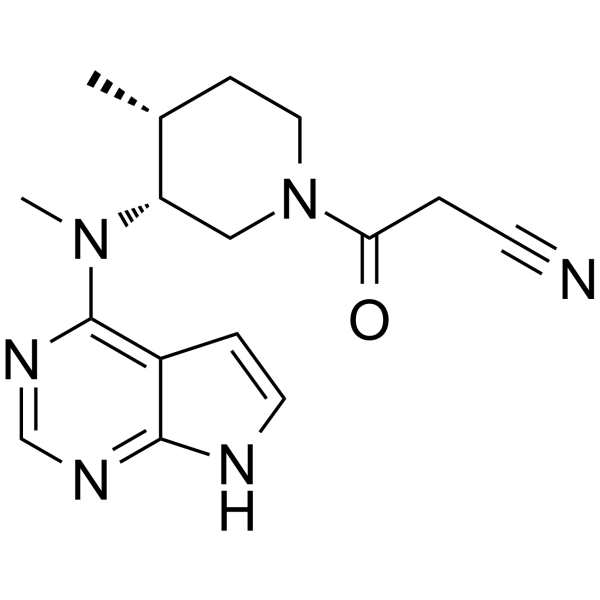
- Formula: C16H20N6O
- Molecular Weight: 312.37
Tofacitinib (Tasocitinib) is an orally active, blood-brain barrier permeable selective inhibitor of JAK1/JAK3. Tofacitinib blocks the JAK-STAT/NF-κB signaling pathway, inhibits cytokine signal transduction, phosphorylation of STAT1/STAT5, and suppresses innate and adaptive immune responses. Tofacitinib can be used in research related to major depressive disorder, rheumatoid arthritis, pulmonary diseases, systemic lupus erythematosus, and immune-mediated liver injury.
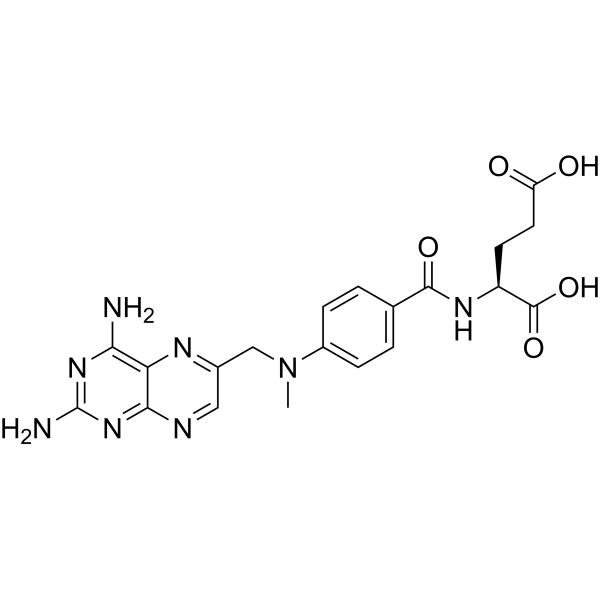
- Formula: C20H22N8O5
- Molecular Weight: 454.44
Methotrexate (Amethopterin; CL14377; WR19039) is an orally active antifolate (Antifolate). Methotrexate inhibits dihydrofolate reductase (DHFR), blocks tetrahydrofolate production, suppresses purine/pyrimidine synthesis and transmethylation, and causes intracellular accumulation of AICAR. Methotrexate promotes extracellular adenosine release, regulates the cytokine network, and inhibits the alarmin function of HMGB1. Methotrexate induces apoptosis and cytotoxicity, upregulates the expression of iNOS and COX-2, suppresses hippocampal neurogenesis, and induces pulmonary fibrosis. Methotrexate is used in the research of various immune and inflammation-related diseases such as arthritis, psoriasis, systemic lupus erythematosus, as well as pulmonary fibrosis and breast cancer.
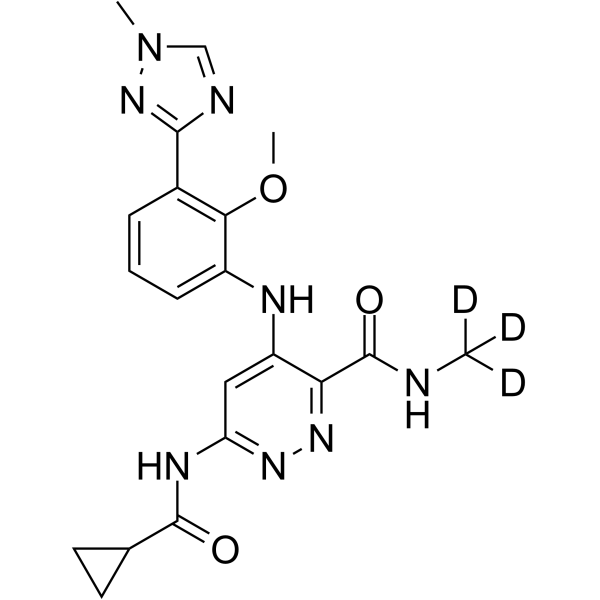
- Formula: C20H19D3N8O3
- Molecular Weight: 425.46
Deucravacitinib (BMS-986165) is an orally active allosteric inhibitor of tyrosine kinase 2 (TYK2), with an IC50 of 0.2 nM and a Ki of 0.02 nM against the JH2 domain of TYK2, and it exhibits selectivity over other JAK subtypes and most of the kinome. Deucravacitinib blocks IL-23, IL-12, p-STAT1/3 and Type I IFN signaling, and inhibits Th17/Th1-mediated psoriasis inflammation. Deucravacitinib can be used in research related to moderate-to-severe plaque psoriasis, inflammatory bowel disease and systemic lupus erythematosus.


- Molecular Weight: 145.2 kDa
Tocilizumab (Anti-Human IL6R, Humanized Antibody) is an anti-human interleukin-6 receptor (IL-6R) neutralizing antibody, prevents binding of IL-6 to the IL-6R, thereby inhibiting both classic and trans-signaling. Tocilizumab (Anti-Human IL6R, Humanized Antibody) can be used for the treatment of rheumatoid arthritis. Tocilizumab is remarkablely effective for the study of severe COVID-19 (coronavirus disease).

- Molecular Weight: 144.92 kDa
Anifrolumab is a type I interferon (IFN) receptor antagonist, a human monoclonal antibody. Anifrolumab blocks the activity of type I interferon. Anifrolumab can be used in systemic lupus erythematosus (SLE) research.
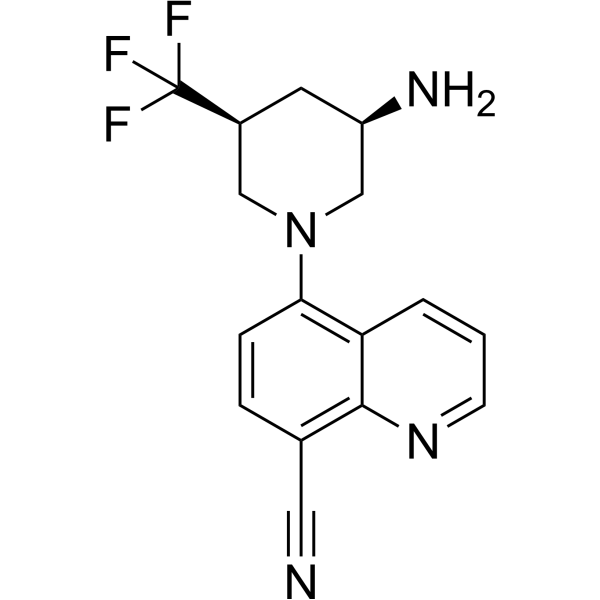
- Formula: C16H15F3N4
- Molecular Weight: 320.31
Enpatoran (M5049) is an orally active and selective TLR7/8 antagonist. Enpatoran inhibits the activation of the downstream type I interferon pathway. Enpatoran is used in studies of cutaneous lupus erythematosus, systemic lupus erythematosus with cutaneous manifestations, and psoriasis.
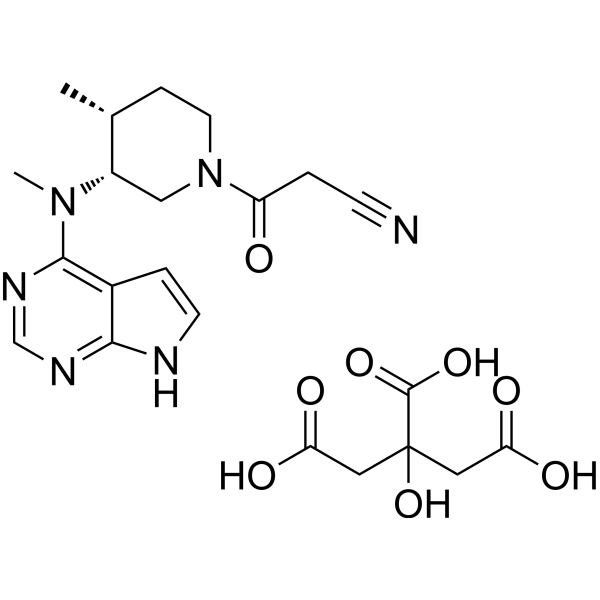
- Formula: C22H28N6O8
- Molecular Weight: 504.49
Tofacitinib citrate (Tasocitinib citrate) is an orally active, blood-brain barrier permeable selective inhibitor of JAK1/JAK3. Tofacitinib citrate blocks the JAK-STAT/NF-κB signaling pathway, inhibits cytokine signal transduction, phosphorylation of STAT1/STAT5, and suppresses innate and adaptive immune responses. Tofacitinib citrate can be used in research related to major depressive disorder, rheumatoid arthritis, pulmonary diseases, systemic lupus erythematosus, and immune-mediated liver injury.
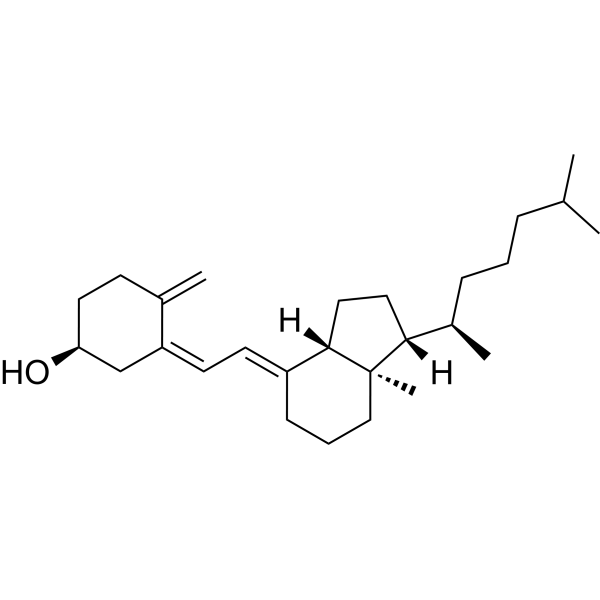
- Formula: C27H44O
- Molecular Weight: 384.64
Vitamin D3 (Cholecalciferol; Colecalciferol) is a naturally occuring form of vitamin D. Vitamin D3 induces cell differentiation and prevents proliferation of cancer cells.
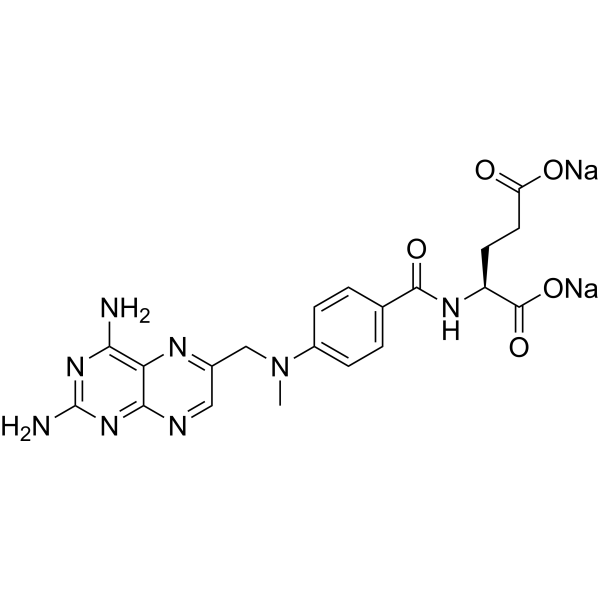
- Formula: C20H20N8Na2O5
- Molecular Weight: 498.40
Methotrexate disodium (Amethopterin disodium; CL14377 disodium; WR19039 disodium) is an orally active antifolate (Antifolate). Methotrexate disodium inhibits dihydrofolate reductase (DHFR), blocks tetrahydrofolate production, suppresses purine/pyrimidine synthesis and transmethylation, and causes intracellular accumulation of AICAR. Methotrexate disodium promotes extracellular adenosine release, regulates the cytokine network, and inhibits the alarmin function of HMGB1. Methotrexate disodium induces apoptosis and cytotoxicity, upregulates the expression of iNOS and COX-2, suppresses hippocampal neurogenesis, and induces pulmonary fibrosis. Methotrexate disodium is used in the research of various immune and inflammation-related diseases such as arthritis, psoriasis, systemic lupus erythematosus, as well as pulmonary fibrosis and breast cancer.

- Molecular Weight: 144.54 kDa
Belimumab (LymphoStat B) is a humanized IgG1λ monoclonal antibody against B-lymphocyte stimulator (BLyS) protein. Belimumab antagonizes BLyS activity in autoimmune diseases and B-lymphocyte malignancies. Belimumab can be used for systemic lupus erythematosus (SLE) research. The component ratio of this product is Active ingredient: Excipients = 1:1.0-1:1.2.
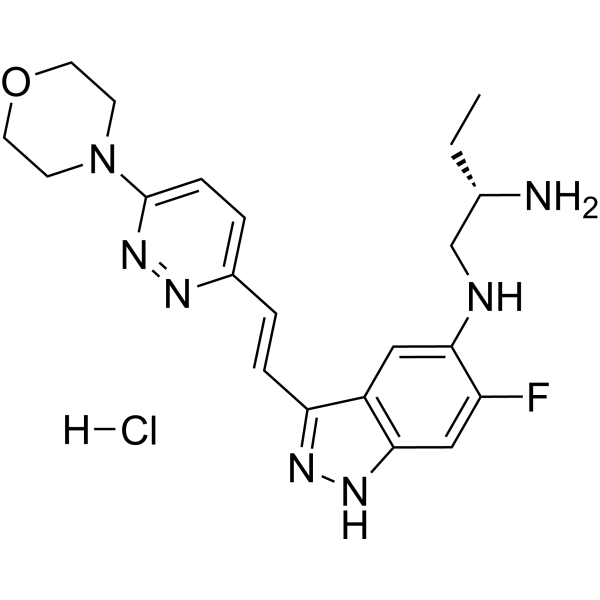
- Formula: C21H27ClFN7O
- Molecular Weight: 447.94
YE6144 free base is a selective prototypical interferon regulatory factor 5 (IRF5) inhibitor. YE6144 free base suppresses the disease course and is especially effective in remission maintenance in a mouse model of systemic lupus erythematosus (SLE). YE6144 free base can be used for SLE research.

- Molecular Weight: 75.36 kDa
Telitacicept (RC18) is a fully human TACI-Fc fusion protein. Telitacicept is a dual B lymphocyte stimulator (BLyS)/APRIL (a proliferation-inducing ligand) inhibitor that effectively blocks proliferation of B lymphocytes. Telitacicept can be used in research of B-cell autoimmune disease. The component ratio of this product is Active ingredient : Excipients = 1: 0.5-1: 0.8.
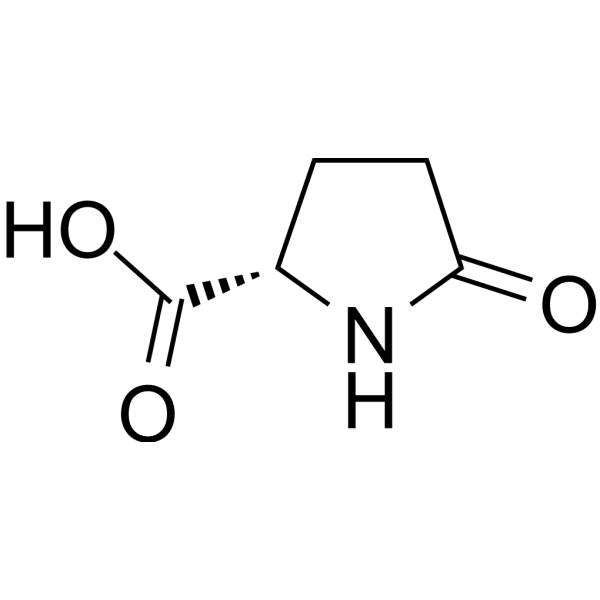
- Formula: C5H7NO3
- Molecular Weight: 129.11
L-Pyroglutamic acid is the levo-isomer of Pyroglutamic acid. L-Pyroglutamic acid is the biologically active enantiomer in humans. Pyroglutamic acid is an intermediate in glutathione metabolism. L-Pyroglutamic acid can be used as a biomarker for systemic lupus erythematosus (SLE).
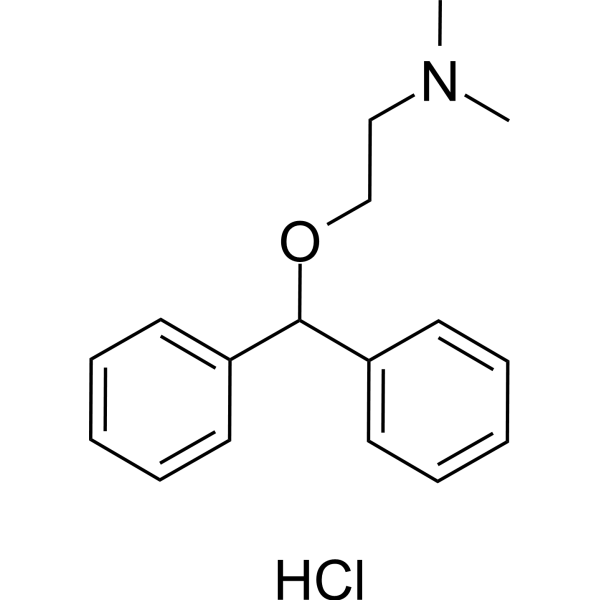

- Molecular Weight: 145.52 kDa
Riliprubart (SAR 445088) is a selective anti-C1s humanized IgG4 monoclonal antibody with mutations that enhance its binding to the neonatal Fc receptor. Riliprubart blocks activation of the classical complement pathway, prevents the formation of the C3 convertase C4b2a, and inhibits complement-mediated hemolytic activity. Riliprubart can be used in research related to classical complement-mediated diseases, cold agglutinin disease, and chronic inflammatory demyelinating polyneuropathy. For the isotype control of Riliprubart, refer to Human IgG4 (S228P) kappa, Isotype Control (HY-P99003).
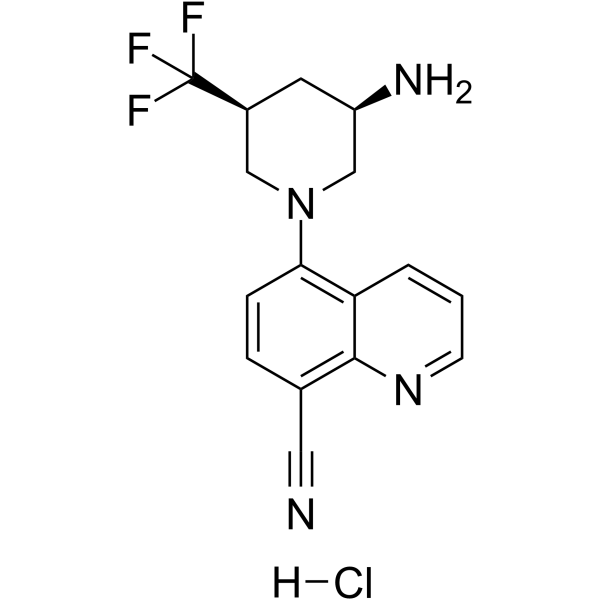
- Formula: C16H16ClF3N4
- Molecular Weight: 356.77
Enpatoran hydrochloride (M5049 hydrochloride) is an orally active and selective TLR7/8 antagonist. Enpatoran hydrochloride inhibits the activation of the downstream type I interferon pathway. Enpatoran hydrochloride is used in studies of cutaneous lupus erythematosus, systemic lupus erythematosus with cutaneous manifestations, and psoriasis.

- Molecular Weight: 146.6 kDa
Litifilimab (BIIB059) is a humanized IgG1 monoclonal antibody targeting BDCA2. Litifilimab induces internalization of BDCA2 receptors on the membrane of plasmacytoid dendritic cells, inhibits the TLR7/TLR9 signaling pathway, and suppresses the production of type I interferons. Litifilimab can be used in the research of systemic and cutaneous lupus erythematosus.
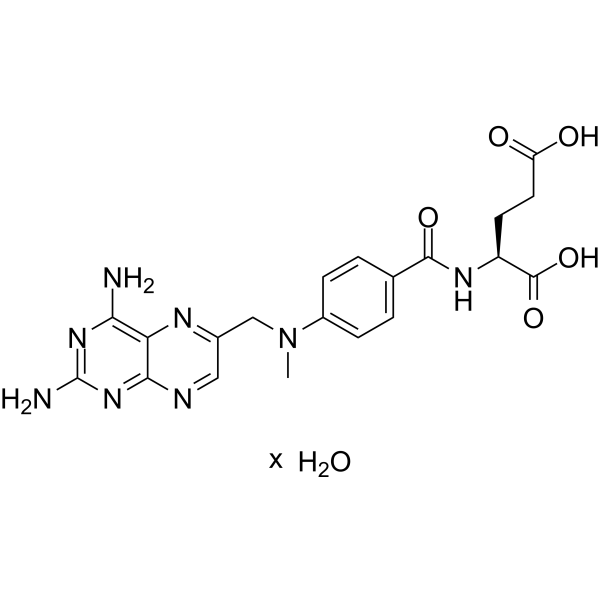
- Formula: C20H22N8O5.xH2O
Methotrexate hydrate (Amethopterin hydrate; CL14377 hydrate; WR19039 hydrate) is an orally active antifolate (Antifolate). Methotrexate hydrate inhibits dihydrofolate reductase (DHFR), blocks tetrahydrofolate production, suppresses purine/pyrimidine synthesis and transmethylation, and causes intracellular accumulation of AICAR. Methotrexate hydrate promotes extracellular adenosine release, regulates the cytokine network, and inhibits the alarmin function of HMGB1. Methotrexate hydrate induces apoptosis and cytotoxicity, upregulates the expression of iNOS and COX-2, suppresses hippocampal neurogenesis, and induces pulmonary fibrosis. Methotrexate hydrate is used in the research of various immune and inflammation-related diseases such as arthritis, psoriasis, systemic lupus erythematosus, as well as pulmonary fibrosis and breast cancer.

- Formula: C160H245N37O36S
- Molecular Weight: 3294.95
IRF5-CPP5 is a cytosolic peptide that selectively targeting human IRF5 wirh a Kd of 0.53 μM. IRF5-CPP5 disrupts IRF5 homodimerization and inhibits its nuclear translocation without altering IRF5 phosphorylation levels. IRF5-CPP5 inhibits proinflammatory cytokine (IL-6, IL-1β, TNF-α) production. IRF5-CPP5 can be used for the research of systemic lupus erythematosus.



