10 Results for "

SK-N-BE(2)

" in MedChemExpress (MCE) Product Catalog:
Products (10)

10 Results for "SK-N-BE(2)" in MCE Product Catalog:

16
16 Publications Verification
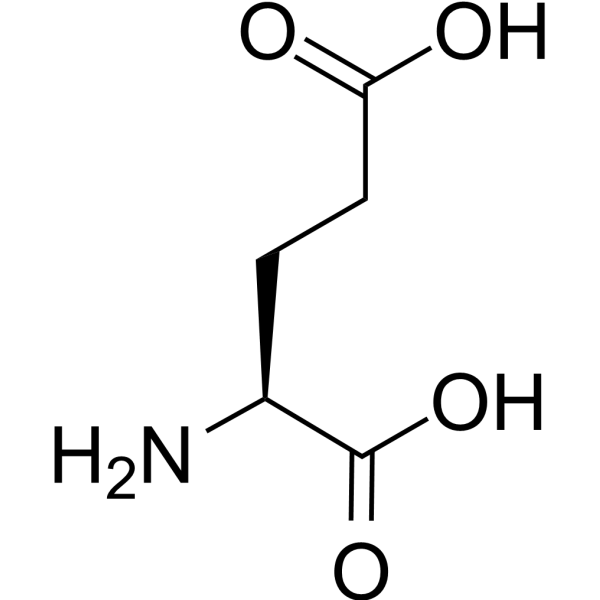
Cat. No.: HY-14608
CAS No.: 56-86-0
Purity:  99.81%
L-Glutamic acid is an excitatory amino acid neurotransmitter that acts as an agonist for all subtypes of glutamate receptors (metabolic rhodophylline, NMDA, and AMPA). L-Glutamic acid has an agonist effect on the release of DA from dopaminergic nerve endings. L-Glutamic acid can be used in the study of neurological diseases. L-Glutamic acid acts at ionotropic and metabotropic glutamate receptors [2] .
loading...
    loading...
15
15 Cited Publications
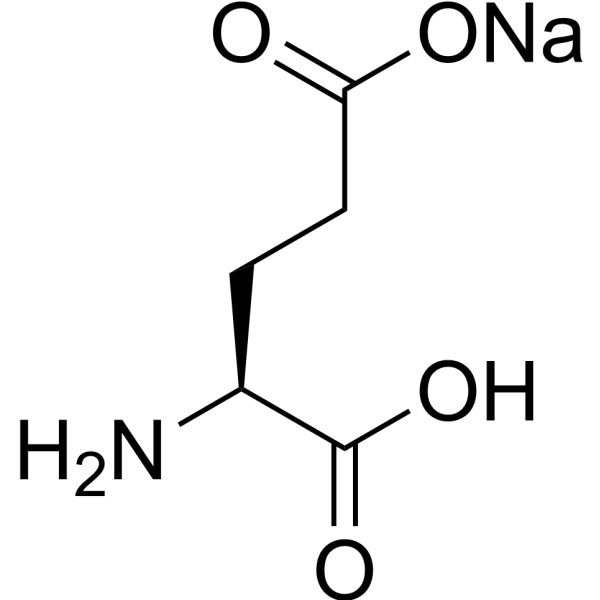
Cat. No.: HY-14608A
CAS No.: 142-47-2
Purity:  ≥98.0%
L-Glutamic acid monosodium salt is an excitatory amino acid neurotransmitter that acts as an agonist for all subtypes of glutamate receptors (metabolic rhodophylline, NMDA, and AMPA). L-Glutamic acid monosodium salt has an agonist effect on the release of DA from dopaminergic nerve endings. L-Glutamic acid monosodium salt can be used in the study of neurological diseases. L-Glutamic acid monosodium salt acts at ionotropic and metabotropic glutamate receptors [2] .
loading...
    loading...
13
13 Cited Publications
Cat. No.: HY-W419700
CAS No.: 7558-63-6
L-Glutamic acid ammonium is an excitatory amino acid neurotransmitter that acts as an agonist for all subtypes of glutamate receptors (metabolic rhodophylline, NMDA, and AMPA). L-Glutamic acid ammonium has an agonist effect on the release of DA from dopaminergic nerve endings. L-Glutamic acid can be used in the study of neurological diseases. L-Glutamic acid ammonium acts at ionotropic and?metabotropic glutamate receptors [2] .
loading...
    loading...
5
5 Cited Publications
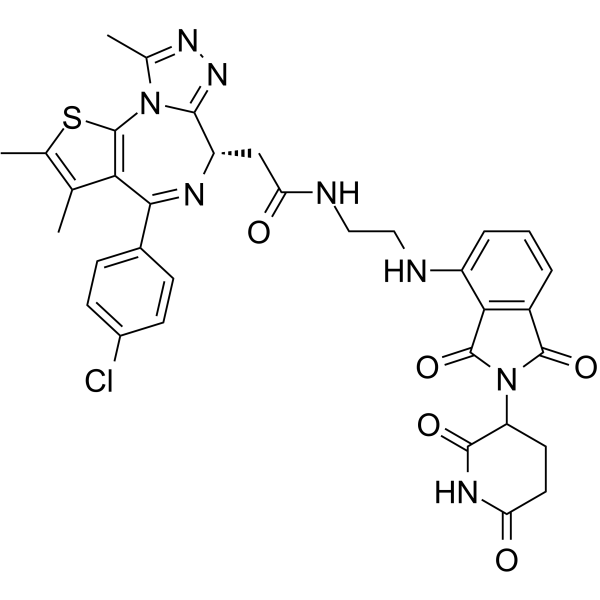
Cat. No.: HY-123844
CAS No.: 1883863-52-2
Purity:  99.94%
dBET57 is a potent and selective BRD4BD1 PROTAC degrader with a DC50 of approximately 500 nM. dBET57 forms a ternary complex with CRL4 CRBN and BRD4BD1, induces the ubiquitination and degradation of BRD4, and indirectly inhibits the transcription of MYCN, c-Myc and PD-L1, ultimately leading to cell cycle arrest and apoptosis. dBET57 can be used in related research on neuroblastoma, non-small cell lung cancer and colorectal cancer [2] .
loading...
    loading...
1
1 Cited Publications
Cat. No.: HY-14608R
CAS No.: 56-86-0
L-Glutamic acid (Standard) is the analytical standard of L-Glutamic acid. This product is intended for research and analytical applications. L-Glutamic acid is an excitatory amino acid neurotransmitter that acts as an agonist for all subtypes of glutamate receptors (metabolic rhodophylline, NMDA, and AMPA). L-Glutamic acid has an agonist effect on the release of DA from dopaminergic nerve endings. L-Glutamic acid can be used in the study of neurological diseases [2] . IC50 & Target:DA . In Vitro: L-Glutamic acid (120, 500, 750, 1000 mg/dL) can reduce the harmful effect of lithium on the embryonic development of Xenopus Xenopus .
L-Glutamic acid (2, 5, 10, 20 mM, 24-48 h) can induce neuroexcitotoxicity in neuroblastoma .
In Vivo: L-Glutamic acid (3 g/kg, subcutaneous injection) can promote excitotoxic degeneration of retinal ganglion cells in mice .
L-Glutamic acid (750 mg/kg, intraperitoneal injection) can reduce and inhibit oxidative stress induced by chlorpyrifos (CPF) in rats .
loading...
    loading...
Cat. No.: HY-168439
CAS No.: 2566733-45-5
HLB-0532259 is a Aurora-A/N-Myc PROTAC degrader, with a DC50 of 20.2 nM against Aurora-A in MCF-7 cells; its DC50 values against N-Myc are 179 nM in SK-N-BE (2) cells and 229 nM in Kelly cells, respectively. HLB-0532259 induces apoptosis (apoptosis) in MYCN-amplified neuroblastoma cells and inhibits tumor growth in mouse xenograft models. HLB-0532259 can be used for the research of neuroblastoma .
loading...
    loading...
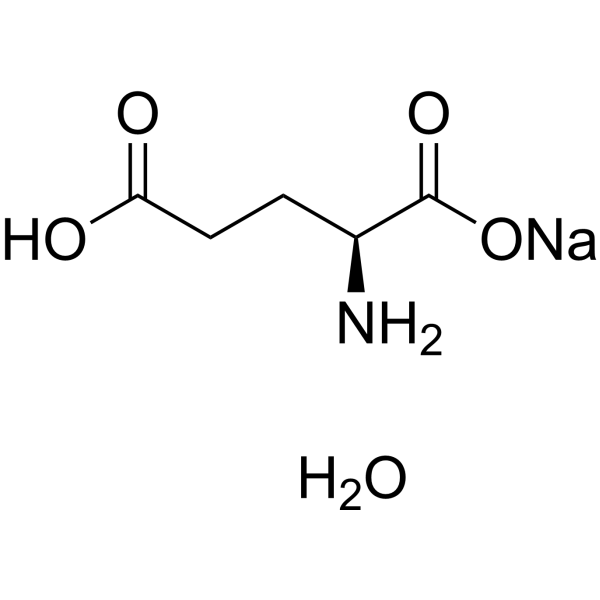
Cat. No.: HY-W016145
CAS No.: 6106-04-3
L-Glutamic acid monosodium hydrate is an excitatory amino acid neurotransmitter that acts as an agonist for all subtypes of glutamate receptors (metabolic rhodophylline, NMDA, and AMPA). L-Glutamic acid monosodium hydrate has an agonist effect on the release of DA from dopaminergic nerve endings. L-Glutamic acid monosodium hydrate can be used in the study of neurological diseases. L-Glutamic acid monosodium hydrate acts at ionotropic and?metabotropic glutamate receptors [2] .
loading...
    loading...
Cat. No.: HY-172609
CAS No.: 1809556-48-6
SL-176 is a PPM1D (Wip1) inhibitor. SL-176 inhibits lipid droplet formation, downregulates the mRNA and protein expression of PPARγ and C/EBPα, and blocks adipocyte differentiation. SL-176 induces G2/M cell cycle arrest, apoptosis and inhibits cell proliferation in breast cancer cells overexpressing PPM1D, and activates components of the p53 pathway. SL-176 suppresses tumor growth in a zebrafish model of neuroblastoma. SL-176 is applicable to research related to obesity, breast cancer and neuroblastoma [2] .
loading...
    loading...
Cat. No.: HY-174368
Synonyms: Pro-BA
Research Areas:  

Cancer

PROTAC EML4-ALK Degrader-1 (Pro-BA) is an orally active EML4-ALK PROTAC degrader that recruits GID4, with a Kd value of 144 nM against human EML4-ALK and a DC50 of 74 nM in H3122 cells. PROTAC EML4-ALK Degrader-1 promotes EML4-ALK ubiquitination and proteasomal degradation, reduces cancer cell viability, inhibits cancer cell and tumor growth, induces apoptosis, and alters cell cycle distribution. PROTAC EML4-ALK Degrader-1 can be used in studies related to EML4-ALK-positive cancers and non-small cell lung cancer .
loading...
    loading...
Cat. No.: HY-14608AR
CAS No.: 142-47-2
L-Glutamic acid (monosodium salt) (Standard) is the analytical standard of L-Glutamic acid (monosodium salt). This product is intended for research and analytical applications. L-Glutamic acid monosodium salt is an excitatory amino acid neurotransmitter that acts as an agonist for all subtypes of glutamate receptors (metabolic rhodophylline, NMDA, and AMPA). L-Glutamic acid monosodium salt has an agonist effect on the release of DA from dopaminergic nerve endings. L-Glutamic acid monosodium salt can be used in the study of neurological diseases [2] .
loading...
    loading...

