





1. Search Result
Search Result
Pathways Recommended: TGF-beta/Smad
Results for "

TGF-β1 receptor

" in MedChemExpress (MCE) Product Catalog:

26

Inhibitors & Agonists

7

Peptides

4

Inhibitory Antibodies

5

Natural
Products

Cat. No. Product Name Target Research Areas Chemical Structure
  • HY-P0118B
    Disitertide diammonium
    Maximum Cited Publications
    18 Publications Verification

    P144 diammonium

    TGF-beta/Smad PI3K Apoptosis Cancer
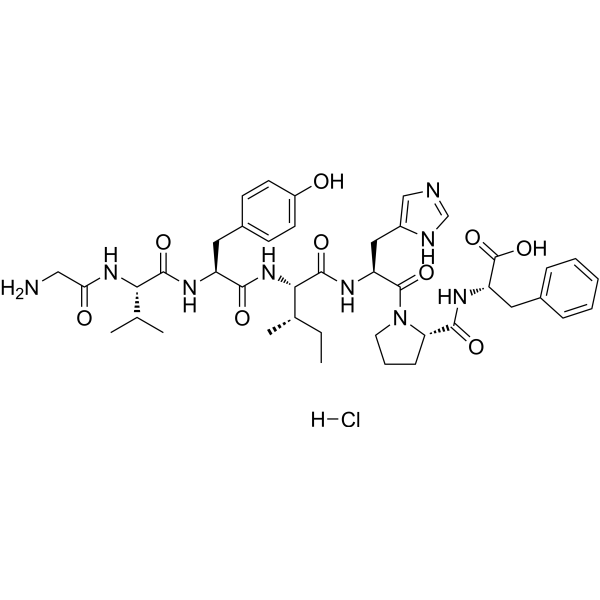
    Disitertide (P144) diammonium is a peptidic transforming growth factor-beta 1 (TGF-β1) inhibitor specifically designed to block the interaction with its receptor. Disitertide diammonium is also a PI3K inhibitor and an apoptosis inducer [1] .
    Disitertide diammonium
  • HY-124748A
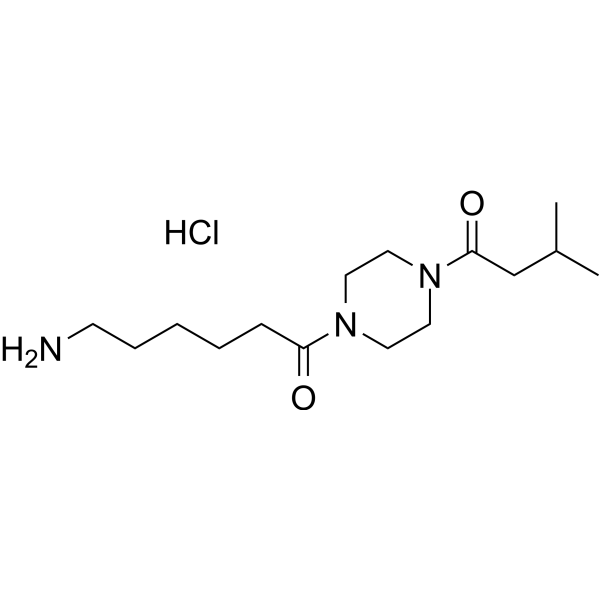
    ENMD-1068 hydrochloride
    2 Publications Verification

    Protease Activated Receptor (PAR) Apoptosis Inflammation/Immunology
    ENMD-1068 hydrochloride is a selective protease-activated receptor 2 (PAR2) antagonist. ENMD-1068 hydrochloride reduces hepatic stellate cell activation and collagen expression by inhibiting TGF-β1/Smad signaling. ENMD-1068 hydrochloride also inhibits the proliferation of endometrial cells and induces apoptosis of epithelial cells in the lesion. ENMD-1068 hydrochloride can be used in the study of endometriosis and liver fibrosis [1] .
    ENMD-1068 hydrochloride
  • HY-P0118
    Disitertide
    Maximum Cited Publications
    18 Publications Verification

    P144

    TGF-beta/Smad PI3K Apoptosis Cancer
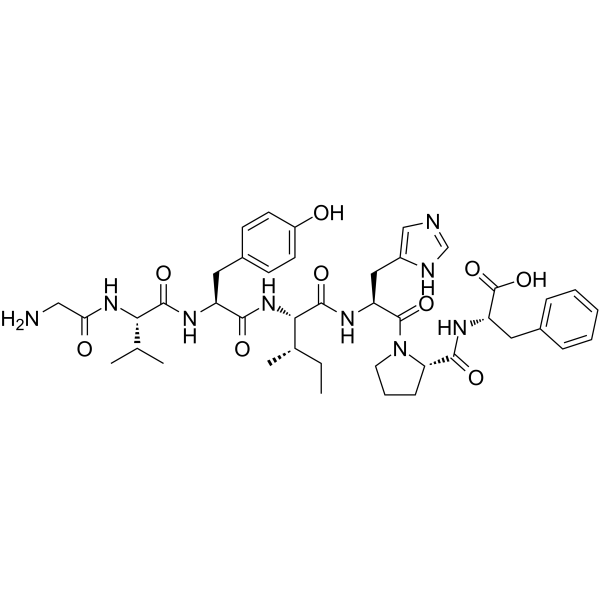
    Disitertide (P144) is a peptidic transforming growth factor-beta 1 (TGF-β1) inhibitor specifically designed to block the interaction with its receptor. Disitertide (P144) is also a PI3K inhibitor and an apoptosis inducer [1] .
    Disitertide
  • HY-19767
    GSK 3008348
    2 Publications Verification

    Integrin TGF-β Receptor Infection Inflammation/Immunology Cancer
    GSK 3008348 is a small molecule antagonist of integrin αvβ6 with IC50 values for αvβ6, αvβ1, αvβ3, αvβ5, and αvβ8 are 1.50, 2.83, 12.53, 4.00, and 2.26 nM, respectively. GSK 3008348 can target the αvβ6 integrin, inhibit TGF-β activation, and thereby alleviate the fibrotic process. GSK 3008348 prevents the binding of the foot-and-mouth disease virus (FMDV) to the αvβ6 integrin receptor on the surface of host cells, thereby inhibiting the entry of the virus. GSK 3008348 can be used for research on pulmonary fibrosis and various types of cancer [1] .
    GSK 3008348
  • HY-116514

    Farnesyl Transferase Apoptosis Endogenous Metabolite Cancer
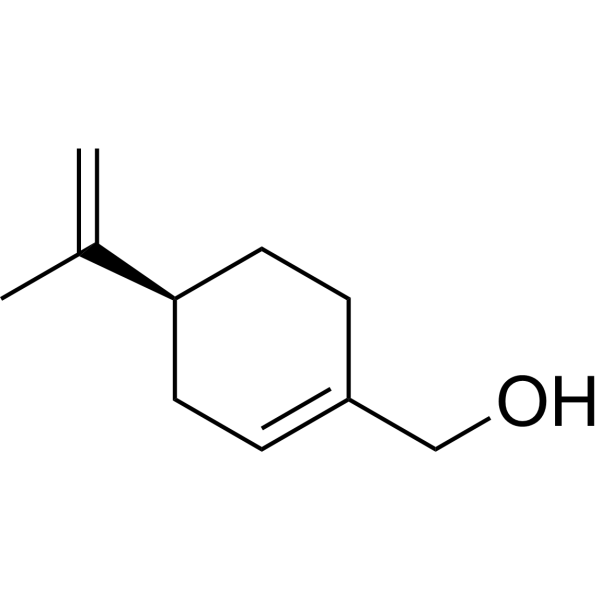
    (S)-(-)-Perillyl alcohol, a monoterpene, is an orally active farnesyl transferase and geranylgeranyl transferase inhibitor. (S)-(-)-Perillyl alcohol up-regulates the mannose-6-phosphate receptor, facilitating TGF-β1 activation and cytostasis,. (S)-(-)-Perillyl alcohol induces apoptosis in cancer cells, modulates cyclin D1 and AP-1 activity. (S)-(-)-Perillyl alcohol exhibits antitumor activity against sarcoma tumors in mice. (S)-(-)-Perillyl alcohol can be used for the research of squamous cell carcinoma of the esophagus and sarcoma 180 [1] .
    (S)-(−)-Perillyl alcohol
  • HY-N1472
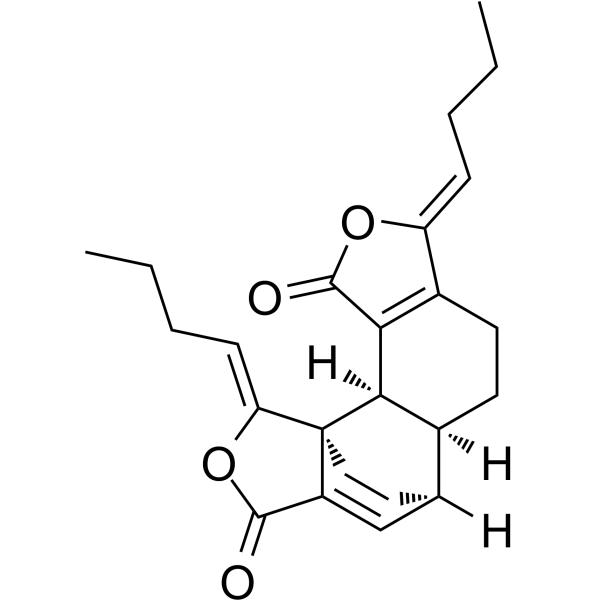
    Levistolide A
    5 Publications Verification

    Apoptosis Reactive Oxygen Species (ROS) PPAR GSK-3 Tau Protein Ras TGF-β Receptor Infection Neurological Disease Inflammation/Immunology
    Levistolide A is an apoptosis inducer and a PEDV virus inhibitor. Levistolide A can induce apoptosis in colon cancer cells and suppress the replication of porcine epidemic diarrhea virus (PEDV) by promoting ROS generation. Levistolide A activates peroxisome proliferator-activated receptor γ (PPARγ) in N2a/APP695swe cells and reduces excessive phosphorylation of tau through the GSK3α/β pathway, improving symptoms in Alzheimer’s mice. Levistolide A improves kidney damage in 5/6 nephrectomy (Nx) mice by inhibiting the RAS,TGF-β1/Smad, and MAPK pathways [1] .
    Levistolide A
  • HY-N5124
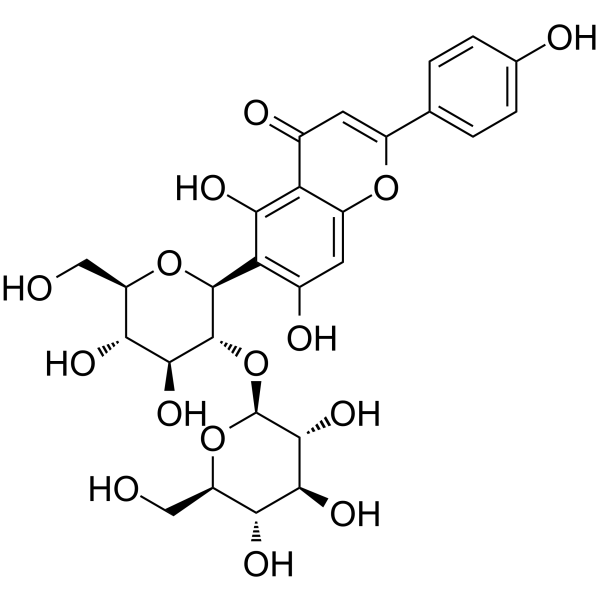
    Meloside A
    4 Publications Verification

    Isovitexin 2''-O-glucoside; Isovitexin 2''-O-β-D-glucoside

    Androgen Receptor Apoptosis Reactive Oxygen Species (ROS) Interleukin Related TGF-β Receptor Neurological Disease Metabolic Disease Inflammation/Immunology Cancer
    Meloside A (Isovitexin 2''-O-glucoside) is a flavonoid with antioxidant activity. Meloside A can inhibit cell apoptosis and ROS production. Meloside A can inhibit androgen receptor (AR) nuclear translocation and AR protein expression. Meloside A can reduce IL-6, TGF-β1 and DKK-1 levels. Meloside A can be used for the researches of inflammation and endocrinology, such as hair loss [1].
    Meloside A
  • HY-15472

    5-HT Receptor p38 MAPK TGF-β Receptor FGFR Apoptosis Caspase Cardiovascular Disease Neurological Disease Cancer
    PRX-08066 is a selective and orally active 5-hydroxytryptamine receptor 2B (5-HT2BR) antagonist with a Ki of 3.4 nM. PRX-08066 inhibits the MAPK pathway, 5-HT release and fibrotic factor (TGFβ1, CTGF and FGF2) expression. PRX-08066 inhibits the proliferation of KRJ-I cells and induces apoptosis (caspase-3 activation). PRX-08066 inhibits pulmonary vascular remodeling. PRX-08066 can be used of pulmonary Arterial Hypertension (PAH) and neuroendocrine tumor (NET) [1] .
    PRX-08066
  • HY-19767A
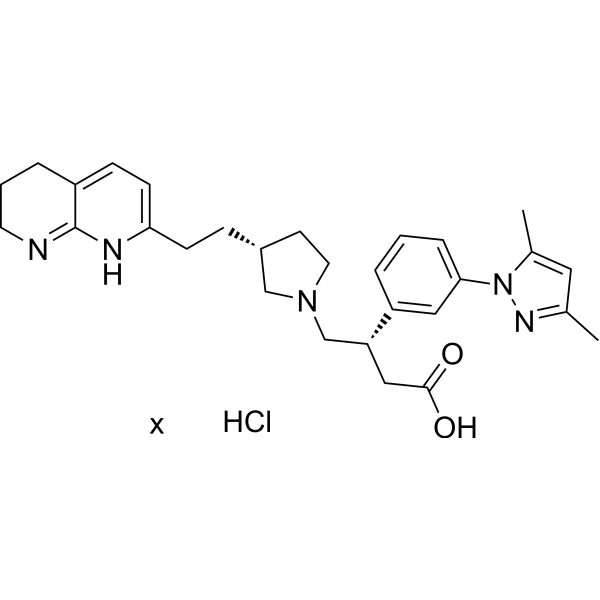
    GSK 3008348 hydrochloride
    2 Publications Verification

    Integrin TGF-β Receptor Infection Inflammation/Immunology Cancer
    GSK 3008348 hydrochloride is a small molecule antagonist of integrin αvβ6 with IC50 values for αvβ6, αvβ1, αvβ3, αvβ5, and αvβ8 are 1.50, 2.83, 12.53, 4.00, and 2.26 nM, respectively. GSK 3008348 hydrochloride can target the αvβ6 integrin, inhibit TGF-β activation, and thereby alleviate the fibrotic process. GSK 3008348 hydrochloride prevents the binding of the foot-and-mouth disease virus (FMDV) to the αvβ6 integrin receptor on the surface of host cells, thereby inhibiting the entry of the virus. GSK 3008348 hydrochloride can be used for research on pulmonary fibrosis and various types of cancer [1] .
    GSK 3008348 hydrochloride
  • HY-P3136

    TRV120055

    Angiotensin Receptor ERK Cardiovascular Disease
    TRV055 (TRV120055) is a G protein-biased agonist of angiotensin II type 1 receptors (AT1Rs). TRV120055 induces fibroblast proliferation, overexpression of collagen I and α-SMA, and stress fibre formation in human cardiac fibroblasts. TRV055 activates AT1 receptor/Gαq-mediated signaling pathways, upregulates TGF-β1 and p-ERK1/2. TRV055 induces collagen secretion in adult rat myofibroblasts at a level comparable to Ang II. TRV055 can be used to study the role of G protein-biased signaling of AT1Rs in regulating fibrotic responses [1]
    TRV055
  • HY-P2294A
    pm26TGF-β1 peptide TFA
    1 Publications Verification

    TGF-β Receptor Inflammation/Immunology
    pm26TGF-β1 TFA peptide is a peptide that mimics a portion of the human TGF-β1 molecule. pm26TGF-β1 peptide TFA shows high affinity for the TGF-β1 receptor. pm26TGF-β1 peptide TFA displays potent anti-inflammatory properties and does not exhibit neutrophils’ chemoattraction [1] .
    pm26TGF-β1 peptide TFA
  • HY-P3136A

    TRV120055 hydrochloride

    Angiotensin Receptor Cardiovascular Disease
    TRV055 (TRV120055) hydrochloride is a G protein-biased agonist of angiotensin II type 1 receptors (AT1Rs). TRV055 hydrochloride induces fibroblast proliferation, overexpression of collagen I and α-SMA, and stress fibre formation in human cardiac fibroblasts. RV055 hydrochloride activates AT1 receptor/Gαq-mediated signaling pathways, upregulates TGF-β1 and p-ERK1/2. RV055 hydrochloride induces collagen secretion in adult rat myofibroblasts at a level comparable to Ang II. RV055 hydrochloride can be used to study the role of G protein-biased signaling of AT1Rs in regulating fibrotic responses [1]
    TRV055 hydrochloride
  • HY-P2294

    TGF-β Receptor Inflammation/Immunology
    pm26TGF-β1 peptide is a peptide that mimics a portion of the human TGF-β1 molecule. pm26TGF-β1 peptide shows high affinity for the TGF-β1 receptor. pm26TGF-β1 peptide displays potent anti-inflammatory properties and does not exhibit neutrophils’ chemoattraction [1] .
    pm26TGF-β1 peptide
  • HY-P0118A

    P144 TFA

    TGF-beta/Smad PI3K Apoptosis Cancer
    Disitertide (P144) TFA is a peptidic transforming growth factor-beta 1 (TGF-β1) inhibitor specifically designed to block the interaction with its receptor. Disitertide TFA is also a PI3K inhibitor and an apoptosis inducer [1] .
    Disitertide TFA
  • HY-P99963

    HS636

    PD-1/PD-L1 Cancer
    Sudubrilimab (HS636) is an Ig G1-kappa monoclonal antibody against PDL1. Sudubrilimab is fused at the C terminus of the heavy chain to a TGF-β1 receptor Ⅱ ectodomain (TGFBR2-ECD), and which can sequester the PD-1/PD-L1 pathway and TGF-β bioactivity in the immunosuppressive tumor microenvironment [1].
    Sudubrilimab
  • HY-P991084

    PD-1/PD-L1 Cancer
    TQB-2858 is a bifunctional fusion protein composed of a monoclonal antibody against PD-L1 fused with the extracellular domain of TGFreceptor. TQB-2858 has a high affinity for PD-L1, TGF-β1, and TGF-β3 and exhibited high PD-L1 target occupancy. TQB-2858 can be used for the study of osteosarcoma and alveolar soft part sarcoma (ASPS) [1].
    TQB-2858
  • HY-110246

    Formyl Peptide Receptor (FPR) Inflammation/Immunology
    Quin C1 is a highly specific and potent agonist for formyl peptide receptor 2 (FPR2/ALX). Quin-C1 significantly reduces the neutrophil and lymphocyte counts in BALF, diminishes expression of TNF-α, IL-1β, KC, and TGF-β1, and decreases collagen deposition in lung tissue. Quin C1 has the potential for the research of lung injury [1].
    Quin C1
  • HY-124748

    Protease Activated Receptor (PAR) Apoptosis Inflammation/Immunology
    ENMD-1068 is a selective protease-activated receptor 2 (PAR2) antagonist. ENMD-1068 reduces hepatic stellate cell activation and collagen expression by inhibiting TGF-β1/Smad signaling. ENMD-1068 also inhibits the proliferation of endometrial cells and induces apoptosis of epithelial cells in the lesion. ENMD-1068 can be used in the study of endometriosis and liver fibrosis [1] .
    ENMD-1068
  • HY-170448

    PROTACs Androgen Receptor Endocrinology
    PROTAC AR Degrader-9 (Compound c6) is a PROTAC degrader for androgen receptor, that degrades AR in human hair follicle papilla cells (HDPCs) with a DC50 of 262.38 nM. PROTAC AR Degrader-9 promotes the expressions of paracrine factors, such as TGF-β1 and β-catenin, exhibits hair regenerating efficacy in mouse models [1]. (Pink: ligand for target protein AR ligand-38 (HY-170450); Black: linker; Blue: ligand for E3 ligase Cereblon (HY-170449))
    PROTAC AR Degrader-9
  • HY-149899

    VD/VDR Others
    VDR agonist 2 (compound 16i) is a VDR (vitamin D receptor) agonist that can effectively inhibit TGF-β1-induced activation of hepatic stellate cells (HSC). VDR agonist 2 has significant anti-hepatic fibrosis effects both in vitro and in vivo [1].
    VDR agonist 2
  • HY-15472A

    5-HT Receptor p38 MAPK TGF-β Receptor FGFR Apoptosis Caspase Cardiovascular Disease Neurological Disease Cancer
    PRX-08066 maleate is a selective and orally active 5-hydroxytryptamine receptor 2B (5-HT2BR) antagonist with a Ki of 3.4 nM. PRX-08066 maleate inhibits the MAPK pathway, 5-HT release and fibrotic factor (TGFβ1, CTGF and FGF2) expression. PRX-08066 maleate inhibits the proliferation of KRJ-I cells and induces apoptosis (caspase-3 activation). PRX-08066 maleate inhibits pulmonary vascular remodeling. PRX-08066 maleate can be used of pulmonary Arterial Hypertension (PAH) and neuroendocrine tumor (NET) [1] .
    PRX-08066 maleate
  • HY-116514R

    Reference Standards Farnesyl Transferase Apoptosis Endogenous Metabolite Cancer
    (S)-(-)-Perillyl alcohol (Standard) is the analytical standard of (S)-(-)-Perillyl alcohol (HY-116514). This product is intended for research and analytical applications. (S)-(-)-Perillyl alcohol, a monoterpene, is an orally active farnesyl transferase and geranylgeranyl transferase inhibitor. (S)-(-)-Perillyl alcohol up-regulates the mannose-6-phosphate receptor, facilitating TGF-β1 activation and cytostasis,. (S)-(-)-Perillyl alcohol induces apoptosis in cancer cells, modulates cyclin D1 and AP-1 activity. (S)-(-)-Perillyl alcohol exhibits antitumor activity against sarcoma tumors in mice. (S)-(-)-Perillyl alcohol can be used for the research of squamous cell carcinoma of the esophagus and sarcoma 180.
    (S)-(-)-Perillyl alcohol (Standard)
  • HY-181430

    TGF-beta/Smad Metabolic Disease Inflammation/Immunology
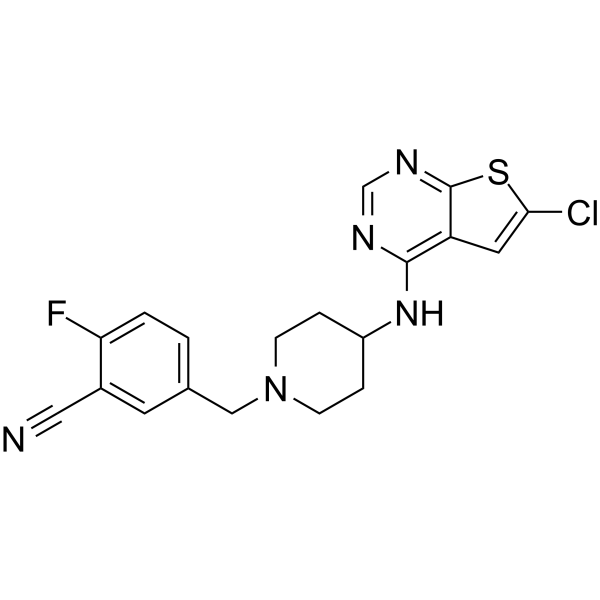
    PXS 25 is a cation-independent mannose 6-phosphate receptor (CI-M6PR) inhibitor that inhibits CI-M6PR-mediated activation of latent TGF-β1. PXS 25 inhibits conversion of high glucose-induced latent TGF-β1 to active TGF-β1 in proximal tubule cells under normoxic conditions. PXS 25 suppresses high glucose-induced fibronectin, collagen IV production, and phosphorylated Smad 2 in proximal tubule cells under normoxic conditions. PXS 25 has antifibrotic properties in skin fibroblasts. PXS 25 can be used for the research of diabetic nephropathy [1].
    PXS 25
  • HY-N11768

    NF-κB Interleukin Related Toll-like Receptor (TLR) Inflammation/Immunology
    4-Methoxylonchocarpin is an orally active anti-inflammatory agent. 4-methoxylonchocarpin inhibits the binding of LPS to Toll-like Receptor (TLR) TLR4 to inhibit NF-κB activation and TNF Receptor and IL-6 expression. 4-Methoxylonchocarpin also inhibits the phosphorylation of TGF-beta activated kinase 1 and TNBS-induced expression of IL-1β, IL-17A, and TNF. 4-methoxylonchocarpin can improve 2,4, 6-trinitrobenzene sulfonic acid (TNBS)-induced colitis mouse model [1].
    4-Methoxylonchocarpin
  • HY-P992108

    RELAX10

    RXFP Receptor Akt NO Synthase VEGFR Cardiovascular Disease
    Efadirelaxin alfa (RELAX10) is a highly selective agonist of relaxin/insulin-like family peptide receptor RXFP1. After subcutaneous administration in animal experiments, Efadirelaxin alfa exhibits a significantly prolonged terminal half-life (7 days in mice, 3.75 days in rats), and shows no activity against related receptors such as RXFP2 and RXFP3. Efadirelaxin alfa has significant anti-cardiac hypertrophy and anti-fibrotic effects. Efadirelaxin alfa effectively attenuates and reverses cardiac hypertrophy and collagen deposition by regulating the TGF-β1/Smad2 and AKT/eNOS signaling pathways. Efadirelaxin alfa improves cardiac systolic function without causing fluctuations in blood pressure or heart rate, demonstrating favorable safety. Efadirelaxin alfa is currently mainly used in studies related to heart failure [1].
    Efadirelaxin alfa
  • HY-P992076

    TGF-β Receptor TGF-beta/Smad Cholinesterase (ChE) Fungal Infection Cancer
    Anti-Candida auris β-1,3-glucans Antibody (2G8) is an antibody targeting Candida auris β-1,3-glucans, and also acts as an inhibitor of AChE and TGFreceptor 2. Anti-Candida auris β-1,3-glucans Antibody (2G8) also targets fungal cell wall components, effectively inhibits fungal growth and interferes with capsule formation, thereby significantly reducing the fungal load in mouse tissues. Anti-Candida auris β-1,3-glucans Antibody (2G8) not only blocks TGFreceptor binding to inhibit the Smad signaling pathway, reduces fibroblast activation and collagen deposition, but also induces epithelial differentiation of tumor cells and reduces pancreatic tumor metastasis. Anti-Candida auris β-1,3-glucans Antibody (2G8) specifically binds to the conserved N-linked glycoepitope on AChE to inhibit its activity without interfering with BChE, and can be used in studies of cryptococcosis and related tumor mechanisms [1] .The isotype control is Human IgG1 kappa, Isotype Control (HY-P99001).
    Anti-Candida auris β-1, 3 glucans Antibody (2G8)

Inquiry Online

Your information is safe with us. * Required Fields.

Salutation


Country or Region *

Applicant Name *


Organization Name *

Department *


Email Address *


Product Name *

Cat. No.


Requested quantity *

Phone Number *


Remarks

Inquiry Online

Inquiry Information

Product Name:
Cat. No.:
Quantity:
MCE Japan Authorized Agent:

