

1. Search Result
Search Result
Pathways Recommended: Neuronal Signaling JAK/STAT Signaling
Results for "

VEGF/VEGFR2 signaling

" in MedChemExpress (MCE) Product Catalog:

16

Inhibitors & Agonists

1

Peptides

2

Inhibitory Antibodies

5

Natural
Products

Targets Recommended:
Cat. No. Product Name Target Research Areas Chemical Structure
  • HY-108801A
    Aflibercept (VEGF Trap)
    1 Publications Verification

    VEGFR Cardiovascular Disease Metabolic Disease Cancer
    Aflibercept (VEGF Trap) is a soluble decoy VEGFR constructed by fusing the Ig domains of VEGFR1 and VEGFR2 with the Fc region of human IgG1. Aflibercept inhibits VEGF signaling by reducing VEGF-regulated processes. Aflibercept can be used for thr research of age-related macular degeneration (AMD) and cardiovascular disease .
    Aflibercept (VEGF Trap)
  • HY-108801
    Aflibercept
    1 Publications Verification

    VEGF Trap; VEGF-TRAPR1R2; VEGF-trapR1

    VEGFR Cardiovascular Disease Metabolic Disease Cancer
    Aflibercept (VEGF Trap) is a soluble decoy VEGFR constructed by fusing the Ig domains of VEGFR1 and VEGFR2 with the Fc region of human IgG1. Aflibercept inhibits VEGF signaling by reducing VEGF-regulated processes. Aflibercept can be used for thr research of age-related macular degeneration (AMD) and cardiovascular disease .
    Aflibercept
  • HY-N0876
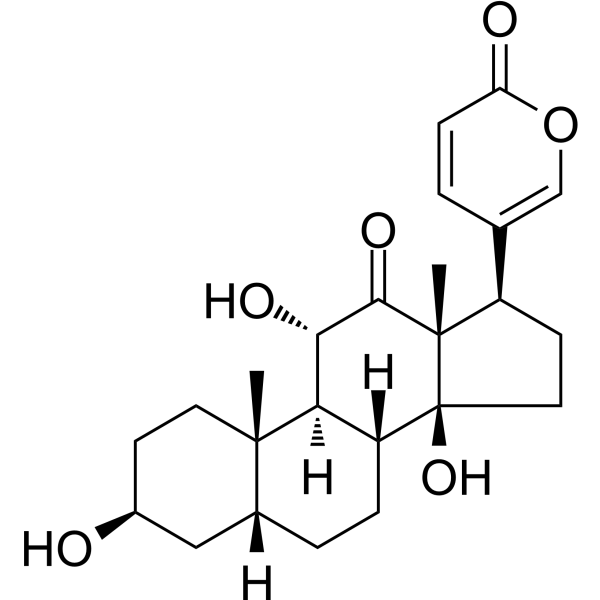
    Arenobufagin
    4 Publications Verification

    Apoptosis Autophagy PI3K Akt mTOR PARP Caspase Atg8/LC3 Cancer
    Arenobufagin is a natural bufadienolide that can be extracted from toad venom. Arenobufagin can induce apoptosis and autophagy in human hepatocellular carcinoma cells through inhibition of PI3K/Akt/mTOR pathway. Arenobufagin has potent antineoplastic activity against HCC HepG2 cells as well as corresponding multidrug-resistant HepG2/ADM cells. Arenobufagin can inhibit VEGF-mediated angiogenesis through suppression of VEGFR-2 signaling pathway .
    Arenobufagin
  • HY-N4322
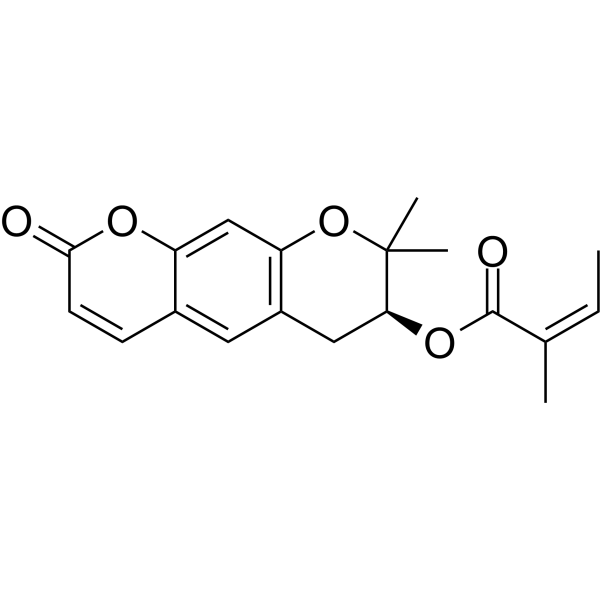
    Decursinol angelate
    1 Publications Verification

    PKC Inflammation/Immunology Cancer
    Decursinol angelate acts as a PKC activator and GDH inhibitor, with an IC50 of 1.432 μM against human GDH. Decursinol angelate activates PKC, downregulates PKCα and PKCβII isoforms, and exerts cytotoxic activity against cancer cells. Decursinol angelate binds to GDH and inhibits its enzymatic activity. Decursinol angelate inhibits VEGF-induced autophosphorylation of VEGFR2, downstream p42/44 ERK and JNK-MAPK signaling pathways, as well as the angiogenesis process. Decursinol angelate is applicable to research related to cancer and leukemia .
    Decursinol angelate
  • HY-148877

    HSP HSV HIF/HIF Prolyl-Hydroxylase VEGFR NF-κB ERK Akt FAK Infection Inflammation/Immunology Cancer
    AT-533 is a potent Hsp90 and HSV inhibitor. AT-533 suppresses tumor growth and angiogenesis by blocking the HIF-1α/VEGF/VEGFR-2 signaling pathway. AT-533 also inhibits the activation of the downstream pathways, including Akt/mTOR/p70S6K, Erk1/2 and FAK. AT-533 inhibits the tube formation, cell migration, and invasion of human umbilical vein endothelial cells (HUVECs) .
    AT-533
  • HY-N3001
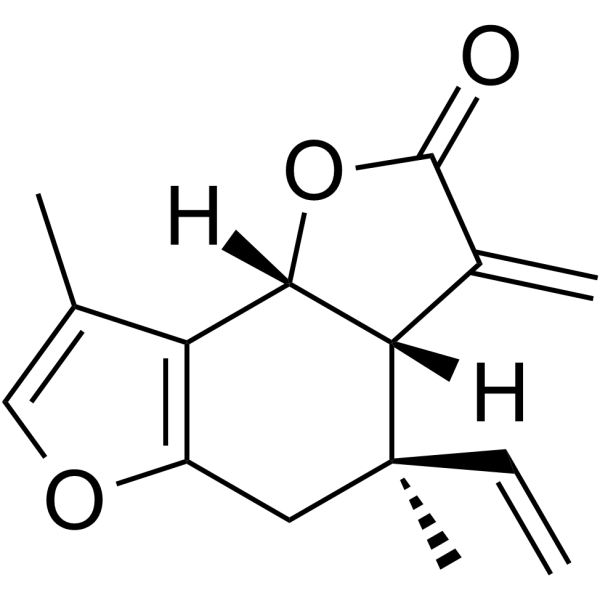
    Isolinderalactone
    1 Publications Verification

    STAT VEGFR Bcl-2 Family Survivin IAP NF-κB Apoptosis Caspase Neurological Disease Inflammation/Immunology Cancer
    Isolinderalactone is a sesquiterpene that exhibits anti-cancer, anti-inflammatory, and neuroprotective effects. Isolinderalactone inhibits VEGF expression and tyrosine phosphorylation of VEGFR2. Isolinderalactone decreases viability and induces apoptosis in U-87 glioblastoma (GBM) cells and colorectal cancer (CRC) cells. Isolinderalactone induces G2/M phase cell cycle arrest, ROS generation, pJNK/p38 MAPK activation, in colorectal cancer (CRC) cells. Isolinderalactone blocks LPS (HY-D1056)-induced NF-κB activation while activating Nrf2-HMOX1 signaling in RAW264.7 macrophages. Isolinderalactone improves cognitive dysfunction in APP/PS1 mice. Isolinderalactone can be used for the study of Glioblastoma multiforme (GBM), colorectal cancer, Alzheimer’s disease and acute lung injury .
    Isolinderalactone
  • HY-108933

    VEGFR FGFR Cancer
    JK-P3 is a potent and pan VEGFR2 inhibitor, with IC50s of 7.83 μM, 27 μM and 5.18 μM for VEGFR2, FGFR1 and FGFR3, respectively. JK-P3 can inhibit VEGF-A-stimulated VEGFR2 activation and intracellular signalling, also inhibits endothelial monolayer wound closure and angiogenesis, as well as fibroblast growth factor receptor kinase activity in vitro. JK-P3 has anti-angiogenic activity .
    JK-P3
  • HY-120200

    VEGFR Cardiovascular Disease Cancer
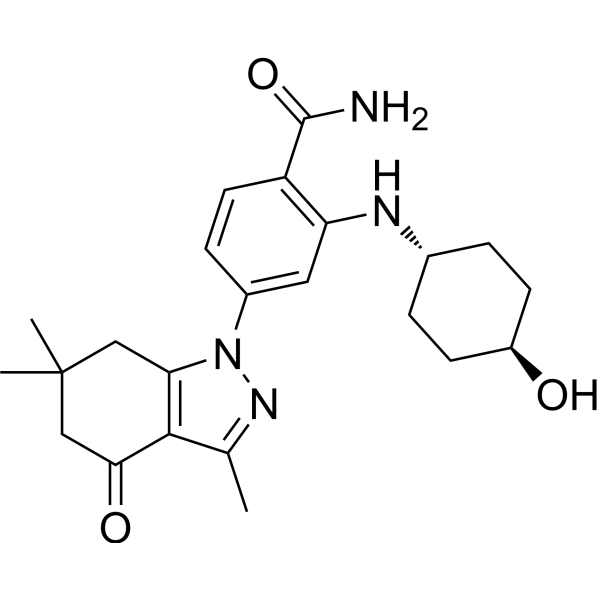
    YF-452 is a potent inhibitor of vascular endothelial growth factor receptor 2 (VEGFR2). YF-452 remarkably inhibits the migration, invasion and tube-like structure formation of human umbilical vein endothelial cells (HUVECs) with little toxicity. YF-452 inhibits VEGF-induced phosphorylation of VEGFR2 kinase and the downstream protein kinases including extracellular signal regulated kinase (ERK), focal adhesion kinase (FAK) and Src. YF-452 is a potential antiangiogenic agent candidate for cancer research .
    YF-452
  • HY-18185

    VEGFR Cancer
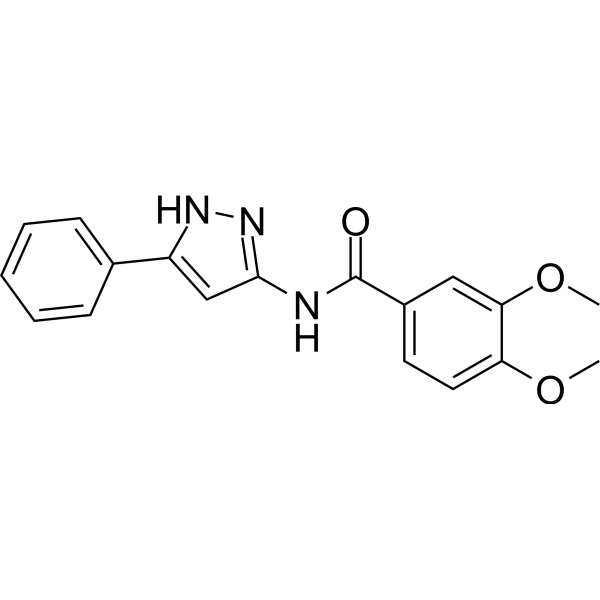
    JNJ 17029259 is an orally active and selective VEGF-R2 kinase inhibitor. JNJ 17029259 inhibits VEGF-mediated signal transduction. JNJ 17029259 has anti-angiogenic activity .
    JNJ 17029259
  • HY-164551

    VEGFR STAT ERK Apoptosis Cancer
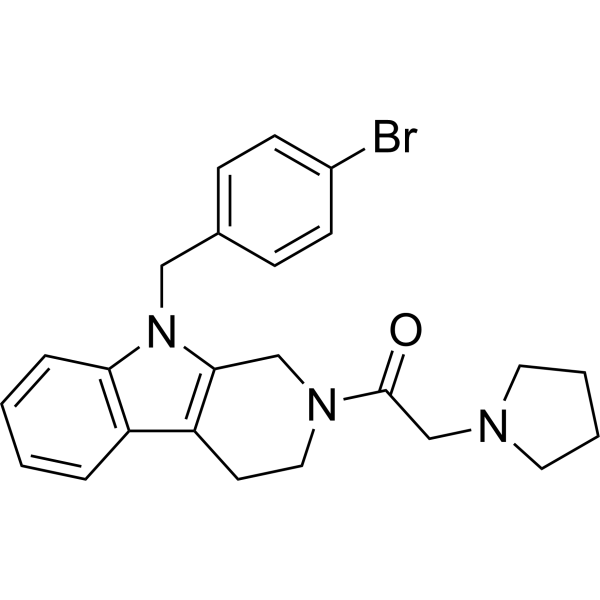
    YLL545 is a type of vascular endothelial growth factor receptor 2 (VEGFR2) inhibitor. YLL545 can inhibit VEGF-induced phosphorylation of VEGFR2 and the activation of downstream signaling factors (like phosphorylated STAT3 and phosphorylated ERK1/2) in human umbilical vein endothelial cells (HUVEC). YLL545 can suppress the proliferation, migration, invasion, and angiogenesis of HUVEC. YLL545 can induce apoptosis in breast cancer mice and inhibit tumor growth .
    YLL545
  • HY-N0876R

    Reference Standards Apoptosis Autophagy PI3K Akt mTOR PARP Caspase Atg8/LC3 Cancer
    Arenobufagin is a natural bufadienolide that can be extracted from toad venom. Arenobufagin can induce apoptosis and autophagy in human hepatocellular carcinoma cells through inhibition of PI3K/Akt/mTOR pathway. Arenobufagin has potent antineoplastic activity against HCC HepG2 cells as well as corresponding multidrug-resistant HepG2/ADM cells. Arenobufagin can inhibit VEGF-mediated angiogenesis through suppression of VEGFR-2 signaling pathway .
    Arenobufagin (Standard)
  • HY-P11198

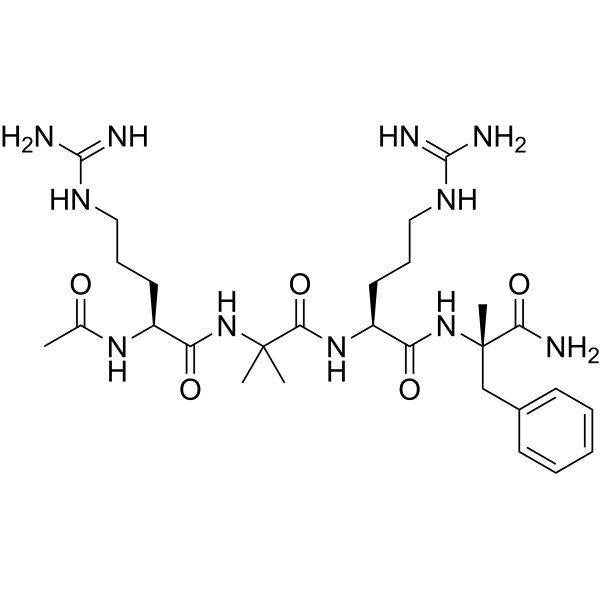
    Apoptosis VEGFR ERK Akt Caspase Bcl-2 Family Cancer
    AC-P19M is an anticancer peptide. AC-P19M induces apoptosis by disrupting the cell membrane of cancer cells. AC-P19M reverses epithelial-mesenchymal transition (EMT). AC-P19M shows anti-angiogenic activity through the inhibition of VEGF-VEGFR2/ERK/Akt signaling. AC-P19M can be used for lung cancer research .
    AC-P19M
  • HY-116452

    VEGFR Cancer
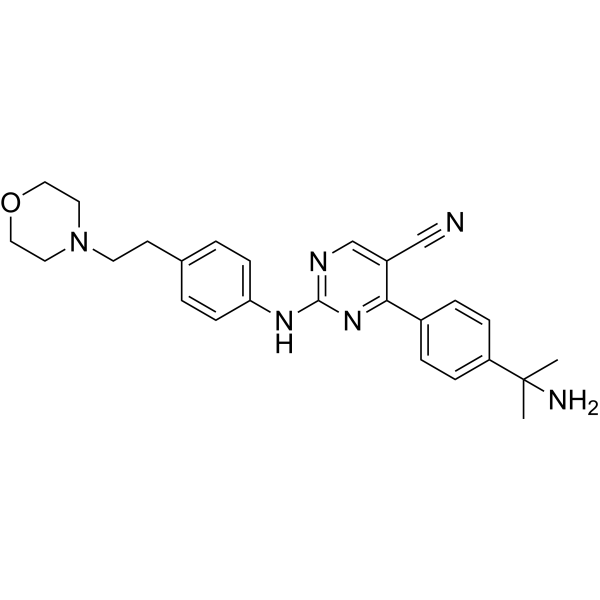
    YLT192 is an orally active and highly bioavailable VEGFR2 inhibitor with potent anti-angiogenic activity and anti-tumor efficacy. YLT192 significantly inhibited the kinase activity of VEGFR2 and inhibited the proliferation, migration, invasion and tube formation of human umbilical cord vascular endothelial cells. YLT192 also inhibited VEGF-induced VEGFR2 phosphorylation and its downstream signaling regulators. YLT192 also showed the ability to inhibit angiogenesis in vivo in zebrafish embryo models and alginate-coated tumor cell experiments. YLT192 can directly inhibit the proliferation of cancer cells and induce their apoptosis .
    YLT192
  • HY-108933R

    Reference Standards VEGFR FGFR Cancer
    JK-P3 (Standard) is the analytical standard of JK-P3 (HY-108933). This product is intended for research and analytical applications. JK-P3 is a potent and pan VEGFR2 inhibitor, with IC50s of 7.83 μM, 27 μM and 5.18 μM for VEGFR2, FGFR1 and FGFR3, respectively. JK-P3 can inhibit VEGF-A-stimulated VEGFR2 activation and intracellular signalling, also inhibits endothelial monolayer wound closure and angiogenesis, as well as fibroblast growth factor receptor Kinase activity in vitro. JK-P3 has anti-angiogenic activity .
    JK-P3 (Standard)
  • HY-135435

    VEGFR PDGFR FGFR Neurological Disease Metabolic Disease Cancer
    SU10944 is a selective, orally active VEGFR inhibitor, with an IC50 of 6 nM against VEGFR-1, an IC50 of 96 nM and a Ki of 21 nM against VEGFR-2. SU10944 only exhibits weak inhibitory activity against PDGFRβ (IC50 = 1 μM), SCFR (IC50 = 1.58 μM) and FGFR-1 (IC50 = 1.6 μM). SU10944 selectively inhibits VEGFR receptor downstream signaling, neovascularization, vascular permeability, VEGF-mediated tissue factor production, and induces tumor growth delay. SU10944 can be used in research related to diabetic retinopathy, exudative age-related macular degeneration or cancer .
    SU10944
  • HY-117733

    Tie VEGFR Cancer
    Zerumin A is an anti-angiogenic agent that acts on multiple molecular targets related to angiogenesis (including kdr/VEGFR2, angpt1, angpt2, tie1, and tie2). Zerumin A specifically inhibits the proliferation and migration of human umbilical vein endothelial cells (HUVECs) by regulating the VEGF-VEGFR and ANGPT-TIE signaling pathways, and dose-dependently inhibits angiogenesis (10-20 μM significantly inhibits zebrafish embryo angiogenesis). Zerumin A can be used in the research of cancer and angiogenesis-related inflammatory diseases. Zerumin A can be naturally extracted from the 95% ethanol extract of the fruits, seeds, and pericarp of Alpinia caerulea (R.Br.) Bentham (a plant of the Alpinia genus in the Zingiberaceae family) .
    Zerumin A

Inquiry Online

Your information is safe with us. * Required Fields.

Salutation


Country or Region *

Applicant Name *


Organization Name *

Department *


Email Address *


Product Name *

Cat. No.


Requested quantity *

Phone Number *


Remarks

Inquiry Online

Inquiry Information

Product Name:
Cat. No.:
Quantity:
MCE Japan Authorized Agent:

