26 Results for "

acetylated histones

" in MedChemExpress (MCE) Product Catalog:
Products (26)

26 Results for "acetylated histones" in MCE Product Catalog:

24
24 Publications Verification
Cat. No.: HY-13032B
CAS No.: 1895049-20-3
Purity:  97.04%
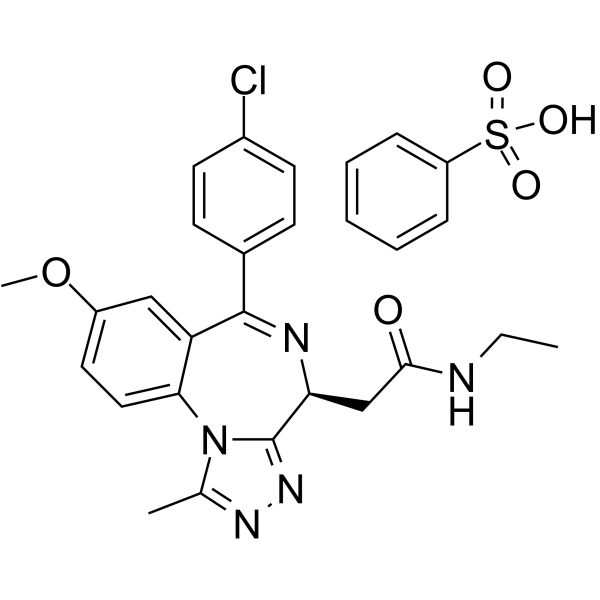
Synonyms: GSK 525762C; I-BET 762 besylate
Research Areas:  

Cancer

Molibresib besylate (GSK 525762C; I-BET 762 besylate) is an orally active pan-BET inhibitor that targets and binds to BRD2, BRD3, BRD4 and BRDT. By competitively occupying acetylated lysine binding sites, Molibresib besylate disrupts the interaction between BET proteins and chromatin, thereby effectively inhibiting MYC expression and target gene transcription. Molibresib besylate exhibits broad antiproliferative activity, which not only inhibits cancer cell growth and induces growth arrest, but also downregulates mitosis-related genes and upregulates the level of p-ERK1/2. When combined with MEK inhibitors, Molibresib besylate shows a significant synergistic effect, reduces tumor burden in mouse models of leukemia, modulates the immune microenvironment and prolongs survival. Molibresib besylate is widely applicable to research related to acute myeloid leukemia, multiple myeloma, triple-negative breast cancer, small-cell lung cancer and various advanced refractory solid tumors .
loading...
    loading...
3
3 Cited Publications
Cat. No.: HY-W015239
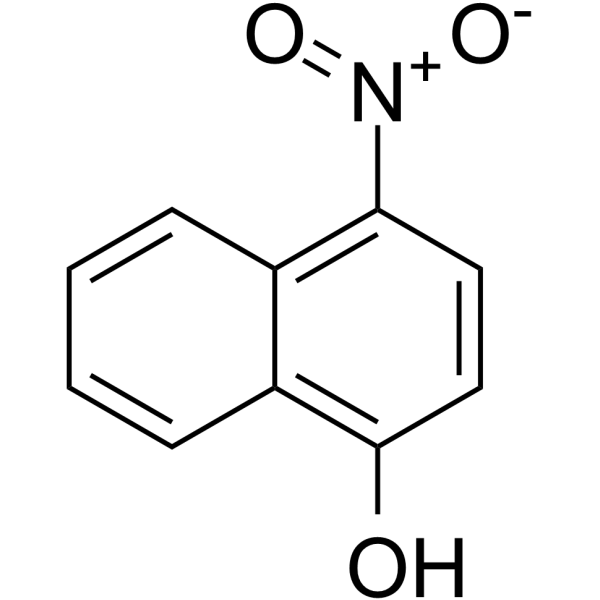
CAS No.: 605-62-9
Target:  

Acyltransferase

Research Areas:  

Inflammation/Immunology Cancer

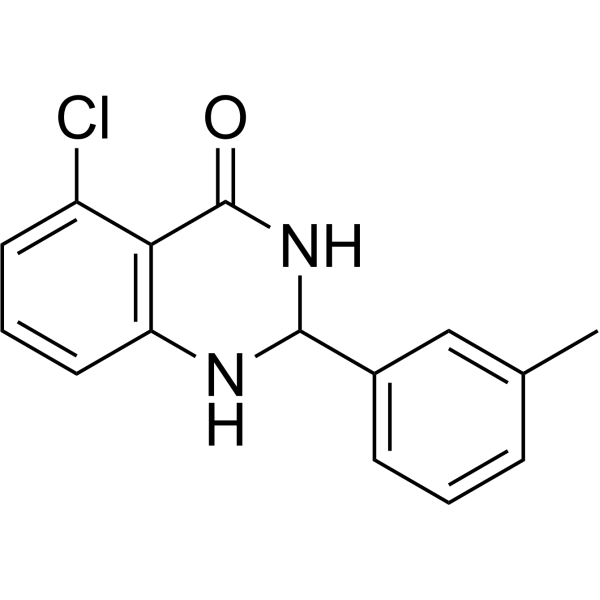
KAT8-IN-1 is a lysine (K) acetyltransferase 8 (KAT8) inhibitor, with IC50s of 141 μM (KAT8), 221 μM (KAT2B), 106 μM (KAT3B), respectively. KAT8 inhibits histone acetyltransferases (HATs), and could result in disease states, such as cancer or inflammatory diseases .
loading...
    loading...
2
2 Cited Publications
Cat. No.: HY-16531
CAS No.: 1311423-89-8
Research Areas:  

Neurological Disease Cancer

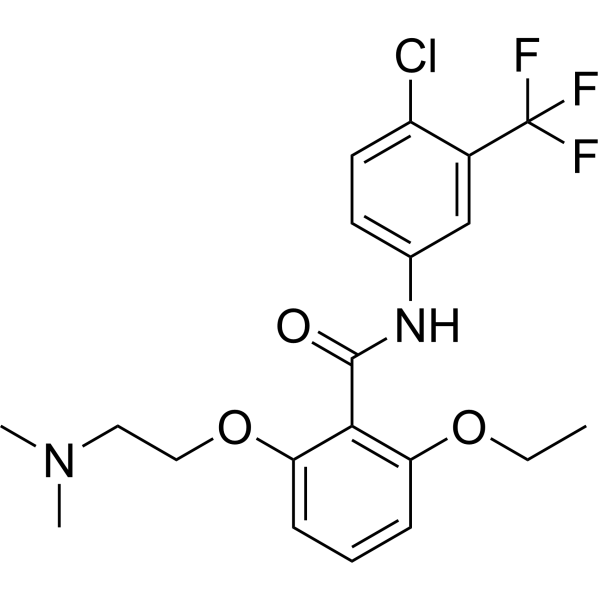
YF-2 is a highly selective, blood-brain-barrier permeable histone acetyltransferase activator, acetylates H3 in the hippocampus, with EC50s of 2.75 μM, 29.04 μM and 49.31 μM for CBP, PCAF, and GCN5, respectively, shows no effect on HDAC. Anti-cancer and anti-Alzheimer's disease .
loading...
    loading...
2
2 Cited Publications
Cat. No.: HY-16531A
CAS No.: 1312005-62-1
Research Areas:  

Neurological Disease Cancer

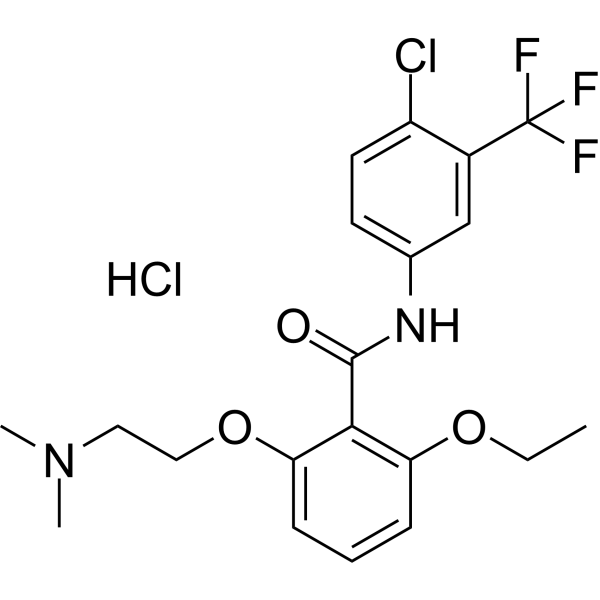
YF-2 hydrochloride is a highly selective, blood-brain-barrier permeable histone acetyltransferase activator, acetylates H3 in the hippocampus, with EC50s of 2.75 μM, 29.04 μM and 49.31 μM for CBP, PCAF, and GCN5, respectively, shows no effect on HDAC. Anti-cancer and anti-Alzheimer's disease .
loading...
    loading...
1
1 Cited Publications
Cat. No.: HY-135115
CAS No.: 31773-95-2
Purity:  95.16%
Synonyms: 3,4-DHPEA-EA
Oleuropein Aglycone (3,4-DHPEA-EA) is a polyphenol and the aglycone form of oleuropein (HY-N0292), formed by enzymatic, acidic or acetylated hydrolysis of oleuropein. Dietary intake of oleuropein Aglycone (50 mg/kg diet) increases the number of neuronal autophagic vesicles, reverses cognitive deficits in the TgCRND8 transgenic mouse model of Alzheimer's disease, and reduces the levels of histone deacetylase 2 (HDAC2) in the cortex and hippocampus. Oleuropein Aglycone increases urinary norepinephrine, interscapular brown adipose tissue epinephrine, and UCP1 protein levels, and reduced plasma leptin levels and total abdominal adipose tissue weight in a rat model of high-fat diet-induced obesity. Oleuropein Aglycone also reduced lung neutrophil infiltration, lipid peroxidation, and IL-1β levels in a mouse model of carrageenan-induced pleurisy.
loading...
    loading...
Cat. No.: HY-145550
CAS No.: 1610044-98-8
Purity:  98.97%
Synonyms: BI894999
Research Areas:  

Cancer

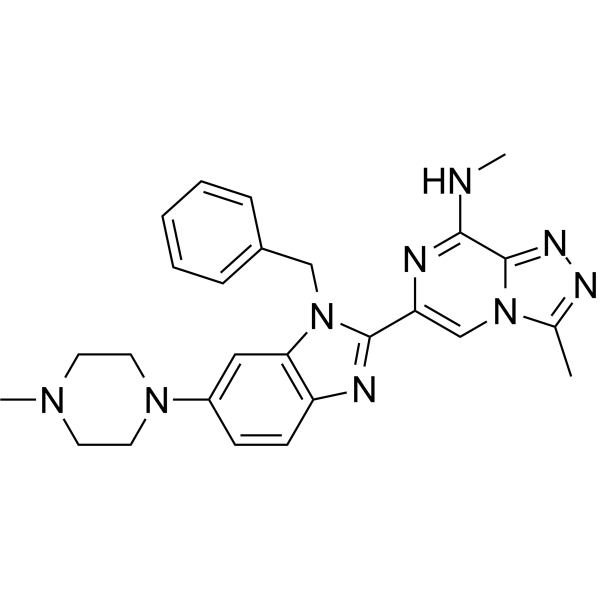
Amredobresib (BI894999) is an orally active BET inhibitor. Amredobresib inhibits the binding of BRD4-BD1 and BRD4-BD2 bromodomains to acetylated histones with IC50 values of 5 nM and 41 nM, respectively. Amredobresib exhibits anticancer activity against acute myeloid leukemia (AML) and NUT cancer .
loading...
    loading...
Cat. No.: HY-132242
CAS No.: 334829-66-2
Purity:  ≥99.0%
Synonyms: SFN-NAC
Research Areas:  

Cancer

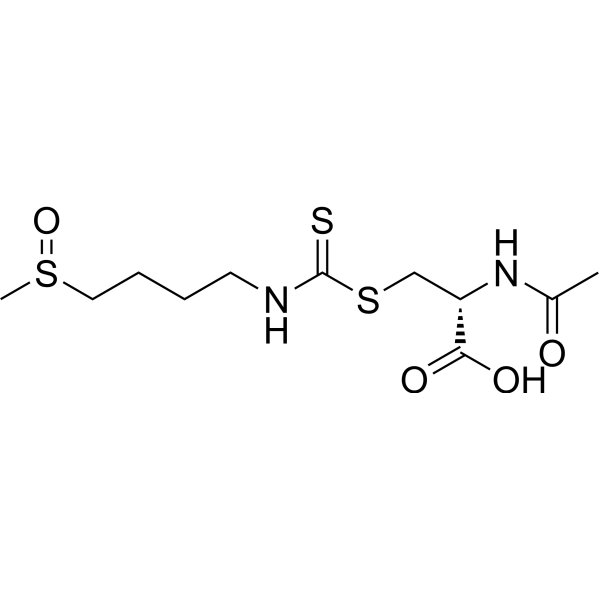
DL-Sulforaphane N-acetyl-L-cysteine (SFN-NAC) is an orally active HDAC inhibitor and metabolite of sulforaphane (HY-13755) with longer half-life and better blood-brain barrier permeability. DL-Sulforaphane N-acetyl-L-cysteine activates autophagy-mediated downregulation of α-tubulin expression through the ERK pathway and can be used in cancer research .
loading...
    loading...
Cat. No.: HY-151532
CAS No.: 2819989-61-0
Purity:  99.75%
Research Areas:  

Cancer

PBRM1-BD2-IN-5 is a potent PBRM1 Bromodomain inhibitor with Kd values of 1.5 μM and 3.9 μM for PBRM1-BD2 and PBRM1-BD5, respectively, and an IC50 value of 0.26 μM for PBRM1-BD2. PBRM1-BD2-IN-5 reduces the binding of full-length PBRM1 within the PBAF complex in cell lysates to acetylated histone peptide. PBRM1-BD2-IN-5 can be used to research anticancer .
loading...
    loading...
Cat. No.: HY-116227
CAS No.: 1808948-28-8
Research Areas:  

Inflammation/Immunology

(2S,3R)-LP99 is a potent and selective BRD7 and BRD9 inhibitor with an KD of 99 nM for BRD9. (2S,3R)-LP99 inhibits the association of BRD7 and BRD9 to acetylated histones in vitro and in cells. (2S,3R)-LP99 demonstrates that BRD7/9 plays a role in regulating pro-inflammatory cytokine secretion .
loading...
    loading...
Cat. No.: HY-171140
Research Areas:  

Cancer

PROTAC HDAC6 degrader 3 is a selective HDAC6 PROTAC degrader with an IC50 of 0.686 μM and shows high selectivity for HDAC6 over HDAC1-4. PROTAC HDAC6 degrader 3 recruits cereblon (CRBN) to trigger HDAC6 ubiquitination and subsequent proteasomal degradation. PROTAC HDAC6 degrader 3 selectively elevates acetylated α-tubulin levels in cancer cells, and does not induce histone H3 hyperacetylation or obvious loss of cell viability. PROTAC HDAC6 degrader 3 is applicable for research on multiple myeloma .
loading...
    loading...
Cat. No.: HY-149669
CAS No.: 3053430-96-6
Purity:  99.29%
Research Areas:  

Cancer

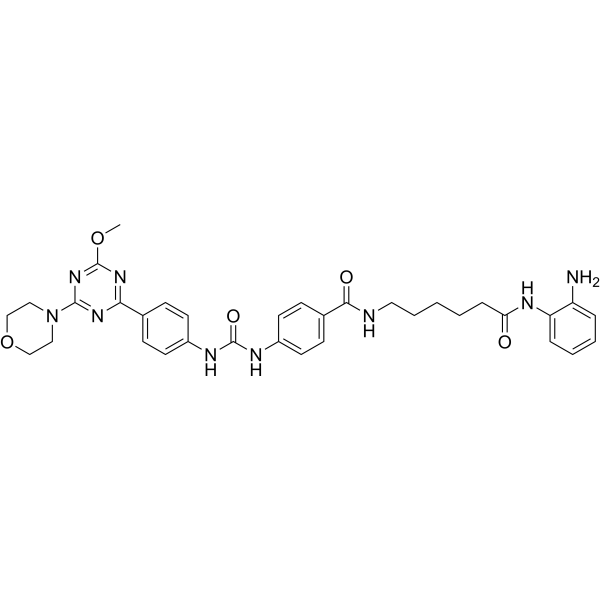
PH14 is a PI3Kα/HDAC3 inhibitor, with an IC50 value of 20.3 nM against PI3Kα and 24.5 nM against HDAC3. PH14 blocks the phosphorylation of AKT, inhibits the PI3K/AKT signaling pathway, increases the level of acetylated histone H3, promotes apoptosis, and exerts antiproliferative activity against tumor cells. PH14 can be used in the research of mantle cell lymphoma, myeloma, acute promyelocytic leukemia, and breast cancer .
loading...
    loading...
Cat. No.: HY-171139
Research Areas:  

Cancer

PROTAC HDAC6 degrader 2 is a non‑hydroxamate selective HDAC6 PROTAC degrader with an IC50 of 0.643 μM and shows high selectivity for HDAC6 over HDAC1-4. PROTAC HDAC6 degrader 2 recruits VHL E3 ubiquitin ligase to trigger HDAC6 ubiquitination and subsequent proteasomal degradation. PROTAC HDAC6 degrader 2 selectively elevates acetylated α-tubulin levels in cancer cells, and does not induce histone H3 hyperacetylation or obvious loss of cell viability. PROTAC HDAC6 degrader 2 is applicable for research on multiple myeloma .
loading...
    loading...
Cat. No.: HY-151531
CAS No.: 2819989-60-9
Research Areas:  

Cancer

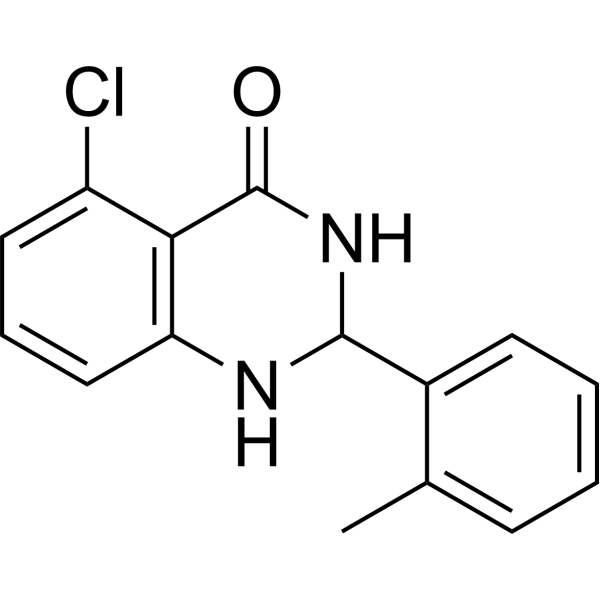
PBRM1-BD2-IN-4 is a PBRM1-BD2 inhibitor with an IC50 of 0.2 μM, and its Kd values for PBRM1-BD2 and PBRM1-BD5 are 5.5 μM and 11.1 μM, respectively. PBRM1-BD2-IN-4 selectively inhibits the proliferation of PBRM1-dependent prostate cancer cells. PBRM1-BD2-IN-4 can be used in studies related to prostate cancer .
loading...
    loading...
Cat. No.: HY-178110
CAS No.: 3028442-70-5
Research Areas:  

Cancer

HDAC6-IN-65 is a selective HDAC6 inhibitor (IC50 = 0.9 nM) and also exhibits a certain suppressive effect on HDAC3 (IC50 = 39.4 nM). HDAC6-IN-65 can induce the accumulation of α-tubulin (ac-tubulin) and acetylated histone H3 (ac-histone H3, a class I HDAC inhibition marker) in Neuro-2a cells. HDAC6-IN-65 can be used for the study of melanoma .
loading...
    loading...
Cat. No.: HY-175671
Research Areas:  

Neurological Disease

LSD1/HDAC-IN-3 is a inhibitor targeting class I HDAC and LSD1 enzymes. LSD1/HDAC-IN-3 inhibits HDAC1, HDAC2, HDAC3, and LSD1 with IC50 values of 1702 nM, 842 nM, 358 nM, and 1074 nM, respectively. LSD1/HDAC-IN-3 exhibits antioxidant effects in H2O2-stressed ARPE-19 and 661W retinal cells, increasing levels of acetylated and methylated histone H3. LSD1/HDAC-IN-3 enhances photoreceptor survival in the rd10 mouse model of retinitis pigmentosa. LSD1/HDAC-IN-3 can be used for the study of inherited retinal diseases such as retinitis pigmentosa (RP) .
loading...
    loading...
Cat. No.: HY-155329
CAS No.: 3032392-65-4
Target:  

HDAC

Research Areas:  

Inflammation/Immunology

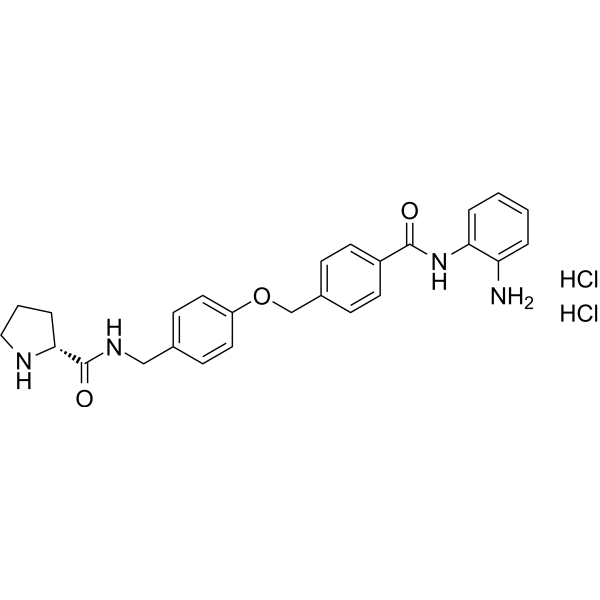
GK718 is a HDAC1/3 inhibitor (IC50: 259 and 139 nM respectively). GK718 increased acetylated histone H3 level in cells. GK718 inhibits Bleomycin (HY-108345) induced pulmonary fibrosis in mice .
loading...
    loading...
Cat. No.: HY-170226
Research Areas:  

Cancer

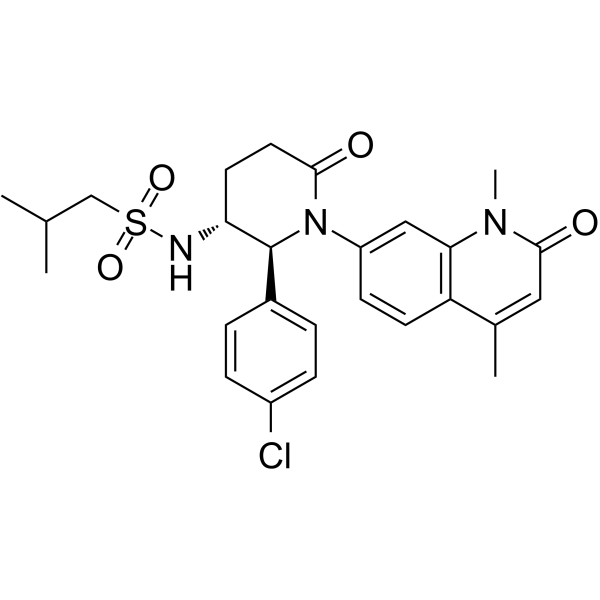
BET-IN-28 (Compound 44) is a highly potent inhibitor of bromodomain and extra-terminal domain (BET), with an IC50 value of 4.47 nM against BRD4-BD1. BET-IN-28 blocks the interaction between BET proteins and N-acetylated lysine residues on histone tails, down-regulates certain genes. BET-IN-28 can be used for hematological malignancies and solid tumors study .
loading...
    loading...
Cat. No.: HY-156091
CAS No.: 3007565-26-3
Target:  

PI3K HDAC

Research Areas:  

Cancer

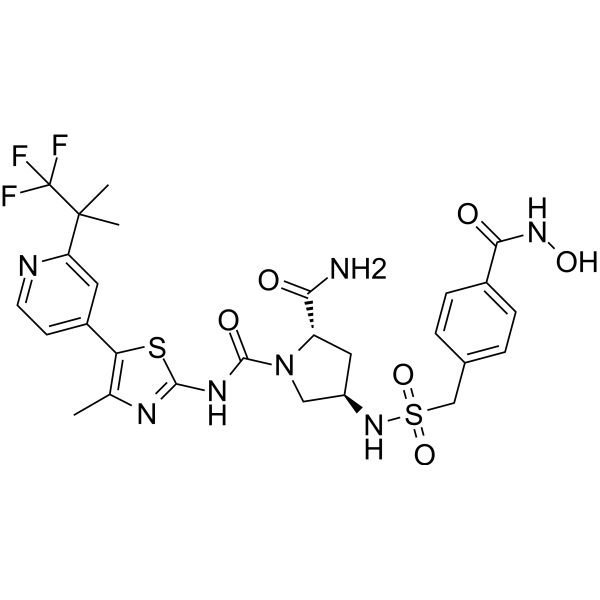
PI3Kα/HDAC6-IN-1 (compound 21j) is a dual PI3Kα/HDAC6 inhibitor with IC50 of 2.9 and 26 nM, respectively. PI3Kα/HDAC6-IN-1 also inhibits AKT(Ser473) phosphorylation and induces the accumulation of acetylated α-tubulin without affecting acetylated histones H3 and H4. PI3Kα/HDAC6-IN-1 efficiently inhibits L-363 cell line (IC50=0.17 μM) and has good anti-cancer activity .
loading...
    loading...
Cat. No.: HY-161710
XYD129 is a CBP/p300 PROTAC degrader. XYD129 potently binds to CBP, p300 and CRBN proteins, with IC50 values of 0.021 μM, 0.03 μM and 0.18 μM, respectively. XYD129 forms a ternary CRBN-CBP/p300 complex and induces CBP/p300 degradation via the ubiquitin-proteasome system. XYD129 inhibits tumor growth and suppresses the proliferation of acute myeloid leukemia cells. XYD129 can be used in studies related to acute myeloid leukemia .
loading...
    loading...
Cat. No.: HY-132242R
CAS No.: 334829-66-2
Synonyms: SFN-NAC (Standard)
Research Areas:  

Cancer

Pipemidic acid (trihydrate) (Standard) is the analytical standard of Pipemidic acid (trihydrate). This product is intended for research and analytical applications. Pipemidic acid trihydrate, a derivative of Piromidic acid, is an antibacterial agent. Pipemidic acid trihydrate inhibits DNA gyrase. Pipemidic acid trihydrate is active against gram-negative bacteria including Pseudomonas aeruginosa as well as some gram-positive bacteria. Pipemidic acid trihydrate can be used for the research of intestinal, urinary, and biliary tract infections .
loading...
    loading...

