18 Results for "

antiarrhythmic compound

" in MedChemExpress (MCE) Product Catalog:
Products (18)

18 Results for "antiarrhythmic compound" in MCE Product Catalog:

Cat. No.: HY-40294
CAS No.: 271-44-3
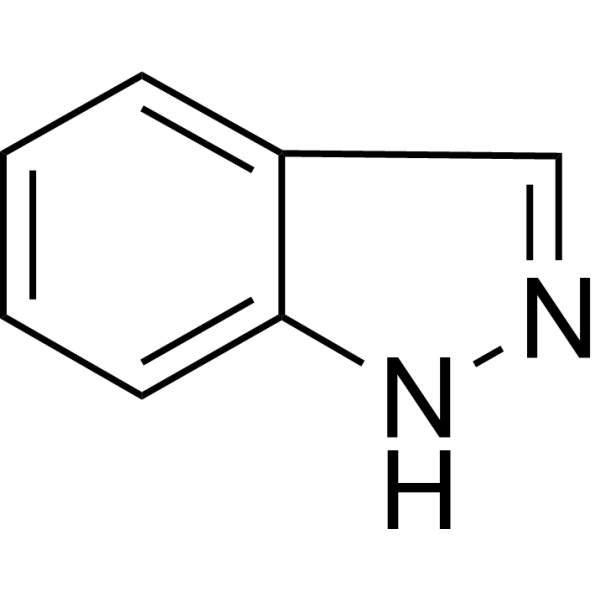
Indazole, also called isoindazole, a heterocyclic aromatic organic compound. Its derivatives display a broad variety of biological activities including anti-inflammatory, antibacterial, anti-HIV, antiarrhythmic, antifungal and antitumour properties. Indazole and its derivatives can be used for research of cancer, neurological disorders, cardiovascular diseases, gastrointestinal diseases .
loading...
    loading...
Cat. No.: HY-124031
CAS No.: 142451-48-7
Purity:  98.98%
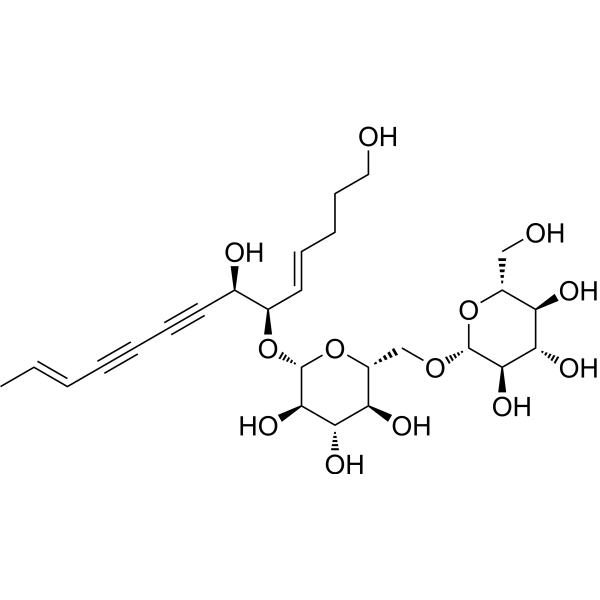
Lobetyolinin is a polyacetylene compound. Lobetyolinin can be extracted from the traditional Chinese medicine Codonopsis pilosula. Lobetyolinin has antiarrhythmic effects. Lobetyolinin can be used in liver cancer research .
loading...
    loading...
Cat. No.: HY-40294R
CAS No.: 271-44-3
Indazole (Standard) is the analytical standard of Indazole. This product is intended for research and analytical applications. Indazole, also called isoindazole, a heterocyclic aromatic organic compound. Its derivatives display a broad variety of biological activities including anti-inflammatory, antibacterial, anti-HIV, antiarrhythmic, antifungal and antitumour properties. Indazole and its derivatives can be used for research of cancer, neurological disorders, cardiovascular diseases, gastrointestinal diseases .
loading...
    loading...
Cat. No.: HY-115839A
CAS No.: 33774-52-6
Synonyms: Detajmium bitartrate; Tachmalcor
Target:  

Sodium Channel

Research Areas:  

Cardiovascular Disease

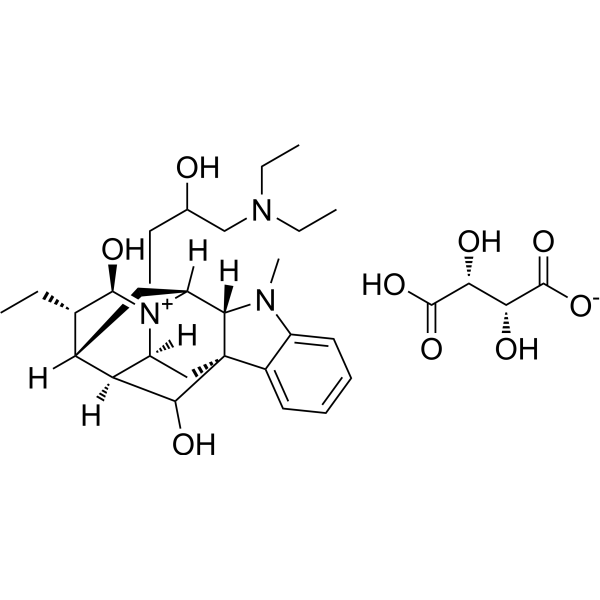
Detajmium (L-tartrate) is an antiarrhythmic compound. Detajmium has effect on V max in both dog ventricular muscle and Purkinje fibers was frequency dependent .
loading...
    loading...
Cat. No.: HY-124176
CAS No.: 85642-08-6
L-6355 is an Amiodarone (HY-14187) related compound, which inhibits Ca 2+/calmodulin activated cyclic nucleotide phosphodiesterase with an IC50 value of 0.65 μM. L-6355 is promising for research of antiarrhythmic and antianginal agent .
loading...
    loading...
Cat. No.: HY-123646
CAS No.: 133775-36-7
Target:  

Others

Research Areas:  

Cardiovascular Disease

RS 2135 is an antiarrhythmic compound that can suppress ischemia-induced ventricular arrhythmias .
loading...
    loading...
Cat. No.: HY-18600B
CAS No.: 1294552-65-0
Synonyms: (E)-NE-10064
Target:  

Potassium Channel

Research Areas:  

Cardiovascular Disease

(E)-Azimilide is an isomer of Azimilide (HY-18600), a class of antiarrhythmic compounds that inhibit I(Ks) and I(Kr) activity .
loading...
    loading...
Cat. No.: HY-105167A
CAS No.: 128995-51-7
Synonyms: E 0471
Target:  

Others

Research Areas:  

Cardiovascular Disease

MW-436 (E 0471) hydrochloride is a benzofuran compound with antiarrhythmic effects. MW-436 hydrochloride can be used for the research of cardiovascular disease .
loading...
    loading...
Cat. No.: HY-19004
CAS No.: 94899-83-9
Target:  

Sodium Channel

Research Areas:  

Cardiovascular Disease

711389-S hydrochloride is an antiarrhythmic compound that demonstrates its antiarrhythmic activity by increasing the ventricular fibrillation threshold (VFT). 711389-S hydrochloride also has strong anti-fibrillation effects and safety, and can be used in the study of ventricular fibrillation and sudden cardiac death. 711389-S hydrochloride also inhibits the sodium current .
loading...
    loading...
Cat. No.: HY-163637
Target:  

Sodium Channel

Research Areas:  

Cardiovascular Disease

Sodium Channel inhibitor 5 (compound 7d) is a potent inhibitor of sodium channel, with the IC50 of 2.7 μM. Sodium Channel inhibitor 5 plays an important role in antiarrhythmic research .
loading...
    loading...
Cat. No.: HY-171782
CAS No.: 90405-00-8
Target:  

Others

Research Areas:  

Cardiovascular Disease

Amidepin is a new type of antiarrhythmic compound. Amidepin has the activity of regulating cardiac electrical activity. The main regulatory mechanism of amidepin involves ion channel or receptor interaction. Amidepin can be used for the study of arrhythmias .
loading...
    loading...
Cat. No.: HY-126704
CAS No.: 90961-53-8
Synonyms: KC-8857
Target:  

Potassium Channel

Research Areas:  

Cardiovascular Disease

Tedisamil (KC-8857) is an antiarrhythmic compound with important biological activities. Tedisamil exhibits a significant slowing effect on heart rate, which is achieved by inhibiting the transient outward potassium current (I(to)) in the atrium. Tedisamil inhibits multiple potassium currents, including IK, K(ATP), and PKA-activated chloride channels, thereby prolonging the cardiac action potential and QT interval, and increasing cardiac reentry. Tedisamil has antiarrhythmic effects on ventricular arrhythmias and atrial flutter in animal models .
loading...
    loading...
Cat. No.: HY-117135
CAS No.: 186086-10-2
Research Areas:  

Cardiovascular Disease

HNS-32 is a compound with antiarrhythmic and vasodilatory effects in canine hearts, showing superior protective effects against ischemic and reperfusion arrhythmias compared to an equivalent dose of Mexiletine hydrochloride (HY-A0093). Furthermore, HNS-32 exhibits significant negative chronotropic effects on mammalian ventricular myocardium, indicating its potential application value in the study of acute coronary syndrome .
loading...
    loading...
Cat. No.: HY-108998
CAS No.: 96480-44-3
Research Areas:  

Cardiovascular Disease

Bisaramil hydrochloride is an antiarrhythmic compound with activity in inhibiting free radical generation. Bisaramil hydrochloride directly blocks sodium currents and exhibits enhanced sodium channel blocking ability. Bisaramil hydrochloride inhibits isoproterenol-induced slow calcium action potentials in cardiomyocytes. Bisaramil hydrochloride reduces heart rate and prolongs the PR, QRS, and QT intervals in the electrocardiogram, showing blocking effects on sodium and potassium channels. Bisaramil hydrochloride reduces cardiac conduction velocity, increases the threshold current for capture and atrial fibrillation, and prolongs the effective refractory period. Bisaramil hydrochloride reduces ventricular arrhythmias and eliminates mortality caused by ventricular fibrillation in ischemic rat hearts .
loading...
    loading...
Cat. No.: HY-169624
CAS No.: 635703-12-7
Target:  

Potassium Channel

Research Areas:  

Cardiovascular Disease

GPV574 is a derivative of the antiarrhythmic compound propafenone, capable of inhibiting HERG channels (IC50 = 5.04 μM).
loading...
    loading...
Cat. No.: HY-15208A
CAS No.: 158751-64-5
Synonyms: HMR 1098 free base
Target:  

Others

Research Areas:  

Others

Clamikalant (HMR 1098 free base) is a compound used to suppress cardiac arrhythmias. It prevents the reduction of the refractory period during ventricular fibrillation in dogs and also shows antiarrhythmic effects in a rabbit heart model.
loading...
    loading...
Cat. No.: HY-126704A
CAS No.: 132523-84-3
Synonyms: KC-8857 dihydrochloride
Target:  

Potassium Channel

Research Areas:  

Cardiovascular Disease

Tedisamil (KC-8857) dihydrochloride is an antiarrhythmic compound with important biological activities. Tedisamil dihydrochloride exhibits a significant slowing effect on heart rate, which is achieved by inhibiting the transient outward potassium current (I(to)) in the atrium. Tedisamil dihydrochloride inhibits multiple potassium currents, including IK, K(ATP), and PKA-activated chloride channels, thereby prolonging the cardiac action potential and QT interval, and increasing cardiac reentry. Tedisamil dihydrochloride has antiarrhythmic effects on ventricular arrhythmias and atrial flutter in animal models .
loading...
    loading...
Cat. No.: HY-119753
CAS No.: 68284-69-5
Synonyms: SC-31828
Target:  

Others

Research Areas:  

Cardiovascular Disease

Disobutamide (SC-31828) is an orally active, blood-brain barrier permeable cationic amphiphilic ditertiary amine piperidine ring compound with antiarrhythmic properties. Disobutamide induces lysosomal phospholipid accumulation, which triggers extensive cytoplasmic vacuolization and leads to cell death. Disobutamide prolongs multiple electrocardiographic intervals in canine hearts, induces cardiac arrest at high doses, and causes decreased retinal reflectivity. Disobutamide can be used in studies related to arrhythmias, and also serves as a model drug for investigating the storage mechanisms and toxicity thresholds of intracellular amphiphilic compounds .
loading...
    loading...
  • 1

