18 Results for "

antiproliferation effects

" in MedChemExpress (MCE) Product Catalog:
Products (18)

18 Results for "antiproliferation effects" in MCE Product Catalog:

13
13 Cited Publications
Cat. No.: HY-B0715
CAS No.: 6493-05-6
Synonyms: BL-191; Oxpentifylline
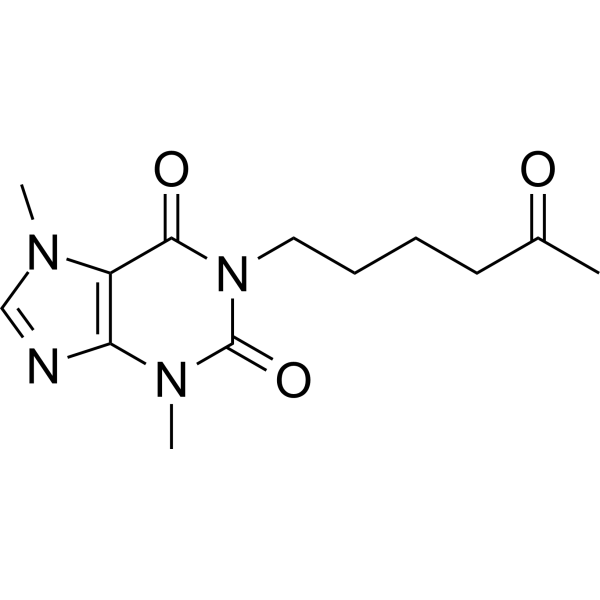
Pentoxifylline (BL-191), a haemorheological agent, is an orally active non-selective phosphodiesterase (PDE) inhibitor, with immune modulation, anti-inflammatory, hemorheological, anti-fibrinolytic and anti-proliferation effects. Pentoxifylline can be used for the research of peripheral vascular disease, cerebrovascular disease and a number of other conditions involving a defective regional microcirculation .
loading...
    loading...
3
3 Cited Publications
Cat. No.: HY-N0189
CAS No.: 481-72-1
Synonyms: Rhabarberone; 3-Hydroxymethylchrysazine
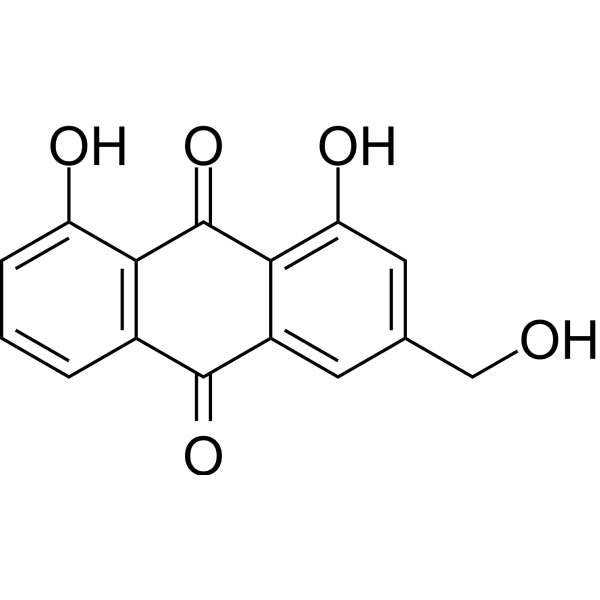
Aloe emodin (Rhabarberone) is a natural hydroxyanthraquinone with antitumor activities. aloe-emodin can bind with mTORC2 and inhibit its kinase activity. Aloe emodin exerts antiproliferation effects and induces cellular apoptosis . Aloe emodin also exhibits antiviral activity that against influenza A virus .
loading...
    loading...
Cat. No.: HY-164995
CAS No.: 2417370-68-2
L1BC8 (compound 13a) is a BRD4 PROTAC degrader with anticancer effects. L1BC8 is also a drug-linker conjugate for ADC that can be used for the synthesis of ADCs. The resulting BRD4-degrader antibody conjugates exhibit potent and antigen-dependent BRD4 degradation and antiproliferation activities in cell-based experiments .
loading...
    loading...
Cat. No.: HY-N0060BS
CAS No.: 860605-59-0
Synonyms: (E)-Coniferic acid-d3
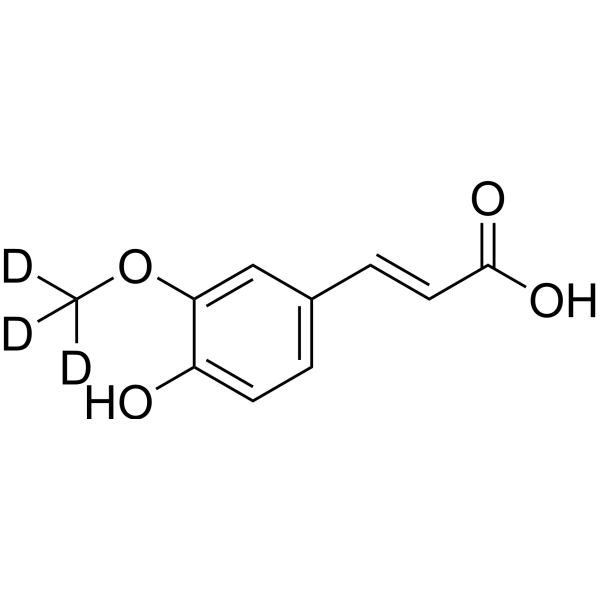
(E)-Ferulic acid-d3 is the deuterium labeled (E)-Ferulic acid. (E)-Ferulic acid is a isomer of Ferulic acid which is an aromatic compound, abundant in plant cell walls. (E)-Ferulic acid causes the phosphorylation of β-catenin, resulting in proteasomal degradation of β-catenin and increases the expression of pro-apoptotic factor Bax and decreases the expression of pro-survival factor survivin. (E)-Ferulic acid shows a potent ability to remove reactive oxygen species (ROS) and inhibits lipid peroxidation. (E)-Ferulic acid exerts both anti-proliferation and anti-migration effects in the human lung cancer cell line H1299 .
loading...
    loading...
Cat. No.: HY-B0715S2
CAS No.: 1185995-18-9
Synonyms: BL-191-d5; Oxpentifylline-d5
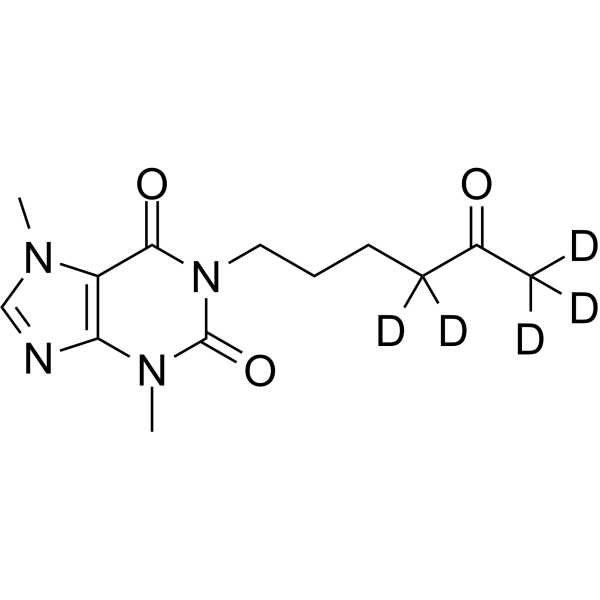
Pentoxifylline-d5 is the deuterium labeled Pentoxifylline. Pentoxifylline (BL-191), a haemorheological agent, is an orally active non-selective phosphodiesterase (PDE) inhibitor, with immune modulation, anti-inflammatory, hemorheological, anti-fibrinolytic and anti-proliferation effects. Pentoxifylline can be used for the research of peripheral vascular disease, cerebrovascular disease and a number of other conditions involving a defective regional microcirculation .
loading...
    loading...
Cat. No.: HY-N3940
CAS No.: 38990-03-3
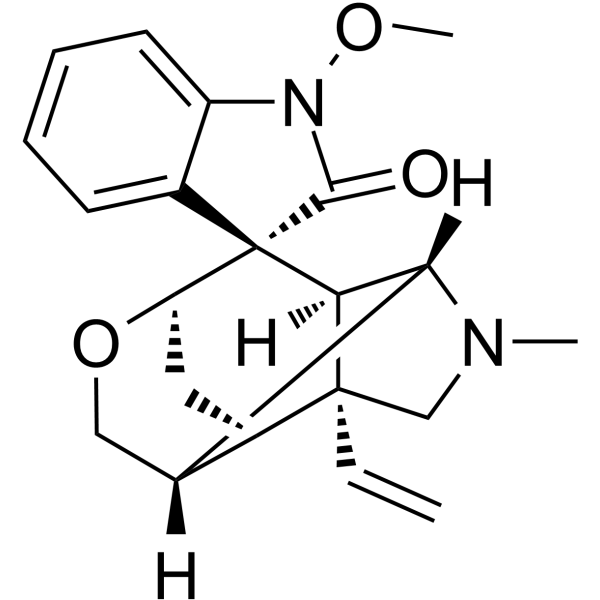
Gelsevirine is the major alkaloid in Gelsemium elegans with potent anxiolytic effects. The anxiolytic mechanism of Gelsevirine may be involved in the agonist action of the glycine receptor in the brain. Gelsevirine has anti-proliferation activity with IC50 values of 1.41 mM and 1.22 mM for SW480 cells and MGC80-3 cells, respectively .
loading...
    loading...
Cat. No.: HY-101990
CAS No.: 1031206-36-6
Purity:  99.81%
Target:  

VEGFR

Research Areas:  

Others

IMS2186 is an anti-choroidal neovascularization (CNV) agent that inhibits angiogenesis upstream of VEGF. IMS2186 can arrest cancer cell cycle in G2/M phase, thus exerting anti-proliferation and anti-angiogenesis effects. IMS2186 has no intraocular toxicity and reduces the amount of eye leakage and diseased cells .
loading...
    loading...
Cat. No.: HY-116015
CAS No.: 21061-10-9
Purity:  98.00%
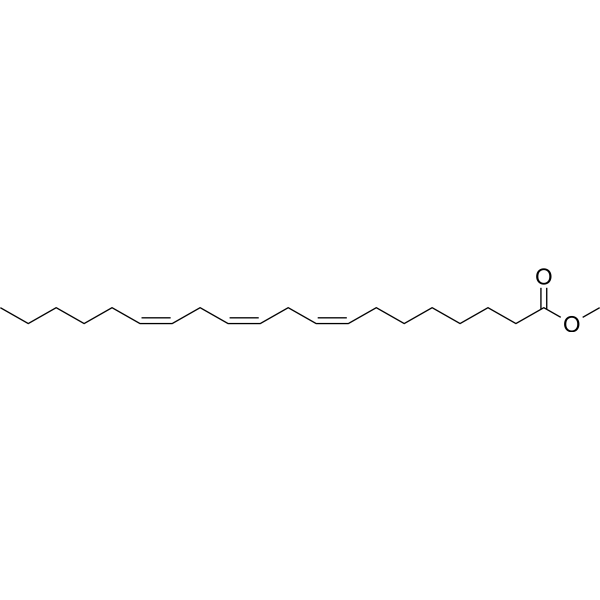
Dihomo-γ-Linolenic acid methyl ester is the methyl ester form of Dihomo-γ-Linolenic Acid (DGLA) (HY-A0143). Dihomo-γ-Linolenic acid is an n-6 polyunsaturated fatty acid that is metabolized mainly through the cyclooxygenase (COX) pathway to the anti-inflammatory eicosanoid prostaglandin (PG) E1. Dihomo-γ-Linolenic acid has anti-inflammatory and antiproliferation effects .
loading...
    loading...
Cat. No.: HY-156292
CAS No.: 3018914-66-1
Research Areas:  

Cancer

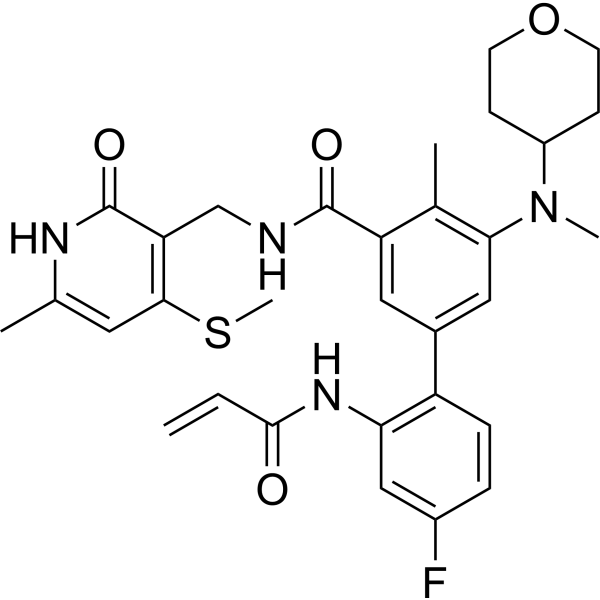
IHMT-EZH2-426 (compound 38) is an effective covalent EZH2 degrader, with IC50 values of 1.3 nM, 1.2 nM, and 1.7-3.5 nM for EZH2 wild type, EZH2-A687V, and EZH2-Y641F/Y641N/Y641S, respectively. IHMT-EZH2-426 reduces H3K27me3 and EZH2 levels and shows effective anti-proliferative effects in B-cell lymphoma and TNBC cell lines.
loading...
    loading...
Cat. No.: HY-B0715S
CAS No.: 1185878-98-1
Synonyms: BL-191-d6; Oxpentifylline-d6
Pentoxifylline-d6 is the deuterium labeled Pentoxifylline. Pentoxifylline (BL-191), a haemorheological agent, is an orally active non-selective phosphodiesterase (PDE) inhibitor, with immune modulation, anti-inflammatory, hemorheological, anti-fibrinolytic and anti-proliferation effects. Pentoxifylline can be used for the research of peripheral vascular disease, cerebrovascular disease and a number of other conditions involving a defective regional microcirculation .
loading...
    loading...
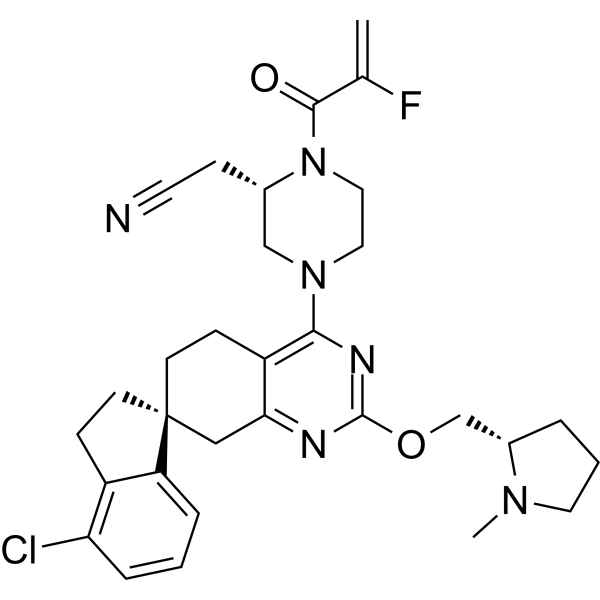
Cat. No.: HY-142946
CAS No.: 2927439-07-2
Target:  

Ras

Research Areas:  

Cancer

KRAS G12C inhibitor 44 (compound 54) is a potent and orally active KRAS G12C inhibitor. KRAS G12C inhibitor 44 shows anti-proliferation activities with IC50s of 0.016, 0.028 µM in MIA PaCA-2, H358 cells, respectively. KRAS G12C inhibitor 44 shows antitumor effects in vivo .
loading...
    loading...
Cat. No.: HY-B0715R
CAS No.: 6493-05-6
Synonyms: BL-191 (Standard); Oxpentifylline (Standard)
Pentoxifylline (Standard) is the analytical standard of Pentoxifylline. This product is intended for research and analytical applications. Pentoxifylline (BL-191), a haemorheological agent, is an orally active non-selective phosphodiesterase (PDE) inhibitor, with immune modulation, anti-inflammatory, hemorheological, anti-fibrinolytic and anti-proliferation effects. Pentoxifylline can be used for the research of peripheral vascular disease, cerebrovascular disease and a number of other conditions involving a defective regional microcirculation .
loading...
    loading...
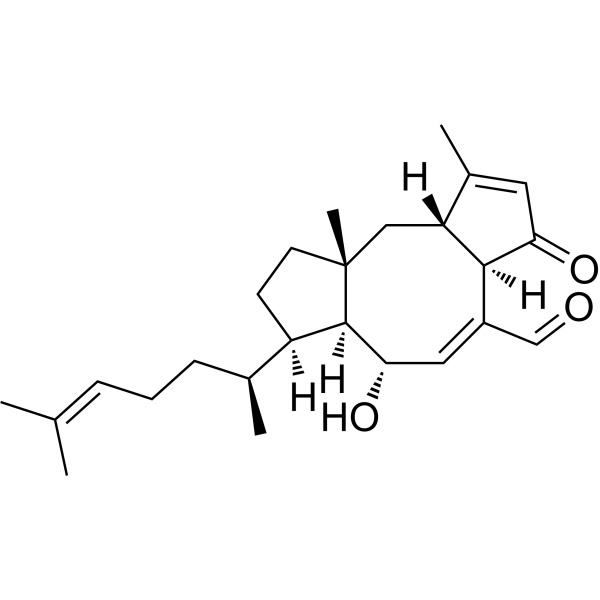
Cat. No.: HY-N12617
Bipolaricin R (Compound 6) is a compound that can be isolated from Bipolaris maydis. Bipolaricin R exhibits noticeable antimicrobial ability against Bacillus cereus, Staphylococcus aureus, and Staphylococcus epidermidis. Bipolaricin R has excellent antiproliferation and apoptosis induction effects against A549 cell line .
loading...
    loading...
Cat. No.: HY-129236
CAS No.: 13289-18-4
Target:  

Na+/K+ ATPase Apoptosis

Research Areas:  

Cancer

Hellebrin is a bufadienolide compound extracted from plants that can inhibit tumor cell growth. Hellebrigenin shows potential in overcoming cancer cells' resistance to apoptosis stimuli and has also demonstrated anti-proliferation effects in multidrug-resistant (MDR) cancer cell models. Hellebrin can act on Na+/K+-ATPase to regulate intracellular signaling pathways .
loading...
    loading...
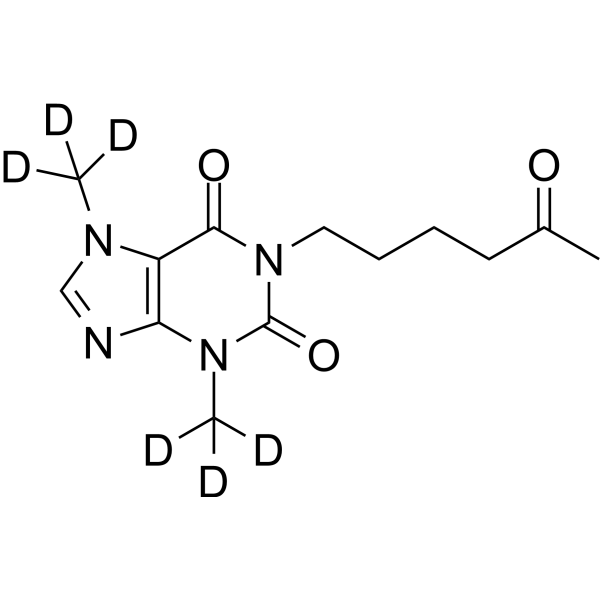
Cat. No.: HY-B0715S3
CAS No.: 1185878-97-0
Synonyms: BL-191-d3; Oxpentifylline-d3
Pentoxifylline-d3 (BL-191-d3) is deuterium labeled Pentoxifylline. Pentoxifylline (BL-191), a haemorheological agent, is an orally active non-selective phosphodiesterase (PDE) inhibitor, with immune modulation, anti-inflammatory, hemorheological, anti-fibrinolytic and anti-proliferation effects. Pentoxifylline can be used for the research of peripheral vascular disease, cerebrovascular disease and a number of other conditions involving a defective regional microcirculation .
loading...
    loading...
Cat. No.: HY-W814315
CAS No.: 1256577-71-5
Synonyms: CH5424802 analog; RO5424802 analog; RG7853 analog
Research Areas:  

Cancer

Alectinib analog (CH5424802 analog) is a selective ALK inhibitor with activity in blocking resistance gating mutations. The synthetic optimization of alectinib analog allows it to be combined with specific peptides to improve the ability to target cancer cells. Alectinib analog exhibits low micromolar IC50 values in antiproliferation and shows good cytotoxic effects. The inhibitory activity of alectinib analog is closely related to its stability and release of active ingredients. Alectinib analog demonstrated the ability to inhibit vascular septal length or width in an in vivo zebrafish model .
loading...
    loading...
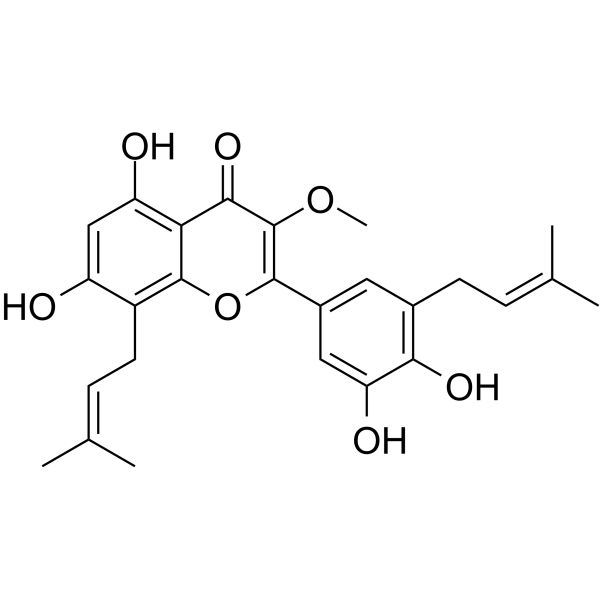
Cat. No.: HY-N9174
CAS No.: 1353676-65-9
5,7,3',4'-Tetrahydroxy-3-methoxy-8,5'-diprenylflavone is a natural product that can be extracted from B. papyrifera. 5,7,3',4'-Tetrahydroxy-3-methoxy-8,5'-diprenylflavone has potent anti-proliferation effects on ER-positive breast cancer cells, with an IC50 value of 4.41 μM for MCF-7 cells. 5,7,3',4'-Tetrahydroxy-3-methoxy-8,5'-diprenylflavone also reduces the tumor growth in the BCAP-37 xenograft .
loading...
    loading...
Cat. No.: HY-167237
CAS No.: 20304-47-6
Calactin is a glycoside that can be isolated from Asclepias curassavica L.. Calactin activates caspase-3, caspase-8, caspase-9, and phosphorylates ERK. Calactin induces DNA damage, apoptosis, PARP cleavage, G2/M phase cell cycle arrest, shifts Bax/Bcl-2 expression, and shows anti-proliferation effects in leukemia cells. Calactin can be used for the research of leukemia .
loading...
    loading...
  • 1

