1. Search Result
Search Result
Results for "

broad-spectrum antimicrobial antibiotic

" in MedChemExpress (MCE) Product Catalog:

69

Inhibitors & Agonists

1

Bibliotecas de Screening

14

Natural
Products

9

Isotope-Labeled Compounds

Targets Recommended:
Cat. No. Nombre del producto Target Áreas de investigación Chemical Structure
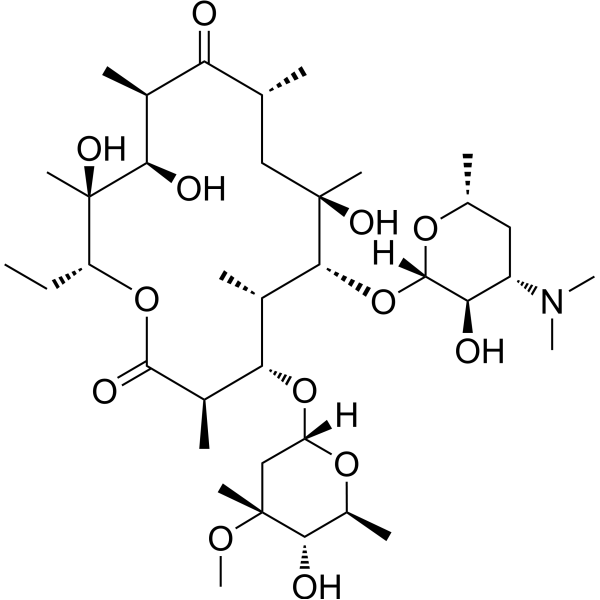
  • HY-B0220
    Erythromycin
    Maximum Cited Publications
    24 Publications Verification

    Bacterial Antibiotic DNA/RNA Synthesis Infection Cancer
    Erythromycin is a macrolide antibiotic produced by actinomycete?Streptomyces erythreus?with a broad spectrum of antimicrobial activity. Erythromycin binds to bacterial 50S ribosomal subunits and inhibits?RNA-dependent protein synthesis?by blockage of transpeptidation and/or translocation reactions, without affecting synthesis of nucleic acid [1][2]. Erythromycin also exhibits antitumor and neuroprotective effect in different fields of research [3][4].
    Erythromycin
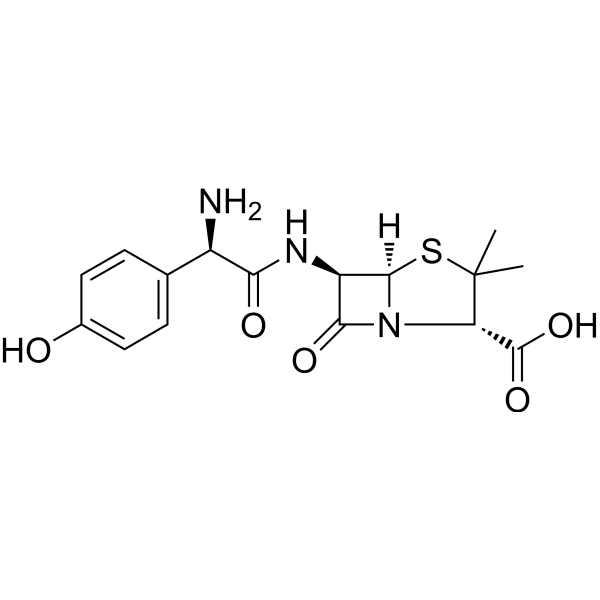
  • HY-B0467A
    Amoxicillin
    20+ Cited Publications

    Amoxycillin

    Bacterial Antibiotic Infection Cancer
    Amoxicillin (Amoxycillin) is an antibiotic with good oral absorption and broad spectrum antimicrobial activity. Amoxicillin inhibits the biosynthesis of polypeptides in the cell wall, thereby inhibiting cell growth .
    Amoxicillin
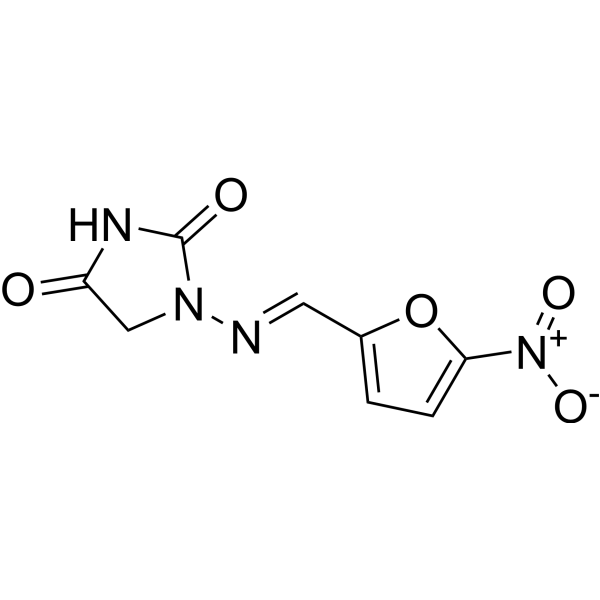
  • HY-A0090
    Nitrofurantoin
    5+ Cited Publications

    Bacterial Antibiotic Infection
    Nitrofurantoin is a potent and orally active broad-spectrum beta-lactamase antimicrobial agent. Nitrofurantoin acts as an antibiotic and can be used for the study of urinary tract infections (UTIs), including cystitis and kidney infections .
    Nitrofurantoin
  • HY-B0479

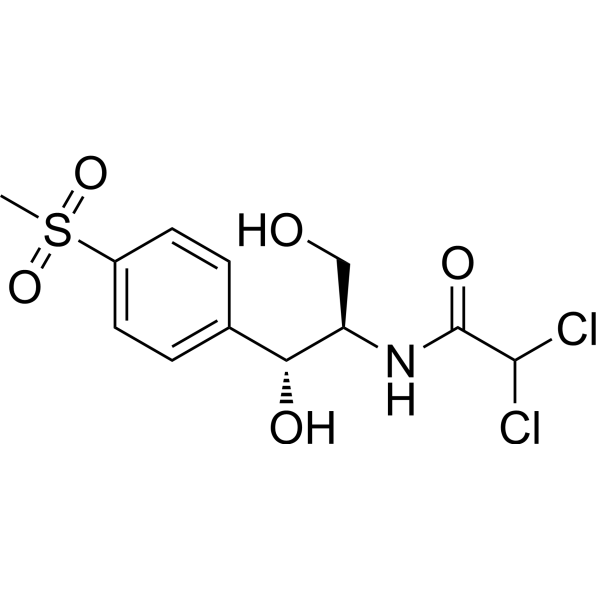
    Thiophenicol; Dextrosulphenidol

    Beta-lactamase Bacterial Antibiotic Infection
    Thiamphenicol (Thiophenicol), a methyl-sulfonyl derivative of Chloramphenicol, is a broad-spectrum antimicrobial antibiotic. Thiamphenicol acts by binding to the 50S ribosomal subunit, leading to inhibition of protein synthesis and bacteriostatic effect (against Gram-negative, Gram-positive aerobic and anaerobic bacteria) .
    Thiamphenicol
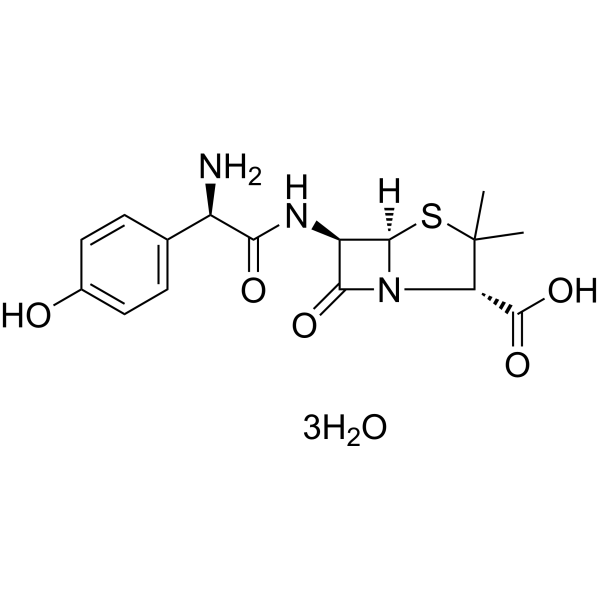
  • HY-B0467B
    Amoxicillin trihydrate
    20+ Cited Publications

    Amoxycillin trihydrate

    Bacterial Antibiotic Infection Cancer
    Amoxicillin (Amoxycillin) trihydrateis an antibiotic with good oral absorption and broad spectrum antimicrobial activity. Amoxicillin trihydrateis inhibits the biosynthesis of polypeptides in the cell wall, thereby inhibiting cell growth .
    Amoxicillin trihydrate
  • HY-B0467S

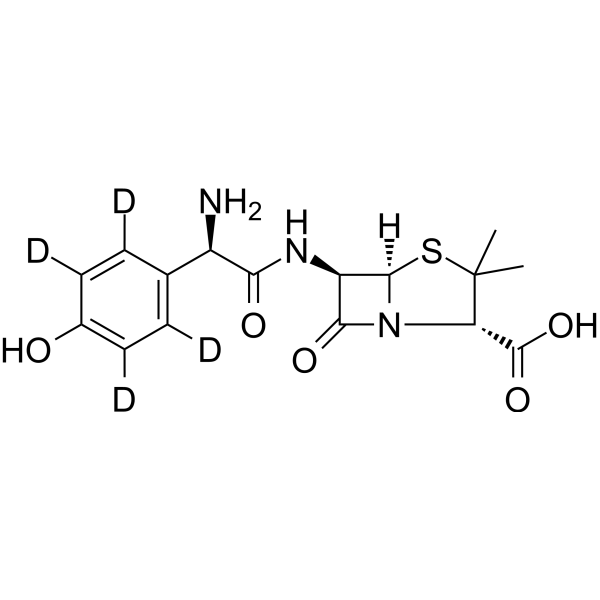
    Amoxycillin d4

    Isotope-Labeled Compounds Bacterial Antibiotic Infection
    Amoxicillin-d4 is a deuterium labeled Amoxicillin. Amoxicillin is an antibiotic with good oral absorption and broad spectrum antimicrobial activity .
    Amoxicillin-d4
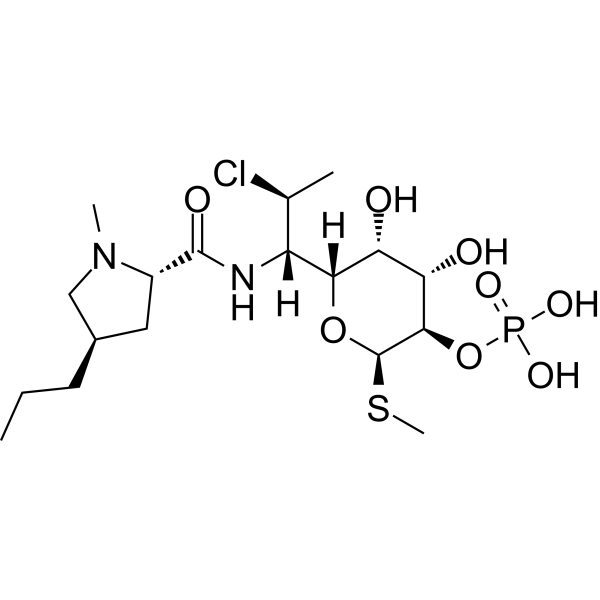
  • HY-B1064
    Clindamycin phosphate
    4 Publications Verification

    Clindamycin 2-phosphate; U-28508

    Bacterial Antibiotic Parasite Infection Cancer
    Clindamycin phosphate (Clindamycin 2-phosphate) is a broad-spectrum bacteriostatic lincosamide antibiotic. Clindamycin phosphate is the proagent of Clindamycin (HY-B1455) with no antimicrobial activity in vitro but can be rapidly converted in vivo to the active parent agent, Clindamycin, by phosphatase ester hydrolysis. Clindamycin phosphate can be used for researching acne and bacterial vaginosis . Clindamycin phosphate has no cytotoxicity. Combined with platelet rich fibrin (PRF), PRF-Clindamycin phosphate enhances antimicrobial properties .
    Clindamycin phosphate
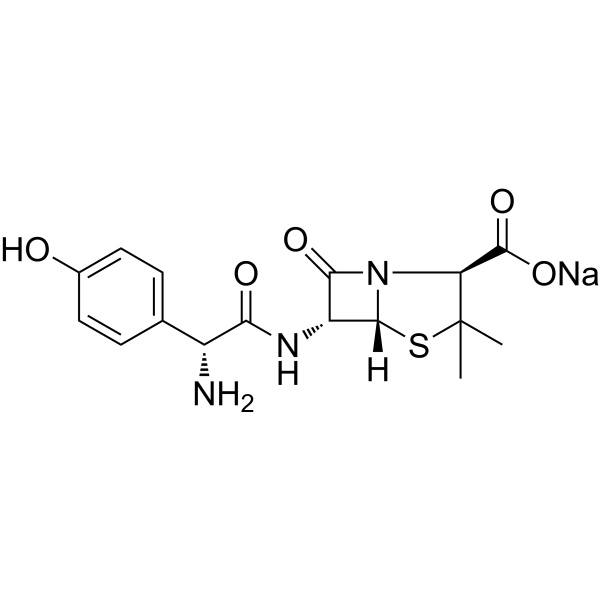
  • HY-B0467
    Amoxicillin sodium
    20+ Cited Publications

    Amoxycillin sodium

    Bacterial Antibiotic Infection Cancer
    Amoxicillin (Amoxycillin) sodium is an antibiotic with good oral absorption and broad spectrum antimicrobial activity. Amoxicillin sodium inhibits the biosynthesis of polypeptides in the cell wall, thereby inhibiting cell growth .
    Amoxicillin sodium
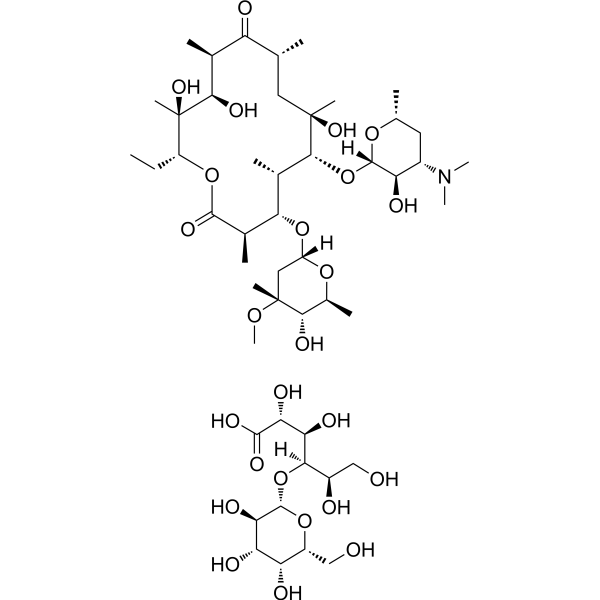
  • HY-B0220A
    Erythromycin lactobionate
    Maximum Cited Publications
    24 Publications Verification

    Antibiotic Bacterial DNA/RNA Synthesis Infection Cancer
    Erythromycin lactobionate is a macrolide antibiotic produced by actinomycete Streptomyces erythreus with a broad spectrum of antimicrobial activity. Erythromycin lactobionate binds to bacterial 50S ribosomal subunits and inhibits RNA-dependent protein synthesis by blockage of transpeptidation and/or translocation reactions, without affecting synthesis of nucleic acid [1][2]. Erythromycin lactobionate also exhibits antitumor and neuroprotective effect in different fields of research [3][4].
    Erythromycin lactobionate
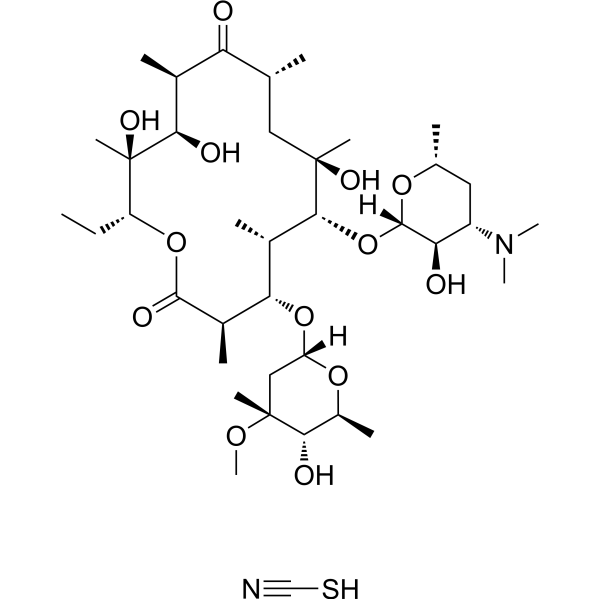
  • HY-B0220D
    Erythromycin thiocyanate
    Maximum Cited Publications
    24 Publications Verification

    Bacterial Antibiotic DNA/RNA Synthesis Infection Cancer
    Erythromycin thiocyanate is a macrolide antibiotic produced by actinomycete Streptomyces erythreus with a broad spectrum of antimicrobial activity. Erythromycin thiocyanate binds to bacterial 50S ribosomal subunits and inhibits RNA-dependent protein synthesis by blockage of transpeptidation and/or translocation reactions, without affecting synthesis of nucleic acid [1][2]. Erythromycin thiocyanate also exhibits antitumor and neuroprotective effect in different fields of research [3][4].
    Erythromycin thiocyanate
  • HY-128423
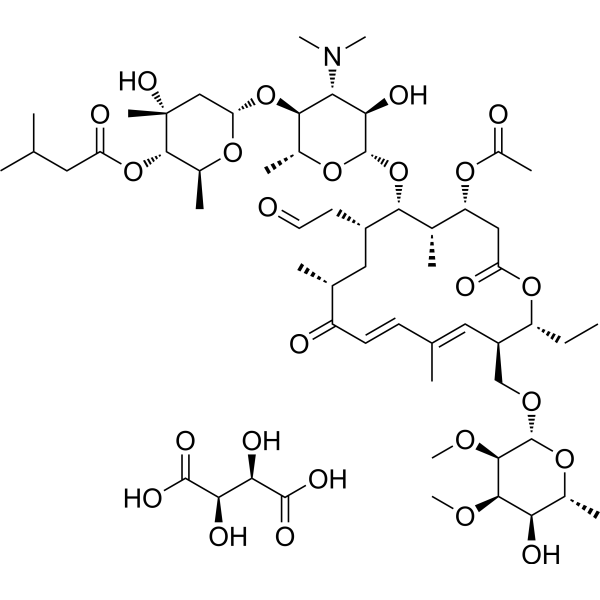
    Tylvalosin tartrate
    2 Publications Verification

    Acetylisovaleryltylo​sin tartrate

    Antibiotic Bacterial NF-κB Apoptosis Infection Inflammation/Immunology
    Tylvalosin (Acetylisovaleryltylosin) tartrate is an orally active, broad-spectrum macrolide antibiotic with antimicrobial activity. Tylvalosin tartrate is an antiviral agent useful in studying PRRSV infection. Tylvalosin tartrate induces apoptosis. Tylvalosin tartrate also has anti-inflammatory activity, relieves oxidative stress, and alleviates acute lung injury by inhibiting NF-κB activation .
    Tylvalosin tartrate
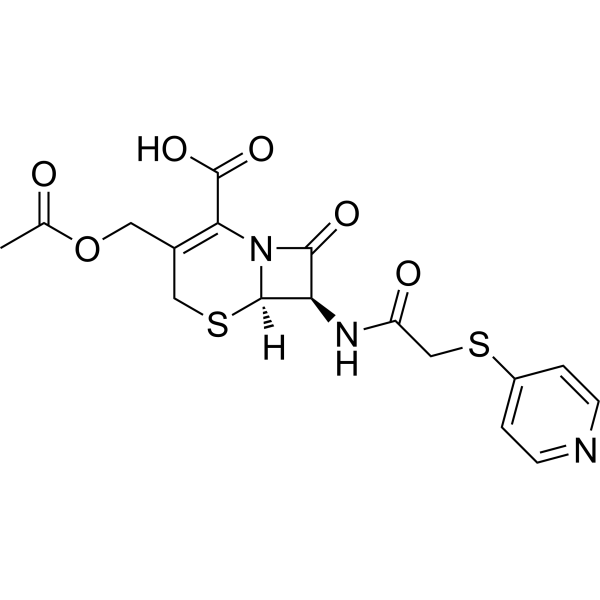
  • HY-A0153A

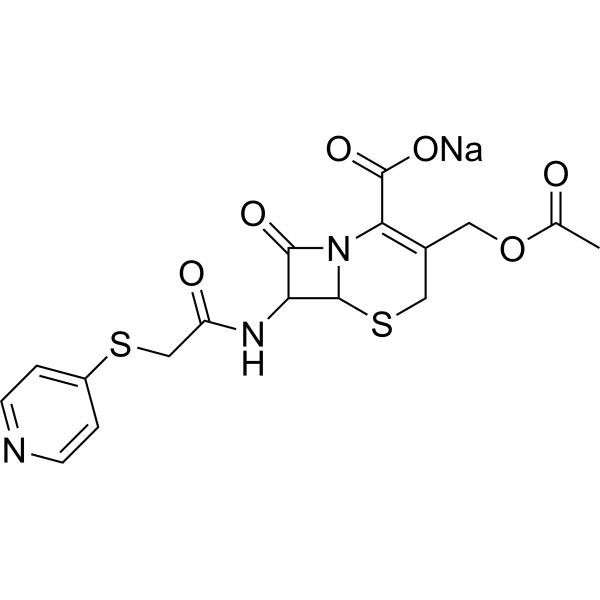
    Cefapirin sodium

    Bacterial Antibiotic Infection
    Cephapirin sodium (Cefapirin sodium) is an ephalosporin antibiotic with broad-spectrum antimicrobial activity .
    Cephapirin sodium
  • HY-128423A
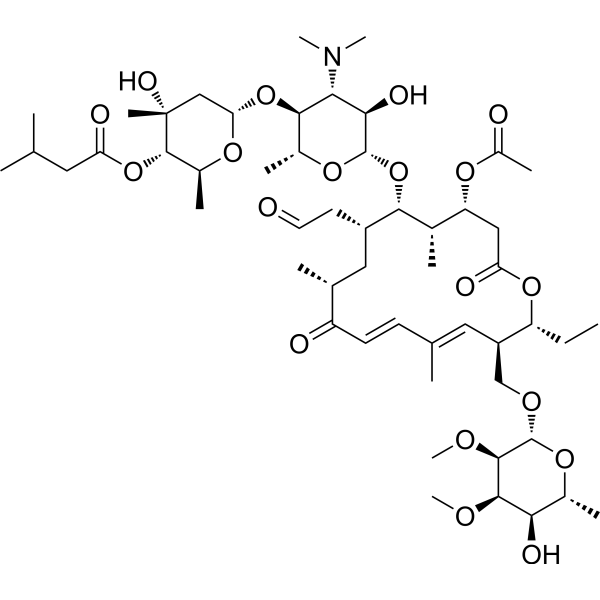
    Tylvalosin
    2 Publications Verification

    Acetylisovaleryltylo​sin

    Antibiotic Bacterial NF-κB Apoptosis Infection Inflammation/Immunology Cancer
    Tylvalosin (Acetylisovaleryltylo?sin) is an orally active, broad-spectrum macrolide antibiotic with antimicrobial activity. Tylvalosin is an antiviral agent used to study PRRSV infection. Tylvalosin induces apoptosis. Tylvalosin also has anti-inflammatory activity, alleviates oxidative stress, and alleviates acute lung injury by inhibiting NF-κB activation .
    Tylvalosin
  • HY-B1300

    Antibiotic Bacterial Beta-lactamase Interleukin Related Infection
    Cefonicid sodium is a long-acting cephalosporin antibiotic. Cefonicid sodium also acts as a noncompetitive class I β-lactamase inhibitor with a Ki value of 0.8 μM. Cefonicid sodium exhibits broad-spectrum antimicrobial activity and is effective against a variety of Gram-positive and Gram-negative bacteria. Cefonicid sodium can be used for research on infections .
    Cefonicid sodium
  • HY-100589
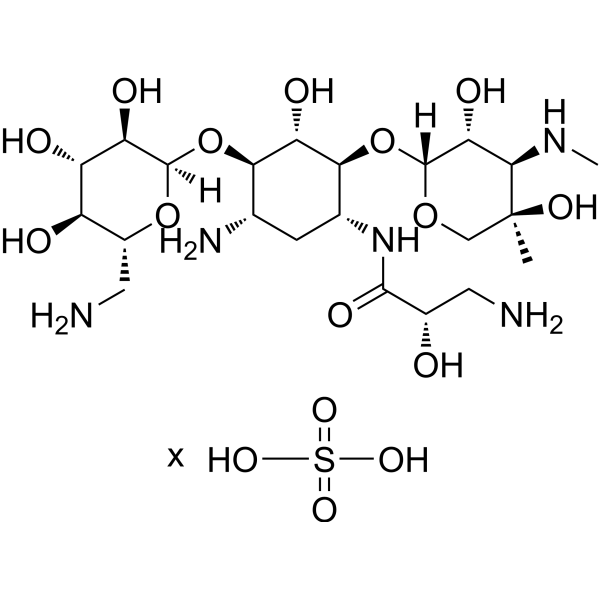
    Isepamicin sulfate
    1 Publications Verification

    Sch 21420 sulfate

    Antibiotic Bacterial Infection Cardiovascular Disease Neurological Disease Metabolic Disease
    Isepamicin sulfate (Sch 21420 sulfate) is a broad-spectrum aminoglycoside antibiotic. Isepamicin sulfate has considerable antimicrobial activity against some Gram-negative non-fermenting bacteria that are highly resistant to antibiotics. Isepamicin sulfate inhibits writhing reactions induced by Acetic acid (HY-Y0319), regulates vascular blood flow and blood pressure, and inhibits spontaneous uterine movements. Isepamicin sulfate has antidiuretic and blood sugar-raising effects. Isepamicin sulfate can be used in seizure research .
    Isepamicin sulfate
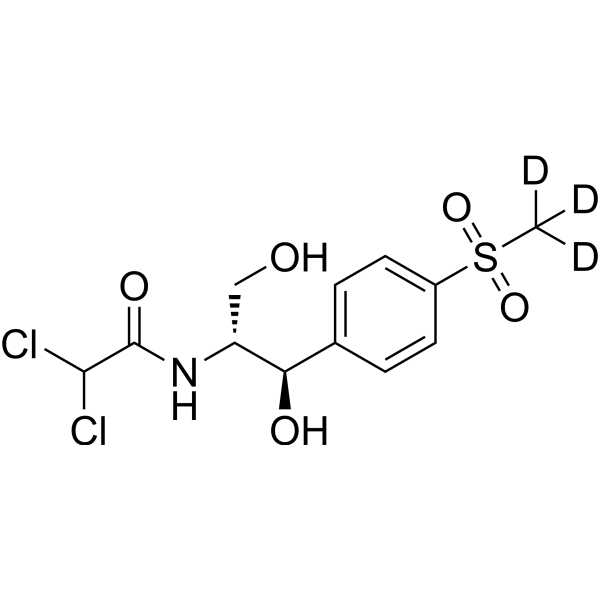
  • HY-B0479S

    Thiophenicol-d3; Dextrosulphenidol-d3

    Isotope-Labeled Compounds Bacterial Antibiotic Infection
    Thiamphenicol-d3 is a deuterium labeled Thiamphenicol. Thiamphenicol, a methyl-sulfonyl derivative of Chloramphenicol, is a broad-spectrum antimicrobial antibiotic. Thiamphenicol acts by binding to the 50S ribosomal subunit, leading to inhibition of protein synthesis and bacteriostatic effect (against Gram-negative, Gram-positive aerobic and anaerobic bacteria) .
    Thiamphenicol-d3
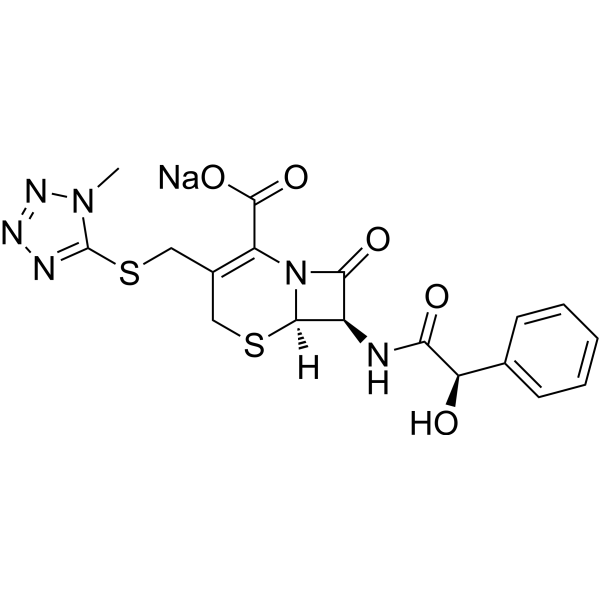
  • HY-B1128A

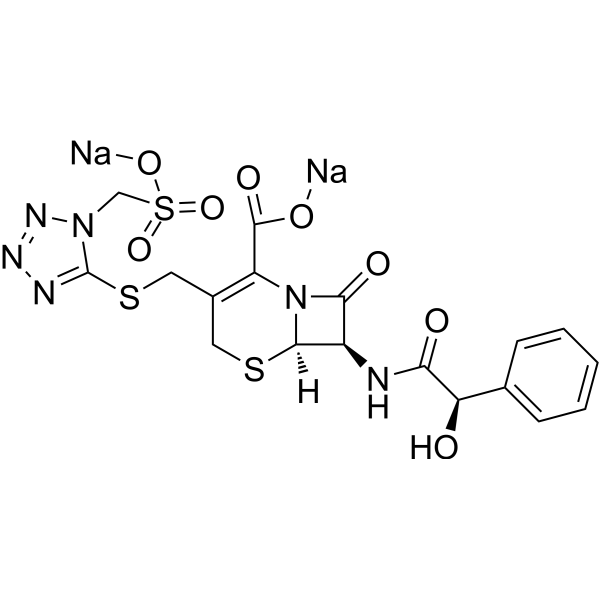
    Cephamandole sodium

    Antibiotic Bacterial Infection
    Cefamandole (Cephamandole) sodium is a semi-synthetic second-generation cephalosporin antibiotic with broad-spectrum antimicrobial activity. Cefamandole sodium is resistant to hydrolysis by β-lactamases produced by some Gram-negative bacteria. Cefamandole sodium kills Gram-positive cocci and various Gram-negative bacilli mainly by inhibiting cell wall synthesis, but it is inactive against Pseudomonas, Proteus vulgaris and Providencia stuartii, and its efficacy is affected by inoculum size. The plasma elimination half-life of Cefamandole sodium in rats is only 0.4 h, it is mainly excreted in urine in biologically active form, and it hardly penetrates the non-inflamed blood-brain barrier. Cefamandole sodium is widely used in studies related to bacterial infections .
    Cefamandole sodium
  • HY-A0153

    Cefapirin

    Antibiotic Bacterial Infection
    Cephapirin (Cefapirin) is an ephalosporin antibiotic with broad-spectrum antimicrobial activity .
    Cephapirin
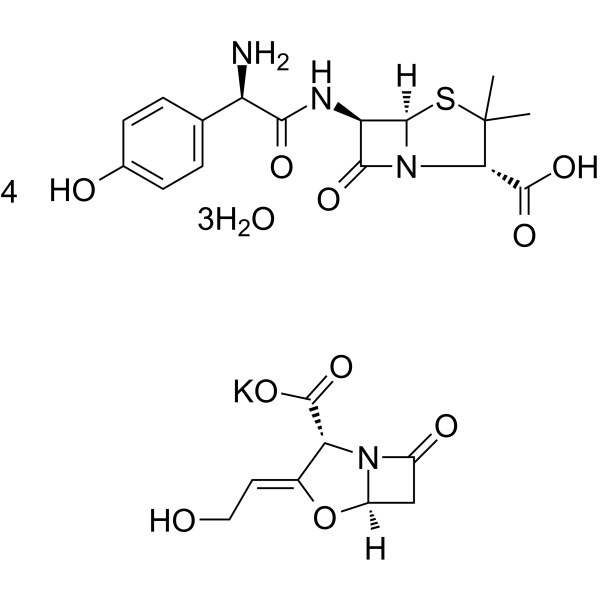
  • HY-131165

    Antibiotic Bacterial Infection Cancer
    Amoxicillin (trihydrate) mixture with potassium clavulanate (4:1) an antibiotic with good oral absorption and broad spectrum antimicrobial activity. Amoxicillin (trihydrate) mixture with potassium clavulanate (4:1) inhibits the biosynthesis of polypeptides in the cell wall, thereby inhibiting cell growth .
    Amoxicillin trihydrate mixture with potassium clavulanate (4:1)
  • HY-B0220S1

    Isotope-Labeled Compounds Bacterial Antibiotic Infection
    Erythromycin- 13C,d3 is the 13C- and deuterium labeled Erythromycin. Erythromycin is a macrolide antibiotic produced by actinomycete?Streptomyces erythreus?with a broad spectrum of antimicrobial activity. Erythromycin acts by binding to bacterial 50S ribosomal subunits and inhibits?RNA-dependent protein synthesis?by blockage of transpeptidation and/or translocation reactions, without affecting synthesis of nucleic acid .
    Erythromycin-13C,d3
  • HY-A0090R

    Reference Standards Bacterial Antibiotic Infection
    Nitrofurantoin (Standard) is the analytical standard of Nitrofurantoin. This product is intended for research and analytical applications. Nitrofurantoin is a potent and orally active broad-spectrum beta-lactamase antimicrobial agent. Nitrofurantoin acts as an antibiotic and can be used for the study of urinary tract infections (UTIs), including cystitis and kidney infections .
    Nitrofurantoin (Standard)
  • HY-121473

    Antibiotic Bacterial Fungal Parasite Infection
    Aklavin is a structural analog of Aclacinomycin A (HY-N2306) produced by Streptomyces strain A 1165. Aklavin possesses Z-DNA-inducing and stabilizing activities, along with antibiotic, anti-phage and broad-spectrum antimicrobial activities. Aklavin inhibits the proliferation of various viruses (such as influenza virus and poliovirus) and interferes with their nucleoprotein synthesis, while also exhibiting inhibitory effects on staphylococci, mycobacteria and specific fungi. Aklavin blocks phage-induced bacterial lysis by regulating host-parasite interactions. Aklavin shows specific toxicity to fertilized eggs and mice, and does not alter the splicing of the SMN2 gene .
    Aklavin
  • HY-B0220S2

    Bacterial DNA/RNA Synthesis Antibiotic Infection
    Erythromycin-d3 is the deuterium labeled Erythromycin . Erythromycin is a macrolide antibiotic produced by actinomycete Streptomyces erythreus with a broad spectrum of antimicrobial activity. Erythromycin binds to bacterial 50S ribosomal subunits and inhibits RNA-dependent protein synthesis by blockage of transpeptidation and/or translocation reactions, without affecting synthesis of nucleic acid. Erythromycin also exhibits antitumor and neuroprotective effect in different fields of research .
    Erythromycin-d3
  • HY-B0479R

    Thiophenicol (Standard); Dextrosulphenidol (Standard)

    Beta-lactamase Reference Standards Bacterial Antibiotic Infection
    Thiamphenicol (Standard) is the analytical standard of Thiamphenicol. This product is intended for research and analytical applications. Thiamphenicol (Thiophenicol), a methyl-sulfonyl derivative of Chloramphenicol, is a broad-spectrum antimicrobial antibiotic. Thiamphenicol acts by binding to the 50S ribosomal subunit, leading to inhibition of protein synthesis and bacteriostatic effect (against Gram-negative, Gram-positive aerobic and anaerobic bacteria) .
    Thiamphenicol (Standard)
  • HY-N16374

    Antibiotic Bacterial Fungal Infection Cancer
    Mazethramycin B (Compound II) is an antitumor antibiotic. Mazethramycin B can be isolated from the Streptomyces thioluteusM ME561-L4. Mazethramycin B has a broad-spectrum antimicrobial activity (such as MICs of 1.56 and 6.25 μg/mL for the bacteria Bacillus subtilis PCI 219 and the fungus Candida pseudotropicalis, resepectively). Mazethramycin B significantly increases survival in L1210 leukemia mice model .
    Mazethramycin B
  • HY-A0153R

    Cefapirin (Standard)

    Reference Standards Antibiotic Bacterial Infection
    Cephapirin (Standard) is the analytical standard of Cephapirin. This product is intended for research and analytical applications. Cephapirin (Cefapirin) is an ephalosporin antibiotic with broad-spectrum antimicrobial activity .
    Cephapirin (Standard)
  • HY-A0090S

    Isotope-Labeled Compounds Antibiotic Bacterial Others
    Nitrofurantoin- 13C3 is the 13C labeled Nitrofurantoin (HY-A0090) . Nitrofurantoin is a potent and orally active broad-spectrum beta-lactamase antimicrobial agent. Nitrofurantoin acts as an antibiotic and can be used for the study of urinary tract infections (UTIs), including cystitis and kidney infections .
    Nitrofurantoin-13C3
  • HY-106922

    GV104326

    Antibiotic Bacterial Infection
    Sanfetrinem (GV104326) is a β-lactamase-stable antibiotic. Sanfetrinem has broad-spectrum antimicrobial activity against both Gram-positive and Gram-negative bacteria .
    Sanfetrinem
  • HY-A0035

    Antibiotic Bacterial Infection
    Faropenem is a potent and orally active beta-lactam antibiotic. Faropenem demonstrates broad-spectrum in vitro antimicrobial activity against many gram-positive and -negative aerobes and anaerobes. Faropenem is resistant to hydrolysis by nearly all beta-lactamases, including extended-spectrum beta-lactamases and AmpC beta-lactamases. Faropenem is developed as an oral proagent, faropenem medoxomil, for the research of respiratory tract infections .
    Faropenem
  • HY-B0467BR

    Amoxycillin trihydrate (Standard)

    Reference Standards Bacterial Antibiotic Infection
    Amoxicillin (trihydrate) (Standard) is the analytical standard of Amoxicillin (trihydrate). This product is intended for research and analytical applications. Amoxicillin (Amoxycillin) trihydrateis an antibiotic with good oral absorption and broad spectrum antimicrobial activity. Amoxicillin trihydrateis inhibits the biosynthesis of polypeptides in the cell wall, thereby inhibiting cell growth .
    Amoxicillin trihydrate (Standard)
  • HY-B0220B

    Antibiotic Bacterial Infection Cancer
    Erythromycin gluceptate is a macrolide antibiotic produced by actinomycete Streptomyces erythreus with a broad spectrum of antimicrobial activity. Erythromycin gluceptate binds to bacterial 50S ribosomal subunits and inhibits RNA-dependent protein synthesis by blockage of transpeptidation and/or translocation reactions, without affecting synthesis of nucleic acid [1][2]. Erythromycin gluceptate also exhibits antitumor and neuroprotective effect in different fields of research [3][4].
    Erythromycin (gluceptate)
  • HY-B1128

    Cephamandole

    Antibiotic Bacterial Infection
    Cefamandole (Cephamandole) is a semi-synthetic second-generation cephalosporin antibiotic with broad-spectrum antimicrobial activity. Cefamandole is resistant to hydrolysis by β-lactamases produced by some Gram-negative bacteria. Cefamandole kills Gram-positive cocci and various Gram-negative bacilli mainly by inhibiting cell wall synthesis, but it is inactive against Pseudomonas, Proteus vulgaris and Providencia stuartii, and its efficacy is affected by inoculum size. The plasma elimination half-life of Cefamandole in rats is only 0.4 h, it is mainly excreted in urine in biologically active form, and it hardly penetrates the non-inflamed blood-brain barrier. Cefamandole is widely used in studies related to bacterial infections .
    Cefamandole
  • HY-167256

    Antibiotic Bacterial Infection
    Gentamicin C1 is a broad-spectrum aminoglycoside antibiotic with antimicrobial activity .
    Gentamicin C1
  • HY-B0455B

    SC47111A (aspartate); NY-198 (aspartate)

    Bacterial Antibiotic Infection
    Lomefloxacin (SC47111A) aspartate is a broad-spectrum quinolone antibiotic, with antimicrobial activity. Lomefloxacin aspartate can be used for researching respiratory tract infections, genitourinary infections, gastrointestinal infections, ENT infections, etc. .
    Lomefloxacin (aspartate)
  • HY-12824

    Antibiotic Bacterial Infection
    RNPA1000, an antibiotic, is a potent RnpA inhibitor and inhibits RnpA-mediated cellular RNA degradation. RNPA1000 inhibits tRNA maturation with an IC50 of 175 μM. RNPA1000 displays broad-spectrum antimicrobial activities and inhibits staphylococcal and all Gram-positive bacterial pathogens activity .
    RNPA1000
  • HY-B0467AS

    Amoxycillin-13C6

    Isotope-Labeled Compounds Bacterial Antibiotic Infection
    Amoxicillin- 13C6 is the 13C6 labeled Amoxicillin. Amoxicillin is an antibiotic with good oral absorption and broad spectrum antimicrobial activity.
    Amoxicillin-13C6
  • HY-B0467C

    Amoxycillin arginine

    Antibiotic Bacterial Infection Cancer
    Amoxicillin (Amoxycillin) arginine is an antibiotic with good oral absorption and broad spectrum antimicrobial activity. Amoxicillin arginine inhibits the biosynthesis of polypeptides in the cell wall, thereby inhibiting cell growth .
    Amoxicillin arginine
  • HY-B0467AR

    Amoxycillin (Standard)

    Reference Standards Bacterial Antibiotic Infection Cancer
    Amoxicillin (Standard) is the analytical standard of Amoxicillin. This product is intended for research and analytical applications. Amoxicillin (Amoxycillin) is an antibiotic with good oral absorption and broad spectrum antimicrobial activity. Amoxicillin inhibits the biosynthesis of polypeptides in the cell wall, thereby inhibiting cell growth .
    Amoxicillin (Standard)
  • HY-B0467R

    Amoxycillin sodium (Standard)

    Reference Standards Bacterial Antibiotic Infection Cancer
    Amoxicillin (sodium) (Standard) is the analytical standard of Amoxicillin (sodium). This product is intended for research and analytical applications. Amoxicillin (Amoxycillin) sodium is an antibiotic with good oral absorption and broad spectrum antimicrobial activity. Amoxicillin sodium inhibits the biosynthesis of polypeptides in the cell wall, thereby inhibiting cell growth[1][2][3].
    Amoxicillin sodium (Standard)
  • HY-B0220E

    Bacterial Antibiotic DNA/RNA Synthesis Infection Cancer
    Erythromycin A dihydrate is a macrolide antibiotic produced by actinomycete Streptomyces erythreus with a broad spectrum of antimicrobial activity. Erythromycin A dihydrate binds to bacterial 50S ribosomal subunits and inhibits RNA-dependent protein synthesis by blockage of transpeptidation and/or translocation reactions, without affecting synthesis of nucleic acid [1][2]. Erythromycin A dihydrate also exhibits antitumor and neuroprotective effect in different fields of research [3][4].
    Erythromycin A dihydrate
  • HY-108875

    Antibiotic Bacterial DNA/RNA Synthesis Infection Cancer
    Erythromycin stearate is a macrolide antibiotic produced by actinomycete Streptomyces erythreus with a broad spectrum of antimicrobial activity. Erythromycin stearate binds to bacterial 50S ribosomal subunits and inhibits RNA-dependent protein synthesis by blockage of transpeptidation and/or translocation reactions, without affecting synthesis of nucleic acid [1][2]. Erythromycin stearate also exhibits antitumor and neuroprotective effect in different fields of research [3][4].
    Erythromycin stearate
  • HY-B0220R
    Erythromycin (Standard)
    Maximum Cited Publications
    24 Publications Verification

    Reference Standards Bacterial Antibiotic DNA/RNA Synthesis Infection Cancer
    Erythromycin (Standard) is the analytical standard of Erythromycin. This product is intended for research and analytical applications. Erythromycin is a macrolide antibiotic produced by actinomycete?Streptomyces erythreus?with a broad spectrum of antimicrobial activity. Erythromycin binds to bacterial 50S ribosomal subunits and inhibits?RNA-dependent protein synthesis?by blockage of transpeptidation and/or translocation reactions, without affecting synthesis of nucleic acid . Erythromycin also exhibits antitumor and neuroprotective effect in different fields of research .
    Erythromycin (Standard)
  • HY-N14233

    Antibiotic Bacterial Infection
    Inosamycin A is a broad-spectrum antimicrobial antibiotic .
    Inosamycin A
  • HY-A0153AR

    Cefapirin sodium (Standard)

    Reference Standards Bacterial Antibiotic Infection
    Cephapirin (sodium) (Standard) is the analytical standard of Cephapirin (sodium). This product is intended for research and analytical applications. Cephapirin sodium (Cefapirin sodium) is an ephalosporin antibiotic with broad-spectrum antimicrobial activity .
    Cephapirin sodium (Standard)
  • HY-129347

    T-2636E

    Antibiotic Bacterial Infection
    Lankacyclinol A is an orally active antibiotic isolated from Streptomyces rochei. Lankacyclinol A has broad-spectrum antimicrobial activity against both Gram-positive and Gram-negative bacteria. Lankacyclinol A exhibits low toxicity in mice .
    Lankacyclinol A
  • HY-126662

    Antibiotic Bacterial Infection
    Netzahualcoyone is a triterpenoid compound isolated from the Celastraceae plant family. Netzahualcoyone exhibits broad-spectrum antibiotic activity against Gram-positive bacteria and yeasts, but is not active against Gram-negative bacteria. Netzahualcoyone can be utilized in the development of antibiotics and for studying antimicrobial mechanisms .
    Netzahualcoyone
  • HY-B0455S

    SC47111A-d5 hydrochloride; NY-198-d5 hydrochloride

    Isotope-Labeled Compounds Inflammation/Immunology
    Lomefloxacin-d5 (hydrochloride) is the deuterium labeled Lomefloxacin hydrochloride. Lomefloxacin (SC47111A) hydrochloride is a broad-spectrum quinolone antibiotic, with antimicrobial activity. Lomefloxacin hydrochloride is used for the research of respiratory tract infections, genitourinary infections, gastrointestinal infections, ENT infections, etc. .
    Lomefloxacin-d5 hydrochloride
  • HY-B0455AR

    SC47111A (Standard); NY-198 (Standard)

    Reference Standards Bacterial Antibiotic Infection
    Lomefloxacin (Standard) is the analytical standard of Lomefloxacin. This product is intended for research and analytical applications. Lomefloxacin (SC47111A) is a broad-spectrum quinolone antibiotic, with antimicrobial activity. Lomefloxacin is used for the research of respiratory tract infections, genitourinary infections, gastrointestinal infections, ENT infections, etc. .
    Lomefloxacin (Standard)
  • HY-B1908R

    SF-837 (Standard); antibiotic SF-837 (Standard)

    Reference Standards Bacterial Antibiotic Infection
    Lomefloxacin (Standard) is the analytical standard of Lomefloxacin. This product is intended for research and analytical applications. Lomefloxacin (SC47111A) is a broad-spectrum quinolone antibiotic, with antimicrobial activity. Lomefloxacin is used for the research of respiratory tract infections, genitourinary infections, gastrointestinal infections, ENT infections, etc. .
    Midecamycin (Standard)
  • HY-B1064A

    Clindamycin 2-phosphate hydrochloride; U-28508 hydrochloride

    Bacterial Antibiotic Parasite Infection Cancer
    Clindamycin phosphate (Clindamycin 2-phosphate) hydrochloride is a broad-spectrum bacteriostatic lincosamide antibiotic. Clindamycin phosphate hydrochloride is the proagent of Clindamycin (HY-B1455) with no antimicrobial activity in vitro but can be rapidly converted in vivo to the active parent agent, Clindamycin, by phosphatase ester hydrolysis. Clindamycin phosphate hydrochloride can be used for researching acne and bacterial vaginosis .
    Clindamycin phosphate hydrochloride

Consulta en línea

Your information is safe with us. * Required Fields.

Saludo


Country or Region *

Nombre del solicitante *


Nombre de la Organizaciòn *

Department *


Direcciòn del E-mail *


Nombre del producto *

Cat. No.


Requested quantity *

Número de teléfono *


Observaciones

Consulta en línea

Inquiry Information

Nombre del producto:
Cat. No.:
Cantidad:
MCE Japan Authorized Agent:

