







1. Search Result
Search Result
Pathways Recommended: Membrane Transporter/Ion Channel
Results for "

calcium ion concentration

" in MedChemExpress (MCE) Product Catalog:

30

Inhibitors & Agonists

1

Screening Libraries

9

Fluorescent Dyes

4

Biochemical Assay Reagents

3

Peptides

1

Natural
Products

Cat. No. Product Name Target Research Areas Chemical Structure
  • HY-Y0537E
    Potassium chloride, for cell culture
    1 Publications Verification

    Environmental Pollutants Calcium Channel Potassium Channel Biochemical Assay Reagents Neurological Disease
    Potassium chloride, for cell culture is potassium chloride that can be used for cell culture. Potassium chloride, for cell culture increases extracellular potassium ion concentration to induce cellular depolarization, thereby activating voltage-gated calcium channels and regulating intracellular calcium signaling. Potassium chloride, for cell culture upregulates Brn-5. Potassium chloride, for cell culture inhibits the proliferation of neurons and some plant cells .
    Potassium chloride, for cell culture
  • HY-10007
    NPS-2143
    Maximum Cited Publications
    29 Publications Verification

    SB-262470A

    CaSR Metabolic Disease
    NPS-2143 (SB-262470A), an orally active calcilytic agent, is a selective and potent calcium ion-sensing receptor (CaSR) antagonist. NPS-2143 (SB-262470A) blocks increases in cytoplasmic Ca 2+ concentrations (IC50=43 nM) elicited by activating the Ca 2+ receptor in HEK 293 cells expressing the human Ca 2+ receptor .
    NPS-2143
  • HY-101898
    Indo-1 AM
    1 Publications Verification

    Indo-1 Acetoxymethyl ester

    Fluorescent Dye Others
    Calcium is an important part of the human body, usually in the form of calcium, a large number of bones and teeth of the human body, a small amount of blood and tissues. MCE calcium ion detection probe can specifically identify intracellular calcium ions, with high sensitivity, low cytotoxicity, increased AM acetylmethyl ester can enter the cell well, after being sheared by the intracellular esterase stay in the cell to bind to calcium ions, produce strong fluorescence, in addition, Mag-indo-1/AM and Mag-Fluo-4 AM at a certain concentration (usually 5 mM) can effectively identify intracellular magnesium ions .
    Indo-1 AM
  • HY-10171
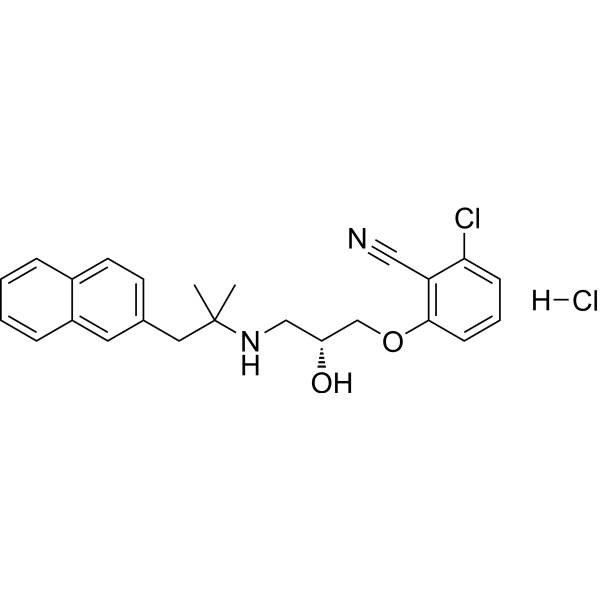
    NPS-2143 hydrochloride
    Maximum Cited Publications
    29 Publications Verification

    SB-262470A hydrochloride

    CaSR Metabolic Disease
    NPS-2143 hydrochloride (SB-262470A hydrochloride), an orally active calcilytic agent, is a selective and potent calcium ion-sensing receptor (CaSR) antagonist. NPS-2143 hydrochloride (SB-262470A hydrochloride) blocks increases in cytoplasmic Ca 2+ concentrations (IC50=43 nM) elicited by activating the Ca 2+ receptor in HEK 293 cells expressing the human Ca 2+ receptor .
    NPS-2143 hydrochloride
  • HY-DY1028

    Fluorescent Dye Others
    Fluo-4 AM (solution) is a cell-permeable Ca 2+ (calcium ion) indicator (Ex/Em = 485/526 nm) .
    Solvent and concentration: DMSO: 1 mM
    Fluo-4 AM (solution)
  • HY-W250149

    Biochemical Assay Reagents Cancer
    Chlorophosphonazo III is a cell membrane-permeable contrast agent and spectrophotometric reagent. Chlorophosphonazo III forms stable 1:1 complexes with intracellular calcium, magnesium, uranium, titanium, zirconium, thorium, scandium, equivalent actinides and protactinium. Chlorophosphonazo III generates photoacoustic signals correlated with Ca 2+ concentrations, which is applicable for imaging 3D tumor cell cultures and tumor spheroids. Chlorophosphonazo III exhibits no cytotoxicity, can be used for spectrophotometric detection of target ions, and the absorbance of its complexes remains stable for up to one week within the pH range of 2.2 to 7.0 .
    Chlorophosphonazo III
  • HY-148129

    TRPC6-IN-3

    TRP Channel Cardiovascular Disease
    Apecotrep (TRPC6-IN-3) (compound 17) is a potent, orally active transient receptor potential C6 ion channel (TRPC6) inhibitor. Apecotrep modulates not only intracellular calcium concentration, but also membrane potential by modulating the flux of cations including calcium and sodium ions. Apecotrep can be used in research of respiratory system .
    Apecotrep
  • HY-A0236

    Sodium Channel Potassium Channel Calcium Channel Calmodulin Cardiovascular Disease
    Aprindine is an Ib-class anti-arrhythmic agent. Aprindine mainly exerts its effect by blocking sodium channels (INa), thereby reducing the excitability and conduction velocity of cardiac muscle cells. Aprindine significantly inhibits delayed potassium currents, which helps to prolong the atrial effective refractory period (AERP) and inhibit the occurrence of atrial fibrillation. Aprindine can also regulate intracellular calcium ion concentration by inhibiting Na +/Ca 2+ exchange current (INCX), thereby further stabilizing cardiac electrical activity. Aprindine can be used for the study of atrial fibrillation (AF) and ventricular arrhythmias .
    Aprindine
  • HY-P5142

    ω-ACTX-Hv1; ω-Atracotoxin-HV1

    Insecticide Calcium Channel Apoptosis Necroptosis Cardiovascular Disease Neurological Disease Inflammation/Immunology
    ω-Hexatoxin-Hv1a (ω-ACTX-Hv1; ω-Atracotoxin-HV1) is an orally active insecticidal neurotoxin containing an inhibitor cystine knot motif and a selective calcium channel inhibitor. ω-Hexatoxin-Hv1a blocks L-type voltage-dependent Ca 2+ channels and reduces intracellular calcium ion concentration, thereby decreasing apoptosis, necroptosis and oxidative stress, and promoting cell recovery and energy level elevation. ω-Hexatoxin-Hv1a causes larval paralysis and death by impairing neurotransmission in the central nervous system of insects. It shows high injectable toxicity against insects of multiple orders, but exhibits weak oral toxicity. ω-Hexatoxin-Hv1a is widely applicable to studies related to ischemia-reperfusion injury, atopic dermatitis, and ischemic injury of cardiomyocytes and neurons .
    ω-Hexatoxin-Hv1a
  • HY-B2200

    Tricalcium dicitrate tetrahydrate, 99%

    Environmental Pollutants Biochemical Assay Reagents Calcium Channel Metabolic Disease
    Calcium citrate tetrahydrate, 99% exhibits the ability to release more calcium ions in a short time therefore allowing a high activity, and a high concentration of calcium ions that can stimulate bone formation .
    Calcium citrate tetrahydrate, 99%
  • HY-A0236A

    Sodium Channel Potassium Channel Calcium Channel Calmodulin Cardiovascular Disease
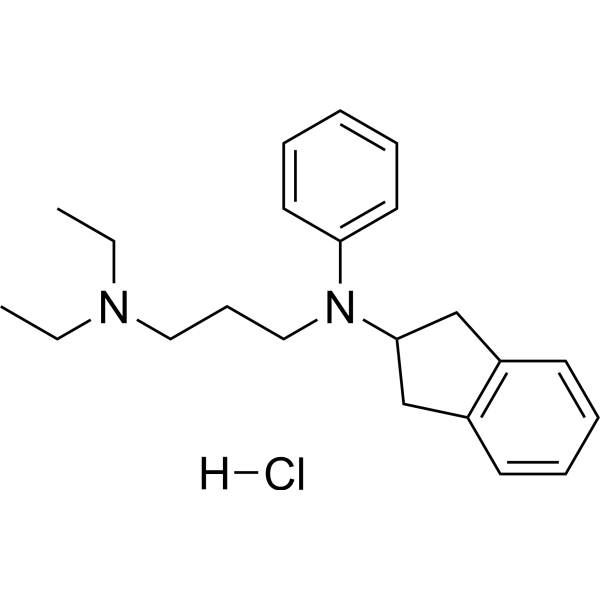
    Aprindine hydrochloride is an Ib-class anti-arrhythmic agent. Aprindine hydrochloride mainly exerts its effect by blocking sodium channels (INa), thereby reducing the excitability and conduction velocity of cardiac muscle cells. Aprindine hydrochloride significantly inhibits delayed potassium currents, which helps to prolong the atrial effective refractory period (AERP) and inhibit the occurrence of atrial fibrillation. Aprindine hydrochloride can also regulate intracellular calcium ion concentration by inhibiting Na +/Ca 2+ exchange current (INCX), thereby further stabilizing cardiac electrical activity. Aprindine hydrochloride can be used for the study of atrial fibrillation (AF) and ventricular arrhythmias .
    Aprindine hydrochloride
  • HY-172627

    Fluorescent Dye Calcium Channel Others
    Rhod-FF tripotassium is a Rhod-2 derivative and cell-impermeant calcium indicator (Kd of 320 μM). Rhod-FF tripotassium indicates calcium concentration by fluorescence upon binding to calcium ions, with excitation at 552 nm and emission at 580 nm .
    Rhod-FF tripotassium
  • HY-D1701

    Fluorescent Dye Others
    Calcium is an important part of the human body, usually in the form of calcium, a large number of bones and teeth of the human body, a small amount of blood and tissues. MCE calcium ion detection probe can specifically identify intracellular calcium ions, with high sensitivity, low cytotoxicity, increased AM acetylmethyl ester can enter the cell well, after being sheared by the intracellular esterase stay in the cell to bind to calcium ions, produce strong fluorescence, in addition, Mag-indo-1/AM and Mag-Fluo-4 AM at a certain concentration (usually 5 mM) can effectively identify intracellular magnesium ions .
    Mag-Fura-2 AM
  • HY-137325

    Guanylate Cyclase Others
    2-Chloro-ATP is a soluble guanylate cyclase inhibitor that increases intracellular calcium concentration at low concentrations through a mechanism independent of inositol phosphate production .
    2-Chloro-ATP
  • HY-P11226

    Amyloid-β CaMK Apoptosis Neurological Disease
    TI-16 is a peptide that targets β-amyloid (Aβ) protein. TI-16 can cross the blood-brain barrier. TI-16 can increase the concentration of intracellular free CaM, thereby restoring calcium ion homeostasis and reducing Aβ toxicity. TI-16 can reduce the deposition of Aβ in the brain, improve neuronal pathology, inhibit cell apoptosis, and improve cognitive function in mice. TI-16 is commonly used in the study of Alzheimer's disease .
    TI-16
  • HY-108663

    5-Methoxyuridine 5'-trihydrogen diphosphate

    P2Y Receptor Neurological Disease Metabolic Disease
    5-OMe-UDP (5-methoxyuridine 5'-trihydrogen diphosphate) is a P2Y6 receptor agonist (EC50=0.08 μM). 5-OMe-UDP activates the P2Y6 receptor by binding to it, which triggers signaling pathways within the cell. This activation can lead to an increase in intracellular calcium ion concentration, which in turn regulates cellular function. The methoxy groups of 5-OMe-UDP provide additional activity and selectivity, contributing to the binding of 5-OMe-UDP to the P2Y6 receptor. 5-OMe-UDP can be used to study diseases related to P2Y6 receptor function, such as diabetes, inflammatory bowel disease, Alzheimer's disease, etc .
    5-OMe-UDP
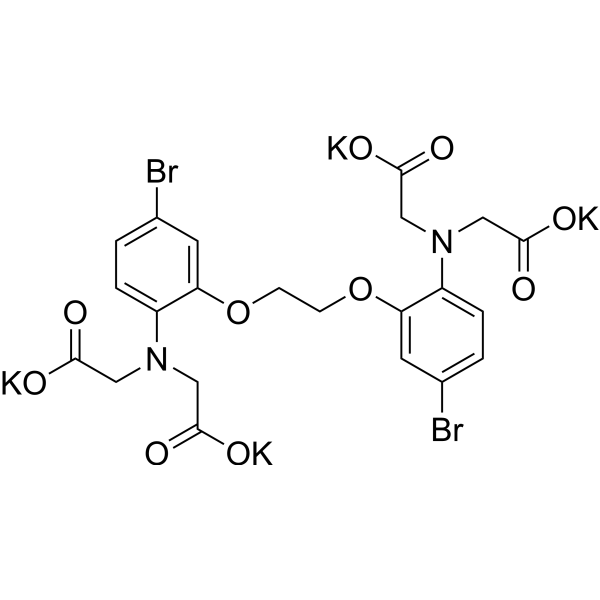
  • HY-D1639

    Fluorescent Dye Others
    5,5'-Dibromo BAPTA tetrapotassium is a calcium chelator, can be formulated into a buffer with a defined calcium ion concentration. 5,5'-Dibromo BAPTA tetrapotassium can control the concentration of calcium ions inside and outside the cell and can be used in studies of calcium physiological activity .
    5,5'-Dibromo BAPTA tetrapotassium
  • HY-158746

    Fluo-2 acetoxymethyl ester; Fluo-2 ha; Fluo-2 high affinity

    Fluorescent Dye Others
    Fluo-2 AM (Fluo-2 acetoxymethyl ester) is a fluorescent dye, that can be used for detection of intracellular calcium ion concentration .
    Fluo-2 AM
  • HY-N6687R

    A-23187 (Standard); Antibiotic A-23187 (Standard)

    Oxidative Phosphorylation Reference Standards Bacterial Fungal Apoptosis Autophagy Antibiotic Infection Cancer
    Calcimycin (Standard) is the analytical standard of Calcimycin. This product is used for research and analytical applications. Calcimycin is an antibiotic and a unique divalent cation ionophore, such as calcium ions and magnesium ions. Calcimycin induces Ca 2+ -dependent cell death by increasing the intracellular calcium concentration. Calcimycin inhibits the growth of Gram-positive bacteria and some fungi, and also inhibits the activity of ATPase and uncouples the oxidative phosphorylation (OXPHOS) of mammalian cells, inducing apoptosis and autophagy.
    Calcimycin (Standard)
  • HY-126551

    LDLR Platelet-activating Factor Receptor (PAFR) Calcium Channel Metabolic Disease
    Butenoyl-PAF is a phospholipid analog of platelet activating factor (PAF-like) that is generated in oxidized low-density lipoprotein (DLDR). Butenoyl-PAF can activate cells that express human PAF receptors, such as neutrophils, monocytes, and platelets, and it stimulates an increase in intracellular calcium ion concentration .
    Butenoyl-PAF
  • HY-D0121B

    Fluorescent Dye Others
    INDO 1 pentasodium is a cell-impermeant ratiometric, free calcium ion (Ca 2+) fluorescent indicator that can quantitatively monitor dynamic changes in intracellular free Ca 2+ concentrations. When unbound to Ca 2+ (free state), INDO 1 pentasodium exhibits a peak emission wavelength of 485 nm under UV excitation (350 nm). Upon binding to Ca 2+ (bound state), the emission peak shifts to 405 nm. INDO 1 pentasodium is highly photolabile and susceptible to photobleaching, and its emission spectrum may overlap with the autofluorescence of NADH .
    INDO 1 pentasodium
  • HY-172190C

    Biochemical Assay Reagents Others
    MS Medium (Calcium-Free) is a culture medium with a high concentration of inorganic salts and ions, making it a relatively stable balanced solution. The quantity and ratio of nutrients in MS Medium (Calcium-Free) are suitable to meet the nutritional and physiological needs of plants.
    MS Medium Calcium-Free
  • HY-120174

    Endogenous Metabolite Others
    SU200 is a TRPV1 agonist with the activity of regulating intracellular calcium ion concentration. SU200 can induce different calcium ion response modes, showing significant reaction potential and maximum reaction effect. There is obvious response delay and variability in the effects of SU200 in different cells. The use of SU200 may provide pharmacological development opportunities .
    SU200
  • HY-DY1095

    Fluo-3-pentaacetoxymethyl ester (solution)

    Fluorescent Dye Others
    Fluo-3AM (solution) is a fluorecent Ca 2+ chelator, with high affinity for calcium. Fluo-3 AM can specifically identify intracellular calcium ions, with high sensitivity, low cytotoxicity, increased AM acetylmethyl ester can enter the cell well, after being sheared by the intracellular esterase stay in the cell to bind to calcium ions, produce strong fluorescence .
    Solvent and concentration: DMSO: 5 mM
    Fluo-3AM (solution)
  • HY-E70949

    PKC Metabolic Disease
    Protein Kinase C,Rat (EC 2.7.1.37) is a family of protein kinase enzymes that are involved in controlling the function of other proteins through the phosphorylation of hydroxyl groups of serine and threonine amino acid residues on these proteins. Protein Kinase C in turn are activated by signals such as increases in the concentration of diacylglycerol (DAG) or calcium ions (Ca 2+).
    Protein Kinase C,Rat
  • HY-DY1101

    Fura-2 Acetoxymethyl ester (solution)

    Fluorescent Dye Others
    Fura-2 AM (solution) (Fura-2 Acetoxymethyl ester (solution)) is a membrane permeable, intracellular, UV light-excitable and ratiometric fluorescent Ca 2+ (calcium ion) indicator. Fura-2 AM crosses cell membranes and is converted to Fura-2 (HY-D0110A) via cellular esterases. Fura-2 AM can be used to detect calcium in cells.
    Solvent and concentration: DMSO: 1 mM
    Fura-2 AM (solution)
  • HY-DY1091

    Fluorexon (solution)

    Fluorescent Dye Others
    Calcein (solution) (Fluorexon (solution)) is a fluorescent dye and self-quenching probe, used as an indicator of lipid vesicle leakage, and also as a complexometric indicator for titration of calcium ions with EDTA, and for fluorometric determination of calcium. Calcein cannot directly cross the intact cell membrane of a living cell, unlike Calcein-AM (HY-D0041) which is cell-permeable. Calcein can also be used as a model drug for evaluating efficiency and bioavailability of drug delivery systems .
    Solvent and concentration: DMSO: 2 mM
    The 1 mL volume is defined as the base specification. All larger sizes correspond to incremental volumes of this base.
    Calcein (solution)
  • HY-10007R

    SB-262470A (Standard)

    CaSR Reference Standards Metabolic Disease
    NPS-2143 (Standard) is the analytical standard of NPS-2143 (HY-10007). This product is intended for research and analytical applications. NPS-2143 (SB-262470A), an orally active calcilytic agent, is a selective and potent calcium ion-sensing receptor (CaSR) antagonist. NPS-2143 (SB-262470A) blocks increases in cytoplasmic Ca2+ concentrations (IC50=43 nM) elicited by activating the Ca2+ receptor in HEK 293 cells expressing the human Ca2+ receptor .
    NPS-2143 (Standard)
  • HY-A0236AR

    Reference Standards Sodium Channel Potassium Channel Calcium Channel Calmodulin Cardiovascular Disease
    Aprindine hydrochloride (Standard) is the analytical reference standard of Aprindine hydrochloride (HY-A0236A). This product is used for research and analytical applications. Aprindine hydrochloride is an Ib-class anti-arrhythmic agent. Aprindine hydrochloride mainly exerts its effect by blocking sodium channels (INa), thereby reducing the excitability and conduction velocity of cardiac muscle cells. Aprindine hydrochloride significantly inhibits delayed potassium currents, which helps to prolong the atrial effective refractory period (AERP) and inhibit the occurrence of atrial fibrillation. Aprindine hydrochloride can also regulate intracellular calcium ion concentration by inhibiting Na +/Ca 2+ exchange current (INCX), thereby further stabilizing cardiac electrical activity. Aprindine hydrochloride can be used for the study of atrial fibrillation (AF) and ventricular arrhythmias.
    Aprindine hydrochloride (Standard)
  • HY-P5142A

    ω-ACTX-Hv1 TFA; ω-Atracotoxin-HV1 TFA

    Insecticide Apoptosis Calcium Channel Necroptosis Cardiovascular Disease Neurological Disease Inflammation/Immunology
    ω-Hexatoxin-Hv1a (ω-ACTX-Hv1; ω-Atracotoxin-HV1) TFA is an orally active insecticidal neurotoxin containing an inhibitor cystine knot motif and a selective calcium channel inhibitor. ω-Hexatoxin-Hv1a TFA blocks L-type voltage-dependent Ca 2+ channels and reduces intracellular calcium ion concentration, thereby decreasing apoptosis, necroptosis and oxidative stress, and promoting cell recovery and energy level elevation. ω-Hexatoxin-Hv1a TFA causes larval paralysis and death by impairing neurotransmission in the central nervous system of insects. It shows high injectable toxicity against insects of multiple orders, but exhibits weak oral toxicity. ω-Hexatoxin-Hv1a TFA is widely applicable to studies related to ischemia-reperfusion injury, atopic dermatitis, and ischemic injury of cardiomyocytes and neurons .
    ω-Hexatoxin-Hv1a TFA

Inquiry Online

Your information is safe with us. * Required Fields.

Salutation


Country or Region *

Applicant Name *


Organization Name *

Department *


Email Address *


Product Name *

Cat. No.


Requested quantity *

Phone Number *


Remarks

Inquiry Online

Inquiry Information

Product Name:
Cat. No.:
Quantity:
MCE Japan Authorized Agent:

