

Search Result
Results for "
collagen III
" in MedChemExpress (MCE) Product Catalog:
5
Biochemical Assay Reagents
| Cat. No. |
Product Name |
Target |
Research Areas |
Chemical Structure |
-
- HY-13948
-
|
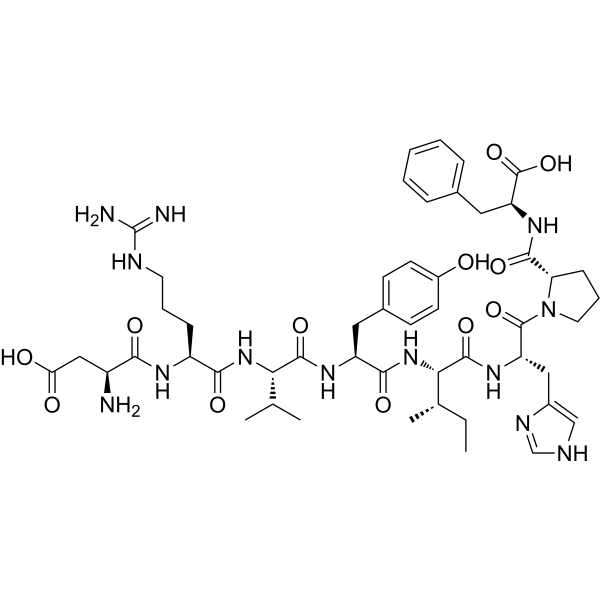
Angiotensin II; Ang II; DRVYIHPF
|
Angiotensin Receptor
Apoptosis
|
Cardiovascular Disease
Infection
Metabolic Disease
Inflammation/Immunology
Cancer
|
|
Angiotensin II (Angiotensin II) is a vasoconstrictor and a major bioactive peptide of the renin/angiotensin system. Angiotensin II human plays a central role in regulating human blood pressure, which is mainly mediated by interactions between Angiotensin II and the G-protein-coupled receptors (GPCRs) Angiotensin II type 1 receptor (AT1R) and Angiotensin II type 2 receptor (AT2R). Angiotensin II human stimulates sympathetic nervous stimulation, increases aldosterone biosynthesis and renal actions. Angiotensin II human induces growth of vascular smooth muscle cells, increases collagen type I and III synthesis in fibroblasts, leading to thickening of the vascular wall and myocardium, and fibrosis. Angiotensin II human also induces apoptosis. Angiotensin II induces capillary formation from endothelial cells via the LOX-1 dependent redox-sensitive pathway .
|
-
-
- HY-13948A
-
|
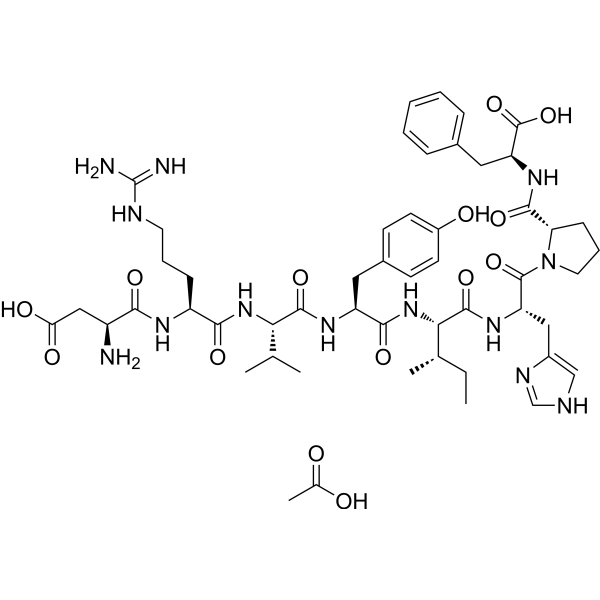
Angiotensin II acetate; Ang II acetate; DRVYIHPF acetate
|
Angiotensin Receptor
Apoptosis
|
Cardiovascular Disease
Infection
Metabolic Disease
Inflammation/Immunology
Cancer
|
|
Angiotensin II human (Angiotensin II) acetate is a vasoconstrictor and a major bioactive peptide of the renin/angiotensin system. Angiotensin II human acetate plays a central role in regulating human blood pressure, which is mainly mediated by interactions between Angiotensin II and the G-protein-coupled receptors (GPCRs) Angiotensin II type 1 receptor (AT1R) and Angiotensin II type 2 receptor (AT2R). Angiotensin II human acetate stimulates sympathetic nervous stimulation, increases aldosterone biosynthesis and renal actions. Angiotensin II human acetate induces growth of vascular smooth muscle cells, increases collagen type I and III synthesis in fibroblasts, leading to thickening of the vascular wall and myocardium, and fibrosis. Angiotensin II human acetate also induces apoptosis. Angiotensin II human acetate induces capillary formation from endothelial cells via the LOX-1 dependent redox-sensitive pathway .
|
-
-
- HY-129389
-
|
|
Glycosyltransferase
|
Cancer
|
|
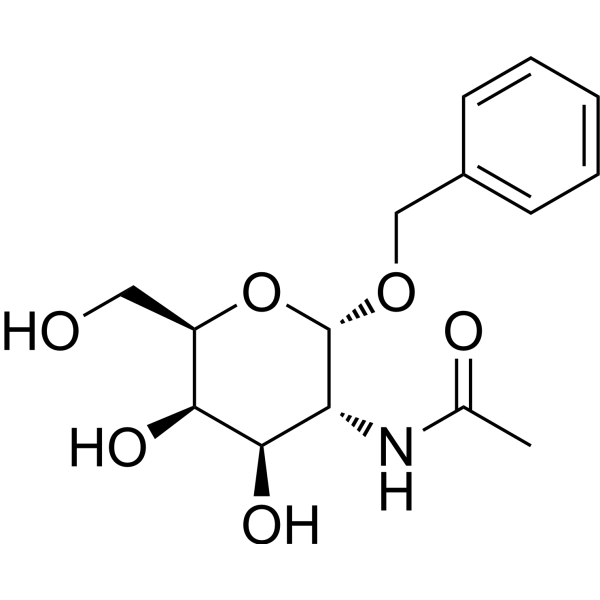
Benzyl-α-GalNAc is a potent O-glycosylation inhibitor. Benzyl-α-GalNAc effectively inhibits the proliferation and activation of LX-2 cells and suppresses the expression of collagen I/III, which has good potential for investigation in liver fibrosis. Benzyl-α-GalNAc also significantly enhances the anti-tumour activity of 5-Fluorouracil (HY-90006) (e.g. pancreatic cancer) by inhibiting O-glycosylation .
|
-
-
- HY-E70005C
-
|
|
MMP
|
Others
|
Collagenase, Type III is a microbially derived matrix metalloproteinases (MMPs) and zinc peptidase. Collagenase, Type III breaksdown collagens1, 4, 9, 10, 14, fibronectin, MMP-9, gelatin, plasminogen, aggrecan,perlecan osteonectin
|
-
-
- HY-17367
-
-
-
- HY-100495
-
FT011
2 Publications Verification
Asengeprast
|
MMP
|
Inflammation/Immunology
|
|
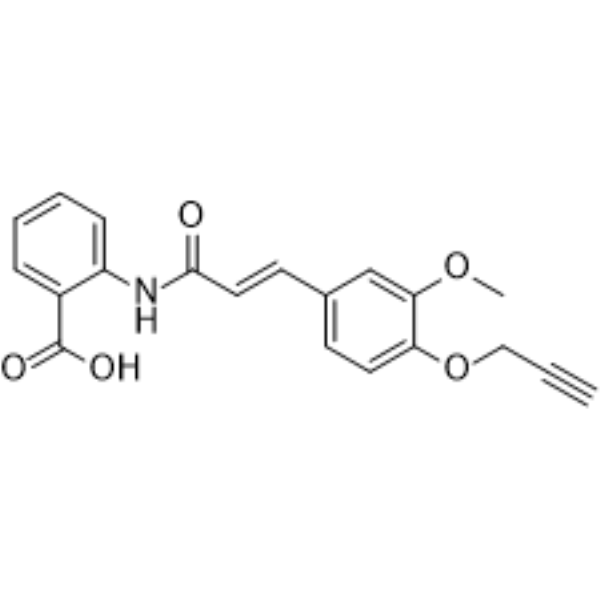
FT011 is an anti-fibrotic agent, reduces mRNA expression of collagens I and III and inhibits collagen synthesis . FT011 is a click chemistry reagent, it contains an Alkyne group and can undergo copper-catalyzed azide-alkyne cycloaddition (CuAAc) with molecules containing Azide groups.
|
-
-
- HY-17367A
-
-
-
- HY-NP132A
-
|
|
Biochemical Assay Reagents
Integrin
Autophagy
Apoptosis
Discoidin Domain Receptor
|
Cancer
|
|
Recombinant humanized type III collagen (MW 55900) is a type III collagen with a molecular weight of 55900 Da. Recombinant humanized type III collagen has various biological functions, such as promoting skin extracellular matrix regeneration and improving the cell microenvironment. Recombinant humanized type III collagen inhibits the proliferation, migration, and invasion of breast cancer cells. Type III collagen functions in cell adhesion, migration, proliferation and differentiation through its interaction with integrins .
|
-
-
- HY-NP132
-
|
|
Biochemical Assay Reagents
Integrin
Autophagy
Apoptosis
Discoidin Domain Receptor
|
Cancer
|
|
Recombinant Humanized Type III Collagen 28.6kDa is a 28.6 kDa recombinant humanized type III collagen. Recombinant Humanized Type III Collagen possesses a variety of biological functions, such as promoting the regeneration of the skin extracellular matrix and improving the cellular microenvironment. Recombinant Humanized Type III Collagen can also inhibit the proliferation, migration and invasion of breast cancer cells. Recombinant Humanized Type III Collagen plays a role in cell adhesion, migration, proliferation and differentiation by interacting with Integrin .
|
-
-
- HY-W129161
-
|
|
Amino Acid Derivatives
|
Metabolic Disease
|
|
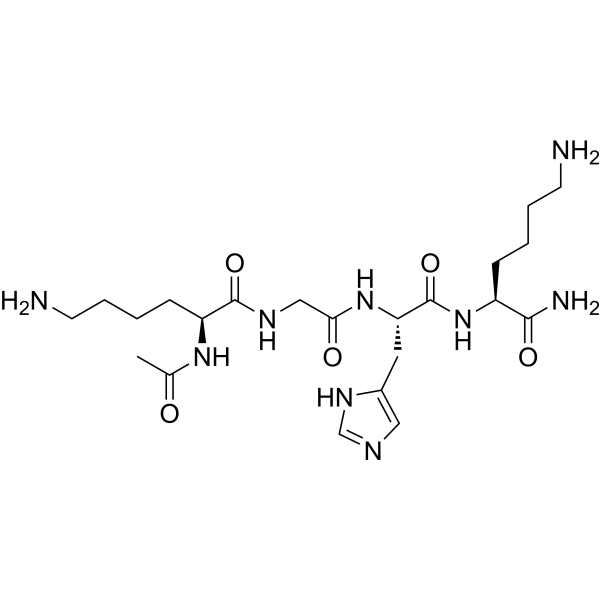
Acetyl tetrapeptide-3 is a synthetic peptide. Acetyl tetrapeptide-3 enhances the adhesion of hair follicles to the scalp but also promotes the development of new hair follicles. Acetyl tetrapeptide-3 stimulates the synthesis of collagen III in hair follicles. Acetyl tetrapeptide-3 combined with Biochanin A (HY-14595) and ginseng extracts, can stimulate dermal papilla extracellular matrix (ECM) proteins by increasing hydroxyproline, Collagen Type 3, and laminin, yielding a significant improvement in hair follicle size and hair anchoring .
|
-
-
- HY-13948B
-
|
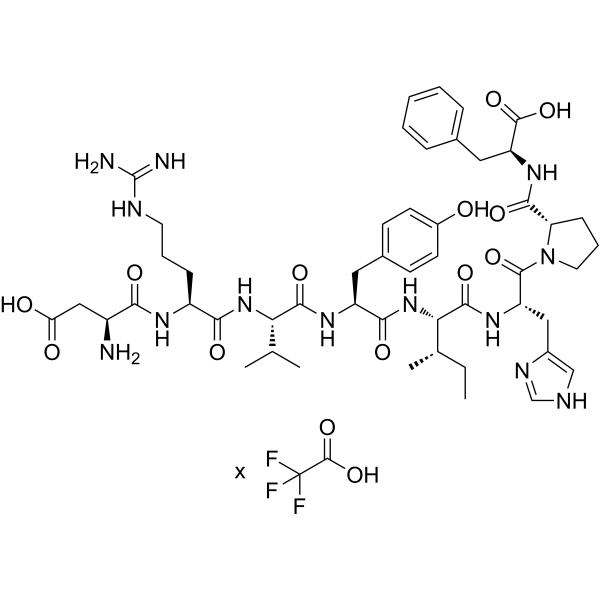
Angiotensin II TFA; Ang II TFA; DRVYIHPF TFA
|
Angiotensin Receptor
Apoptosis
|
Cardiovascular Disease
Metabolic Disease
Cancer
|
|
Angiotensin II human (Angiotensin II) TFA is a vasoconstrictor and a major bioactive peptide of the renin/angiotensin system. Angiotensin II human TFA plays a central role in regulating human blood pressure, which is mainly mediated by interactions between Angiotensin II and the G-protein-coupled receptors (GPCRs) Angiotensin II type 1 receptor (AT1R) and Angiotensin II type 2 receptor (AT2R). Angiotensin II human TFA stimulates sympathetic nervous stimulation, increases aldosterone biosynthesis and renal actions. Angiotensin II human TFA induces growth of vascular smooth muscle cells, increases collagen type I and III synthesis in fibroblasts, leading to thickening of the vascular wall and myocardium, and fibrosis. Angiotensin II human TFA also induces apoptosis. Angiotensin II human TFA induces capillary formation from endothelial cells via the LOX-1 dependent redox-sensitive pathway .
|
-
-
- HY-P5557
-
|
|
Bacterial
Necroptosis
|
Infection
Inflammation/Immunology
|
|
TP4 (Nile tilapia piscidin) is an orally active amphipathic α-helical cationic antimicrobial peptide. TP4 (Nile tilapia piscidin) exerts broad-spectrum bactericidal activity against Gram-positive and Gram-negative bacteria by disrupting cell membrane structures, and also exhibits certain hemolytic activity. TP4 (Nile tilapia piscidin) regulates the innate immune system and enhances the expression of lysozymes, cytokines and antioxidant enzymes to resist bacterial infection. TP4 (Nile tilapia piscidin) also stimulates the proliferation of keratinocytes and fibroblasts, and significantly promotes the healing of wounds infected with MRSA. TP4 (Nile tilapia piscidin) can be used in research related to bacterial infection, peritonitis, wound healing and other fields .
|
-
-
- HY-122906
-
|
|
c-Fms
|
Inflammation/Immunology
|
|
JTE-952 is a potent, oral active and selective Type II inhibitor of colony stimulating factor-1 receptor (CSF-1R or cFMS, type III receptor tyrosine kinase), with IC50 values of 13 nM and 261 nM for CSF1R and TrkA , respectively. Effective against a mouse collagen-induced model of arthritis .
|
-
-
- HY-NP131
-
|
|
Discoidin Domain Receptor
Apoptosis
Autophagy
|
Cancer
|
|
Recombinant Humanized Type III Collagen 10.4kDa is a novel biomaterial that have anticancer effects. Recombinant Humanized Type III Collagen 10.4kDa activates discoidin domain receptor 1 (DDR1), and thus inhibits autophagy, proliferation, and migration of cancer cells, and induces apoptosis .
|
-
-
- HY-P990294
-
|
|
Transmembrane Glycoprotein
STAT
Collagen
Reactive Oxygen Species (ROS)
Interleukin Related
|
Cardiovascular Disease
Inflammation/Immunology
|
|
Anti-Mouse CD106/VCAM-1 Antibody (M/K-2.7) is an anti-mouse CD106/VCAM-1 IgG1 monoclonal antibody. Anti-Mouse CD106/VCAM-1 Antibody (M/K-2.7) reduces inflammatory response and oxidative stress by lowering p-STAT3 and reactive oxygen species (ROS) levels. Anti-Mouse CD106/VCAM-1 Antibody (M/K-2.7) can alleviate cardiac inflammation and fibrosis by reducing the expression of collagen I and collagen III. Anti-Mouse CD106/VCAM-1 Antibody (M/K-2.7) can be used for research on cardiovascular conditions such as hypertensive heart condition and subretinal fibrosis .
|
-
-
- HY-NP103
-
|
Bovine Type III collagen, immunization grade
|
MMP
|
Inflammation/Immunology
|
|
Highly purified Type III collagen, from bovine skin (Bovine Type III collagen, immunization grade) is an immune grade collagen derived from bovine skin, which can stimulate the animal's immune system to produce specific antibodies against this collagen. Collagen is also a substrate for hydrolysis by MMPs .
|
-
-
- HY-114564
-
|
E5510
|
Prostaglandin Receptor
|
Cardiovascular Disease
|
|
Satigrel (E5510) is a potent inhibitor of platelet aggregation. Satigrel inhibits collagen- and arachidonic acid-induced platelet aggregation through preventing thromboxane A2 synthesis by selective inhibition of the target enzyme, PGHS1, which exists in platelets. Satigrel inhibits PGHS1 (IC50: 0.081 μM) and PGHS2 (IC50: 5.9 μM). Satigrel is against Type III PDE, Type V and Type II (IC50: 15.7 μM, 39.8 μM and 62.4 μM, respectively) .
|
-
-
- HY-NP124
-
|
Porcine Type III collagen, immunization grade
|
MMP
|
Inflammation/Immunology
|
|
Highly purified Type III collagen, from porcine skin (Porcine Type III collagen, immunization grade) is an immune grade collagen derived from porcine skin, which can stimulate the animal's immune system to produce specific antibodies against this collagen. Collagen is also a substrate for hydrolysis by MMPs .
|
-
-
- HY-129502
-
|
P-23924C
|
HIF/HIF Prolyl-Hydroxylase
|
Others
|
|
Fibrostatin C (P-23924C) is an orally active prolyl hydroxylase inhibitor that also inhibits collagen biosynthesis. Fibrostatin C also increases the number of cytoplasmic granules immunoreactive with antibodies to collagen I or III. Fibrostatin C inhibits the secretion of type I collagen in Tenon's capsule fibroblasts. Fibrostatin C is promising for research of the wound fibrotic response in the wound of glaucoma filtering surgery .
|
-
-
- HY-171657
-
|
|
Drug Derivative
SOD
Interleukin Related
COX
Collagen
|
Inflammation/Immunology
|
|
4'-Acetoxy resveratrol is a Resveratrol (HY-16561) derivative. 4'-Acetoxy resveratrol upregulates gene expression of elastin, collagen types III and IV, superoxide dismutase (SOD), and catalase (CAT), while downregulating interleukins (IL-1A, IL-1R2, IL-6, IL-8) and cyclooxygenase-2 (COX-2) in human skin models. 4'-Acetoxy resveratrol can be used for skin reasearch .
|
-
-
- HY-100495R
-
|
Asengeprast (Standard)
|
MMP
Reference Standards
|
Inflammation/Immunology
|
|
FT011 (Standard) is the analytical standard of FT011 (HY-100495). This product is intended for research and analytical applications. FT011 is an anti-fibrotic agent, reduces mRNA expression of collagens I and III and inhibits collagen synthesis . FT011 is a click chemistry reagent, it contains an Alkyne group and can undergo copper-catalyzed azide-alkyne cycloaddition (CuAAc) with molecules containing Azide groups.
|
-
-
- HY-P11648
-
|
|
Osteopontin
|
Inflammation/Immunology
Cancer
|
|
SVVYGLR is an osteopontin-derived peptide. SVVYGLR can promote the differentiation of fibroblasts into myofibroblast-like cells and promote the production of type III collagen by cardiac fibroblasts. SVVYGLR can activate the adhesion, migration and tubule formation of endothelial cells in vitro. SVVYGLR promotes angiogenesis and wound healing and promotes the migration of dermal fibroblasts and keratinocytes. SVVYGLR can be used for research related to angiogenesis, dermal wounds and bone regeneration .
|
-
| Cat. No. |
Product Name |
Type |
-
- HY-NP132A
-
|
|
Biochemical Assay Reagents
|
|
Recombinant humanized type III collagen (MW 55900) is a type III collagen with a molecular weight of 55900 Da. Recombinant humanized type III collagen has various biological functions, such as promoting skin extracellular matrix regeneration and improving the cell microenvironment. Recombinant humanized type III collagen inhibits the proliferation, migration, and invasion of breast cancer cells. Type III collagen functions in cell adhesion, migration, proliferation and differentiation through its interaction with integrins .
|
-
- HY-NP132
-
|
|
Biochemical Assay Reagents
|
|
Recombinant Humanized Type III Collagen 28.6kDa is a 28.6 kDa recombinant humanized type III collagen. Recombinant Humanized Type III Collagen possesses a variety of biological functions, such as promoting the regeneration of the skin extracellular matrix and improving the cellular microenvironment. Recombinant Humanized Type III Collagen can also inhibit the proliferation, migration and invasion of breast cancer cells. Recombinant Humanized Type III Collagen plays a role in cell adhesion, migration, proliferation and differentiation by interacting with Integrin .
|
-
- HY-NP131
-
|
|
Biochemical Assay Reagents
|
|
Recombinant Humanized Type III Collagen 10.4kDa is a novel biomaterial that have anticancer effects. Recombinant Humanized Type III Collagen 10.4kDa activates discoidin domain receptor 1 (DDR1), and thus inhibits autophagy, proliferation, and migration of cancer cells, and induces apoptosis .
|
-
- HY-NP103
-
|
Bovine Type III collagen, immunization grade
|
Biochemical Assay Reagents
|
|
Highly purified Type III collagen, from bovine skin (Bovine Type III collagen, immunization grade) is an immune grade collagen derived from bovine skin, which can stimulate the animal's immune system to produce specific antibodies against this collagen. Collagen is also a substrate for hydrolysis by MMPs .
|
-
- HY-NP124
-
|
Porcine Type III collagen, immunization grade
|
Biochemical Assay Reagents
|
|
Highly purified Type III collagen, from porcine skin (Porcine Type III collagen, immunization grade) is an immune grade collagen derived from porcine skin, which can stimulate the animal's immune system to produce specific antibodies against this collagen. Collagen is also a substrate for hydrolysis by MMPs .
|
| Cat. No. |
Product Name |
Target |
Research Area |
-
- HY-13948
-
|
Angiotensin II; Ang II; DRVYIHPF
|
Angiotensin Receptor
Apoptosis
|
Cardiovascular Disease
Infection
Metabolic Disease
Inflammation/Immunology
Cancer
|
|
Angiotensin II (Angiotensin II) is a vasoconstrictor and a major bioactive peptide of the renin/angiotensin system. Angiotensin II human plays a central role in regulating human blood pressure, which is mainly mediated by interactions between Angiotensin II and the G-protein-coupled receptors (GPCRs) Angiotensin II type 1 receptor (AT1R) and Angiotensin II type 2 receptor (AT2R). Angiotensin II human stimulates sympathetic nervous stimulation, increases aldosterone biosynthesis and renal actions. Angiotensin II human induces growth of vascular smooth muscle cells, increases collagen type I and III synthesis in fibroblasts, leading to thickening of the vascular wall and myocardium, and fibrosis. Angiotensin II human also induces apoptosis. Angiotensin II induces capillary formation from endothelial cells via the LOX-1 dependent redox-sensitive pathway .
|
-
- HY-13948A
-
|
Angiotensin II acetate; Ang II acetate; DRVYIHPF acetate
|
Angiotensin Receptor
Apoptosis
|
Cardiovascular Disease
Infection
Metabolic Disease
Inflammation/Immunology
Cancer
|
|
Angiotensin II human (Angiotensin II) acetate is a vasoconstrictor and a major bioactive peptide of the renin/angiotensin system. Angiotensin II human acetate plays a central role in regulating human blood pressure, which is mainly mediated by interactions between Angiotensin II and the G-protein-coupled receptors (GPCRs) Angiotensin II type 1 receptor (AT1R) and Angiotensin II type 2 receptor (AT2R). Angiotensin II human acetate stimulates sympathetic nervous stimulation, increases aldosterone biosynthesis and renal actions. Angiotensin II human acetate induces growth of vascular smooth muscle cells, increases collagen type I and III synthesis in fibroblasts, leading to thickening of the vascular wall and myocardium, and fibrosis. Angiotensin II human acetate also induces apoptosis. Angiotensin II human acetate induces capillary formation from endothelial cells via the LOX-1 dependent redox-sensitive pathway .
|
-
- HY-W129161
-
|
|
Amino Acid Derivatives
|
Metabolic Disease
|
|
Acetyl tetrapeptide-3 is a synthetic peptide. Acetyl tetrapeptide-3 enhances the adhesion of hair follicles to the scalp but also promotes the development of new hair follicles. Acetyl tetrapeptide-3 stimulates the synthesis of collagen III in hair follicles. Acetyl tetrapeptide-3 combined with Biochanin A (HY-14595) and ginseng extracts, can stimulate dermal papilla extracellular matrix (ECM) proteins by increasing hydroxyproline, Collagen Type 3, and laminin, yielding a significant improvement in hair follicle size and hair anchoring .
|
-
- HY-13948B
-
|
Angiotensin II TFA; Ang II TFA; DRVYIHPF TFA
|
Angiotensin Receptor
Apoptosis
|
Cardiovascular Disease
Metabolic Disease
Cancer
|
|
Angiotensin II human (Angiotensin II) TFA is a vasoconstrictor and a major bioactive peptide of the renin/angiotensin system. Angiotensin II human TFA plays a central role in regulating human blood pressure, which is mainly mediated by interactions between Angiotensin II and the G-protein-coupled receptors (GPCRs) Angiotensin II type 1 receptor (AT1R) and Angiotensin II type 2 receptor (AT2R). Angiotensin II human TFA stimulates sympathetic nervous stimulation, increases aldosterone biosynthesis and renal actions. Angiotensin II human TFA induces growth of vascular smooth muscle cells, increases collagen type I and III synthesis in fibroblasts, leading to thickening of the vascular wall and myocardium, and fibrosis. Angiotensin II human TFA also induces apoptosis. Angiotensin II human TFA induces capillary formation from endothelial cells via the LOX-1 dependent redox-sensitive pathway .
|
-
- HY-P5557
-
|
|
Bacterial
Necroptosis
|
Infection
Inflammation/Immunology
|
|
TP4 (Nile tilapia piscidin) is an orally active amphipathic α-helical cationic antimicrobial peptide. TP4 (Nile tilapia piscidin) exerts broad-spectrum bactericidal activity against Gram-positive and Gram-negative bacteria by disrupting cell membrane structures, and also exhibits certain hemolytic activity. TP4 (Nile tilapia piscidin) regulates the innate immune system and enhances the expression of lysozymes, cytokines and antioxidant enzymes to resist bacterial infection. TP4 (Nile tilapia piscidin) also stimulates the proliferation of keratinocytes and fibroblasts, and significantly promotes the healing of wounds infected with MRSA. TP4 (Nile tilapia piscidin) can be used in research related to bacterial infection, peritonitis, wound healing and other fields .
|
-
- HY-P11648
-
|
|
Osteopontin
|
Inflammation/Immunology
Cancer
|
|
SVVYGLR is an osteopontin-derived peptide. SVVYGLR can promote the differentiation of fibroblasts into myofibroblast-like cells and promote the production of type III collagen by cardiac fibroblasts. SVVYGLR can activate the adhesion, migration and tubule formation of endothelial cells in vitro. SVVYGLR promotes angiogenesis and wound healing and promotes the migration of dermal fibroblasts and keratinocytes. SVVYGLR can be used for research related to angiogenesis, dermal wounds and bone regeneration .
|
| Cat. No. |
Product Name |
Target |
Research Area |
Image |
-
- HY-P990294
-
|
|
Transmembrane Glycoprotein
STAT
Collagen
Reactive Oxygen Species (ROS)
Interleukin Related
|
Cardiovascular Disease
Inflammation/Immunology
|
|
Anti-Mouse CD106/VCAM-1 Antibody (M/K-2.7) is an anti-mouse CD106/VCAM-1 IgG1 monoclonal antibody. Anti-Mouse CD106/VCAM-1 Antibody (M/K-2.7) reduces inflammatory response and oxidative stress by lowering p-STAT3 and reactive oxygen species (ROS) levels. Anti-Mouse CD106/VCAM-1 Antibody (M/K-2.7) can alleviate cardiac inflammation and fibrosis by reducing the expression of collagen I and collagen III. Anti-Mouse CD106/VCAM-1 Antibody (M/K-2.7) can be used for research on cardiovascular conditions such as hypertensive heart condition and subretinal fibrosis .
|
-
(5)
| Cat. No. |
Product Name |
Category |
Target |
Chemical Structure |
-
- HY-13948
-
|
Angiotensin II; Ang II; DRVYIHPF
|
Structural Classification
Natural Products
Classification of Application Fields
Endogenous metabolite
Disease Research Fields
Endocrinology
Source Classification
Cancer
|
Angiotensin Receptor
Apoptosis
|
|
Angiotensin II (Angiotensin II) is a vasoconstrictor and a major bioactive peptide of the renin/angiotensin system. Angiotensin II human plays a central role in regulating human blood pressure, which is mainly mediated by interactions between Angiotensin II and the G-protein-coupled receptors (GPCRs) Angiotensin II type 1 receptor (AT1R) and Angiotensin II type 2 receptor (AT2R). Angiotensin II human stimulates sympathetic nervous stimulation, increases aldosterone biosynthesis and renal actions. Angiotensin II human induces growth of vascular smooth muscle cells, increases collagen type I and III synthesis in fibroblasts, leading to thickening of the vascular wall and myocardium, and fibrosis. Angiotensin II human also induces apoptosis. Angiotensin II induces capillary formation from endothelial cells via the LOX-1 dependent redox-sensitive pathway .
|
-
-
- HY-17367
-
-
-
- HY-17367A
-
-
-
- HY-129502
-
|
P-23924C
|
Natural Products
Microorganisms
Source Classification
|
HIF/HIF Prolyl-Hydroxylase
|
|
Fibrostatin C (P-23924C) is an orally active prolyl hydroxylase inhibitor that also inhibits collagen biosynthesis. Fibrostatin C also increases the number of cytoplasmic granules immunoreactive with antibodies to collagen I or III. Fibrostatin C inhibits the secretion of type I collagen in Tenon's capsule fibroblasts. Fibrostatin C is promising for research of the wound fibrotic response in the wound of glaucoma filtering surgery .
|
-
| Cat. No. |
Compare |
Product Name |
Species |
Source |
Image |
Compare Products
|
| Products |
|
| Cat. No. |
|
| Species |
|
| Source |
|
| Tag |
|
| Accession |
|
| Gene ID |
|
| Molecular Weight |
|
| Purity |
|
| Endotoxin Level |
|
| Biological Activity |
|
| Appearance |
|
| Formulation |
|
| Storage & Stability |
|
| Shipping |
|
| Free Sample |
Yes
No
|
| Size |
* This product has been "discontinued".
Optimized version of product available:
|
| Cat. No. |
Product Name |
|
Classification |
-
- HY-100495
-
FT011
2 Publications Verification
Asengeprast
|
|
Alkynes
|
|
FT011 is an anti-fibrotic agent, reduces mRNA expression of collagens I and III and inhibits collagen synthesis . FT011 is a click chemistry reagent, it contains an Alkyne group and can undergo copper-catalyzed azide-alkyne cycloaddition (CuAAc) with molecules containing Azide groups.
|
Your information is safe with us. * Required Fields.
Inquiry Information
- Product Name:
- Cat. No.:
- Quantity:
- MCE Japan Authorized Agent:

