


1. Search Result
Search Result
Results for "

diffuse

" in MedChemExpress (MCE) Product Catalog:

174

Inhibitors & Agonists

1

Screening Libraries

5

Fluorescent Dye

4

Biochemical Assay Reagents

7

Peptides

13

Inhibitory Antibodies

4

Natural
Products

2

Isotope-Labeled Compounds

1

Oligonucleotides

Cat. No. Product Name Target Research Areas Chemical Structure
  • HY-P99055

    TNF Receptor Inflammation/Immunology Cancer
    Urelumab, a fully human, non-ligand binding, CD137 agonist IgG4 monoclonal antibody, enhances T-cell and natural killer-cell antitumor activity, and may enhance cytotoxic activity of Rituximab (HY-P9913). Urelumab can be used for the research of diffuse large B-cell lymphoma (DLBCL), follicular lymphoma (FL), and other types of non-Hodgkin lymphoma (NHL) .
    Urelumab
  • HY-153356

    Molecular Glues Apoptosis Inflammation/Immunology Cancer
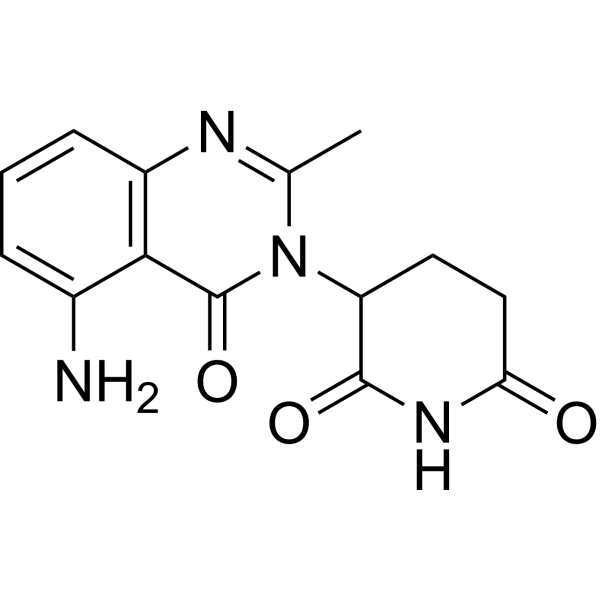
    MRT-2359 is an orally active and selective GSPT1 molecular glue degrader, with a DC50 of 5 nM. MRT-2359 induces CRBN/GSPT1 ternary complex formation to drive CRBN- and degron-dependent proteasomal GSPT1 degradation, with selectivity for wild-type GSPT1 over the GSPT1G575N mutant. MRT-2359 disrupts protein translation, induces ribosome stalling, downregulates MYC family proteins and their transcriptional output, reduces proliferation, and induces apoptosis in cancer cells. MRT-2359 can be used for the research of non-small cell lung cancer (NSCLC), small cell lung cancer (SCLC), neuroendocrine lung cancer, high grade neuroendocrine cancers, diffuse large B-cell lymphoma, prostate cancer, and MYC-driven solid tumors .
    MRT-2359
  • HY-P99349

    Loncastuximab tesirine-lpyl; ADCT-402

    Antibody-Drug Conjugates (ADCs) Apoptosis Cancer
    Loncastuximab tesirine is a human cluster of differentiation 19 (CD19)-directed antibody-drug conjugate (ADC). The antibody portion is Loncastuximab (HY-P99711), and the drug-linker conjugate for ADC is Tesirine (HY-128952). Once bound to CD19 on the cell membrane, loncastuximab tesirine is rapidly internalised and triggers cell death. Loncastuximab tesirin induces cell apoptosis, it can be used for the research of diffuse large B-cell lymphoma .
    Loncastuximab tesirine
  • HY-101883

    Fluorescent Dye Others
    BCECF-AM is a cell membrane permeable compound widely used as a fluorescent indicator for intracellular pH. BCECF-AM could diffuse through the cell membrane and intracellular esterase cleave the ester bond releasing BCECF (HY-101882). BCECF allows measurements in the physiological pH range 6.0-8.0. Excitation ratio: 490/440 nm; Emission intensity: 535 nm.
    BCECF-AM
  • HY-12422

    CDK Cancer
    Voruciclib is an orally active and selective CDK inhibitor with Ki values of 0.626 nM-9.1 nM. Voruciclib potently blocks CDK9, the transcriptional regulator of MCL-1. Voruciclib represses expression of MCL-1 in multiple models of diffuse large B-cell lymphoma (DLBCL) .
    Voruciclib
  • HY-W011404
    Tributyrin
    1 Publications Verification

    Glyceryl tributyrate

    Apoptosis TNF Receptor Interleukin Related Metabolic Disease Cancer
    Tributyrin (Glyceryl tributyrate), a neutral short-chain fatty acid triglyceride, is a stable and rapidly absorbed proagent of Butyric Acid. Tributyrin diffuses through biological membranes and is metabolized by intracellular lipases, releasing effective butyrate directly into the cell in vivo. Tributyrin has potent antiproliferative, proapoptotic and differentiation-inducing effects .
    Tributyrin
  • HY-144858
    EZM0414
    5+ Cited Publications

    Histone Methyltransferase Cancer
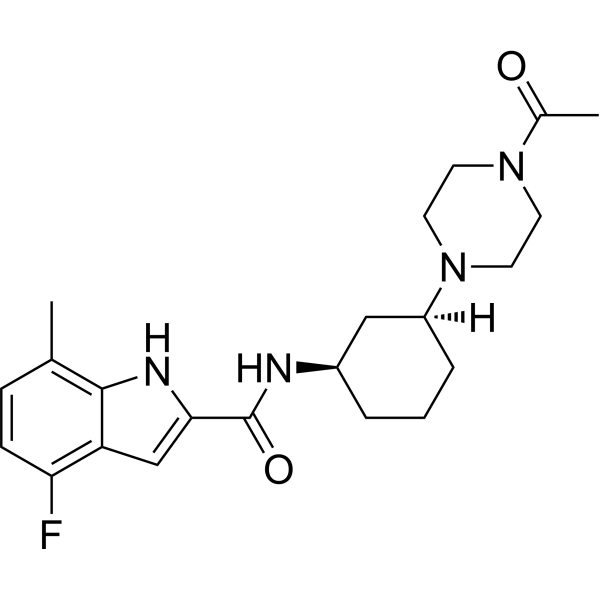
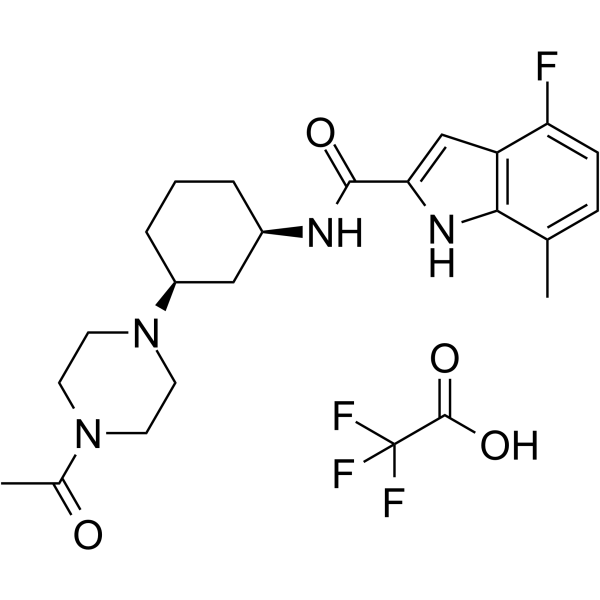
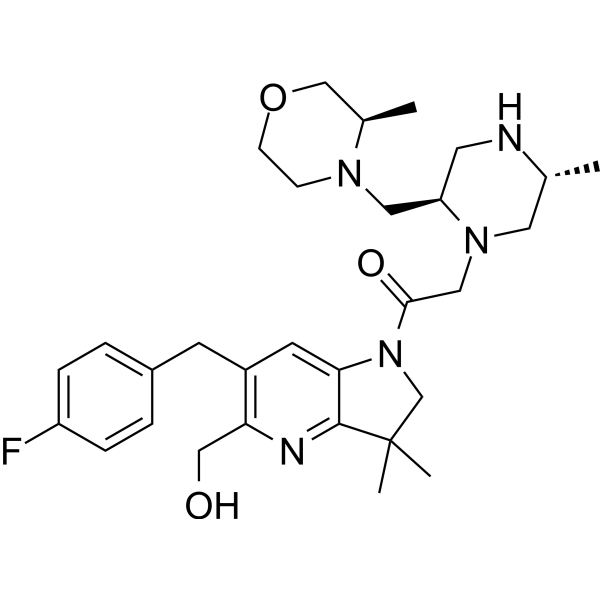
    EZM0414 is a potent, selective, orally bioavailable inhibitor of SETD2 (IC50=18 nM in SETD2 biochemical assay; IC50=34 nM in cellular assay). EZM0414 can be used for the research of relapsed or refractory multiple myeloma and diffuse large B-cell lymphoma .
    EZM0414
  • HY-100653
    AZD5153
    5 Publications Verification

    Epigenetic Reader Domain Apoptosis Cancer
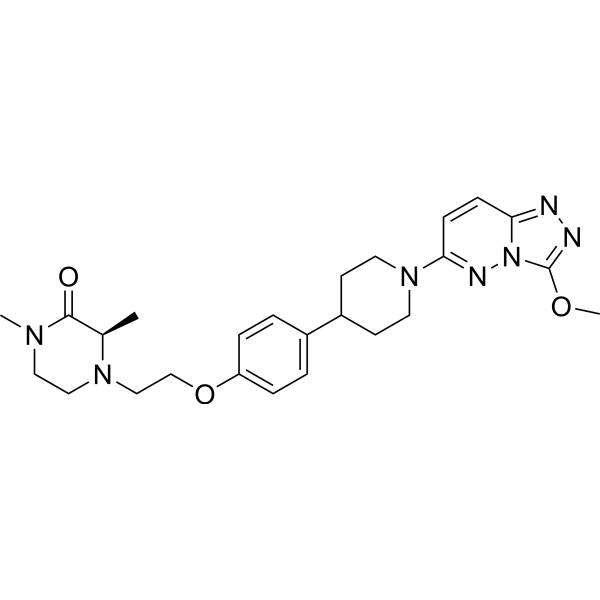
    AZD5153 is a bivalent, selective, and orally active BET/BRD4 bromodomain inhibitor with an IC50 of value of 5 nM for full-length BRD4 (FL-BRD4). AZD5153 ligates two bromodomains in BRD4 simultaneously. AZD5153 can be used for the study of cancer, such as acute myeloid leukemia, multiple myeloma, and diffuse large B-cell lymphoma .
    AZD5153
  • HY-16712
    LDN-214117
    2 Publications Verification

    TGF-β Receptor Cancer
    LDN-214117 is an orally active ALK2 inhibitor with well-tolerated and good brain penetration. LDN-214117 has a high selectivity and low cytotoxicity for ALK2 with an IC50 value of 24 nM. LDN-214117 also is a specific bone morphogenetic proteins (BMPs) signaling inhibitor and has relatively selective inhibition for BMP6 with an IC50 value of 100 nM. LDN-214117 can be used for the research of fibrodysplasia ossificans progressiva (FOP), diffuse intrinsic pontine glioma (DIPG) .
    LDN-214117
  • HY-B0373
    Tiopronin
    1 Publications Verification

    Others Metabolic Disease
    Tiopronin is a diffusible antioxidant, an antidote to heavy metal poisoning and a radioprotective agent. Tiopronin can control the rate of cystine precipitation and excretion and has the potential for cystinuria, rheumatoid arthritis and hepatic disorders .
    Tiopronin
  • HY-103019
    Enitociclib
    2 Publications Verification

    (+)-BAY-1251152; (+)-VIP152; (S)-Enitociclib

    Drug Isomer CDK Apoptosis DNA/RNA Synthesis Inflammation/Immunology Cancer
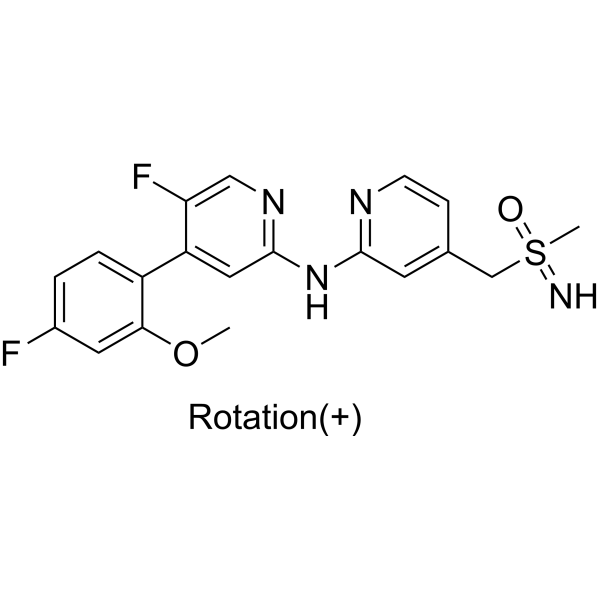
    Enitociclib ((+)-BAY-1251152; (+)-VIP152) is a selective CDK9 inhibitor (IC50=3 nM) that inhibits transcriptional elongation by blocking Ser2/Ser5 phosphorylation of RNA polymerase II. Enitociclib specifically depletes key short-lived proteins such as c-MYC, MCL-1 and induces tumor cell apoptosis. Enitociclib also interferes with the production of enhancer RNAs (eRNA) and enhancer-promoter interactions, and downregulates oncogene expression at the epigenetic level. Enitociclib exerts synergistic effects with agents including Bortezomib (HY-10227), Lenalidomide (HY-A0003), Pomalidomide (HY-10984), Venetoclax (HY-15531) and Paclitaxel (HY-B0015), and even reverses paclitaxel resistance. Enitociclib serves as a vital research tool for various malignancies such as double-hit diffuse large B-cell lymphoma, multiple myeloma and pancreatic ductal adenocarcinoma .
    Enitociclib
  • HY-10293
    Aderbasib
    1 Publications Verification

    INCB007839; INCB7839

    MMP Cancer
    Aderbasib (INCB007839) is a potent, orally active and target specific low nanomolar hydroxamate-based inhibitor of ADAM10 and ADAM17. Aderbasib exhibits robust antineoplastic activity and can be used for cancer research, including diffuse large B-cell non-Hodgkin lymphoma, HER2 + breast cancer, gliomas, et al .
    Aderbasib
  • HY-121282
    Mepazine
    2 Publications Verification

    Pecazine

    MALT1 Apoptosis Cancer
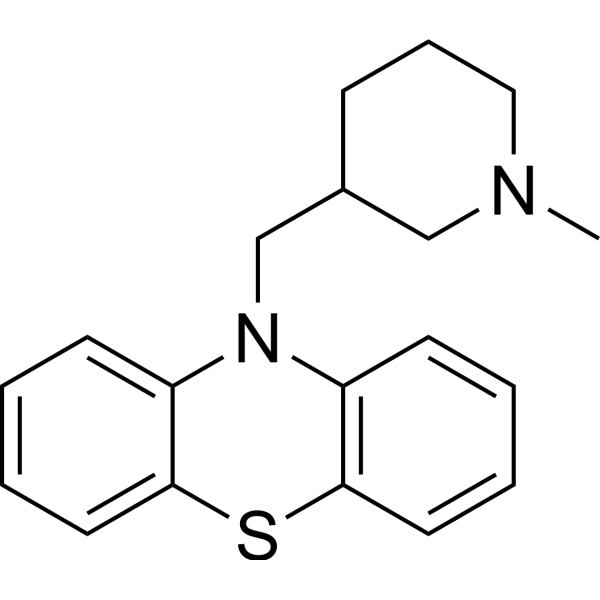
    Mepazine (Pecazine) is a potent and selective MALT1 protease inhibitor with IC50s of 0.83 and 0.42 μM for GSTMALT1 full length and GSTMALT1 325-760, respectively. Mepazine affects viability of ABC-DLBCL cells by enhancing apoptosis .
    Mepazine
  • HY-12649
    Y16
    5+ Cited Publications

    Ras Cancer
    Y16 is a specific inhibitor of Leukemia-associated Rho guanine nucleotide exchange factor (LARG) with a Kd value of 76 nM. Y16 is active in blocking the interaction of LARG and related G-protein-coupled Rho GEFs with RhoA. Y16 shows no detectable effect on other diffuse B-cell lymphoma (Dbl) family Rho GEFs, Rho effectors, or a RhoGAP .
    Y16
  • HY-111101

    IRAK Cancer
    AZ1495, a weak base, is a potent orally active interleukin-1 receptor associated kinase 4 (IRAK4) inhibitor. AZ1495 has a favorable physicochemical and kinase selectivity for IRAK4 and IRAK1 with IC50 values of 0.005 μM and 0.023 μM, respectively. AZ1495 has IRAK4 inhibition with a Kd value of 0.0007 μM. AZ1495 can be used for the research of diffuse large B-cell lymphoma (DLBCL) .
    AZ1495
  • HY-120231

    MALT1 NF-κB MMP Cancer
    Z-VRPR-FMK is an irreversible MALT1 protein inhibitor. Z-VRPR-FMK inhibits the growth and invasion of diffuse large B-cell lymphoma by inhibiting MALT1-induced NF-κB activation and MMP expression .
    Z-VRPR-FMK
  • HY-P99711

    RB4v1.2

    CD19 ADC Antibody Cancer
    Loncastuximab (RB4v1.2) is an anti-CD19 monoclonal antibody. Loncastuximab has antitumor activity and can be used in the research of Non-Hodgkin Lymphoma (NHL) and Diffuse Large B-cell Lymphoma (DLBCL). Loncastuximab is capable of synthesizing the ADC molecule Loncastuximab tesirine (HY-P99349) .
    Loncastuximab
  • HY-148234

    Anaplastic lymphoma kinase (ALK) TGF-beta/Smad Cancer
    M4K2234, a chemical probe, is an orally active, highly selective inhibitor of ALK1 and ALK2 with IC50 values of 7 nM and 14 nM, respectively. M4K2234 specifically blocks BMP signaling by inhibiting the phosphorylation of SMAD1/5/8. M4K2234 inhibits BMP7-stimulated reporter gene activity (IC50 = 16 nM). M4K2234 can be used for the investigation of ALK1/2-mediated biological processes and related diseases such as diffuse midline glioma (DMG) and fibrodysplasia ossificans progressiva (FOP) .
    M4K2234
  • HY-P99613

    MK-4280; Mavezelimab

    LAG-3 Cancer
    Favezelimab (MK-4280) is a humanized monoclonal antibody targeting LAG-3. Favezelimab blocks the interaction between LAG-3 and its ligand, MHC class II molecules. Favezelimab is applicable to research on relapsed/refractory classical Hodgkin lymphoma, relapsed/refractory diffuse large B-cell lymphoma, and relapsed/refractory indolent B-cell lymphoma . For the isotype control of Favezelimab, refer to Human IgG4 (S228P) kappa, Isotype Control (HY-P99003).
    Favezelimab
  • HY-168654

    Wee1 Cancer
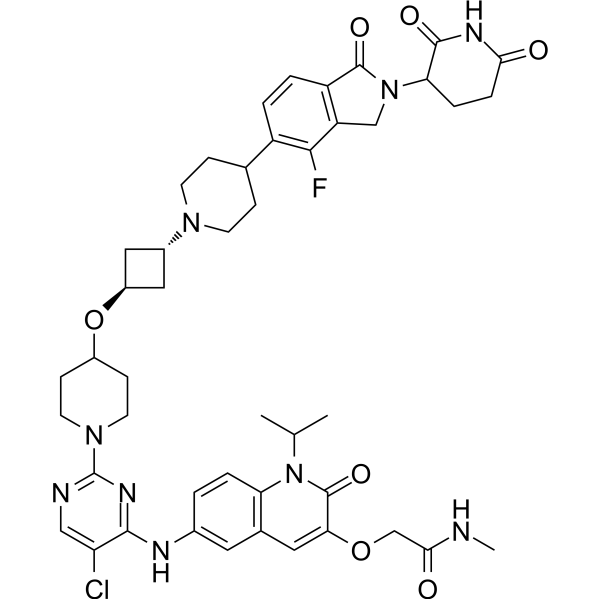
    WEE1 degrader 1 (Compound 10) is a CRBN-dependent molecular glue degrader of WEE1 and casein kinase 1α (CK1α) with sub-2 nM DC50 values for both targets. WEE1 degrader 1 can be used for the research of acute lymphoblastic leukemia, acute monocytic leukemia, acute promyelocytic leukemia, colorectal adenocarcinoma, diffuse large b cell lymphoma .
    WEE1 degrader 1
  • HY-157334
    DEG-77
    1 Publications Verification

    Molecular Glues Casein Kinase IKZF Family Bcl-2 Family CDK Apoptosis Cancer
    DEG-77 is a molecular glue targeting IKZF2 and CK1α, with DC50 values of 15.3 nM and 10 nM, respectively. DEG-77 exhibits significant anti-tumor activity, inducing increased transcriptional levels of the pro-apoptotic protein Bax and the cell cycle arrest protein p21. DEG-77 is applicable to the research of acute myeloid leukemia (AmL), diffuse large B-cell lymphoma and ovarian cancer.
    DEG-77
  • HY-P990033

    CC-95251; BMS-986351

    CD47 Cancer
    Anzurstobart is a CD47/SIRPα inhibitor with human SIRPα Kd of 0.0541 nM and human SIRPα IC50 of 100 nM. Anzurstobart binds SIRPα at a CD47-overlapping site, blocks CD47-SIRPα interactions, inhibits CD47-SIRPα axis signaling, and binds across 6 prevalent human SIRPα haplotypes. Anzurstobart binds SIRPγ and inhibits CD47-SIRPγ interactions. Anzurstobart can be used for the research of non-Hodgkin's lymphoma, colorectal cancer, squamous cell carcinoma of the head and neck, diffuse large B-cell lymphoma, and advanced solid and hematologic malignancies .
    Anzurstobart
  • HY-157763

    PROTAC-Linker Conjugates for PAC Btk Cancer
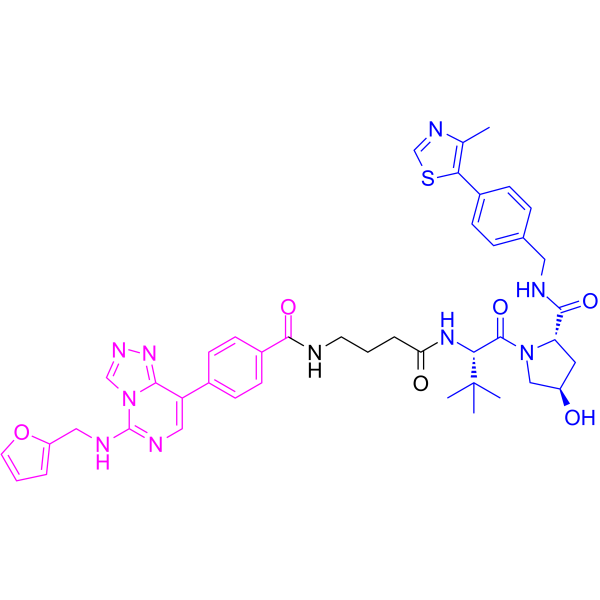
    Mal-PEG1-Val-Cit-PABC-diphosphate-BTK degrader-1 is a cleavable linker-payload conjugate and cereblon-binding BTK bifunctional degrader. Mal-PEG1-Val-Cit-PABC-diphosphate-BTK degrader-1 induces BTK degradation and exerts cytotoxic effects when delivered via CD79b monoclonal antibody. Mal-PEG1-Val-Cit-PABC-diphosphate-BTK degrader-1, when formulated as a CD79b antibody-drug conjugate, achieves sustained in vivo BTK degradation in tumor-bearing mice with reduced systemic payload exposure. Mal-PEG1-Val-Cit-PABC-diphosphate-BTK degrader-1 can be used for the research of activated b-cell-like diffuse large b-cell lymphoma (ADC linker: (HY-130944); PROTAC: (HY-163295)) .
    Mal-PEG1-Val-Cit-PABC-diphosphate-BTK degrader-1
  • HY-147091

    Ligands for Target Protein for PROTAC Cancer
    Tazemetostat de(methyl morpholine)-COOH (compound 7) is a ligand for the PROTAC target protein EZH2, which can be used to synthesis of EZH2 degraders (PROTACs). EZH2 degraders have potent cell viability inhibition in diffuse large B-cell lymphoma (DLBCL) and other subtypes of lymphoma .
    Tazemetostat de(methyl morpholine)-COOH
  • HY-101883A
    BCECF Acetoxymethyl ester
    5+ Cited Publications

    Fluorescent Dye Others
    BCECF Acetoxymethyl ester is a cell membrane permeable compound widely-used as a fluorescent indicator for intracellular pH. BCECF Acetoxymethyl ester could diffuse through the cell membrane and intracellular esterase cleave the ester bond releasing BCECF (HY-101882). BCECF allows measurements in the physiological pH range 6.0-8.0. Excitation ratio: 490/440 nm; Emission intensity: 535 nm .
    BCECF Acetoxymethyl ester
  • HY-161828

    PROTACs CDK Cancer
    JWZ-5-13 is a CDK7 PROTAC degrader. JWZ-5-13 inhibits the proliferation of cancer cells. JWZ-5-13 is applicable to the research of ovarian cancer, diffuse large B-cell lymphoma, acute T-lymphoblastic leukemia and non-small cell lung cancer .
    JWZ-5-13
  • HY-172199

    ClpP Cancer
    THX6 is an hClpP activator with an EC50 of 1.18 μM. THX6 improves off-target profile with no affinity for hD2R and only weak affinity for hD3R (Ki = 51.1 µM) in HEK293 cells. THX6 shows good cytotoxicity in ONC201-resistant cells with an IC50 of 0.13 μM. THX6 changes the levels of fatty acids (PUFAs, MUFAs, and SFAs) in DIPG cells. THX6 decreases the level of proteins involved in oxidative phosphorylation, biogenesis, and mitophagy proteins, thereby resulting in a global collapse of mitochondrial integrity and function. THX6 can be used for diffuse intrinsic pontine glioma research .
    THX6
  • HY-145103

    Histone Methyltransferase Cancer
    UNC6934 is a selective NSD2-PWWP1 antagonist with IC50 values of 78 nM and 104 nM, and a Ka of 91 nM against human targets. UNC6934 binds to the canonical methyl-lysine binding pocket of NSD2-PWWP1 and directly competes with H3K36me2 for binding. UNC6934 induces the aggregation of NSD2 within the nucleolus, without altering ribosomal RNA transcription, global H3K36me2 levels or the proliferation of KMS-11 cells. UNC6934 can be used in studies related to multiple myeloma and diffuse intrinsic pontine glioma.
    UNC6934
  • HY-156437

    Apoptosis Ser/Thr Protease NEKs Mitosis Cancer
    NBI-961 is a potent NEK2 inhibitor that inhibits proteasomal degradation. NBI-961 induces G2/mitosis arrest and apoptosis in diffuse large B cell lymphoma (DLBCL) cells .
    NBI-961
  • HY-125962

    Fluorescent Dye Amyloid-β Neurological Disease
    X-34 is a lipophilic and bright yellow-green fluorescent derivative of Congo red (HY-D0236). X-34 can be used to stain neuritic and diffuse plaques, neurofibrillary tangles (NFTs), neuropil threads, and cerebrovascular amyloid in the brain. X-34 can be used for research of Alzheimer’s disease .
    X-34
  • HY-P1407

    MALT1 NF-κB MMP Cancer
    Z-Val-Arg-Pro-DL-Arg-Fluoromethylketone TFA is an irreversible MALT1 protein inhibitor. Z-Val-Arg-Pro-DL-Arg-Fluoromethylketone TFA inhibits the growth and invasion of diffuse large B-cell lymphoma by inhibiting MALT1-induced NF-κB activation and MMP expression .
    Z-Val-Arg-Pro-DL-Arg-Fluoromethylketone TFA
  • HY-121282A
    Mepazine hydrochloride
    2 Publications Verification

    Pecazine hydrochloride

    MALT1 Apoptosis Cancer
    Mepazine hydrochloride (Pecazine hydrochloride) is a potent and selective MALT1 protease inhibitor with IC50s of 0.83 and 0.42 μM for GSTMALT1 full length and GSTMALT1 325-760, respectively. Mepazine hydrochloride affects viability of ABC-DLBCL cells by enhancing apoptosis .
    Mepazine hydrochloride
  • HY-131246

    Histone Methyltransferase Cancer
    DM-01 is a powerful and selective EZH2 inhibitor for the research of diffuse large B-cell lymphoma (DLBCL), follicular lymphoma (FL), and SNF5/INI-1/SMARCB1 genetically defined solid tumors .
    DM-01
  • HY-111781

    WS-413

    Btk Cancer
    Civorebrutinib (WS-413) is a selective, orally active BTK and TEC inhibitor with an IC50 of <100 nM for both targets. Civorebrutinib inhibits B cell activation. Civorebrutinib significantly suppresses the in vivo growth of diffuse large B-cell lymphoma cells. Civorebrutinib can be used for the research of diffuse large B-cell lymphoma .
    Civorebrutinib
  • HY-12422A

    CDK Cancer
    Voruciclib hydrochloride is an orally active and selective CDK inhibitor with Ki values of 0.626 nM-9.1 nM. Voruciclib hydrochloride potently blocks CDK9, the transcriptional regulator of MCL-1. Voruciclib hydrochloride represses expression of MCL-1 in multiple models of diffuse large B-cell lymphoma (DLBCL) .
    Voruciclib hydrochloride
  • HY-19916

    BAL-101553

    Microtubule/Tubulin Checkpoint Kinase (Chk) Cancer
    Lisavanbulin (BAL-101553) is the prodrug of the microtubule targeting agent Avanbulin (BAL 27862) (HY-106008). Lisavanbulin is a BBB-penetrant and orally active antitumor agent, especially in tumors that express high levels of end-binding protein 1. Lisavanbulin has ability to target tumor cell proliferation and affects the tumor microenvironment by reducing tumor microvasculature. Lisavanbulin is also a spindle assembly checkpoint activator. Lisavanbulin induces cell cycle arrest and subsequent death or aberrant chromosome segregation. Lisavanbulin can be studied in research for diffuse large B cell lymphoma (DLBCL) and glioblastoma .
    Lisavanbulin
  • HY-149591

    TGF-β Receptor Anaplastic lymphoma kinase (ALK) Cancer
    M4K-2009 is an orally bioactive ALK2 inhibitor with an IC50 of 13 nM. M4K-2009 exerts comparable inhibitory potency against wild-type and mutant ALK2 G328V, ALK2 R206H, and ALK2 R258G. M4K-2009 exhibits moderate off-target inhibitory activity against hERG potassium channels. M4K-2009 can be used in studies related to diffuse intrinsic pontine glioma .
    M4K-2009
  • HY-133876

    DiA

    Fluorescent Dye Others
    4-Di-16-ASP is a green fluorescent membrane dye. 4-Di-16-ASP is a lipophilic aminostyryl probe with a broad emission spectrum (can be detected with green, orange or even red filters). It is commonly used for neuronal membrane tracing (it diffuses faster than DiO) .
    4-Di-16-ASP
  • HY-162651

    PROTACs Epigenetic Reader Domain Apoptosis Cancer
    PROTAC BRD9 Degrader-8 is a selective, orally active BRD9 PROTAC degrader with a DC50 of 16 pM.\nPROTAC BRD9 Degrader-8 induces cell cycle arrest at the G1 phase and promotes apoptosis. PROTAC BRD9 Degrader-8 can be used for research on acute myeloid leukemia and diffuse large B-cell lymphoma .
    PROTAC BRD9 Degrader-8
  • HY-156566

    PROTACs Epigenetic Reader Domain HSP Cancer
    PROTAC BRD4 Degrader-21 is a BRD4-targeting PROTAC degrader with an IC50 value of 59 nM. PROTAC BRD4 Degrader-21 induces ubiquitination of BRD4, leading to its degradation via the proteasome. PROTAC BRD4 Degrader-21 binds to recombinant HSP90α protein with moderate affinity, having an IC50 of 100-1000 nM. PROTAC BRD4 Degrader-21 induces cancer cell death. PROTAC BRD4 Degrader-21 inhibits tumor growth in xenograft mouse models. PROTAC BRD4 Degrader-21 can be used for the research of acute myeloid leukemia, diffuse large B-cell lymphoma .
    PROTAC BRD4 Degrader-21
  • HY-P99501

    HS006

    CD20 Cancer
    Zuberitamab (HS006) is a monoclonal antibody that targets CD20 and can be used in cancer research, including diffuse large B-cell lymphoma .
    Zuberitamab
  • HY-130253

    IRAK Cancer
    IRAK4-IN-6 is an orally efficacious and selective IRAK4 inhibitor with an IC50 of 4 nM, and targetes MyD88 L265P mutant diffuse large B cell lymphoma .
    IRAK4-IN-6
  • HY-155939

    TGF-β Receptor Cancer
    M4K2163 dihydrochloride is a potent, selective, blood-brain barrier (BBB) permeable activin receptor-like kinase-2 (ALK2) inhibitor, with an IC50 of 19 nM. M4K2163 dihydrochloride can be used in the research of diffuse intrinsic pontine glioma (DIPG) .
    M4K2163 dihydrochloride
  • HY-176941

    TGF-β Receptor Cancer
    ALK2-IN-6 (Compound 14a) is a selective ALK2 inhibitor, with an IC50 of 9 nM. ALK2-IN-6 can be used in the research of diffuse intrinsic pontine glioma .
    ALK2-IN-6
  • HY-P991345

    AMP-514

    PD-1/PD-L1 Cancer
    MEDI-0680 (AMP-514) is a human IgG4 monoclonal antibody (mAb) targeting PDCD1/PD-1/CD279. MEDI-0680 can be used in Diffuse Large B-Cell Lymphoma (DLBCL) research .
    MEDI-0680
  • HY-19916A

    BAL-101553 dihydrochloride

    Microtubule/Tubulin Checkpoint Kinase (Chk) Cancer
    Lisavanbulin (BAL-101553) dihydrochloride is the prodrug of the microtubule targeting agent Avanbulin (BAL 27862) (HY-106008). Lisavanbulin dihydrochloride exhibits antitumor activity, especially in tumors that express high levels of end-binding protein 1. Lisavanbulin dihydrochloride has ability to target tumor cell proliferation and affects the tumor microenvironment by reducing tumor microvasculature. Lisavanbulin dihydrochloride is also a spindle assembly checkpoint activator. Lisavanbulin dihydrochloride induces cell cycle arrest and subsequent death or aberrant chromosome segregation. Lisavanbulin dihydrochloride can be studied in research for diffuse large B cell lymphoma (DLBCL) and glioblastoma .
    Lisavanbulin dihydrochloride
  • HY-175502

    Molecular Glues IKZF Family Apoptosis Cancer
    MGD-22, a molecular glue, is an orally active IKZF1/2/3 degrader with DC50 values of 8.33 nM, 9.91 nM, and 5.74 nM, respectively. MGD-22 exhibits extremely potent anti-proliferative activity against diverse hematological cancer cells. MGD-22 induces apoptosis in cancer cells. MGD-22 demonstrates potent anti-tumor efficacy in mice bearing NCI-H929 xenografts or WSU-DLCL-2 xenografts. MGD-22 can be used for the study of hematological cancers, including multiple myeloma (MM), acute myeloid leukemia (AML), and diffuse large B-cell lymphoma (DLBCL) .
    MGD-22
  • HY-N9508

    Cytochrome P450 Inflammation/Immunology
    Perilla ketone is a naturally occurring xenobiotic compound. Perilla ketone is activated by pulmonary P450 cytochrome enzymes in the lung, resulting in severe pulmonary damage and development of diffuse pulmonary edema .
    Perilla ketone
  • HY-P991051

    Interleukin Related Inflammation/Immunology
    GSK-2330811 is a humanized IgG1 antibody that targets Oncostatin M (OSM). GSK-2330811 has the potential for the study of diffuse cutaneous systemic sclerosis (dcSSc). The isotype control for GSK-2330811 can refer to Human IgG1 kappa, Isotype Control (HY-P99001) .
    GSK-2330811
  • HY-P3779

    Aβ(17-42)

    Apoptosis Neurological Disease
    Amyloid 17-42 (Aβ(17-42)) is a major constituent of diffuse plaques in Alzheimer's disease and cerebellar pre-amyloid in Down's syndrome, derived by alpha- and gamma-secretase cleavage of the amyloid precursor protein (APP). Amyloid 17-42 can induce neuronal apoptosis via a Fas-like/caspase-8 activation pathway .
    Amyloid 17-42

Inquiry Online

Your information is safe with us. * Required Fields.

Salutation


Country or Region *

Applicant Name *


Organization Name *

Department *


Email Address *


Product Name *

Cat. No.


Requested quantity *

Phone Number *


Remarks

Inquiry Online

Inquiry Information

Product Name:
Cat. No.:
Quantity:
MCE Japan Authorized Agent:

