


1. Search Result
Search Result
Results for "

drug-releasing

" in MedChemExpress (MCE) Product Catalog:

44

Inhibitors & Agonists

1

Screening Libraries

28

Biochemical Assay Reagents

1

Peptides

1

Natural
Products

5

Oligonucleotides

Cat. No. Product Name Target Research Areas Chemical Structure
  • HY-42990

    HSPC; Hydrogenated soybean phosphatidylcholine

    Liposome Metabolic Disease
    Hydrogenated soya phosphatidylcholine (hydrogenated soybean phosphatidylcholine) is a natural product. Hydrogenated soya phosphatidylcholine can extend drug release in regard to drug loading and solubility for oral drug delivery of watersoluble drugs .
    Hydrogenated soya phosphatidylcholine
  • HY-W075517

    2-Methylimidazole zinc salt

    Caspase Pyroptosis MOFs Cancer
    ZIF-8 (2-Methylimidazole zinc salt) is a caspase-1/Gasdermin D activator and a pH- and stimulus-responsive inducer of drug release, which serves as a highly efficient drug delivery carrier. ZIF-8 is a metal-organic framework (MOF). ZIF-8 activates the caspase-1/Gasdermin D-dependent pyroptosis pathway, induces pyroptosis, necrosis and immunogenic cell death, initiates in situ anti-tumor immunity, reprograms the immunosuppressive tumor microenvironment and inhibits tumor proliferation. ZIF-8 is applicable to related research on multiple cancers including colorectal cancer and breast cancer .
    ZIF-8
  • HY-A0104K

    Hypromellose (Type II,Viscosity:3mPa.s); (Hydroxypropyl)methyl cellulose (Type II,Viscosity:3mPa.s); Celacol HPM 5000 (Type II,Viscosity:3mPa.s)

    Environmental Pollutants Biochemical Assay Reagents Others
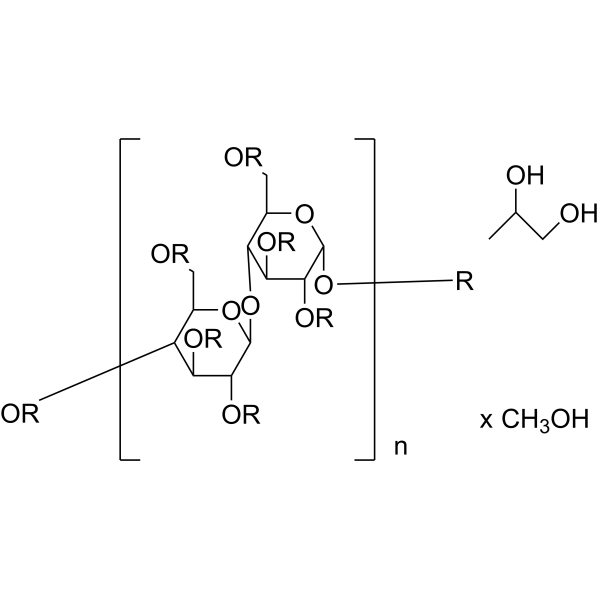
    HPMC (Type II, Viscosity: 3 mPa.s) is a nonionic polymer prepared via synthetic modification of cellulose. As a hydrophilic matrix material, HPMC prolongs drug release through non-Fickian diffusion, which includes the diffusion of drugs in the hydrated matrix and the polymer relaxation process .
    HPMC (Type II,Viscosity:3mPa.s)
  • HY-A0104B

    Hypromellose (Type I,Viscosity:100mPa.s); (Hydroxypropyl)methyl cellulose (Type I,Viscosity:100mPa.s); Celacol HPM 5000 (Type I,Viscosity:100mPa.s)

    Environmental Pollutants Biochemical Assay Reagents Others
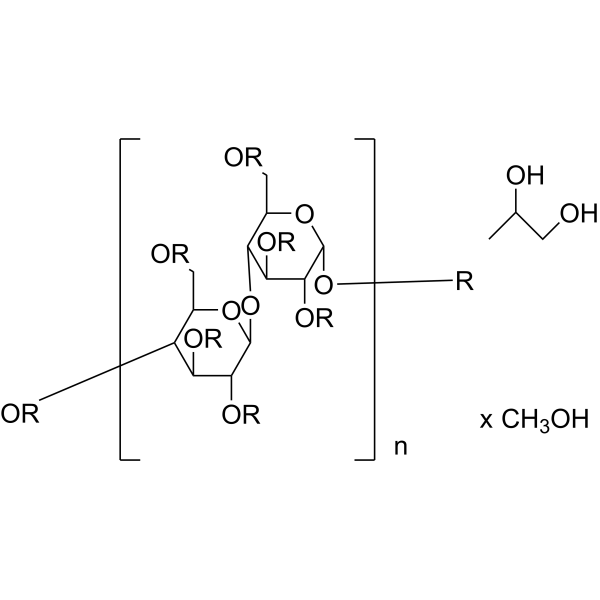
    HPMC (Type I, Viscosity: 100 mPa·s) is a nonionic polymer obtained via synthetic modification of cellulose. As a hydrophilic matrix material, HPMC prolongs drug release through non-Fickian diffusion, including the diffusion of drugs within the hydrated matrix and the polymer relaxation process .
    HPMC (Type I,Viscosity:100mPa.s)
  • HY-W250721

    CBM 980

    Biochemical Assay Reagents Others
    Carbomer 980 (CBM 980) is an acrylic acid polymer, which can be used as a thickening agent. Carbomer 980 provides a stable gel matrix, exhibits good heat, light and microbial contamination resistance. Carbomer 980 facilitates the drug release and local application, which can be used in the pharmaceutical industry .
    Carbomer 980
  • HY-A0104E

    Hypromellose (Type II,Viscosity:100mPa.s); (Hydroxypropyl)methyl cellulose (Type II,Viscosity:100mPa.s); Celacol HPM 5000 (Type II,Viscosity:100mPa.s)

    Environmental Pollutants Biochemical Assay Reagents Others
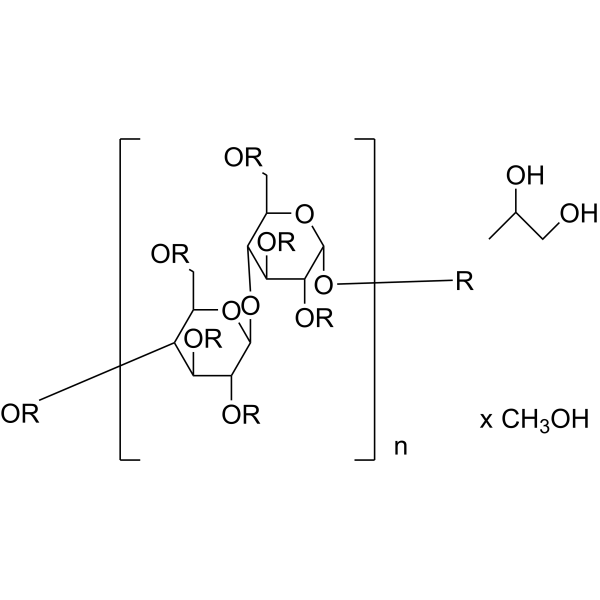
    HPMC (Hypromellose; (Hydroxypropyl)methyl cellulose; Celacol HPM 5000) (Type II,Viscosity:100mPa.s) is a non-ionic polymer obtained via synthetic modification of cellulose. As a hydrophilic matrix material, HPMC prolongs drug release through non-Fickian diffusion, including the diffusion of drugs in the hydrated matrix and the polymer relaxation process .
    HPMC (Type II,Viscosity:100mPa.s)
  • HY-W250721B

    CBM 934

    Biochemical Assay Reagents Others
    Carbomer 934 (CBM 934) is an acrylic acid polymer, which can be used as a thickening agent. Carbomer 934 which forms a high viscosity gel, provides a stable gel matrix, and exhibits good heat, light and microbial contamination resistance. Carbomer 934 facilitates the drug release and local application, which can be used in the pharmaceutical industry .
    Carbomer 934
  • HY-A0104I

    Hypromellose (Type II,Viscosity:100000mPa.s); (Hydroxypropyl)methyl cellulose (Type II,Viscosity:100000mPa.s); Celacol HPM 5000 (Type II,Viscosity:100000mPa.s)

    Biochemical Assay Reagents Others
    HPMC (Hypromellose; (Hydroxypropyl)methyl cellulose; Celacol HPM 5000) (Type II,Viscosity:100000mPa.s) is a non-ionic polymer obtained via synthetic modification of cellulose. As a hydrophilic matrix material, HPMC prolongs drug release through non-Fickian diffusion, including the diffusion of drugs in the hydrated matrix and the polymer relaxation process .
    HPMC (Type II,Viscosity:100000mPa.s)
  • HY-W250721C

    CBM 941

    Biochemical Assay Reagents
    Carbomer 941 (CBM 941) is an acrylic acid polymer, which can be used as a thickening agent. Carbomer 941 provides a stable gel matrix, exhibits good heat, light and microbial contamination resistance. Carbomer 941 facilitates the drug release and local application, which can be used in the pharmaceutical industry .
    Carbomer 941
  • HY-156829A

    Biochemical Assay Reagents Cancer
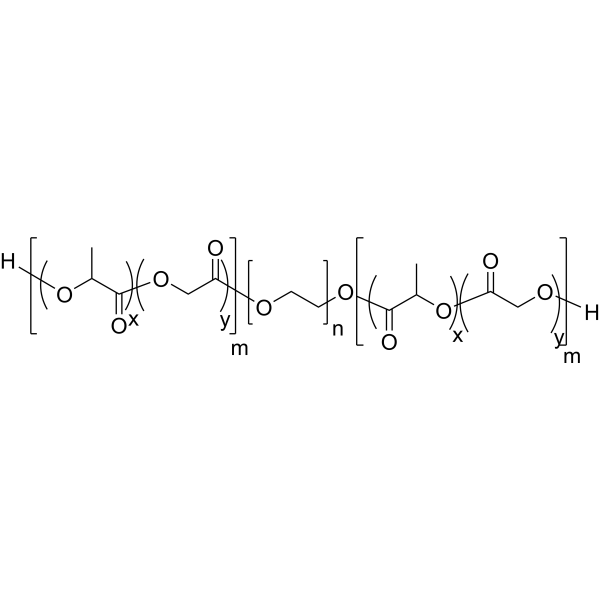
    PLGA-PEG-PLGA (1500-1500-1500) (LA/GA 15:1) is a matrix materia, with lactic acid (LA):glycolic acid (GA) = 15:1, that acts as anti-cancer drug delivery. PLGA-PEG-PLGA (1500-1500-1500) (LA/GA 15:1) can improve a drug's bioavailability, efficacy, water solubility, drug encapsulation efficiency, sustained drug release, and to minimize undesirable toxicity .
    PLGA-PEG-PLGA (1500-1500-1500) (LA/GA 15:1)
  • HY-158224

    FibMA

    Biochemical Assay Reagents Others
    Silk Fibroin Methacryloyl (FibMA) is methacrylated silk fibroin with excellent biocompatibility, stable mechanical properties and good processing properties, and was selected as the substrate for multifunctional microneedle (MN) patches. . MN patches made of Silk Fibroin Methacryloyl exhibit excellent biocompatibility, sustained drug release, pro-angiogenic, antioxidant and antibacterial properties depending on the specific drug encapsulated . Silk Fibroin Methacryloyl needs to self-assemble into fibrous hydrogel under the action of photoinitiator LAP (HY-44076), and target bioactive adhesion sites, play an inherent supporting role for tissue cells and biodegradable activity.
    Application: cell culture, biological 3D printing, tissue engineering, etc.
    Silk Fibroin Methacryloyl
  • HY-Y0850U5

    Polyvinyl alcohol (Mw 27000, 98-99% hydrolyzed, ~600 polymerization); Poly(Ethenol) (Mw 27000, 98-99% hydrolyzed, ~600 polymerization)

    Biochemical Assay Reagents Fungal Infection
    PVA (Polyvinyl alcohol) (Mw 27000, 98-99% hydrolyzed, ~600 polymerization) is a nonionic ethanol homopolymer with hydrophilicity, water solubility and biodegradability. PVA (Mw 27000, 98-99% hydrolyzed, ~600 polymerization) exhibits biocompatibility, non-toxicity and non-carcinogenicity, as well as antibacterial activity against Gram-positive bacteria, Gram-negative bacteria and fungal strains. PVA (Mw 27000, 98-99% hydrolyzed, ~600 polymerization) can serve as a solubilizer, stabilizer, mucoadhesive agent and sustained-release agent, and has a synergistic solubilizing effect on voriconazole/sulfobutyl ether β-cyclodextrin complexes. By stabilizing such complexes, PVA (Mw 27000, 98-99% hydrolyzed, ~600 polymerization) forms freeze-thaw hydrogels with high mucoadhesion, sustained drug release and ex vivo corneal permeability. When compounded with hyaluronic acid hydrogels, PVA (Mw 27000, 98-99% hydrolyzed, ~600 polymerization) supports chondrocyte growth in vitro, and also forms complexes with Cu 2+, Co 2+, Ni 2+ and Zn 2+ ions. PVA (Mw 27000, 98-99% hydrolyzed, ~600 polymerization) can be used in studies related to fungal keratitis, bacterial infections and fungal infections .
    PVA (Mw 27000, 98-99% hydrolyzed, ~600 polymerization)
  • HY-W250721D

    Carboxy polymethylene

    Biochemical Assay Reagents Others
    Carbomer (Carboxy polymethylene) is an acrylic acid polymer, which can be used as a thickening agent. Carbomer provides a stable gel matrix, exhibits good heat, light and microbial contamination resistance. Carbomer facilitates the drug release and local application, which can be used in the pharmaceutical industry .
    Carbomer
  • HY-W250721G

    Carboxy polymethylene (interpolymer)

    Others
    Carbomer interpolymer (Carboxy polymethylene (interpolymer)) is an acrylic acid polymer, which can be used as a thickening agent. Carbomer interpolymer provides a stable gel matrix, exhibits good heat, light and microbial contamination resistance. Carbomer interpolymer facilitates the drug release and local application, which can be used in the pharmaceutical industry .
    Carbomer interpolymer
  • HY-W250721F

    Carboxy polymethylene (homopolymer)

    Biochemical Assay Reagents Others
    Carbomer homopolymer (Carboxy polymethylene (homopolymer)) is an acrylic acid polymer, which can be used as a thickening agent. Carbomer homopolymer provides a stable gel matrix, exhibits good heat, light and microbial contamination resistance. Carbomer homopolymer facilitates the drug release and local application, which can be used in the pharmaceutical industry .
    Carbomer homopolymer
  • HY-W250721J

    CBM 960

    Biochemical Assay Reagents Others
    Carbomer 960 is an acrylic acid polymer, which can be used as a thickening agent. Carbomer 960 which forms a high viscosity gel, provides a stable gel matrix, and exhibits good heat, light and microbial contamination resistance. Carbomer 960 facilitates the drug release and local application, which can be used in the pharmaceutical industry .
    Carbomer 960
  • HY-156829

    Biochemical Assay Reagents Cancer
    PLGA-PEG-PLGA (1500-1500-1500) (LA/GA 1:1) is a matrix materia, with lactic acid (LA):glycolic acid (GA) = 1:1, that acts as anti-cancer drug delivery. PLGA-PEG-PLGA (1500-1500-1500) (LA/GA 1:1) can improve a drug's bioavailability, efficacy, water solubility, drug encapsulation efficiency, sustained drug release, and to minimize undesirable toxicity .
    PLGA-PEG-PLGA (1500-1500-1500) (LA/GA 1:1)
  • HY-D1005A7

    PEG-PPG-PEG, 2400 (Average)

    Biochemical Assay Reagents Others
    Poloxamer 125 (L45) (PEG-PPG-PEG, 2400 (Average)) is a block polymer of polyoxyethylene and polyoxypropylene, belonging to water-soluble non-ionic biosurfactants with properties such as emulsification and wetting. Poloxamer 125 (L45) has thermosensitive characteristics and can form thermoreversible hydrogels in aqueous solutions, presenting a fluid state at room temperature and transforming into a viscous gel under body temperature conditions; when its concentration is higher than the critical micelle concentration, it can also self-assemble into micelles in aqueous systems. Poloxamer 125 (L45) enables controlled drug release, prolongs the local retention time of drugs, and is often used as a drug delivery carrier. Poloxamer 125 (L45) can be applied in the fields of cosmetics, biomedicine and tissue engineering .
    Poloxamer 125 (L45)
  • HY-W888521

    Biochemical Assay Reagents Others
    mPEG-PLLA is a diblock copolymer. mPEG-PLLA can be used to synthesize block copolymer micelle for drug-releasing .
    mPEG-PLLA
  • HY-W250721K

    CBM 996

    Biochemical Assay Reagents Others
    Carbomer 996 is an acrylic acid polymer, which can be used as a thickening agent. Carbomer 996 which forms a high viscosity gel, provides a stable gel matrix, and exhibits good heat, light and microbial contamination resistance. Carbomer 996 facilitates the drug release and local application, which can be used in the pharmaceutical industry .
    Carbomer 996
  • HY-W250721H

    CBM 970

    Biochemical Assay Reagents Others
    Carbomer 970 is an acrylic acid polymer, which can be used as a thickening agent. Carbomer 970 which forms a high viscosity gel, provides a stable gel matrix, and exhibits good heat, light and microbial contamination resistance. Carbomer 970 facilitates the drug release and local application, which can be used in the pharmaceutical industry .
    Carbomer 970
  • HY-W250721L

    CBM 676

    Biochemical Assay Reagents Others
    Carbomer 676 is an acrylic acid polymer, which can be used as a thickening agent. Carbomer 676 which forms a high viscosity gel, provides a stable gel matrix, and exhibits good heat, light and microbial contamination resistance. Carbomer 676 facilitates the drug release and local application, which can be used in the pharmaceutical industry .
    Carbomer 676
  • HY-178819

    Integrin Drug Intermediate Cancer
    NM-001 is a theranostic prodrug that targets ανβ3 integrin. NM-001 consists of cRGD and GFLG peptides, a DCM fluorophore and Chlorambucil (HY-13593). NM-001 internalizes into lysosomes of tumor cells via the cRGD peptide, and generates NM-002 (HY-178820) and Chlorambucil through intracellular cleavage at the GFLG peptide by overexpressed Cathepsin B (CTSB). NM-001 exhibits green fluorescence under physiological conditions, and converts to NIR fluorescence by CTSB activation. NM-001 has significant antitumor activity with low toxicity in HeLa cell xenografts mouse models. NM-001 can be used for real-time drug release monitoring research .
    NM-001
  • HY-W250721I

    CBM 990

    Biochemical Assay Reagents Others
    Carbomer 990 is an acrylic acid polymer, which can be used as a thickening agent. Carbomer 990 which forms a high viscosity gel, provides a stable gel matrix, and exhibits good heat, light and microbial contamination resistance. Carbomer 990 facilitates the drug release and local application, which can be used in the pharmaceutical industry .
    Carbomer 990
  • HY-W583729

    Biochemical Assay Reagents Others
    DL-Poly (lactic acid) is a biodegradable poly (α-hydroxy acid) matrix and a coating material for controlled drug release. DL-Poly (lactic acid) is classified as a drug release retardant, which degrades into natural lactic acid monomers, an intermediate product of carbohydrate metabolism, enabling complete drug delivery that lasts for several weeks. Its drug release rate is affected by the pH of the surrounding environment .
    DL-Polylactic acid
  • HY-185371

    Irinotecan hydrochlorid liposomee; Liposomal irinotecan

    Liposome Topoisomerase Cancer
    Irinotecan liposome is a liposome-encapsulated form of Irinotecan hydrochlorid (HY-16562A) (a topoisomerase I inhibitor). Compared with Irinotecan, Irinotecan liposome enhances antitumor activity, reduces drug release rate, and avoids neutropenia.
    Irinotecan liposome
  • HY-W013021R

    Others Reference Standards Others
    Norbornene (Standard) is the analytical standard of Norbornene (HY-W013021). This product is intended for research and analytical applications. Norbornene is a bicyclic compound. Norbornene polymers can be used in tissue engineering and drug release system .
    Norbornene (Standard)
  • HY-167488

    Biochemical Assay Reagents Others
    PLLA1000-PEG1000-RhB is a terminal rhodamine-labeled polylactic acid derivative. PLLA1000-PEG1000-RhB can be used to label nanomicelles for real-time monitoring of drug release in vivo .
    PLLA1000-PEG1000-RhB
  • HY-167486

    Biochemical Assay Reagents Others
    PLLA1000-PEG3000-RhB is a terminal rhodamine-labeled polylactic acid derivative. PLLA1000-PEG3000-RhB can be used to label nanomicelles for real-time monitoring of drug release in vivo .
    PLLA1000-PEG3000-RhB
  • HY-167482

    Biochemical Assay Reagents Others
    PLLA2000-PEG3000-RhB is a terminal rhodamine-labeled polylactic acid derivative. PLLA2000-PEG3000-RhB can be used to label nanomicelles for real-time monitoring of drug release in vivo .
    PLLA2000-PEG3000-RhB
  • HY-167480

    Biochemical Assay Reagents Others
    PLLA3000-PEG1000-RhB is a terminal rhodamine-labeled polylactic acid derivative. PLLA3000-PEG1000-RhB can be used to label nanomicelles for real-time monitoring of drug release in vivo .
    PLLA3000-PEG1000-RhB
  • HY-167491

    Biochemical Assay Reagents Others
    PLLA10000-PEG2000-RhB is a terminal rhodamine-labeled polylactic acid derivative. PLLA10000-PEG2000-RhB can be used to label nanomicelles for real-time monitoring of drug release in vivo .
    PLLA10000-PEG2000-RhB
  • HY-167490

    Biochemical Assay Reagents Others
    PLLA10000-PEG3000-RhB is a terminal rhodamine-labeled polylactic acid derivative. PLLA10000-PEG3000-RhB can be used to label nanomicelles for real-time monitoring of drug release in vivo .
    PLLA10000-PEG3000-RhB
  • HY-167484

    Biochemical Assay Reagents Others
    PLLA2000-PEG1000-RhB is a terminal rhodamine-labeled polylactic acid derivative. PLLA2000-PEG1000-RhB can be used to label nanomicelles for real-time monitoring of drug release in vivo .
    PLLA2000-PEG1000-RhB
  • HY-167487

    Biochemical Assay Reagents Others
    PLLA1000-PEG2000-RhB is a terminal rhodamine-labeled polylactic acid derivative. PLLA1000-PEG2000-RhB can be used to label nanomicelles for real-time monitoring of drug release in vivo .
    PLLA1000-PEG2000-RhB
  • HY-167483

    Biochemical Assay Reagents Others
    PLLA2000-PEG2000-RhB is a terminal rhodamine-labeled polylactic acid derivative. PLLA2000-PEG2000-RhB can be used to label nanomicelles for real-time monitoring of drug release in vivo .
    PLLA2000-PEG2000-RhB
  • HY-167485

    Biochemical Assay Reagents Others
    PLLA1000-PEG5000-RhB is a terminal rhodamine-labeled polylactic acid derivative. PLLA1000-PEG5000-RhB can be used to label nanomicelles for real-time monitoring of drug release in vivo .
    PLLA1000-PEG5000-RhB
  • HY-167492

    Biochemical Assay Reagents Others
    PLLA10000-PEG1000-RhB is a terminal rhodamine-labeled polylactic acid derivative. PLLA10000-PEG1000-RhB can be used to label nanomicelles for real-time monitoring of drug release in vivo .
    PLLA10000-PEG1000-RhB
  • HY-167489

    Biochemical Assay Reagents Others
    PLLA10000-PEG5000-RhB is a terminal rhodamine-labeled polylactic acid derivative. PLLA10000-PEG5000-RhB can be used to label nanomicelles for real-time monitoring of drug release in vivo .
    PLLA10000-PEG5000-RhB
  • HY-167481

    Biochemical Assay Reagents Others
    PLLA2000-PEG5000-RhB is a terminal rhodamine-labeled polylactic acid derivative. PLLA2000-PEG5000-RhB can be used to label nanomicelles for real-time monitoring of drug release in vivo .
    PLLA2000-PEG5000-RhB
  • HY-P11641

    MMP Inflammation/Immunology
    GCRRGPLGLSLGKRRCG is an MMP13-specific substrate peptide cleaved by MMP13. GCRRGPLGLSLGKRRCG contributes to an MMP13-responsive hydrogel microsphere system that achieves intelligent and controllable drug release in osteoarthritis (OA), decelerates disease progression, and promotes articular cartilage repair. GCRRGPLGLSLGKRRCG can be used for the research of osteoarthritis .
    GCRRGPLGLSLGKRRCG
  • HY-149196

    TGF-β Receptor Cancer
    TGFβ-IN-3 (Compound 8) is a long-acting tumor-activating prodrug of TGFβR1 inhibitor. TGFβ-IN-3 can achieve selective drug release in tumors, and the tumor/blood ratio is increased by 2.2 times. TGFβ-IN-3 can be used for the study of colon cancer .
    TGFβ-IN-3
  • HY-178820

    Drug Metabolite Cancer
    NM-002 is a metabolite of prodrug NM-001 (HY-178819), with NIR emission. NM-002 generates through activates the prodrug NM-001 by overexpressed Cathepsin B (CTSB) within tumor cells. NM-002 has no toxicity towards tumor cells and can escape from the lysosomes into the cytoplasm. NM-002 can be used for real-time drug release monitoring research .
    NM-002
  • HY-W394166

    Biochemical Assay Reagents Others
    6-Bromo-7-hydroxy-4-(hydroxymethyl)coumarin is a photosensitive cage like ceramide. 6-Bromo-7-hydroxy-4-(hydroxymethyl)coumarin can release active ceramides under light exposure. 6-Bromo-7-hydroxy-4-(hydroxymethyl)coumarin can be used for research on drug release with high spatiotemporal precision .
    6-Bromo-7-hydroxy-4-(hydroxymethyl)coumarin

Inquiry Online

Your information is safe with us. * Required Fields.

Salutation


Country or Region *

Applicant Name *


Organization Name *

Department *


Email Address *


Product Name *

Cat. No.


Requested quantity *

Phone Number *


Remarks

Inquiry Online

Inquiry Information

Product Name:
Cat. No.:
Quantity:
MCE Japan Authorized Agent:

