


Delivery of temperature sensitive items including proteins and kits will be paused on 6/19 for the Juneteenth holiday. For urgent orders please contact customer service.
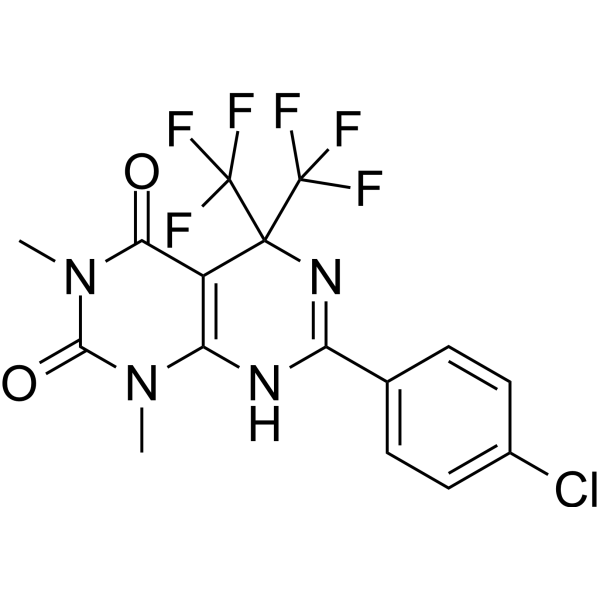
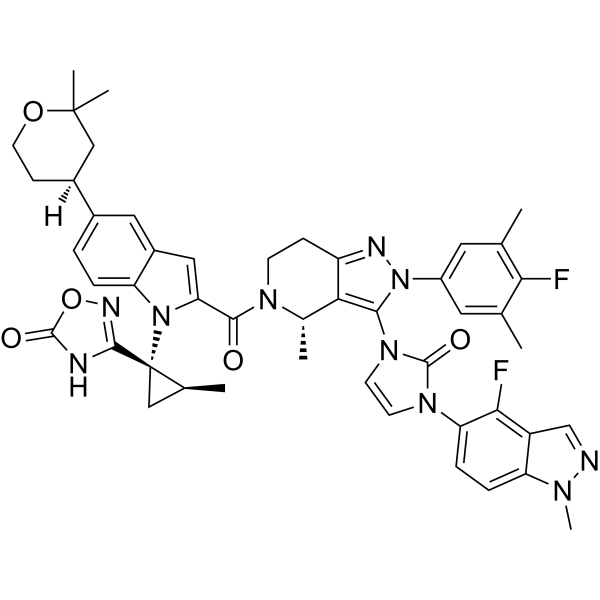
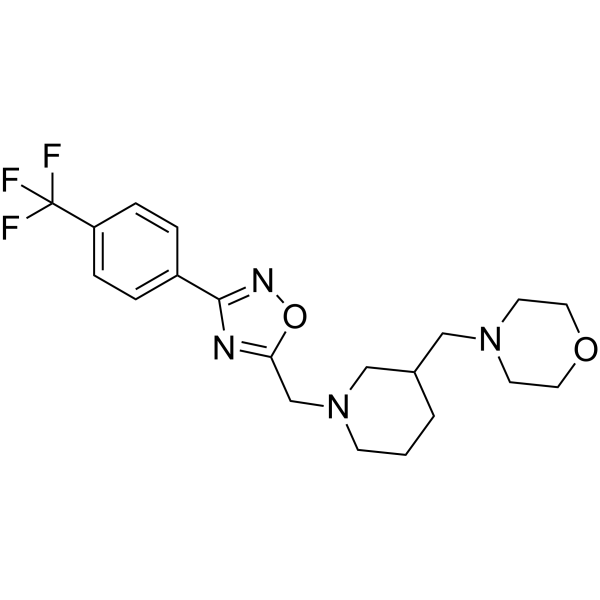
Orforglipron (LY3502970) (Compound 67) is an orally active agonist for Glucagon-likepeptide-1receptor(GLP-1R), which exhibits potency in ameliorates the type 2 diabete .
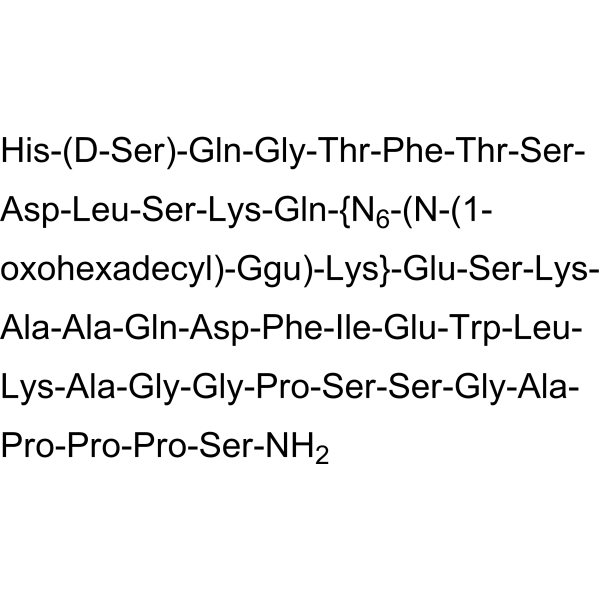
Retatrutide (LY3437943) is a triple agonist peptide of the glucagon receptor (GCGR), glucosedependent insulinotropic polypeptide receptor (GIPR), and glucagon-likepeptide-1receptor(GLP-1R). Retatrutide binds human GCGR, GIPR, and GLP-1R with EC50 values of 5.79, 0.0643 and 0.775 nM, respectively. Retatrutide can be used for the research of obesity .
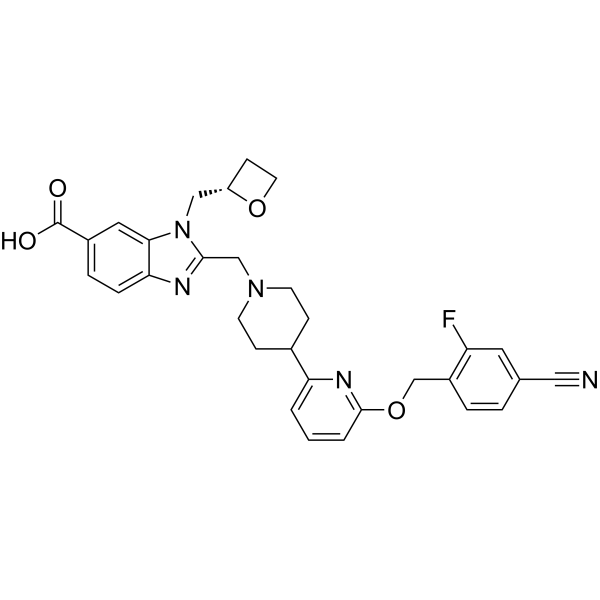
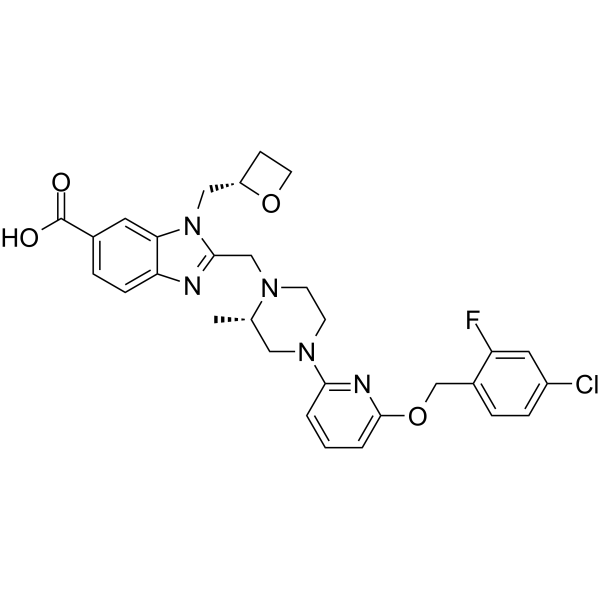
Danuglipron (PF-06882961) is an orally active glucagon-likepeptide-1receptor(GLP-1R) agonist. Danuglipron has the potential for type 2 diabetes research .
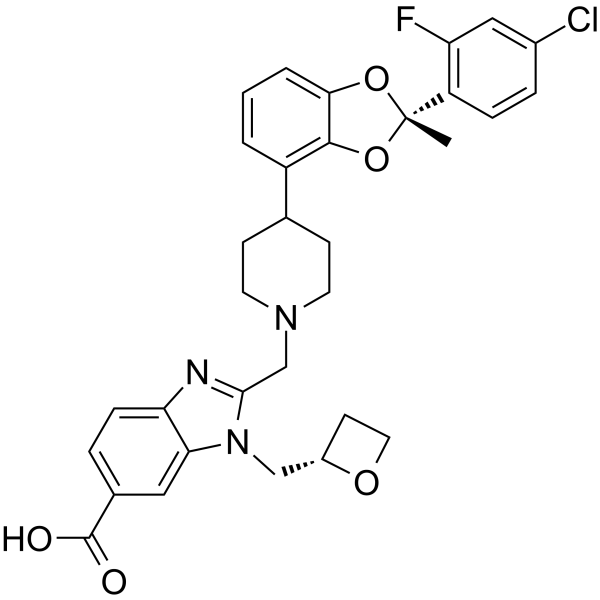
Aleniglipron (GSBR-1290) is an orally active glucagon-likepeptide-1receptor(GLP-1R) agonist, with an EC50 value of less than 0.1 nM in HDB cell lines in cAMP stimulation assays. Aleniglipron selectively activates the Gαs-cAMP signaling pathway of GLP-1R without β-arrestin recruitment. Aleniglipron induces insulin release, promotes glucose clearance, reduces food intake and decreases body weight. Aleniglipron is applicable to research related to type 2 diabetes and obesity .
Retatrutide (LY3437943) TFA is a triple agonist peptide of the glucagon receptor (GCGR), glucosedependent insulinotropic polypeptide receptor (GIPR), and glucagon-likepeptide-1receptor(GLP-1R). Retatrutide TFA binds human GCGR, GIPR, and GLP-1R with EC50 values of 5.79, 0.0643 and 0.775 nM, respectively. Retatrutide TFA can be used for the research of obesity .
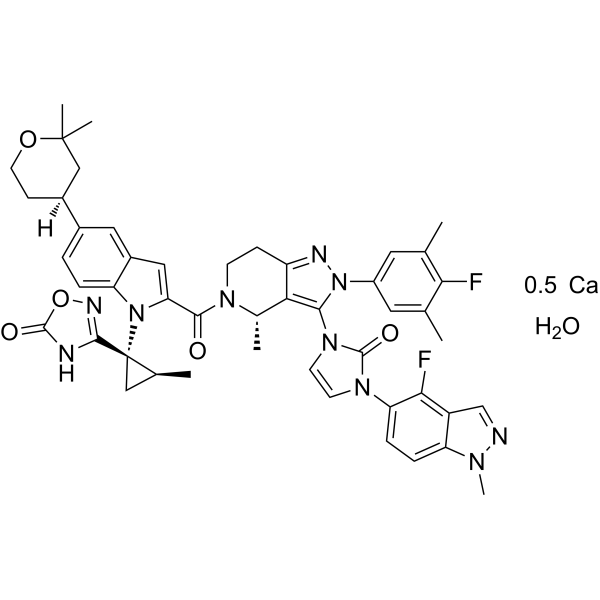
Orforglipron hemicalcium hydrate (LY3502970 hemicalcium hydrate; GLP-1 receptor agonist 1 hemicalcium hydrate) is the calcium salt hydrate form of Orforglipron (HY-112185). Orforglipron is an orally active agonist for Glucagon-likepeptide-1receptor(GLP-1R), which exhibits potency in ameliorating the type 2 diabete .
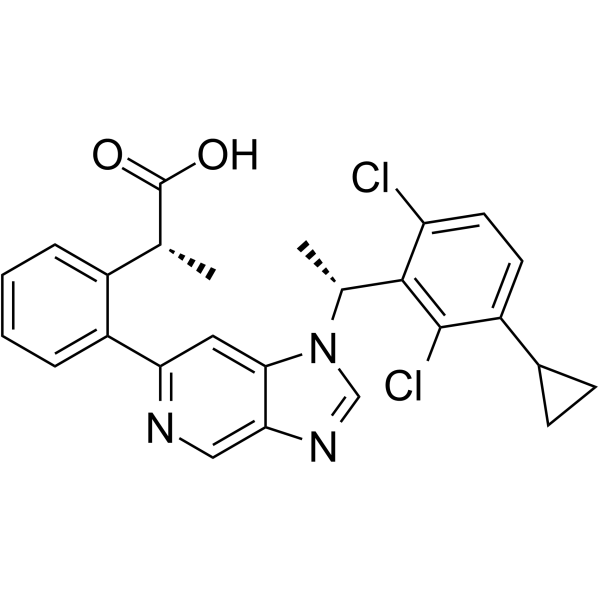
Naperiglipron (LY3549492) is an orally active Glucagon-likepeptide 1receptor(GLP-1R) agonist with an EC50 of 1.14 nM for hGLP-1R. Naperiglipron significantly decreases the level of blood glucose in GLP-1R knock-in mouse models. Naperiglipron inhibits PDE10A1 enzyme activity (IC50: 7.43 μM) with a weak hERG inhibitory activity. Naperiglipron can be used for type II diabetes mellitus (T2DM) and obesity research .
GLP-1R Antagonist 1 (compound 5d) is an orally active, CNS penetrant and non-competitive antagonist of glucagon-likepeptide 1receptor(GLP-1R), with an IC50 of 650 nM .
LSN3318839 is an orally active positive modulator of the glucagon-likepeptide-1receptor(GLP-1R). LSN3318839 can increase the secretion of insulin and has the effect of lowering blood sugar .
Fmoc-Lys(tBuO-Ara-Glu(AEEA-AEEA)-OtBu)-OH is a drug intermediate in the synthesis of Tirzepatide. Tirzepatide is a dual glucose-dependent insulinotropic peptide (GIP) and glucagon-likepeptide-1receptor (GLP-1R) agonist .
Dapiglutide (ZP7570) is a long-acting glucagon-likepeptide-1receptor 1R (GLP-1R)/Glucagon-likepeptide-2 receptor(GLP-2R) dual agonist. Dapiglutide alleviates intestinal dysfunction in a mouse short bowel model and has anti-obesity effects .
tBuO-Ste-Glu(AEEA-AEEA-OH)-OtBu is an intermediate in the synthesis of the glucagon-likepeptide 1receptor (GLP-1R) agonist Semaglutide (HY-114118). tBuO-Ste-Glu(AEEA-AEEA-OH)-OtBu exhibits a strong binding affinity to albumin and can be used to modify SN38 prodrugs to improve tumor distribution .
GLP-1 receptor agonist 7 (Compound 130b) is a potent agonist of glucagon-likepeptide-1(GLP-1).GLP-1 receptor agonist 7 generates cAMP under the mediation of GLP-1R with an EC50 of ≤ 0.2 nM. GLP-1 receptor agonist 7 can be used to study diseases related to the GLP-1 receptor (particularly type 2 diabetes) .
Bamadutide (SAR425899) is a potent dual glucagon-likepeptide-1receptor/glucagon receptor(GLP-1R/GCGR) agonist. Bamadutide improves post-meal blood glucose control by significantly enhancing β-cell function and slowing down the rate of glucose absorption in the body. Bamadutide can be used for the research of metabolic diseases such as type 2 diabetes .
V-0219 is an orally active glucagon-likepeptide-1receptor(GLP-1R) positive allosteric modulator. V-0219 potentiates GLP-1R stimulation, and enhances GLP-1-induced cAMP production and insulin secretion. V-0219 potentiates glucose-dependent insulin secretion. V-0219 improves glucose handling in normal and diabetic rodents. V-0219 can be used for the research of obesity-associated diabetes .
V-0219 hydrochloride is an orally active glucagon-likepeptide-1receptor(GLP-1R) positive allosteric modulator. V-0219 hydrochloride potentiates GLP-1R stimulation, and enhances GLP-1-induced cAMP production and insulin secretion. V-0219 hydrochloride potentiates glucose-dependent insulin secretion. V-0219 hydrochloride improves glucose handling in normal and diabetic rodents. V-0219 hydrochloride can be used for the research of obesity-associated diabetes .
Retatrutide (LY3437943) acetate is a triple agonist peptide of the glucagon receptor (GCGR), glucosedependent insulinotropic polypeptide receptor (GIPR), and glucagon-likepeptide-1receptor(GLP-1R). Retatrutide acetate inhibits human GCGR, GIPR, and GLP-1R with EC50 values of 5.79, 0.0643 and 0.775 nM, respectively. Retatrutide acetate can be used for the research of obesity .
GLP-1R agonist 4 is a glucagon-likepeptide-1(GLP-1)receptor agonist. GLP-1 is an intestinal hypoglycemic hormone secreted by L-cells in the lower gastrointestinal tract. GLP-1R agonist 4 can be used for the research of type 2 diabetes mellitus, obesity, non-alcoholic steatohepatitis, insulin resistance and etc .
GLP-1 receptor agonist 4 is a glucagon-likepeptide-1receptor(GLP-1R) agonist extracted from patent WO2009111700A2, compound 87, has an EC50 of 64.5 nM. GLP-1 receptor agonist 4 can be used in the research for treatment of diabetes .
Danuglipron (PF-06882961) tromethamine is an orally active glucagon-likepeptide-1receptor(GLP-1R) agonist. Danuglipron tromethamine has the potential for type 2 diabetes research .
(S,R)-LSN3318839 is the stereoisomer of LSN3318839 (HY-142162). LSN3318839 is an orally active positive modulator of the glucagon-likepeptide-1receptor(GLP-1R). LSN3318839 can increase the secretion of insulin and has the effect of lowering blood sugar .
Exendin-4 (3-39) is a peptide. Exendin-4 (3-39) is a truncated form of Exendin-4 (HY-13443) that lacks the first two amino acids. Exendin-4 is a potent Glucagon-likepeptide-1receptor (GLP-1r) agonist. Exendin-4 (3-39) and Exendin-4 can be used for the research of diabetic and hypothalamic-pituitary-adrenal (HPA) axis .
GLP-1R/GIPR AgonIST-1 is a double-receptor agonist for GLP-1 (glucagon-likepeptide-1) and GIP (glucose-dependent insulin releasing peptide). GLP-1R/GIPR agonist-1 lowers blood sugar by mimicking the action of endogenous hormones GLP-1 and GIP, enhancing insulin secretion while inhibiting glucagon secretion. GLP-1R/GIPR agonist-1 can be used in the study of metabolic diseases such as diabetes, obesity, and non-alcoholic steatohepatitis (NASH) .
GEP44 is a peptide biased triple agonist targeting Glucagon-likepeptide 1receptor(GLP-1R), neuropeptide Y1 Receptor (Y1-R), and neuropeptide Y2 Receptor (Y2-R). GEP44 induces Y1-R antagonist-controlled, GLP-1R-dependent stimulation of insulin secretion in both rat and human pancreatic islets by counteracting effects of Y1-R and GLP-1R agonism. GEP44 promotes insulin-independent Y1-R-mediated glucose uptake in muscle tissue and significantly reduces food intake and body weight in diet-induced obese rat models. GEP44 can be used for obesity and type 2 diabetes mellitus research .
GLP-1R agonist 34 (Compound 1) is an orally active small molecule glucagon-likepeptide-1receptor(GLP-1R) agonist. GLP-1R agonist 34 promotes insulin secretion, inhibits glucagon release, and delays gastric emptying, thereby effectively lowering blood glucose levels. GLP-1R agonist 34 is promising for research of metabolic diseases, including type 2 diabetes, obesity, and non-alcoholic steatohepatitis (NASH) .
Des His1, Glu8 Exendin-4 is a potent glucagon-likepeptide-1receptor(GLP-1-R) antagonist. Des His1, Glu8 Exendin-4 improves glucose homeostasis by regulating both insulin secretion and glucose production. Des His1, Glu8 Exendin-4 can be used for the research of type 2 diabetic and gastrointestinal .
GUB021794 is a potent and highly selective glucagon-likepeptide-1receptor(GLP-1R) agonist developed using the streaMLine platform with an EC50 value of 18 pM. GUB021794 has a very weak activity against SCTR, with an EC50 value of 190 nM. GUB021794 can significantly reduce the body weight, food intake, and total fat mass of mice in a diet-induced obesity (DIO) model. GUB021794 can be used for research on obesity/diabetes .
Taspoglutide (R1583) acetate is an agonist of the glucagon-likepeptide 1receptor(GLP-1R) with an Ki value of 1.1 nM. Taspoglutide acetate induces cAMP accumulation in CHO-K1 cells expressing human GLP-1R (EC50 = 0.06 nM). Taspoglutide acetate decreases blood levels of glucose and increases blood levels of insulin in a glucose tolerance test in Zucker diabetic obese rats. Taspoglutide acetate reduces blood levels of gastric inhibitory polypeptide (GIP), plasma levels of triglycerides, and body weight in the same model .
GLP-1R agonist 44 is a glucagon-likepeptide-1receptor(GLP-1R) agonist. GLP-1R agonist 44 can be used for the research of diseases related to GLP-1R, such as type 2 diabetes, obesity, non-alcoholic fatty liver disease, non-alcoholic steatohepatitis, nephropathy, gout, hematuria, cardiovascular disease .
GLP-1R agonist 38 (page 15, compound 1) is a glucagon-likepeptide-1receptor(GLP-1R) agonist. GLP-1R agonist 38 can be used for the study of metabolic disorders and related diseases, including but not limited to type II diabetes mellitus (T2DM), obesity and non-alcoholic fatty liver disease (NASH) .
GLP-1 receptor agonist 21 is an orally active glucagon-likepeptide-1receptor(GLP-1R) agonist with an EC50 of 0.64 nM. GLP-1 receptor agonist 21 reduces blood glucose levels and suppresses cumulative food consumption in diabetic mice. GLP-1 receptor agonist 21 can be used for the researches of type 2 diabetes and obesity .
GLP-1R Antagonist 1 (Standard) is the analytical standard of GLP-1R Antagonist 1 (HY-101116). This product is intended for research and analytical applications. GLP-1R Antagonist 1 (compound 5d) is an orally active, CNS penetrant and non-competitive antagonist of glucagon-likepeptide 1receptor (GLP-1R), with an IC50 of 650 nM .
Retatrutide (LY3437943) is a triple agonist peptide of the glucagon receptor (GCGR), glucosedependent insulinotropic polypeptide receptor (GIPR), and glucagon-likepeptide-1receptor(GLP-1R). Retatrutide binds human GCGR, GIPR, and GLP-1R with EC50 values of 5.79, 0.0643 and 0.775 nM, respectively. Retatrutide can be used for the research of obesity .
Retatrutide (LY3437943) TFA is a triple agonist peptide of the glucagon receptor (GCGR), glucosedependent insulinotropic polypeptide receptor (GIPR), and glucagon-likepeptide-1receptor(GLP-1R). Retatrutide TFA binds human GCGR, GIPR, and GLP-1R with EC50 values of 5.79, 0.0643 and 0.775 nM, respectively. Retatrutide TFA can be used for the research of obesity .
Fmoc-Lys(tBuO-Ara-Glu(AEEA-AEEA)-OtBu)-OH is a drug intermediate in the synthesis of Tirzepatide. Tirzepatide is a dual glucose-dependent insulinotropic peptide (GIP) and glucagon-likepeptide-1receptor (GLP-1R) agonist .
Dapiglutide (ZP7570) is a long-acting glucagon-likepeptide-1receptor 1R (GLP-1R)/Glucagon-likepeptide-2 receptor(GLP-2R) dual agonist. Dapiglutide alleviates intestinal dysfunction in a mouse short bowel model and has anti-obesity effects .
tBuO-Ste-Glu(AEEA-AEEA-OH)-OtBu is an intermediate in the synthesis of the glucagon-likepeptide 1receptor (GLP-1R) agonist Semaglutide (HY-114118). tBuO-Ste-Glu(AEEA-AEEA-OH)-OtBu exhibits a strong binding affinity to albumin and can be used to modify SN38 prodrugs to improve tumor distribution .
Bamadutide (SAR425899) is a potent dual glucagon-likepeptide-1receptor/glucagon receptor(GLP-1R/GCGR) agonist. Bamadutide improves post-meal blood glucose control by significantly enhancing β-cell function and slowing down the rate of glucose absorption in the body. Bamadutide can be used for the research of metabolic diseases such as type 2 diabetes .
Retatrutide (LY3437943) acetate is a triple agonist peptide of the glucagon receptor (GCGR), glucosedependent insulinotropic polypeptide receptor (GIPR), and glucagon-likepeptide-1receptor(GLP-1R). Retatrutide acetate inhibits human GCGR, GIPR, and GLP-1R with EC50 values of 5.79, 0.0643 and 0.775 nM, respectively. Retatrutide acetate can be used for the research of obesity .
Exendin-4 (3-39) is a peptide. Exendin-4 (3-39) is a truncated form of Exendin-4 (HY-13443) that lacks the first two amino acids. Exendin-4 is a potent Glucagon-likepeptide-1receptor (GLP-1r) agonist. Exendin-4 (3-39) and Exendin-4 can be used for the research of diabetic and hypothalamic-pituitary-adrenal (HPA) axis .
GLP-1R/GIPR AgonIST-1 is a double-receptor agonist for GLP-1 (glucagon-likepeptide-1) and GIP (glucose-dependent insulin releasing peptide). GLP-1R/GIPR agonist-1 lowers blood sugar by mimicking the action of endogenous hormones GLP-1 and GIP, enhancing insulin secretion while inhibiting glucagon secretion. GLP-1R/GIPR agonist-1 can be used in the study of metabolic diseases such as diabetes, obesity, and non-alcoholic steatohepatitis (NASH) .
GEP44 is a peptide biased triple agonist targeting Glucagon-likepeptide 1receptor(GLP-1R), neuropeptide Y1 Receptor (Y1-R), and neuropeptide Y2 Receptor (Y2-R). GEP44 induces Y1-R antagonist-controlled, GLP-1R-dependent stimulation of insulin secretion in both rat and human pancreatic islets by counteracting effects of Y1-R and GLP-1R agonism. GEP44 promotes insulin-independent Y1-R-mediated glucose uptake in muscle tissue and significantly reduces food intake and body weight in diet-induced obese rat models. GEP44 can be used for obesity and type 2 diabetes mellitus research .
Des His1, Glu8 Exendin-4 is a potent glucagon-likepeptide-1receptor(GLP-1-R) antagonist. Des His1, Glu8 Exendin-4 improves glucose homeostasis by regulating both insulin secretion and glucose production. Des His1, Glu8 Exendin-4 can be used for the research of type 2 diabetic and gastrointestinal .
GUB021794 is a potent and highly selective glucagon-likepeptide-1receptor(GLP-1R) agonist developed using the streaMLine platform with an EC50 value of 18 pM. GUB021794 has a very weak activity against SCTR, with an EC50 value of 190 nM. GUB021794 can significantly reduce the body weight, food intake, and total fat mass of mice in a diet-induced obesity (DIO) model. GUB021794 can be used for research on obesity/diabetes .
Taspoglutide (R1583) acetate is an agonist of the glucagon-likepeptide 1receptor(GLP-1R) with an Ki value of 1.1 nM. Taspoglutide acetate induces cAMP accumulation in CHO-K1 cells expressing human GLP-1R (EC50 = 0.06 nM). Taspoglutide acetate decreases blood levels of glucose and increases blood levels of insulin in a glucose tolerance test in Zucker diabetic obese rats. Taspoglutide acetate reduces blood levels of gastric inhibitory polypeptide (GIP), plasma levels of triglycerides, and body weight in the same model .
GLP1R protein, a G-protein coupled receptor, binds to GLP-1, activating adenylyl cyclase and increasing intracellular cAMP levels. This interaction regulates insulin secretion and maintains glucose homeostasis. GLP1R can also form dimers with GIPR, suggesting complex regulatory mechanisms and interactions with other receptors. GLP1R Protein, Mouse (His-SUMO) is the recombinant mouse-derived GLP1R protein, expressed by E. coli , with N-6*His, N-SUMO labeled tag.
The GLP1R protein is a G protein-coupled receptor for glucagon-like peptide 1 (GLP-1), which upon ligand binding activates adenylyl cyclase and increases cAMP levels. This interaction critically regulates insulin secretion, affecting cellular responses and metabolic processes associated with GLP-1 signaling. GLP1R Protein, Human (HEK293, Fc) is the recombinant human-derived GLP1R protein, expressed by HEK293 , with C-hFc labeled tag.
The GLP1R protein is a G protein-coupled receptor for glucagon-like peptide 1 (GLP-1), which upon ligand binding activates adenylyl cyclase and increases cAMP levels. This interaction critically regulates insulin secretion, affecting cellular responses and metabolic processes associated with GLP-1 signaling. GLP1R Protein, Human (HEK293, His) is the recombinant human-derived GLP1R protein, expressed by HEK293, with C-His labeled tag.
The GLP1R protein is a G protein-coupled receptor for glucagon-like peptide 1 (GLP-1), which upon ligand binding activates adenylyl cyclase and increases cAMP levels. This interaction critically regulates insulin secretion, affecting cellular responses and metabolic processes associated with GLP-1 signaling. GLP1R Protein, Human (HEK293, N-His, C-Myc) is the recombinant human-derived GLP1R protein, expressed by HEK293 , with C-Myc, N-10*His labeled tag.
Western blot analysis of extracts from THP-1(lane 2(20μg), Jurkat (lane 3(20μg) and NIH3T3(lane 4(20μg) using FOXO1A (HY-P80132) Rabbit mAb. Proteins were transferred
to a PVDF membrane and blocked with 5% non-fat milk in TBST for 2 hour at room temperature. The primary antibody (1/1000) and Loading control antibody (Beta Actin, HY-P80438, 1/10000) was
used in 5% non-fat milk in TBST at 4°C overnight. Goat Anti-Mouse/Rabbit IgG-HRP Secondary Antibody (1/10000) was used for 1 hour at room temperature.
Western blot analysis of extracts from THP-1(lane 2(20μg), Jurkat (lane 3(20μg) and NIH3T3(lane 4(20μg) using FOXO1A (HY-P80132) Rabbit mAb. Proteins were transferred
to a PVDF membrane and blocked with 5% non-fat milk in TBST for 2 hour at room temperature. The primary antibody (1/1000) and Loading control antibody (Beta Actin, HY-P80438, 1/10000) was
used in 5% non-fat milk in TBST at 4°C overnight. Goat Anti-Mouse/Rabbit IgG-HRP Secondary Antibody (1/10000) was used for 1 hour at room temperature.
Western blot analysis of extracts from THP-1(lane 2(20μg), Jurkat (lane 3(20μg) and NIH3T3(lane 4(20μg) using FOXO1A (HY-P80132) Rabbit mAb. Proteins were transferred
to a PVDF membrane and blocked with 5% non-fat milk in TBST for 2 hour at room temperature. The primary antibody (1/1000) and Loading control antibody (Beta Actin, HY-P80438, 1/10000) was
used in 5% non-fat milk in TBST at 4°C overnight. Goat Anti-Mouse/Rabbit IgG-HRP Secondary Antibody (1/10000) was used for 1 hour at room temperature.
Western blot analysis of extracts from THP-1(lane 2(20μg), Jurkat (lane 3(20μg) and NIH3T3(lane 4(20μg) using FOXO1A (HY-P80132) Rabbit mAb. Proteins were transferred
to a PVDF membrane and blocked with 5% non-fat milk in TBST for 2 hour at room temperature. The primary antibody (1/1000) and Loading control antibody (Beta Actin, HY-P80438, 1/10000) was
MedchemExpress Validation 03
Western blot analysis of extracts from THP-1(lane 2(20μg), Jurkat (lane 3(20μg) and NIH3T3(lane 4(20μg) using FOXO1A (HY-P80132) Rabbit mAb. Proteins were transferred
MedchemExpress Validation 04
Western blot analysis of extracts from THP-1(lane 2(20μg), Jurkat (lane 3(20μg) and NIH3T3(lane 4(20μg) using FOXO1A (HY-P80132) Rabbit mAb. Proteins were transferred
to a PVDF membrane and blocked with 5% non-fat milk in TBST for 2 hour at room temperature. The primary antibody (1/1000) and Loading control antibody (Beta Actin, HY-P80438, 1/10000) was
used in 5% non-fat milk in TBST at 4°C overnight. Goat Anti-Mouse/Rabbit IgG-HRP Secondary Antibody (1/10000) was used for 1 hour at room temperature.
MedchemExpress Validation
Western blot analysis of extracts from THP-1(lane 2(20μg), Jurkat (lane 3(20μg) and NIH3T3(lane 4(20μg) using FOXO1A (HY-P80132) Rabbit mAb. Proteins were transferred
to a PVDF membrane and blocked with 5% non-fat milk in TBST for 2 hour at room temperature. The primary antibody (1/1000) and Loading control antibody (Beta Actin, HY-P80438, 1/10000) was
used in 5% non-fat milk in TBST at 4°C overnight. Goat Anti-Mouse/Rabbit IgG-HRP Secondary Antibody (1/10000) was used for 1 hour at room temperature.
Western blot analysis of extracts from THP-1(lane 2(20μg), Jurkat (lane 3(20μg) and NIH3T3(lane 4(20μg) using FOXO1A (HY-P80132) Rabbit mAb. Proteins were transferred
to a PVDF membrane and blocked with 5% non-fat milk in TBST for 2 hour at room temperature. The primary antibody (1/1000) and Loading control antibody (Beta Actin, HY-P80438, 1/10000) was
used in 5% non-fat milk in TBST at 4°C overnight. Goat Anti-Mouse/Rabbit IgG-HRP Secondary Antibody (1/10000) was used for 1 hour at room temperature.
MedchemExpress Validation
Western blot analysis of extracts from THP-1(lane 2(20μg), Jurkat (lane 3(20μg) and NIH3T3(lane 4(20μg) using FOXO1A (HY-P80132) Rabbit mAb. Proteins were transferred
to a PVDF membrane and blocked with 5% non-fat milk in TBST for 2 hour at room temperature. The primary antibody (1/1000) and Loading control antibody (Beta Actin, HY-P80438, 1/10000) was
used in 5% non-fat milk in TBST at 4°C overnight. Goat Anti-Mouse/Rabbit IgG-HRP Secondary Antibody (1/10000) was used for 1 hour at room temperature.
MedchemExpress Validation
Western blot analysis of extracts from THP-1(lane 2(20μg), Jurkat (lane 3(20μg) and NIH3T3(lane 4(20μg) using FOXO1A (HY-P80132) Rabbit mAb. Proteins were transferred
to a PVDF membrane and blocked with 5% non-fat milk in TBST for 2 hour at room temperature. The primary antibody (1/1000) and Loading control antibody (Beta Actin, HY-P80438, 1/10000) was
used in 5% non-fat milk in TBST at 4°C overnight. Goat Anti-Mouse/Rabbit IgG-HRP Secondary Antibody (1/10000) was used for 1 hour at room temperature.
MedchemExpress Validation
Western blot analysis of extracts from THP-1(lane 2(20μg), Jurkat (lane 3(20μg) and NIH3T3(lane 4(20μg) using FOXO1A (HY-P80132) Rabbit mAb. Proteins were transferred
to a PVDF membrane and blocked with 5% non-fat milk in TBST for 2 hour at room temperature. The primary antibody (1/1000) and Loading control antibody (Beta Actin, HY-P80438, 1/10000) was
used in 5% non-fat milk in TBST at 4°C overnight. Goat Anti-Mouse/Rabbit IgG-HRP Secondary Antibody (1/10000) was used for 1 hour at room temperature.
MedchemExpress Validation
Western blot analysis of extracts from THP-1(lane 2(20μg), Jurkat (lane 3(20μg) and NIH3T3(lane 4(20μg) using FOXO1A (HY-P80132) Rabbit mAb. Proteins were transferred
to a PVDF membrane and blocked with 5% non-fat milk in TBST for 2 hour at room temperature. The primary antibody (1/1000) and Loading control antibody (Beta Actin, HY-P80438, 1/10000) was
used in 5% non-fat milk in TBST at 4°C overnight. Goat Anti-Mouse/Rabbit IgG-HRP Secondary Antibody (1/10000) was used for 1 hour at room temperature.
MedchemExpress Validation
Western blot analysis of extracts from THP-1(lane 2(20μg), Jurkat (lane 3(20μg) and NIH3T3(lane 4(20μg) using FOXO1A (HY-P80132) Rabbit mAb. Proteins were transferred
to a PVDF membrane and blocked with 5% non-fat milk in TBST for 2 hour at room temperature. The primary antibody (1/1000) and Loading control antibody (Beta Actin, HY-P80438, 1/10000) was
used in 5% non-fat milk in TBST at 4°C overnight. Goat Anti-Mouse/Rabbit IgG-HRP Secondary Antibody (1/10000) was used for 1 hour at room temperature.
MedchemExpress Validation
Western blot analysis of extracts from THP-1(lane 2(20μg), Jurkat (lane 3(20μg) and NIH3T3(lane 4(20μg) using FOXO1A (HY-P80132) Rabbit mAb. Proteins were transferred
to a PVDF membrane and blocked with 5% non-fat milk in TBST for 2 hour at room temperature. The primary antibody (1/1000) and Loading control antibody (Beta Actin, HY-P80438, 1/10000) was
used in 5% non-fat milk in TBST at 4°C overnight. Goat Anti-Mouse/Rabbit IgG-HRP Secondary Antibody (1/10000) was used for 1 hour at room temperature.
MedChemExpress values your privacy and your trust is important to us. We use cookies to enhance your website experience. Some cookies are necessary to run the website.
Privacy and Cookie Policy

