Search Result
Results for "
hYperlocomotion
" in MedChemExpress (MCE) Product Catalog:
1
Biochemical Assay Reagents
| Cat. No. |
Product Name |
Target |
Research Areas |
Chemical Structure |
-
- HY-16900
-
|
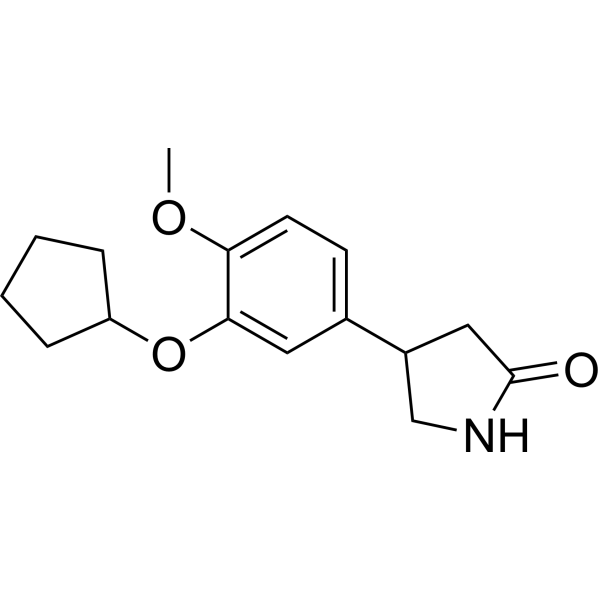
(R,S)-Rolipram; (±)-Rolipram; ZK 62711
|
Bacterial
HIV
Phosphodiesterase (PDE)
Epigenetic Reader Domain
Amyloid-β
|
Infection
Neurological Disease
Cancer
|
|
Rolipram is a PDE4 inhibitor, with blood-brain barrier permeability, that reverses β-amyloid-induced learning and memory impairment in rats. Rolipram elevates intracellular cAMP and clevels and regulates the cAMP/CREB signaling pathway, thereby alleviating neuroinflammation and apoptotic responses. Rolipram promotes neuronal differentiation of human bone marrow mesenchymal stem cells and inhibits Methamphetamine- and morphine-induced hyperlocomotion in mice. Rolipram also reduces the viability of glioblastoma stem-like cells and enhances Bevacizumab (HY-P9906)-induced cell death. Rolipram inhibits the expression of proinflammatory cytokines and enhances central noradrenergic transmission. Rolipram is mainly used in studies related to various central nervous system diseases including Alzheimer's disease, major depressive disorder, glioblastoma multiforme, and multiple sclerosis .
|
-
-
- HY-15084
-
|
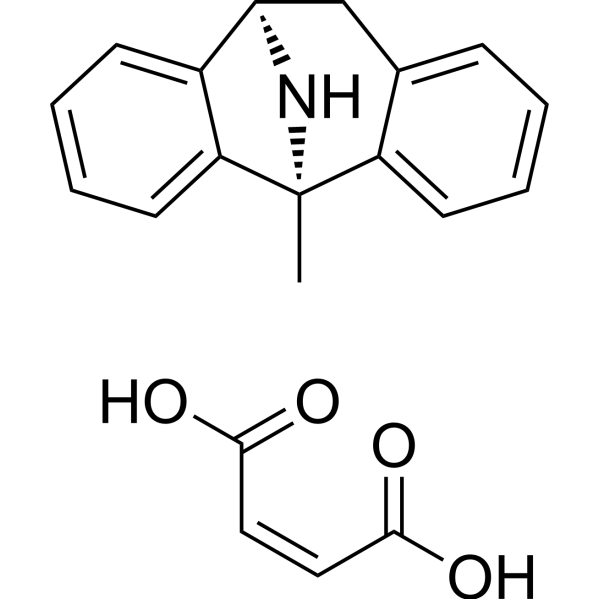
(+)-MK 801 Maleate
|
iGluR
|
Neurological Disease
|
|
Dizocilpine maleate (MK-801 maleate) is a potent, selective and non-competitive NMDA receptor antagonist with Kd of 37.2 nM in rat brain membranes.
|
-
-
- HY-15084B
-
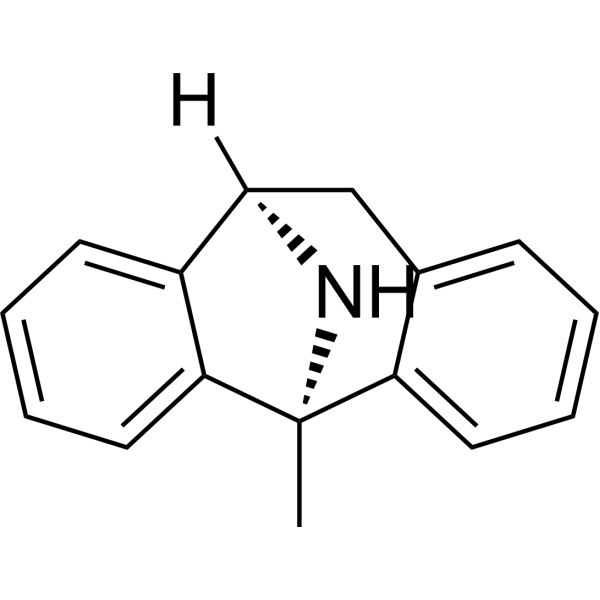
Dizocilpine
Maximum Cited Publications
44 Publications Verification
MK-801
|
iGluR
|
Neurological Disease
|
|
Dizocilpine (MK-801), a potent anticonvulsant, is a selective and non-competitive NMDA receptor antagonist, with a Kd of 37.2 nM in rat brain membranes. Dizocilpine acts by binding to a site located within the NMDA associated ion channel and thus prevents Ca 2+ flux .
|
-
-
- HY-145404
-
|
|
Opioid Receptor
|
Metabolic Disease
|
|
Mitragynine pseudoindoxyl is a potent orally active agonist of the μ-opioid receptor (MOR-1, Ki=0.8 nM) and an antagonist of the δ-opioid receptor (DOR-1, Ki=3.0 nM). Mitragynine pseudoindoxyl has moderate affinity for the κ-opioid receptor (KOR-1, Ki=24 nM) and does not recruit β-arrestin-2, acting through G protein-mediated signaling pathways without β-arrestin-2-related activation. Mitragynine pseudoindoxyl produces potent analgesic activity through a mixed μ-agonist/δ-antagonist mechanism, with low side effects such as physical dependence, respiratory depression, and constipation, and no rewarding or aversive behaviors. Mitragynine pseudoindoxyl reduces hyperactivity, inhibits GI transit, and enhances characteristics, making it a potential analgesic .
|
-
-
- HY-118424
-
|
|
iGluR
|
Neurological Disease
Metabolic Disease
|
|
JNJ-55511118 is a selective TARP γ-8 binding AMPA receptor modulator with oral bioavailability and blood-brain barrier permeability, with a Ki of 26 nM. JNJ-55511118 reduces voluntary intake of sweetened alcohol in male mice. In rodent models, JNJ-55511118 inhibits hippocampal neurotransmission, reduces specific electroencephalogram frequency bands, induces transient hyperlocomotion, impairs learning and memory abilities, and exerts anticonvulsant effects. JNJ-55511118 is applicable to research related to alcohol use disorder and seizures .
|
-
-
- HY-103151
-
|
|
5-HT Receptor
|
Neurological Disease
Metabolic Disease
|
|
CP94253 hydrochloride is an orally active, brain-penetrant and selective 5-HT1B receptor agonist with an Ki of 2 nM. CP94253 hydrochloride induces antidepressant-like effects, waking enhancement, sleep inhibition, increased sleep latency, hyperlocomotion, and suppressed aggressive behavior. CP94253 hydrochloride can be used for the research of depression and heightened aggressive behavior .
|
-
-
- HY-16639
-
|
|
GPR35
Neurotensin Receptor
|
Neurological Disease
Endocrinology
|
|
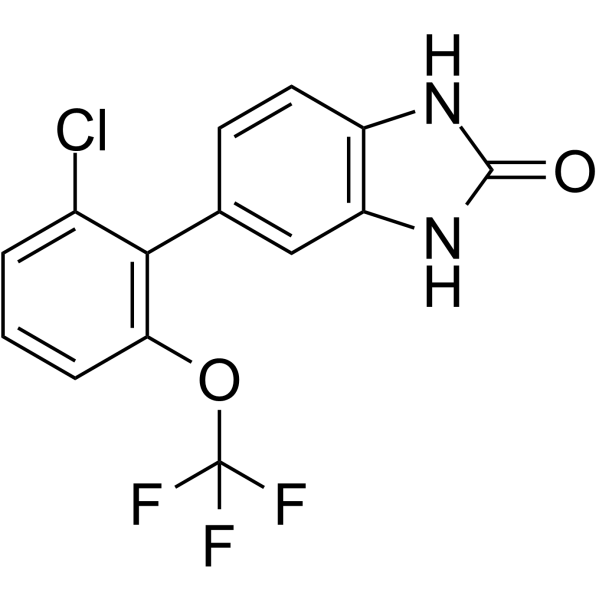
ML314 is a potent, BBB-penetrant and β-arrestin biased molecule agonist of NTR1 (EC50 = 1.9 μM). ML314 shows good selectivity against NTR2 and GPR35, but does not stimulate Ca2+ mobilization. ML314 can attenuate amphetamine-like hyperlocomotion in dopamine transporter knockout mice. ML314 attenuates methamphetamine-associated hyperlocomotion and potentiates the psychostimulant inhibitory effects of a ghrelin antagonist in wild type mouse model. ML314 also acts as an allosteric enhancer of endogenous neurotensin. ML314 antagonizes G protein signaling. ML314 can be studied in research for methamphetamine abuse conditions .
|
-
-
- HY-139178
-
|
|
Phosphodiesterase (PDE)
|
Neurological Disease
|
|
KVA-D-88 is a blood-brain barrier-permeable PDE4 inhibitor with IC50 values of 140 and 880 nM for PDE4B and PDE4D, respectively. KVA-D-88 induces cAMP accumulation and inhibits neuroactive substance-mediated hyperlocomotion, locomotor sensitization. KVA-D-88 can be used for the research of drug addiction .
|
-
-
- HY-161137
-
|
|
Amino acid Transporter
iGluR
|
Neurological Disease
|
|
LQFM215 is a proline transporter (PROT) inhibitor. LQFM215 inhibits proline transport by competitively binding to the active site of PROT. LQFM215 effectively reduces hyperlocomotion and enhances social interaction .
|
-
-
- HY-N0927
-
|
Tetrahydrocolumbamine; (S)-Tetrahydrocolumbamine
|
Dopamine Receptor
|
Others
Neurological Disease
|
|
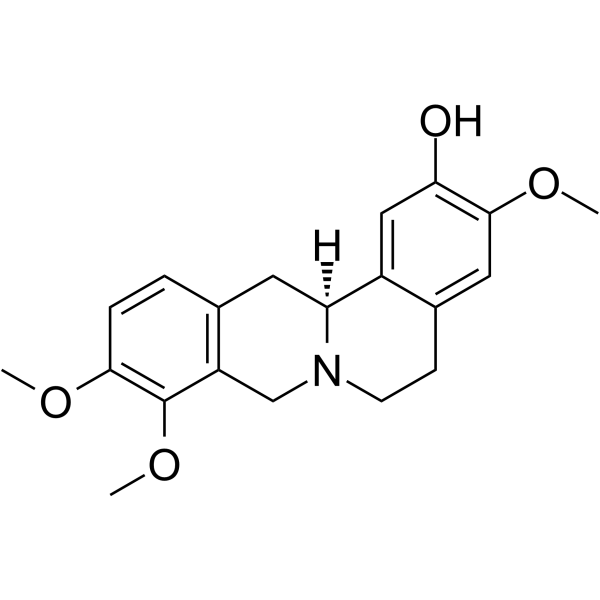
(-)-Isocorypalmine (Tetrahydrocolumbamine; (S)-Tetrahydrocolumbamine) is a dopamine receptor ligand and modulator capable of crossing the blood-brain barrier. (-)-Isocorypalmine exhibits receptor selectivity, acting as a partial agonist of dopamine D1 and D5 receptors (coupled via Gs proteins), as well as an antagonist of D2, D3 and D4 receptors (by blocking Gi protein-mediated signaling). (-)-Isocorypalmine shows no significant binding to various non-dopamine receptors, ion channels and transporters. (-)-Isocorypalmine is metabolically stable in vivo, effectively inhibits spontaneous and cocaine-induced hyperlocomotion, sensitization and conditioned place preference in mice, and does not induce addictive place preference when administered alone. (-)-Isocorypalmine can be used in addiction research .
|
-
-
- HY-139044
-
|
|
mAChR
|
Neurological Disease
|
|
VU6000918 is a muscarinic acetylcholine (M4) positive allosteric modulator, with an EC50 of 19 nM for hM4 .
|
-
-
- HY-114753
-
|
CR-2249; XY-2401
|
iGluR
|
Neurological Disease
|
|
Neboglamine (CR-2249; XY-2401) is a modulator for N-methyl-D-aspartate (NMDA) receptor. Neboglamine increases the levels of fos-like immunoreactivity (FLI)-positive cells in the prefrontal cortex, nucleus accumbens, and lateral septal nucleus in rat models, .restores NMDA (HY-17551) -mediated neurotransmitter release, and inhibits phencyclidine-induced hyperlocomotion .
|
-
-
- HY-123889
-
|
|
Dopamine Receptor
|
Neurological Disease
|
|
VK4-116 (Compound 19) is a selective Dopamine D3 receptor (D3R) antagonist with a Ki of 6.84 nM.VK4-116 significantly inhibits Oxycodone-induced hyperlocomotion and locomotor sensitization in mouse models. VK4-116 with pretreatment also inhibits the acquisition of Oxycodone-induced conditioned place preference (CPP) in rat models .
|
-
-
- HY-179008A
-
|
|
5-HT Receptor
|
Neurological Disease
|
|
(S)-5-HT2CR agonist 1 (Compound (S)-16k) is selective 5-HT2CR agonist, with an EC50 of 14 nM. FXa-IN-2 can be used in the research of hyperlocomotion .
|
-
-
- HY-179008
-
|
|
5-HT Receptor
|
Neurological Disease
|
|
5-HT2CR agonist 2 (Compound 16k) is a selective, blood-brain barrier-penetrating and Gq-biased 5-HT2CR agonist, with an EC50 of 36 nM. 5-HT2CR agonist 2 attenuates MK801 (HY-15084B)-induced hyperlocomotion and reverses Phencyclidine-induced hyperlocomotor activity .
|
-
-
- HY-16900R
-
|
(R,S)-Rolipram (Standard); (±)-Rolipram (Standard); ZK 62711 (Standard)
|
Reference Standards
Bacterial
HIV
Phosphodiesterase (PDE)
Epigenetic Reader Domain
Amyloid-β
|
Neurological Disease
Cancer
|
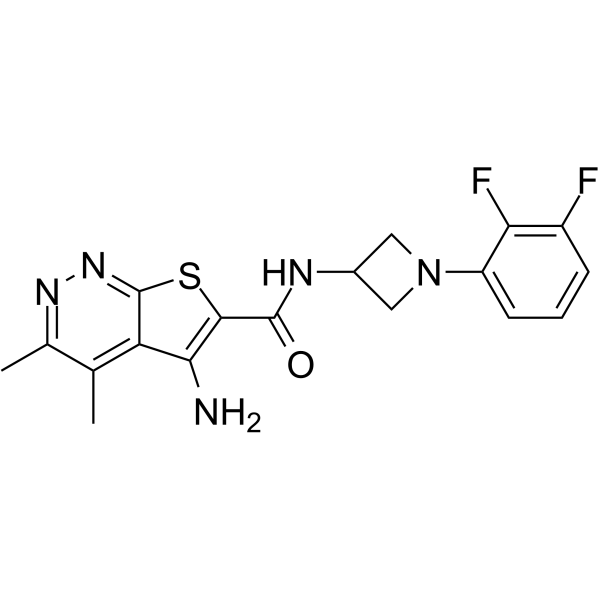
|
Rolipram (Standard) is the analytical standard of Rolipram (HY-16900). This product is intended for research and analytical applications. Rolipram is a PDE4 inhibitor, with blood-brain barrier permeability, that reverses β-amyloid-induced learning and memory impairment in rats. Rolipram elevates intracellular cAMP and clevels and regulates the cAMP/CREB signaling pathway, thereby alleviating neuroinflammation and apoptotic responses. Rolipram promotes neuronal differentiation of human bone marrow mesenchymal stem cells and inhibits Methamphetamine- and morphine-induced hyperlocomotion in mice. Rolipram also reduces the viability of glioblastoma stem-like cells and enhances Bevacizumab (HY-P9906)-induced cell death. Rolipram inhibits the expression of proinflammatory cytokines and enhances central noradrenergic transmission. Rolipram is mainly used in studies related to various central nervous system diseases including Alzheimer's disease, major depressive disorder, glioblastoma multiforme, and multiple sclerosis .
|
-
-
- HY-175532
-
|
|
mAChR
|
Neurological Disease
|
|
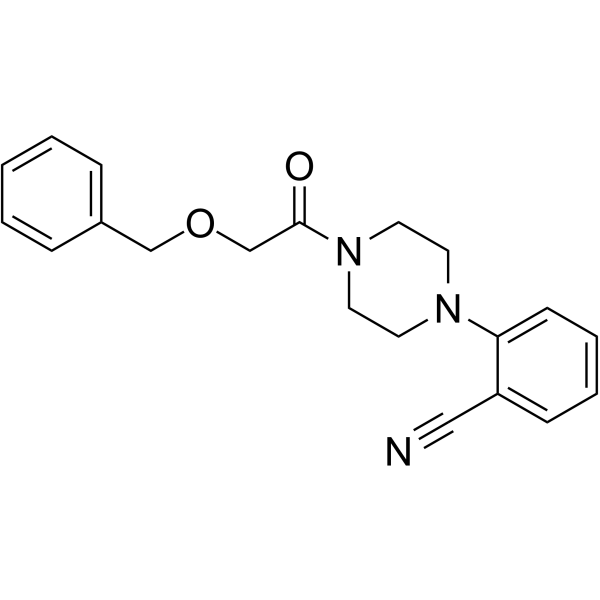
M4 mAChR Modulator-2 is an orally active, selective, brain-penetrant positive allosteric modulator (PAM) of the M4 muscarinic acetylcholine receptor (M4 mAChR) (EC50 = 513 nM). M4 mAChR Modulator-2 exhibits high target selectivity, showing negligible affinity and low inhibition rates for non-target receptors (D1R/D2R/D3R, 5-HT subtypes, κ/δ/μ opioid receptors, H1, M1/M2) while specifically binding to M4 mAChR with a Ki of 377 nM and an inhibition rate of 62.8%. M4 mAChR Modulator-2 reverses Dizocilpine (MK-801) (HY-15084B)-induced hyperlocomotion in mice. M4 mAChR Modulator-2 can be used for the study of schizophrenia
|
-
-
- HY-120727
-
|
|
mGluR
|
Neurological Disease
|
|
VU0364289 is a highly selective mGlu5 positive allosteric modulator (PAM) (binds to the MPEP (HY-14609A) site), with an EC50 of 1.6 μM. VU0364289 shows excellent central nervous system penetration. VU0364289 can reverse amphetamine-induced hyperlocomotion in a dose-dependent manner, which can be used for schizophrenia and other psychiatric research .
|
-
-
- HY-123433
-
|
|
mGluR
|
Neurological Disease
|
|
JNJ-40068782 is a potent positive allosteric modulator of the mGlu2 receptor, with the IC50 of 38 nM .
|
-
-
- HY-118022
-
|
|
mGluR
|
Neurological Disease
|
|
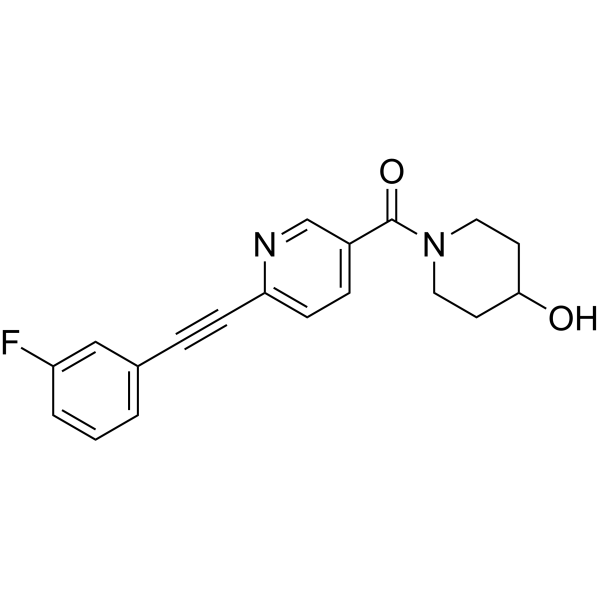
VU0361747 is a potent and selective positive allosteric modulator of metabotropic glutamate receptor 4 (mGluR4 PAM). VU0361737 has neuroprotective effect. VU0361737 significantly reverses Amphetamine-induced hyperlocomotion in vivo .
|
-
-
- HY-117838
-
|
|
Phosphodiesterase (PDE)
|
Neurological Disease
|
|
Phosphodiesterase 10-IN-2 (THPP-4) is an oral active phosphodiesterase 10A (PDE10A) inhibitor with the Ki of 4.5 nM. Phosphodiesterase 10-IN-2 can be used for study of schizophrenia .
|
-
-
- HY-103151A
-
|
|
5-HT Receptor
|
Neurological Disease
Metabolic Disease
|
|
CP94253 is an orally active, brain-penetrant and selective 5-HT1B receptor agonist with an Ki of 2 nM. CP94253 induces antidepressant-like effects, waking enhancement, sleep inhibition, increased sleep latency, hyperlocomotion, and suppressed aggressive behavior. CP94253 can be used for the research of depression and heightened aggressive behavior .
|
-
-
- HY-157172
-
|
|
Integrin
|
Infection
Neurological Disease
|
|
MorHap is a heroin hapten. MorHap conjugated to tetanus toxoid (TT), palm-CV2, and to monophosphoryl lipid A (MPLA)-containing liposomes partially blocks heroin-induced analgesia and hyperlocomotion in mice. MorHap designed conjugates also significantly inhibits HIV-1 binding to α4β7 receptors. MorHap can be used in research to develop vaccines related to heroin addiction and HIV-1 infection .
|
-
-
- HY-173032
-
|
|
mGluR
|
Neurological Disease
|
|
VU6033685 is the orally active positive allosteric modulator (PAM) for mGlu1 that positively modulates human mGlu1 and human mGlu5 with EC50 of 39 nM and 3960 nM. VU6033685 also inhibits CYP1A2, CYP2C9 and CYP2D6 with IC50 of 26, 22.3 and 23.8 μM, respectively. VU6033685 reverses amphetamine-induced rats hyperlocomotion, protects rats from MK-801 (HY-15084B)-induced cognitive impairment. VU6033685 exhibits good pharmacokinetics characteristics in rats with an oral bioavailability of 42.8% .
|
-
-
- HY-W385577A
-
|
|
Drug Derivative
|
Neurological Disease
Metabolic Disease
Inflammation/Immunology
|
|
(S)-2-Benzylpyrrolidine hydrochloride (Compound s1) serves as a METH hapten scaffold. (S)-2-Benzylpyrrolidine hydrochloride attenuates Methamphetamine-induced hyperlocomotion, hyperthermia and respiratory depression. (S)-2-Benzylpyrrolidine hydrochloride alleviates Fentanyl-induced respiratory depression .
|
-
-
- HY-183428
-
|
|
Trace Amine-associated Receptor (TAAR)
|
Neurological Disease
|
|
LK00764 is a TAAR1 agonist with an EC50 of 4 nM. LK00764 alleviates Dizocilpine (HY-15084B)-induced hyperlocomotion, reduces vertical locomotor activity, attenuates spontaneous hyperlocomotion in dopamine transporter knockout rats, and inhibits stress-induced hyperthermia in rats. LK00764 can be used for the research of schizophrenia .
|
-
-
- HY-181559S
-
|
AG06827
|
mAChR
|
Neurological Disease
|
|
VU6025733 (AG06827) is a highly selective, orally active and blood-brain barrier-penetrant positive allosteric modulator of the muscarinic acetylcholine receptor subtype M4 (M4 mAChR). VU6025733 exerts a potentiating effect on acetylcholine-induced receptor activation with an EC50 of 23 nM for hM4 and 55 nM for rM4. VU6025733 shows high selectivity over other muscarinic acetylcholine receptor subtypes, dose-dependently reduces amphetamine-induced hyperlocomotion in rats. VU6025733 is applicable to the research of schizophrenia, Parkinson's disease, and Alzheimer's disease .
|
-
-
- HY-W385577
-
|
|
Drug Derivative
|
Neurological Disease
Inflammation/Immunology
|
|
(S)-2-Benzylpyrrolidine (Compound s1) serves as a METH hapten scaffold. (S)-2-Benzylpyrrolidine attenuates Methamphetamine-induced hyperlocomotion, hyperthermia and respiratory depression. (S)-2-Benzylpyrrolidine alleviates Fentanyl-induced respiratory depression .
|
-
-
- HY-103151R
-
|
|
Reference Standards
5-HT Receptor
|
Neurological Disease
Metabolic Disease
|
|
CP94253 hydrochloride (Standard) is the analytical standard of CP94253 hydrochloride (HY-103151). This product is intended for research and analytical applications. CP94253 hydrochloride is an orally active, brain-penetrant and selective 5-HT1B receptor agonist with an Ki of 2 nM. CP94253 hydrochloride induces antidepressant-like effects, waking enhancement, sleep inhibition, increased sleep latency, hyperlocomotion, and suppressed aggressive behavior. CP94253 hydrochloride can be used for the research of depression and heightened aggressive behavior .
|
-
-
- HY-181649
-
|
|
Sigma Receptor
|
Neurological Disease
|
|
S1R agonist 3 is a potent, selective and brain-penetrant sigma-1 receptor (S1R) agonist with a Ki of 1.5 nM. S1R agonist 3 reduces hyperlocomotion in wfs1abKO zebrafish larvae without affecting locomotion in wildtype wfs1abWT zebrafish larvae. S1R agonist 3 reverses Aβ25-35 (HY-P0128)-induced learning and memory impairments. S1R ligand 1 can be used for the research of Alzheimer’s disease .
|
-
-
- HY-181960
-
|
|
Histamine Receptor
|
Neurological Disease
|
|
BP1.3656B is a selective, orally active, blood-brain barrier-permeable histamine H3 receptor (histamine H3 receptor) inverse agonist/antagonist, with a KB value of 0.08 nM for antagonizing agonist-induced activity and an IC50 value of 0.38 nM for directly inhibiting the basal activity of the receptor. BP1.3656B reduces alcohol consumption, alcohol-seeking behavior, alcohol self-administration, motivation to drink, alcohol relapse, alcohol-induced hyperlocomotion, and binge alcohol intake. BP1.3656B is applicable for the research of alcohol use disorder .
|
-
-
- HY-16900G
-
|
|
Phosphodiesterase (PDE)
Epigenetic Reader Domain
Amyloid-β
|
Neurological Disease
Inflammation/Immunology
Cancer
|
|
Rolipram GMP is Rolipram (HY-16900) produced by using GMP guidelines. GMP small molecules works appropriately as an auxiliary reagent for cell therapy manufacture. Rolipram is a PDE4 inhibitor, with blood-brain barrier permeability, that reverses β-amyloid-induced learning and memory impairment in rats. Rolipram elevates intracellular cAMP and clevels and regulates the cAMP/CREB signaling pathway, thereby alleviating neuroinflammation and apoptotic responses. Rolipram promotes neuronal differentiation of human bone marrow mesenchymal stem cells and inhibits Methamphetamine- and morphine-induced hyperlocomotion in mice. Rolipram also reduces the viability of glioblastoma stem-like cells and enhances Bevacizumab (HY-P9906)-induced cell death. Rolipram inhibits the expression of proinflammatory cytokines and enhances central noradrenergic transmission. Rolipram is mainly used in studies related to various central nervous system diseases including Alzheimer's disease, major depressive disorder, glioblastoma multiforme, and multiple sclerosis .
|
-
| Cat. No. |
Product Name |
Type |
-
- HY-16900G
-
|
|
Fluorescent Dyes
|
|
Rolipram GMP is Rolipram (HY-16900) produced by using GMP guidelines. GMP small molecules works appropriately as an auxiliary reagent for cell therapy manufacture. Rolipram is a PDE4 inhibitor, with blood-brain barrier permeability, that reverses β-amyloid-induced learning and memory impairment in rats. Rolipram elevates intracellular cAMP and clevels and regulates the cAMP/CREB signaling pathway, thereby alleviating neuroinflammation and apoptotic responses. Rolipram promotes neuronal differentiation of human bone marrow mesenchymal stem cells and inhibits Methamphetamine- and morphine-induced hyperlocomotion in mice. Rolipram also reduces the viability of glioblastoma stem-like cells and enhances Bevacizumab (HY-P9906)-induced cell death. Rolipram inhibits the expression of proinflammatory cytokines and enhances central noradrenergic transmission. Rolipram is mainly used in studies related to various central nervous system diseases including Alzheimer's disease, major depressive disorder, glioblastoma multiforme, and multiple sclerosis .
|
| Cat. No. |
Product Name |
Type |
-
- HY-16900G
-
|
|
Biochemical Assay Reagents
|
|
Rolipram GMP is Rolipram (HY-16900) produced by using GMP guidelines. GMP small molecules works appropriately as an auxiliary reagent for cell therapy manufacture. Rolipram is a PDE4 inhibitor, with blood-brain barrier permeability, that reverses β-amyloid-induced learning and memory impairment in rats. Rolipram elevates intracellular cAMP and clevels and regulates the cAMP/CREB signaling pathway, thereby alleviating neuroinflammation and apoptotic responses. Rolipram promotes neuronal differentiation of human bone marrow mesenchymal stem cells and inhibits Methamphetamine- and morphine-induced hyperlocomotion in mice. Rolipram also reduces the viability of glioblastoma stem-like cells and enhances Bevacizumab (HY-P9906)-induced cell death. Rolipram inhibits the expression of proinflammatory cytokines and enhances central noradrenergic transmission. Rolipram is mainly used in studies related to various central nervous system diseases including Alzheimer's disease, major depressive disorder, glioblastoma multiforme, and multiple sclerosis .
|
| Cat. No. |
Product Name |
Category |
Target |
Chemical Structure |
-
- HY-N0927
-
|
Tetrahydrocolumbamine; (S)-Tetrahydrocolumbamine
|
Alkaloids
Structural Classification
Monophenols
other families
Classification of Application Fields
Other Diseases
Phenols
Plants
Isoquinoline Alkaloids
Disease Research Fields
Source Classification
|
Dopamine Receptor
|
|
(-)-Isocorypalmine (Tetrahydrocolumbamine; (S)-Tetrahydrocolumbamine) is a dopamine receptor ligand and modulator capable of crossing the blood-brain barrier. (-)-Isocorypalmine exhibits receptor selectivity, acting as a partial agonist of dopamine D1 and D5 receptors (coupled via Gs proteins), as well as an antagonist of D2, D3 and D4 receptors (by blocking Gi protein-mediated signaling). (-)-Isocorypalmine shows no significant binding to various non-dopamine receptors, ion channels and transporters. (-)-Isocorypalmine is metabolically stable in vivo, effectively inhibits spontaneous and cocaine-induced hyperlocomotion, sensitization and conditioned place preference in mice, and does not induce addictive place preference when administered alone. (-)-Isocorypalmine can be used in addiction research .
|
-
| Cat. No. |
Product Name |
|
Classification |
-
- HY-118022
-
|
|
|
Alkynes
|
|
VU0361747 is a potent and selective positive allosteric modulator of metabotropic glutamate receptor 4 (mGluR4 PAM). VU0361737 has neuroprotective effect. VU0361737 significantly reverses Amphetamine-induced hyperlocomotion in vivo .
|
| Cat. No. |
Product Name |
Target |
Research Areas |
Chemical Structure |
-
- HY-16900G
-
|
|
Phosphodiesterase (PDE)
Epigenetic Reader Domain
Amyloid-β
|
Neurological Disease
Inflammation/Immunology
Cancer
|
|
Rolipram GMP is Rolipram (HY-16900) produced by using GMP guidelines. GMP small molecules works appropriately as an auxiliary reagent for cell therapy manufacture. Rolipram is a PDE4 inhibitor, with blood-brain barrier permeability, that reverses β-amyloid-induced learning and memory impairment in rats. Rolipram elevates intracellular cAMP and clevels and regulates the cAMP/CREB signaling pathway, thereby alleviating neuroinflammation and apoptotic responses. Rolipram promotes neuronal differentiation of human bone marrow mesenchymal stem cells and inhibits Methamphetamine- and morphine-induced hyperlocomotion in mice. Rolipram also reduces the viability of glioblastoma stem-like cells and enhances Bevacizumab (HY-P9906)-induced cell death. Rolipram inhibits the expression of proinflammatory cytokines and enhances central noradrenergic transmission. Rolipram is mainly used in studies related to various central nervous system diseases including Alzheimer's disease, major depressive disorder, glioblastoma multiforme, and multiple sclerosis .
|
-
Your information is safe with us. * Required Fields.
Inquiry Information
- Product Name:
- Cat. No.:
- Quantity:
- MCE Japan Authorized Agent:

