1. Search Result
Search Result
Results for "

hematologic

" in MedChemExpress (MCE) Product Catalog:

225

Inhibitors & Agonists

1

Screening Libraries

2

Fluorescent Dye

1

Biochemical Assay Reagents

4

Peptides

26

Inhibitory Antibodies

3

Natural
Products

4

Isotope-Labeled Compounds

1

Click Chemistry

Cat. No. Product Name Target Research Areas Chemical Structure
  • HY-15433
    Quisinostat
    15+ Cited Publications

    JNJ-26481585

    HDAC Autophagy Inflammation/Immunology Cancer
    Quisinostat (JNJ-26481585) is a potent and orally active pan-HDAC inhibitor (HDACi), with IC50 values ranging from 0.11 nM to 0.64 nM for HDAC1, HDAC2, HDAC4, HDAC10 and HDAC11. Quisinostat has a broad spectrum antitumoral activity . Quisinostat can induce autophagy in neuroblastoma cells .
    Quisinostat
  • HY-112088
    AZD4573
    10+ Cited Publications

    CDK Cancer
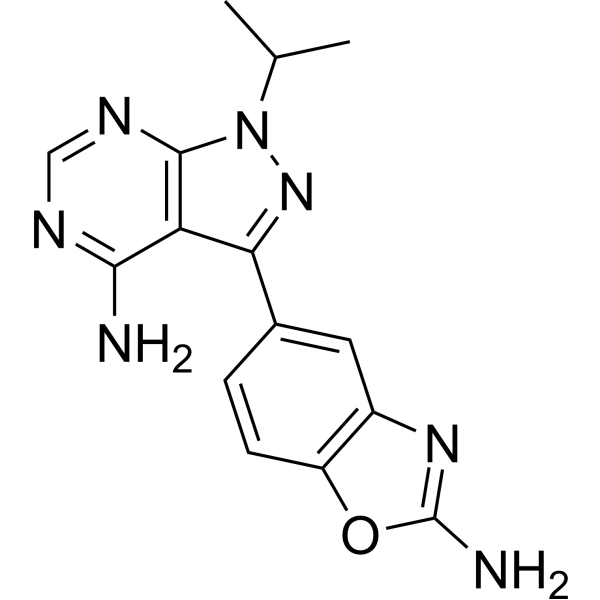
    AZD4573 is a potent and highly selective CDK9 inhibitor (IC50 of <4 nM) that enables transient target engagement for the treatment of hematologic malignancies .
    AZD4573
  • HY-136241
    OT-82
    1 Publications Verification

    NAMPT Caspase Cancer
    OT-82 is a potent, selective and orally active inhibitor of NAMPT. OT-82 is selectively toxic to cells of hematopoietic origin and?induces cell death in a NAD + dependent manner. OT-82 is a promising antineoplastic agent for the study of hematological malignancies .
    OT-82
  • HY-124593
    PTC299
    5 Publications Verification

    Emvododstat

    VEGFR Dihydroorotate Dehydrogenase DNA/RNA Synthesis Cancer
    PTC299 is an orally active inhibitor of VEGFA mRNA translation that selectively inhibits VEGF protein synthesis at the post-transcriptional level. PTC299 is also a potent inhibitor of dihydroorotate dehydrogenase (DHODH). PTC299 shows good oral bioavailability and lack of off-target kinase inhibition and myelosuppression. PTC299 can be useful for the research of hematologic malignancies .
    PTC299
  • HY-149672

    Bcl-2 Family Apoptosis Cancer
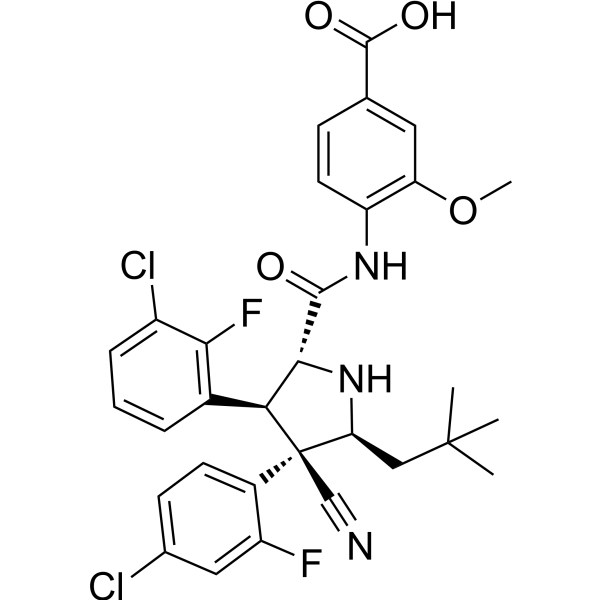
    ABBV-467 is a selective MCL-1 inhibitor (Ki: <0.01 nM). ABBV-467 induces apoptosis. ABBV-467 induces cancer cell death and inhibits tumor growth in models of hematological malignancies, such as multiple myeloma .
    ABBV-467
  • HY-15433A
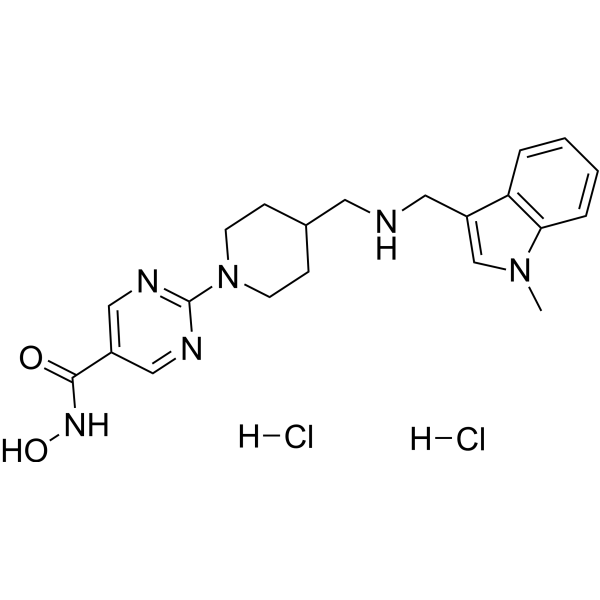
    Quisinostat dihydrochloride
    15+ Cited Publications

    JNJ-26481585 dihydrochloride

    HDAC Autophagy Inflammation/Immunology Cancer
    Quisinostat dihydrochloride (JNJ-26481585 dihydrochloride) is an orally active, potent pan-HDAC inhibitor with IC50s of 0.11 nM, 0.33 nM, 0.64 nM, 0.46 nM, and 0.37 nM for HDAC1, HDAC2, HDAC4, HDAC10 and HDAC11, respectively. Quisinostat dihydrochloride has a broad spectrum antitumoral activity. Quisinostat dihydrochloride can induce autophagy in neuroblastoma cells .
    Quisinostat dihydrochloride
  • HY-160487

    IRAK Apoptosis Cancer
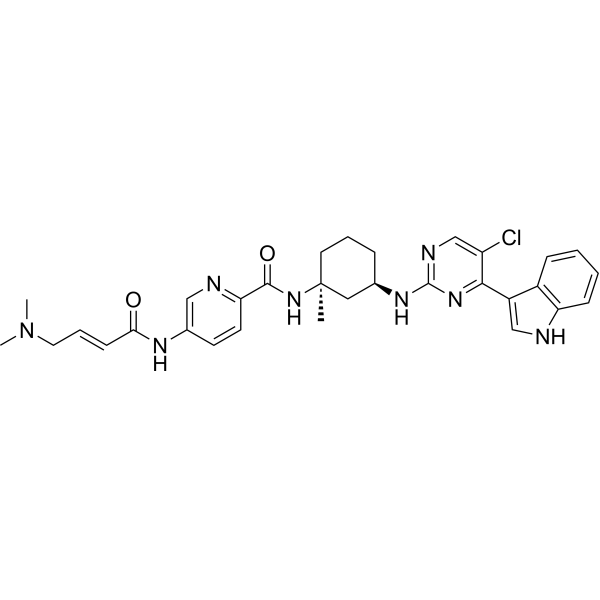
    KME-2780 is the orally active inhibitor for IRAK1 and IRAK4 with IC50s of 19 nM and 0.5 nM. KME-2780 can be used for research of dysregulation of innate immune signaling and hematologic malignancies .
    KME-2780
  • HY-143584

    CDK Apoptosis Cancer
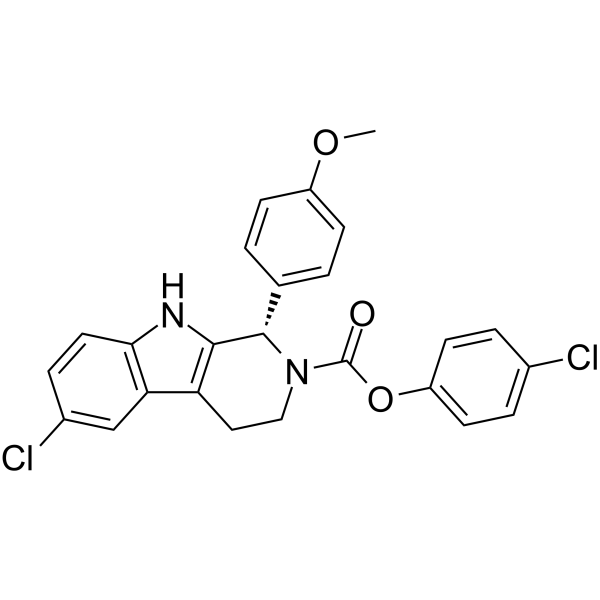
    AZ5576 is a potent and highly selective CDK9 inhibitor (IC50: <5 nM). AZ5576 inhibits the phosphorylation of RNA polymerase II at Ser2, thereby inhibiting transcriptional elongation. AZ5576 can be used for hematological Malignancy research .
    AZ5576
  • HY-147831

    Eukaryotic Initiation Factor (eIF) Epigenetic Reader Domain Cancer
    HR-19011 is an eIF2α phosphorylation activator targeting heme-regulated inhibitor HRI (EIF2AK1). HR-19011 exhibits growth inhibitory activity against K562 cells with an IC50 value of 3.91 µM. HR-19011 inhibits the growth of hematologic malignancies by targeting HRI to activate the integrated stress response via the HRI-eIF2α-ATF4 axis. HR-19011 shows good safety in vivo. HR-19011 can be used for research on hematologic malignancies (leukemia) .
    HR-19011
  • HY-128587
    Mevociclib
    5+ Cited Publications

    SY-1365

    CDK Cancer
    Mevociclib (SY-1365) is a potent and first-in-class selective CDK7 inhibitor, with a Ki of 17.4 nM. Mevociclib exhibits anti-proliferative and apoptotic effects in solid tumor cell lines. Mevociclib possesses anti-tumor activity in hematological and multiple aggressive solid tumors .
    Mevociclib
  • HY-P991228

    Galectin Cancer
    LYT-200 is a humanized monoclonal antibody against galectin-9 (Galectin-9). LYT-200 binds to galectin-9 expressed on the surface of hematologic malignant cells, inhibits pro-leukemic functions and induces cell death. LYT-200 can be used in research related to hematologic malignancies .
    LYT-200
  • HY-136506
    NUC-7738
    1 Publications Verification

    Drug Derivative Cancer
    NUC-7738, an aryloxy phosphoramidate of 3′-Deoxyadenosine, is a 5′-aryloxy phosphoramidate prodrug of 3′-Deoxyadenosine (3′-dA). NUC-7738 has potent cytotoxic activity against a panel of hematological cancer cell lines. NUC-7738 can be used in research of cancer .
    NUC-7738
  • HY-101870

    INCB053914

    Pim Cancer
    Uzansertib (INCB053914) is an orally active, ATP-competitive pan-PIM kinase inhibitor with IC50s of 0.24 nM, 30 nM, 0.12 nM for PIM1, PIM2, PIM3, respectively. Uzansertib has broad anti-proliferative activity against a variety of hematologic tumor cell lines .
    Uzansertib
  • HY-101870B

    INCB053914 phosphate

    Pim Cancer
    Uzansertib (INCB053914) phosphate is an orally active, ATP-competitive pan-PIM kinase inhibitor with IC50s of 0.24 nM, 30 nM, 0.12 nM for PIM1, PIM2, PIM3, respectively. Uzansertib phosphate has broad anti-proliferative activity against a variety of hematologic tumor cell lines .
    Uzansertib phosphate
  • HY-114414
    HDACs/mTOR Inhibitor 1
    1 Publications Verification

    HDAC mTOR Apoptosis Cancer
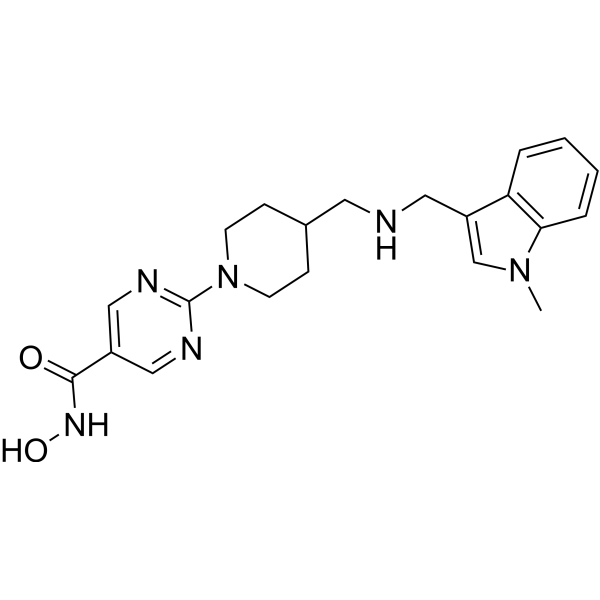
    HDACs/mTOR Inhibitor 1 is a dual HDACs and mTOR inhibitor, with IC50s of 0.19 nM, 1.8 nM, 1.2 nM for HDAC1, HDAC6, mTOR, respectively. HDACs/mTOR Inhibitor 1 stimulates cell cycle arrest in G0/G1 phase and induces tumor cell apoptosis with low toxicity in vivo. HDACs/mTOR Inhibitor 1 can be used in the research of hematologic malignancies .
    HDACs/mTOR Inhibitor 1
  • HY-P99172

    CD47 Interleukin Related Cancer
    CC-90002 is a humanized anti-CD47 monoclonal antibody (mAb). CC-90002 has a high affinity for binding to CD47 with a subnanomolar Kd value. CC-90002 can be used for the research of hematologic malignancies and solid tumors .
    CC-90002
  • HY-P99057

    CDX-1127

    TNF Receptor Transmembrane Glycoprotein Inflammation/Immunology Cancer
    Varlilumab (CDX-1127) is an agonist anti-CD27 monoclonal antibody. Varlilumab can promote T cell expansion and activate the immune response. Varlilumab has anti-tumor activity and can be used in the research of hematological malignancies and solid tumors .
    Varlilumab
  • HY-P99776

    XmAb-13676

    CD20 CD3 Cancer
    Plamotamab (XmAb-13676) is a human bispecific antibody (bsAb) that binds CD3 and CD20. Plamotamab recruits cytotoxic T cells to kill CD20 + expressing tumor cells. Plamotamab induces a mild hematologic reaction (MR), and results in tumor regression in vivo .
    Plamotamab
  • HY-125378

    SBI-0636457; SB1-0636457

    IAP Cancer
    SBP-0636457 (SB1-0636457) is a SMAC mimetic, and as an IAP antagonist. SBP-0636457 binds to the BIR-domains of the IAP proteins, with a Ki of 0.27 μM. SBP-0636457 can be used for the research of solid tumors and hematologic cancers .
    SBP-0636457
  • HY-128601

    Checkpoint Kinase (Chk) Cardiovascular Disease Cancer
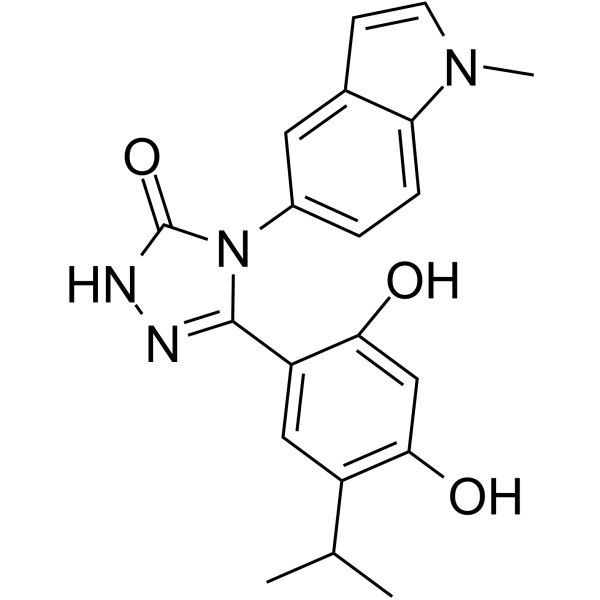
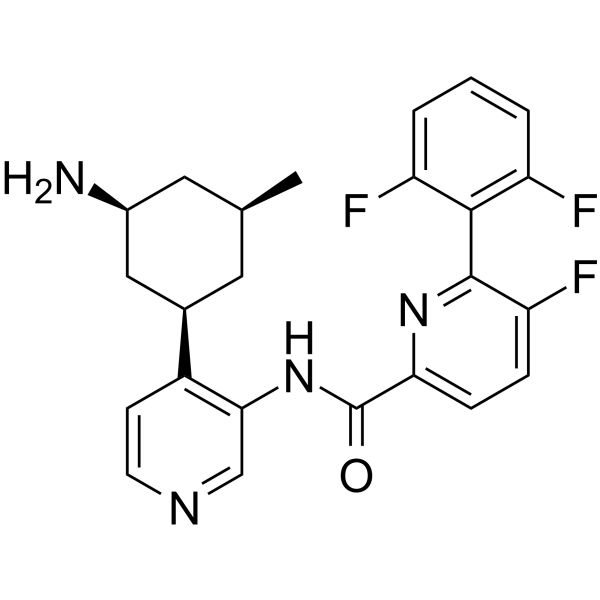
    CHK1-IN-3 is a potent and selective CHK1 inhibitor with an IC50 of 0.4 nM. CHK1-IN-3 effectively inhibits the growth of malignant hematopathy cell lines and displays low affinity for hERG (IC50 > 40 μM). CHK1-IN-3 significantly suppresses the tumor growth in vivo. CHK1-IN-3 can be used for the study of hematologic malignancies .
    CHK1-IN-3
  • HY-170669

    PROTACs CRM1 Apoptosis NF-κB Cancer
    PROTAC XPO1 degrader-1 (Compound 2c) is an XPO1 degrader. PROTAC XPO1 degrader-1 exhibits anti-proliferative effects, can induce cell apoptosis, inhibit NF-κB activity, and cause cell cycle arrest in the G1 phase. PROTAC XPO1 degrader-1 can be used in research on hematological malignancies (Pink: Target Protein Ligand (HY-170672); Black: Linker (HY-W010525); Blue: E3 Ligase Ligand (HY-170671); E3 Ligase Ligand-Linker Conjugate (HY-170673)) .
    PROTAC XPO1 degrader-1
  • HY-W280124

    Histone Methyltransferase Cancer
    PRMT9-IN-1 is a PRMT9 inhibitor. PRMT9-IN-1 can be used in the research of hematological cancer .
    PRMT9-IN-1
  • HY-131341

    Syk Inflammation/Immunology Cancer
    Syk-IN-4 is a potent, selective and orally bioavailable SYK inhibitor with an IC50 of 0.31 nM. SYK has emerged as a potential target for autoimmunity and hematological cancers .
    Syk-IN-4
  • HY-P10948A

    WDR5 Histone Methyltransferase Cardiovascular Disease
    CS-VIP 8 hydrochloride is a selective allosteric WDR5 protein inhibitor (Ki= 0.008 μM). CS-VIP 8 hydrochloride induces conformational changes in the MLL1 complex, leading to the dissociation of MLL1 from the complex, inhibiting MLL1 histone methyltransferase activity and regulating HOX gene expression. CS-VIP 8 hydrochloride is promising for research of hematological diseases such as leukemia .
    CS-VIP 8 hydrochloride
  • HY-P99475

    MSB-2311

    PD-1/PD-L1 Cancer
    Betifisolimab (MSB-2311) is a humanized monoclonal antibody directed against the immunosuppressive ligand PD-L1. Betifisolimab has the potential for advanced solid tumors and hematological malignancies research .
    Betifisolimab
  • HY-156602

    OKI-179

    HDAC Cancer
    Bocodepsin (OKI-179) is an orally active and selective HDAC inhibitor, with antitumor activity. Bocodepsin can be used for suppression on solid tumor and hematologic malignancies .
    Bocodepsin
  • HY-W011180

    Drug Derivative Others
    Vitamin A Propionate is an ester compound of vitamin A. In nutritional studies of foals, different doses have different effects on growth, serum biochemistry and hematological indicators. Too high or too low doses will produce adverse effects and are related to the vitamin A concentration in plasma, liver and kidneys.
    Vitamin A Propionate
  • HY-126141
    JAK/HDAC-IN-1
    1 Publications Verification

    JAK HDAC Apoptosis Cancer
    JAK/HDAC-IN-1 is a potent JAK2/HDAC dual inhibitor, exhibits antiproliferative and proapoptotic activities in several hematological cell lines. JAK/HDAC-IN-1 shows IC50s of 4 and 2 nM for JAK2 and HDAC, respectively .
    JAK/HDAC-IN-1
  • HY-P990077

    CT-011; MDV9300

    PD-1/PD-L1 Cancer
    Pidilizumab (CT-011) is a humanized IgG1k anti-PD-1 monoclonal antibody. Pidilizumab acts as a DLL1 antagonist. Pidilizumab has the potential for hematologic malignancies research .
    Pidilizumab
  • HY-P99952

    SCT400

    CD20 Cancer
    Ripertamab (SCT400) is a recombinant, human-mouse chimeric anti-CD20 IgG1κ mAb. Ripertamab can be used for the research of hematological malignancies, including non-Hodgkin’s lymphoma (NHL) .
    Ripertamab
  • HY-10984A

    (S)-CC-4047

    Endogenous Metabolite Cancer
    (S)-Pomalidomide ((S)-CC-4047) is an angiogenesis-inhibiting drug with growth-inhibitory activity against B-cell tumors. (S)-Pomalidomide can induce complete tumor regression in BurKitt lymphoma cells. (S)-Pomalidomide serves as an immunomodulator with potential applications in inhibiting hematological malignancies .
    (S)-Pomalidomide
  • HY-179105

    TAM Receptor Cancer
    Axl-IN-20 (Compound w11) is a selective, orally active AXL inhibitor, with an IC50 of 5 nM. Axl-IN-20 has antitumor activity against hematological malignancies .
    Axl-IN-20
  • HY-139453A

    DNA Alkylator/Crosslinker Cancer
    LP-284 is a potent DNA alkylating agent that kills solid tumours. LP-284 can be used in the studies of hematologic cancers with compromised DNA repair, such as mantle cell lymphoma (MCL) .
    LP-284
  • HY-175036

    PROTACs Histone Demethylase Apoptosis Caspase PARP Cancer
    YTHu78 is a KDM5B PROTAC-type degrader. YTHu78 induces KDM5B degradation via the ubiquitin-proteasome system and triggers apoptosis in MV-4-11 and MM.1S cell lines. YTHu78 exhibits significant antiproliferative activity against a variety of hematological cancer cell lines and can be used to study hematological cancers. (Pink: KDM5B ligand: (HY-116761); Blue: Thalidomide ligand: (HY-14658), Black + Pink: KDM5B ligand + linker: (HY-175145)) .
    YTHu78
  • HY-P10948

    WDR5 Histone Methyltransferase Cardiovascular Disease
    CS-VIP 8 is a selective allosteric WDR5 protein inhibitor (Ki= 0.008 μM). CS-VIP 8 induces conformational changes in the MLL1 complex, leading to the dissociation of MLL1 from the complex, inhibiting MLL1 histone methyltransferase activity and regulating HOX gene expression. CS-VIP 8 is promising for research of hematological diseases such as leukemia .
    CS-VIP 8
  • HY-125378A

    (7R)-SBI-0636457; (7R)-SB1-0636457

    IAP Cancer
    (7R)-SBP-0636457 is the isomer of SBP-0636457 (HY-125378), and can be used as an experimental control. SBP-0636457 (SB1-0636457) is a SMAC mimetic, and as an IAP antagonist. SBP-0636457 binds to the BIR-domains of the IAP proteins, with a Ki of 0.27 μM. SBP-0636457 can be used for the research of solid tumors and hematologic cancers .
    (7R)-SBP-0636457
  • HY-177117

    MALT1 Infection Neurological Disease Cancer
    Ocipumaltib (Example 2) is an inhibitor of mucosa associated lymphoid tissue protein 1 (MALT1). Ocipumaltib is an antitumor agent. Ocipumaltib can be studied in research for cancer, infection, neurological and hematological diseases .
    Ocipumaltib
  • HY-109174

    CPX-POM

    γ-secretase Metabolic Disease Cancer
    Fosciclopirox (CPX-POM) suppresses growth of urothelial cancer by targeting the γ-secretase complex. Fosciclopirox selectively delivers the active metabolite, Ciclopirox (CPX), to the entire urinary tract. Ciclopirox has anticancer activity in a number of solid and hematologic malignancies .
    Fosciclopirox
  • HY-175502

    Molecular Glues IKZF Family Apoptosis Cancer
    MGD-22, a molecular glue, is an orally active IKZF1/2/3 degrader with DC50 values of 8.33 nM, 9.91 nM, and 5.74 nM, respectively. MGD-22 exhibits extremely potent anti-proliferative activity against diverse hematological cancer cells. MGD-22 induces apoptosis in cancer cells. MGD-22 demonstrates potent anti-tumor efficacy in mice bearing NCI-H929 xenografts or WSU-DLCL-2 xenografts. MGD-22 can be used for the study of hematological cancers, including multiple myeloma (MM), acute myeloid leukemia (AML), and diffuse large B-cell lymphoma (DLBCL) .
    MGD-22
  • HY-15901A

    Pim mTOR Cancer
    LGB321 monohydrochloride is a potent, selective, orally active and ATP competitive inhibitor of all three PIM kinases. LGB321 monohydrochloride inhibits proliferation, mTOR-C1 signaling and phosphorylation of BAD in a number of cell lines derived from diverse hematologic malignancies. LGB321 monohydrochloride can be used for the research of hematologic malignancies .
    LGB321 monohydrochloride
  • HY-114255

    alpha-TEA

    Apoptosis Cancer
    Alpha-tocopheryloxyacetic acid (alpha-TEA) is an inducer of cancer cell apoptosis pathway. Alpha-tocopheryloxyacetic acid is promising for research of solid and hematological malignancies .
    Alpha-tocopheryloxyacetic acid
  • HY-159707

    Checkpoint Kinase (Chk) Cardiovascular Disease Cancer
    MCL1020 is a CHK1 inhibitor with an IC50 of 1.61 μM. MCL1020 properly occupies the ATP pocket by interacting with a diverse range of the sites of CHK1 kinase. MCL1020 can be used for the study of hematologic malignancies .
    MCL1020
  • HY-100885A

    (S)-NUC-1031; Fosgemcitabine palabenamide

    Others Cancer
    (S)-Acelarin ((S)-NUC-1031) is an anti-cancer agent. (S)-Acelarin inhibits the growth of various cancer cells. (S)-Acelarin can be used for the study of solid tumors (e.g., pancreatic cancer, BTC, ovarian cancer) and hematological malignancies .
    (S)-Acelarin
  • HY-167880

    Macrophage migration inhibitory factor (MIF) Cancer
    BMY-25551 is a Mitomycin A (HY-130332) analogue that is 8 to 20 times more potent than Mitomycin C (HY-13316) in cytotoxicity to murine and human tumor cell lines. BMY-25551 can be utilized in cancer and hematologic depression research .
    BMY-25551
  • HY-178468

    PARP Cancer
    PARP1-IN-47 (Compound 35) is a highly selective PARP1 inhibitor (IC50 <100 nM). PARP1-IN-47 blocks poly(ADP-ribosyl)ation and disrupts DNA damage repair pathways to induce tumor cell apoptosis. PARP1-IN-47 is promising for research of solid tumors and hematological malignancies .
    PARP1-IN-47
  • HY-150586

    HDAC Apoptosis Cancer
    PTG-0861 is a selective histone deacetylase 6 (HDAC6) inhibitor with the IC50 value of 5.92 nM. PTG-0861 induces apoptosis and can be used in the study of acute myeloid leukemia, multiple myeloma and other hematological cancers .
    PTG-0861
  • HY-159808

    Proteasome Cancer
    TCL1 is a selective non-covalent inhibitor targeting the Pru domain of the Rpn-13 subunit in the 19S regulatory particle (19S RP) of the proteasome with an IC50 value of approximately 26 μM. TCL1 interferes with the recognition and transport of ubiquitinated proteins by Rpn-13, inhibits the degradation of proteins by the proteasome, and thus affects the balance of intracellular protein metabolism. TCL1 is promising for research of hematological malignancies .
    TCL1
  • HY-P991151

    PD-1/PD-L1 TNF Receptor Cancer
    Opamtistomig is a humanized immunoglobulin (H-γ1-scFv-L-κ) dimer monoclonal antibody targeting human programmed death ligand 1 (PD-L1), CD274 and tumor necrosis factor receptor superfamily member 9 (TNFRSF9). Opamtistomig is promising for research of various solid tumors and hematological malignancies .
    Opamtistomig
  • HY-178683

    Others Cancer
    ALV-05-077-01 is a BLC6/BLC6B degrader. ALV-05-077-01 depletes endogenous BCL6 levels in SuDHL4 cells (high BCL6 expression) and BCL6B levels in KYO1 cells (high BCL6B expression). ALV-05-077-01 can be used for the study of hematological malignancies .
    ALV-05-077-01
  • HY-178700

    Others Cancer
    ALV-05-151-02 is a BLC6/BLC6B degrader. ALV-05-151-02 depletes endogenous BCL6 levels in SuDHL4 cells (high BCL6 expression) and BCL6B levels in KYO1 cells (high BCL6B expression). ALV-05-151-02 can be used for the study of hematological malignancies .
    ALV-05-151-02

Inquiry Online

Your information is safe with us. * Required Fields.

Salutation


Country or Region *

Applicant Name *


Organization Name *

Department *


Email Address *


Product Name *

Cat. No.


Requested quantity *

Phone Number *


Remarks

Inquiry Online

Inquiry Information

Product Name:
Cat. No.:
Quantity:
MCE Japan Authorized Agent:

