1. Search Result
Search Result
Results for "

human D2 receptors

" in MedChemExpress (MCE) Product Catalog:

84

Inhibitors & Agonists

2

Natural
Products

19

Isotope-Labeled Compounds

Cat. No. Product Name Target Research Areas Chemical Structure
  • HY-14544
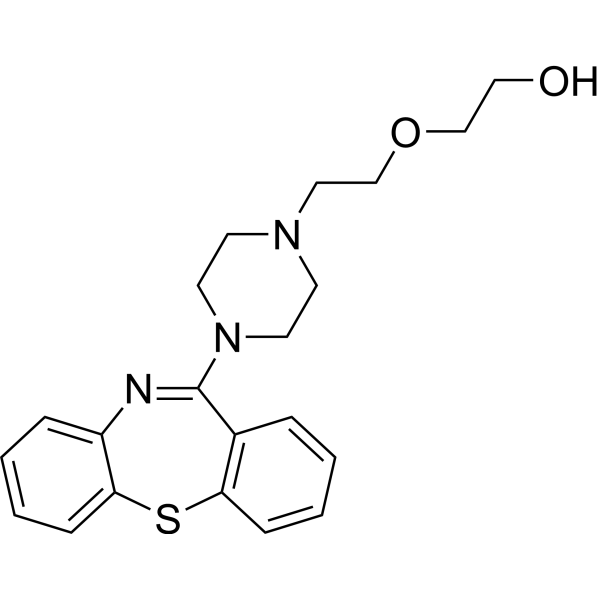
    Quetiapine
    3 Publications Verification

    ICI204636

    5-HT Receptor Dopamine Receptor Neurological Disease
    Quetiapine (ICI204636) is a 5-HT receptors agonist with a pEC50 of 4.77 for human 5-HT1A receptor. Quetiapine is a dopamine receptor antagonist with a pIC50 of 6.33 for human D2 receptor. Quetiapine has moderate to high affinity for the human D2, HT1A, 5-HT2A, 5-HT2C receptor with pKis of 7.25, 5.74, 7.54, 5.55. Antidepressant and anxiolytic effects .
    Quetiapine
  • HY-15780
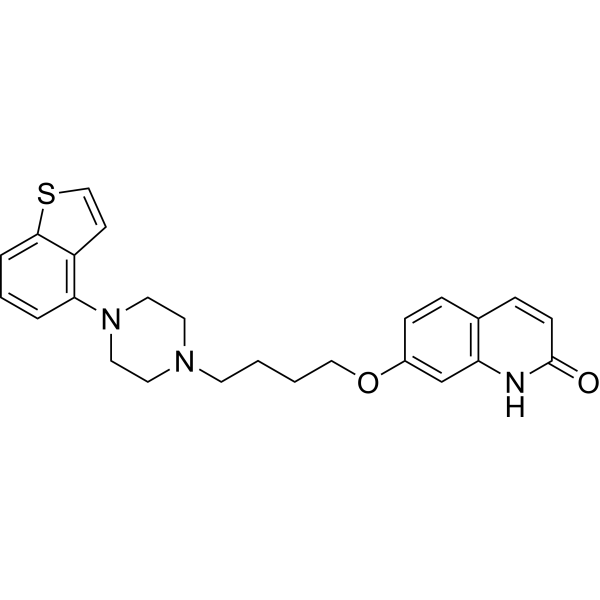
    Brexpiprazole
    Maximum Cited Publications
    6 Publications Verification

    OPC-34712

    5-HT Receptor Dopamine Receptor Adrenergic Receptor Neurological Disease
    Brexpiprazole (OPC-34712), an atypical orally active antipsychotic agent, is a partial agonist of human 5-HT1A and dopamine D2L receptor with Kis of 0.12 nM and 0.3 nM, respectively. Brexpiprazole is also a 5-HT2A receptor antagonist with a Ki of 0.47 nM. Brexpiprazole also shows potent antagonist activity at human noradrenergic α1B (Ki=0.17 nM) and α2C receptors (Ki=0.59 nM) .
    Brexpiprazole
  • HY-B0590
    Tetrabenazine
    1 Publications Verification

    Ro 1-9569

    Monoamine Transporter Dopamine Receptor Neurological Disease
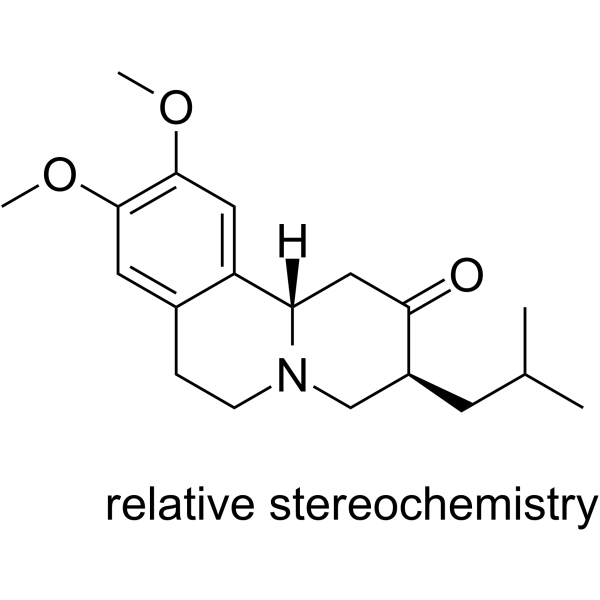
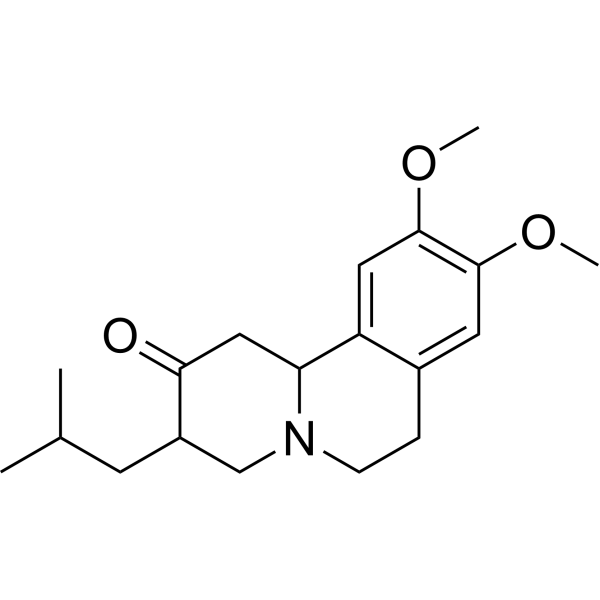
    Tetrabenazine (Ro 1-9569) is a brain-penetrant and orally active VMAT2-selective ligand with human VMAT2 Ki 100 nM. Tetrabenazine binds VMAT2 to block monoamine uptake into synaptic vesicles, potentiates cytoplasmic monoamine degradation. Tetrabenazine weakly blocks dopamine D2 receptors, and increases dopamine turnover via elevated cerebrospinal fluid homovanillic acid. Tetrabenazine can be used for the research of Huntington’s disease, tardive dyskinesia, and Tourette’s syndrome .
    Tetrabenazine
  • HY-B0520A
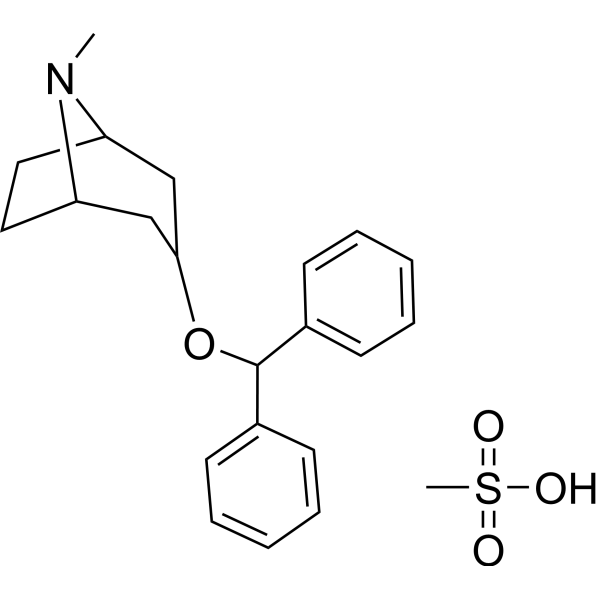
    Benztropine mesylate
    5 Publications Verification

    Benzatropine mesylate; Benzotropine mesylate; Benztropine methanesulfonate

    Dopamine Receptor mAChR Histamine Receptor Infection Neurological Disease Metabolic Disease Cancer
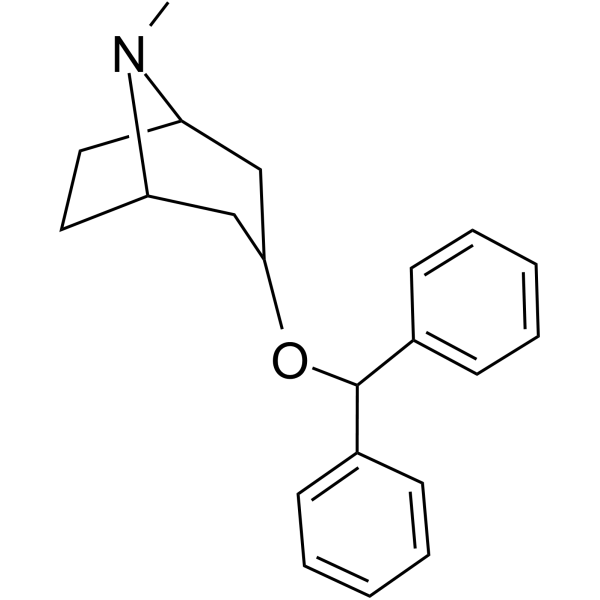
    Benztropine mesylate (Benzatropine mesylate) is an orally active and BBB-permeable centrally acting anticholinergic agent that can be used for Parkinson's disease research. Benztropine mesylate is an anti-histamine agent and a dopamine re-uptake inhibitor. Benztropine mesylate is also a human D2 dopamine receptor allosteric antagonist. Benztropine mesylate also has anti-CSCs (cancer stem cells) effects .
    Benztropine mesylate
  • HY-B0031
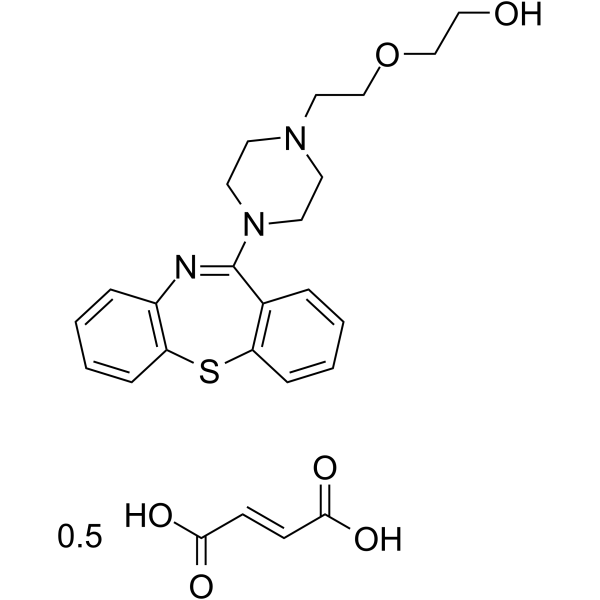
    Quetiapine hemifumarate
    3 Publications Verification

    5-HT Receptor Dopamine Receptor Neurological Disease
    Quetiapine hemifumarate is a 5-HT receptors agonist with a pEC50 of 4.77 for human 5-HT1A receptor. Quetiapine hemifumarate is a dopamine receptor antagonist with a pIC50 of 6.33 for human D2 receptor. Quetiapine hemifumarate has moderate to high affinity for the human D2, HT1A, 5-HT2A, 5-HT2C receptor with pKis of 7.25, 5.74, 7.54, 5.55. Antidepressant and anxiolytic effects .
    Quetiapine hemifumarate
  • HY-B0590S

    Ro 1-9569-d6

    Monoamine Transporter Neurological Disease
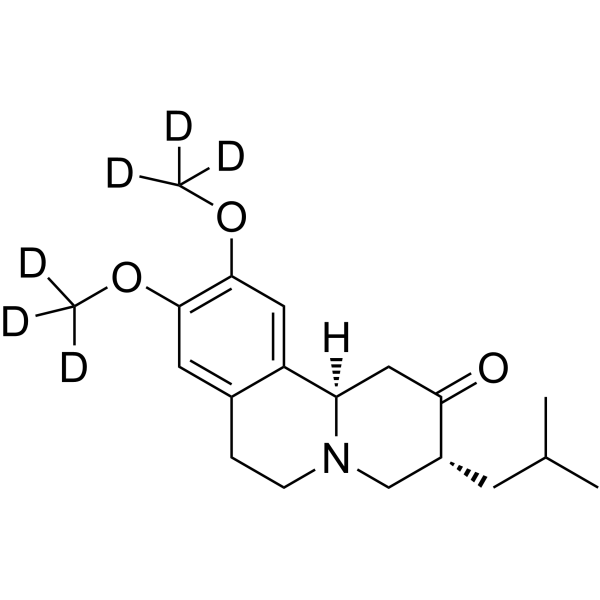
    Tetrabenazine-d6 (Deutetrabenazine) is a deuterium-labled Tetrabenazine (HY-B0590). Tetrabenazine (Ro 1-9569) is a brain-penetrant and orally active VMAT2-selective ligand with human VMAT2 Ki 100 nM. Tetrabenazine binds VMAT2 to block monoamine uptake into synaptic vesicles, potentiates cytoplasmic monoamine degradation. Tetrabenazine weakly blocks dopamine D2 receptors, and increases dopamine turnover via elevated cerebrospinal fluid homovanillic acid. Tetrabenazine can be used for the research of Huntington’s disease, tardive dyskinesia, and Tourette’s syndrome .
    Tetrabenazine-d6
  • HY-B1213
    Trimipramine maleate
    1 Publications Verification

    5-HT Receptor Bacterial Neurological Disease
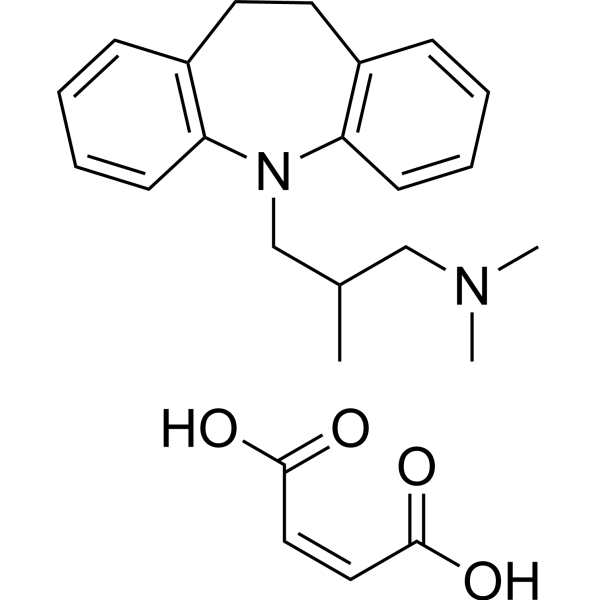
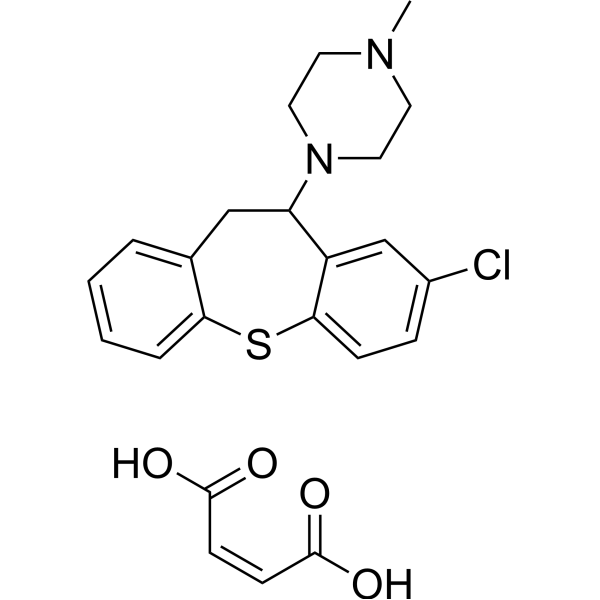
    Trimipramine maleate is a 5-HT receptor antagonist, with blood-brain barrier permeability. Trimipramine maleate has pKi binding values of 6.39, 8.10, 4.66 for 5-HT1C, 5-HT2 and 5-HT1A, respectively. Trimipramine maleate is also a potent and selective inhibitor targeting human noradrenaline (hNAT), serotonin (hSERT) and organic cation transporters (hOCT1, hOCT2) with IC50 values of 4.99 μM, 2.11 μM, 3.72 μM, 8.00 μM, respectively. Trimipramine maleate has vascular activity and anxiolytic efficacy .
    Trimipramine maleate
  • HY-32350
    Ercalcitriol
    3 Publications Verification

    1α,25-Dihydroxy Vitamin D2

    VD/VDR Drug Metabolite Endogenous Metabolite Metabolic Disease
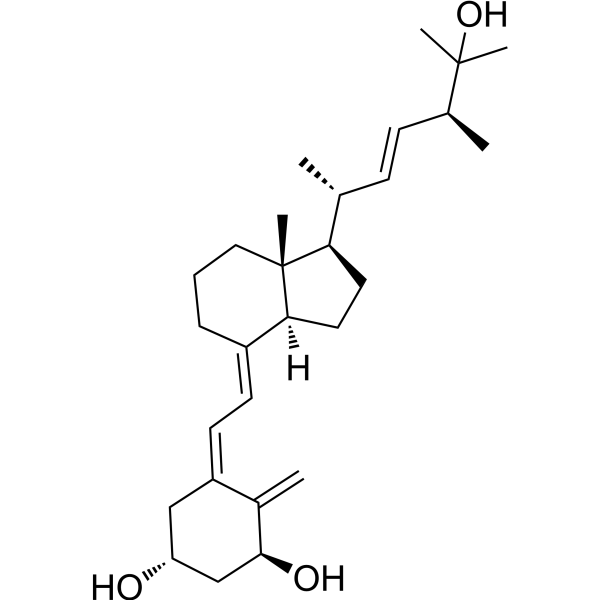
    Ercalcitriol (1α,25-Dihydroxy Vitamin D2) is a vitamin D receptor (VDR) agonist with high binding affinity. After binding to VDR, Ercalcitriol forms a complex with retinoid X receptor (RXR) to regulate target gene transcription. For example, Ercalcitriol induces human gingival/oral epithelial cells to produce human cat antimicrobial peptide (hCAP-18/LL-37), which has antimicrobial activity against periodontal pathogens such as Porphyromonas gingivalis. Ercalcitriol enhances the innate immune defense of the oral mucosa by promoting the expression of antimicrobial peptides, and is mainly used in the study of periodontal diseases and immune-related oral diseases .
    Ercalcitriol
  • HY-100656

    Dopamine Receptor 5-HT Receptor Neurological Disease
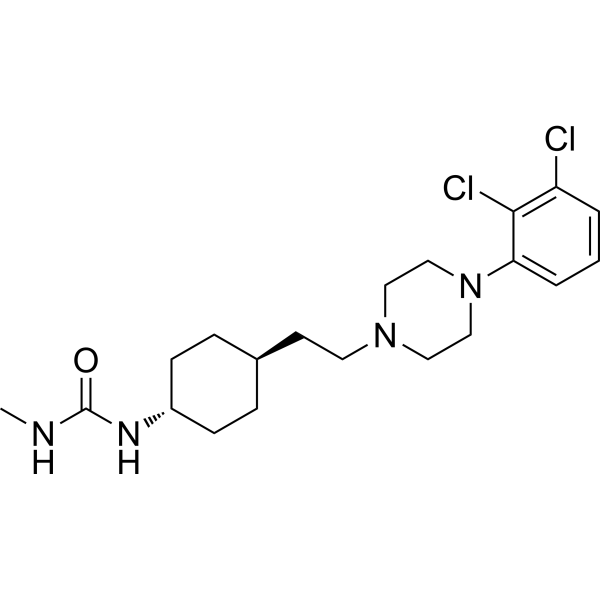
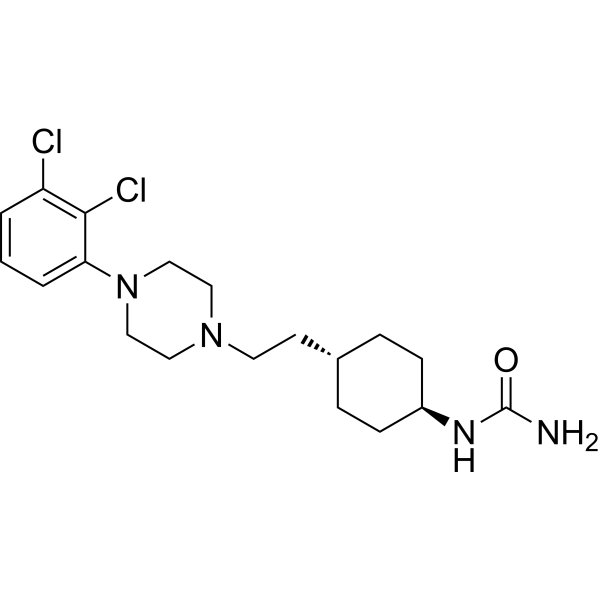
    Desmethyl cariprazine is a major active metabolite of cariprazine, with activities at human dopamine receptors and serotonin receptors, showing a pEC50 of 8.90 at human D2 receptors, a pEC50 of 8.09 at D3 receptors, and a pEC50 of 6.28 at 5-HT1A receptors. Desmethyl cariprazine inhibits forskolin-induced cAMP production at D2, D3 and 5-HT1A receptors, and suppresses serotonin-induced Ca 2+ release at 5-HT2B receptors. Desmethyl cariprazine is applicable to research related to schizophrenia, bipolar disorder type I and bipolar disorder.
    Desmethyl cariprazine
  • HY-101348
    L-741626
    2 Publications Verification

    Dopamine Receptor Neurological Disease
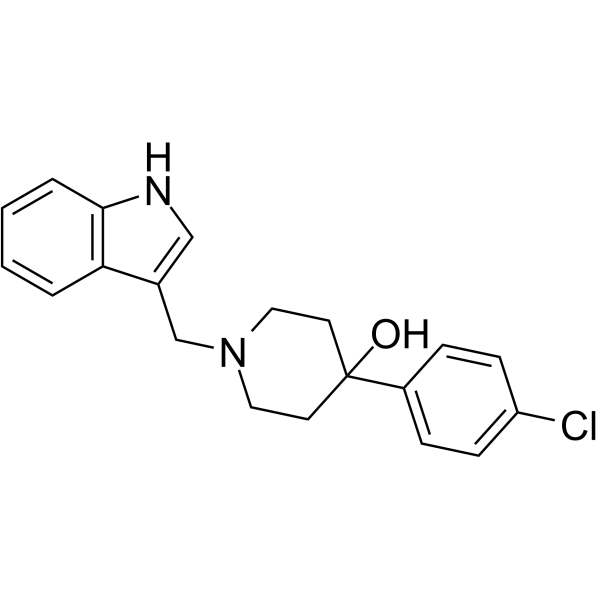
    L-741626 is a selective D2 dopamine receptor antagonist, with the Ki values of 2.4, 100 and 220 nM for human D2, D3 and D4 receptors respectively .
    L-741626
  • HY-14545
    Amisulpride
    2 Publications Verification

    (Rac)-Aramisulpride; (Rac)-Esamisulpride; DAN 2163

    Dopamine Receptor 5-HT Receptor Neurological Disease
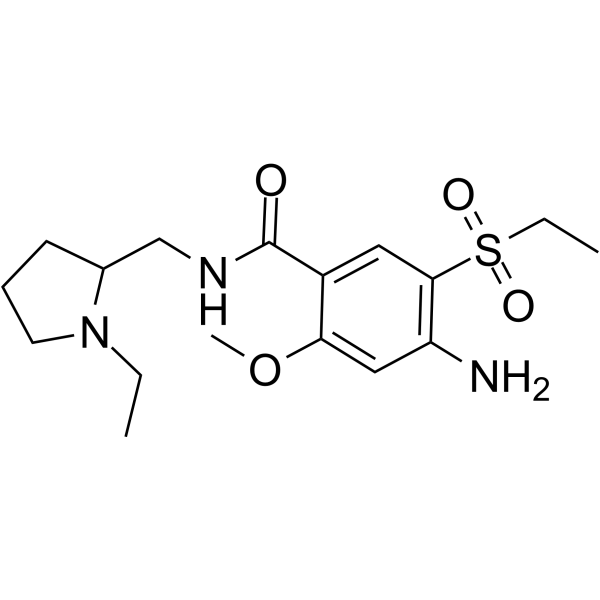
    Amisulpride ((Rac)-Aramisulpride) is a racemic (50:50) mixture of the R-Amisulpride (HY-109167) and S-Amisulpride (HY-126068). Amisulpride is a dopamine D2/D3 receptor antagonist with Ki values of 2.8 and 3.2 nM for human dopamine b>D2 and b>D3, respectively. Amisulpride is a 5-HT7 receptor antagonist with a Ki of 44 nM. Amisulpride can be used in psychiatric research .
    Amisulpride
  • HY-110000

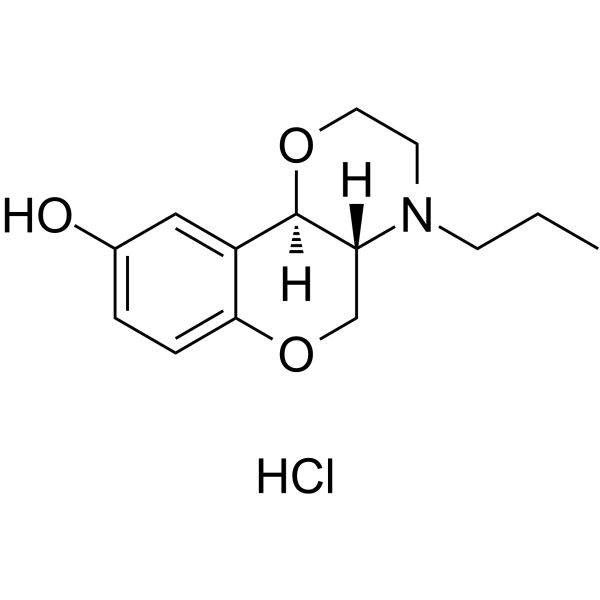
    Dopamine Receptor Neurological Disease
    (+)-PD 128907 hydrochloride is a selective dopamine D2/D3 receptor agonist, with Kis of 1.7, 0.84 nM for human and rat D3 receptors, 179, 770 n M for human and rat D3 receptors, respectively.
    (+)-PD 128907 hydrochloride
  • HY-100820
    Sarizotan
    1 Publications Verification

    EMD 128130

    5-HT Receptor Dopamine Receptor Neurological Disease
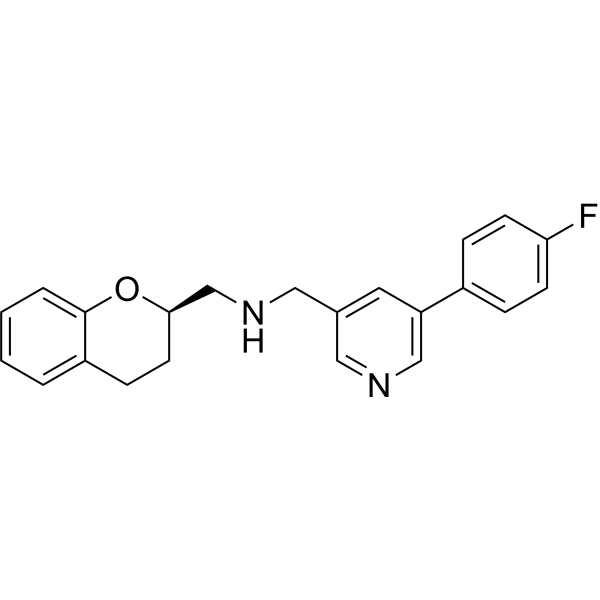
    Sarizotan (EMD 128130) is an orally active serotonin 5-HT1A receptor and dopamine receptor agonist. Sarizotan (EMD 128130) exhibits IC50 values of 6.5 nM (rat 5-HT1A), 0.1 nM (human 5-HT1A), 15.1 nM (rat D2), 17 nM (human D2), 6.8 nM (human D3) and 2.4 nM (human D4.2), respectively .
    Sarizotan
  • HY-B0590A

    Ro 1-9569 Racemate

    Monoamine Transporter Dopamine Receptor Neurological Disease
    Tetrabenazine (Ro 1-9569) Racemate is a brain-penetrant and orally active VMAT2-selective ligand with human VMAT2 Ki 100 nM. Tetrabenazine Racemate binds VMAT2 to block monoamine uptake into synaptic vesicles, potentiates cytoplasmic monoamine degradation. Tetrabenazine Racemate weakly blocks dopamine D2 receptors, and increases dopamine turnover via elevated cerebrospinal fluid homovanillic acid. Tetrabenazine Racemate can be used for the research of Huntington’s disease, tardive dyskinesia, and Tourette’s syndrome .
    Tetrabenazine Racemate
  • HY-B0520
    Benztropine
    5 Publications Verification

    Benzatropine; Benzotropine

    Dopamine Receptor mAChR Histamine Receptor Cancer
    Benztropine (Benzatropine; Benzotropine) is an orally active and BBB-permeable centrally acting anticholinergic agent that can be used for Parkinson's disease research . Benztropine is an anti-histamine agent and a dopamine re-uptake inhibitor. Benztropine is also a human D2 dopamine receptor allosteric antagonist. Benztropine mesylate also has anti-CSCs (cancer stem cells) effects .
    Benztropine
  • HY-100658

    5-HT Receptor Dopamine Receptor Neurological Disease
    Didesmethyl cariprazine is an orally active, BBB-permeable metabolite of Cariprazine (HY-14763). Didesmethyl cariprazine is a partial agonist at the D2 and D3 receptors, full agonist at the 5-HT1A receptor, and antagonist at the human 5-HT2B receptor (Ki: 1.41 nM (human D2L), 0.056 nM (human D3), 1.7 nM (human 5-HT1A), 0.52 nM (human 5-HT2B)). Didesmethyl cariprazine dose-dependently inhibits the spontaneous activity of rat midbrain dopaminergic neurons .
    Didesmethyl cariprazine
  • HY-10847B
    SB-277011 hydrochloride
    1 Publications Verification

    SB-277011A hydrochloride

    Dopamine Receptor 5-HT Receptor Neurological Disease
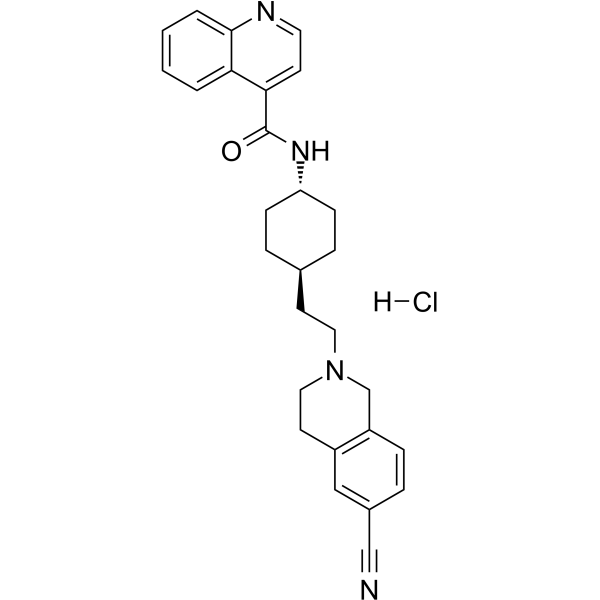
    SB-277011 hydrochloride (SB-277011A hydrochloride) is a potent, selective, orally bioavailable and brain penetrate dopamine D3 receptor (D3R) antagonist with Ki values of 10.7 nM and 11.2 nM at rodent and human D3R, respectively. SB-277011 hydrochloride displays 80- to 100-fold selectivity over other dopamine receptors with pKis of 8.0, 6.0, <5.2, and 5.9 for D3, D2, 5-HT1B, and 5-HT1D receptors, respectively .
    SB-277011 hydrochloride
  • HY-14545A
    Amisulpride hydrochloride
    2 Publications Verification

    (Rac)-Aramisulpride hydrochloride; (Rac)-Esamisulpride hydrochloride; (Rac)-DAN 2163 hydrochloride

    Dopamine Receptor Neurological Disease
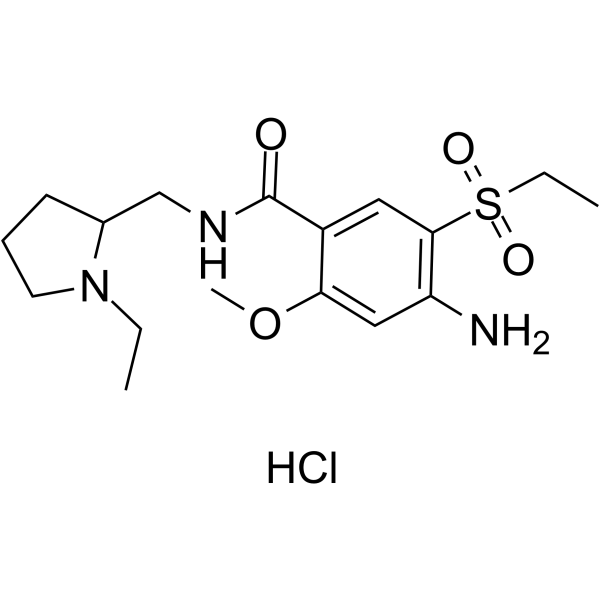
    Amisulpride hydrochloride is a dopamine D2/D3 receptor antagonist with Kis of 2.8 and 3.2 nM for human dopamine D2 and D3, respectively.
    Amisulpride hydrochloride
  • HY-14545S

    (Rac)-Aramisulpride-d5; (Rac)-Esamisulpride-d5; DAN 2163-d5

    Dopamine Receptor Neurological Disease Cancer
    Amisulpride-d5 is the deuterium labeled Amisulpride. Amisulpride is a dopamine D2/D3 receptor antagonist with Kis of 2.8 and 3.2 nM for human dopamine D2 and D3, respectively .
    Amisulpride-d5
  • HY-116941

    Dopamine Receptor Neurological Disease
    A-381393 is a potent, selective, brain penetrate dopamine D4 receptor antagonist, with Kis of 1.5, 1.9 and 1.6 nM for human dopamine D4.4, D4.2, and D4.7 receptor, respectively, >2700-fold selectivity over D1, D2, D3 and D5 dopamine receptors. A-381393 shows moderate affinity for 5-HT2A (Ki, 370 nM) .
    A-381393
  • HY-15780S1

    OPC-34712-d8-1

    Isotope-Labeled Compounds Dopamine Receptor Adrenergic Receptor 5-HT Receptor Neurological Disease
    Brexpiprazole-d8-1 (OPC-34712-d8-1) is the deuterium labeled Brexpiprazole (HY-15780) . Brexpiprazole (OPC-34712), an atypical orally active antipsychotic agent, is a partial agonist of human 5-HT1A and dopamine D2L receptor with Kis of 0.12 nM and 0.3 nM, respectively. Brexpiprazole is also a 5-HT2A receptor antagonist with a Ki of 0.47 nM. Brexpiprazole also shows potent antagonist activity at human noradrenergic α1B (Ki=0.17 nM) and α2C receptors (Ki=0.59 nM) .
    Brexpiprazole-d8-1
  • HY-14544R

    ICI204636 (Standard)

    Reference Standards 5-HT Receptor Dopamine Receptor Neurological Disease
    Quetiapine (Standard) is the analytical standard of Quetiapine. This product is intended for research and analytical applications. Quetiapine (ICI204636) is a 5-HT receptors agonist with a pEC50 of 4.77 for human 5-HT1A receptor. Quetiapine is a dopamine receptor antagonist with a pIC50 of 6.33 for human D2 receptor. Quetiapine has moderate to high affinity for the human D2, HT1A, 5-HT2A, 5-HT2C receptor with pKis of 7.25, 5.74, 7.54, 5.55. Antidepressant and anxiolytic effects .
    Quetiapine (Standard)
  • HY-B0031R

    Reference Standards 5-HT Receptor Dopamine Receptor Neurological Disease
    Quetiapine (hemifumarate) (Standard) is the analytical standard of Quetiapine (hemifumarate). This product is intended for research and analytical applications. Quetiapine hemifumarate is a 5-HT receptors agonist with a pEC50 of 4.77 for human 5-HT1A receptor. Quetiapine hemifumarate is a dopamine receptor antagonist with a pIC50 of 6.33 for human D2 receptor. Quetiapine hemifumarate has moderate to high affinity for the human D2, HT1A, 5-HT2A, 5-HT2C receptor with pKis of 7.25, 5.74, 7.54, 5.55. Antidepressant and anxiolytic effects .
    Quetiapine hemifumarate (Standard)
  • HY-13213

    AM211 free acid

    Prostaglandin Receptor Inflammation/Immunology Endocrinology
    AM211 is a potent, selective and orally bioavailable prostaglandin D2 (PGD2) receptor type 2 (DP2) antagonist, with IC50s of 4.9 nM, 7.8 nM, 4.9 nM, 10.4 nM for human, mouse, guinea pig, and rat DP2, respectively.
    AM211
  • HY-103409

    Dopamine Receptor Neurological Disease
    ABT-724 trihydrochloride is a potent and highly selective dopamine D4 receptor agonist with an EC50 of 12.4 nM for human dopamine D4 receptor. ABT-724 trihydrochloride is a potent partial agonist at the rat D4 (EC50 of 14.3 nM) and the ferret D4 receptor (EC50 of 23.2 nM), and has no effect on dopamine D1, D2, D3, or D5 receptors. ABT-724 trihydrochloride could be useful for the treatment of erectile dysfunction and has favorable side-effect profile .
    ABT-724 trihydrochloride
  • HY-15780R

    OPC-34712 (Standard)

    Reference Standards 5-HT Receptor Dopamine Receptor Adrenergic Receptor Neurological Disease
    Brexpiprazole (Standard) is the analytical standard of Brexpiprazole. This product is intended for research and analytical applications. Brexpiprazole (OPC-34712), an atypical orally active antipsychotic agent, is a partial agonist of human 5-HT1A and dopamine D2L receptor with Kis of 0.12 nM and 0.3 nM, respectively. Brexpiprazole is also a 5-HT2A receptor antagonist with a Ki of 0.47 nM. Brexpiprazole also shows potent antagonist activity at human noradrenergic α1B (Ki=0.17 nM) and α2C receptors (Ki=0.59 nM) .
    Brexpiprazole (Standard)
  • HY-15780S

    OPC-34712-d8

    Isotope-Labeled Compounds 5-HT Receptor Dopamine Receptor Adrenergic Receptor Neurological Disease
    Brexpiprazole-d8 (OPC-34712-d8) is the deuterium labeled Brexpiprazole (HY-15780). Brexpiprazole (OPC-34712), an atypical orally active antipsychotic agent, is a partial agonist of human 5-HT1A and dopamine D2L receptor with Kis of 0.12 nM and 0.3 nM, respectively. Brexpiprazole is also a 5-HT2A receptor antagonist with a Ki of 0.47 nM. Brexpiprazole also shows potent antagonist activity at human noradrenergic α1B (Ki=0.17 nM) and α2C receptors (Ki=0.59 nM) .
    Brexpiprazole-d8
  • HY-13706

    TM30089 Racemate

    Prostaglandin Receptor Endocrinology Cancer
    CAY10471 Racemate (TM30089 Racemate) is a potent and highly selective prostaglandin D2 receptor CRTH2 antagonist, with a Ki of 0.6 nM for hCRTH2, selective over human thromboxane A2 receptor TP (Ki, >10000 nM) or PGD2 receptor DP (Ki, 1200 nM). CAY10471 Racemate also has effect on mouse and rat orthologs of CRTH2 .
    CAY10471 Racemate
  • HY-177122

    Dopamine Receptor Neurological Disease
    Raxlaprazine etomoxil is a small molecule compound with dopamine D2 and D3 receptor modulating activity, which has potential application value in research related to mental illnesses. Raxlaprazine etomoxil exhibits high affinity for human recombinant D2L receptors, with an inhibition constant (Ki) of 1.95 nM. Raxlaprazine etomoxil effectively inhibits forskolin-stimulated cAMP accumulation, with an half maximal effective concentration (EC50) of 3.72 nM in functional activity experiments .
    Raxlaprazine etomoxil
  • HY-14330

    Dopamine Receptor Neurological Disease
    ABT-724, a chemical probe, is a potent and highly selective dopamine D4 receptor agonist with an EC50 of 12.4 nM for human dopamine D4 receptor. ABT-724 is a potent partial agonist at the rat D4 (EC50 of 14.3 nM) and the ferret D4 receptor (EC50 of 23.2 nM). ABT-724 has no effect on dopamine D1, D2, D3, or D5 receptors. ABT-724 could be useful for the treatment of erectile dysfunction and has favorable side-effect profile .
    ABT-724
  • HY-15780A

    OPC-34712 hydrochloride

    5-HT Receptor Dopamine Receptor Adrenergic Receptor Neurological Disease
    Brexpiprazole (OPC-34712) hydrochloride, an atypical orally active antipsychotic agent, is a partial agonist of human 5-HT1A and dopamine D2L receptor with Kis of 0.12 nM and 0.3 nM, respectively. Brexpiprazole hydrochloride is also a 5-HT2A receptor antagonist with a Ki of 0.47 nM. Brexpiprazole hydrochloride also shows potent antagonist activity at human noradrenergic α1B (Ki=0.17 nM) and α2C receptors (Ki=0.59 nM) .
    Brexpiprazole hydrochloride
  • HY-B1213A

    5-HT Receptor Bacterial Neurological Disease
    Trimipramine is a 5-HT receptor antagonist, with pKi binding values of 6.39, 8.10, 4.66 for 5-HT1C, 5-HT2 and 5-HT1A, respectively. Trimipramine is also a potent and selective inhibitor targeting human noradrenaline (hNAT), serotonin (hSERT) and organic cation transporters (hOCT1, hOCT2) with IC50 values of 4.99 μM, 2.11 μM, 3.72 μM, 8.00 μM, respectively. Trimipramine has vascular activity and anxiolytic efficacy .
    Trimipramine
  • HY-B0031S2

    Isotope-Labeled Compounds 5-HT Receptor Dopamine Receptor Neurological Disease
    Quetiapine-d8 (fumarate) is the deuterium labeled Quetiapine. Quetiapine is a 5-HT receptors agonist with a pEC50 of 4.77 for human 5-HT1A receptor. Quetiapine is a dopamine receptor antagonist with a pIC50 of 6.33 for human D2 receptor. Quetiapine has moderate to high affinity for the human D2, HT1A, 5-HT2A, 5-HT2C receptor with pKis of 7.25, 5.74, 7.54, 5.55. Antidepressant and anxiolytic effects .
    Quetiapine-d8 fumarate
  • HY-N3945R

    O,O-Dimethylisoboldine (Standard); S-(+)-Glaucine (Standard); NSC 34396 (Standard)

    Reference Standards Phosphodiesterase (PDE) Calcium Channel Adrenergic Receptor Dopamine Receptor Influenza Virus Infection Inflammation/Immunology
    Glaucine (Standard) is the analytical standard of Glaucine. This product is intended for research and analytical applications. Glaucine (O,O-Dimethylisoboldine) is an alkaloid isolated from Glaucium flavum with antitussive, bronchodilation and anti-inflammatory properties. Glaucine is a selective and orally active phosphodiesterase 4 (PDE4) inhibitor with Kis of 3.4 μM in human bronchus and polymorphonuclear leukocytes. Glaucine is also a non-selective α-adrenoceptor antagonist, a Ca2+ entry blocker, and a weak dopamine D1 and D2 receptor antagonist. Glaucine has antioxidative and antiviral activities .
    Glaucine (Standard)
  • HY-112320

    Dopamine Receptor Neurological Disease
    UCSF34 (Compound 54) is a Haloperidol (HY-14538) analogue. UCSF34 binds to the human D2L receptor, with an estimated pKi of 7.49. UCSF34 can be used in the research of schizophrenia .
    UCSF34
  • HY-34763

    7-Hydroxyquinolinone; 2,7-Dihydroxyquinoline

    Drug Derivative Others
    7-Hydroxycarbostyril (7-Hydroxy-2(1H)-quinolinone) (Compound 7) is a quinolinone derivative. 7-Hydroxycarbostyril can be used for synthesis of Brexpiprazole (HY-15780). Brexpiprazole, a typical orally active antipsychotic agent, is a partial agonist of human 5-HT1A and dopamine D2L receptor .
    7-Hydroxycarbostyril
  • HY-W329175

    SKF-104557

    Dopamine Receptor Neurological Disease
    N-Despropyl Ropinirole (SKF-104557) is an active metabolite of the dopamine D2 receptor agonist Ropinirole (HY-B0623). N-Despropyl Ropinirole is a full agonist at human D2 and D3 receptors. N-Despropyl Ropinirole is a partial agonistof the hD4 receptor .
    N-Despropyl Ropinirole
  • HY-137308

    15R-PGD2

    Prostaglandin Receptor Inflammation/Immunology
    15(R)-Prostaglandin D2 is a potential prostatic hormone DP(2) receptor (Prostaglandin Receptor) agonist with anti-inflammatory activity. 15(R)-Prostaglandin D2 increases actin polymerization in human eosinophils and increases cAMP levels in platelets .
    15(R)-Prostaglandin D2
  • HY-14545R

    (Rac)-Aramisulpride (Standard); (Rac)-Esamisulpride (Standard); DAN 2163 (Standard)

    Reference Standards Dopamine Receptor Neurological Disease Cancer
    Amisulpride (Standard) is the analytical standard of Amisulpride. This product is intended for research and analytical applications. Amisulpride is a dopamine D2/D3 receptor antagonist with Kis of 2.8 and 3.2 nM for human dopamine D2 and D3, respectively.
    Amisulpride (Standard)
  • HY-14545S1

    Isotope-Labeled Compounds Dopamine Receptor Neurological Disease Cancer
    Amisulpride-d5 N-Oxide is the deuterium labeled Amisulpride. Amisulpride is a dopamine D2/D3 receptor antagonist with Kis of 2.8 and 3.2 nM for human dopamine D2 and D3, respectively .
    Amisulpride-d5 N-Oxide
  • HY-100820B

    EMD 128130 dihydrochloride

    5-HT Receptor Dopamine Receptor Neurological Disease
    Sarizotan dihydrochloride (EMD 128130) is an orally active serotonin 5-HT1A receptor and dopamine receptor agonist. Sarizotan (EMD 128130) exhibits IC50 values of 6.5 nM (rat 5-HT1A), 0.1 nM (human 5-HT1A), 15.1 nM (rat D2), 17 nM (human D2), 6.8 nM (human D3) and 2.4 nM (human D4.2), respectively .
    Sarizotan dihydrochloride
  • HY-100820A

    EMD 128130 hydrochloride

    5-HT Receptor Dopamine Receptor Neurological Disease
    Sarizotan hydrochloride is an orally active serotonin 5-HT1A receptor and dopamine receptor agonist. Sarizotan hydrochloride (EMD 128130) exhibits IC50 values of 6.5 nM (rat 5-HT1A), 0.1 nM (human 5-HT1A), 15.1 nM (rat D2), 17 nM (human D2), 6.8 nM (human D3) and 2.4 nM (human D4.2), respectively .
    Sarizotan hydrochloride
  • HY-B0590E

    Ro 1-9569 mesylate

    Monoamine Transporter Dopamine Receptor Neurological Disease
    Tetrabenazine (Ro 1-9569) mesylate is a brain-penetrant and orally active VMAT2-selective ligand with human VMAT2 Ki 100 nM. Tetrabenazine mesylate binds VMAT2 to block monoamine uptake into synaptic vesicles, potentiates cytoplasmic monoamine degradation. Tetrabenazine mesylate weakly blocks dopamine D2 receptors, and increases dopamine turnover via elevated cerebrospinal fluid homovanillic acid. Tetrabenazine mesylate can be used for the research of Huntington’s disease, tardive dyskinesia, and Tourette’s syndrome .
    Tetrabenazine mesylate
  • HY-B0031S3

    Isotope-Labeled Compounds 5-HT Receptor Dopamine Receptor Neurological Disease
    Quetiapine-d8 (hemifumarate) is the deuterium labeled Quetiapine hemifumarate. Quetiapine hemifumarate is a 5-HT receptors agonist with a pEC50 of 4.77 for human 5-HT1A receptor. Quetiapine hemifumarate is a dopamine receptor antagonist with a pIC50 of 6.33 for human D2 receptor. Quetiapine hemifumarate has moderate to high affinity for the human D2, HT1A, 5-HT2A, 5-HT2C receptor with pKis of 7.25, 5.74, 7.54, 5.55. Antidepressant and anxiolytic effects .
    Quetiapine-d8 hemifumarate
  • HY-U00423

    Ramatroban analog

    Prostaglandin Receptor Inflammation/Immunology Endocrinology
    CRTH2-IN-1 (Ramatroban analog) is a selective prostaglandin D2 receptor DP2 (CRTH2) antagonist with an IC50 of 6 nM in a human DP2 binding assay.
    CRTH2-IN-1
  • HY-B0031S4

    Dopamine Receptor 5-HT Receptor Neurological Disease
    Quetiapine (hemifumarate)-d8 is the deuterium labeled Quetiapine hemifumarate . Quetiapine hemifumarate is a 5-HT receptors agonist with a pEC50 of 4.77 for human 5-HT1A receptor. Quetiapine hemifumarate is a dopamine receptor antagonist with a pIC50 of 6.33 for human D2 receptor. Quetiapine hemifumarate has moderate to high affinity for the human D2, HT1A, 5-HT2A, 5-HT2C receptor with pKis of 7.25, 5.74, 7.54, 5.55. Antidepressant and anxiolytic effects .
    Quetiapine hemifumarate-d8
  • HY-B0031S5

    Dopamine Receptor 5-HT Receptor Isotope-Labeled Compounds Neurological Disease
    Quetiapine-d4-1 fumarate is deuterated labeled Quetiapine (hemifumarate) (HY-B0031). Quetiapine hemifumarate is a 5-HT receptors agonist with a pEC50 of 4.77 for human 5-HT1A receptor. Quetiapine hemifumarate is a dopamine receptor antagonist with a pIC50 of 6.33 for human D2 receptor. Quetiapine hemifumarate has moderate to high affinity for the human D2, HT1A, 5-HT2A, 5-HT2C receptor with pKis of 7.25, 5.74, 7.54, 5.55. Antidepressant and anxiolytic effects .
    Quetiapine-d4-1 fumarate
  • HY-100820R

    EMD 128130 (Standard)

    Reference Standards 5-HT Receptor Dopamine Receptor Neurological Disease
    Sarizotan (Standard) is the analytical standard of Sarizotan. This product is intended for research and analytical applications. Sarizotan (EMD 128130) is an orally active serotonin 5-HT1A receptor and dopamine receptor agonist. Sarizotan (EMD 128130) exhibits IC50 values of 6.5 nM (rat 5-HT1A), 0.1 nM (human 5-HT1A), 15.1 nM (rat D2), 17 nM (human D2), 6.8 nM (human D3) and 2.4 nM (human D4.2), respectively .
    Sarizotan (Standard)
  • HY-14544AS

    ICI204636-d4 hydrochloride

    Isotope-Labeled Compounds Dopamine Receptor 5-HT Receptor Neurological Disease
    Quetiapine-d4 (hydrochloride) (ICI204636-d4 (hydrochloride)) is deuterium labeled Quetiapine. Quetiapine (ICI204636) is a 5-HT receptors agonist with a pEC50 of 4.77 for human 5-HT1A receptor. Quetiapine is a dopamine receptor antagonist with a pIC50 of 6.33 for human D2 receptor. Quetiapine has moderate to high affinity for the human D2, HT1A, 5-HT2A, 5-HT2C receptor with pKis of 7.25, 5.74, 7.54, 5.55. Antidepressant and anxiolytic effects .
    Quetiapine-d4 hydrochloride
  • HY-B0590R

    Ro 1-9569 (Standard)

    Reference Standards Monoamine Transporter Dopamine Receptor Neurological Disease
    Tetrabenazine (Standard) is the analytical standard of Tetrabenazine (HY-B0590). This product is intended for research and analytical applications. Tetrabenazine (Ro 1-9569) is a brain-penetrant and orally active VMAT2-selective ligand with human VMAT2 Ki 100 nM. Tetrabenazine binds VMAT2 to block monoamine uptake into synaptic vesicles, potentiates cytoplasmic monoamine degradation. Tetrabenazine weakly blocks dopamine D2 receptors, and increases dopamine turnover via elevated cerebrospinal fluid homovanillic acid. Tetrabenazine can be used for the research of Huntington’s disease, tardive dyskinesia, and Tourette’s syndrome .
    Tetrabenazine (Standard)

Inquiry Online

Your information is safe with us. * Required Fields.

Salutation


Country or Region *

Applicant Name *


Organization Name *

Department *


Email Address *


Product Name *

Cat. No.


Requested quantity *

Phone Number *


Remarks

Inquiry Online

Inquiry Information

Product Name:
Cat. No.:
Quantity:
MCE Japan Authorized Agent:

