1. Search Result
Search Result
Results for "

hyperacetylation

" in MedChemExpress (MCE) Product Catalog:

24

Inhibitors & Agonists

6

Peptides

1

Click Chemistry

Cat. No. Product Name Target Research Areas Chemical Structure
  • HY-100591
    SirReal2
    2 Publications Verification

    Sirtuin Neurological Disease Inflammation/Immunology Cancer
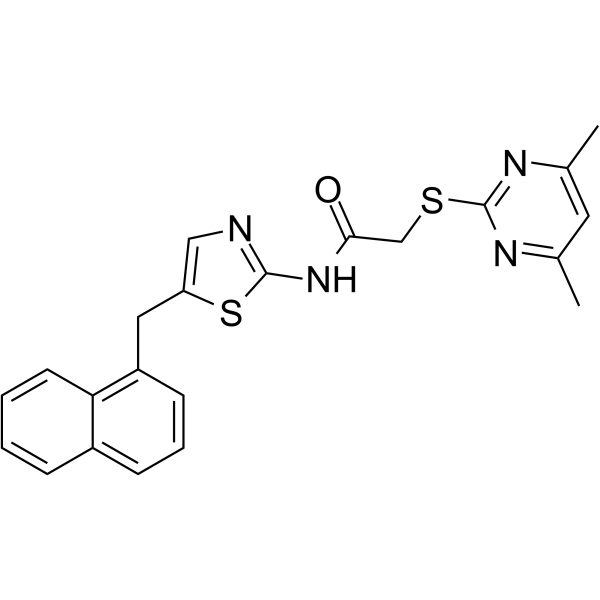
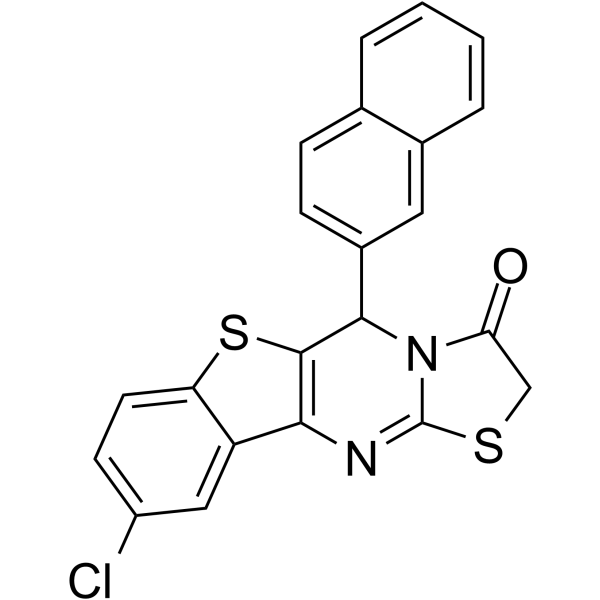
    SirReal2 is a potent, isotype-selective Sirt2 inhibitor with an IC50 value of 140 nM and has very little effect on the activities of Sirt3-5. SirReal2 leads to tubulin hyperacetylation in HeLa cells and induces destabilization of the checkpoint protein BubR1. SirReal2 combined with VS-5584 (HY-16585) suppresses tumor growth and extends the survival rate of mice in tumor xenograft model. SirReal2 is is promising for research of cancer, inflammation and neurodegeneration .
    SirReal2
  • HY-12954

    NCH-51

    HDAC HIV Infection Cancer
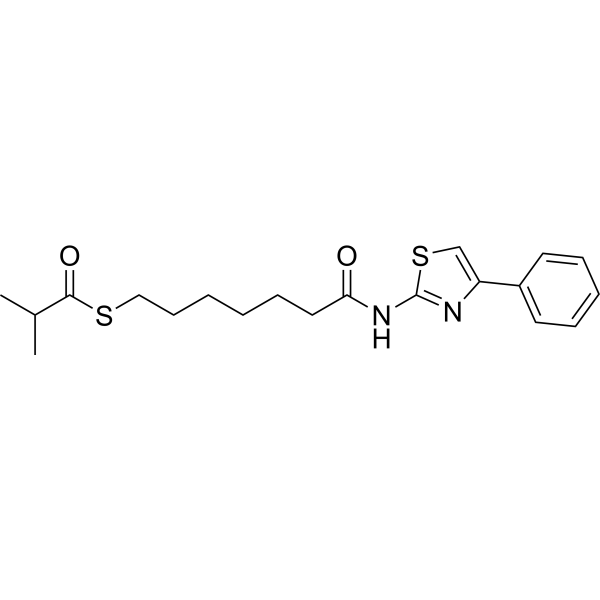
    PTACH (NCH-51) is a potent HDAC inhibitor with IC50s of 48 nM, 32 nM, and 41 nM for HDAC1, HDAC4, and HDAC6, respectively. PTACH exerts potent growth inhibition against various cancer cells (EC50s of 1.1-9.1 μM) .
    PTACH
  • HY-13265
    AR-42
    4 Publications Verification

    HDAC-42; OSU-HDAC42

    HDAC Autophagy Apoptosis Cancer
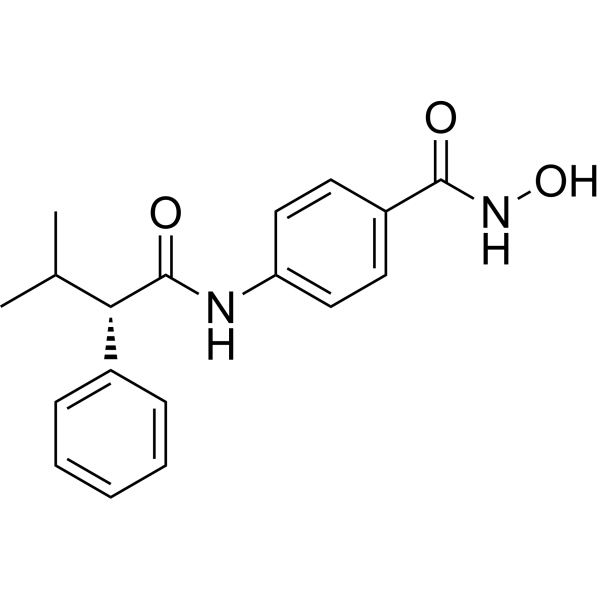
    AR-42 (HDAC-42; OSU-HDAC42) is a potent, orally bioavailable pan-HDAC inhibitor (IC50=16 nM). AR-42 induces growth inhibition, cell-cycle arrest, apoptosis, and activation of caspases-3/7. AR-42 promotes hyperacetylation of H3, H4, and alpha-tubulin, and up-regulation of p21. AR-42 shows cytotoxicity against various human cancer cell lines .
    AR-42
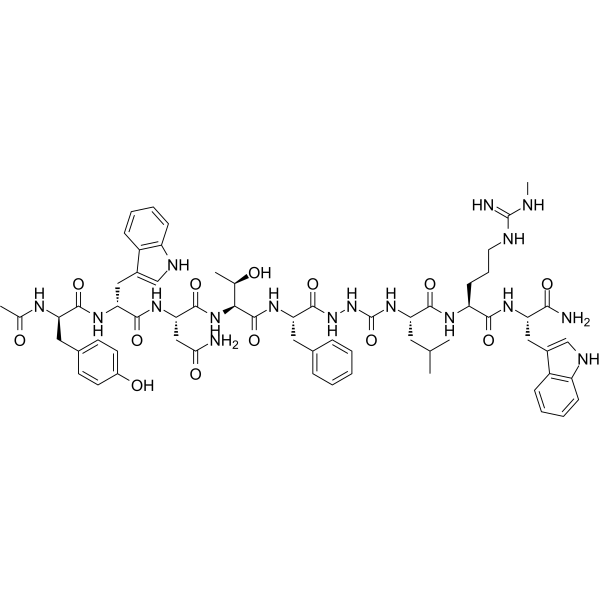
  • HY-P2161B
    TAK-683 acetate
    4 Publications Verification

    Kisspeptin Receptor Cancer
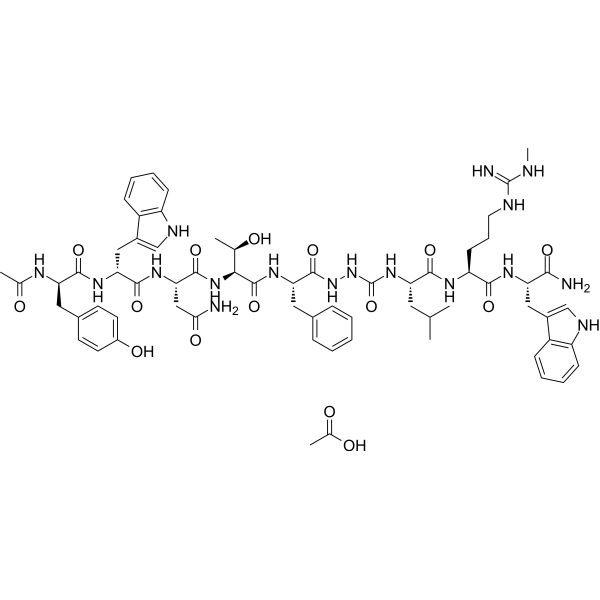
    TAK-683 acetate is a potent full KISS1 receptor (KISS1R) agonist (IC50=170 pM) with improved metabolic stability. TAK-683 acetate is a nonapeptide metastin analog, exhibits agonistic activities to KISS1R with EC50 values of 0.96 nM and 1.6 nM for human and rat, respectively . TAK-683 acetate depletes GnRH in the hypothalamus and reduces plasma FSH, LH, and testosterone levels in vivo, it has the potential for the study of hormone-dependent prostate cancer .
    TAK-683 acetate
  • HY-152134

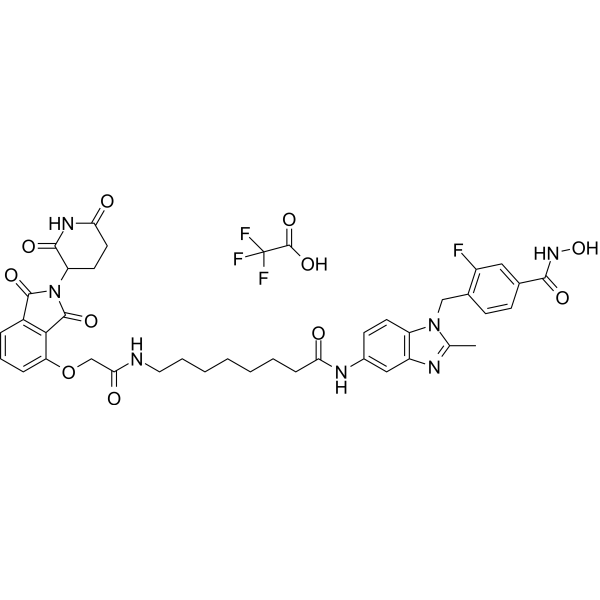
    HDAC PROTACs Cancer
    HDAC6 degrader-3 is a potent and selective HDAC6 degrader via ternary complex formation and the ubiquitin-proteasome pathway with a DC50 value of 19.4 nM. HDAC6 degrader-3 has IC50s of 4.54 nM and 0.647 μM for HDAC6 and HDAC1, respectively. HDAC6 degrader-3 causes strong hyperacetylation of α-tubulin .
    HDAC6 degrader-3
  • HY-P5544

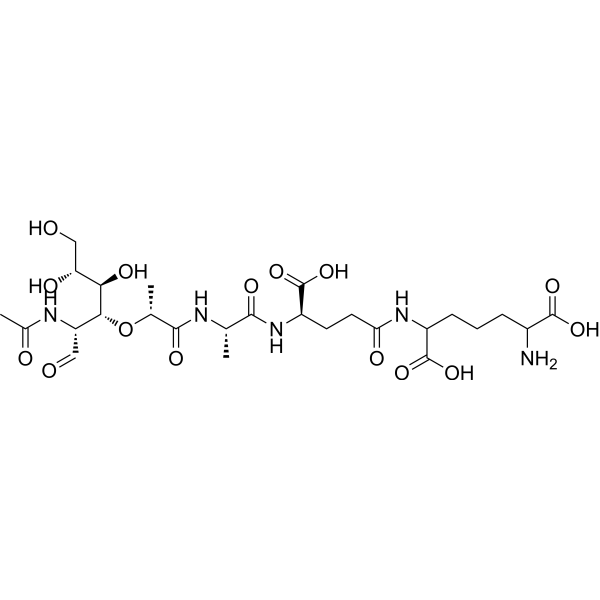
    N-Acetylmuramyl-L-Ala-γ-D-Glu-meso-diaminopimelic acid

    NOD-like Receptor (NLR) Others
    M-TriDAP (N-Acetylmuramyl-L-Ala-γ-D-Glu-meso-diaminopimelic acid) is a NOD1/2 agoist and biological active peptide .
    M-TriDAP
  • HY-179019

    HDAC Microtubule/Tubulin Apoptosis Caspase Neurological Disease Cancer
    HDAC-IN-94 is a potent, selective HDAC6 inhibitor (IC50 = 4.5 nM). HDAC-IN-94 shows >1000-fold selectivity over HDAC8 and shows minimal activity against other isoforms (HDAC1-3/10). HDAC-IN-94 induces α-tubulin hyperacetylation, apoptosis, and G2/M cell cycle arrest, exhibiting potent anti-tumor efficacy with low cytotoxicity. HDAC-IN-94 can be used for neuroblastoma and glioblastoma research .
    HDAC-IN-94
  • HY-P2161

    Kisspeptin Receptor Cancer
    TAK-683 is a potent full KISS1 receptor (KISS1R) agonist (IC50=170 pM) with improved metabolic stability. TAK-683 is a nonapeptide metastin analog, exhibits agonistic activities to KISS1R with EC50 values of 0.96 nM and 1.6 nM for human and rat, respectively . TAK-683 depletes GnRH in the hypothalamus and reduces plasma FSH, LH, and testosterone levels in vivo, it has the potential for the study of hormone-dependent prostate cancer .
    TAK-683
  • HY-118783

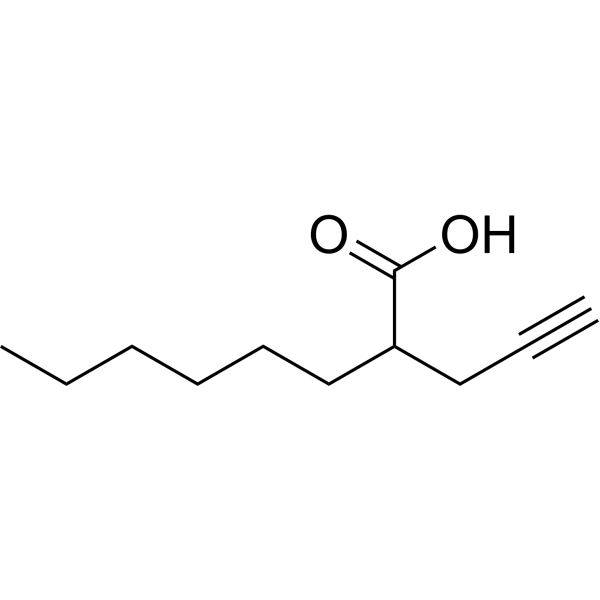
    (±)-2-Hexyl-4-pentynoic acid

    HDAC HSP Neurological Disease Cancer
    2-Hexyl-4-pentynoic acid ((±)-2-Hexyl-4-pentynoic acid), a Valproic acid (HY-10585) derivative, exhibits potential roles of HDAC inhibition (IC50 = 13 μM) and HSP70 induction. 2-Hexyl-4-pentynoic acid causes histone hyperacetylation and protect against glutamate-induced excitotoxicity in cultured neurons. 2-Hexyl-4-pentynoic acid can be used for the study of breast carcinoma. 2-Hexyl-4-pentynoic acid is a click chemistry reagent, it contains an Alkyne group and can undergo copper-catalyzed azide-alkyne cycloaddition (CuAAc) with molecules containing Azide groups .
    2-Hexyl-4-pentynoic acid
  • HY-178336

    VD/VDR HDAC Microtubule/Tubulin Inflammation/Immunology Cancer
    AC-340 is a potent hybrid VDR agonist/HDAC inhibitor. AC-340 superinduces VDR target genes (e.g., CYP24A1) and inhibits HDAC6 (IC50 = 0.37 μM) with ~10-fold selectivity over HDAC2. AC-340 induces VDR hyperagonism by causing widespread protein hyperacetylation (e.g., tubulin and H3K9/K27), which leads to elevated H3K27 acetylation on VDR target genes. AC-340 can be used for melanoma cancer research .
    AC-340
  • HY-146013

    Sirtuin Microtubule/Tubulin Cancer
    Sirt1/2-IN-1 (Compound 7) is a SIRT1 and SIRT2 inhibitor with IC50 values of 1.81, 2.10 and 20.5 µg/mL against SIRT1, SIRT2 and SIRT3, respectively. Sirt1/2-IN-1 displays activity in hyperacetylation of α-tubulin protein with an IC50 of 32.05 µg/mL. Sirt1/2-IN-1 shows prominent anticancer activity .
    Sirt1/2-IN-1
  • HY-178773

    Sirtuin Apoptosis Infection
    SIRT2-IN-18 (Compound 8) is a SIRT2 inhibitor with IC50s of 5.3  and 12.3 μM for SmSIRT2 and hSIRT2, respectively. SIRT2-IN-18 shows potent antischistosomal activities against both Liberian and Puerto Rican strains of Schistosoma mansoni and reduces schistosomula and adult worm pair viability, pairing, and egg production, with low cytotoxicity in mammalian cells. SIRT2-IN-18 increases histone H3 hyperacetylation and induces cytochrome c-mediated apoptosis .
    SIRT2-IN-18
  • HY-P2115

    GnRH Receptor Cancer
    Ramorelix is a luteinizing-hormone-releasing hormone (LHRH) antagonist. Ramorelix can inhibit tumor progression in vivo. Ramorelix can be studied in anti-cancer research .
    Ramorelix
  • HY-131961

    VD/VDR HDAC Cancer
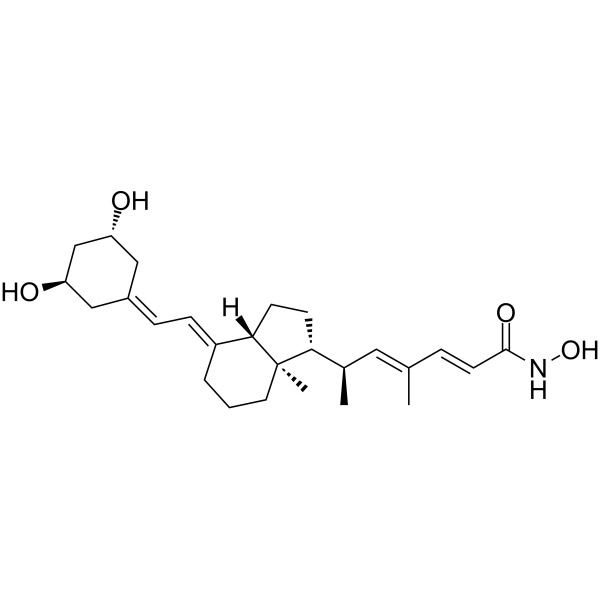
    Triciferol functions as a multiple ligand with combined VDR agonist and HDAC antagonist activities. Triciferol binds directly to the VDR (IC50=87 nM), and functions as an agonist with 1,25D-like potency on several 1,25D target genes. Triciferol induces marked tubulin hyperacetylation, and augments histone acetylation. Antiproliferative and cytotoxic activities .
    Triciferol
  • HY-121512

    HDAC Apoptosis Cancer
    SK-7041 is a HDAC inhibitor with the IC50 of 172 nM. SK-7041 induces the hyperacetylation of histones H3 and H4 .SK-7041 inhibits tumor cell growth in vivo and in vitro, induces cell apoptosis, and arrests cell cycle at the G1 phase .
    SK-7041
  • HY-169922

    HDAC Parasite Caspase Cancer
    HDAC-IN-82 (Compound 18b) is a histone deacetylase (HDAC) inhibitor with selective antiplasmodial and anticancer activity. HDAC-IN-82 shows potent antiproliferative activity and caspase 3/7 activation in cancer cells. HDAC-IN-82 causes hyperacetylation of histone H3 and α-tubulin .
    HDAC-IN-82
  • HY-117136

    HDAC Caspase Bcl-2 Family Cancer
    AN-7 is an orally active histone deacetylase (HDAC) inhibitor that induces histone hyperacetylation and differentiation in vitro and in vivo, and inhibits the proliferation of human prostate 22Rv1 cancer cells. AN-7 can increase the expression of the pro-apoptotic protein Bax, reduce the expression of the anti-apoptotic protein Bcl-2, and promote apoptosis by activating caspase-3, and can be used in the study of prostate cancer .
    AN-7
  • HY-P5544A

    N-Acetylmuramyl-L-Ala-γ-D-Glu-meso-diaminopimelic acid TFA

    NOD-like Receptor (NLR) Others
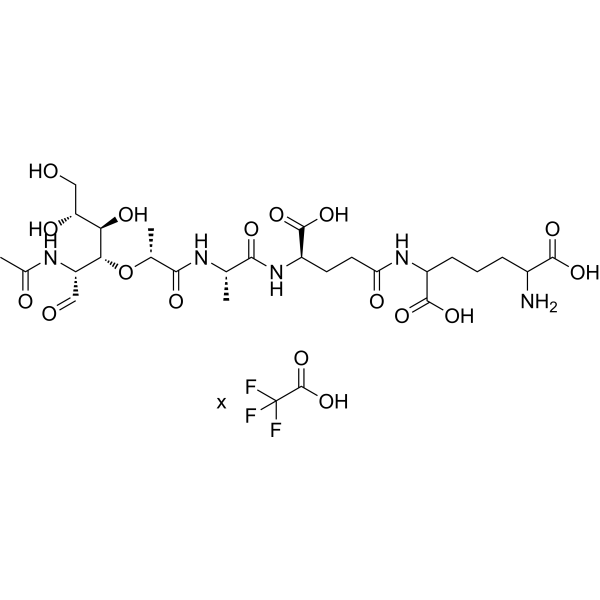
    M-TriDAP (N-Acetylmuramyl-L-Ala-γ-D-Glu-meso-diaminopimelic acid) TFA is a NOD1/2 agoist and biological active peptide .
    M-TriDAP TFA
  • HY-163834

    HDAC Cancer
    HDAC6-IN-47 (Compound S-29b) is inhibitor for HDAC, which exhibits high affinities to HDAC1, HDAC2, HDAC3, HDAC6, HDAC8, HDAC10 with Ki of 60, 56, 162, 0.44, 362 and 849 nM, respectively. HDAC6-IN-47 causes tubulin hyperacetylation in MV4-11, inhibits the proliferation of MV4-11 with an EC50 of 0.50 µM. HDAC6-IN-47 can be used in research of leukemia .
    HDAC6-IN-47
  • HY-P2161A

    Kisspeptin Receptor Cancer
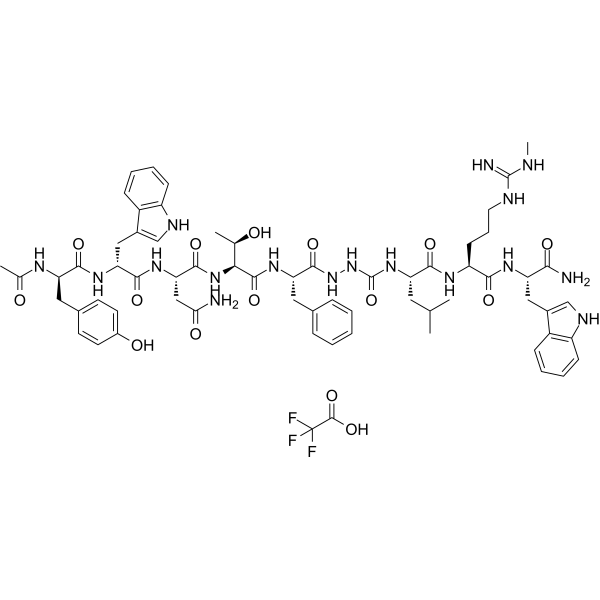
    TAK-683 TFA is a potent full KISS1 receptor (KISS1R) agonist (IC50=170 pM) with improved metabolic stability. TAK-683 TFA is a nonapeptide metastin analog, exhibits agonistic activities to KISS1R with EC50 values of 0.96 nM and 1.6 nM for human and rat, respectively . TAK-683 TFA depletes GnRH in the hypothalamus and reduces plasma FSH, LH, and testosterone levels in vivo, it has the potential for the study of hormone-dependent prostate cancer .
    TAK-683 TFA
  • HY-156094

    HDAC Histone Demethylase Apoptosis Cancer
    JMJD3/HDAC-IN-1 (compound A5b) is a dual inhibitor targeting Jumonji domain-containing protein demethylase 3 (JMJD3) and histone deacetylase (HDAC1, IC50=16 nM). JMJD3/HDAC-IN-1 promotes hypermethylation of histone H3K27 and hyperacetylation of H3K9, and also cleaves caspase-7 and PARP to induce apoptosis. JMJD3/HDAC-IN-1 effectively inhibits cancer cell cloning, migration, and invasion .
    JMJD3/HDAC-IN-1
  • HY-124792

    HDAC Apoptosis Bcr-Abl HSP Cancer
    MRLB-223 is a preferential HDAC1 and HDAC2 inhibitor with activity against tumor cells.MRLB-223 induces histone hyperacetylation, intrinsic apoptotic pathway activation, tumor cell apoptosis, Hsp90 hyperacetylation, and caspase-dependent Bcr-Abl degradation.MRLB-223 mediates p53-independent tumor cell death, with activity suppressed by Bcl-2 overexpression, and kills Bcr-Abl-expressing myeloid cells.MRLB-223 exerts effects in mice bearing Eμ-myc lymphomas.MRLB-223 can be used for the research of Eμ-myc lymphoma .
    MRLB-223
  • HY-116267

    HDAC Apoptosis PARP Bcl-2 Family Androgen Receptor Cancer
    MHY219 is a histone deacetylase (HDAC) inhibitor with an IC50 of 0.276 μM. MHY219 inhibits total HDAC enzyme activity, increases histone H3 and H4 hyperacetylation. MHY219 induces cance cells phase arrest, apoptosis and inhibits proliferationin. MHY219 increases cleavage of PARP, Bax, cytochrome c levels, androgen receptor expression and decreases Bcl-2 expression. MHY219 can be used for the research of prostate cancer .
    MHY219
  • HY-100591R

    Sirtuin Reference Standards Neurological Disease Inflammation/Immunology Cancer
    SirReal2 (Standard) is the analytical standard of SirReal2 (HY-100591). This product is intended for research and analytical applications. SirReal2 is a potent, isotype-selective Sirt2 inhibitor with an IC50 value of 140 nM and has very little effect on the activities of Sirt3-5. SirReal2 leads to tubulin hyperacetylation in HeLa cells and induces destabilization of the checkpoint protein BubR1. SirReal2 combined with VS-5584 (HY-16585) suppresses tumor growth and extends the survival rate of mice in tumor xenograft model. SirReal2 is is promising for research of cancer, inflammation and neurodegeneration .
    SirReal2 (Standard)

Inquiry Online

Your information is safe with us. * Required Fields.

Salutation


Country or Region *

Applicant Name *


Organization Name *

Department *


Email Address *


Product Name *

Cat. No.


Requested quantity *

Phone Number *


Remarks

Inquiry Online

Inquiry Information

Product Name:
Cat. No.:
Quantity:
MCE Japan Authorized Agent:

