

27 Results for "

immune-checkpoint-inhibitors

" in MedChemExpress (MCE) Product Catalog:
Products (27)

27 Results for "immune-checkpoint-inhibitors" in MCE Product Catalog:

7
7 Publications Verification
Cat. No.: HY-P99032
CAS No.: 1228763-95-8
Synonyms: IPH2201
Monalizumab (IPH2201) is an immune checkpoint inhibitor targeting Natural Killer Group 2A (NKG2A). Monalizumab, a humanized anti-NKG2A blocking mAb, increases IFN-γ production, thereby promoting NK cell effector functions. Monalizumab can be used for the research of head and neck squamous cell carcinoma (HNSCC) .
loading...
    loading...
6
6 Cited Publications
Cat. No.: HY-102011
CAS No.: 1818314-88-3
Purity:  99.49%
Target:  

PD-1/PD-L1

Research Areas:  

Inflammation/Immunology Cancer

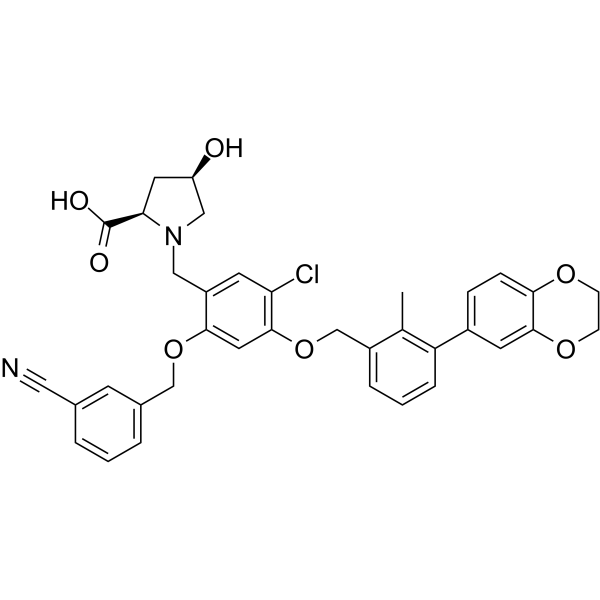
BMS-1166 is a potent PD-1/PD-L1 immune checkpoint inhibitor. BMS-1166 induces dimerization of PD-L1 and blocks its interaction with PD-1, with an IC50 of 1.4 nM. BMS-1166 antagonizes the inhibitory effect of PD-1/PD-L1 immune checkpoint on T cell activation .
loading...
    loading...
6
6 Cited Publications
Cat. No.: HY-102011A
CAS No.: 2113650-05-6
Purity:  99.31%
Target:  

PD-1/PD-L1

Research Areas:  

Inflammation/Immunology Cancer

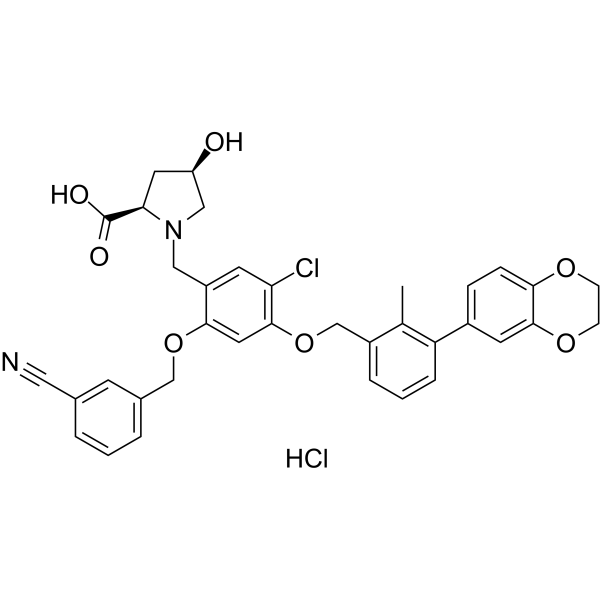
BMS-1166 hydrochloride is a potent PD-1/PD-L1 immune checkpoint inhibitor. BMS-1166 hydrochloride induces dimerization of PD-L1 and blocks its interaction with PD-1, with an IC50 of 1.4 nM. BMS-1166 hydrochloride antagonizes the inhibitory effect of PD-1/PD-L1 immune checkpoint on T cell activation .
loading...
    loading...
Cat. No.: HY-P9986
CAS No.: 1918185-84-8
Synonyms: MTIG-7192A; RG-6058

Target:  

CD28

Research Areas:  

Cancer

Tiragolumab is an immune checkpoint inhibitor binding to the T-cell immunoglobulin and ITIM domain (TIGIT). Tiragolumab in combination with Atezolizumab (HY-P9904) and Bevacizumab (HY-P9906) has benefit in unresectable hepatocellular carcinoma. Tiragolumab can be used to study non-small cell lung cancer (NSCLC) and melanoma .
loading...
    loading...
Cat. No.: HY-N6579
CAS No.: 65247-27-0
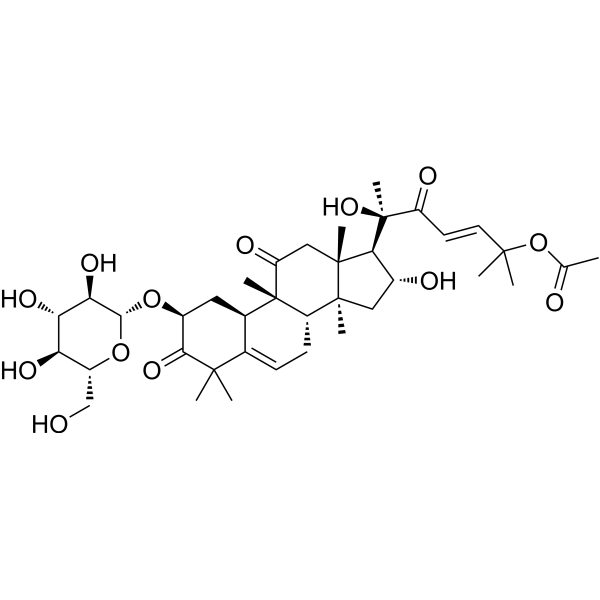
Arvenin I is a natural cucurbitacin glucoside that activates T cells within the cancer-competitive environment. Arvenin I covalently reacts with and hyperactivates MKK3, thereby reviving the mitochondrial fitness of exhausted T cells through the activation of the p38MAPK pathway . Arvenin I exhibits broad-spectrum antiproliferative against cancer cells . Arvenin I enhances antitumor effects both as a monotherapy and in combination with immune checkpoint inhibitors in mice . Arvenin I can be used for cancer research, such as colon cancer, breast cancer, lung cancer, and ovarian cancer [1][2].
loading...
    loading...
Cat. No.: HY-120635
CAS No.: 2113650-04-5
Purity:  99.32%
Target:  

PD-1/PD-L1

Research Areas:  

Inflammation/Immunology Cancer

BMS-1001 is an orally active human PD-L1/PD-1 immune checkpoint inhibitor. BMS-1001 exhibits low-toxicity in cells. The IC50 value of BMS-1001 in a homogeneous time-resolved fluorescence (HTRF) binding assay is 2.25 nM .
loading...
    loading...
Cat. No.: HY-156649
CAS No.: 1417742-86-9
Purity:  99.72%
Synonyms: CR6086
Vorbipiprant (CR6086) is an orally active EP4 receptor antagonist with high selectivity for the human EP4 receptor (Ki: 16.6 nM). Vorbipiprant has immunomodulatory, anti-inflammatory, antitumor, and anti-angiogenic activities. Vorbipiprant can inhibit the expression of multiple pro-inflammatory cytokines and the activation of immune cells, and convert "cold" tumors unresponsive to immune checkpoint inhibitors into "hot" tumors. Vorbipiprant is used in the research of diseases such as rheumatoid arthritis and colon cancer .
loading...
    loading...
Cat. No.: HY-P991480
ONC-841 is a blood-brain barrier-permeable, humanized monoclonal antibody targeting SIGLEC10. As an immune checkpoint inhibitor, ONC-841 restores the functions of immune effector cells such as T cells and enhances anti-tumor immune responses by blocking inhibitory signals mediated by SIGLEC10. ONC-841 restores the phagocytic and migratory activities of microglia, and promotes the phagocytosis of Amyloid-β and Tau protein aggregates by microglia. ONC-841 is applicable to research related to solid tumors and Alzheimer's disease .
loading...
    loading...
Cat. No.: HY-P990704
CAS No.: 2640305-01-5
Synonyms: AZD-2936

Research Areas:  

Cancer

Rilvegostomig (AZD-2936) is a bispecific humanized IgG1 antibody targeting PD-1 and TIGIT. Rilvegostomig induces tumor growth inhibition and modulates the tumor immune microenvironment. Rilvegostomig exhibits anti-tumor activity in metastatic non-small cell lung cancer (without prior immune checkpoint inhibitor treatment). Rilvegostomig can be used in research related to metastatic non-small cell lung cancer and endometrial cancer .
loading...
    loading...
Cat. No.: HY-150879
CAS No.: 1675202-20-6
Purity:  98.01%
Research Areas:  

Cancer

BMS-37 is a PD-1/PD-L1 immune checkpoint inhibitor with an IC50 towards the PD-L1/PD-1 complex in the range of 18 to 200 nM. BMS-37 shows unspecific toxicity against modified Jurkat T cells with an EC50 between 3 and 6 µM. BMS-37 can be used for the study of the PD-L1-induced exhaustion of T-cells or as PD-L1 ligand to synthesize PROTAC molecules .
loading...
    loading...
Cat. No.: HY-159647
CAS No.: 2892065-45-9
Research Areas:  

Cancer

PLX-4545 is an orally active, selective molecular glue degrader targeting IKZF2. Through a molecular glue mechanism, PLX-4545 binds to CRBN, recruits IKZF2 to form a ternary complex, and promotes its ubiquitination and proteasomal degradation. This further converts inhibitory regulatory T cells (Treg) into effector-like T cells, enhances CD8 + T cell responses, and modulates the Teff:Treg balance. PLX-4545 also increases the production of the inflammatory cytokine IL-2 and reduces the suppressive activity of Treg. PLX-4545 can be used in cancer immunotherapy research, and exhibits a synergistic effect when combined with immune checkpoint inhibitors such as anti-PD1 .
loading...
    loading...
Cat. No.: HY-120647
CAS No.: 2113650-03-4
Target:  

PD-1/PD-L1

Research Areas:  

Inflammation/Immunology Cancer

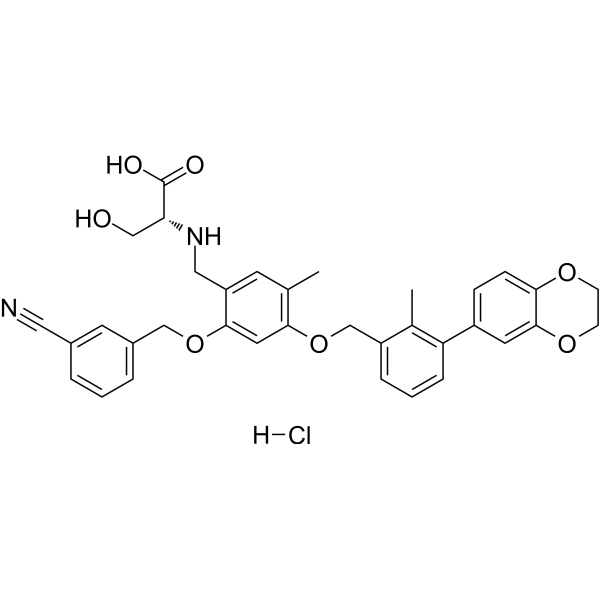
BMS-1001 is an orally active human PD-L1/PD-1 immune checkpoint inhibitor. BMS-1001 exhibits low-toxicity in cells. The IC50 value of BMS-1001 in a homogeneous time-resolved fluorescence (HTRF) binding assay is 2.25 nM .
loading...
    loading...
Cat. No.: HY-148305
CAS No.: 2499965-07-8
Target:  

PD-1/PD-L1

Research Areas:  

Cancer

PD-1/PD-L1-IN-28 (compound 3) is an immune checkpoint inhibitor of PD-1/PD-L1 signaling pathway (IC50=0.744 µM). PD-1/PD-L1-IN-28 shows good research potential in tumor immunity .
loading...
    loading...
Cat. No.: HY-141431
CAS No.: 2503325-21-9
Target:  

E1/E2/E3 Enzyme

Research Areas:  

Inflammation/Immunology Cancer

Cbl-b-IN-2 (Example 8) is an orally bioavailable compound, can inhibit the E3 enzyme Casitas B-lineage lymphoma proto-oncogene-b (Cbl-b) in the ubiquitin proteasome pathway. Cbl-b-IN-2 can be used to modulate the immune system and diseases amenable to immune system modulation. Cbl-b-IN-2 (Example 8) also may be administered to an individual with cancer, either alone or as part of a combination, with one or more of an immune checkpoint inhibitor, an anti-neoplastic agent, and radiation agent .
loading...
    loading...
Cat. No.: HY-P990778
CAS No.: 2756879-35-1
Synonyms: ATG-101

Target:  

TNF Receptor PD-1/PD-L1

Research Areas:  

Inflammation/Immunology Cancer

Xirestomig (ATG-101) is a tetravalent "2+2″ PD-L1×4-1BB bispecific antibody. Xirestomig binds PD-L1 and 4-1BB concurrently, with a greater affinity for PD-L1, and potently activated 4-1BB+ T cells when cross-linked with PD-L1-positive cells. Xirestomig activates exhausted T cells upon PD-L1 binding. Xirestomig displays potent antitumor activity in numerous in vivo tumor models, including those resistant or refractory to immune checkpoint inhibitors (ICIs) .
loading...
    loading...
Cat. No.: HY-P10715
Target:  

Inhibitory Antibodies

Research Areas:  

Inflammation/Immunology Cancer

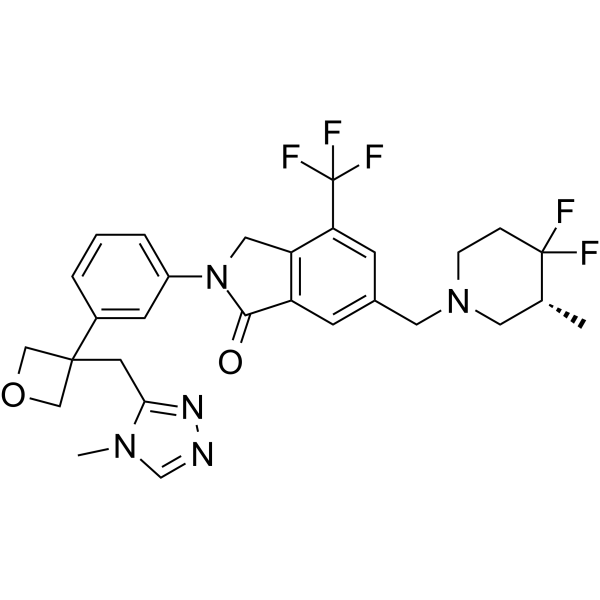
Fmoc-KCRGDK is a self-assembling peptide that can be used to prepare hydrogels and assist in drug delivery for immune checkpoint inhibitors. Fmoc-KCRGDK can be applied in cancer immunotherapy research .
loading...
    loading...
Cat. No.: HY-174460
Target:  

Drug Intermediate

Research Areas:  

Cancer

pCR8 is a CR8 prodrug and anticancer agent responsive to H2O2. pCR8 achieves selective release of CR8 via boronate ester oxidation mediated by elevated hydrogen peroxide levels at tumor sites, self-assembles into nanoparticles, and degrades cell cycle-related proteins. A synergistic effect is produced when pCR8 is used in combination with immune checkpoint inhibitors. pCR8 can be used for the research of triple-negative breast cancer .
loading...
    loading...
Cat. No.: HY-P990259
Anti-Mouse CD96 Antibody (3.3) is a rat-derived anti-mouse CD96 IgG1 λ type antibody inhibitor. Anti-Mouse CD96 Antibody (3.3) blocks binding of CD155 to CD96. Anti-Mouse CD96 Antibody (3.3) can enhance the antitumor efficacy of multiple immune-checkpoint inhibitors. Anti-Mouse CD96 Antibody (3.3) shows potent anti-tumor and anti-metastatic activity in various tumor models. Anti-Mouse CD96 Antibody (3.3) can be used for the researches of cancer and inflammation, such as mammary carcinoma .
loading...
    loading...
Cat. No.: HY-175236
CAS No.: 3053768-78-5
SF-9-2 is a PD-L1/PD-1 binding inhibitor (IC50 = 24.9 nM). SF-9-2 inhibits epithelial-mesenchymal transition, migration, invasion, and proliferation of SK-N-SH cells, and also induces apoptosis and cell cycle arrest. SF-9-2 blocks PD-L1-induced SK-N-SH cell growth through the MAPK signaling pathway. SF-9-2 restores GSK-3β activity and enhances PD-L1 degradation through the ubiquitin-proteasome pathway. SF-9-2 inhibits tumor growth in the SK-N-SH NOG mouse model without significant toxicity. SF-9-2 also acts as an immune checkpoint inhibitor, blocking PD-L1 to restore T cell function. SF-9-2 can be used in neuroblastoma research .
loading...
    loading...
Cat. No.: HY-117161
CAS No.: 189057-68-9
Purity:  99.8%
Target:  

Cytochrome P450

Research Areas:  

Cancer

ZINC05626394 is a cytochrome b5 reductase 3 inhibitor with activity by increasing nitric oxide bioavailability. ZINC05626394 may have potential applications in anti-cancer suppression, especially in combination with antibody drug conjugates (ADCs) and immune checkpoint inhibitors. The efficacy of ZINC05626394 may be limited by different mechanisms, including antigen-related resistance and failure of endocytosis .
loading...
    loading...

