1. Search Result
Search Result
Results for "

long-chain acylcarnitine

" in MedChemExpress (MCE) Product Catalog:

24

Inhibitors & Agonists

11

Natural
Products

7

Isotope-Labeled Compounds

2

Oligonucleotides

Targets Recommended:
Cat. No. Product Name Target Research Areas Chemical Structure
  • HY-113147
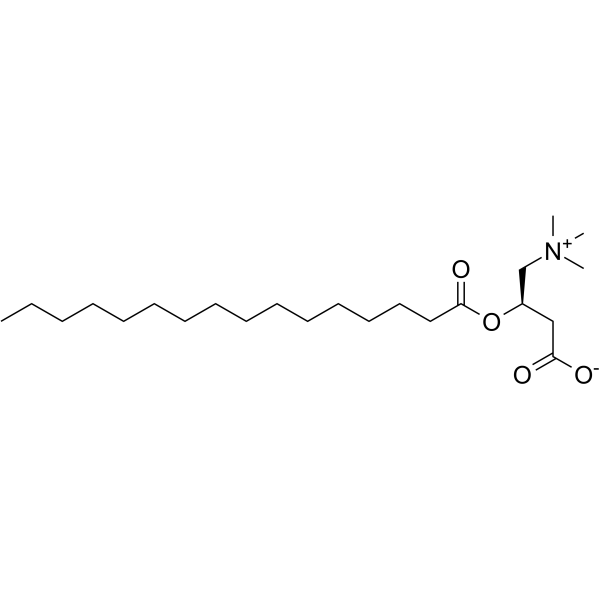
    L-Palmitoylcarnitine
    2 Publications Verification

    Potassium Channel Endogenous Metabolite Cardiovascular Disease Metabolic Disease
    L-Palmitoylcarnitine, a long-chain acylcarnitine and a fatty acid metabolite, accumulates in the sarcolemma and deranges the membrane lipid environment during ischaemia. L-Palmitoylcarnitine inhibits KATP channel activity, without affecting the single channel conductance, through interaction with Kir6.2 .
    L-Palmitoylcarnitine
  • HY-113166
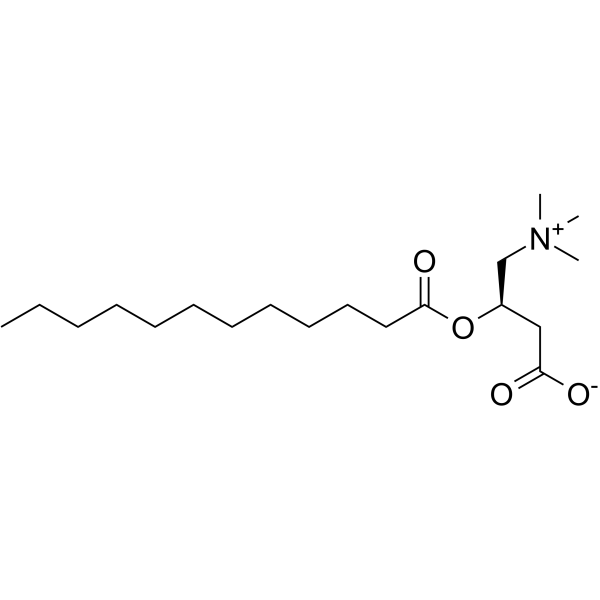
    Dodecanoylcarnitine
    1 Publications Verification

    (-)-Lauroylcarnitine

    Endogenous Metabolite Metabolic Disease Inflammation/Immunology
    Dodecanoylcarnitine ((-)-Lauroylcarnitine) is a medium long-chain acylcarnitine, an intermediate product in key energy metabolic pathways of fatty acid β-oxidation and amino acids catabolism. The abnormal decrease in the Dodecanoylcarnitine levels indicats that mitochondrial fuel metabolism, including fatty acid oxidation is significantly disturbed. Changes in plasma concentrations of Dodecanoylcarnitine are not only associated with type II diabetes, but also with pre-diabetes status. Dodecanoylcarnitine is present in fatty acid oxidation disorders such as long-chain acyl CoA dehydrogenase deficiency, carnitine palmitoyltransferase I/II deficiency, and is also associated with celiac disease. Dodecanoylcarnitine deomonstrates high sensitivities and specificities in predicting asthma. Combined model of Decanoylcarnitine (HY-113069), Dodecanoylcarnitine, PC (16:0/0:0), and Asp Arg Pro can be used as a potential biomarker for the diagnosis of Yin-deficiency-heat syndrome .
    Dodecanoylcarnitine
  • HY-113147A
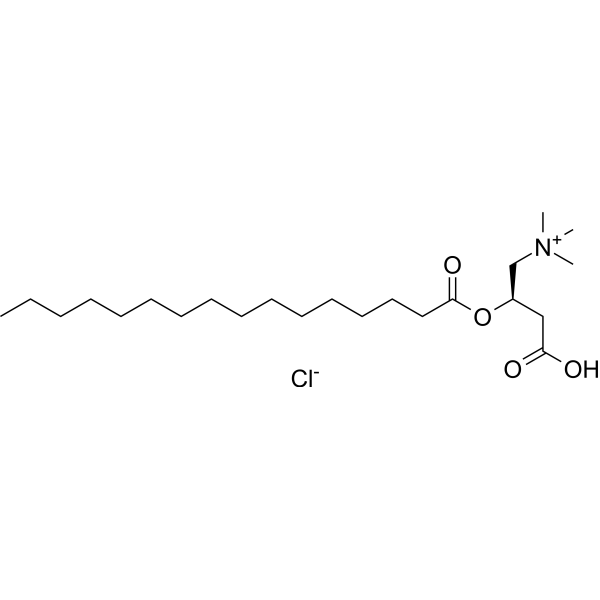
    L-Palmitoylcarnitine chloride
    2 Publications Verification

    Potassium Channel Endogenous Metabolite Cardiovascular Disease Metabolic Disease
    L-Palmitoylcarnitine chloride, a long-chain acylcarnitine and a fatty acid metabolite, accumulates in the sarcolemma and deranges the membrane lipid environment during ischaemia. L-Palmitoylcarnitine chloride inhibits KATP channel activity, without affecting the single channel conductance, through interaction with Kir6.2 .
    L-Palmitoylcarnitine chloride
  • HY-113201

    Endogenous Metabolite Neurological Disease
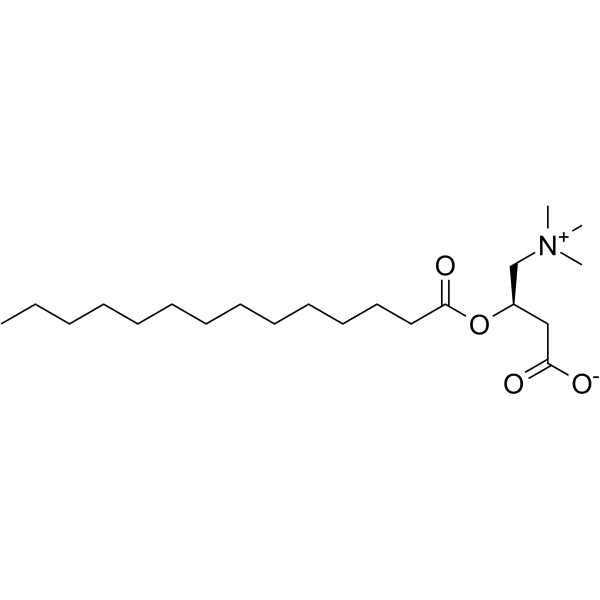
    Tetradecanoylcarnitine is an acylcarnitine involved in mitochondrial β-oxidation of long-chain saturated fatty acids and fatty acid metabolism. Tetradecanoylcarnitine serves as a biomarker for very long-chain acyl-CoA dehydrogenase deficiency and MPTP (HY-15608)-induced Parkinson's disease. Tetradecanoylcarnitine exhibits a characteristic significant elevation in plasma levels in patients with sarcopenia, including those complicated with hypertension, and this elevation is closely associated with an increased risk of death. Tetradecanoylcarnitine is widely used in research on the pathological mechanisms of diseases such as Parkinson's disease and sarcopenia .
    Tetradecanoylcarnitine
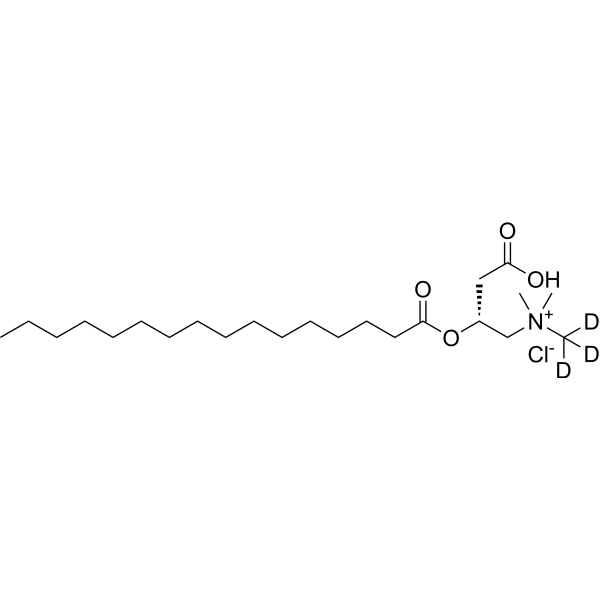
  • HY-113147AS

    Potassium Channel Endogenous Metabolite Cardiovascular Disease Metabolic Disease
    L-Palmitoylcarnitine-d3 hydrochloride is the deuterium labeled L-Palmitoylcarnitine hydrochloride. L-Palmitoylcarnitine hydrochloride, a long-chain acylcarnitine and a fatty acid metabolite, accumulates in the sarcolemma and deranges the membrane lipid environment during ischaemia. L-Palmitoylcarnitine hydrochloride inhibits KATP channel activity, without affecting the single channel conductance, through interaction with Kir6.2 .
    L-Palmitoylcarnitine-d3 hydrochloride
  • HY-113256

    Carnitine Palmitoyltransferase (CPT) Endogenous Metabolite Metabolic Disease
    Linoleyl carnitine is an acylcarnitine and metabolite. Linoleyl carnitine in the liver is negatively correlated with pantothenic acid and citric acid in serum. Linoleyl carnitine accumulates in mitochondrial CPT II deficiency .
    Linoleyl carnitine
  • HY-130466
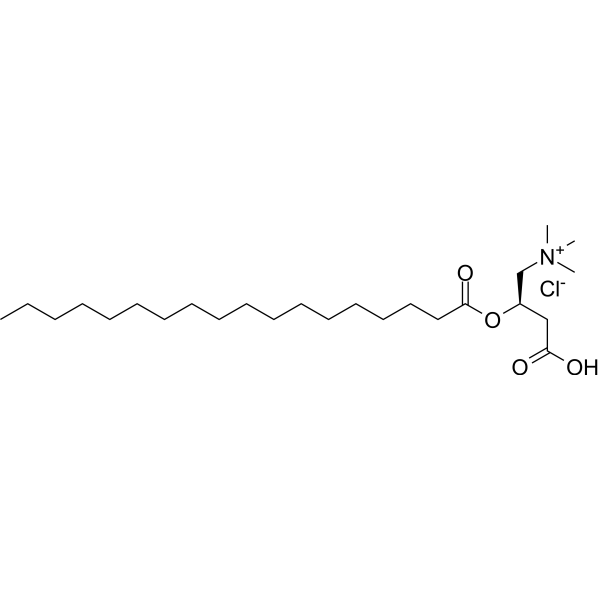
    Stearoyl-L-carnitine chloride
    1 Publications Verification

    Endogenous Metabolite GlyT Neurological Disease Metabolic Disease
    Stearoyl-L-carnitine chloride is an endogenous long-chain acylcarnitine. Stearoyl-L-carnitine chloride is a less potent inhibitor of GlyT2. Stearoyl-L-carnitine chloride inhibits glycine responses by 16.8% at concentrations up 3 μM .
    Stearoyl-L-carnitine chloride
  • HY-113147B
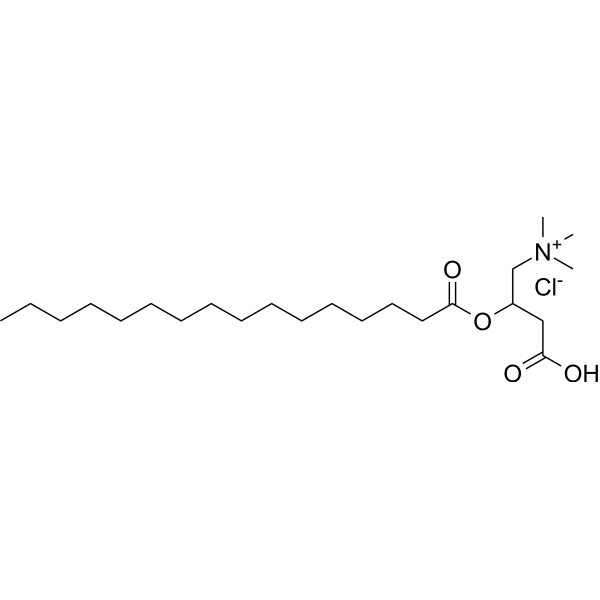
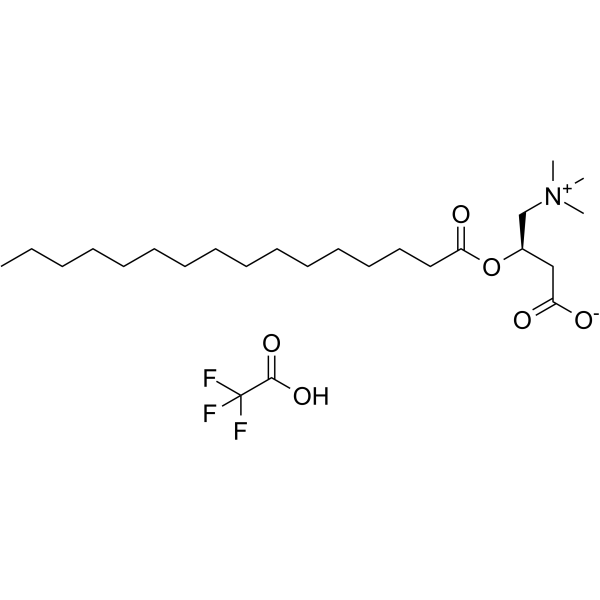
    L-Palmitoylcarnitine TFA
    2 Publications Verification

    Endogenous Metabolite Potassium Channel Cardiovascular Disease Metabolic Disease
    L-Palmitoylcarnitine TFA, a long-chain acylcarnitine and a fatty acid metabolite, accumulates in the sarcolemma and deranges the membrane lipid environment during ischaemia. L-Palmitoylcarnitine TFA inhibits KATP channel activity, without affecting the single channel conductance, through interaction with Kir6.2 .
    L-Palmitoylcarnitine TFA
  • HY-130466S

    Endogenous Metabolite GlyT Metabolic Disease
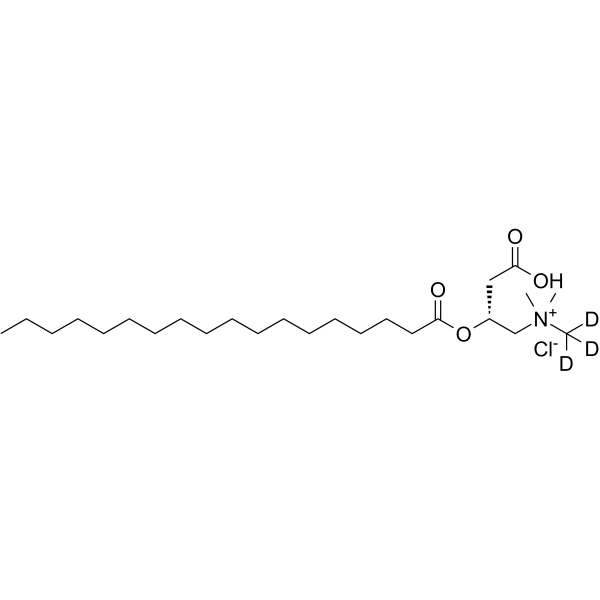
    Stearoyl-L-carnitine-d3 (chloride) is the deuterium labeled Stearoyl-L-carnitine chloride. Stearoyl-L-carnitine chloride is an endogenous long-chain acylcarnitine. Stearoyl-L-carnitine chloride is a less potent inhibitor of GlyT2. Stearoyl-L-carnitine chloride inhibits glycine responses by 16.8% at concentrations up 3 μM .
    Stearoyl-L-carnitine-d3 chloride
  • HY-172548

    Carnitine Palmitoyltransferase (CPT) Endogenous Metabolite Metabolic Disease
    Docosahexaenoyl-L-carnitine chloride is a long-chain acylcarnitine composed of Docosahexaenoic acid (HY-B2167) and L-carnitine (HY-B0399). Docosahexaenoyl-L-carnitine chloride is transported into mitochondria for β -oxidation and decomposition under the action of carnitine palmitoyltransferase I (CPT I) and others. Docosahexaenoyl-L-carnitine chloride is promising for research of diseases related to fatty acid metabolism .
    Docosahexaenoyl-L-carnitine chloride
  • HY-158812

    Drug Derivative Metabolic Disease
    Eicosapentaenoyl-L-carnitine chloride is a long-chain acylcarnitine composed of Eicosapentaenoic Acid (HY-B0660) and L-Carnitine (HY-B0399). The levels of Eicosapentaenoyl-L-carnitine chloride are increased in the eyes of mice fed a diet high in n-3/n-6 polyunsaturated fatty acids (PUFAs) in a mouse model of myopia induced by out-of-focus lenses .
    Eicosapentaenoyl-L-carnitine chloride
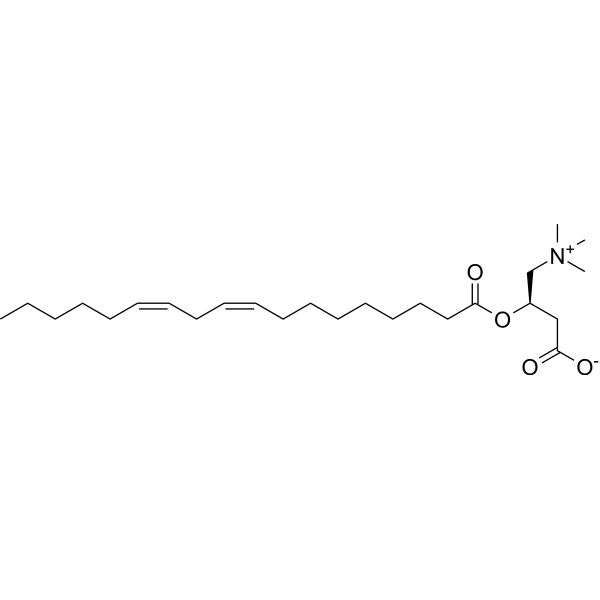
  • HY-145525

    CAR 18:2; C18:2 Carnitine; L-Carnitine linoleoyl ester

    Endogenous Metabolite Others
    Linoleoyl-L-carnitine is a naturally occurring long-chain acylcarnitine. Hepatic levels of linoleoyl-L-carnitine are increased following high-dose (200 mg/kg) administration of Isoniazid (Item No. 20378) in mice.
    Linoleoyl-L-carnitine chloride
  • HY-130466R

    Endogenous Metabolite GlyT Metabolic Disease
    Stearoyl-L-carnitine (chloride) (Standard) is the analytical standard of Stearoyl-L-carnitine (chloride). This product is intended for research and analytical applications. Stearoyl-L-carnitine chloride is an endogenous long-chain acylcarnitine. Stearoyl-L-carnitine chloride is a less potent inhibitor of GlyT2. Stearoyl-L-carnitine chloride inhibits glycine responses by 16.8% at concentrations up 3 μM .
    Stearoyl-L-carnitine chloride (Standard)
  • HY-W770914

    Isotope-Labeled Compounds GlyT Endogenous Metabolite Metabolic Disease
    Stearoyl-L-carnitine chloride- 13C3 is the 13C-labeled Stearoyl-L-carnitine chloride (HY-130466). Stearoyl-L-carnitine chloride is an endogenous long-chain acylcarnitine. Stearoyl-L-carnitine chloride is a less potent inhibitor of GlyT2. Stearoyl-L-carnitine chloride inhibits glycine responses by 16.8% at concentrations up 3 μM .
    Stearoyl-L-carnitine chloride-13C3
  • HY-113147S1

    Isotope-Labeled Compounds Potassium Channel Endogenous Metabolite Cardiovascular Disease Metabolic Disease
    L-Palmitoylcarnitine-d9 is deuterium labeled L-Palmitoylcarnitine. L-Palmitoylcarnitine, a long-chain acylcarnitine and a fatty acid metabolite, accumulates in the sarcolemma and deranges the membrane lipid environment during ischaemia. L-Palmitoylcarnitine inhibits KATP channel activity, without affecting the single channel conductance, through interaction with Kir6.2 .
    L-Palmitoylcarnitine-d9
  • HY-113147AR

    Reference Standards Potassium Channel Endogenous Metabolite Cardiovascular Disease Metabolic Disease
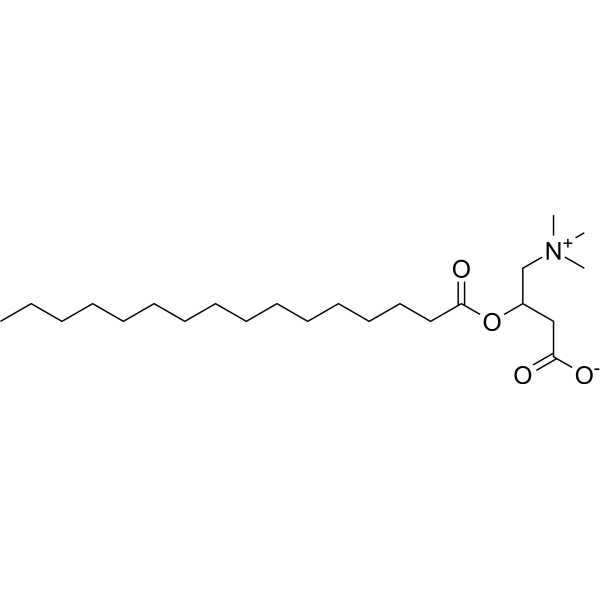
    L-Palmitoylcarnitine (chloride) (Standard) is the analytical standard of L-Palmitoylcarnitine (chloride). This product is intended for research and analytical applications. L-Palmitoylcarnitine chloride, a long-chain acylcarnitine and a fatty acid metabolite, accumulates in the sarcolemma and deranges the membrane lipid environment during ischaemia. L-Palmitoylcarnitine chloride inhibits KATP channel activity, without affecting the single channel conductance, through interaction with Kir6.2[1].
    L-Palmitoylcarnitine chloride (Standard)
  • HY-152013S

    Isotope-Labeled Compounds Endogenous Metabolite Potassium Channel Cardiovascular Disease
    L-Palmitoylcarnitine-d3-1 (hydrochloride) is deuterium labeled L-Palmitoylcarnitine (chloride). L-Palmitoylcarnitine chloride, a long-chain acylcarnitine and a fatty acid metabolite, accumulates in the sarcolemma and deranges the membrane lipid environment during ischaemia. L-Palmitoylcarnitine chloride inhibits KATP channel activity, without affecting the single channel conductance, through interaction with Kir6.2 .
    L-Palmitoylcarnitine-d3-1 hydrochloride
  • HY-113166R

    (-)-Lauroylcarnitine (Standard)

    Reference Standards Endogenous Metabolite Metabolic Disease Inflammation/Immunology
    Dodecanoylcarnitine (Standard) is the analytical standard of Dodecanoylcarnitine (HY-113166). This product is intended for research and analytical applications. Dodecanoylcarnitine ((-)-Lauroylcarnitine) is a medium long-chain acylcarnitine, an intermediate product in key energy metabolic pathways of fatty acid β-oxidation and amino acids catabolism. The abnormal decrease in the Dodecanoylcarnitine levels indicats that mitochondrial fuel metabolism, including fatty acid oxidation is significantly disturbed. Changes in plasma concentrations of Dodecanoylcarnitine are not only associated with type II diabetes, but also with pre-diabetes status. Dodecanoylcarnitine is present in fatty acid oxidation disorders such as long-chain acyl CoA dehydrogenase deficiency, carnitine palmitoyltransferase I/II deficiency, and is also associated with celiac disease. Dodecanoylcarnitine deomonstrates high sensitivities and specificities in predicting asthma. Combined model of Decanoylcarnitine (HY-113069), Dodecanoylcarnitine, PC (16:0/0:0), and Asp Arg Pro can be used as a potential biomarker for the diagnosis of Yin-deficiency-heat syndrome .
    Dodecanoylcarnitine (Standard)
  • HY-113202S1

    Isotope-Labeled Compounds GlyT Endogenous Metabolite PKC Neurological Disease Metabolic Disease
    Stearoyl-L-carnitine-d9 chloride is the deuterium labeled Stearoyl-L-carnitine chloride. Stearoyl-L-carnitine chloride, a fatty ester lipid molecule, is an endogenous metabolite. Stearoyl-L-carnitine chloride can be used as PKC inhibitor. Stearoyl-L-carnitine chloride accumulates in β cells, leading to arrest of insulin synthesis and energy deficiency in type 2 diabetes mouse. Stearoyl-L-carnitine chloride inhibits lecithin cholesterol acyltransferase (LCAT) in rat and rabbits plasma. Stearoyl-L-carnitine chloride acts as a metabolomics biomarker for Parkinson’s disease. Stearoyl-L-carnitine chloride is a less potent inhibitor of GlyT2 .
    Stearoyl-L-carnitine-d9 chloride
  • HY-176830

    C19:0 Carnitine chloride; L-Carnitine nonadecanoyl ester chloride; L-Carnitine pristanoyl ester chloride

    Endogenous Metabolite Others
    Nonadecanoyl-L-carnitine (C19:0 Carnitine) chloride is a long-chain acylcarnitine composed of Nonadecanoic acid (HY-W004261) and L-carnitine (HY-B0399).
    Nonadecanoyl-L-carnitine chloride
  • HY-W654252

    Isotope-Labeled Compounds Metabolic Disease
    Linoleoyl Carnitine (N-methyl-d3) is the deuterium labeled Linoleyl carnitine (HY-113256). Linoleyl carnitine is an acylcarnitine used to study long-chain 3-hydroxyacyl-CoA dehydrogenase deficiency and fatty acid oxidation disorders in fibroblasts .
    Linoleoyl Carnitine (N-methyl-d3)
  • HY-W750419

    Palmitoleoylcarnitine (C16:1)

    Endogenous Metabolite Metabolic Disease Inflammation/Immunology
    cis-9-Hexadecenoylcarnitine inner salt (Palmitoleoylcarnitine (C16:1)) is a long-chain acylcarnitine controlling fatty acid metabolism and mitochondrial function. cis-9-Hexadecenoylcarnitine inner salt accumulates in colorectal cancer cells. cis-9-Hexadecenoylcarnitine inner salt exists in plants and mediates lipid anabolic development. cis-9-Hexadecenoylcarnitine inner salt acts as a metabolic marker for type 1 diabetes and inflammatory bowel disease plasma. cis-9-Hexadecenoylcarnitine inner salt can be used for research on diabetes, metabolism, and inflammatory bowel disease .
    cis-9-Hexadecenoylcarnitine inner salt
  • HY-156184

    Endogenous Metabolite Neurological Disease Metabolic Disease Cancer
    Octanoylcarnitine is an orally active medium-chain acylcarnitine transport intermediate in fatty acid β-oxidation. Octanoylcarnitine is converted to octanoyl-CoA by carnitine acetyltransferase (CrAT), which then generates energy via β-oxidation in mitochondria of the heart and skeletal muscle. Octanoylcarnitine enhances grip strength and treadmill endurance, alleviates lactic acidosis, distributes in muscle and heart tissues, increases free carnitine levels, and mitigates mitochondrial stress. Octanoylcarnitine is associated with long-chain fatty acid metabolism, shows a positive correlation with subcutaneous fat area in patients with metastatic pancreatic ductal adenocarcinoma, and is closely related to central retinal artery occlusion (CRAO) .
    Octanoylcarnitine
  • HY-N19253

    Endogenous Metabolite Metabolic Disease
    9,12-Hexadecadienoylcarnitine is an acylcarnitine. The level of 9,12-Hexadecadienoylcarnitine increases during mild weight loss induced by a 12-week low-calorie diet. The serum level of 9,12-Hexadecadienoylcarnitine is upregulated in models of reduced intrinsic capacity. 9,12-Hexadecadienoylcarnitine can be used in studies related to overweight and reduced intrinsic capacity .
    9,12-Hexadecadienoylcarnitine

Inquiry Online

Your information is safe with us. * Required Fields.

Salutation


Country or Region *

Applicant Name *


Organization Name *

Department *


Email Address *


Product Name *

Cat. No.


Requested quantity *

Phone Number *


Remarks

Inquiry Online

Inquiry Information

Product Name:
Cat. No.:
Quantity:
MCE Japan Authorized Agent:

