
1. Search Result
Search Result
Results for "

mouse spinal cord

" in MedChemExpress (MCE) Product Catalog:

19

Inhibitors & Agonists

3

Peptides

3

Inhibitory Antibodies

1

Recombinant Proteins

2

Oligonucleotides

Cat. No. Product Name Target Research Areas Chemical Structure
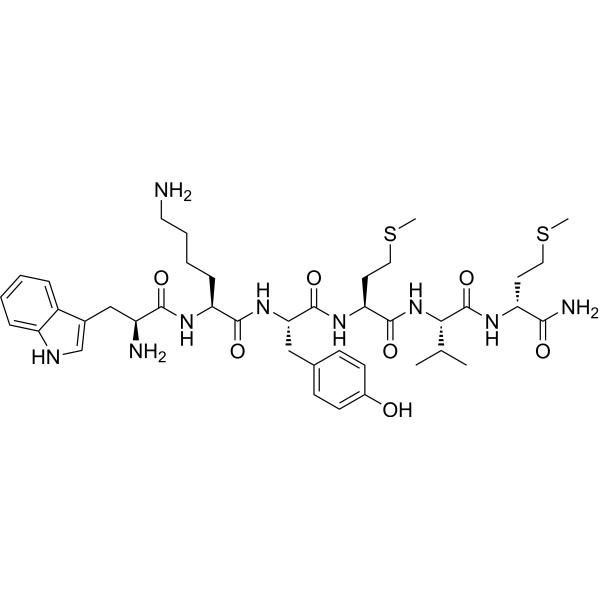
  • HY-P1120

    WKYMVm-amide; W-Peptide

    Formyl Peptide Receptor (FPR) PERK Apoptosis Neurological Disease Metabolic Disease Inflammation/Immunology Cancer
    WKYMVm is a selective formylpeptide receptor 2 (FPR2) agonist. WKYMVm has a powerful anti-inflammatory effect that can reduce lung injury and spinal cord injury. WKYMVm ameliorates obesity by regulating lipid metabolism and leptin signaling. WKYMVm is involved in the regulation of immune cells by activating FPRs. WKYMVm can promote the chemotactic migration of immune cells and inhibit the apoptosis of phagocytes. In addition, WKYMVm may play a favorable or unfavorable role in tumors, depending on the type of tumor .
    WKYMVm
  • HY-147410
    Ulefnersen
    1 Publications Verification

    ION-363

    DNA/RNA Synthesis Neurological Disease
    Ulefnersen (ION363) is an Antisense Oligonucleotide (ASO) directed against the 6th intron of the fused-in sarcoma (FUS) transcript to silence FUS in a non-allele-specific manner. Ulefnersen can reduce postnatal levels of FUS protein in the brain and spinal cord in disease-relevant mouse model of ALS-FUS , delaying motor neuron degeneration. Ulefnersen can be used in the research of Amyotrophic Lateral Sclerosis (ALS) .
    Ulefnersen
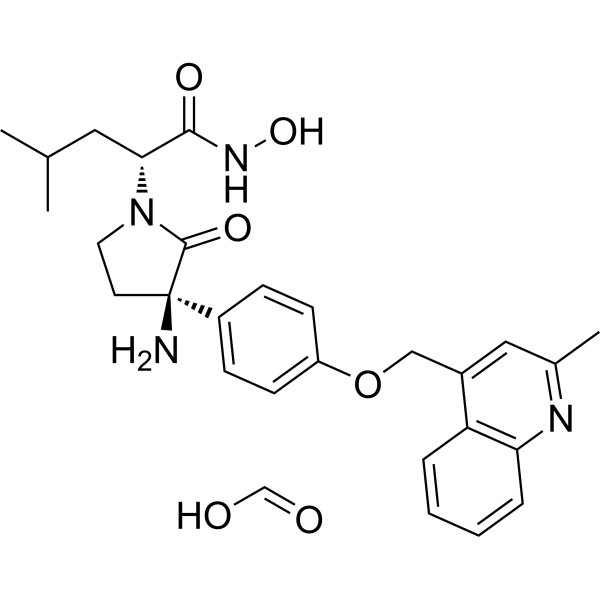
  • HY-19667A
    BMS-561392 formate
    2 Publications Verification

    DPC 333 formate

    TNF Receptor NF-κB Apoptosis p38 MAPK Neurological Disease Inflammation/Immunology
    BMS-561392 formate (DPC 333 formate) is a selective ADAM17(TACE) inhibitor. BMS-561392 formate inhibits TNF-α secretion by regulating signaling pathways such as p44 MAPK and NF-κB. BMS-561392 formate also affects the survival of central nervous system-related cells including oligodendrocytes and microglia. BMS-561392 formate promotes microglial apoptosis, enlarges the injury area and exacerbates astrogliosis in a mouse spinal cord injury model. BMS-561392 formate can be used in research related to spinal cord injury and inflammatory diseases .
    BMS-561392 formate
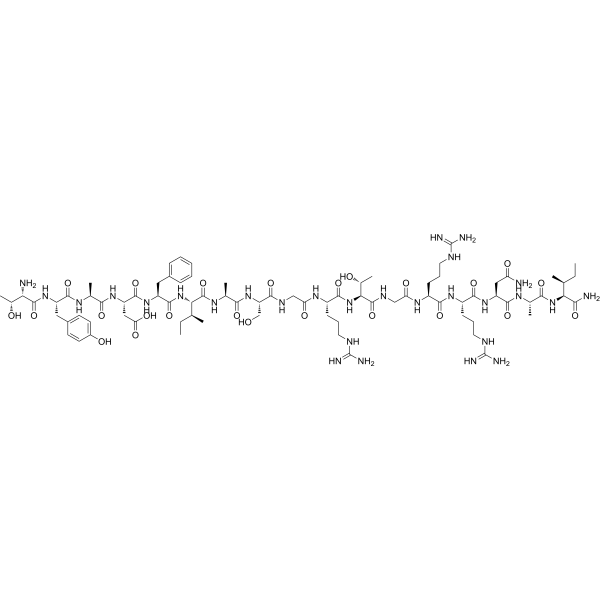
  • HY-P1290
    PKA Inhibitor Fragment (6-22) amide
    5 Publications Verification

    PKI-(6-22)-amide

    PKA Neurological Disease
    PKA Inhibitor Fragment (6-22) amide is a highly potent and specific competitive inhibitor of PKA, with Ki values of 1.7 nM and 1.6 nM against human and bovine PKA catalytic subunits, respectively. The IC50 of PKA Inhibitor Fragment (6-22) amide targeting bovine PKA is 8.6 nM. PKA Inhibitor Fragment (6-22) amide effectively abolishes PKA activity in mouse brain and spinal cord, and exerts in vivo efficacy via intracerebroventricular administration. PKA Inhibitor Fragment (6-22) amide significantly reverses low-dose morphine analgesic tolerance in mice and blocks photoaffinity labeling of cAMP-dependent protein kinase. PKA Inhibitor Fragment (6-22) amide can be applied to research in fields related to the mechanism of morphine analgesic tolerance and skin wound healing .
    PKA Inhibitor Fragment (6-22) amide
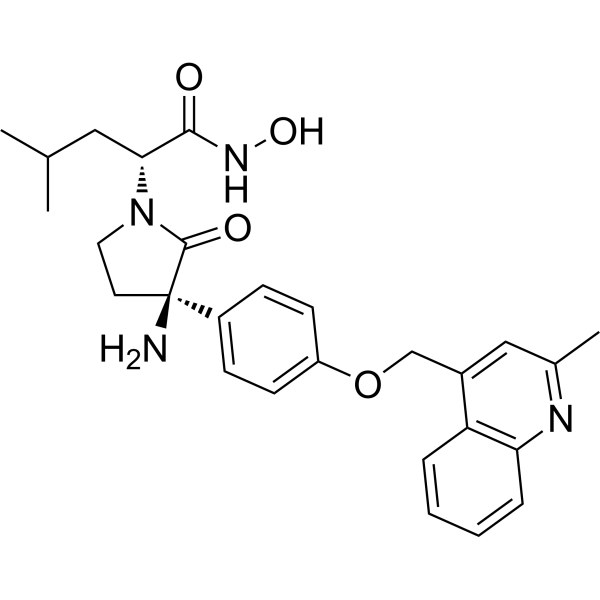
  • HY-19667

    DPC 333

    TNF Receptor NF-κB Apoptosis p38 MAPK Neurological Disease Inflammation/Immunology
    BMS-561392 (BMS-561392) is a selective ADAM17(TACE) inhibitor. BMS-561392 inhibits TNF-α secretion by regulating signaling pathways such as p44 MAPK and NF-κB. BMS-561392 also affects the survival of central nervous system-related cells including oligodendrocytes and microglia. BMS-561392 promotes microglial apoptosis, enlarges the injury area and exacerbates astrogliosis in a mouse spinal cord injury model. BMS-561392 can be used in research related to spinal cord injury and inflammatory diseases .
    BMS-561392
  • HY-105005

    AAD-2004

    Prostaglandin Receptor PGE synthase Reactive Oxygen Species (ROS) Apoptosis Neurological Disease Inflammation/Immunology
    Crisdesalazine (AAD-2004) is a microsomal prostaglandin E2 synthase-1 (mPGES-1) inhibitor. Crisdesalazine acts as a potent free radical scavenger that directly neutralizes reactive oxygen species (ROS) including hydrogen peroxide, exerting neuroprotective effects against apoptosis and axonal damage. Crisdesalazine inhibits PGE2 production, mediates inflammatory responses, and promotes the conversion of macrophages from the pro-inflammatory M1 phenotype to the anti-inflammatory M2 phenotype. Crisdesalazine is applicable to neuroprotection research in multiple sclerosis and spinal cord injury .
    Crisdesalazine
  • HY-147410A
    Ulefnersen sodium
    1 Publications Verification

    ION-363 sodium

    DNA/RNA Synthesis Neurological Disease
    Ulefnersen sodium (ION363) is an Antisense Oligonucleotide (ASO) directed against the 6th intron of the fused-in sarcoma (FUS) transcript to silence FUS in a non-allele-specific manner. Ulefnersen sodium can reduce postnatal levels of FUS protein in the brain and spinal cord in disease-relevant mouse model of ALS-FUS , delaying motor neuron degeneration. Ulefnersen sodium can be used in the research of Amyotrophic Lateral Sclerosis (ALS) .
    Ulefnersen sodium
  • HY-125726

    (3'-sulfo)Galβ-Cer(d18:1/24:1); N-Nervonoyl Sulfatide; C24:1 Sulfatide

    Nuclear Factor of activated T Cells (NFAT) Inflammation/Immunology
    Sulfo galactosylceramide (N-Nervonoyl Sulfatide; C24:1 Sulfatide) is a glycolipid and the major sulfolipid species in mature myelin. Sulfo galactosylceramide interacts with C-type lectins and immunoglobulin-like receptors, with the highest affinity for LMIR5. Sulfo galactosylceramide induces MCP-1 production by basophils but not mast cells, and increases NFAT activation via LMIR5. Sulfo galactosylceramide alleviates symptoms and improves survival in a mouse model of chronic relapsing-remitting experimental autoimmune encephalomyelitis (EAE), and reduces inflammatory lesions and the number of infiltrating mononuclear cells in the lumbar spinal cord of EAE mice.
    Sulfo galactosylceramide
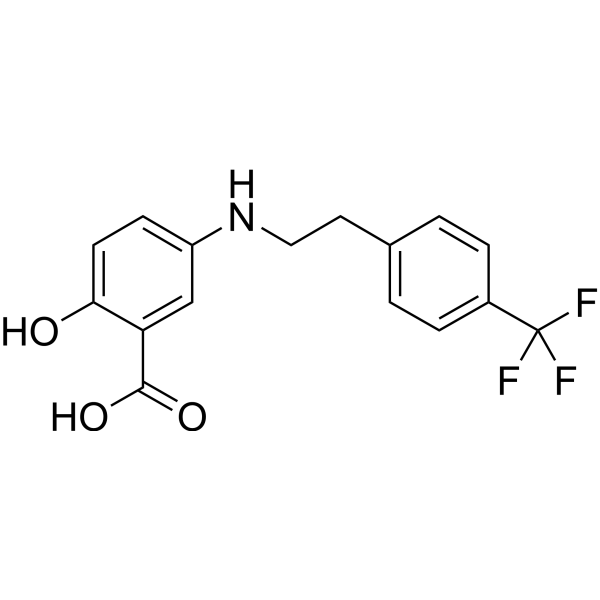
  • HY-12761

    Cannabinoid Receptor Cardiovascular Disease Others Neurological Disease Metabolic Disease Inflammation/Immunology Cancer
    A-836339 is a selective CB2 receptor agonist, with Ki values of 0.4 nM and 0.8 nM in humans and rats, respectively. A-836339 exhibits multiple effects such as analgesia, gastric protection, anti-inflammation, and antioxidant activity. A-836339 produces antinociceptive and analgesic activities by activating CB2 receptors in the dorsal root ganglia and spinal cord. A-836339 can also exert gastric protective effects through anti-inflammatory mechanisms (reducing TNF-α and IL-1β) and antioxidant mechanisms (enhancing the activities of CAT and SOD, and reducing H2O2). Radioactively labeled A-836339 can serve as a CB2-specific radioligand for autoradiography and PET imaging. A-836339 can be used in research on inflammatory pain, neuropathic pain, gastric ulcers, cerebral ischemia, etc .
    A-836339
  • HY-117702

    Prolyl Endopeptidase (PREP) Aminopeptidase Opioid Receptor Dopamine Receptor Drug Intermediate Neurological Disease Metabolic Disease Inflammation/Immunology
    RB 101 is a blood-brain barrier-crossing prodrug as well as aminopeptidase N and neutral endopeptidase-24.11 inhibitor. RB 101 blocks enkephalin breakdown, elevates extracellular enkephalin levels and activate δ-opioid receptor and dopamine D1 receptor. RB 101 can be used for the research of pain, depressive syndromes, and diabetic neuropathy .
    RB 101
  • HY-P991380

    Transferrin Receptor Neurological Disease
    TXB4 is a brain-permeable human monoclonal antibody (mAb) targeting CD71. TXB4 prevents 6-OHDA-induced death of TH-positive neurons in the SNc in a 6-OHDA mouse model of Parkinson's disease (PD). TXB4 can be used in neurodegenerative diseases, acute brain and spinal cord injury, and depression research .
    TXB4
  • HY-175165

    Enterovirus Infection
    Jun6504 is an enterovirus 2C inhibitor. Jun6504 shows potent and broad-spectrum antiviral activity against multiple strains of EV-D68 (EC50 = 250 nM), EV-A71 (EC50 = 502.4 nM), and CVB3 (EC50 = 1049 nM). Jun6504 improves paralysis score and weight gain in a neonatal mouse model of EV-D68 infection. Jun6504 reduces viral titers in the spinal cord and the infected quadriceps muscle. Jun6504 can be used for EV-D68 antiviral research .
    Jun6504
  • HY-P0193

    Biochemical Assay Reagents Neurological Disease Endocrinology
    Nocistatin (Bovine) is a nociceptin precursor contains another biologically active peptide. Nocistatin (Bovine) blocks nociception-induced allodynia and hyperalgesia. Nocistatin (Bovine) also attenuates pain evoked by prostaglandin E2. Nocistatin (Bovine) can bind to the membrane of mouse brain and spinal cord with high affinity. Nocistatin (Bovine) can be studied in research on pain transmission .
    Nocistatin (Bovine)
  • HY-101304

    S-isopropyl ITU; IPTU

    NO Synthase Cardiovascular Disease Neurological Disease
    S-Isopropylisothiourea hydrobromide (S-isopropyl ITU; IPTU) is a blood-brain barrier (BBB) penetrant NOS inhibitor with IC50 values of 0.66, 0.75 and 0.29 μM against mouse spinal cord, cerebellar, bovine aortic and porcine endothelial cell NOS. S-Isopropylisothiourea exhibits a significant blood pressure-raising effect without damaging the perfusion of vital organs and can also inhibit the late-phase pain response induced by formalin. S-Isopropylisothiourea hydrobromide is used in the researchs for hemorrhagic shock and pain response based on NOS .
    S-Isopropylisothiourea hydrobromide
  • HY-P991310

    LT3015; LT-3000

    LPL Receptor Neurological Disease Cancer
    Lpathomab (LT3015; LT-3000) is a human IgG1 monoclonal antibody (mAb) targeting LPA. Lpathomab reduces the release of IL-8 and IL-6 cytokines in SKOV3 cells and blocks LPA-triggered tumor cell migration. Lpathomab reduces neovascularization in Matrigel plug and CNV models. Lpathomab inhibits brain injury in the CCI mouse model. Lpathomab can be used in the study of brain injury, ovarian cancer, diabetic neuropathy, and spinal cord injury. Recommended isotype control: Human IgG1 kappa, Isotype Control (HY-P99001) .
    Lpathomab
  • HY-182648

    ASK1 Neurological Disease
    K811 is an orally active ASK1 inhibitor with an IC50 of 6 nM. K811 inhibits glial cell activation in the lumbar spinal cord of SOD1 G93A transgenic mice. K811 extends the survival of SOD1 G93A transgenic mice, a mouse model of amyotrophic lateral sclerosis. K811 can be used in studies related to amyotrophic lateral sclerosis .
    K811
  • HY-P992060

    CD20 NF-κB Inflammation/Immunology Cancer
    Anti-Mouse CD20 Antibody (18B12) is a B cell depleting agent that targets mouse CD20. Anti-Mouse CD20 Antibody (18B12) not only inhibits the growth of mesothelioma, lung cancer and thymoma, but also significantly enhances the efficacy of adenoviral tumor antigen vaccines and induces tumor regression by increasing the number of tumor-specific CD8 + T cells. Anti-Mouse CD20 Antibody (18B12) reduces B cell infiltration into the central nervous system of mice with experimental autoimmune encephalomyelitis, and delays motor dysfunction and neuronal death after spinal cord injury by alleviating inflammatory responses and tissue damage. Anti-Mouse CD20 Antibody (18B12) is widely applicable to research in fields related to mesothelioma, lung cancer, thymoma, experimental autoimmune encephalomyelitis and spinal cord injury .
    Anti-Mouse CD20 Antibody (18B12)
  • HY-182365

    Histone Demethylase Neurological Disease Inflammation/Immunology
    EED-IN-4 is an orally active, EZH2-selective immunomodulator and EED-H3K27me3 inhibitor (EED, IC50=28.21 nM) with anti-inflammatory activity. In mouse models, EED-IN-4 preferentially and persistently accumulates in lymph nodes after oral administration. By reducing the H3K27me3 level of dendritic cells and inhibiting their migration, EED-IN-4 reduces the infiltration of immune cells into the central nervous system and effectively alleviates spinal cord inflammation. EED-IN-4 shows weak inhibitory activity against hERG channels and is non-mutagenic, with no obvious toxicity observed upon long-term oral administration. EED-IN-4 can be used for the research of multiple sclerosis .
    EED-IN-4
  • HY-182366

    Histone Methyltransferase Neurological Disease Inflammation/Immunology
    EED-IN-5 is an orally active, EZH2-selective trisubstituted pyridine-based EED-H3K27me3 inhibitor and immunomodulator with anti-inflammatory activity. The IC50 value of EED-IN-5 against EED is 28.21 nM. In mouse models, EED-IN-5 preferentially and persistently accumulates in lymph nodes after oral administration. By reducing the H3K27me3 level of dendritic cells and inhibiting their migration, EED-IN-5 decreases the infiltration of specific dendritic cells, macrophages and T cells into the spinal cord and brain. EED-IN-5 exhibits hERG inhibitory activity, shows negative results in the Mini-Ames test, and causes no obvious toxicity upon long-term high-dose administration. EED-IN-5 can be used for the research of multiple sclerosis .
    EED-IN-5

Inquiry Online

Your information is safe with us. * Required Fields.

Salutation


Country or Region *

Applicant Name *


Organization Name *

Department *


Email Address *


Product Name *

Cat. No.


Requested quantity *

Phone Number *


Remarks

Inquiry Online

Inquiry Information

Product Name:
Cat. No.:
Quantity:
MCE Japan Authorized Agent:

