30 Results for "

neuronal cultures

" in MedChemExpress (MCE) Product Catalog:
Products (30)

30 Results for "neuronal cultures" in MCE Product Catalog:

27
27 Publications Verification
Cat. No.: HY-100403
CAS No.: 298690-60-5
Purity:  99.67%
Target:  

mGluR

Research Areas:  

Cancer

Ro 67-7476 is a potent positive allosteric modulator of mGluR1 and potentiates glutamate-induced calcium release in HEK293 cells expressing rat mGluR1a with an EC50 of 60.1 nM . Ro 67-7476 is a potent P-ERK1/2 agonist and activates ERK1/2 phosphorylation in the absence of exogenously added glutamate (EC50=163.3 nM) .
loading...
    loading...
1
1 Cited Publications
Cat. No.: HY-110175
CAS No.: 191744-13-5
Purity:  99.94%
Target:  

iGluR

Research Areas:  

Neurological Disease

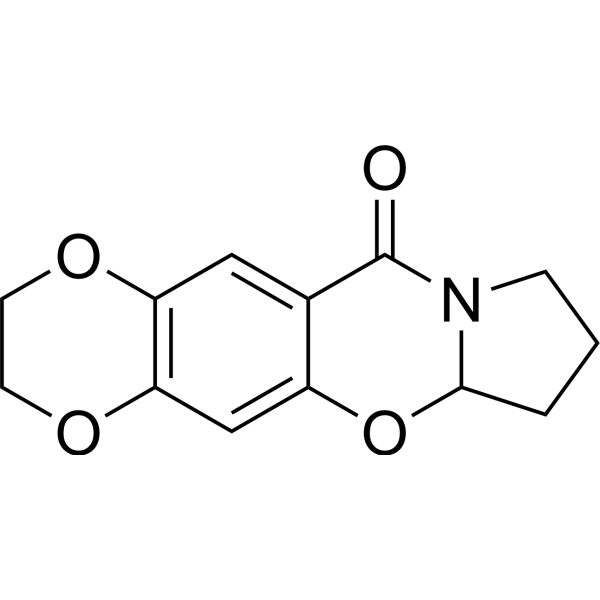
CX614 is a positive variant modulator of AMPA receptors that enhances excitatory postsynaptic potentials (amplitude and duration) by blocking and slowing the inactivation of responses to glutamate and automatically evokes excitatory postsynaptic currents in neuronal cultures. CX614 can be used in the study of psychiatric disorders such as depression .
loading...
    loading...
1
1 Cited Publications
Cat. No.: HY-K3012

This product is serum-free and supports cell growth and survival. It has been associated with the growth and expression of neuroblastoma, and with post-mitotic neuronal survival and expression in primary cultures of both the peripheral nervous system (PNS) and central nervous system (CNS). This product is formulated with water-for-injection. The 5 mL is defined as the base specification. All larger sizes correspond to incremental volumes of this base.

loading...
    loading...
Cat. No.: HY-139201D
CAS No.: 27964-99-4
Synonyms: PDLHB (MW 4000-15000)
Poly-D-lysine hydrobromide (MW 4000-15000) (PDLHB (MW 4000-15000)) is an artificially synthesized polymer matrix widely used in neuronal cell culture. Poly-D-lysine hydrobromide is also known as a calcium-sensing receptor (CaSR) agonist peptide .
loading...
    loading...
Cat. No.: HY-131006
CAS No.: 2080306-27-8
Purity:  ≥99.0%
Target:  

Monoamine Transporter

Research Areas:  

Neurological Disease

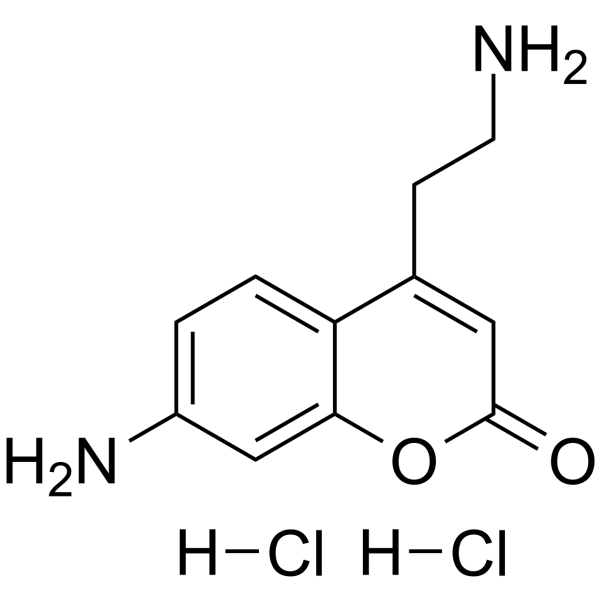
FFN200 dihydrochloride, a fluorescent substrate of VMAT2, selectively trace monoamine exocytosis in both neuronal cell culture and brain tissue. The fluorescence excitation and emission maxima of FFN200 are determined to be 352 and 451 nm, respectively .
loading...
    loading...
Cat. No.: HY-116586
AF710B is an orally effective allosteric agonist for the M1 muscarinic receptor and σ1 receptor. AF710B activates the downstream phosphorylated ERK1/2 and phosphorylated CREB signaling pathways. AF710B simultaneously improves cognitive function and alleviates the core pathological features of Alzheimer's disease, including deposition, excessive Tau phosphorylation and neuroinflammation. AF710B is applicable to the research of Alzheimer's disease .
loading...
    loading...
Cat. No.: HY-125172
CAS No.: 300670-16-0
Synonyms: Polyglutamine Aggregation inhibitor III
Target:  

Huntingtin

Research Areas:  

Others

C2-8 is an inhibitor of polyglutamine (polyQ) aggregation (IC50s=25 and 0.05 μM for recombinant HDQ51 and in PC12 cells, respectively). It also inhibits polyQ aggregation in organotypic hippocampal slice cultures isolated from R6/2 transgenic mice and reduces neurodegeneration in a dose-dependent manner in a Drosophila model of Huntington's disease. C2-8 (100 and 200 mg/kg) reduces huntingtin aggregate size, reduces neuronal atrophy, and improves motor performance in a rotarod test in the R6/2 transgenic mouse model of Huntington's disease.
loading...
    loading...
Cat. No.: HY-P10360
CAS No.: 2816095-52-8
Target:  

α-synuclein

Research Areas:  

Neurological Disease

Tat-βsyn-degron is an α-synuclein knockdown peptide that effectively degrades α-synuclein protein via the proteasome pathway. Tat-βsyn-degron effectively reduces α-synuclein protein levels in primary rat cortical neuron cultures. In a Parkinson's mouse toxicity model, Tat-βsyn-degron can alleviate parkinsonian toxin-induced neuronal damage and movement disorders .
loading...
    loading...
Cat. No.: HY-125693
CAS No.: 143839-74-1
Target:  

Fungal

Research Areas:  

Infection Neurological Disease

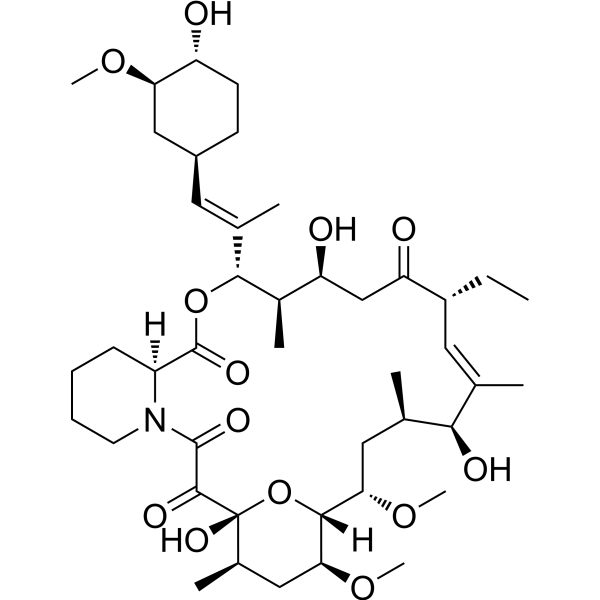
L685818 is a specific immunophilin ligand. L685818 was neuroregenerative and non-neuroprotective in primary brain cultures. L685818 protects dopaminergic neurons from toxic inhibition of MPP+ and 6-OHDA, reduces tyrosine hydroxylase (TH) loss, and promotes neuronal process regeneration. L685818 is also an antifungal reagent for Cryptococcus neoformans .
loading...
    loading...
Cat. No.: HY-120240
CAS No.: 1380201-88-6
Target:  

Others

Research Areas:  

Others

AND-302 is a small molecule anticonvulsant with activity in preventing glutamate- or hydrogen peroxide-induced cell death and decreased neuronal viability in in vitro hippocampal cultures.
loading...
    loading...
Cat. No.: HY-158212
CAS No.: 101578-13-6
Target:  

DYRK

Research Areas:  

Neurological Disease

Dyrk1A-IN-8 (compound 4C) is a potent inhibitor of Dyrk1A , with the IC50 of 209 nM. Dyrk1A-IN-8 plays an important role in neurodegenerative diseases .
loading...
    loading...
Cat. No.: HY-19225
CAS No.: 209969-60-8
Synonyms: KA-672 hydrochloride; Anseculin hydrochloride
Target:  

iGluR

Research Areas:  

Neurological Disease

Ensaculin is an NMDA receptor channel blocker. Ensaculin has neuroprotective effects in NMDA toxicity models and promotes neuronal growth in primary cultures of rat brain cells. Ensaculin has the potential to be developed as an anti-dementia drug that acts on various neurotransmitter systems .
loading...
    loading...
Cat. No.: HY-P2697
CAS No.: 123063-31-0
Synonyms: Cys-Laminin A chain 2091-2108
Target:  

Inhibitory Antibodies

Research Areas:  

Others

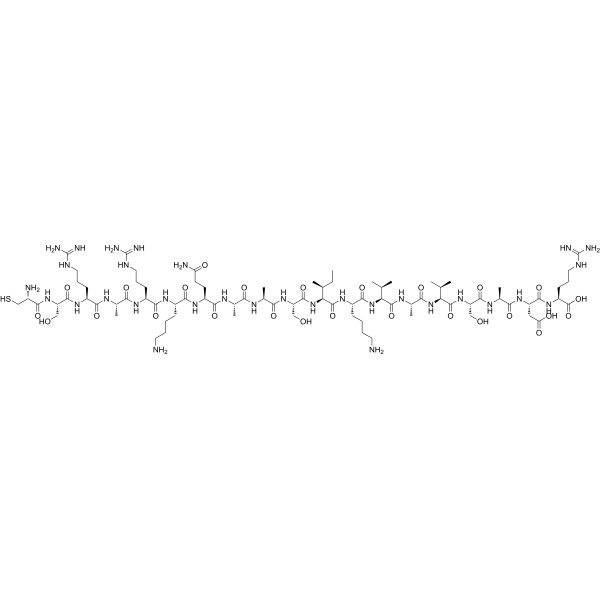
PA22-2 (free acid) (Cys-Laminin A chain 2091-2108) is a peptide that supports neurite outgrowth and stimulates neuronal-like process formation. PA22-2 (free acid) can be used to culture human adenoid cystic carcinoma cells, and in the preparation of peptide-functionalized supported phospholipid bilayers .
loading...
    loading...
Cat. No.: HY-178153
CAS No.: 1204572-46-2
Target:  

iGluR

Research Areas:  

Neurological Disease

BPAM363 is an orally active, selective positive allosteric modulator (PAM) of AMPARs with blood-brain barrier penetration. BPAM363 selectively potentiates AMPAR activity in human and rat models, with an EC2x value of 0.96 μM in rat embryonic cortex primary neurons. BPAM363 upregulates BDNF protein expression in rat primary cortical neuronal cultures. BPAM363 enhances AMPA-mediated excitatory postsynaptic responses in rat and mice. BPAM363 can be used for the study of cognitive disorders .
loading...
    loading...
Cat. No.: HY-127020
CAS No.: 108605-51-2
Target:  

Bacterial

Research Areas:  

Infection

Deoxyenterocin is a bacterial metabolite originally isolated from Streptomyces that has diverse biological activities, including antibiotic, antiviral, and antioxidant properties. It inhibits the growth of S. lutea, S. aureus, K. pneumoniae, and V. percolans in vitro when used at a concentration of 500 μg/mL. Deoxyenterocin (50 μg/mL) inhibits the cytopathic effect of influenza A H1N1 virus by 60.6% in vitro. It also prevents hydrogen peroxide-induced decreases in glutathione (GSH) levels and in the mitochondrial membrane potential in mouse primary cortical neuronal cultures when used at a concentration of 1 μM.
loading...
    loading...
Cat. No.: HY-153172
CAS No.: 2274723-90-7
Synonyms: Phenylbenzothiazole-PEG4-OH; SPG302
Target:  

Drug Intermediate

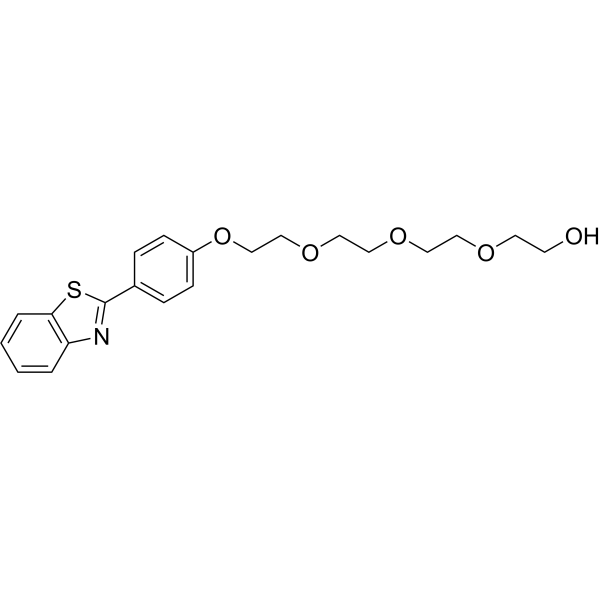
Tazbentetol (Phenylbenzothiazole-PEG4-OH) is a synaptogenic compound. Tazbentetol partially preserves inner retinal neurotransmission function and maintains retinal function. Tazbentetol increases dendritic spine glutamatergic synapses via cytoskeleton signaling pathways, enhances synaptic density both in vitro and in vivo, and restores glutamatergic synapses. Tazbentetol improves the progression of motor symptoms and enhances memory. Tazbentetol can be used in the research of glaucoma, diabetic retinopathy and amyotrophic lateral sclerosis .
loading...
    loading...
Cat. No.: HY-K6502

MCE Human iPSC-Derived Brain Organoid Long-term Culture Medium is a specialized culture system developed through systematic reformulation and concentration optimization based on neuronal cell culture platforms. It significantly enhances the adaptability and stability of long-term culture for brain organoids derived from human induced pluripotent stem cells (iPSCs).

loading...
    loading...
Cat. No.: HY-K3012A

MCE N-2 Serum-free Supplement (100×) can be used in conjunction with growth factors such as bFGF and EGF in serum-free neuronal cell culture mediums, DMEM and the DMEM/F12. This product is formulated with basal culture medium. The 5 mL is defined as the base specification. All larger sizes correspond to incremental volumes of this base.

loading...
    loading...
Cat. No.: HY-K3014D

MCE Bi-27 Serum-free Supplement (50×), Antioxidant-Free is a customized neuronal culture supplement developed by removing antioxidants components (such as vitamins, superoxide dismutase, catalase, etc.) from the standard Bi-27 formulation. It is specifically designed for investigating the roles of reactive oxygen species (ROS) in aging, cytotoxicity, apoptosis, and chronic neurological diseases. This formulation provides a stable culture environment for mechanistic studies without the interference of exogenous antioxidants.

loading...
    loading...
Cat. No.: HY-180345
CAS No.: 855170-53-5
Research Areas:  

Neurological Disease

ND-7001 is an inhibitor of PDE2 with an IC50 of 0.05 μM. ND-7001 exhibits good selectivity agianst PDE3 and PDE4. ND-7001 increases cGMP levels in primary neuronal cultures of rat cerebral cortical neurons. ND-7001 displays anxiolytic effects .
loading...
    loading...

