


33 Results for "

non-covalent interactions

" in MedChemExpress (MCE) Product Catalog:
Products (33)

33 Results for "non-covalent interactions" in MCE Product Catalog:

18
18 Publications Verification
Cat. No.: HY-148439
CAS No.: 2765081-21-6
Purity:  99.68%
Synonyms: RMC-6236; RAS-IN-2
Target:  

Ras PERK

Research Areas:  

Cancer

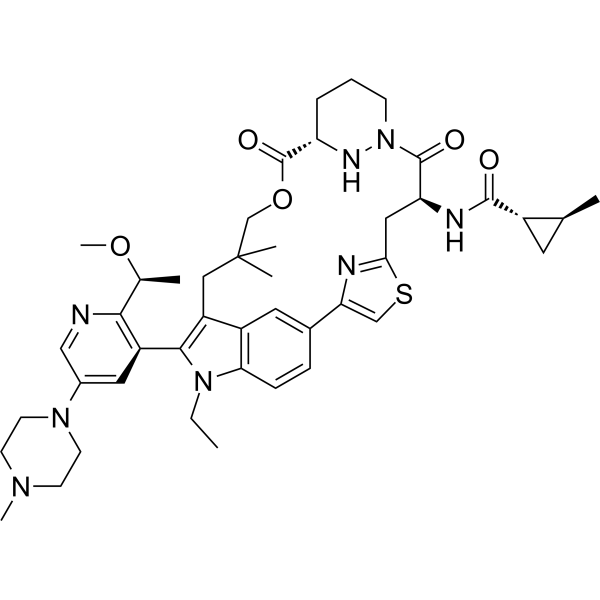
Daraxonrasib (RMC-6236) is an orally active, non-covalent RAS (ON) inhibitor. Daraxonrasib disrupts the interaction of wild-type or mutant RAS proteins with the RAS binding domain of BRAF, with EC50 values ranging from 28-220 nM for wild-type KRAS, NRAS, HRAS, and multiple oncogenic RAS variants. Daraxonrasib inhibits pERK. Daraxonrasib has anti-tumor activity against KRAS mutant tumors .
loading...
    loading...
5
5 Cited Publications
Cat. No.: HY-P3152
CAS No.: 9013-20-1
Streptavidin is a ~60 kDa homotetramer. Streptavidin binds four molecules of biotin with the highest affinity. The binding affinity of biotin to streptavidin is one of the highest reported for a non-covalent interaction to date, with a KD ~0.01 pM . Streptavidin has an immunosuppressive role .
This product is a Streptavidin protein recombinantly expressed in an E. coli expression system.
loading...
    loading...
1
1 Cited Publications
Cat. No.: HY-137441
CAS No.: 1000999-96-1
Purity:  99.52%
Synonyms: PU-HZ151
Target:  

HSP

Research Areas:  

Neurological Disease Cancer

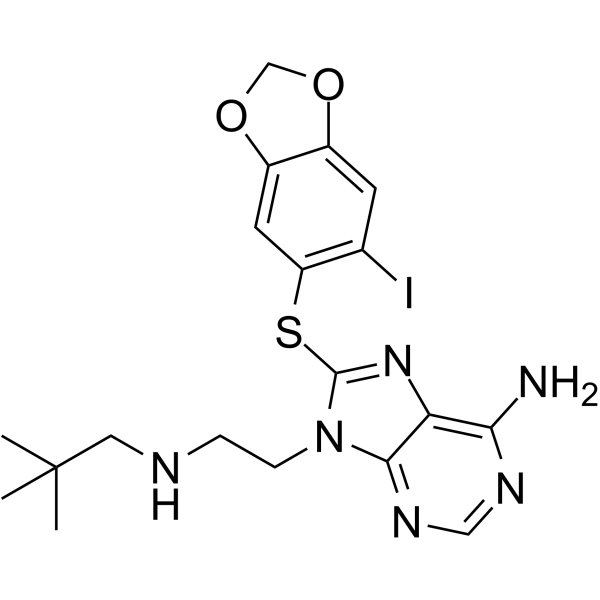
Icapamespib (PU-HZ151; PU-AD) is a selective, orally active inhibitor of Epichaperomes assembled by HSP90 with slow dissociation kinetics. Icapamespib can cross the blood-brain barrier (BBB) ??and induce epichaperome disassembly by non-covalently binding to HSP90, restoring the normal protein-protein interaction network. Icapamespib can specifically disrupt disease-related abnormal protein interaction networks, reduce neurotoxic protein aggregation and tumor cell survival signals. Icapamespib can be used in the research of neurodegenerative diseases such as Alzheimer's disease, as well as cancers such as glioblastoma and metastatic breast cancer .
loading...
    loading...
1
1 Cited Publications
Cat. No.: HY-137441A
CAS No.: 2267287-26-1
Purity:  98.67%
Synonyms: PU-HZ151 hydrochloride
Target:  

HSP

Research Areas:  

Neurological Disease Cancer

Icapamespib (PU-HZ151; PU-AD) hydrochloride is a selective, orally active inhibitor of Epichaperomes assembled by HSP90 with slow dissociation kinetics. Icapamespib hydrochloride can cross the blood-brain barrier (BBB) ??and induce epichaperome disassembly by non-covalently binding to HSP90, restoring the normal protein-protein interaction network. Icapamespib hydrochloride can specifically disrupt disease-related abnormal protein interaction networks, reduce neurotoxic protein aggregation and tumor cell survival signals. Icapamespib hydrochloride can be used in the research of neurodegenerative diseases such as Alzheimer's disease, as well as cancers such as glioblastoma and metastatic breast cancer .
loading...
    loading...
Cat. No.: HY-152857
CAS No.: 2565656-70-2
Purity:  99.96%
Synonyms: LY3473329
Target:  

LDLR

Research Areas:  

Cardiovascular Disease

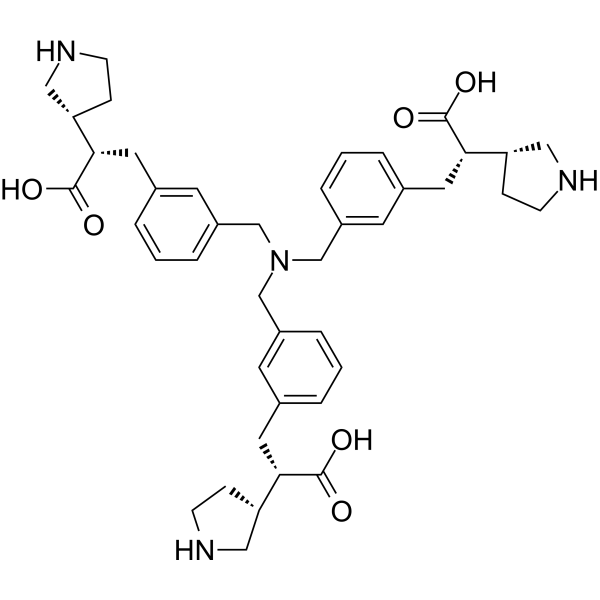
Muvalaplin (LY3473329) is an orally active, selective small molecule inhibitor of lipoprotein (a) (Lp (a)) that disrupts the initial non-covalent interaction between apo(a) and apoB100, preventing the disulphide bond and Lp(a) formation. Muvalaplin reduces the levels of Lp (a) in transgenic mice and in cynomolgus monkeys .
loading...
    loading...
Cat. No.: HY-W015954
CAS No.: 24347-58-8
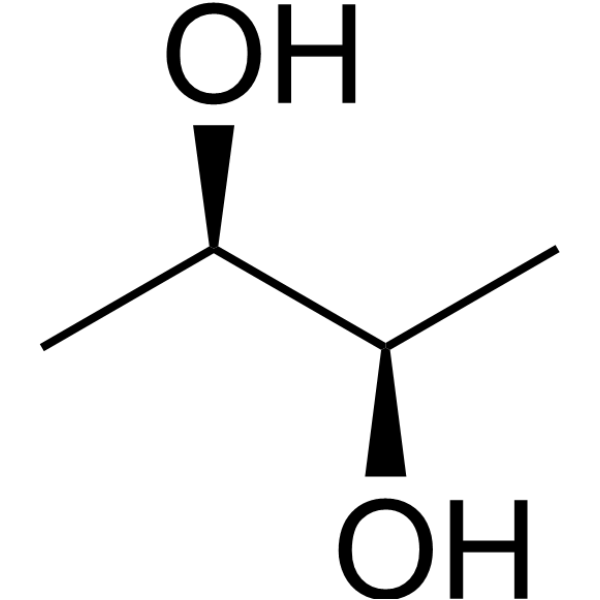
(2R,3R)-Butane-2,3-diol is a non-covalent, reversible agonist targeting lanthanum (La 3+)-sensitive calcium channels in bacteria (e.g., Escherichia coli) with an EC50 of approximately 25 mM. (2R,3R)-Butane-2,3-diol binds to calcium channel proteins or related complexes, induces channel opening, promotes extracellular calcium influx, and triggers intracellular calcium transients, which may regulate bacterial physiological activities such as growth, metabolism, and signal transduction. (2R,3R)-Butane-2,3-diol mediates bacterial-host cell signaling interactions and affects the metabolic balance of intestinal microorganisms, and can be used to study lactose intolerance and other related diseases .
loading...
    loading...
Cat. No.: HY-W145665
CAS No.: 9005-82-7
Amylose is not a typical small-molecule ligand with a specific traditional receptor-binding target. It is a polysaccharide. In food science and biological systems, amylose can interact with proteins and free fatty acids through non-covalent forces like hydrophobic interactions and electrostatic interactions. For example, it can form a ternary complex with them, which is related to the structure and digestion of starch. It is widely studied in the fields of food science, carbohydrate metabolism, and is also relevant in research on controlling glycemic responses, as it affects starch digestion rate .
loading...
    loading...
Cat. No.: HY-P4076
CAS No.: 791642-10-9
Research Areas:  

Infection

MPG peptides, Pβ is an amphipathic cell-penetrating peptide. MPG peptides, Pβ consists of three components: the hydrophobic fusion sequence (GALFLGFLGAAGSTMGA) of HIV glycoprotein 41, a spacer domain (WSQP), and the nuclear localization signal (KKKRKV) of the large T antigen of Simian virus 40. MPG peptides, Pβ can form stable non-covalent complexes with nucleic acids (including DNA) through electrostatic interactions and improve their intracellular delivery. MPG peptides, Pβ can be used in studies of HIV-1-related immune responses .
loading...
    loading...
Cat. No.: HY-W012817
CAS No.: 95-71-6
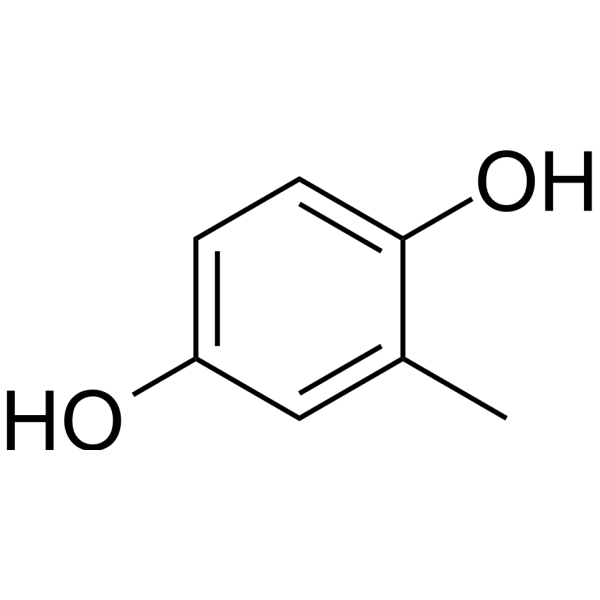
Methylhydroquinone is an orally active COX inhibitor with IC50s of 480.7 μM and 52.2 μM for ovine COX-1 and human recombinant COX-2, respectively. Methylhydroquinone has potential DNA damaging effects: 1) inhibiting COX-1 to reduce prostaglandin synthesis and exert anti-inflammatory activity; 2) inducing DNA single-strand breaks. Methylhydroquinone exerts its effects by competitively binding to the active sites of COX-1 (such as Tyr385, Met522) and non-covalent interactions .
loading...
    loading...
Cat. No.: HY-163144
CAS No.: 3044084-97-8
Target:  

PROTACs Src

Research Areas:  

Cancer

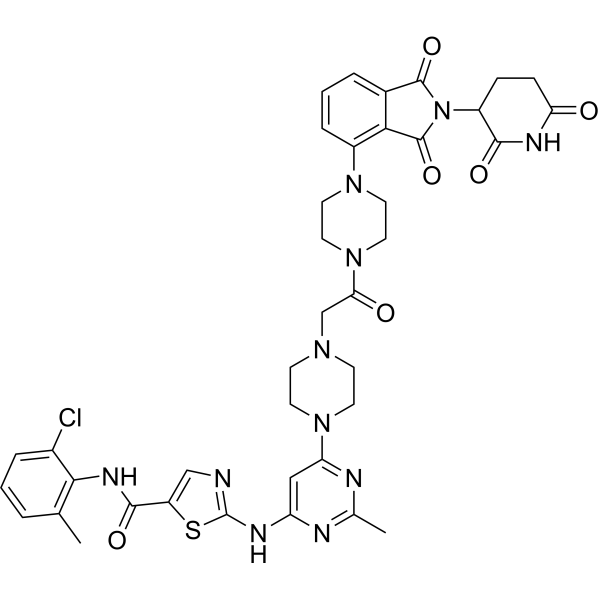
DAS-5-oCRBN is a PROTAC molecule with both c‑Src kinase inhibitory activity and target protein degradation activity, with an EC50 of 45 nM for c‑Src binding. DAS-5-oCRBN binds non-covalently to Cereblon and mediates target protein degradation via the ubiquitin-proteasome pathway. DAS-5-oCRBN can catalytically deplete intracellular c‑Src protein, while blocking both the kinase catalytic function of c‑Src and the non-catalytic protein interactions mediated by its SH2 and SH3 domains. DAS-5-oCRBN inhibits tumor cell proliferation and exerts significant anti-proliferative effects on both c‑Src kinase activity-dependent MDA-MB-231 cells and c‑Src protein level-dependent CAL51 cells. DAS-5-oCRBN can be used in cancer-related research such as studies on triple-negative breast cancer and chronic myeloid leukemia .
loading...
    loading...
Cat. No.: HY-Y0260
CAS No.: 13790-39-1
Target:  

Cholinesterase (ChE)

Research Areas:  

Neurological Disease

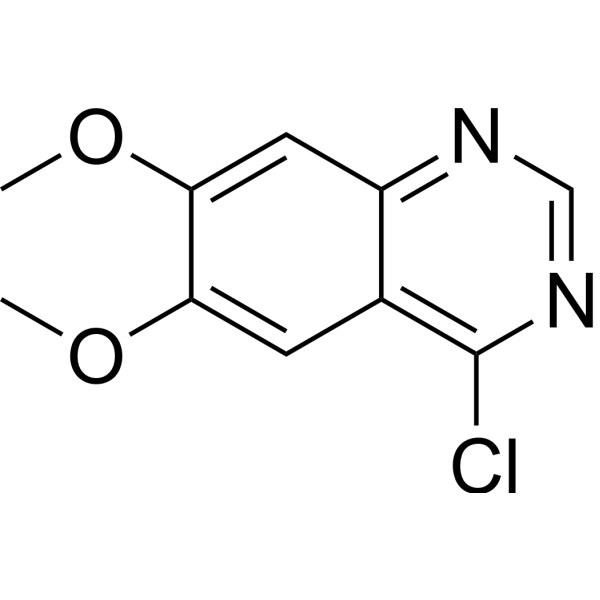
4-Chloro-6,7-dimethoxyquinazoline is a quinazoline derivative. 4-Chloro-6,7-dimethoxyquinazoline exhibits a significant interaction with the AChE protein (as demonstrated by molecular docking analysis). 4-Chloro-6,7-dimethoxyquinazoline is applicable to research related to Alzheimer's disease .
loading...
    loading...
Cat. No.: HY-W097122
CAS No.: 170941-79-4
Research Areas:  

Others

Fmoc-Gly-Gly-Gly-OH is a self-assembling gelator tripeptide modified with 9-fluorenylmethoxycarbonyl (Fmoc). Fmoc-Gly-Gly-Gly-OH forms a secondary supramolecular network through non-covalent interactions in hybrid polymer hydrogel systems. Fmoc-Gly-Gly-Gly-OH contributes to the construction of double-network hydrogels. Fmoc-Gly-Gly-Gly-OH can be used in studies of tissue regeneration and biomedical delivery applications .
loading...
    loading...
Cat. No.: HY-W582504
CAS No.: 15709-76-9
Synonyms: CuCl(TPP)3
Target:  

DNA Stain Bacterial Fungal

Research Areas:  

Infection Cancer

Chlorotris(triphenylphosphine)copper (CuCl(TPP)₃) is a DNA-targeted metal complex. Chlorotris(triphenylphosphine)copper involves non-covalent interactions (such as groove binding mode) through the copper(I) center to affect DNA function, showing inhibitory activity against bacteria, fungi, and tumor cells. Chlorotris(triphenylphosphine)copper is promising for research of antibacterial, antitumor, and antioxidant agents .
loading...
    loading...
Cat. No.: HY-W015954R
CAS No.: 24347-58-8
(2R,3R)-Butane-2,3-diol (Standard) is the analytical standard of (2R,3R)-Butane-2,3-diol (HY-W015954). This product is intended for research and analytical applications. (2R,3R)-Butane-2,3-diol is a non-covalent, reversible agonist targeting lanthanum (La 3+)-sensitive calcium channels in bacteria (e.g., Escherichia coli) with an EC50 of approximately 25 mM. (2R,3R)-Butane-2,3-diol binds to calcium channel proteins or related complexes, induces channel opening, promotes extracellular calcium influx, and triggers intracellular calcium transients, which may regulate bacterial physiological activities such as growth, metabolism, and signal transduction. (2R,3R)-Butane-2,3-diol mediates bacterial-host cell signaling interactions and affects the metabolic balance of intestinal microorganisms, and can be used to study lactose intolerance and other related diseases .
loading...
    loading...
Cat. No.: HY-169228
CAS No.: 2759280-09-4
Target:  

Btk

Research Areas:  

Cancer

WS-11 is a non-covalent reversible BTK inhibitor with IC50s of 3.9 nM and 2.2 nM for wild type, C481S mutation BTK, respectively. WS-11 can form strong π-π interaction with PHE540 and form p-π interaction with LYS430 within the active pocket, besides the strong hydrogen bonds .
loading...
    loading...
Cat. No.: HY-153532
CAS No.: 2428738-43-4
Target:  

PI5P4K

Research Areas:  

Cancer

CVM-05-002 is a selective pan-phosphatidylinositol 5-phosphate 4-kinase (PI5P4K) inhibitor, with IC50 values of 0.27 μM and 1.69 μM against PI5P4Kα and PI5P4Kβ, respectively. CVM-05-002 binds non-covalently to the ATP-binding pocket of PI5P4Kα, forming hydrophobic interactions and hydrogen bonds with pocket residues. CVM-05-002 can be used in tumor-related research .
loading...
    loading...
Cat. No.: HY-162321
CAS No.: 1286482-29-8
Target:  

Ras

Research Areas:  

Cancer

ZINC57632462 (ACA-6) is a non-covalent allosteric KRAS inhibitor. ZINC57632462 disrupts nucleotide exchange and inhibits RAS-effector interaction. ZINC57632462 can be used for the research of cancer .
loading...
    loading...
Cat. No.: HY-W012817R
CAS No.: 95-71-6
Methylhydroquinone (Standard) is the analytical standard of Methylhydroquinone. This product is intended for research and analytical applications. Methylhydroquinone is an orally active COX inhibitor with IC50s of 480.7 μM and 52.2 μM for ovine COX-1 and human recombinant COX-2, respectively. Methylhydroquinone has potential DNA damaging effects: 1) inhibiting COX-1 to reduce prostaglandin synthesis and exert anti-inflammatory activity; 2) inducing DNA single-strand breaks. Methylhydroquinone exerts its effects by competitively binding to the active sites of COX-1 (such as Tyr385, Met522) and non-covalent interactions[1][2].
loading...
    loading...
Cat. No.: HY-181892
Target:  

Bacterial

Research Areas:  

Infection

LpxC-IN-17 (Compound a5) is a non-covalent LpxC inhibitor and Antibacterial agent. LpxC-IN-17 chelates catalytic zinc ions and forms extensive non-covalent interactions within the LpxC active site, thereby functionally inhibiting the enzyme. LpxC-IN-17 exhibits antibacterial activity against Gram-negative pathogens including Escherichia coli, Klebsiella pneumoniae and Pseudomonas aeruginosa. LpxC-IN-17 is applicable to research related to Gram-negative bacterial infections .
loading...
    loading...
Cat. No.: HY-187992
Research Areas:  

Others

SDH-IN-48 is a succinate dehydrogenase (SDH) inhibitor, with an IC50 of 0.056 μM against porcine SDH. SDH-IN-48 binds to the SDH active pocket through multiple non-covalent interactions. SDH-IN-48 can be used in related research on rice sheath blight disease .
loading...
    loading...

