1. Search Result
Search Result
Results for "

one-carbon

" in MedChemExpress (MCE) Product Catalog:

19

Inhibitors & Agonists

1

Biochemical Assay Reagents

1

Peptides

4

Natural
Products

2

Isotope-Labeled Compounds

1

Oligonucleotides

Cat. No. Product Name Target Research Areas Chemical Structure
  • HY-14520
    Tetrahydrofolic acid
    5+ Cited Publications

    L-5,6,7,8-Tetrahydrofolic acid; L-Tetrahydrofolic acid

    Endogenous Metabolite Metabolic Disease
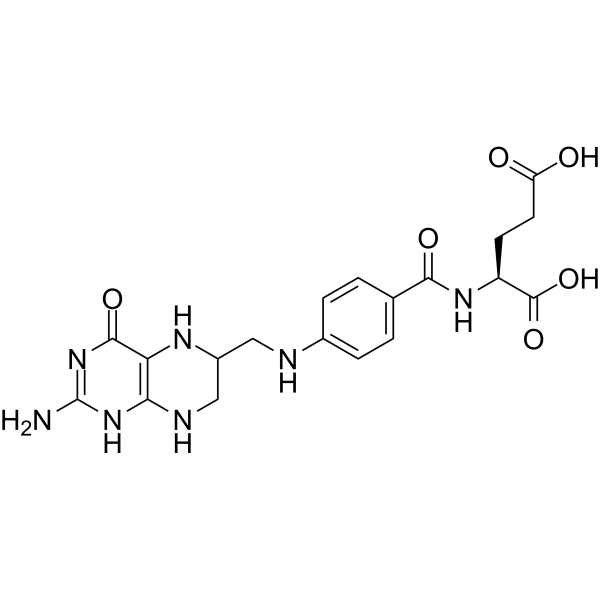
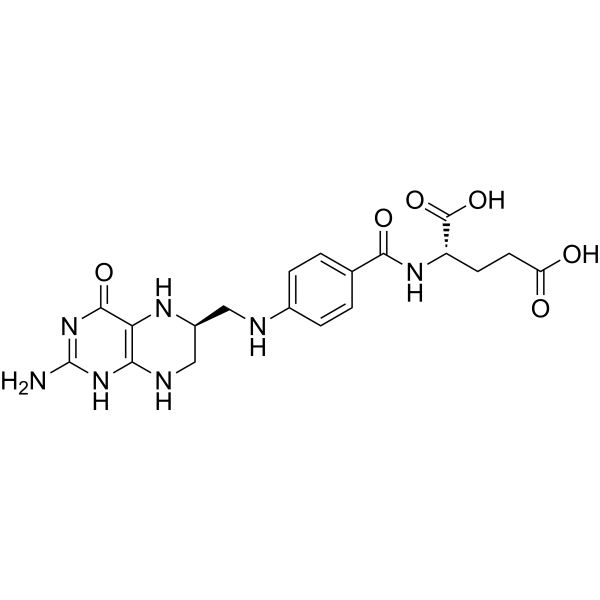
    Tetrahydrofolic acid (L-5,6,7,8-Tetrahydrofolic acid) is the biologically active vitamin B9 folate derivative. Tetrahydrofolic acid is a donor of one-carbon groups for amino acids, nucleic acids, and lipids. Tetrahydrofolic acid serves as an acceptor of free formaldehyde, producing 5,10-methylenetetrahydrofolate-Tetrahydrofolic acid .
    Tetrahydrofolic acid
  • HY-B0504
    Creatinine
    5+ Cited Publications

    NSC13123

    Endogenous Metabolite GABA Receptor iGluR Infection Neurological Disease Metabolic Disease Cancer
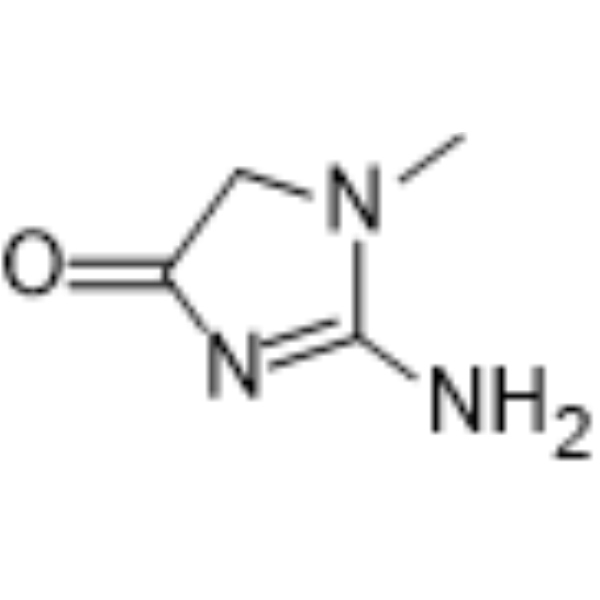
    Creatinine (NSC13123) is an orally active, blood-brain barrier-permeable modulator of GABAA and NMDA receptors, with activities of antioxidation and metabolic regulation. Creatinine is generated via non-enzymatic conversion of creatine and phosphocreatine in muscle. Creatinine serum levels correlate with muscle mass, glomerular filtration rate, and extrarenal clearance, serving as an evaluation biomarker for renal function, muscle mass, and clinical outcomes, and used for perioperative renal risk assessment. In addition, Creatinine can induce specific Cryptococcus species to produce creatinine deiminase and act as their nitrogen source, while it can be secreted via renal tubules. Creatinine is widely used in research related to various diseases such as neurodegenerative diseases, psychiatric disorders, acute kidney injury, chronic kidney disease, and renal failure .
    Creatinine
  • HY-151507
    306Oi10
    1 Publications Verification

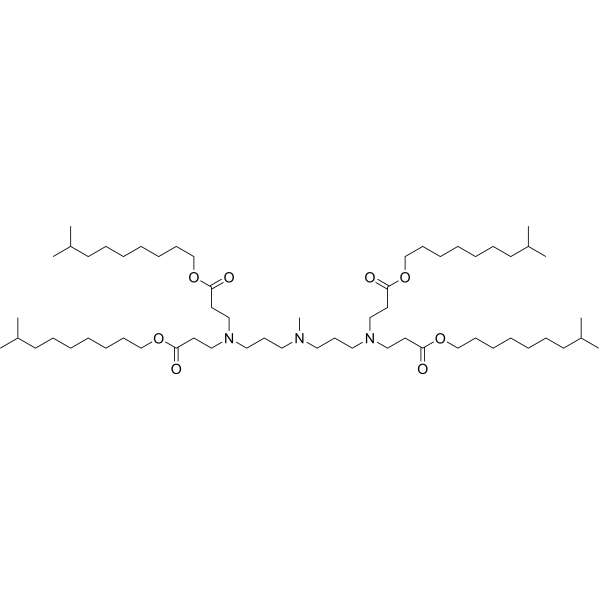
    Liposome Others
    306Oi10 is a branched ionizable lipid that can be used to construct lipid nanoparticles (LNPs) for delivering messenger RNA. The surface ionization of lipid nanoparticles is related to the effectiveness of mRNA delivery. The tail of 306Oi10 has a one-carbon branch, which provides it with stronger surface ionization compared to lipids with linear tails, thereby enhancing its mRNA delivery efficacy. 306Oi10 can be used in research related to mRNA delivery .
    306Oi10
  • HY-113110

    L-Cysteinylglycine; Cys-Gly; H-Cys-Gly-OH

    Endogenous Metabolite Reactive Oxygen Species (ROS) DNA/RNA Synthesis Cardiovascular Disease Cancer
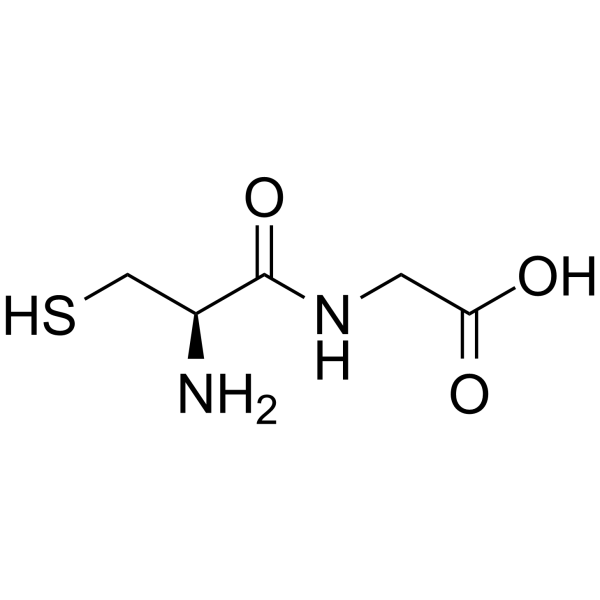
    Cysteinylglycine (L-Cysteinylglycine; Cys-Gly) is a dipeptide formed by the peptide bond linkage between cysteine (Cysteine) and glycine (Glycine). Cysteinylglycine is an important metabolic intermediate in the human body, mainly derived from the degradation of glutathione (GSH). Cysteinylglycine reduces ferric iron to ferrous iron, drives the redox cycle of iron, generates reactive oxygen species (ROS), stimulates oxidative reactions, induces lipid peroxidation of human plasma LDL lipoproteins, and causes oxidative damage to DNA bases. Cysteinylglycine can be used as a biomarker to evaluate ischemic heart disease, breast cancer and other conditions .
    Cysteinylglycine
  • HY-131943

    Methylenetetrahydrofolate Dehydrogenase (MTHFD) Neurological Disease Cancer
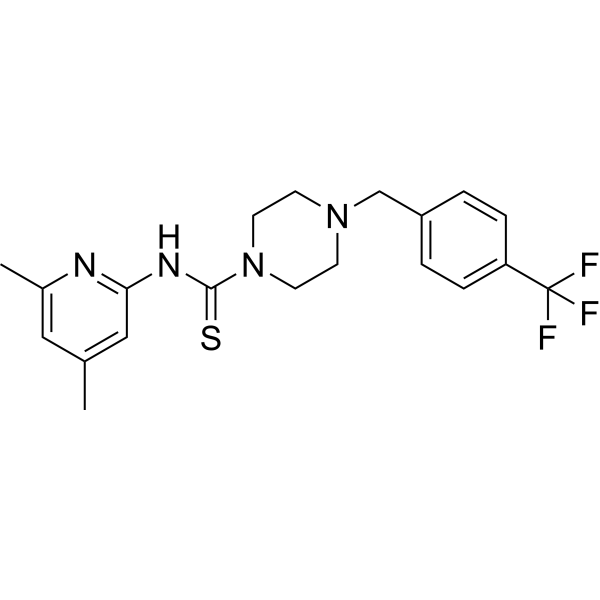
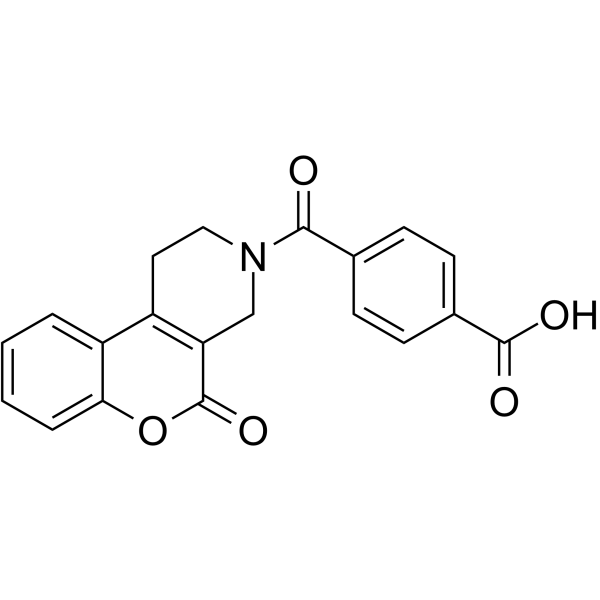
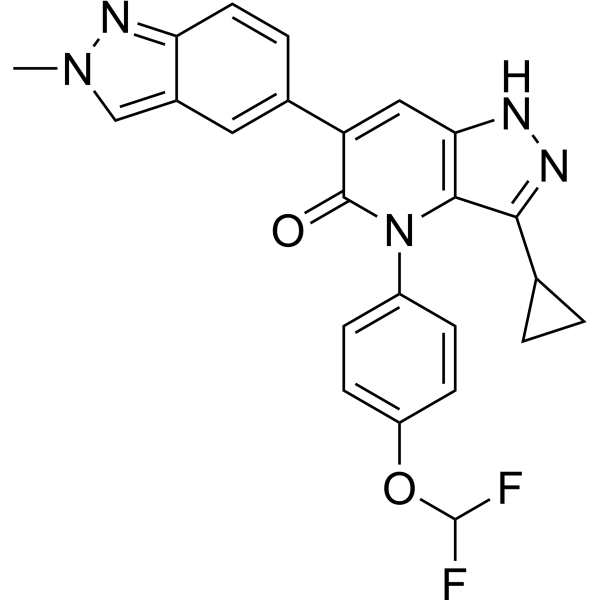
    DS44960156 is a selective MTHFD2 inhibitor with moderate to low blood-brain barrier penetration (IC50=1.6 μM, Ki=1.23 μM). DS44960156 specifically binds to the active site of MTHFD2, disrupts redox homeostasis and blocks serine-mediated one-carbon metabolism, thereby increasing the NAD +/NADH ratio and ROS levels. DS44960156 not only effectively inhibits the proliferation of glioma cells, but also enhances the sensitivity of cells to glutamine starvation-induced death. DS44960156 binds to plasma proteins, shows no mutagenicity, carcinogenicity or acute oral toxicity, and serves as a research agent for glioblastoma multiforme and other cancers .
    DS44960156
  • HY-17557
    Calcium N5-methyltetrahydrofolate
    Maximum Cited Publications
    9 Publications Verification

    NSC173328; 5-Methyl THF calcium

    Drug Derivative Cardiovascular Disease Neurological Disease Metabolic Disease Cancer
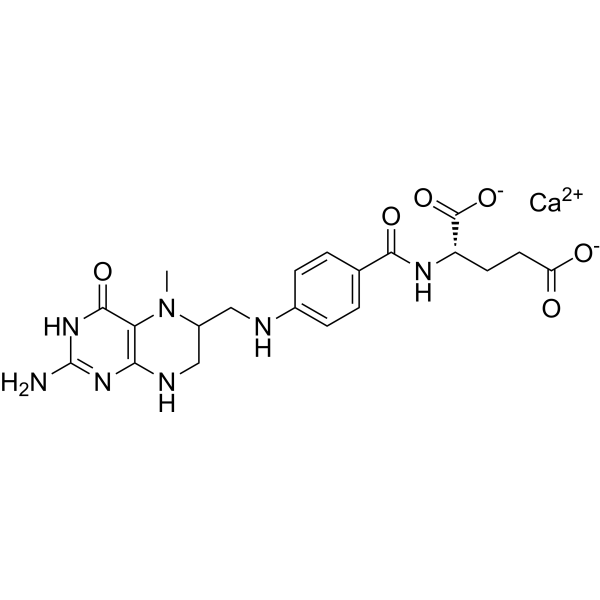
    Calcium N5-methyltetrahydrofolate (NSC173328; 5-Methyl THF (calcium)), Levomefolic acid (HY-14781) derivative, is a folic acid supplement. Calcium N5-methyltetrahydrofolate can be used for the research of neural tube defects, infertility, non-hodgkin's lymphoma, endometriosis .
    Calcium N5-methyltetrahydrofolate
  • HY-14520S

    Isotope-Labeled Compounds Endogenous Metabolite Metabolic Disease
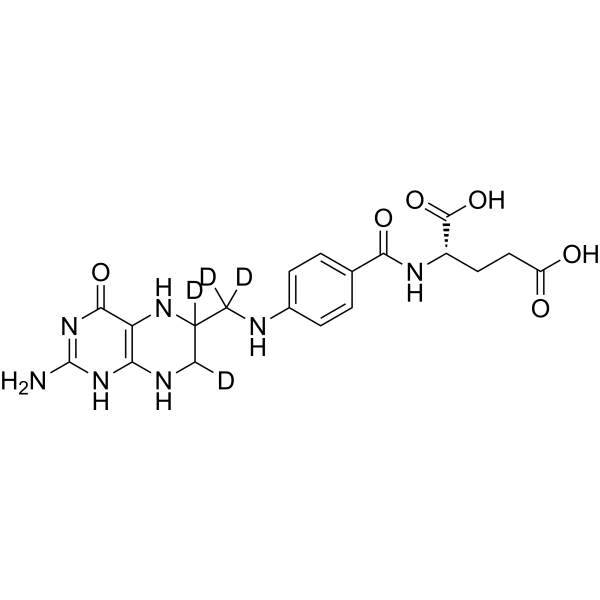
    Tetrahydrofolic acid-d4 is the deuterium labeled Tetrahydrofolic acid. Tetrahydrofolic acid (L-5,6,7,8-Tetrahydrofolic acid) is the biologically active vitamin B9 folate derivative. Tetrahydrofolic acid is a donor of one-carbon groups for amino acids, nucleic acids, and lipids. Tetrahydrofolic acid serves as an acceptor of free formaldehyde, producing 5,10-methylenetetrahydrofolate-Tetrahydrofolic acid .
    Tetrahydrofolic acid-d4
  • HY-162353

    Cancer
    AZ'9567 is an orally active MAT2a inhibitor with a pIC50 of 9.1. AZ'9567 binds to MAT2a allosterically, reduces the synthesis of SAM, decreases SDMA levels, and exerts antiproliferative effects on MTAP-knockout cells. AZ'9567 depletes SAM, causes methionine accumulation in plasma and tissues, triggers adaptive disorders in one-carbon metabolism, transsulfuration metabolism and lipid metabolism, and induces oxidative stress, hepatic steatosis and lipid homeostasis imbalance. AZ'9567 can be used in studies related to MTAP-deficient/deleted cancers .
    AZ'9567
  • HY-137829

    Endogenous Metabolite Others
    5-Methyltetrahydrofolic acid disodium is the metabolite of Folinic acid (Leucovorin) (HY-17556). 5-Methyltetrahydrofolic acid disodium is involved in one-carbon metabolism and the transfer of methyl groups .
    5-Methyltetrahydrofolic acid disodium
  • HY-14520S1

    L-5,6,7,8-Tetrahydrofolic acid-13C5; L-Tetrahydrofolic acid-13C5

    Isotope-Labeled Compounds Endogenous Metabolite Metabolic Disease
    Tetrahydrofolic acid- 13C5 (L-5,6,7,8-Tetrahydrofolic acid- 13C5) is 13C labeled Tetrahydrofolic acid. Tetrahydrofolic acid (L-5,6,7,8-Tetrahydrofolic acid) is the biologically active vitamin B9 folate derivative. Tetrahydrofolic acid is a donor of one-carbon groups for amino acids, nucleic acids, and lipids. Tetrahydrofolic acid serves as an acceptor of free formaldehyde, producing 5,10-methylenetetrahydrofolate-Tetrahydrofolic acid .
    Tetrahydrofolic acid-13C5
  • HY-14520B

    L-5,6,7,8-Tetrahydrofolic acid trihydrochloride; L-Tetrahydrofolic acid trihydrochloride

    Endogenous Metabolite Metabolic Disease
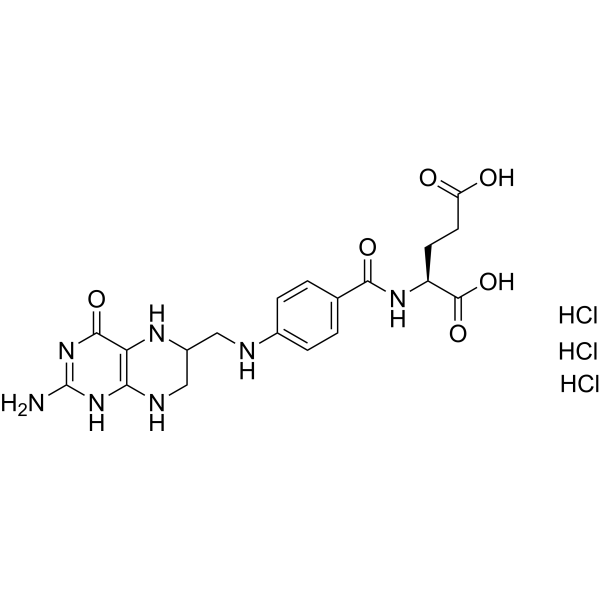
    Tetrahydrofolic acid (L-5,6,7,8-Tetrahydrofolic acid) trihydrochloride is the biologically active vitamin B9 folate derivative. Tetrahydrofolic acid trihydrochloride is a donor of one-carbon groups for amino acids, nucleic acids, and lipids. Tetrahydrofolic acid trihydrochloride serves as an acceptor of free formaldehyde, producing 5,10-methylenetetrahydrofolate-Tetrahydrofolic acid .
    Tetrahydrofolic acid trihydrochloride
  • HY-117783

    Antibiotic Infection
    Y-05460M-A is a substituted isocoumarin antibiotic. Y-05460M-A exhibits inhibitory activity against Gram-positive and Gram-negative bacteria. Y-05460M-A is cytotoxic against P388 lymphatic leukemia. Y-05460M-A also has antiulcer activity. Y-05460M-A is a one-carbon lower homologue of PM-04128. Y-05460M-A can be achieved from N-Boc-L-valine .
    Y-05460M-A
  • HY-14520A

    (6S)-5,6,7,8-Tetrahydrofolic acid

    Endogenous Metabolite Metabolic Disease
    (6S)-Tetrahydrofolic acid is 1000-fold more active than the (6R) form at promoting the binding of fluorodeoxyuridylate to thymidylate synthase and 600-fold more active as a growth factor of P. cerevisiae. (6S)-Tetrahydrofolic acid also has a low affinity and high dissociation rate for folate-binding protein .
    (6S)-Tetrahydrofolic acid
  • HY-E71183

    Biochemical Assay Reagents Others
    12-Hydroxydihydrochelirubine 12-O-methyltransferase (EC 2.1.1.120) belongs to the family of transferases, specifically those transferring one-carbon group methyltransferases.
    12-Hydroxydihydrochelirubine 12-O-methyltransferase
  • HY-E71177

    Biochemical Assay Reagents Others
    10-Hydroxydihydrosanguinarine 10-O-methyltransferase (EC 2.1.1.119) belongs to the family of?transferases, specifically those transferring one-carbon group methyltransferases.?
    10-Hydroxydihydrosanguinarine 10-O-methyltransferase
  • HY-149193

    Endogenous Metabolite Metabolic Disease
    5-Taurinomethyluridine is a taurine-containing modified uridine and translation regulator that exists in Trp and Leu (UUR) tRNAs of mammalian mitochondria. 5-Taurinomethyluridine is located at the first position of the anticodon of these mitochondrial tRNAs. 5-Taurinomethyluridine is synthesized from taurine and one-carbon metabolites by GTPBP3/MTO1, and its deficiency directly causes abnormal mitochondrial translation and various human mitochondrial diseases .
    5-Taurinomethyluridine
  • HY-182356

    Methylenetetrahydrofolate Dehydrogenase (MTHFD) Cancer
    MTHFD1/2-IN-1 is an orally active dual MTHFD1/MTHFD2 inhibitor, with IC50 values of 0.26 μM and 0.031 μM against human MTHFD1 and MTHFD2, respectively. MTHFD1/2-IN-1 blocks one-carbon metabolism by inhibiting the dehydrogenase activity of MTHFD1 as well as the dehydrogenase and cyclohydrolase activities of MTHFD2, thereby disrupting nucleotide biosynthesis and redox homeostasis in cancer cells. MTHFD1/2-IN-1 exhibits favorable Caco-2 permeability and hepatic microsomal metabolic stability. MTHFD1/2-IN-1 shows significant anti-leukemic activity, which not only reduces the viability of various leukemia cells but also inhibits tumor growth of acute myeloid leukemia (AML) in mouse models .
    MTHFD1/2-IN-1
  • HY-178711

    Others Metabolic Disease
    18-Oxooctadecanoic acid is a long-chain fatty acid derivative. 18-Oxooctadecanoic acid is exclusively oxidized by P450BM-3 to the corresponding α,ω-dicarboxylic acid (1,18-octadecanedioic acid) without undergoing decarboxylation to form one-carbon-shorter olefins. 18-Oxooctadecanoic acid can be used for the study of metabolic pathways of aldehyde-containing long-chain fatty acids .
    18-Oxooctadecanoic acid
  • HY-182284

    Reactive Oxygen Species (ROS) Apoptosis Bcl-2 Family Caspase SHMT Methylenetetrahydrofolate Dehydrogenase (MTHFD) Cytochrome P450 Cancer
    Anticancer agent 310 is an antitumor agent. Anticancer agent 310 releases nitric oxide to induce mitochondrial ROS burst, triggers mitochondrial dysfunction and activates the Bax/Bcl-2-Cyt c-Caspase-9/Caspase-3 apoptotic pathway. Anticancer agent 310 also reduces the levels of SHMT2 and MTHFD2, decreases the ratios of NADPH/NADP + and GSH/GSSG, thereby disrupting redox homeostasis and exacerbating intracellular ROS accumulation. Anticancer agent 310 can be used in research related to gastric cancer .
    Anticancer agent 310

Inquiry Online

Your information is safe with us. * Required Fields.

Salutation


Country or Region *

Applicant Name *


Organization Name *

Department *


Email Address *


Product Name *

Cat. No.


Requested quantity *

Phone Number *


Remarks

Inquiry Online

Inquiry Information

Product Name:
Cat. No.:
Quantity:
MCE Japan Authorized Agent:

