1. Search Result
Search Result
Results for "

organophosphorus insecticide

" in MedChemExpress (MCE) Product Catalog:

16

Inhibitors & Agonists

1

Isotope-Labeled Compounds

Targets Recommended:
Cat. No. Product Name Target Research Areas Chemical Structure
  • HY-B1881
    Pirimiphos-methyl
    1 Publications Verification

    Environmental Pollutants Insecticide Parasite Cholinesterase (ChE) Infection
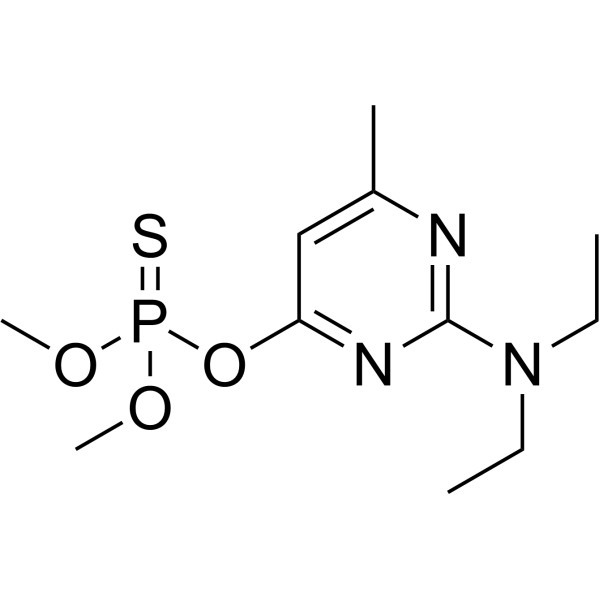
    Pirimiphos-methyl is an organophosphorus insecticide and acaricide that can inhibit AChE in target organisms. Pirimiphos-methyl is often used for prevention and control of beetles, snout beetles, moths and Ephestia cautella during storage of agricultural grains .
    Pirimiphos-methyl
  • HY-B1885
    Fenitrothion
    2 Publications Verification

    Environmental Pollutants Apoptosis Insecticide Cholinesterase (ChE) AMPK PI3K Parasite Akt SOD Infection
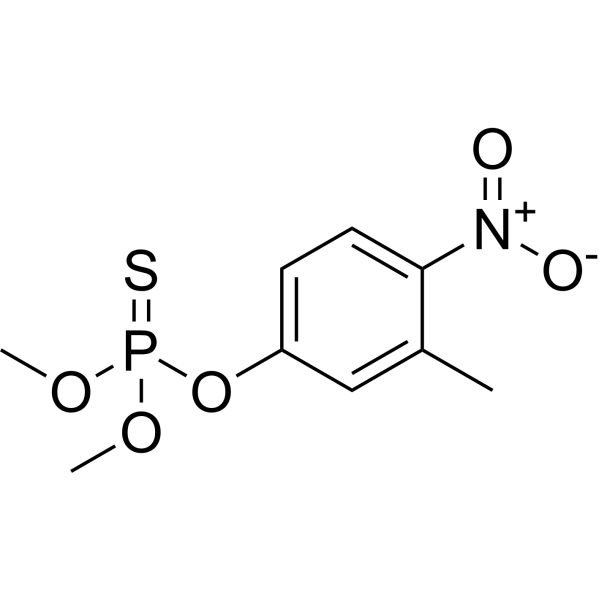
    Fenitrothion is a broad-spectrum and orally active insecticide/acaricide. Fenitrothion inhibits cholinesterase, AMPKα and IRS1/PI3K/AKT. Fenitrothion causes Apoptosis, reduces SOD activity. Fenitrothion shows insecticidal effect against Rhyzopertha dominica and Tribolium castaneum adults. Fenitrothion is widely used in cotton crops, vegetable crops, fruit crops and field crops, especially rice. Fenitrothion can be used for brain and spleen toxicology studies .
    Fenitrothion
  • HY-119438

    Insecticide Others
    Aspon is an organophosphorus insecticide. Aspon can be utilized as phosphorus sources by bacteria .
    Aspon
  • HY-129925

    Insecticide Others
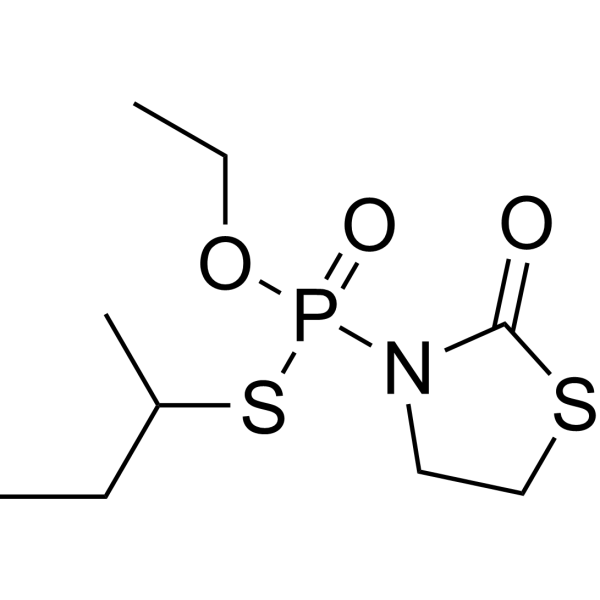
    CP-49674 is an organophosphorus compound. CP-49674 can be used as an insecticide to control the common cattle grub .
    CP-49674
  • HY-W783157

    Heterofos

    Insecticide Cholinesterase (ChE) Infection
    Heterophos (Heterofos) is an organophosphorus insecticide and an AChE inhibitor. Heterophos inhibits AChE's function of decomposing acetylcholine, causing disorder of insect nerve conduction and exerting insecticidal effects .
    Heterophos
  • HY-B1881R

    Reference Standards Insecticide Cholinesterase (ChE) Parasite Infection
    Pirimiphos-methyl (Standard) is the analytical standard of Pirimiphos-methyl (HY-B1881). This product is intended for research and analytical applications. Pirimiphos-methyl is an organophosphorus insecticide and acaricide that can inhibit AChE in target organisms. Pirimiphos-methyl is often used for prevention and control of beetles, snout beetles, moths and Ephestia cautella during storage of agricultural grains.
    Pirimiphos-methyl (Standard)
  • HY-119525

    Insecticide Infection
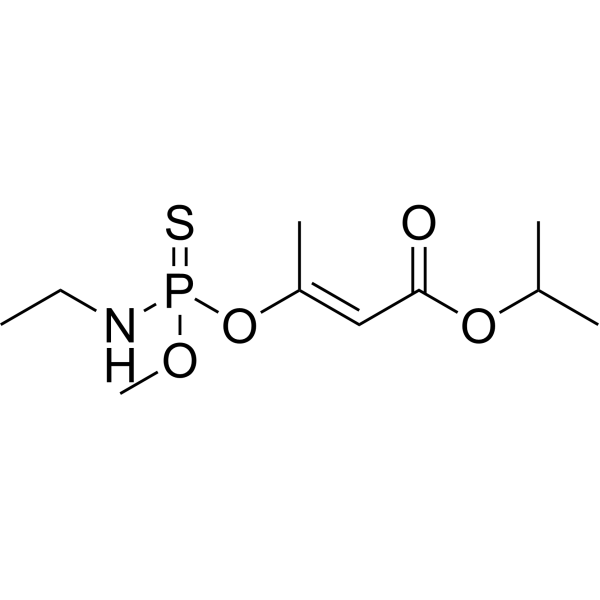
    Propetamphos is an organophosphorus insecticide. Propetamphos causes cytotoxicity and oxidative stress .
    Propetamphos
  • HY-116870

    Parasite Infection
    Vamidothion is a polar organophosphorus insecticide and acaricide with biological activity against insects and mites. Vamidothion is degraded by human serum albumin (HSA) and promotes adduct formation with tyrosine residues. The phosphate amino acid adducts formed after the reaction of vamidothion with HSA are detected by liquid chromatography quadrupole-Orbitrap mass spectrometry. The metabolites of vamidothion can be used in forensic toxicology to help determine deaths caused by organophosphorus poisoning .
    Vamidothion
  • HY-B1885R

    Reference Standards Insecticide Parasite Cholinesterase (ChE) AMPK PI3K Akt Apoptosis SOD Infection
    Fenitrothion (Standard) is the analytical standard of Fenitrothion (HY-B1885). This product is intended for research and analytical applications. Fenitrothion is a broad-spectrum and orally active insecticide/acaricide. Fenitrothion inhibits cholinesterase, AMPKα and IRS1/PI3K/AKT. Fenitrothion causes Apoptosis, reduces SOD activity. Fenitrothion shows insecticidal effect against Rhyzopertha dominica and Tribolium castaneum adults. Fenitrothion is widely used in cotton crops, vegetable crops, fruit crops and field crops, especially rice. Fenitrothion can be used for brain and spleen toxicology studies .
    Fenitrothion (Standard)
  • HY-B1881S

    Isotope-Labeled Compounds Insecticide Cholinesterase (ChE) Parasite Infection
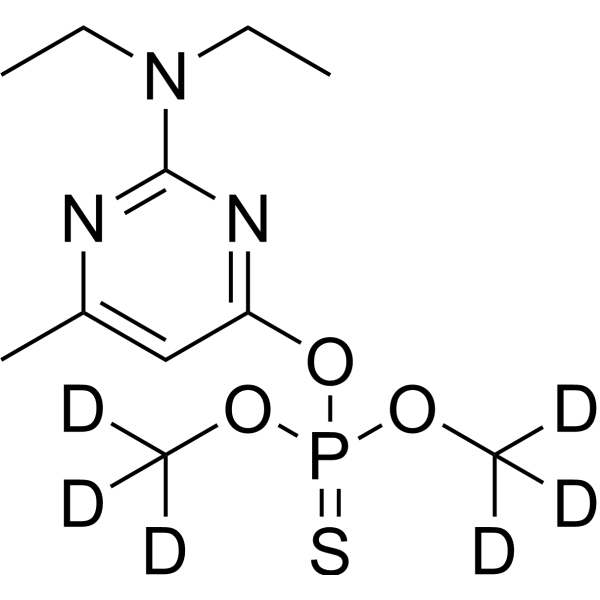
    Pirimiphos-methyl-d6 is the deuterium labeled Pirimiphos-methyl (HY-B1881) . Pirimiphos-methyl is an organophosphorus insecticide and acaricide that can inhibit AChE in target organisms. Pirimiphos-methyl is often used for prevention and control of beetles, snout beetles, moths and Ephestia cautella during storage of agricultural grains .
    Pirimiphos-methyl-d6
  • HY-W741033

    Drug Metabolite Others
    Demeton-S sulfone is an oxidative metabolite of the organophosphorus insecticide Disulfoton .
    Demeton-S sulfone
  • HY-107852

    Insecticide Others
    Demeton-S-methyl sulfone is an organophosphorus insecticide metabolite.Demeton-S-methyl sulfone serves as a substrate for metabolic breakdown.Demeton-S-methyl sulfone forms via oxidation of demeton S-methyl sulfoxide in sugar-beet cell suspension cultures.Demeton-S-methyl sulfone undergoes thioester bond cleavage, producing ethanethiols that convert into S-methylated compounds or S-glucosides .
    Demeton-S-methyl sulfone
  • HY-133992

    Drug Metabolite Others
    Fensulfothion sulfone is a metabolite of the organophosphorus insecticide fensulfothion.
    Fensulfothion sulfone
  • HY-119525R

    Insecticide Reference Standards Infection
    Propetamphos (Standard) is the analytical standard of Propetamphos. This product is intended for research and analytical applications. Propetamphos is an organophosphorus insecticide. Propetamphos causes cytotoxicity and oxidative stress .
    Propetamphos (Standard)
  • HY-134099

    Drug Metabolite Others
    Vamidothion-sulfone is the oxidative metabolite of the insecticide and acaricide Vamidothion (HY-116870) .
    Vamidothion-sulfone
  • HY-120131

    Insecticide Cholinesterase (ChE) Neurological Disease
    Cyanofenphos is an orally active organophosphate insecticide and brain AChE inhibitor with neurotoxicity. Cyanofenphos induces delayed neurotoxicity such as ataxia and paralysis. Cyanofenphos also causes symptoms including somnolence, reduced feed intake and weight loss in hens. Cyanofenphos has a unique self-antagonistic effect: repeated low-dose pre-treatment not only reduces subsequent acute toxicity, but also exacerbates delayed neurotoxicity and attenuates enzyme inhibition, with the protective effect peaking at 24 h after the last pre-treatment. Cyanofenphos is commonly used in studies related to delayed neurotoxicity .
    Cyanofenphos

Inquiry Online

Your information is safe with us. * Required Fields.

Salutation


Country or Region *

Applicant Name *


Organization Name *

Department *


Email Address *


Product Name *

Cat. No.


Requested quantity *

Phone Number *


Remarks

Inquiry Online

Inquiry Information

Product Name:
Cat. No.:
Quantity:
MCE Japan Authorized Agent:

