1. Search Result
Search Result
Results for "

orthosteric site

" in MedChemExpress (MCE) Product Catalog:

21

Inhibitors & Agonists

4

Screening Libraries

3

Natural
Products

1

Click Chemistry

Targets Recommended:
Cat. No. Product Name Target Research Areas Chemical Structure
  • HY-174801

    Cyclic GMP-AMP Synthase Inflammation/Immunology
    XL-3156 is a cGAS inhibitor. XL-3156 occupies both allosteric and orthosteric sites simultaneously, and inhibits the interaction and phase separation between cGAS and DNA by stabilizing the closed conformation of the activation loop. XL-3156 can be used in the research of diseases such as autoimmune diseases and inflammation .
    XL-3156
  • HY-12150
    CCMI
    1 Publications Verification

    AVL-3288; UCI-4083

    nAChR Neurological Disease
    CCMI (AVL-3288) is a potent and selective α7 nAChR-positive allosteric modulator, does not bind to or activate α7 nAChRs via the orthosteric site, and causes significant positive modulation of agonist-induced currents at α7 nAChRs. CCMI has potential in CNS diseases with cognitive dysfunction .
    CCMI
  • HY-159829

    NBI-1117568; HTL-0016878

    mAChR Neurological Disease
    Direclidine (NBI-1117568, HTL-0016878) is a selective orthosteric agonist targeting the muscarinic acetylcholine M4 receptor, exhibiting very low affinity for M1, M2, M3, and M5 receptors. It binds to the orthosteric site of the M4 receptor in a non-covalent, competitive manner. Direclidine specifically activates the M4 receptor, inhibiting the release of acetylcholine from striatal cholinergic interneurons, thereby regulating the balance of the dopaminergic system and reducing psychiatric symptoms associated with excessive dopamine release. Direclidine can improve symptoms associated with neuropsychiatric disorders and is used in research on schizophrenia and other neuropsychiatric disorders .
    Direclidine
  • HY-112247

    PPAR TGF-beta/Smad Metabolic Disease Inflammation/Immunology
    SR 16832 is a dual-site covalent, orthosteric and allosteric PPARγ antagonist. SR 16832 activates the TGF-β signaling pathway and upregulates the expression of Vimentin and Fibronectin (Fibronectin). SR 16832 is toxic to bronchial epithelium. SR 16832 can be used in research related to type 2 diabetes and pulmonary fibrosis .
    SR 16832
  • HY-N1910
    4'-O-Methylbavachalcone
    4 Publications Verification

    SARS-CoV Virus Protease Succinate Receptor 1 ERK Infection Neurological Disease
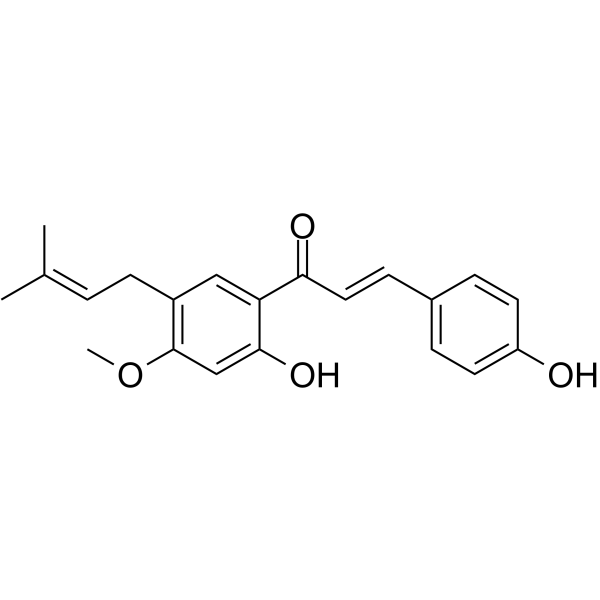
    4'-O-Methylbavachalcone is an orally active prenylated flavonoid that inhibits the activity of SARS-CoV papain-like protease (PLpro), with an IC50 of 10.1 μM and a Ki of 4.6 μM. 4'-O-Methylbavachalcone inhibits poly (ADP-ribose) polymerase-mediated cell death (parthanatos), reduces cerebral infarct volume, binds to the orthosteric site of SUCNR1, blocks the interaction between succinate and SUCNR1, inhibits SUCNR1 activity, blocks the nuclear translocation of NFATc4, suppresses the activation of the ERK1/2 signaling pathway, inhibits cardiomyocyte hypertrophy and restores the expression of α-actinin. 4'-O-Methylbavachalcone can be used in studies related to ischemic stroke, SARS-CoV and cardiomyocyte hypertrophy .
    4'-O-Methylbavachalcone
  • HY-N7683

    Glycosidase Metabolic Disease
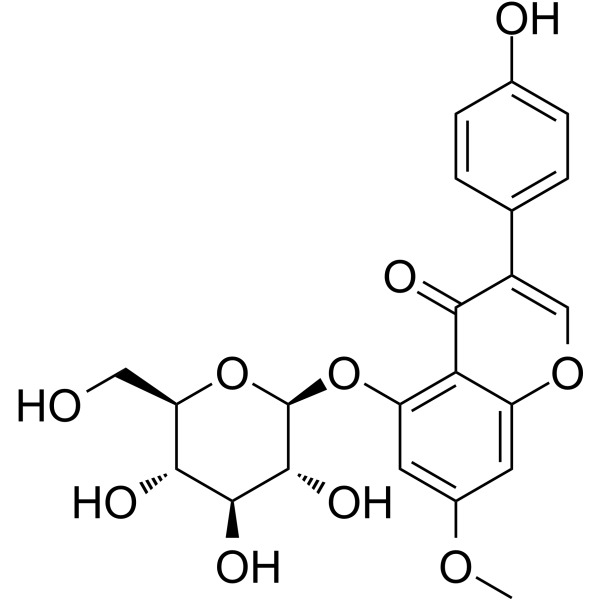
    Prunetin 5-O-β-D-glucopyranoside is an isoflavone. Prunetin 5-O-β-D-glucopyranoside can be isolated from the pedicels of Prunus avium and Prunus cerasus. Prunetin 5-O-β-D-glucopyranoside acts as a non-competitive α-glucosidase inhibitor, with a IC50 of 56.05 μg/mL and a Ki of 121 μg/mL against Saccharomyces cerevisiae α-glucosidase. Prunetin 5-O-β-D-glucopyranoside can be used in studies related to type 2 diabetes .
    Prunetin 5-O-β-D-glucopyranoside
  • HY-174802

    Cyclic GMP-AMP Synthase IKK IFNAR Neurological Disease Inflammation/Immunology Cancer
    XL-3158 is a selective and cross-species Cyclic GMP-AMP synthase (cGAS) inhibitor (IC50: 11.1 μM for human cGAS, 2.19 μM for mouse cGAS). XL-3158 simultaneously occupy allosteric and orthosteric sites, stabilizing the activation loop in a closed, inactive conformation and thereby attenuating the cGAS-DNA interactions. XL-3158 inhibits cGAS by targeting phase separation. XL-3158 efficiently penetrates cells by inhibiting aggregate formation, effectively reducing the local concentration of cGAS within cells. XL-3158 can be used for the study of cGAS-dependent inflammatory diseases.
    XL-3158
  • HY-59384

    Free Fatty Acid Receptor Metabolic Disease Inflammation/Immunology
    MOMBA is a selective FFA2 (Free Fatty Acid Receptor 2) orthosteric agonist that activates receptor signaling pathways by binding to the orthosteric site of FFA2 with high specificity. MOMBA holds potential for research on metabolic and inflammatory diseases .
    MOMBA
  • HY-112874

    BMS-687681

    CCR Neurological Disease Inflammation/Immunology Cancer
    BMS-681 is an orthosteric antagonist of CC chemokine receptor 2 (CCR2). BMS-681 restricts the movement of the extracellular end of TM6 by stabilizing TM7. TM7 and TM6 are the main components of the orthosteric binding site. BMS-681 can be used to study inflammatory neurodegenerative diseases and cancer .
    BMS-681
  • HY-146201

    Phosphodiesterase (PDE) 5-HT Receptor Neurological Disease
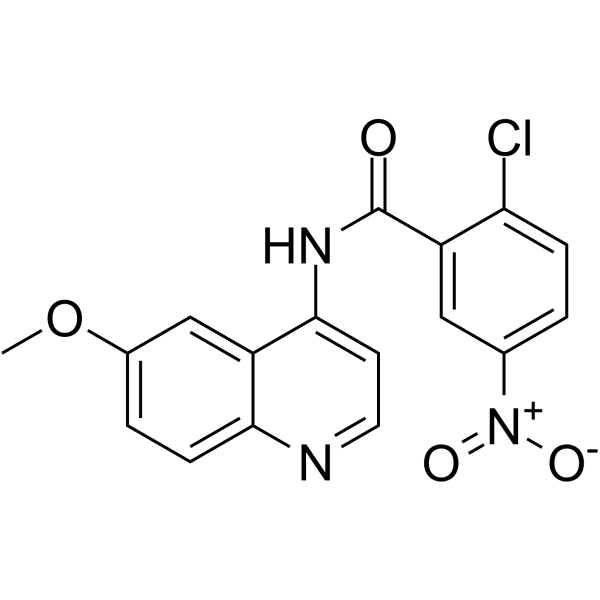
    PDE4B/7A-IN-1 is a dual PDE4B/PDE7A inhibitor. PDE4B/7A-IN-1 shows IC50 values of 69.0 μM for PDE4B and 57.0 μM for PDE7A, as well as Ki values of 539 nM for 5-HT1A and 328 nM for 5-HT7. PDE4B/7A-IN-1 shows favorable membrane permeability. PDE4B/7A-IN-1 can be used for the study of cognitive impairment and depression .
    PDE4B/7A-IN-1
  • HY-135698

    M-CAM

    Opioid Receptor Neurological Disease
    Methocinnamox (M-CAM) a selective and long-acting μ-opioid receptor (MOR) antagonist with a Ki of 0.6 nM. Methocinnamox binds to the orthosteric site of the MOR in a pseudo-irreversible, non-covalent manner, resulting in prolonged receptor blockade that persists until new receptors are synthesized. Methocinnamox acts as a reversible antagonist at both the kappa-opioid receptor (KOR) (Ki = 4.9 nM) and delta-opioid receptor (DOR) (Ki = 2.2 nM), and it exhibits no intrinsic agonist activity at these receptors. Methocinnamox can be used to reverse and prevent opioid overdose and addiction .
    Methocinnamox
  • HY-162659

    Adrenergic Receptor Others
    β2AR ligand 1 (Compound 4) is a homobivalent bitopic ligand for β2 adrenergic receptor (β2AR) on the orthosteric binding site (OBS) and the metastable binding sites (MBS) .
    β2AR ligand 1
  • HY-174147

    GABA Receptor Neurological Disease
    GABAB receptor antagonist 4 (Compound 28) is a GABAB receptor antagonist. GABAB receptor antagonist 4 can inhibit GABA-induced G protein activation. GABAB receptor antagonist 4 competitively binds to the orthosteric site of GABAB receptor. GABAB receptor antagonist 4 can be used to study GABAB receptor-related neurological diseases .
    GABAB receptor antagonist 4
  • HY-124912

    Histamine Receptor Others
    VUF-6884 (Compound 7j) is a histamine receptor (Histamine Receptor) ligand with activity toward human H4R and H1R. Its pEC50 and pKi values against human H4R are 7.70 and 7.55, respectively, while those against human H1R are 8.17 and 8.11, respectively. VUF-6884 competitively binds to the orthosteric binding site of human H4R to displace histamine, and exhibits inverse agonist activity at human H1R .
    VUF-6884
  • HY-180554

    Synaptic Vesicle Proteins Neurological Disease
    UCB1244283 is a synaptic vesicle glycoprotein 2A (SV2A) allosteric modulator. UCB1244283 binds to a secondary ligand-binding site in SV2A and enhances orthosteric ligand engagement when the orthosteric site is occupied, by stabilizing the occluded state and slowing ligand dissociation. UCB1244283 shows a clear protective effect against both tonic and clonic convulsions in sound-sensitive mice. UCB1244283 can be used for epilepsy research .
    UCB1244283
  • HY-N11141

    Adrenergic Receptor Others
    (R)-Octopamine is a Gs-coupled receptor agonist. (R)-Octopamine binds to the orthosteric site of BmOAR2 and interacts with the Asp115, Ser202 and Tyr300 residues to activate the receptor, which couples to Gs protein and thereby stimulates adenylate cyclase activity .
    (R)-Octopamine
  • HY-182921

    GPR84 Enterovirus Inflammation/Immunology
    GPR84 antagonist 11 is a highly selective GPR84 antagonist, with a human pA2 of 8.41 and a pKi of 8.16. GPR84 antagonist 11 competitively inhibits the binding of agonists to the orthosteric site of GPR84 and has improved druglike properties, though its metabolic stability still requires optimization. GPR84 antagonist 11 can be used in the research of autoimmune diseases and fibrotic diseases .
    GPR84 antagonist 11
  • HY-121837

    Adrenergic Receptor Arrestin Cardiovascular Disease Inflammation/Immunology
    β2AR-IN-15 is a selective β2-adrenergic receptor (β2AR) antagonist with a Kd of 1.7 μM. β2AR-IN-15 binds to an intracellular β2AR region overlapping the G-protein binding site, enhancing orthosteric inverse agonist binding while negatively modulating binding of orthosteric agonists with EC50 values of 1.9 and 0.48 μM. β2AR-IN-15 shows inhibitory effect on cAMP production and β-arrestin recruitment to activated β2AR. β2AR-IN-15 can be used for the research of cardiovascular and pulmonary diseases .
    β2AR-IN-15
  • HY-182687

    Adenosine Receptor Neurological Disease
    MRS7469 is a highly selective A1 adenosine receptor (A1AR) agonist with over 2000-fold selectivity over other adenosine receptor subtypes. MRS7469 stably binds to the orthosteric binding site of A1AR, and exhibits extremely high affinity for both humans and mice (e.g., human pKi is 8.67, mouse pKi is 9.43). By activating central A1AR, MRS7469 significantly induces hypothermia, motor inhibition and psychomotor dysfunction, and can be widely used in research related to depression and other relevant fields .
    MRS7469
  • HY-182850

    CXCR Metabolic Disease
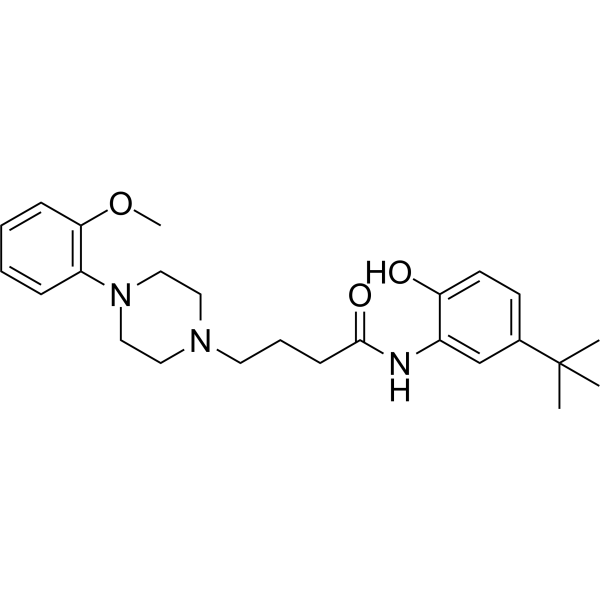
    UCUF-965 is a CXCR4 positive allosteric modulator. UCUF-965 potentiates CXCL12-induced β-arrestin recruitment and cAMP signaling, activates lymphoblast migration, induces calcium flux, and does not bind CXCR4’s orthosteric CXCL12 site. UCUF-965 reduces miR-15b and miR-29a levels, increases miR-146a levels in fibroblasts. UCUF-965 enhances angiogenesis and reduces wound healing time in diabetic mice. UCUF-965 can be used for the research of diabetic wound healing impairment .
    UCUF-965
  • HY-402739

    CCR Inflammation/Immunology
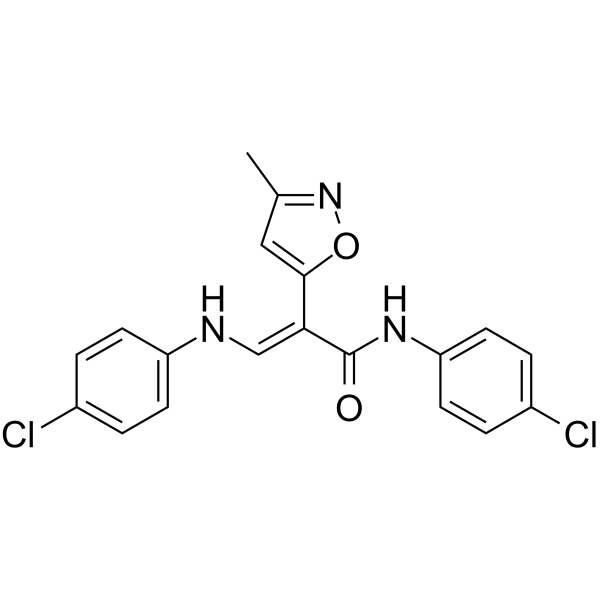
    CCR2-IN-1 (Compound HO11553-TM) is a G protein-coupled receptor CCR2 inhibitor. CCR2-IN-1 slows the progression of idiopathic pulmonary fibrosis. CCR2-IN-1 can be used for the research of idiopathic pulmonary fibrosis .
    CCR2-IN-1

Inquiry Online

Your information is safe with us. * Required Fields.

Salutation


Country or Region *

Applicant Name *


Organization Name *

Department *


Email Address *


Product Name *

Cat. No.


Requested quantity *

Phone Number *


Remarks

Inquiry Online

Inquiry Information

Product Name:
Cat. No.:
Quantity:
MCE Japan Authorized Agent:

