
1. Search Result
Search Result
Results for "

oxidized low-density lipoprotein (oxLDL)

" in MedChemExpress (MCE) Product Catalog:

13

Inhibitors & Agonists

2

Biochemical Assay Reagents

1

Inhibitory Antibodies

1

Recombinant Proteins

1

Isotope-Labeled Compounds

5

Antibodies

Targets Recommended:
Cat. No. Product Name Target Research Areas Chemical Structure
  • HY-NP013

    Mouse ox-LDL

    LDLR ROR β-catenin Cardiovascular Disease
    Oxidized low density lipoprotein (mouse) (Mouse ox-LDL) is an oxidized low density lipoprotein (LDL). Oxidized low density lipoprotein (mouse) induces atherosclerosis (AS) by facilitating endothelial dysfunction and accelerating the VSMCs growth and migration. Oxidized low density lipoprotein (mouse) can be used to construct an in vitro model of AS .
    Oxidized low density lipoprotein (mouse)
  • HY-P99793

    MLDL1278A

    LDLR Inflammation/Immunology
    Orticumab (MLDL1278A) is an antibody targeting to oxidized or malondialdehyde-modified lipoprotein (LDL). Orticumab specifically inhibits oxidized low-density lipoproteins (oxLDL). Orticumab involves in modulation of autoimmune responses against oxLDL, improves atherosclerosis in animal model. Orticumab also can be used for research of psoriasis improvement .
    Orticumab
  • HY-W015600

    Orthocetamol

    Ferroptosis Glutathione Peroxidase Reactive Oxygen Species (ROS) LDLR Cardiovascular Disease Inflammation/Immunology
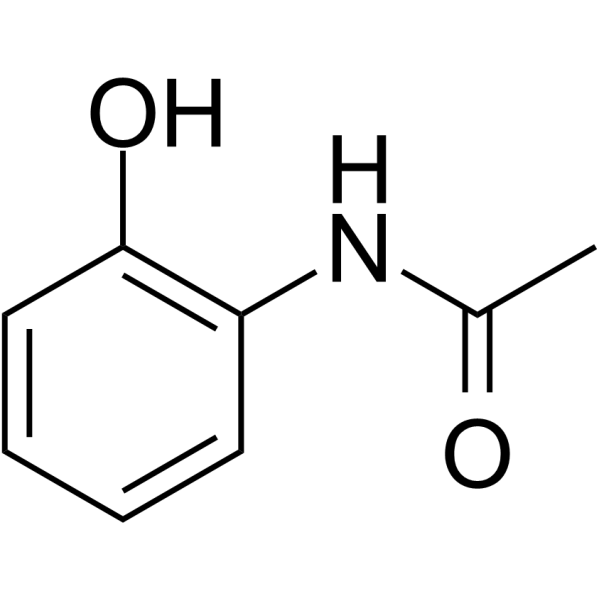
    2-Acetamidophenol (Orthocetamol) is a regulator that targets ferroptosis and glutathione metabolic pathways, is the ortho-regioisomer of Paracetamol (HY-66005). 2-Acetamidophenol has anti-atherosclerotic activity, and inhibiting total cholesterol (TC) and triglyceride (TG) in a zebrafish hyperlipidemia model with IC50s for 30 μM and 40 μM, respectively. 2-Acetamidophenol upregulates the expression of glutathione synthesis-related genes (such as GCLC, GCLM, GSS) and iron ion transport genes (such as FPN1, FTH), reduces the accumulation of intracellular reactive oxygen species (ROS) and ferrous ions (Fe 2+), and enhances the activity of glutathione peroxidase GPX4, thereby inhibiting macrophage phagocytosis of oxidized low-density lipoprotein (ox-LDL) and foam cell formation .
    2-Acetamidophenol
  • HY-114164G

    Thrombin Protease Activated Receptor (PAR) MMP VEGFR Epigenetic Reader Domain Cardiovascular Disease Neurological Disease Inflammation/Immunology
    Murine Thrombin is a murine serine protease that plays a central role in blood coagulation. Murine Thrombin stimulates macrophages to polarize into a unique phenotype characterized by anti-inflammatory and pro-repair properties. Murine Thrombin activates PAR1, induces the production of MCP-1, MMP3 and VEGF in mouse intervertebral discs, and causes degradation of the cartilage matrix and destruction of intervertebral disc structure. Murine Thrombin activity increases significantly in paraoxon-induced status epilepticus .
    Murine Thrombin
  • HY-130576

    Apoptosis Cardiovascular Disease
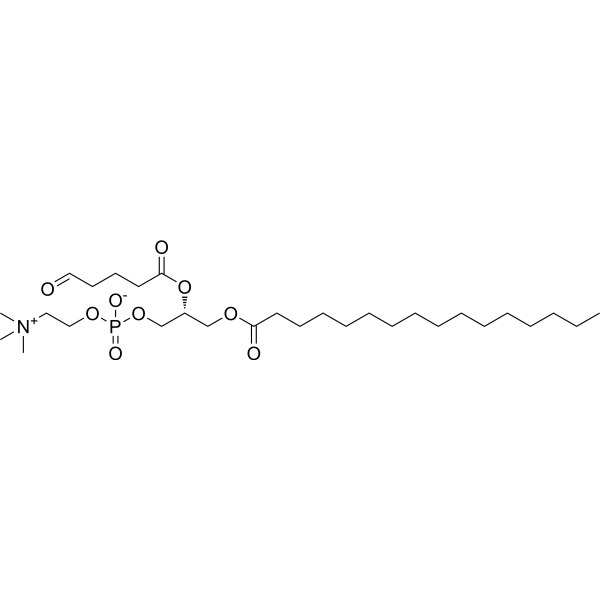
    POVPC is an oxidized phospholipid can be found in in oxidatively modified low density lipoprotein (oxLDL). POVPC inhibits VSMC growth in high serum condition. POVPC induces apoptosis in low serum condition .
    POVPC
  • HY-19749
    PD 151746
    5+ Cited Publications

    Proteasome Interleukin Related Cardiovascular Disease Inflammation/Immunology Cancer
    PD 151746 is a selective calpain-1 inhibitor with an IC50 of 260 nM. PD 151746 binds μ-calpain Ca 2+-binding sites, and shows selectivity over cathepsin B, papain, trypsin, thermolysin, and basal calcineurin. PD 151746 reduces Oxidized low-density lipoprotein (oxLDL)-induced cytotoxicity, apoptotic DNA fragmentation, and blocks IL-1α maturation. PD 151746 can be used for the research of atherosclerosis and psoriasis .
    PD 151746
  • HY-126726

    Biochemical Assay Reagents Others
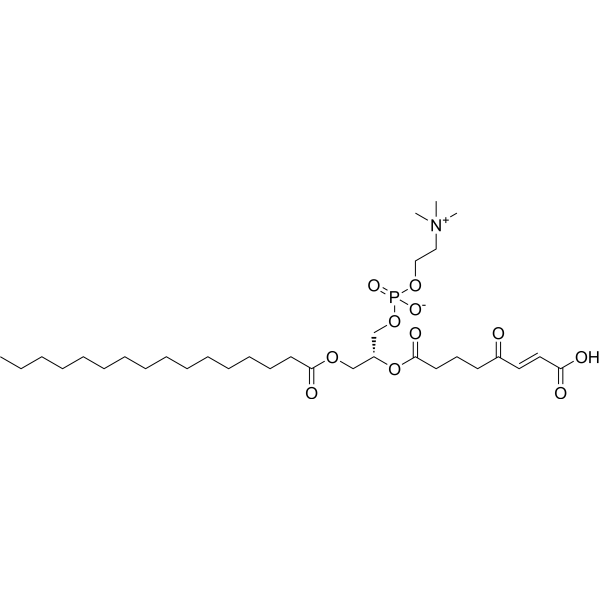
    Oxidized low-density lipoprotein (oxLDL) particles contain low molecular weight species that are cytotoxic and proatherogenic. Many of these species were recently isolated and purified from oxLDL and identified as phosphatidylcholine species containing fragmented oxidized short-chain fatty acid residues at the sn-2 position. 1-(Palmitoyl)-2-(5-keto-6-octene-dioyl)phosphatidylcholine or KOdiA-PC is one of the most potent CD36 ligands of the oxLDL species. KOdiA-PC confers CD36 scavenger receptor binding affinity to LDL at a frequency of only 2 to 3 KOdiA-PC molecules/LDL particle and may be one of the more important structural determinants of oxLDL.
    KOdiA-PC
  • HY-W015600R

    Orthocetamol (Standard)

    Reference Standards Ferroptosis Glutathione Peroxidase Reactive Oxygen Species (ROS) LDLR Cardiovascular Disease Inflammation/Immunology
    2-Acetamidophenol (Standard) is the analytical standard of 2-Acetamidophenol. This product is intended for research and analytical applications. 2-Acetamidophenol (Orthocetamol) is a regulator that targets ferroptosis and glutathione metabolic pathways, is the ortho-regioisomer of Paracetamol (HY-66005). 2-Acetamidophenol has anti-atherosclerotic activity, and inhibiting total cholesterol (TC) and triglyceride (TG) in a zebrafish hyperlipidemia model with IC50s for 30 μM and 40 μM, respectively. 2-Acetamidophenol upregulates the expression of glutathione synthesis-related genes (such as GCLC, GCLM, GSS) and iron ion transport genes (such as FPN1, FTH), reduces the accumulation of intracellular reactive oxygen species (ROS) and ferrous ions (Fe 2+), and enhances the activity of glutathione peroxidase GPX4, thereby inhibiting macrophage phagocytosis of oxidized low-density lipoprotein (ox-LDL) and foam cell formation .
    2-Acetamidophenol (Standard)
  • HY-134154

    PAzePC; Azelaoyl PC; 1-Palmitoyl-2-Azelaoyl PC

    Endogenous Metabolite Metabolic Disease
    Oxidized low-density lipoprotein (oxLDL) particles contain low molecular weight species which are cytotoxic and pro-atherogenic. Many of these substances were isolated and purified from oxLDL and identified as phosphatidylcholine species containing a fragmented, oxidized short-chain fatty acid remnant at the sn-2 position. PAz-PC (Azelaoyl PC) is one of the predominant oxLDL species and may be one of the important structural determinants of oxLDL.
    PAz-PC
  • HY-W015600S

    Orthocetamol-d3

    Isotope-Labeled Compounds Ferroptosis Glutathione Peroxidase Reactive Oxygen Species (ROS) LDLR Cardiovascular Disease Inflammation/Immunology
    2-Acetamidophenol-d3 (Orthocetamol-d3) is the deuterium labeled 2-Acetamidophenol (HY-W015600). 2-Acetamidophenol (Orthocetamol) is a regulator that targets ferroptosis and glutathione metabolic pathways, is the ortho-regioisomer of Paracetamol (HY-66005). 2-Acetamidophenol has anti-atherosclerotic activity, and inhibiting total cholesterol (TC) and triglyceride (TG) in a zebrafish hyperlipidemia model with IC50s for 30 μM and 40 μM, respectively. 2-Acetamidophenol upregulates the expression of glutathione synthesis-related genes (such as GCLC, GCLM, GSS) and iron ion transport genes (such as FPN1, FTH), reduces the accumulation of intracellular reactive oxygen species (ROS) and ferrous ions (Fe2+), and enhances the activity of glutathione peroxidase GPX4, thereby inhibiting macrophage phagocytosis of oxidized low-density lipoprotein (ox-LDL) and foam cell formation .
    2-Acetamidophenol-d3
  • HY-156081

    Keap1-Nrf2 Apoptosis Metabolic Disease
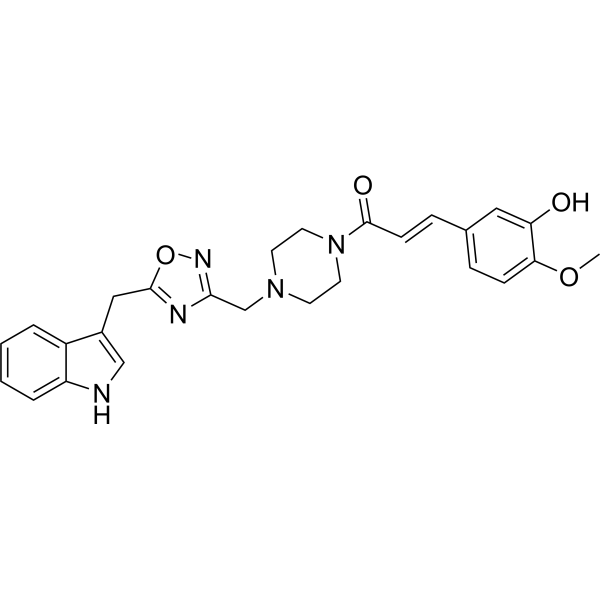
    Nrf2 activator-9 (compound D-36) is an Nrf2 activator that inhibits oxidized low-density lipoprotein (oxLDL) and high glucose (HG)-induced apoptosis in HUVEC cells. Nrf2 activator-9 inhibits oxLDL and HG-induced vascular endothelial cell (VEC) injury and can effectively prevent and treat atherosclerosis .
    Nrf2 activator-9
  • HY-164813

    7-Ketocholesteryl-9-carboxynonanoate

    NF-κB Metabolic Disease
    oxLig-1 (7-Ketocholesteryl-9-carboxynonanoate) is the lipid moiety of oxidized low-density lipoprotein (oxLDL) and is a key ligand for β-glycoprotein I (β(2)-GPI). oxLig-1 causes nuclear translocation by activating the NF-κB pathway. oxLig-1 can be used in the study of atherosclerosis (AS) .
    oxLig-1
  • HY-143243

    Apoptosis NF-κB Keap1-Nrf2 Reactive Oxygen Species (ROS) Cardiovascular Disease
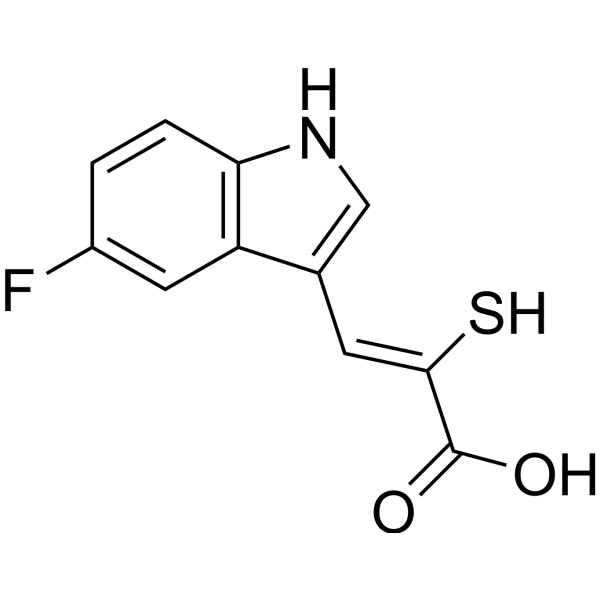
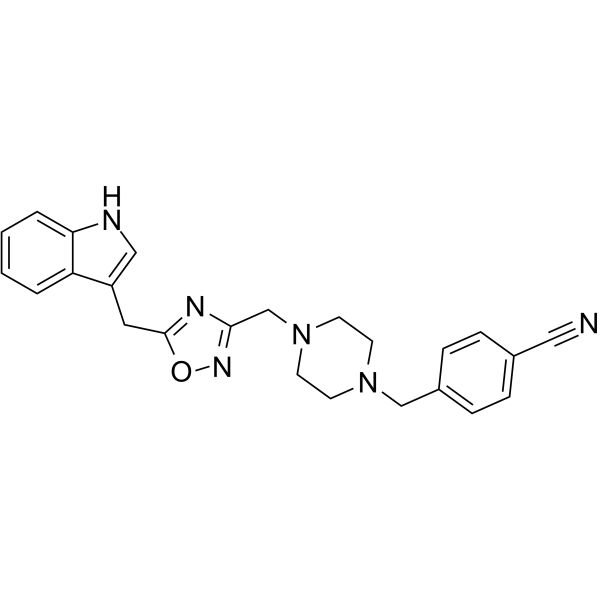
    Antioxidant agent-5 (compound D-6) is a potent antioxidant agent. Antioxidant agent-5 can inhibit oxLDL (oxidized low-density lipoprotein)-induced apoptosis and the expression of ICAM-1 and VCAM-1 in VECs. Antioxidant agent-5 suppresses oxLDL-induced increase of ROS level and nuclear translocation of NF-κB. Antioxidant agent-5 protects against oxLDL-induced endothelial injury by activating Nrf2/HO-1 anti-oxidation pathway .
    Antioxidant agent-5

Inquiry Online

Your information is safe with us. * Required Fields.

Salutation


Country or Region *

Applicant Name *


Organization Name *

Department *


Email Address *


Product Name *

Cat. No.


Requested quantity *

Phone Number *


Remarks

Inquiry Online

Inquiry Information

Product Name:
Cat. No.:
Quantity:
MCE Japan Authorized Agent:

