17 Results for "

pH sensitive fluorescent probe

" in MedChemExpress (MCE) Product Catalog:
Products (17)

17 Results for "pH sensitive fluorescent probe" in MCE Product Catalog:

5
5 Cited Publications
Cat. No.: HY-15940
CAS No.: 72088-94-9
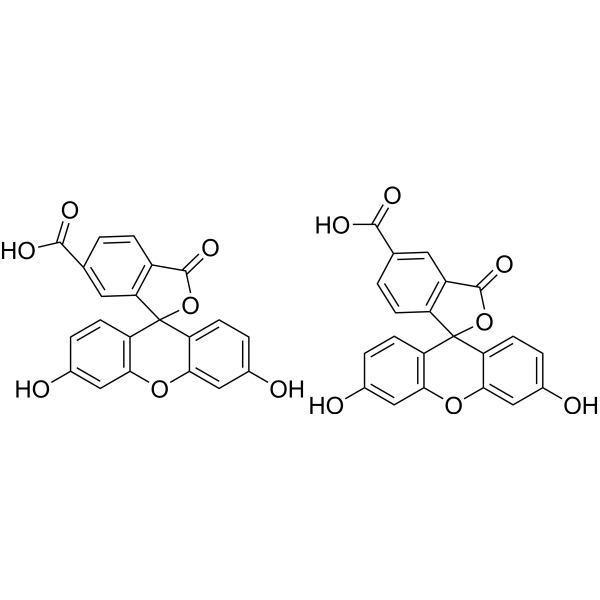
Synonyms: 5(6)-FAM; 5-(and-6)-Carboxyfluorescein mixed isomers
5(6)-Carboxyfluorescein (5(6)-FAM) is an amine-reactive pH-sensitive green fluorescent probe. 5(6)-Carboxyfluorescein (5(6)-FAM) can be used to label proteins, peptides and nucleotides. 5(6)-Carboxyfluorescein can be used for the detection of tumour areas in vivo .
loading...
    loading...
3
3 Cited Publications
Cat. No.: HY-118155
CAS No.: 3548-09-2
Purity:  99.56%
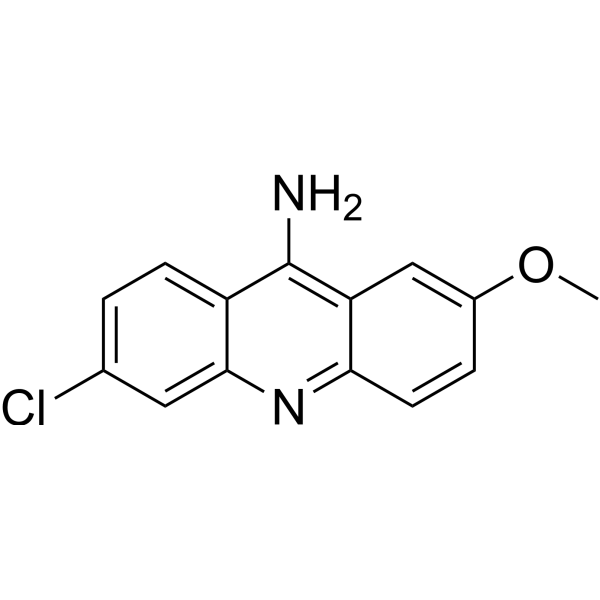
Synonyms: ACMA
9-Amino-6-chloro-2-methoxyacridine is a pH sensitive fluorescent probe. 9-Amino-6-chloro-2-methoxyacridine has been frequently used to measure changes in vacuolar pH when a specific substrate crosses the tonoplast through a putative H +/solute antiport system .
loading...
    loading...
2
2 Cited Publications
Cat. No.: HY-D1094
CAS No.: 126208-12-6
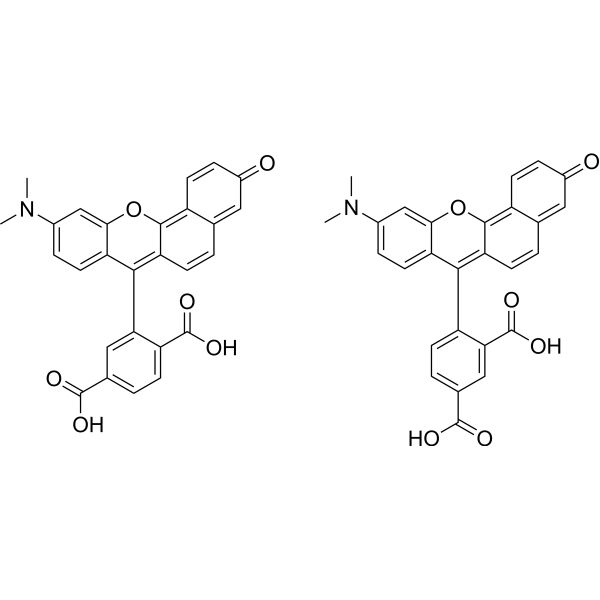
Synonyms: SNARF 1
Carboxy-SNARF 1 (5/6-mixture) (SNARF 1) is a fluorescent probe that is sensitive to pH (Ex: 488 nm). Carboxy-SNARF 1 (5/6-mixture) can be used for measurement pH. Carboxy-SNARF 1 (5/6-mixture) exhibits a significant emission shift from yellow-orange (Em: 580 nm) to deep red fluorescence (Em: 640 nm) under acidic and basic conditions (pH=7-8), respectively .
loading...
    loading...
Cat. No.: HY-D0077
CAS No.: 195136-58-4
Synonyms: Oregon green 488
Target:  

Fluorescent Dye

Research Areas:  

Others

2',7'-Difluorofluorescein (Oregon green 488) is a fluorescein derivative and a pH-sensitive fluorescent probe (pKa ~4.7). Upon excitation at 488 nm, 2',7'-Difluorofluorescein exhibits pH-sensitive fluorescence intensity through the formation of dianions, while its pH sensitivity decreases under excitation at 450 nm, allowing its use in ratiometric pH analysis. 2',7'-Difluorofluorescein can be used for the quantitative analysis of pH values in the range of 2-7 in submicron aerosol particles. 2',7'-Difluorofluorescein undergoes buffer-mediated and buffer-free excited-state proton transfer between different protonated forms, and its cationic form undergoes rapid excited-state deprotonation. 2',7'-Difluorofluorescein is resistant to photodegradation, maintains stable absorption and fluorescence properties within the physiological pH range, and serves as a fluorescent protein label, a component of Ca 2+ indicators, a fluorescent imaging agent, and an anisotropy probe .
loading...
    loading...
Cat. No.: HY-W110898
CAS No.: 2381-85-3
Target:  

Fluorescent Dye

Research Areas:  

Others

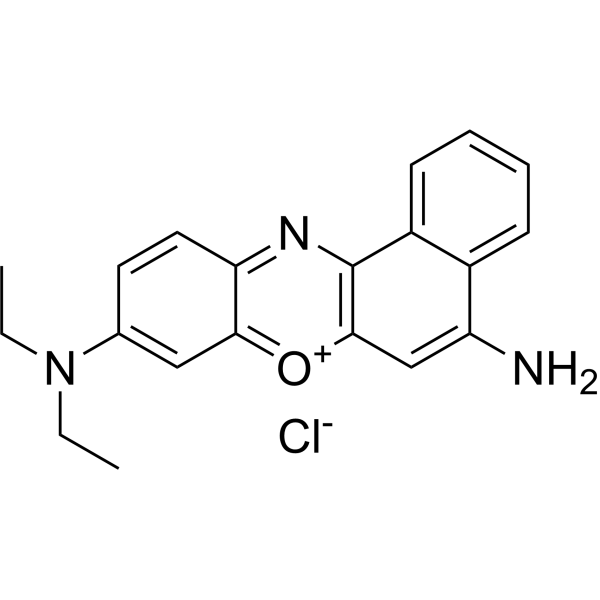
Nile blue chloride is a highly fluorescent and photostable organic dye. Nile blue chloride and fluorescein isothiocyanate (FITC) can be used to construct a ratiometric pH sensitive probe for tracking the pH of the extracellular fluid between cancer cells in realtime. Nile Blue chloride has the potential for the research of nonlinear optics .
loading...
    loading...
Cat. No.: HY-124473
CAS No.: 61419-02-1
Purity:  99.52%
Synonyms: NapHthafluorescein
Research Areas:  

Cancer

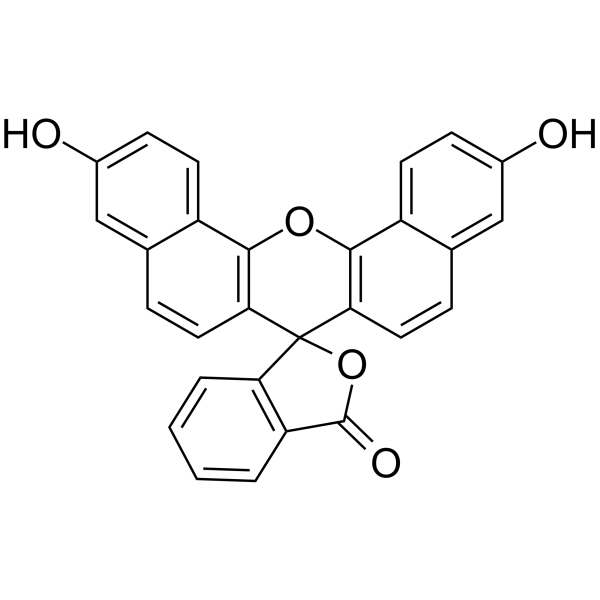
Naphthofluorescein inhibits the interaction between HIF-1 and Mint3. Naphthofluorescein suppresses Mint3-dependent HIF-1 activity and glycolysis in cancer cells and macrophages without cytotoxicity in vitro and adverse effect in vivo . Naphthofluorescein is also a fluorescent pH-sensitive probe that can be used for functional Cerenkov imaging .
loading...
    loading...
Cat. No.: HY-D1457
CAS No.: 152584-38-8
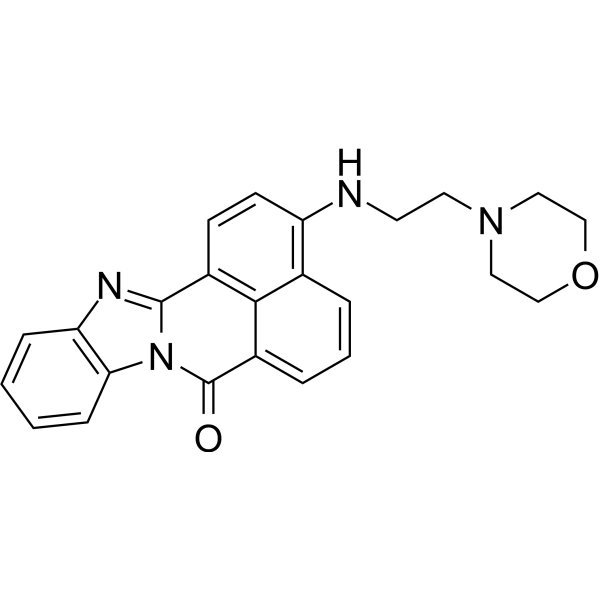
DND-189, a low-pH fluorescent probe, is sensitive to neutral and low pH range. DND-189 can be used to measure the pH of acidic organelles .
loading...
    loading...
Cat. No.: HY-157036
CAS No.: 2962939-33-7
Purity:  98.82%
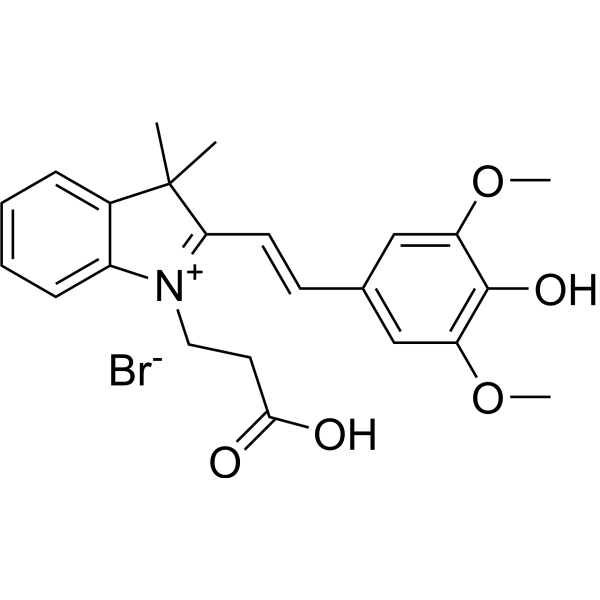
INSA is a a pH-sensitive fluorescent probe. INSA can simultaneously light up mitochondria (red emission) and lysosomes (green emission) for their internal pH differences .
loading...
    loading...
Cat. No.: HY-20794
CAS No.: 41175-50-2
Target:  

Fluorescent Dye

Research Areas:  

Others

8-Hydroxyjulolidine is a chromophore moiety of a fluorescent probe for the detection of weak acid ions. 8-Hydroxyjulolidine can be used to synthesize the salicylaldehyde derivative 9-formyl-8-hydroxyjulolidine, which exhibits sensitive detection ability to pH changes of hydrogen sulfide and silicate in aqueous solution .
loading...
    loading...
Cat. No.: HY-150175
CAS No.: 1786411-17-3
Target:  

Fluorescent Dye

Research Areas:  

Inflammation/Immunology

HKSOX-1 and its derivatives (HKSOX-1r and HKSOX-1m) are novel fluorescent probes designed for highly sensitive and selective detection of the superoxide anion radical (O2 •−) in cellular environments. These probes utilize an aryl trifluoromethanesulfonate group that undergoes O2 •−-mediated cleavage, releasing a free phenol and emitting fluorescence. They demonstrate excellent specificity and sensitivity across various pH ranges, withstand interference from strong oxidants and reductants typical in cellular contexts. HKSOX-1r, optimized for cellular retention, has been effectively employed in diverse assays including confocal imaging, flow cytometry, and zebrafish embryo studies, highlighting its utility in investigating O2 •− roles in inflammation, mitochondrial stress, and other physiological processes .
loading...
    loading...
Cat. No.: HY-D2817
Target:  

Fluorescent Dye

Research Areas:  

Others

FITC-PLL is a fluorescently labeled polycationic polypeptide probe composed of polylysine (PLL) and FITC (HY-66019), with a typical Ex/Em of 495/520 nm. The fluorescence intensity and lifetime of FITC-PLL are sensitive to pH and FITC density. FITC-PLL can be used for quantifying hapten receptor binding and endocytosis kinetics in macrophages, as a patternable substrate for neuron guidance, for negatively charged phospholipid membrane binding and transmembrane transport, and for live-cell imaging of starch nanoparticle conjugates and lysosome labeling .
loading...
    loading...
Cat. No.: HY-D1470
CAS No.: 210832-86-3
Target:  

Fluorescent Dye

Research Areas:  

Others

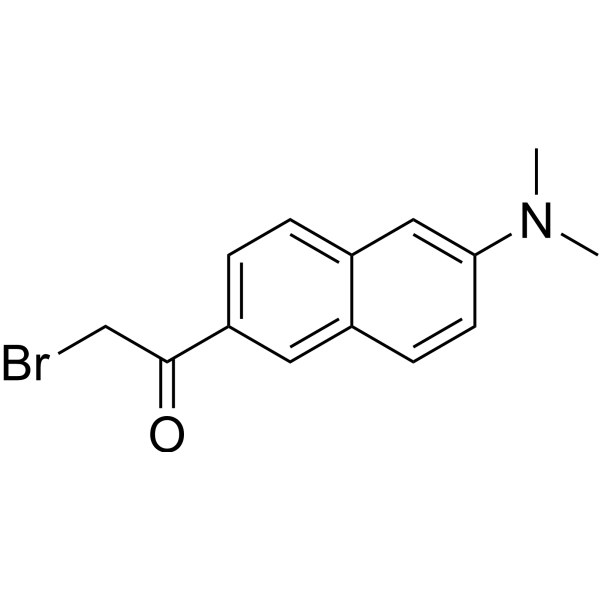
BADAN is a thiol-reactive, environment-sensitive fluorescent probe used for site-specific labeling of protein cysteine residues to detect protein topology, local polarity, protein-lipid interactions, and conformational changes. The bromoacetyl group of BADAN covalently binds to cysteine thiols, and its fluorescence originates from the intramolecular charge transfer (ICT) excited state. The emission peak position varies with the polarity of the surrounding medium: it blue-shifts to approximately 488 nm in nonpolar environments (such as the hydrophobic core of lipid bilayers) and red-shifts to approximately 496-507 nm in polar environments (such as aqueous phases), independent of enzymes, pH, or membrane potential. Ex = 380-402 nm; Em = 400-600 nm .
loading...
    loading...
Cat. No.: HY-W024881
CAS No.: 184351-56-2
Synonyms: 2,3,3-Trimethylindolenine-5-sulfonic acid potassium salt
Research Areas:  

Cancer

Potassium 2,3,3-trimethylindole-5-sulfonate (2,3,3-Trimethylindolenine-5-sulfonic acid potassium salt) is a sulfonated indoline compound, and also serves as the starting indole raw material for the synthesis of pH-sensitive near-infrared cyanine dye HCyC-646 and near-infrared fluorescent probe IR-793. Potassium 2,3,3-trimethylindole-5-sulfonate can be used in lung adenocarcinoma-related research .
loading...
    loading...
Cat. No.: HY-D2998
CAS No.: 2567068-39-5
ONOO-LysopH is a new Rhodamine-based near-infrared fluorescent probe. ONOO-LysopH is acid-sensitive, exhibiting rapid near-infrared fluorescence enhancement around 686 nm under acidic pH conditions. ONOO-LysopH also displays a rapid NIR turn-on fluorescence around 678 nm for ONOO− at physiological pH. ONOO-LysopH can target lysosomes to track lysosomal pH changes and image endogenous/exogenous ONOO− in live cells. ONOO-LysopH is applicable for cell imaging ONOO− and tracking lysosomal pH changes .
loading...
    loading...
Cat. No.: HY-D3129
Target:  

Fluorescent Dye

Research Areas:  

Others

Ratio-pHCL-1 is a fluorescent probe for quantitative ratiometric pH imaging in biological systems. Ratio-pHCL-1 consists of an acrylamide 1,2-dioxetane chemiluminescent scaffold and a linked pH-sensitive carbon fluorescein fluorophore, and functions via chemically initiated electron exchange luminescence (CIEEL) decomposition and chemiluminescence resonance energy transfer (CRET). Ratio-pHCL-1 can cross cell membranes and accumulate intracellularly, enabling pH measurement within the range of 6.8-8.4 .
loading...
    loading...
Cat. No.: HY-D3148
CAS No.: 1804107-88-7
Target:  

Fluorescent Dye

Research Areas:  

Others

TPE-Ph-In is a mitochondria-targeted voltage-sensitive probe that can be used for mitochondrial membrane potential detection, mitochondrial imaging of animal and plant cells and tissues, mouse sperm activity indication, and detection of mitochondrial membrane potential changes associated with early apoptosis. TPE-Ph-In is non-fluorescent in solution, but emits strong fluorescence when aggregated via restriction of intramolecular rotation/movement, and its fluorescence intensity is directly correlated with local probe concentration or mitochondrial membrane potential level. TPE-Ph-In can penetrate cell membranes, target mitochondria through charge-dependent accumulation, has low cytotoxicity and high photostability, and enables super-resolution imaging of plant mitochondrial fission, fusion and cristae structures. The excitation wavelengths of TPE-Ph-In include 450 nm, 488 nm, and 489 nm, while its emission wavelengths include 551-661 nm, 660 nm, and 694 nm. TPE-Ph-In can be used for studies on mitochondrial dysfunction associated with early apoptosis .
loading...
    loading...
Cat. No.: HY-D3103
CAS No.: 1027058-07-6
Target:  

Fluorescent Dye

Research Areas:  

Others

CMTDP is a Fluorescent probe for detecting local polarity changes around the Cys34 domain of bovine serum albumin during pH-induced N→B conformational transition. It is a thiol-specific and polarity-sensitive probe; it covalently labels the free cysteine residue at position 34 (Cys34) of bovine serum albumin, and its fluorescence maximum emission wavelength shifts in response to solvent polarity, but not to pH and temperature. When labeled to BSA, as the local polarity around the Cys34 domain increases with rising pH, the probe shows a bathchromic shift in fluorescence emission wavelength and a decrease in fluorescence intensity, which allows quantification of the local polarity change via the relationship between emission wavelength shift and dielectric constant. CMTDP itself has absorption peaks at ~392 and 508 nm, and CMTDP-labeled BSA has excitation maxima at 376 and 470 nm at pH 6.0, with the shorter-wavelength excitation peak red-shifting as pH increases while the longer one remains stable; when excited at 470 nm, the fluorescence emission maximum shifts from 570 nm at pH 6.0 to 577 nm at pH 9.1, while free CMTDP at pH 7.4 has an emission maximum at 621 nm. The excitation/emission wavelengths for CMTDP-labeled BSA are Ex/Em = 376/570 nm at pH 6.0, Ex/Em = ~376+/573 nm at pH 7.4, Ex/Em = ~376+/575 nm at pH 8.0, Ex/Em = ~376+/577 nm at pH 9.1, and for free CMTDP at pH 7.4, Ex/Em (when excited at 470 nm) = 470/621 nm[1].
loading...
    loading...
  • 1

