1. Search Result
Search Result
Results for "

phosphatidylglycerol

" in MedChemExpress (MCE) Product Catalog:

25

Inhibitors & Agonists

8

Biochemical Assay Reagents

1

Peptides

2

Isotope-Labeled Compounds

9

Oligonucleotides

Cat. No. 상품명 Target 연구분야 Chemical Structure
  • HY-W251428

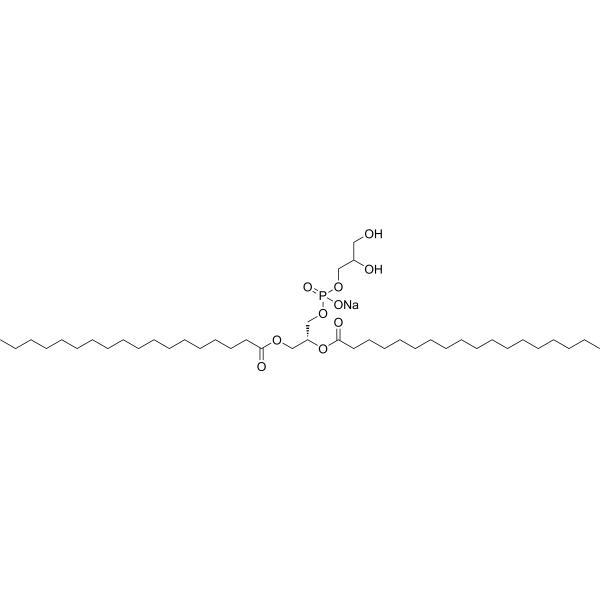
    Egg PG

    Biochemical Assay Reagents Others
    Phosphatidylglycerols (PG) is a selective inhibitor targeting the TLR4 accessory protein CD14/MD-2 complex, inhibiting LPS or virus (such as RSV)-mediated inflammatory signaling pathways through competitive binding. Phosphatidylglycerols directly bind to viral particles to block infection, inhibit COX-2 expression to reduce the release of inflammatory factors (IL-6, IL-8), and improve oxidative stress by regulating mitochondrial membrane phospholipid remodeling. Phosphatidylglycerols can be taken orally or by inhalation and can be used in the study of chronic inflammatory diseases (such as atherosclerosis) and respiratory viral infections (such as RSV) .
    Phosphatidylglycerols (egg) sodium salt
  • HY-145742

    DSPG sodium

    Liposome Cardiovascular Disease
    1,2-Distearoyl-sn-Glycero-3-Phosphatidylglycerol (sodium) is the component of liposomes for drug delivery .
    1,2-Distearoyl-sn-Glycero-3-Phosphatidylglycerol sodium
  • HY-112307A

    Liposome Cardiovascular Disease Inflammation/Immunology
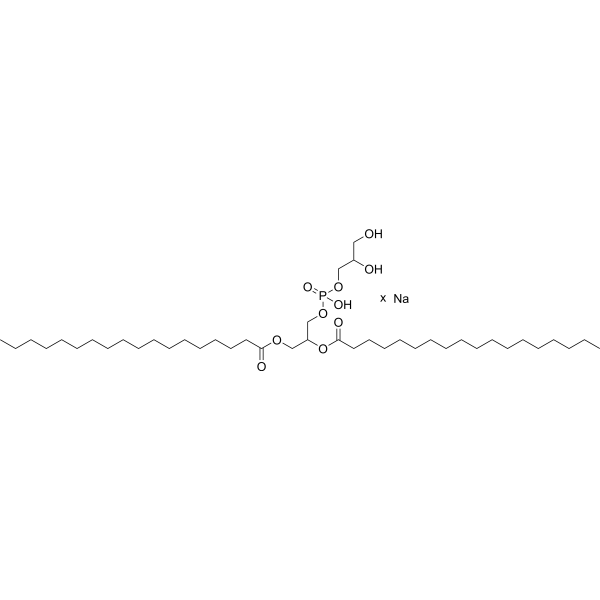
    (Rac)-1,2-Distearoyl-sn-Glycero-3-Phosphatidylglycerol (sodium) is an anionic phospholipid, can be studied for drug delivery and the synthesis of liposomes. 1,2-Distearoyl-sn-Glycero-3-Phosphatidylglycerol-containing liposomes can induce Tregs that are specific for the liposomes’ cargo. 1,2-Distearoyl-sn-Glycero-3-Phosphatidylglycerol is taken up by antigen-presenting cells mediated via complement component 1q (C1q) .
    (Rac)-1,2-Distearoyl-sn-Glycero-3-Phosphatidylglycerol sodium
  • HY-142980

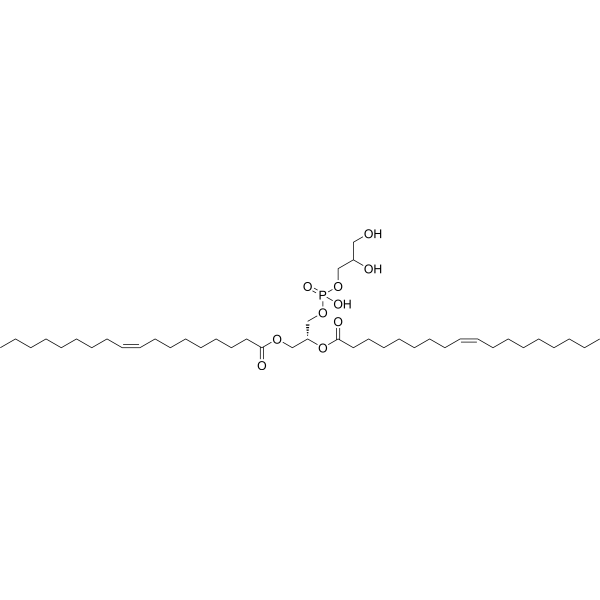
    Dioleoylphosphatidylglycerol

    Liposome Inflammation/Immunology
    DOPG (Dioleoylphosphatidylglycerol) is a negatively charged phosphatidylglycerol phospholipid. DOPG is abundant in prokaryotic cell membranes and mitochondria, and has a low phase transition temperature and a tendency to form stable vesicles. DOPG inhibits the production of inflammatory mediators in macrophages in response to heat shock protein B4 (HSPB4)-activated toll-like receptor 2 (TLR2). DOPG is applicable to studies of membrane biology, drug-membrane interactions (especially in systems targeting negatively charged membranes), construction of drug delivery carriers, as well as research on sterile corneal inflammation and wound healing promotion .
    DOPG
  • HY-174940

    Biochemical Assay Reagents Others
    E. coli Extract Polar is a polar lipid extract of Escherichia coli containing phosphatidylethanolamine, phosphatidylglycerol, and cardiolipin for reconstitution of membrane proteins.
    E. coli Extract Polar
  • HY-142991

    POPG

    Liposome Others
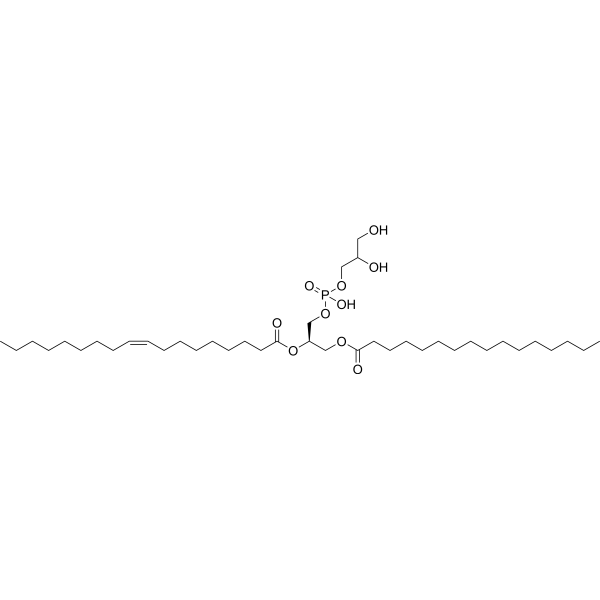
    1-Palmitoyl-2-oleoyl-sn-glycero-3-phosphatidylglycerol (POPG) is an anionic phosphatidylglycerol that often serves as a key component to co-construct model phospholipid bilayers with phosphatidylcholine (e.g., at a 3:1 POPC:POPG ratio) for investigating the structure and dynamics of transmembrane proteins. 1-Palmitoyl-2-oleoyl-sn-glycero-3-phosphatidylglycerol acts as a fundamental material for mimicking the physicochemical properties of biological membranes and enables the elucidation of membrane protein interaction mechanisms .
    1-Palmitoyl-2-oleoyl-sn-glycero-3-phosphatidylglycerol
  • HY-148601

    DSPG

    Liposome Others
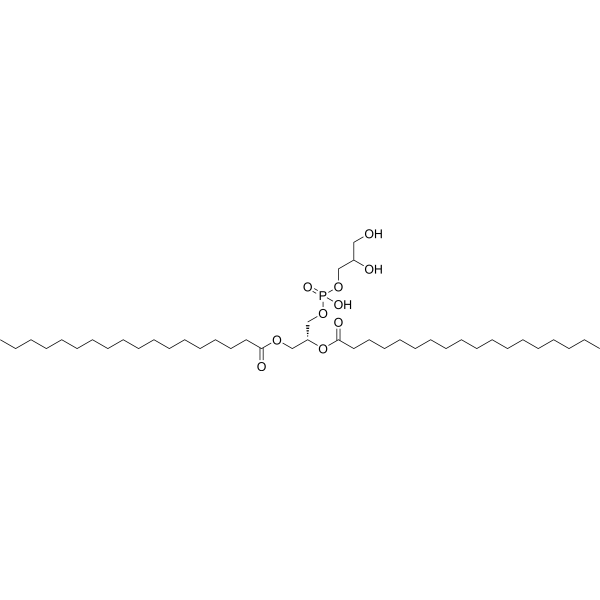
    1,2-Distearoyl-sn-Glycero-3-Phosphatidylglycerol is an anionic phospholipid, can be used for drug delivery and the synthesis of liposomes.
    1,2-Distearoyl-sn-Glycero-3-Phosphatidylglycerol
  • HY-146047

    Bacterial Infection
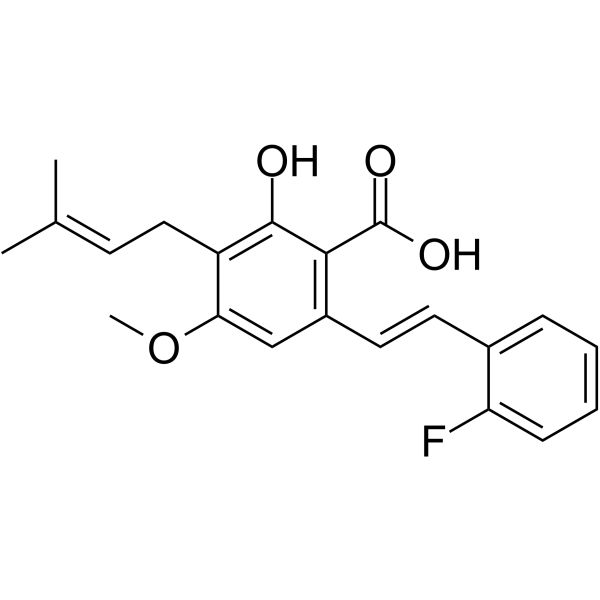
    Antibacterial agent 94 (compound 5b) is a potent antibacterial agent. Antibacterial agent 94 show antibacterial activities and show the capability of eradicating MRSA persisters. Antibacterial agent 94 has an effect on bacterial membrane. Antibacterial agent 94 interferes in phosphatidylglycerol (PG) synthesis pathway .
    Antibacterial agent 94
  • HY-178476

    Bacterial Reactive Oxygen Species (ROS) Infection
    Anti-MRSA agent 36 (Compound III13) is an antibacterial agent with strong anti MRSA activity (MIC = 1 μg/mL). Anti-MRSA agent 36 targets phosphatidylglycerol (PG) on bacterial membranes, disrupting membrane integrity, leading to DNA leakage and increased ROS. Anti-MRSA agent 36 has advantages such as low cytotoxicity, low hemolysis, difficulty in inducing drug resistance, and good plasma stability. Anti-MRSA agent 36 can be used for the study of skin abscess and systemic infection models .
    Anti-MRSA agent 36
  • HY-145742S

    Isotope-Labeled Compounds Liposome Cardiovascular Disease
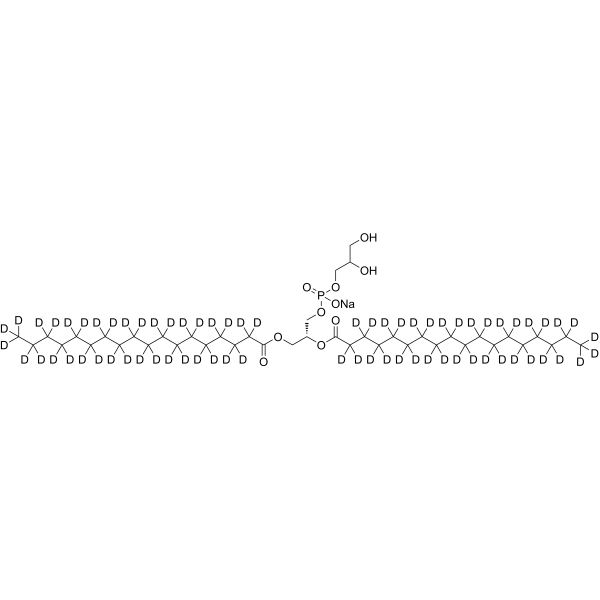
    1,2-Distearoyl-sn-Glycero-3-Phosphatidylglycerol-d70 (sodium) is deuterium labeled 1,2-Distearoyl-sn-Glycero-3-Phosphatidylglycerol. 1,2-Distearoyl-sn-Glycero-3-Phosphatidylglycerol (sodium) is the component of liposomes for drug delivery .
    1,2-Distearoyl-sn-Glycero-3-Phosphatidylglycerol-d70 sodium
  • HY-W344927

    (2R)-2,3-Bis(heptadecanoyloxy)propyl 2,3-dihydroxypropyl phosphate sodium

    Biochemical Assay Reagents Metabolic Disease
    1,2-Diheptadecanoyl-sn-Glycero-3-Phosphatidylglycerol (sodium) ((2R)-2,3-Bis(heptadecanoyloxy)propyl 2,3-dihydroxypropyl phosphate (sodium)) is an ester product.
    1,2-Diheptadecanoyl-sn-Glycero-3-Phosphatidylglycerol sodium
  • HY-175295A

    Bacterial Reactive Oxygen Species (ROS) Infection
    Anti-MRSA agent 33 iodide is an anti-Methicillin (HY-121544)-resistant Staphylococcus aureus (MRSA) agent, with MIC values of 2-4 μg/mL. Anti-MRSA agent 33 iodide demonstrates effective biofilm eradication and minimal cytotoxicity toward mammalian cells. Anti-MRSA agent 33 iodide specifically binds to phosphatidylglycerol (PG) on bacterial membranes, leading to membrane disruption, excessive production of ROS, and metabolic collapse, ultimately resulting in bacterial cell death. Anti-MRSA agent 33 iodide reduces bacterial load in a murine skin infection model .
    Anti-MRSA agent 33 iodide
  • HY-170423

    Biochemical Assay Reagents Others
    18:1 (Δ9-Trans) PG is a phosphatidylglycerol with a phosphoglycerol backbone .
    18:1 (Δ9-Trans) PG
  • HY-173587

    1,2-Bis(heptanoylthio) glycerophosphatidylglycerol sodium

    Phospholipase Metabolic Disease
    1,2-Bis(heptanoylthio)-sn-glycero-3-PG (1,2-Bis(heptanoylthio) glycerophosphatidylglycerol) sodium is a fatty acylthioesterified phosphatidylglycerol derivative that can be used to mimic the action of phospholipases or as a probe molecule for membrane fusion studies .
    1,2-Bis(heptanoylthio)-sn-glycero-3-PG sodium
  • HY-174158

    Bacterial Infection
    Antibacterial agent 270 (Compound 3e) is an antibacterial agent that acts on bacterial membrane components phosphatidylglycerol (PG), cardiolipin (CL), and bacterial DNA. Antibacterial agent 270 disrupts bacterial membrane structure and binds to DNA to interfere with genetic information transmission. Antibacterial agent 270 is promising for research of infections caused by methicillin-resistant Staphylococcus aureus (MRSA) .
    Antibacterial agent 270
  • HY-169160

    Bacterial Infection
    Anti-MRSA agent 18 (E17) is an inhibitor of MRSA with MIC values of 2 μg/mL for S. aureus and 4 μg/mL for MRSA, respectively. Anti-MRSA agent 18 interacts with bacterial cell membrane phosphatidylglycerol and cardiolipin, causing changes in cell membrane permeability and polarization, increased intracellular ROS, and DNA and protein leakage, thereby accelerating bacterial death .
    Anti-MRSA agent 18
  • HY-153924

    Biochemical Assay Reagents Metabolic Disease
    Di-22:6-BMP is a bisphospholipid and also a structural isomer of phosphatidylglycerol. Di-22:6-BMP serves as a biomarker for drug-induced phospholipidosis in rats .
    Di-22:6-BMP
  • HY-183340

    Bacterial Infection
    Antibacterial agent 341 is an anti-bacterial agent. Antibacterial agent 341 shows broad-spectrum Gram-positive antibacterial activity. Antibacterial agent 341 targets phosphatidylglycerol (PG) and cardiolipin (CL) in bacterial cell membranes, induces sustained depolarization of membranes, and disrupts the cell membrane integrity. Antibacterial agent 341 exhibits anti-infection activity against S. aureus-induced subcutaneous abscesses in mice .
    Antibacterial agent 341
  • HY-W783339

    Others Others
    17:1 Lyso PG sodiumis a phosphatidylglycerol.
    17:1 Lyso PG sodium
  • HY-151998S

    Isotope-Labeled Compounds Metabolic Disease
    DMPG-d54 is the deuterium labeled DMPG (1,2-Dimyristoyl-sn-glycero-3-phosphatidylglycerol). DMPG is a lipid that can be used to prepare lipid nanoparticles (LNPs) for drug delivery.
    DMPG-d54
  • HY-157626

    Others Others
    16:0-22:6 PG (sodium)is a phosphatidylglycerol.
    16:0-22:6 PG sodium
  • HY-W725735

    Others Metabolic Disease
    15:0-18:1 PG (sodium)is a phosphatidylglycerol.
    15:0-18:1 PG sodium
  • HY-183751

    Bacterial Reactive Oxygen Species (ROS) Infection
    Antibacterial agent 346 (Compound H14d) is a broad-spectrum Antibacterial agent and BsFtsZ inhibitor, with an IC50 of 69.67 μg/mL against BsFtsZ. Antibacterial agent 346 selectively binds to phosphatidylglycerol, disrupts membrane integrity, increases permeability, triggers depolarization and causes intracellular protein leakage. Antibacterial agent 346 induces intracellular ROS accumulation, which in turn triggers oxidative stress and cell death. Antibacterial agent 346 eradicates mature biofilms formed by Gram-positive and Gram-negative bacteria. Antibacterial agent 346 exhibits antibacterial activity against methicillin-resistant Staphylococcus aureus and Acinetobacter baumannii. Antibacterial agent 346 can be used in the research of bacterial infections .
    Antibacterial agent 346
  • HY-P10519A

    Bacterial Reactive Oxygen Species (ROS) Infection
    Brevicidine TFA is an antimicrobial peptide with selective bactericidal activity against Gram-negative pathogens. Brevicidine TFA disrupts bacterial morphology by binding to lipopolysaccharide (LPS) on the bacterial cell membrane to form pores. Brevicidine TFA causes dissipation of intracellular proton motive force, outer membrane damage, inhibition of ATP biosynthesis and reactive oxygen species accumulation in bacterial cells. As a sensitizer, Brevicidine TFA exerts synergistic activity when combined with a variety of conventional antibiotics .
    Brevicidine TFA
  • HY-182798

    Bacterial Reactive Oxygen Species (ROS) Infection
    Antibacterial agent 337 is an antibacterial agent. Antibacterial agent 337 specifically interacts with PG in bacterial cell membranes, triggering membrane disruption, membrane depolarization, increased permeability, cytoplasmic leakage, ROS accumulation and rapid bacterial death. Antibacterial agent 337 inhibits biofilm formation and disrupts mature biofilms. Antibacterial agent 337 exhibits potent in vivo antibacterial efficacy in a mouse model of Staphylococcus aureus skin abscess. Antibacterial agent 337 can be used in studies of Gram-positive bacterial infections, including methicillin-resistant Staphylococcus aureus infections, vancomycin-resistant Enterococcus faecalis infections and bacterial biofilm infections .
    Antibacterial agent 337

온라인 문의

Your information is safe with us. * Required Fields.

호칭


Country or Region *

고객명 *


회사명 *

Department *


메일주소 *


상품명 *

Cat. No.


Requested quantity *

전화번호 *


비고

온라인 문의

Inquiry Information

상품명:
Cat. No.:
수량:
MCE Japan Authorized Agent:

