
Search Result
Results for "
photosynthesis
" in MedChemExpress (MCE) Product Catalog:
9
Biochemical Assay Reagents
8
Isotope-Labeled Compounds
| Cat. No. |
Product Name |
Target |
Research Areas |
Chemical Structure |
-
- HY-18569
-
-
-
- HY-P2962
-
|
TG
|
Biochemical Assay Reagents
|
Infection
Inflammation/Immunology
|
|
Transglutaminase, Streptoverticillium mobaraense (TG) is an enzyme that forms cross-links between protein molecules. Transglutaminase, Streptoverticillium mobaraense attaches proteins and peptides to small molecules, polymers, surfaces, DNA and other proteins. Transglutaminase, Streptoverticillium mobaraense is widely used in food applications in the meat, fish, dairy and baking industries .
|
-
-
- HY-W127709
-
|
|
Environmental Pollutants
Biochemical Assay Reagents
|
Others
|
|
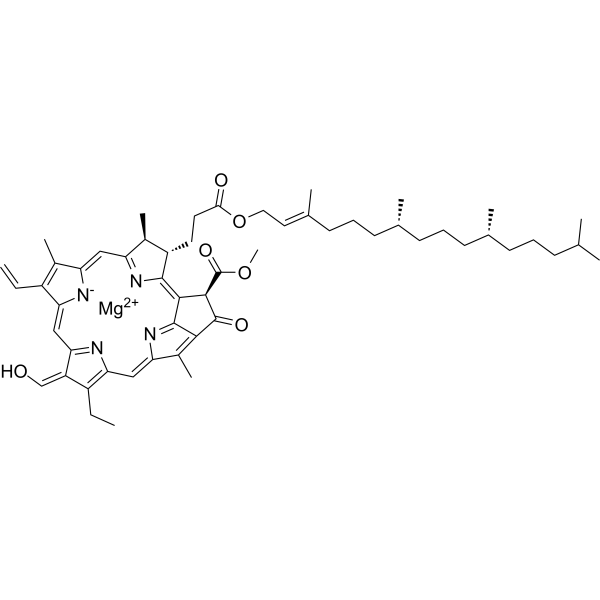
Chlorophyll b is an orally active tetrapyrrole derivative and pigment. Chlorophyll b can be obtained from photosynthetic organisms such as plants and algae. Chlorophyll b acts as a hydrogen donor and increases Glutathione levels. Chlorophyll b has antioxidant activity and functionally replaces chlorophyll a in photosystem II to participate in photosynthesis. Chlorophyll b reduces Cisplatin (HY-17394)-induced DNA damage, chromosome instability, and oxidative stress. Chlorophyll b is mainly used in the study of plant photosynthesis mechanism .
|
-
-
- HY-B0860
-
Diuron
2 Publications Verification
|
Environmental Pollutants
Reactive Oxygen Species (ROS)
Herbicide
MDM-2/p53
|
Cancer
|
|
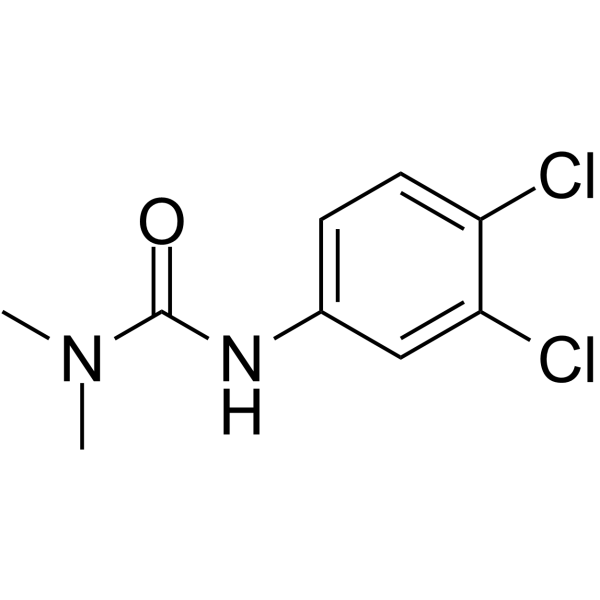
Diuron is an orally active phenylurea herbicide. Diuron inhibits photosynthesis in plants by blocking the formation of ATP and NADH. Diuron increases the production of ROS. Diuron increases expression of p53 in certain cell lines. Diuron has herbicidal activity against annual and perennial broadleaf weeds and grass weeds. Diuron promotes DMBA/BBN-induced bladder cancer. Diuron can be used in breast cancer research .
|
-
-
- HY-N6614
-
|
|
VD/VDR
|
Others
|
|
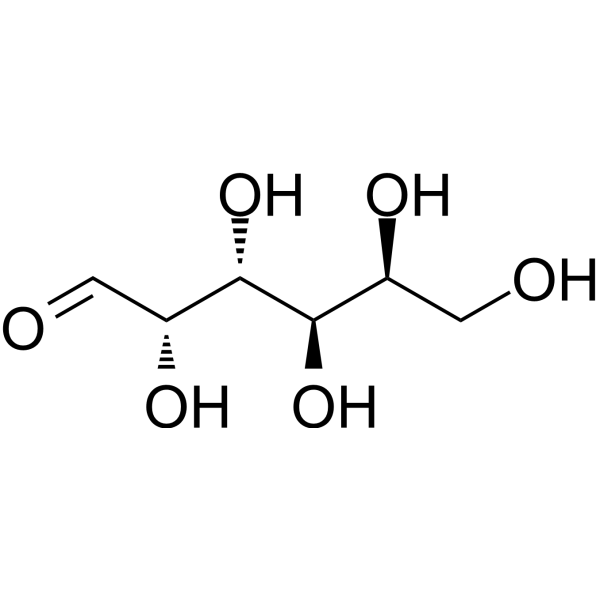
L-Galactose is a key intermediate in the de novo synthesis of vitamin C (L-ascorbic acid) in plants. It is converted into L-ascorbic acid by participating in the VTC2 cycle and enzymatic steps, exerting antioxidant activities, maintaining cell structure, and participating in the carbon flow distribution of photosynthesis. L-Galactose can be used to study the analysis of the synthesis pathway of vitamin C in plant physiology .
|
-
-
- HY-143693
-
|
|
Liposome
|
Others
|
|
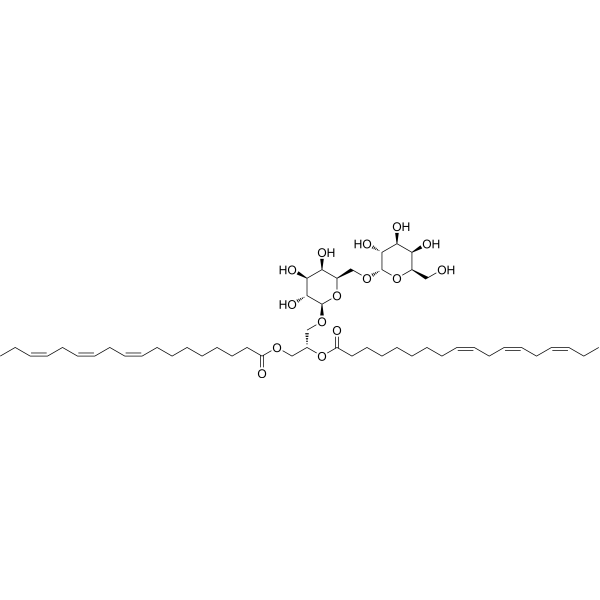
DGDG, a chloroplast lipid, is a bilayer-forming lipid. DGDG is important for photosynthesis, and can be used for drug delivery .
|
-
-
- HY-116954
-
|
|
DNA/RNA Synthesis
|
Others
|
|
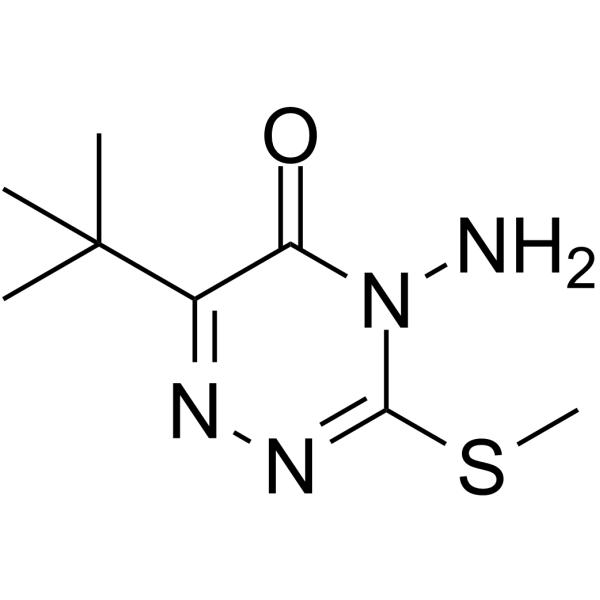
Metribuzin is a low-cost non-selective herbicide belonging to the chemical class of triazinones. Metribuzin inhibits plant DNA synthesis and acts on photosystem II, ultimately suppressing photosynthesis. Metribuzin provides excellent control of important annual grass and broadleaf weeds .
|
-
-
- HY-B1991
-
|
|
Environmental Pollutants
Herbicide
|
Others
|
|
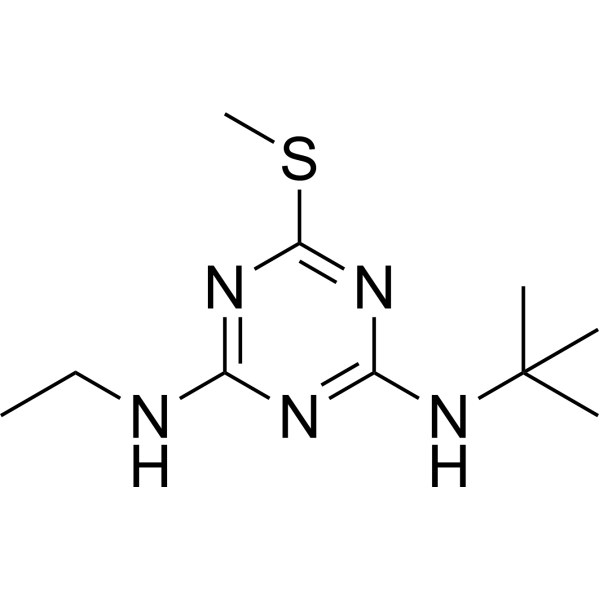
Terbutryn is a photosystem II inhibitor and aquatic toxicant. Terbutryn interferes with photosynthesis by inhibiting photosystem II. Terbutryn reduces the production of periphyton by acting directly on periphytic algae in artificial indoor streams. Terbutryn reduces the population growth of Lumbriculus variegatus in artificial indoor streams through indirect effects associated with the reduction of food sources for periphyton. The overall 50% dissipation time (DT50) of Terbutryn in the water of artificial indoor streams is 28 d .
|
-
-
- HY-119176
-
|
|
Environmental Pollutants
Protoporphyrinogen IX oxidase
Herbicide
|
Others
|
|
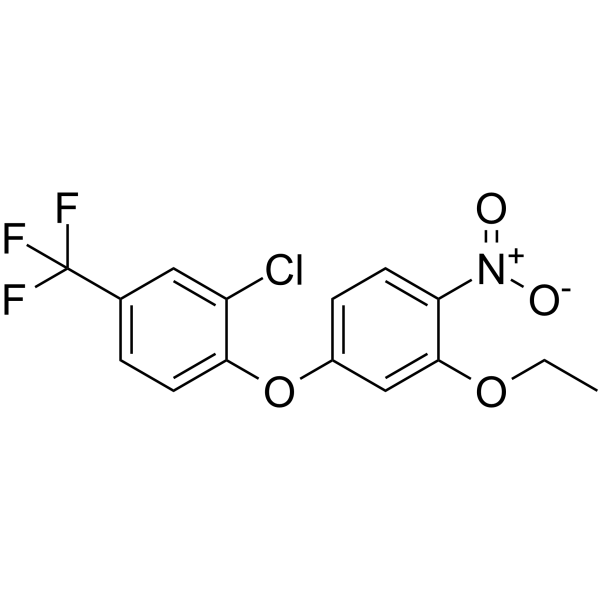
Oxyfluorfen is a pre- and post-emergence diphenyl ether herbicide to control annual broad-leaved and grass weeds. Oxyfluorfen is a protoporphyrinogen oxidase inhibitor and inhibits photosynthesis by blocking chlorophyll synthesis. Oxyfluorfen can inhibit cell growth. Oxyfluorfen induces DNA damage and exhibits toxicity toward aquatic organisms such as Paramisgurnus dabryanus. Oxyfluorfen has genome-level deleterious effects on fish that can lead to stunted skeletal growth. Oxyfluorfen induces transverse limb deficiency or craniosynostosis .
|
-
-
- HY-164642
-
|
RuBP
|
Endogenous Metabolite
|
Metabolic Disease
|
|
Ribulose 1,5-bisphosphate (RUBP) is a vital photosynthetic intermediate and substrate. Ribulose 1,5-bisphosphate acts as both product and substrate for Thermococcus kodakarensis KOD1 R15Pi. Ribulose 1,5-bisphosphate tightly binds to inactive RuBP carboxylase sites in plant leaves.Ribulose 1,5-bisphosphate serves as the key substrate for CO2 fixation in photosynthesis. Ribulose 1,5-bisphosphate supports carboxylation and regeneration processes in photosynthesis. Ribulose 1,5-bisphosphate determines the dynamic transition temperature of photosynthetic control. Ribulose 1,5-bisphosphate can be used for photosynthesis and enzyme mechanism research .
|
-
-
- HY-111973
-
|
|
Phytohormone
iGluR
|
Neurological Disease
|
|
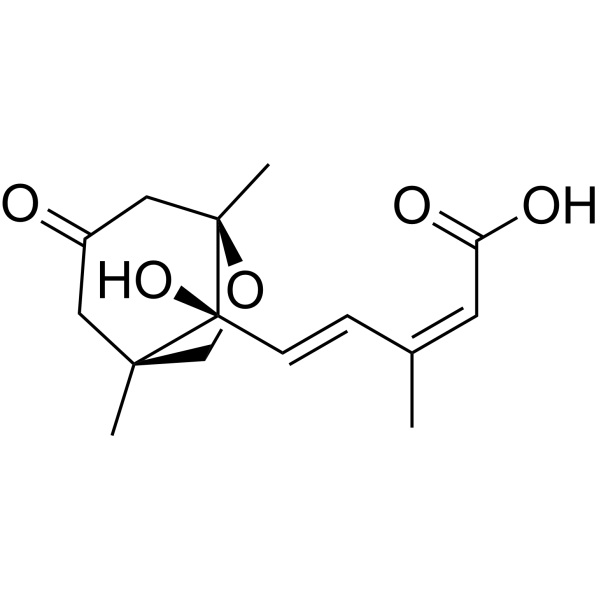
Phaseic acid is a Abscisic acid terpenoid catabolite that can able to activate a subset of Abscisic acid repectors. Phaseic acid is a plant hormone associated with photosynthesis arrest and abscission. Phaseic acid is the antagonist for NMDA-type glutamate receptor (NMDAR) that inhibits NMDAR currents with an IC50 of 34.37 μM. Phaseic acid reduces intracellular calcium influx, and exhibits neuroprotective effect .
|
-
-
- HY-B2024
-
|
|
Environmental Pollutants
Herbicide
|
Others
|
|
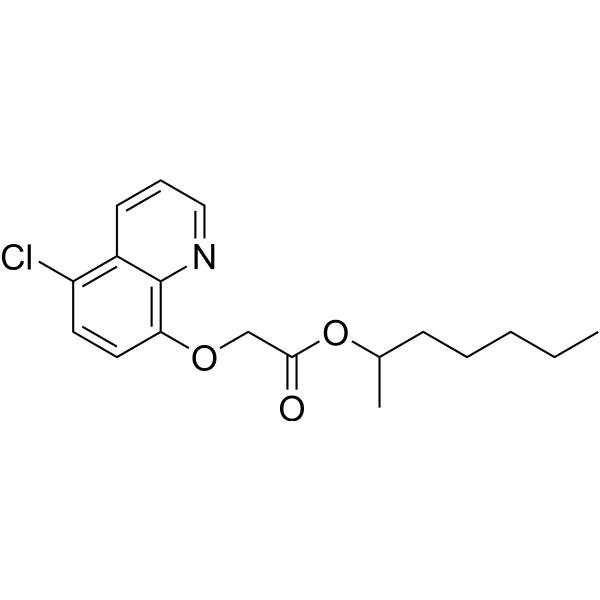
Cloquintocet-mexyl is a herbicide safener. Cloquintocet-mexyl promotes the expression of genes related to chlorophyll synthesis (such as GTR and PPO) and chlorophyll-binding protein genes (CBP), increases the chlorophyll content, thereby promoting photosynthesis and reducing oxidative stress. Cloquintocet-mexyl improves wheat tolerance to Fomesafen (HY-B2010) .
|
-
-
- HY-18569R
-
|
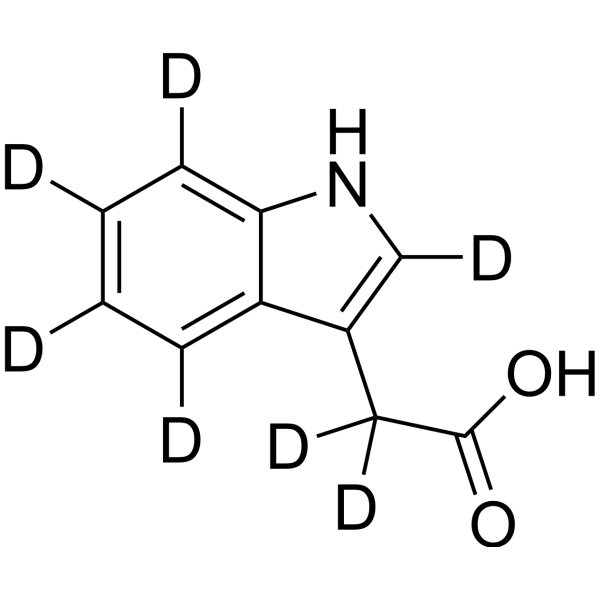
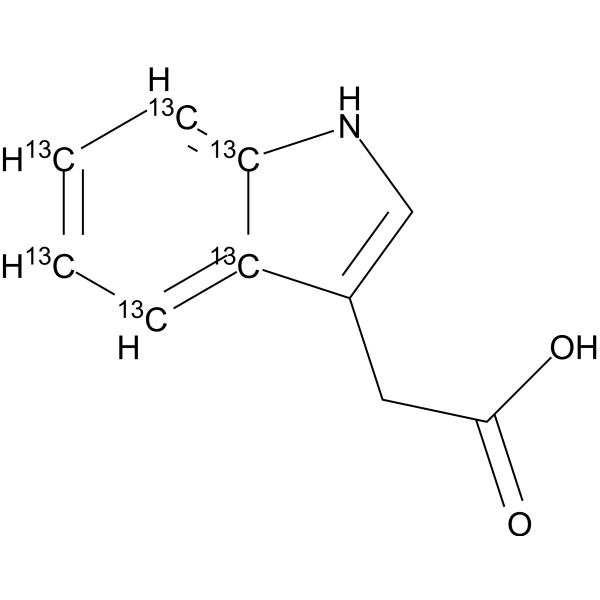
Indole-3-acetic acid (standard); 3-IAA (standard)
|
Molecular Glues
Reference Standards
Endogenous Metabolite
|
Others
|
|
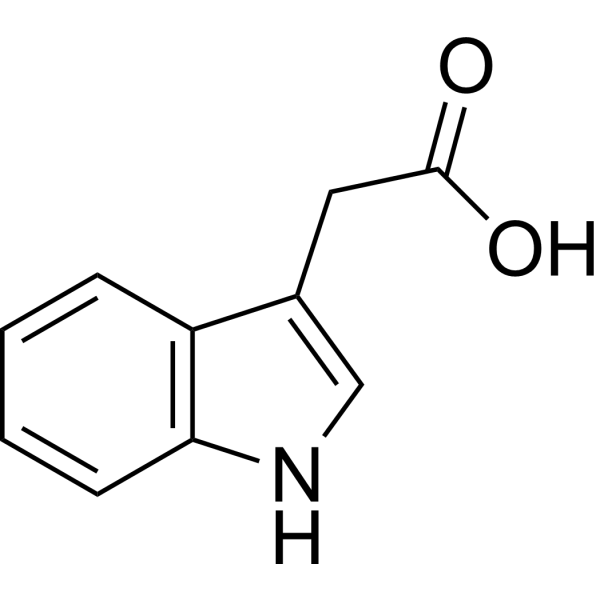
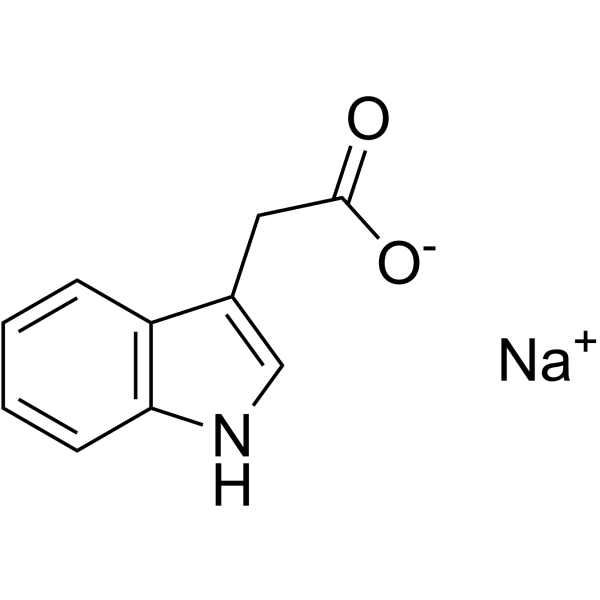
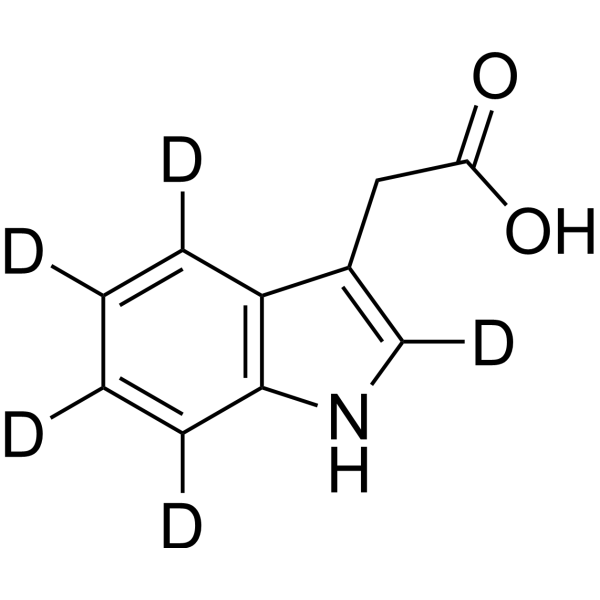
3-Indoleacetic acid (Standard) is the analytical standard of 3-Indoleacetic acid. This product is intended for research and analytical applications. 3-Indoleacetic acid is is an IAA hormone and growth regulator that can promote plant nutritional growth through processes such as cell expansion, differentiation, morphogenesis, and organogenesis .
|
-
-
- HY-B1853
-
|
|
Environmental Pollutants
Apoptosis
ERK
Herbicide
MEK
|
Cardiovascular Disease
|
|
Simetryn is a triazine herbicide that exerts teratogenicity. Simetryn inhibits photosynthesis by blocking electron transfer in the chloroplast photosystem II and activates the MEK/Erk signaling pathway. Simetryn triggers vascular and developmental abnormalities in zebrafish and tadpoles, suppresses proliferation, enhances apoptosis, and induces malformations. Simetryn serves as a tool to establish a zebrafish model for studying arteriovenous malformations and related pathogenesis. Simetryn controls paddy weeds and can be used for research on developmental and vascular disorders .
|
-
-
- HY-N0097R
-
|
DL-Guanosine (Standard); Vernine (Standard)
|
Reference Standards
HSV
Endogenous Metabolite
|
Infection
|
|
Guanosine (Standard) is the analytical standard of Guanosine. This product is intended for research and analytical applications. Guanosine (DL-Guanosine) is a purine nucleoside comprising guanine attached to a ribose (ribofuranose) ring via a β-N9-glycosidic bond. Guanosine possesses anti-HSV activity.
In Vitro: Guanosine can be phosphorylated to become guanosine monophosphate (GMP), cyclic guanosine monophosphate (cGMP), guanosine diphosphate (GDP), and guanosine triphosphate (GTP). These forms play important roles in various biochemical processes such as synthesis of nucleic acids and proteins, photosynthesis, muscle contraction, and intracellular signal transduction (cGMP).
|
-
-
- HY-136375
-
-
-
- HY-B0866
-
-
-
- HY-W127745
-
|
Isovegetable alcohol
|
Environmental Pollutants
Biochemical Assay Reagents
|
Others
|
|
Isophytol is a diterpene alcohol commonly found in various plant species, especially in chloroplasts, where it plays a role in photosynthesis. Isophytols have unique chemical properties that make them important ingredients in a variety of industrial processes, including the production of perfumes, essences and cosmetics. It also has potential medicinal properties, including antioxidant and anti-inflammatory effects.
|
-
-
- HY-N7092A
-
|
L-arabino-2-Hexulose, 95%
|
Endogenous Metabolite
|
Metabolic Disease
|
|
L-(+)-Fructose, 95% (L-arabino-2-Hexulose, 95%) is the L-isomer of D-Fructose (HY-N7092). L-(+)-Fructose, 95% participates in glycolysis and gluconeogenesis, and can be used to study photosynthesis and carbohydrate storage in plant biology. L-(+)-Fructose, 95% is applicable for investigating the activity of fructokinase and other fructose-metabolizing enzymes .
|
-
-
- HY-W725574
-
|
BAS 29095
|
Photosystem II
|
Others
|
|
Dimidazon (BAS 29095) is a weak electron transport inhibitor targeting photosystem II (PSII). Dimidazon inhibits electron transfer from the primary electron acceptor Q in PSII to photosystem I. Dimidazon is promising for research of photosynthesis regulation and weed control .
|
-
-
- HY-121242
-
|
VEL-5026
|
Photosystem II
|
Others
|
|
Buthidazole is a selective herbicide for weed control in corn. Buthidazole inhibits photosynthetic electron transport at two distinct sites in the photosynthetic electron transport chain. The major site of inhibition was on the reducing side of photosystem II. Another site of electron transport inhibition is on the oxidizing side of photosystem II. Buthidazole inhibits corn photosynthesis and prevents starch accumulation in bundle sheath chloroplasts and some ultrastructural disruption of mesophyl chloroplasts of corn plants .
|
-
-
- HY-N11913
-
|
|
Biochemical Assay Reagents
|
Others
|
|
Siderin is a selective Photosystem II (PSII) inhibitor. Siderin inhibits ATP synthesis by blocking electron transport at the donor and acceptor sides of PSII Siderin can be used in the study of plant photosynthesis .
|
-
-
- HY-W145500
-
|
Sedoheptulosan
|
Biochemical Assay Reagents
|
Others
|
|
Sedoheptulose anhydride is a compound belonging to the class of carbohydrates. It is a derivative of sedoheptulose, a seven-carbon sugar. Sedoheptulose anhydride is commonly used in biochemistry as a precursor for various metabolic pathways. It can be converted into Sedoheptulose 1,7-bisphosphate, which is an important molecule for photosynthesis and carbon fixation. In addition to its use in biochemistry, Sedoheptulose anhydride has applications in cancer research.
|
-
-
- HY-128736B
-
|
|
Endogenous Metabolite
|
|
|
D-2-Phosphoglyceric acid is an important metabolic intermediate that has the activity of promoting cellular energy metabolism and regulating biosynthesis. D-2-Phosphoglyceric acid plays a key role in glycolysis and photosynthesis and is essential for the energy supply of cells. D-2-Phosphoglyceric acid can also be used as a biomarker to monitor the metabolic status in different organisms.
|
-
-
- HY-B0860S
-
|
|
Isotope-Labeled Compounds
Herbicide
Reactive Oxygen Species (ROS)
MDM-2/p53
|
Cancer
|
|
Diuron-d6 is the deuterium labeled Diuron (HY-B0860). Diuron is an orally active phenylurea herbicide. Diuron inhibits photosynthesis in plants by blocking the formation of ATP and NADH. Diuron increases the production of ROS. Diuron increases expression of p53 in certain cell lines. Diuron has herbicidal activity against annual and perennial broadleaf weeds and grass weeds. Diuron promotes DMBA/BBN-induced bladder cancer. Diuron can be used in breast cancer research .
|
-
-
- HY-B1875
-
-
-
- HY-148851
-
|
BChl a, from Rhodopseudomonas sphaeroides (under argon)
|
Bacterial
|
Others
|
|
Bacteriochlorophyll a, from Rhodopseudomonas sphaeroides (under argon) (BChl a, from Rhodopseudomonas sphaeroides (under argon)) is a chlorophyll analog found in some bacteria that participates in the light absorption and energy transfer processes of photosynthesis .
|
-
-
- HY-116706
-
|
|
Environmental Pollutants
Herbicide
|
Others
|
|
Lenacil is a selective uracil substituted herbicide used for control of both annual grasses, broad leafed weeds and some perennial weeds in sugarcane, apples, alfalfa, peaches, peacans, peppermints (Mentha piperita) and sugar beets. Lenacil can inhibit photosynthesis .
|
-
-
- HY-N7697D
-
-
-
- HY-W725473
-
|
|
Isotope-Labeled Compounds
|
Others
|
|
Oxyfluorfen-d5 is deuterated labeled Oxyfluorfen (HY-119176) Oxyfluorfen is a pre- and post-emergence diphenyl ether herbicide to control annual broad-leaved and grass weeds. Oxyfluorfen is a protoporphyrinogen oxidase inhibitor and inhibits photosynthesis by blocking chlorophyll synthesis.
|
-
-
- HY-136369
-
-
-
- HY-116954R
-
|
|
Reference Standards
DNA/RNA Synthesis
|
Others
|
|
Metribuzin (Standard) is the analytical standard of Metribuzin. This product is intended for research and analytical applications. Metribuzin is a low-cost non-selective herbicide that belongs to the chemical class of triazinones. Metribuzin hinders DNA synthesis in treated plants and acts on photosystem II, ultimately inhibiting photosynthesis. Metribuzin provides good control of important annual grass and broad-leaf weeds .
|
-
-
- HY-B2039
-
|
|
Herbicide
|
Others
|
|
Bentazone is a post-emergence herbicide used for selective control of broadleaf weeds and sedges in beans, rice, corn, peanuts, mint and others. It acts by interfering with photosynthesis .
|
-
-
- HY-136513
-
-
-
- HY-W750694
-
|
|
Drug Derivative
|
Others
|
|
β-Cryptoxanthin palmitate is a carotenoid, and is abundant in peels. Carotenoids are important biological active, and may regulate cellular differentiation, growth control, photooxidative protection, cell membrane stability, photosynthesis, vision process and nutrition .
|
-
-
- HY-W714225
-
|
Monosodium methylarsonate
|
Environmental Pollutants
Herbicide
|
Others
|
|
Sodium methylarsonate (Monosodium methylarsonate) is an organoarsenic compound with environmental toxicity that can be used as a herbicide to control weeds. Sodium methylarsonate interferes with plant metabolic processes, particularly by hindering photosynthesis and protein synthesis, ultimately leading to plant death. Additionally, sodium methylarsonate can induce the production of metallothioneins (MTs) in fish .
|
-
-
- HY-W750675
-
|
Astaxanthin palmitate
|
Drug Derivative
|
Others
|
|
Astaxanthin monopalmitate (Astaxanthin palmitate) is an esterified form of Astaxanthin (HY-B2163) (a carotenoid). Astaxanthin monopalmitate degradation resulted in a mixture of free and palmitate apo-astaxanthins. Carotenoids are important biological active, and may regulate cellular differentiation, growth control, photooxidative protection, cell membrane stability, photosynthesis, vision process and nutrition .
|
-
-
- HY-N11882
-
|
PQ-9
|
Reactive Oxygen Species (ROS)
|
Others
|
|
Plastoquinone (PQ-9) is a photosynthetic electron carrier as well as a redox sensor capable of regulating state transitions and gene expression. Plastoquinone transfers electrons to the cytochrome b6/f complex via the Q cycle, and participates in the establishment of the thylakoid transmembrane pH gradient. Plastoquinone can react with ROS. Plastoquinone is used in plant photosynthesis research .
|
-
-
- HY-B0860R
-
|
|
Herbicide
Reference Standards
Reactive Oxygen Species (ROS)
MDM-2/p53
|
Cancer
|
|
Diuron (Standard) is the analytical standard of Diuron (HY-B0860). This product is intended for research and analytical applications. Diuron is an orally active phenylurea herbicide. Diuron inhibits photosynthesis in plants by blocking the formation of ATP and NADH. Diuron increases the production of ROS. Diuron increases expression of p53 in certain cell lines. Diuron has herbicidal activity against annual and perennial broadleaf weeds and grass weeds. Diuron promotes DMBA/BBN-induced bladder cancer. Diuron can be used in breast cancer research .
|
-
-
- HY-N8488
-
|
|
Others
|
Others
|
|
Anhydro-6-epiophiobolin A, an analog of Ophiobolin A, is a potent inhibitor of photosynthesis (I50s of 6.1 and 1 mM for photosynthesis in Chlorella and Spinach, respectively) .
|
-
-
- HY-N8488A
-
|
|
Others
|
Others
|
|
Anhydroophiobolin A is a potent inhibitor of photosynthesis with IC50s of 77 and 14 mM in the photosynthesis of chlorella and spinach, respectively. Anhydroophiobolin A is an analog of Ophiobolin A .
|
-
-
- HY-B1875R
-
|
|
Herbicide
Reference Standards
|
Others
|
|
Monuron (Standard) is the analytical standard of Monuron. This product is intended for research and analytical applications. Monuron is a phenylurea herbicide which inhibits photosynthesis .
|
-
-
- HY-17659
-
|
|
Drug Derivative
|
Others
|
|
Decylplastoquinone is lipid-soluble derivative of plastoquinone (HY-N11882). Plastoquinone (PQ-9), a potent electron carrier, is an essential component of photosynthesis. Plastoquinone is also a redox sensor that regulates state transitions and gene expression .
|
-
-
- HY-E70125
-
|
Carboxycyclohexadienyl dehydratase
|
Biochemical Assay Reagents
|
Others
|
|
Arogenate dehydratase (Carboxycyclohexadienyl dehydratase) is the key enzymes that catalyze the conversion of arogenate into Phe in the stroma of chloroplasts and plastids in vascular plants. Arogenate dehydratase plays an important role in cell wall lignin biosynthesis, photosynthesis, and can be used for plant improvement .
|
-
-
- HY-116706R
-
|
|
Herbicide
Reference Standards
|
Others
|
|
Lenacil (Standard) is the analytical standard of Lenacil. This product is intended for research and analytical applications. Lenacil is a selective uracil substituted herbicide used for control of both annual grasses, broad leafed weeds and some perennial weeds in sugarcane, apples, alfalfa, peaches, peacans, peppermints (Mentha piperita) and sugar beets. Lenacil can inhibit photosynthesis .
|
-
-
- HY-119176R
-
|
|
Herbicide
Reference Standards
Protoporphyrinogen IX oxidase
|
Others
|
|
Oxyfluorfen (Standard) is the analytical standard of Oxyfluorfen. This product is intended for research and analytical applications. Oxyfluorfen is a pre- and post-emergence diphenyl ether herbicide to control annual broad-leaved and grass weeds. Oxyfluorfen is a protoporphyrinogen oxidase inhibitor and inhibits photosynthesis by blocking chlorophyll synthesis. Oxyfluorfen can inhibit cell growth. Oxyfluorfen induces DNA damage and exhibits toxicity toward aquatic organisms such as Paramisgurnus dabryanus. Oxyfluorfen has genome-level deleterious effects on fish that can lead to stunted skeletal growth. Oxyfluorfen induces transverse limb deficiency or craniosynostosis .
|
-
-
- HY-B2005
-
|
|
Herbicide
|
Others
|
|
Terbumeton is a methoxytriazine herbicide, which inhibits sensitive weeds' growth through inhibition of photosynthesis .
|
-
-
- HY-W750700
-
|
1,1'-Dihydroxylycopene
|
Endogenous Metabolite
|
Others
|
|
Dihydroxylycopene is a polar carotenoid that is essential for photosynthesis in phototrophic bacteria. Dihydroxylycopene is an essential carotenoid in Phaeospirillum .
|
-
-
- HY-136375R
-
|
|
Herbicide
Reference Standards
|
Others
|
|
Cyanazine (Standard) is the analytical standard of Cyanazine. This product is intended for research and analytical applications. Cyanazine, a triazine herbicide cyanazine, is used to control a variety of grass weeds and broadleaf weed. Cyanazine is proved non-genotoxic .
|
-
-
- HY-W414724
-
|
|
Herbicide
|
Others
|
|
Methabenzthiazuron is a herbicide, which inhibits the plants' growth through inhibition of photosynthesis. Methabenzthiazuron can be used for weed control in cereal crops .
|
-
- HY-W414724R
-
|
|
Herbicide
Reference Standards
|
Others
|
|
Methabenzthiazuron (Standard) is the analytical standard of Methabenzthiazuron. This product is intended for research and analytical applications. Methabenzthiazuron is a herbicide, which inhibits the plants' growth through inhibition of photosynthesis. Methabenzthiazuron can be used for weed control in cereal crops .
|
-
- HY-B2039S1
-
|
|
Isotope-Labeled Compounds
|
Others
|
|
Bentazone-d7 is the deuterium labeled Bentazone . Bentazone is a post-emergence herbicide used for selective control of broadleaf weeds and sedges in beans, rice, corn, peanuts, mint and others. It acts by interfering with photosynthesis .
|
-
- HY-W750691
-
|
|
Drug Derivative
|
Others
|
|
Citranaxanthin is a carotenoid that can be isolated from Sea Hare Dolabella auriculari. Carotenoids are important biological active, and may regulate cellular differentiation, growth control, photooxidative protection, cell membrane stability, photosynthesis, vision process and nutrition .
|
-
- HY-B2039R
-
|
|
Herbicide
Reference Standards
|
Others
|
|
Bentazone (Standard) is the analytical standard of Bentazone. This product is intended for research and analytical applications. Bentazone is a post-emergence herbicide used for selective control of broadleaf weeds and sedges in beans, rice, corn, peanuts, mint and others. It acts by interfering with photosynthesis .
|
-
- HY-136513S
-
-
- HY-B0866S
-
|
|
Isotope-Labeled Compounds
|
Metabolic Disease
|
Ametryn- 13C,d3 is the 13C- and deuterium labeled Ametryn. Ametryn, a member of the Triazine chemical family, is a herbicide which inhibits photosynthesis and other enzymatic processes. Ametryn is effective against annual broadleaf weeds and grasses .
|
-
- HY-W720006
-
|
|
Drug Derivative
|
Others
|
|
4,4'-Diapo-ω,ω-carotene-4,4'-dial is a carotenoid pigment. Carotenoids are important biological active, and may regulate cellular differentiation, growth control, photooxidative protection, cell membrane stability, photosynthesis, vision process and nutrition .
|
-
- HY-B2039S
-
|
|
Isotope-Labeled Compounds
|
Others
|
|
Bentazone- 13C10, 15N is the 13C-labeled and 15N-labeled Bentazone. Bentazone is a post-emergence herbicide used for selective control of broadleaf weeds and sedges in beans, rice, corn, peanuts, mint and others. It acts by interfering with photosynthesis .
|
-
- HY-W874850
-
|
|
Herbicide
|
|
|
Fluorodifen is a selective herbicide with the activity of inhibiting weed growth. Fluorodifen can effectively control the growth of various annual and perennial broadleaf weeds and some grass weeds, and is widely used in the field management of various crops. By acting on the photosynthesis of plants and the regulation of their growth hormones, Fluorodifen ensures the healthy growth and harvest of crops.
|
-
- HY-W711089
-
|
MC-4379-d3-1
|
Isotope-Labeled Compounds
Herbicide
|
Others
|
|
Bifenox-d3-1 (Modown-d3; MC-4379-d3) is the deuterium labeled Bifenox (HY-136513). Bifenox (Modown; MC-4379) is a potent herbicide. Bifenox increases the ROS production. Bifenox causes cellular membrane disruption, inhibition of photosynthesis .
|
-
- HY-W719977
-
|
|
Drug Derivative
|
Others
|
|
Astacene is a major secondary carotenoid that can be extracted from the skin of the goldfish and other species. Astacene is an oxidative artifact of Astaxanthin (HY-B2163). Carotenoids are important biological active, and may regulate cellular differentiation, growth control, photooxidative protection, cell membrane stability, photosynthesis, vision process and nutrition .
|
-
- HY-P10685
-
|
[Tyr5,12,Lys7]-Polyphemusin II
|
HIV
CMV
|
Infection
|
|
T-22 (polyphemusin II with [Tyr5,12,Lys7]) is a new synthetic peptide that fights HIV, with an EC50 of 0.008 μg/mL and a CC50 of 54 μg/mL. T22 promotes plant height, photosynthesis, total chlorophyll content, and gas exchange in tomatoes, and it can resist CMV .
|
-
- HY-W782321
-
|
12'-Apo-β-carotenal
|
Drug Derivative
|
Others
|
|
β-Apo-12'-carotenal (12'-Apo-β-carotenal) is a carotenoid derivative. β-Apo-12'-carotenal can be isolated from chili pepper fruits. Carotenoids are important biological active, and may regulate cellular differentiation, growth control, photooxidative protection, cell membrane stability, photosynthesis, vision process and nutrition .
|
-
- HY-B1853R
-
|
|
Herbicide
Reference Standards
ERK
MEK
Apoptosis
|
Cardiovascular Disease
|
|
Simetryn (Standard) is the analytical standard of Simetryn (HY-B1853). This product is intended for research and analytical applications. Simetryn is a triazine herbicide that exerts teratogenicity. Simetryn inhibits photosynthesis by blocking electron transfer in the chloroplast photosystem II and activates the MEK/Erk signaling pathway. Simetryn triggers vascular and developmental abnormalities in zebrafish and tadpoles, suppresses proliferation, enhances apoptosis, and induces malformations. Simetryn serves as a tool to establish a zebrafish model for studying arteriovenous malformations and related pathogenesis. Simetryn controls paddy weeds and can be used for research on developmental and vascular disorders .
|
-
- HY-136369R
-
|
|
Herbicide
Mitosis
Reference Standards
|
Others
|
|
Ethofumesate (Standard) is the analytical standard of Ethofumesate. This product is intended for research and analytical applications. Ethofumesate, a chiral herbicide, acts by inhibiting mitosis and reducing photosynthesis and plant respiration .
|
-
- HY-155726
-
|
|
Others
|
Others
|
|
Cy-FBP/SBPase-IN-1 (compound S5) is a Cy-FBP/SBPase inhibitor, which is an important regulatory enzyme in cyanobacterial photosynthesis. Thus Cy-FBP/SBPase-IN-1 inhibits Calvin cycle and photosystem, and decreases photosynthetic efficiency in cyanobacterial photosynthesis. Cy-FBP/SBPase-IN-1 potently inhibits the growth of cyanobacteria, as well as Synechocystis sp.PCC6803. Cy-FBP/SBPase-IN-1 shows safety profile in human-derived cells and zebrafish models .
|
-
- HY-W714215
-
|
|
Herbicide
|
Others
|
|
Sebuthylazine is a herbicide. Sebuthylazine is selectively and systematically absorbed and migrated through plant roots. Sebuthylazine inhibits photosynthesis in photosystem II .
|
-
- HY-136369S
-
|
|
Isotope-Labeled Compounds
Herbicide
|
Others
|
|
Ethofumesate-d5 is the deuterium labeled Ethofumesate (HY-136369). Ethofumesate, a chiral herbicide, acts by inhibiting mitosis and reducing photosynthesis and plant respiration .
|
-
- HY-163910
-
|
|
Herbicide
|
Others
|
|
Herbicidal agent 5 (compound B5) is a herbicide that acts on Photosynthetic System II (PS II) .
|
-
- HY-B1977
-
|
GS 16068; Sancap; Cotofor
|
Herbicide
|
Others
|
|
Dipropetryn (GS 16068) is a compound that inhibits algal photosynthesis and toxin production. It can reduce the photosynthetic activity and pigment content of Karenia, reduce the levels of unsaturated fatty acids, reactive oxygen and hemolytic toxins, and regulate the expression of related proteins.
|
-
- HY-B0866R
-
|
|
Herbicide
Reference Standards
|
Metabolic Disease
|
Ametryn (Standard) is the analytical standard of Ametryn. This product is intended for research and analytical applications. Ametryn, a member of the Triazine chemical family, is a herbicide which inhibits photosynthesis and other enzymatic processes. Ametryn is effective against annual broadleaf weeds and grasses .
|
-
- HY-W714182
-
|
|
Herbicide
|
Others
|
|
Dimethametryn is a methylthio-triazine herbicide mainly used for controlling broadleaf weeds in paddy fields. Dimethametryn blocks plant photosynthesis by inhibiting electron transport and non-cyclic photophosphorylation of photosystem II, ultimately causing chlorosis, necrosis and death of sensitive plants .
|
-
- HY-W750681
-
|
13-cis-Canthaxanthin
|
Drug Derivative
|
Others
|
|
(13Z)-Canthaxanthin (13-cis-Canthaxanthin) is a carotenoid that exists in salmon feds. Carotenoids are important biological active, and may regulate cellular differentiation, growth control, photooxidative protection, cell membrane stability, photosynthesis, vision process and nutrition .
|
-
- HY-W750672
-
|
|
Drug Derivative
|
Others
|
|
Astaxanthin dipalmitate is a carotenoid. Astaxanthin dipalmitate can be used for pigmentation of rainbow trout and sea trout. Carotenoids are important biological active, and may regulate cellular differentiation, growth control, photooxidative protection, cell membrane stability, photosynthesis, vision process and nutrition .
|
-
- HY-N9677
-
|
|
Herbicide
|
Others
|
|
Digalactosyldiacylglycerol is a membrane structure stabilizer that selectively acts on photosystem II light-harvesting complex II (LHCII), serving as a natural bilayer-forming lipid in plant thylakoid membranes. Digalactosyldiacylglycerol constructs a lipid bilayer environment with monogalactosyldiacylglycerol (MGDG) in a 2:1 molar ratio, stabilizing the supramolecular structure of LHCII through interactions such as hydrogen bonding. Its core activity is maintaining thylakoid membrane stacking (grana formation) and supporting photosynthesis-related functions, while also possessing functions in light harvesting assistance and excitation energy quenching regulation under light stress. Digalactosyldiacylglycerol can be used in research on plant photosynthesis mechanisms, thylakoid membrane structure and function regulation, as well as in the construction of artificial photosynthetic systems and the development of plant photoprotection strategies .
|
-
- HY-W750677
-
|
|
Endogenous Metabolite
|
Others
|
|
7,8-Didehydroastaxanthin is a major carotenoid found in Crown-of-Thorns Starfish. 7,8-Didehydroastaxanthin is an oxidative metabolite of diatoxanthin. Carotenoids are important biological active, and may regulate cellular differentiation, growth control, photooxidative protection, cell membrane stability, photosynthesis, vision process and nutrition .
|
-
- HY-W750682
-
|
|
Drug Derivative
|
Others
|
|
β-Carotene 5,6-epoxide, a carotenoid, is a degradation product of β-carotene. β-Carotene 5,6-epoxide can be found in isolated chloroplasts. Carotenoids are important biological active, and may regulate cellular differentiation, growth control, photooxidative protection, cell membrane stability, photosynthesis, vision process and nutrition .
|
-
- HY-W874850R
-
|
|
Endogenous Metabolite
Reference Standards
|
|
|
Fluorodifen (Standard) is the analytical standard of Fluorodifen. This product is intended for research and analytical applications. Fluorodifen is a selective herbicide with the activity of inhibiting weed growth. Fluorodifen can effectively control the growth of various annual and perennial broadleaf weeds and some grass weeds, and is widely used in the field management of various crops. By acting on the photosynthesis of plants and the regulation of their growth hormones, Fluorodifen ensures the healthy growth and harvest of crops.
|
-
- HY-160735
-
|
|
Herbicide
Glutaminase
|
Others
|
|
L-Phosphinothricin is a glutamine synthetase inhibitor and a non-selective herbicide. L-Phosphinothricin acts as a competitive inhibitor, induces toxic ammonium ion accumulation in plants and bacteria, and indirectly blocks the photosynthesis process. L-Phosphinothricin exerts herbicidal activity against both monocotyledonous and dicotyledonous plant species, is primarily absorbed through plant leaves, exhibits limited translocation in plants, and undergoes rapid degradation by soil microorganisms with no root uptake. L-Phosphinothricin can be used for research on weed control in agricultural and non-crop scenarios .
|
-
- HY-N17574
-
|
|
|
Others
|
|
3-(1,1-Dimethylallyl) xanthyletin (compound 2) is a pyranocoumarin present in the roots of Stauranthus perforatus. 3-(1,1-Dimethylallyl) xanthyletin inhibits the uncoupled electron transport from water to ferricyanide in spinach thylakoids. 3-(1,1-Dimethylallyl) xanthyletin act as a Hill reaction inhibitor. 3-(1,1-Dimethylallyl) xanthyletin interferes with plant energy metabolism at the photosynthetic level .
|
-
| Cat. No. |
Product Name |
Type |
-
- HY-18569
-
|
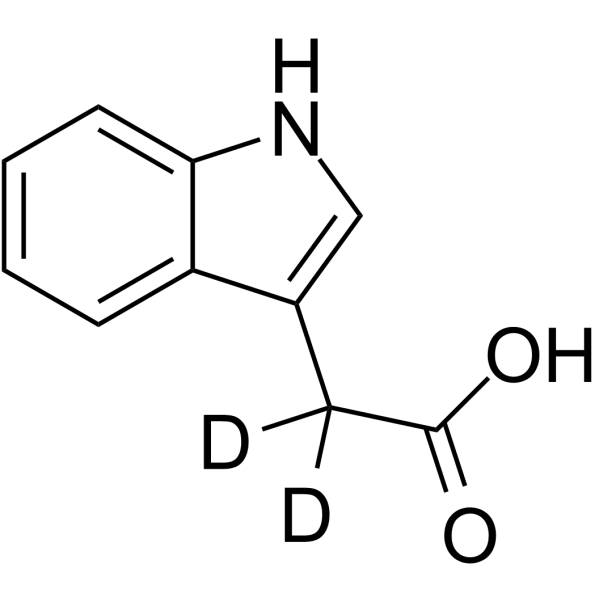
Indole-3-acetic acid; 3-IAA
|
Biochemical Assay Reagents
|
|
3-Indoleacetic acid is is an IAA hormone and growth regulator that can promote plant nutritional growth through processes such as cell expansion, differentiation, morphogenesis, and organogenesis .
|
-
- HY-W127709
-
|
|
Biochemical Assay Reagents
|
|
Chlorophyll b is an orally active tetrapyrrole derivative and pigment. Chlorophyll b can be obtained from photosynthetic organisms such as plants and algae. Chlorophyll b acts as a hydrogen donor and increases Glutathione levels. Chlorophyll b has antioxidant activity and functionally replaces chlorophyll a in photosystem II to participate in photosynthesis. Chlorophyll b reduces Cisplatin (HY-17394)-induced DNA damage, chromosome instability, and oxidative stress. Chlorophyll b is mainly used in the study of plant photosynthesis mechanism .
|
-
- HY-N6614
-
|
|
Biochemical Assay Reagents
|
|
L-Galactose is a key intermediate in the de novo synthesis of vitamin C (L-ascorbic acid) in plants. It is converted into L-ascorbic acid by participating in the VTC2 cycle and enzymatic steps, exerting antioxidant activities, maintaining cell structure, and participating in the carbon flow distribution of photosynthesis. L-Galactose can be used to study the analysis of the synthesis pathway of vitamin C in plant physiology .
|
-
- HY-143693
-
|
|
Biochemical Assay Reagents
|
|
DGDG, a chloroplast lipid, is a bilayer-forming lipid. DGDG is important for photosynthesis, and can be used for drug delivery .
|
-
- HY-18569R
-
|
Indole-3-acetic acid (standard); 3-IAA (standard)
|
Biochemical Assay Reagents
|
|
3-Indoleacetic acid (Standard) is the analytical standard of 3-Indoleacetic acid. This product is intended for research and analytical applications. 3-Indoleacetic acid is is an IAA hormone and growth regulator that can promote plant nutritional growth through processes such as cell expansion, differentiation, morphogenesis, and organogenesis .
|
-
- HY-W127745
-
|
Isovegetable alcohol
|
Biochemical Assay Reagents
|
|
Isophytol is a diterpene alcohol commonly found in various plant species, especially in chloroplasts, where it plays a role in photosynthesis. Isophytols have unique chemical properties that make them important ingredients in a variety of industrial processes, including the production of perfumes, essences and cosmetics. It also has potential medicinal properties, including antioxidant and anti-inflammatory effects.
|
-
- HY-N7092A
-
|
L-arabino-2-Hexulose, 95%
|
Biochemical Assay Reagents
|
|
L-(+)-Fructose, 95% (L-arabino-2-Hexulose, 95%) is the L-isomer of D-Fructose (HY-N7092). L-(+)-Fructose, 95% participates in glycolysis and gluconeogenesis, and can be used to study photosynthesis and carbohydrate storage in plant biology. L-(+)-Fructose, 95% is applicable for investigating the activity of fructokinase and other fructose-metabolizing enzymes .
|
-
- HY-W145500
-
|
Sedoheptulosan
|
Biochemical Assay Reagents
|
|
Sedoheptulose anhydride is a compound belonging to the class of carbohydrates. It is a derivative of sedoheptulose, a seven-carbon sugar. Sedoheptulose anhydride is commonly used in biochemistry as a precursor for various metabolic pathways. It can be converted into Sedoheptulose 1,7-bisphosphate, which is an important molecule for photosynthesis and carbon fixation. In addition to its use in biochemistry, Sedoheptulose anhydride has applications in cancer research.
|
-
- HY-148851
-
|
BChl a, from Rhodopseudomonas sphaeroides (under argon)
|
Biochemical Assay Reagents
|
|
Bacteriochlorophyll a, from Rhodopseudomonas sphaeroides (under argon) (BChl a, from Rhodopseudomonas sphaeroides (under argon)) is a chlorophyll analog found in some bacteria that participates in the light absorption and energy transfer processes of photosynthesis .
|
| Cat. No. |
Product Name |
Target |
Research Area |
-
- HY-P10685
-
|
[Tyr5,12,Lys7]-Polyphemusin II
|
HIV
CMV
|
Infection
|
|
T-22 (polyphemusin II with [Tyr5,12,Lys7]) is a new synthetic peptide that fights HIV, with an EC50 of 0.008 μg/mL and a CC50 of 54 μg/mL. T22 promotes plant height, photosynthesis, total chlorophyll content, and gas exchange in tomatoes, and it can resist CMV .
|
| Cat. No. |
Product Name |
Category |
Target |
Chemical Structure |
-
- HY-164642
-
|
RuBP
|
Structural Classification
Natural Products
Endogenous metabolite
Source Classification
|
Endogenous Metabolite
|
|
Ribulose 1,5-bisphosphate (RUBP) is a vital photosynthetic intermediate and substrate. Ribulose 1,5-bisphosphate acts as both product and substrate for Thermococcus kodakarensis KOD1 R15Pi. Ribulose 1,5-bisphosphate tightly binds to inactive RuBP carboxylase sites in plant leaves.Ribulose 1,5-bisphosphate serves as the key substrate for CO2 fixation in photosynthesis. Ribulose 1,5-bisphosphate supports carboxylation and regeneration processes in photosynthesis. Ribulose 1,5-bisphosphate determines the dynamic transition temperature of photosynthetic control. Ribulose 1,5-bisphosphate can be used for photosynthesis and enzyme mechanism research .
|
-
-
- HY-18569R
-
-
-
- HY-N0097R
-
-
-
- HY-N7092A
-
-
-
- HY-N11913
-
-
-
- HY-148851
-
|
BChl a, from Rhodopseudomonas sphaeroides (under argon)
|
Natural Products
Microorganisms
Source Classification
|
Bacterial
|
|
Bacteriochlorophyll a, from Rhodopseudomonas sphaeroides (under argon) (BChl a, from Rhodopseudomonas sphaeroides (under argon)) is a chlorophyll analog found in some bacteria that participates in the light absorption and energy transfer processes of photosynthesis .
|
-
-
- HY-N7697D
-
-
-
- HY-W750694
-
-
-
- HY-N11882
-
-
-
- HY-N8488
-
-
-
- HY-N8488A
-
-
-
- HY-W750700
-
-
-
- HY-W750691
-
-
-
- HY-W720006
-
-
-
- HY-W719977
-
|
|
Natural Products
Animals
Source Classification
|
Drug Derivative
|
|
Astacene is a major secondary carotenoid that can be extracted from the skin of the goldfish and other species. Astacene is an oxidative artifact of Astaxanthin (HY-B2163). Carotenoids are important biological active, and may regulate cellular differentiation, growth control, photooxidative protection, cell membrane stability, photosynthesis, vision process and nutrition .
|
-
-
- HY-W782321
-
-
-
- HY-W750681
-
|
13-cis-Canthaxanthin
|
Natural Products
Animals
Source Classification
|
Drug Derivative
|
|
(13Z)-Canthaxanthin (13-cis-Canthaxanthin) is a carotenoid that exists in salmon feds. Carotenoids are important biological active, and may regulate cellular differentiation, growth control, photooxidative protection, cell membrane stability, photosynthesis, vision process and nutrition .
|
-
-
- HY-N9677
-
|
|
Structural Classification
Natural Products
Amaranthaceae
Plants
Spinacia oleracea L.
Source Classification
|
Herbicide
|
|
Digalactosyldiacylglycerol is a membrane structure stabilizer that selectively acts on photosystem II light-harvesting complex II (LHCII), serving as a natural bilayer-forming lipid in plant thylakoid membranes. Digalactosyldiacylglycerol constructs a lipid bilayer environment with monogalactosyldiacylglycerol (MGDG) in a 2:1 molar ratio, stabilizing the supramolecular structure of LHCII through interactions such as hydrogen bonding. Its core activity is maintaining thylakoid membrane stacking (grana formation) and supporting photosynthesis-related functions, while also possessing functions in light harvesting assistance and excitation energy quenching regulation under light stress. Digalactosyldiacylglycerol can be used in research on plant photosynthesis mechanisms, thylakoid membrane structure and function regulation, as well as in the construction of artificial photosynthetic systems and the development of plant photoprotection strategies .
|
-
-
- HY-W750677
-
|
|
Natural Products
Animals
Source Classification
|
Endogenous Metabolite
|
|
7,8-Didehydroastaxanthin is a major carotenoid found in Crown-of-Thorns Starfish. 7,8-Didehydroastaxanthin is an oxidative metabolite of diatoxanthin. Carotenoids are important biological active, and may regulate cellular differentiation, growth control, photooxidative protection, cell membrane stability, photosynthesis, vision process and nutrition .
|
-
-
- HY-W750682
-
|
|
Natural Products
Microorganisms
Source Classification
|
Drug Derivative
|
|
β-Carotene 5,6-epoxide, a carotenoid, is a degradation product of β-carotene. β-Carotene 5,6-epoxide can be found in isolated chloroplasts. Carotenoids are important biological active, and may regulate cellular differentiation, growth control, photooxidative protection, cell membrane stability, photosynthesis, vision process and nutrition .
|
-
-
- HY-N17574
-
-
| Cat. No. |
Product Name |
Chemical Structure |
-
- HY-B0860S
-
|
|
|
Diuron-d6 is the deuterium labeled Diuron (HY-B0860). Diuron is an orally active phenylurea herbicide. Diuron inhibits photosynthesis in plants by blocking the formation of ATP and NADH. Diuron increases the production of ROS. Diuron increases expression of p53 in certain cell lines. Diuron has herbicidal activity against annual and perennial broadleaf weeds and grass weeds. Diuron promotes DMBA/BBN-induced bladder cancer. Diuron can be used in breast cancer research .
|
-
-
- HY-W725473
-
|
|
|
Oxyfluorfen-d5 is deuterated labeled Oxyfluorfen (HY-119176) Oxyfluorfen is a pre- and post-emergence diphenyl ether herbicide to control annual broad-leaved and grass weeds. Oxyfluorfen is a protoporphyrinogen oxidase inhibitor and inhibits photosynthesis by blocking chlorophyll synthesis.
|
-
-
- HY-B2039S1
-
|
|
|
Bentazone-d7 is the deuterium labeled Bentazone . Bentazone is a post-emergence herbicide used for selective control of broadleaf weeds and sedges in beans, rice, corn, peanuts, mint and others. It acts by interfering with photosynthesis .
|
-
-
- HY-136513S
-
|
|
|
Bifenox-d3 is the deuterium labeled Bifenox. Bifenox (MC-4379) is a nitrophenyl ether herbicide. Bifenox disrupts cellular membrane, inhibits photosynthesis and inhibits the protoporphyrinogen oxidase. Bifenox increases the ROS production in the microalgae Chlamydomonas reinhardtii .
|
-
-
- HY-B0866S
-
|
|
Ametryn- 13C,d3 is the 13C- and deuterium labeled Ametryn. Ametryn, a member of the Triazine chemical family, is a herbicide which inhibits photosynthesis and other enzymatic processes. Ametryn is effective against annual broadleaf weeds and grasses .
|
-
-
- HY-B2039S
-
|
|
|
Bentazone- 13C10, 15N is the 13C-labeled and 15N-labeled Bentazone. Bentazone is a post-emergence herbicide used for selective control of broadleaf weeds and sedges in beans, rice, corn, peanuts, mint and others. It acts by interfering with photosynthesis .
|
-
-
- HY-W711089
-
|
|
|
Bifenox-d3-1 (Modown-d3; MC-4379-d3) is the deuterium labeled Bifenox (HY-136513). Bifenox (Modown; MC-4379) is a potent herbicide. Bifenox increases the ROS production. Bifenox causes cellular membrane disruption, inhibition of photosynthesis .
|
-
-
- HY-136369S
-
|
|
|
Ethofumesate-d5 is the deuterium labeled Ethofumesate (HY-136369). Ethofumesate, a chiral herbicide, acts by inhibiting mitosis and reducing photosynthesis and plant respiration .
|
-
| Cat. No. |
Product Name |
|
Classification |
-
- HY-N16344
-
|
|
|
Cationic Lipids
|
|
Hydrogenated DGDG is a lipid derived from plants. Digalactosyldiacylglycerol (DGDG) is a galactosylglycerolipid, which is a major lipid component in the thylakoid membrane of leaf chloroplasts. DGDG is vital for photosynthesis.
|
Your information is safe with us. * Required Fields.
Inquiry Information
- Product Name:
- Cat. No.:
- Quantity:
- MCE Japan Authorized Agent:

