16 Results for "

phototoxic/photosensitizing

" in MedChemExpress (MCE) Product Catalog:
Products (16)

16 Results for "phototoxic/photosensitizing" in MCE Product Catalog:

20
20 Cited Publications
Cat. No.: HY-W854659
CAS No.: 72984-36-2
Synonyms: Ce6 trisodium
Chlorin e6 Ce6 (trisodium) is a water-soluble derivative of chlorophyll, belonging to the chlorin class of photosensitizers with an absorption wavelength range of 600-670 nm. Chlorin e6 trisodium emits characteristic red fluorescence upon light excitation, enabling real-time identification of tumor boundaries and progression. Chlorin e6 trisodium can be used for the study of photodynamic therapy (PDT) of cancers (bladder cancer) and fluorescence diagnosis of neoplastic lesions .
loading...
    loading...
4
4 Cited Publications
Cat. No.: HY-128973
CAS No.: 24533-72-0
Purity:  ≥98.0%
Research Areas:  

Cancer

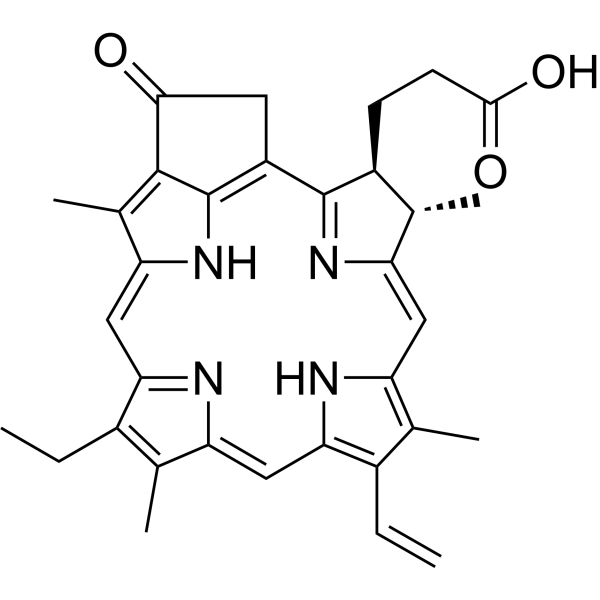
Pyropheophorbide-a (Ppa) is a photosensitizer used in photodynamic therapy (PDT) for tumors. Pyropheophorbide-a exhibits phototoxic effects on tumor cells, such as cervical cancer cells, and also has anti-lipogenesis activity. Pyropheophorbide-a shows potential for research in the fields of cancer and age-related macular degeneration (AMD). Pyropheophorbide-a derivatives also demonstrate inhibitory activity against tumor cells .
loading...
    loading...
Cat. No.: HY-W587892
CAS No.: 7289-52-3
Synonyms: 1-Methoxydecane
Research Areas:  

Others

Decyl methyl ether is a new type of strong fatty ether. Decyl methyl ether is non-genotoxic and phototoxic/photosensitizing .
loading...
    loading...
Cat. No.: HY-147690
CAS No.: 2138330-43-3
Target:  

Photosensitizer

Research Areas:  

Cancer

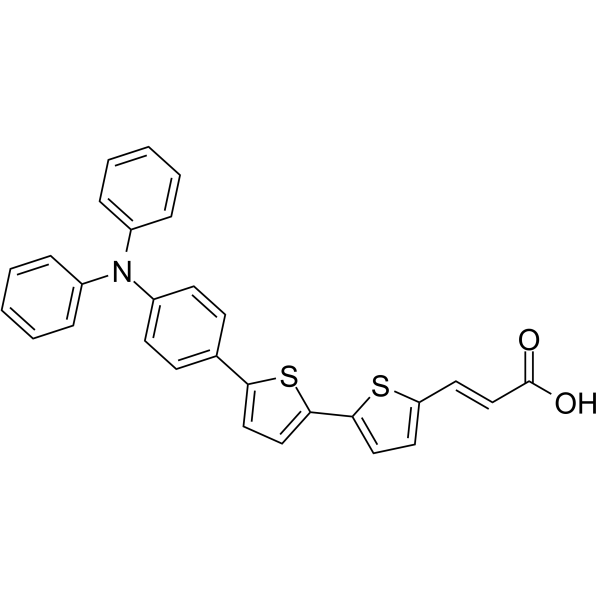
Photosensitizer-2 (compound 1) is a organic D-π-A sensitizer against phototoxicity. Photosensitizer-2 contains an acrylic acid moiety that exerts high levels of phototoxicity. Photosensitizer-2 shows antitumor activity against HeLa cells, with IC50 values of 20.9 ± 4.5 μM (dark) and 0.046 ± 0.012 μM (irradiation), respectively .
loading...
    loading...
Cat. No.: HY-N10611
CAS No.: 24568-67-0
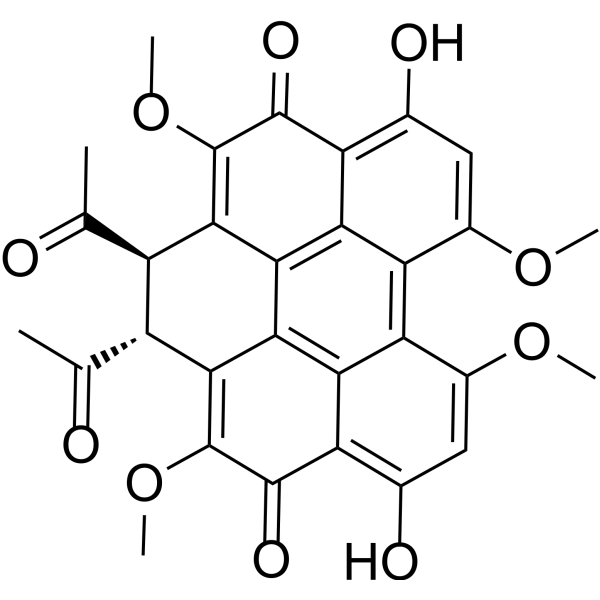
Elsinochrome A is a perylene quinone photosensitizer, and can generate reactive oxygen species (ROS) to induce apoptosis and autophagy under light excitation. Elsinochrome A also shows antifungal activity against C. albicans biofilm through photodynamic antimicrobial chemotherapy (PACT). Elsinochrome A can be used for research of photodynamic therapy (PDT) (Ex: 460 nm) .
loading...
    loading...
Cat. No.: HY-N7402
CAS No.: 6378-65-0
Target:  

Others

Hexyl hexanoate is a fruit aroma component with potential food and beverage additive activity. Hexyl hexanoate is found in alcoholic beverages and is used to blend fruit flavors. Hexyl hexanoate is present in many fruits, Parmesan cheese, alcoholic beverages, and black tea. Hexyl hexanoate is a volatile component produced as a result of fruit ripening. Toxicity assessments of hexyl hexanoate showed that it is not mutagenic and that exposure is below safety thresholds for repeated dose, reproduction, and local respiratory toxicity. Hexyl hexanoate is also below thresholds in skin sensitization assessments, and for phototoxicity and photosensitization, the results showed that it does not present a relevant risk. Hexyl hexanoate is considered non-persistent, non-bioaccumulative, and non-toxic according to the environmental criteria of the International Fragrance Association .
loading...
    loading...
Cat. No.: HY-146414
CAS No.: 2344751-89-7
Target:  

Photosensitizer

Research Areas:  

Cancer

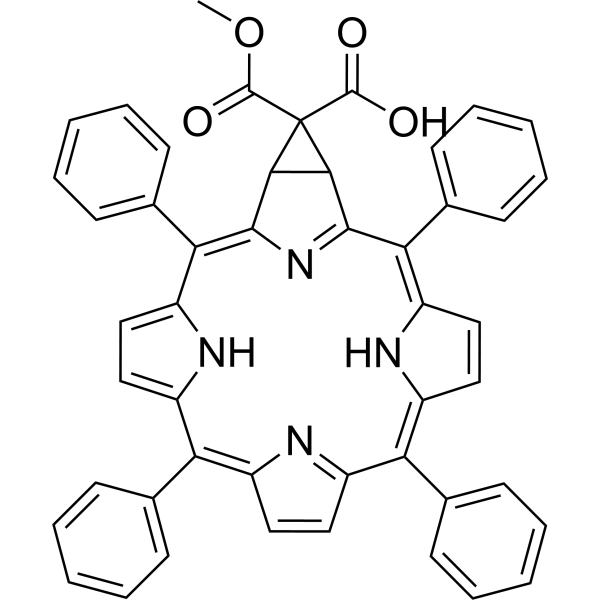
Antitumor photosensitizer-1 (Compound 8) is a potent photosensitizer. Antitumor photosensitizer-1 has outstanding photodynamic anti-tumor effects without obvious skin photo-toxicity, and can act as new agent candidates for photodynamic research .
loading...
    loading...
Cat. No.: HY-146416
CAS No.: 2344751-92-2
Target:  

Photosensitizer

Research Areas:  

Cancer

Antitumor photosensitizer-2 (Compound 11) is a potent photosensitizer. Antitumor photosensitizer-2 has outstanding photodynamic anti-tumor effects without obvious skin photo-toxicity, and can act as new agent candidates for photodynamic research .
loading...
    loading...
Cat. No.: HY-147521
CAS No.: 2102725-52-8
Target:  

Necroptosis

Research Areas:  

Cancer

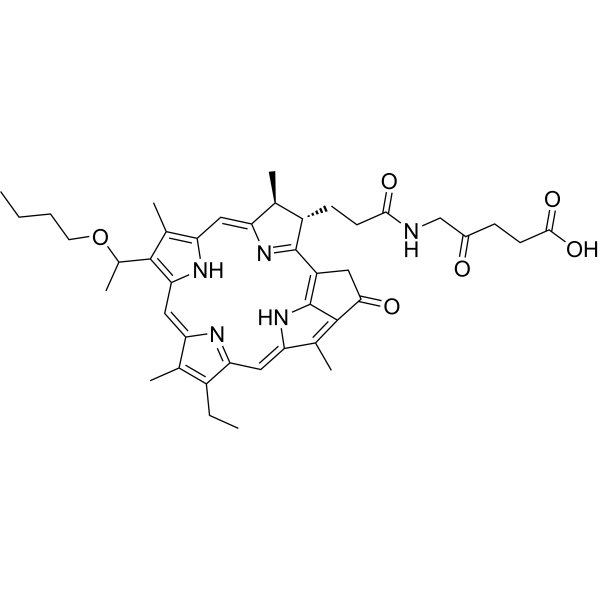
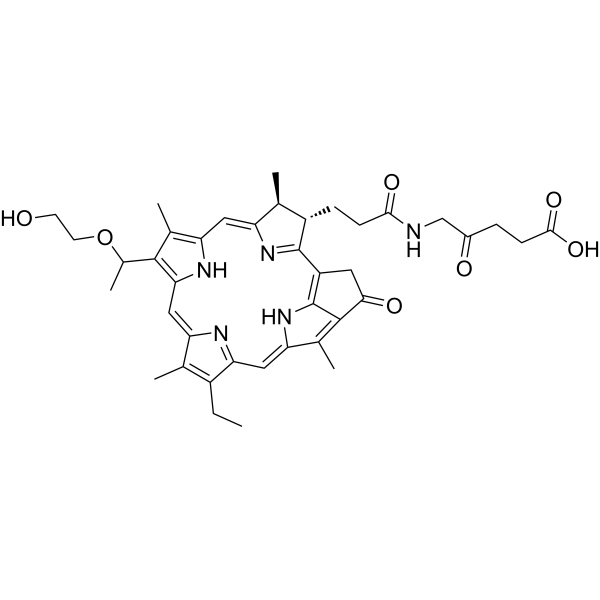
Antitumor photosensitizer-3 (Compound I) is a chlorin derivative. Antitumor photosensitizer-3 induces tumor cells apoptosis and necrosis under 650 nm laser irradiation. Antitumor photosensitizer-3 exhibits lower skin photo-toxicity than positive reference m-THPC in vivo .
loading...
    loading...
Cat. No.: HY-156092
Target:  

BCRP Apoptosis

Research Areas:  

Cancer

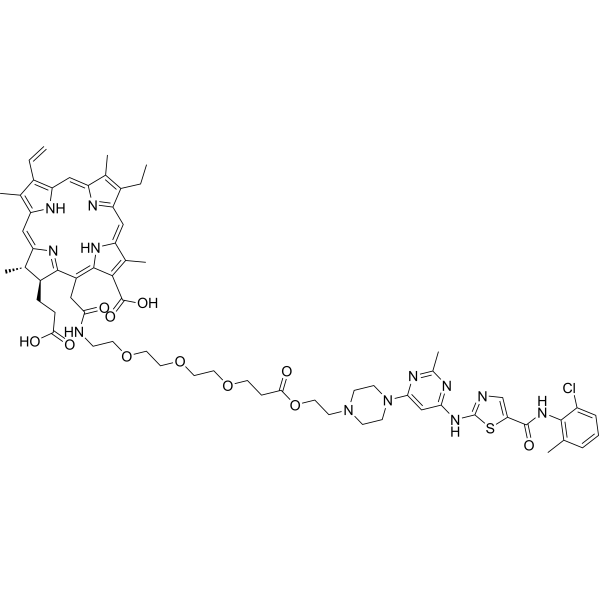
Antitumor photosensitizer-4 (compound 10b) is a potent tyrosine kinase inhibitor (TKI) targeting ABCG2. Antitumor photosensitizer-4 is a photosensitizer (PS) consisting of a conjugate of dasatinib (HY-10181) and imatinib (HY-15463). Antitumor photosensitizer-4 induces apoptosis and ROS production and exhibits strong phototoxicity to HepG2 and B16-F10 cells .
loading...
    loading...
Cat. No.: HY-175214
Research Areas:  

Cancer

Antitumor photosensitizer-9 is a near-infrared Photosensitizer (PS) with a high singlet oxygen production rate (relative rate = 1.79). Antitumor photosensitizer-9 exhibits strong phototoxicity against various cancer cells and induces ROS generation under light irradiation. Antitumor photosensitizer-9 inhibits tumor growth in vivo and exhibits excellent anticancer photodynamic therapy (PDT) efficacy at low drug and light doses. Antitumor photosensitizer-9 can be used in photodynamic therapy research .
loading...
    loading...
Cat. No.: HY-163034
Research Areas:  

Cancer

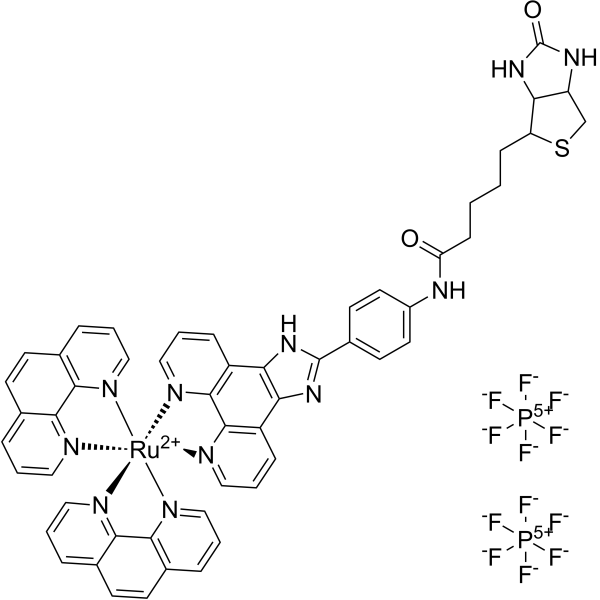
Antitumor photosensitizer-5 (Ru2) is a photosensitizer which effectively target tumor mitochondria with an IC50 of 0.3 μM for phototoxicity to A549 cells. Under 460 nm light irradiation, antitumor photosensitizer-5 induces the generation of reactive oxygen species and NADH depletion, causes mitochondrial damage and activation of caspase-3, inducing apoptosis and suppressing cell migration. Antitumor photosensitizer-5 has the potential to prevent the growth of malignant tumors, therefore, shows the potential to be applied to photodynamic therapy .
loading...
    loading...
Cat. No.: HY-D2620
CAS No.: 3030055-40-1
CAR-2 is a BODIPY-based photosensitizer that induces ferroptosis in photodynamic therapy (PDT) by targeting the endoplasmic reticulum (ER) and lipid droplets (LDs). CAR-2 exhibits phototoxicity in breast cancer cells with IC50 of 0.01-0.02 μM. CAR-2 exhibits antitumor efficacy in 4T1 xenograft mouse models .
loading...
    loading...
Cat. No.: HY-128973R
CAS No.: 24533-72-0
Research Areas:  

Cancer

Pyropheophorbide-a (Standard) is the analytical standard of Pyropheophorbide-a. This product is intended for research and analytical applications. Pyropheophorbide-a (Ppa) is a photosensitizer used in photodynamic therapy (PDT) for tumors. Pyropheophorbide-a exhibits phototoxic effects on tumor cells, such as cervical cancer cells, and also has anti-lipogenesis activity. Pyropheophorbide-a shows potential for research in the fields of cancer and age-related macular degeneration (AMD). Pyropheophorbide-a derivatives also demonstrate inhibitory activity against tumor cells .
loading...
    loading...
Cat. No.: HY-182066
Target:  

PANoptosis

Research Areas:  

Cancer

Photosensitizer-9 is an iridium (III)-based photosensitizer with anti-melanoma activity. Photosensitizer-9 exhibits significant phototoxicity (IC50=0.98 μM) and an ideal phototoxicity index (PI=3.05). Under light irradiation, Photosensitizer-9 generates large amounts of intracellular •OH in an oxygen-independent manner. Photosensitizer-9 mediates photodynamic therapy under hypoxic conditions and synergistically activates PANoptosis (by upregulating cleaved Caspase-3, GSDMD-N, p-MLKL), ferroptosis (by disrupting the GSH-GPX4-LPO axis), apoptosis, pyroptosis and necroptosis in melanoma cells. Photosensitizer-9 induces immunogenic cell death by promoting the release of damage-associated molecular patterns under hypoxic conditions and increases the maturation rate of dendritic cells. Photosensitizer-9 reduces tumor volume in melanoma-bearing mice. Photosensitizer-9 is applicable to relevant studies on melanoma .
loading...
    loading...
Cat. No.: HY-170883
Target:  

Photosensitizer

Research Areas:  

Cancer

Type-I/-II Photosensitizer-1 (compound 8b) is a photosensitizer with anticancer activity. Type-I/-II Photosensitizer-1 exhibits significant phototoxicity against both A549 and 4T1 tumor cells. Type-I/-II Photosensitizer-1 shows a strong oxygen-independent antitumor effect under laser irradiation (IC50=1.50-1.76 μM) .
loading...
    loading...
  • 1

