1. Search Result
Search Result
Results for "

plant bacterial pathogens

" in MedChemExpress (MCE) Product Catalog:

16

Inhibitors & Agonists

1

Biochemical Assay Reagents

2

Peptides

7

Natural
Products

Targets Recommended:
Cat. No. Product Name Target Research Areas Chemical Structure
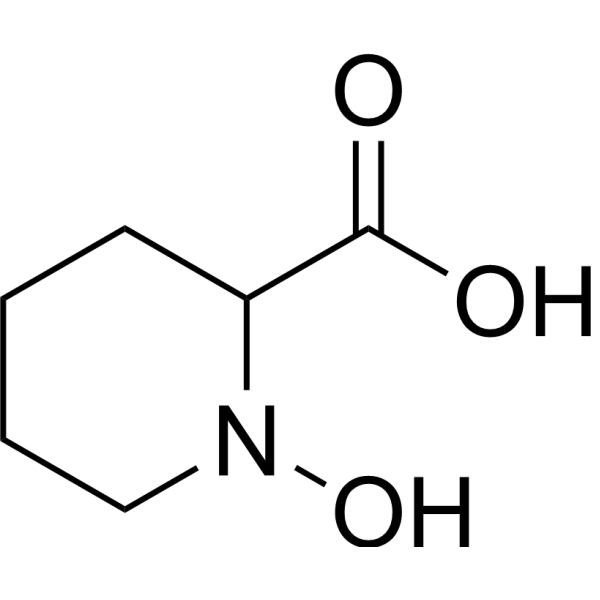
  • HY-N7378
    N-Hydroxypipecolic acid
    5 Publications Verification

    1-Hydroxy-2-piperidinecarboxylic acid; NHP

    Bacterial Inflammation/Immunology
    N-Hydroxypipecolic acid (1-Hydroxy-2-piperidinecarboxylic acid), a plant metabolite and a systemic acquired resistance (SAR) regulator, orchestrates SAR establishment in concert with the immune signal salicylic acid. N-Hydroxypipecolic acid accumulates systemically in the plant foliage in response to pathogen attack. N-Hydroxypipecolic acid induces SAR to bacterial and oomycete infection .
    N-Hydroxypipecolic acid
  • HY-160238

    Corynebactin

    Bacterial Fungal Infection
    Bacillibactin (Corynebactin) is a cyclic tricatecholate siderophore. Bacillibactin’s primary function is to facilitate bacterial iron acquisition by chelating iron ions (Fe 3+) from the environment, thereby aiding bacterial survival under iron-limited conditions. Bacillibactin exhibits direct antimicrobial activity, such as inhibition of the growth of the producing bacteria Pseudomonas aeruginosa and Aeromonas veronae, as well as plant pathogens such as Pseudomonas syringae.Bacillibactin can be used in antibacterial and antifungal research .
    Bacillibactin
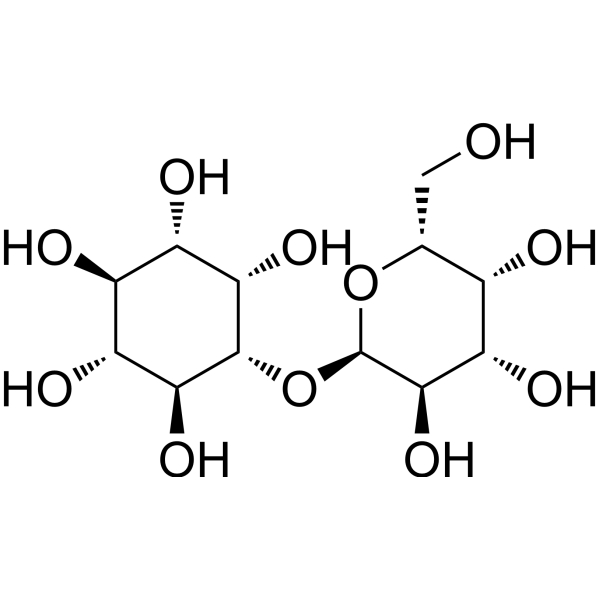
  • HY-N9497

    Galectin Fungal Infection
    Galactinol is a disaccharide carbohydrate serving as a galactosyl donor, which belongs to the raffinose family oligosaccharide pathway and acts as an important osmoprotectant. Galactinol not only induces disease resistance in plants against fungal and bacterial pathogens, but also significantly enhances plant tolerance to abiotic stresses such as drought, high salinity, low temperature and oxidative damage. In addition, Galactinol has the ability to scavenge hydroxyl radicals, can act as a signaling component for root colonization-induced systemic resistance, and is positively correlated with seed longevity in various crops, making it a potential biomarker for evaluating seed vigor. Therefore, Galactinol can be used in the research of various plant diseases including fungal leaf spot, bacterial angular leaf spot, gray mold and soft rot .
    Galactinol
  • HY-P10396

    Bacterial Infection Inflammation/Immunology
    Elf18 is a peptide fragment of bacterial translation elongation factor Tu (EF-Tu). Elf18 can be recognized by plant pattern recognition receptors, thereby inducing an immune response. Elf18 can enhance plants' resistance to pathogens and can be used in research related to plant immune responses .
    Elf18
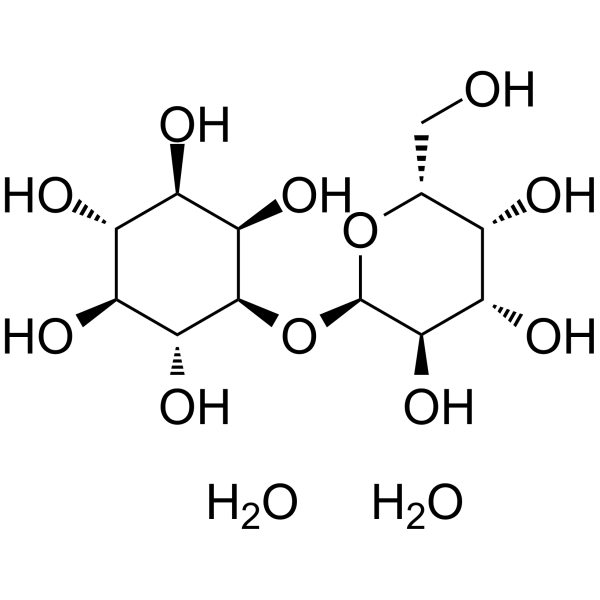
  • HY-135258

    Galectin Fungal Others
    Galactinol dihydrate is a disaccharide carbohydrate serving as a galactosyl donor, which belongs to the raffinose family oligosaccharide pathway and acts as an important osmoprotectant. Galactinol dihydrate not only induces disease resistance in plants against fungal and bacterial pathogens, but also significantly enhances plant tolerance to abiotic stresses such as drought, high salinity, low temperature and oxidative damage. In addition, Galactinol dihydrate has the ability to scavenge hydroxyl radicals, can act as a signaling component for root colonization-induced systemic resistance, and is positively correlated with seed longevity in various crops, making it a potential biomarker for evaluating seed vigor. Therefore, Galactinol dihydrate can be used in the research of various plant diseases including fungal leaf spot, bacterial angular leaf spot, gray mold and soft rot .
    Galactinol dihydrate
  • HY-155461

    Bacterial Infection
    Antibiofilm agent-3 (compound 3b) is a tetracarboxamide antibacterial agent that effectively inhibits the plant bacterial pathogen Xanthomonas citri (Xanthomonas citri ssp. citri, Xcc) (MIC=500 μg/ mL). Antibiofilm agent-3 inhibits biofilm formation by Xcc with IC50=15.37 μg/mL .
    Antibiofilm agent-3
  • HY-149169

    Bacterial Inflammation/Immunology
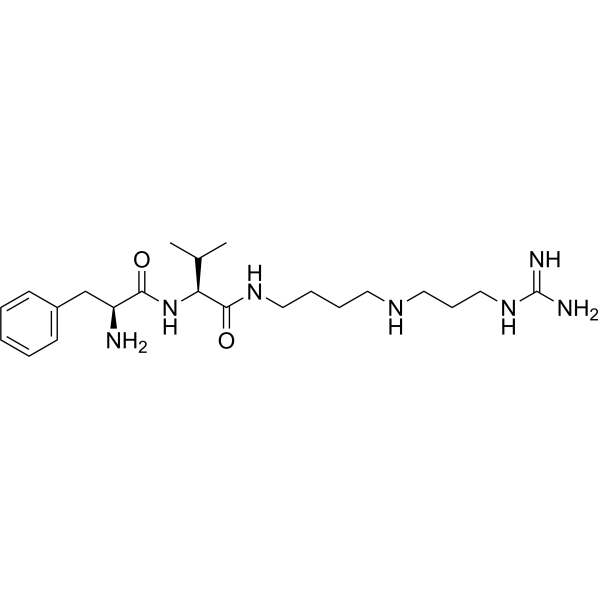
    Phevamine A is a small molecule bacterial phytotoxin that can be isolated from Pseudomonas syringae. Phevamine promotes bacterial growth by suppressing plant immune responses .
    Phevamine A
  • HY-N7378A

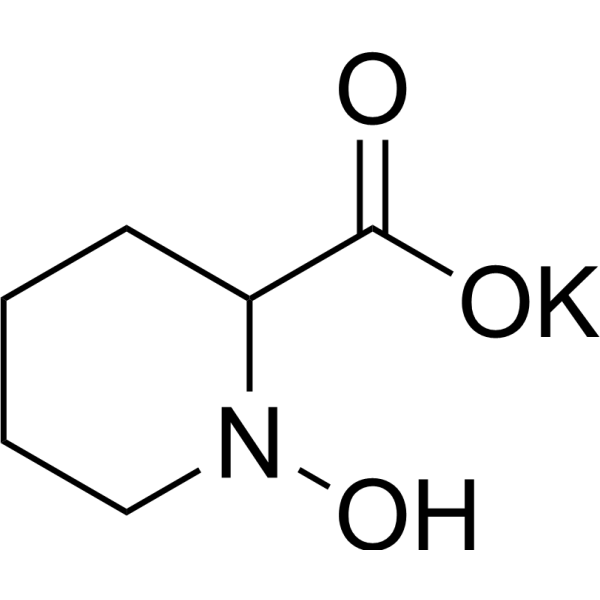
    1-Hydroxy-2-piperidinecarboxylic acid potassium; NHP potassium

    Bacterial Inflammation/Immunology
    N-Hydroxypipecolic acid potassium (1-Hydroxy-2-piperidinecarboxylic acid potassium), a plant metabolite and a systemic acquired resistance (SAR) regulator, orchestrates SAR establishment in concert with the immune signal salicylic acid. N-Hydroxypipecolic acid potassium accumulates systemically in the plant foliage in response to pathogen attack. N-Hydroxypipecolic acid potassium induces SAR to bacterial and oomycete infection .
    N-Hydroxypipecolic acid potassium
  • HY-168844

    Bacterial Reactive Oxygen Species (ROS) Infection
    Antibacterial agent 259 (K3) is a bactericide, with EC50 values ​​of 1.5, 1.7 and 4.9 mg/L for Xoo, Xoc and Xac, respectively. Antibacterial agent 259 can induce pathogens to produce reactive oxygen species (ROS), leading to their death. Antibacterial agent 259 can be used in the prevention and control of plant bacterial diseases .
    Antibacterial agent 259
  • HY-N16462

    Bacterial Infection
    2-(2-Heptenyl)-3-methyl-4(1H)-quinolone is a quinoline alkaloid found in Burkholderia sp. VY81. 2-(2-Heptenyl)-3-methyl-4(1H)-quinolone is promising for research of bacterial diseases in rice (e.g., soft rot) and other plant pathogens (e.g., Pythium ultimum, Fusarium oxysporum) .
    2-(2-Heptenyl)-3-methyl-4(1H)-quinolone
  • HY-183966

    Bacterial Fungal Infection
    Antibacterial agent 348 is an antimicrobial agent containing piperazine-isopropanolamine bifunctional groups. Antibacterial agent 348 suppresses virulence factor expression in plant pathogens. Antibacterial agent 348 compromises bacterial membrane integrity, leading to cytoplasmic leakage. Antibacterial agent 348 inhibits cellular proliferation of plant pathogens, diminishes colonization and infectivity of plant pathogens in host plants. Antibacterial agent 348 can be used for the research of rice bacterial leaf blight, pepper phytophthora blight .
    Antibacterial agent 348
  • HY-W838632

    Bacterial Antibiotic Infection
    Antibacterial agent 266 (Compound C5) is a plant pathogen inhibitor that disrupts bacterial integrity, with EC50 values of 24.1 μg/mL and 39.0 μg/mL against Xanthomonas oryzae pv oryzae (Xoo) and X. axonopodis pv citri (Xac), respectively. Antibacterial agent 266 can be used in the development of plant pathology and agricultural antimicrobial agents research .
    Antibacterial agent 266
  • HY-127158

    Bacterial Infection
    Fenaminosulf is a plant immune modulator and mutagen. Fenaminosulf impairs plant immune recognition and signal transduction by inhibiting the activities of key kinases such as Xa21 and PBL19, thereby regulating the expression of genes related to hormone metabolism, phenylpropane biosynthesis, and plant-pathogen interactions. Fenaminosulf affects the growth and gall formation of Zizania latifolia in a concentration-dependent manner. Fenaminosulf induces mutations in bacterial systems and causes plant chromosome aberrations, but shows no mutagenic activity or lethal effect in Drosophila melanogaster. Fenaminosulf exhibits inconsistent carcinogenicity in rat studies .
    Fenaminosulf
  • HY-N16448

    Bacterial Infection
    Xanthoascin (Compound 1) is a natural phenolic metabolite with strong anti plant pathogen activity. Xanthoascin can be extracted from the solid fermentation product of endophytic fungus Aspergillus sp. IFB-YXS isolated from Ginkgo biloba leaves. Xanthoascin has a MIC of 0.3125 µg/mL against Clavibacter michiganense subsp. Sepedonicus and moderate inhibitory activity against other pathogens (MIC = 5-20 µg/mL). Xanthoascin can disrupt the permeability of bacterial cell membranes, leading to nucleic acid leakage .
    Xanthoascin
  • HY-P11177

    Fungal Bacterial Infection Cancer
    Cn-AMP1 is a disulfide-free plant peptide that can be isolated from green coconut water. Cn-AMP1 shows activity against multiple pathogenic bacteria, fungal pathogens and cancer cells. Cn-AMP1 is capable of up-regulating inflammatory-cytokine secretion by monocytes. Cn-AMP1 can be used for research on control bacterial infections and cancers .
    Cn-AMP1
  • HY-N7378R

    1-Hydroxy-2-piperidinecarboxylic acid (Standard); NHP (Standard)

    Bacterial Reference Standards Inflammation/Immunology
    N-Hydroxypipecolic acid (Standard) (1-Hydroxy-2-piperidinecarboxylic acid (Standard); NHP (Standard)) is the analytical standard of N-Hydroxypipecolic acid (HY-N7378). This product is intended for research and analytical applications. N-Hydroxypipecolic acid (1-Hydroxy-2-piperidinecarboxylic acid), a plant metabolite and a systemic acquired resistance (SAR) regulator, orchestrates SAR establishment in concert with the immune signal salicylic acid. N-Hydroxypipecolic acid accumulates systemically in the plant foliage in response to pathogen attack. N-Hydroxypipecolic acid induces SAR to bacterial and oomycete infection .
    N-Hydroxypipecolic acid (Standard)

Inquiry Online

Your information is safe with us. * Required Fields.

Salutation


Country or Region *

Applicant Name *


Organization Name *

Department *


Email Address *


Product Name *

Cat. No.


Requested quantity *

Phone Number *


Remarks

Inquiry Online

Inquiry Information

Product Name:
Cat. No.:
Quantity:
MCE Japan Authorized Agent:

