





1. Search Result
Search Result
Results for "

polymer matrix

" in MedChemExpress (MCE) Product Catalog:

26

Inhibitors & Agonists

2

Fluorescent Dyes

18

Biochemical Assay Reagents

4

Oligonucleotides

Targets Recommended:
Cat. No. Product Name Target Research Areas Chemical Structure
  • HY-15534
    JC-1
    210+ Cited Publications

    CBIC2

    Fluorescent Dye Others
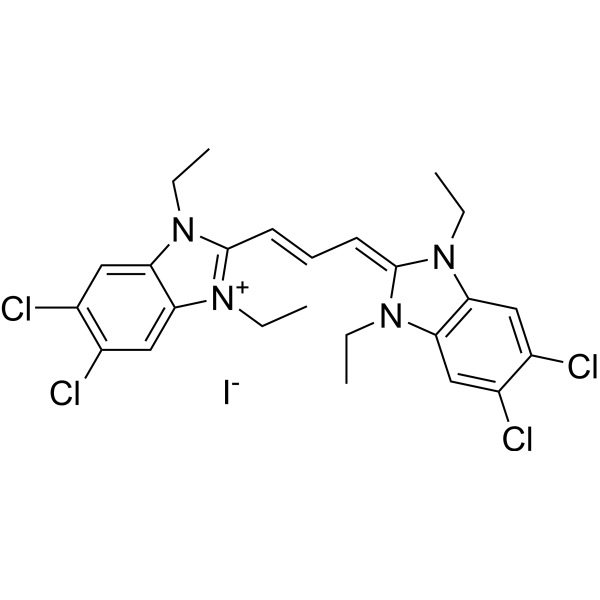
    JC-1 (CBIC2) is an ideal fluorescent probe widely used to detect mitochondrial membrane potential. JC-1 accumulates in mitochondria in a potential dependent manner and can be used to detect the membrane potential of cells, tissues or purified mitochondria. In normal mitochondria, JC-1 aggregates in the mitochondrial matrix to form a polymer, which emits strong red fluorescence (Ex=585 nm, Em=590 nm); When the mitochondrial membrane potential is low, JC-1 cannot aggregate in the matrix of mitochondria and produce green fluorescence (ex=510 nm, em= 527 nm) .
    JC-1
  • HY-Y1365

    Environmental Pollutants Biochemical Assay Reagents Metabolic Disease Cancer
    Gelatins is a non-toxic, non carcinogenic, biodegradable, and non irritating natural polymer derived from partial hydrolysis of collagen. Due to its strong liquid absorption and swelling ability, Gelatins has excellent hemostatic properties and can be used as a matrix material for the reduction, growth, and stability of metal nanoparticles. Gelatins can also be used for tumor cell culture and tumor therapy .
    Gelatins
  • HY-Y1310A

    Environmental Pollutants Biochemical Assay Reagents Others
    Sodium alginate is an anionic straight chain polysaccharide. Sodium alginate can be obtained from different species of algae. Sodium alginate has different properties, such as pH-sensitivity, nontoxicity, nonimmunogenicity. Sodium alginate has weak gelation, viscosity, and film-forming properties. Sodium alginate can be utilized to prepare gels and film materials for food preservation. Sodium alginate is a versatile functional biomaterial for viscosity enhancement, stabilizer, matrixing agent, encapsulation polymer, bioadhesive and film former .
    Sodium alginate (Viscosity 200±20mpa.s)
  • HY-W110542J

    PEGDA (MW 700)

    Biochemical Assay Reagents Others
    Poly(ethylene glycol) diacrylate (PEGDA) (MW 700) is a versatile polymer material that is widely used as a building material for hydrogel scaffolds, especially in the fields of tissue engineering and regenerative medicine. Poly(ethylene glycol) diacrylate (MW 700) mimics the extracellular matrix (ECM), providing support and growth space for cells .
    Poly(ethylene glycol) diacrylate (MW 700)
  • HY-W250313

    PLA

    Biochemical Assay Reagents Others Cancer
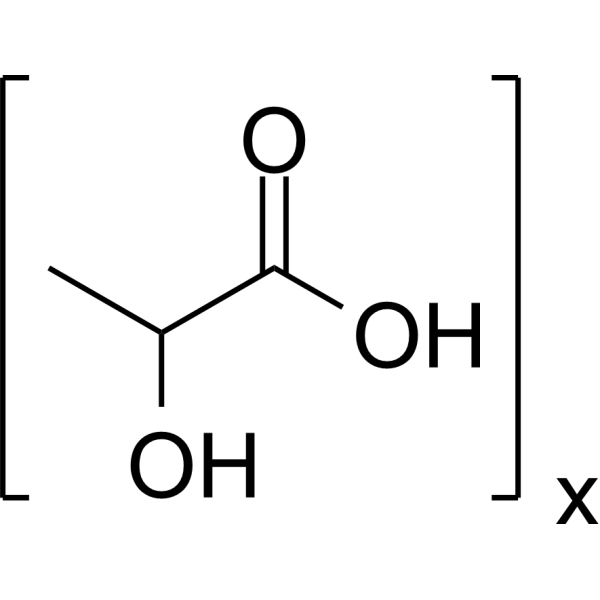
    Polylactic acid (PLA) is a biodegradable and biocompatible polymer widely used as a carrier for drug delivery systems and a structural material for tissue engineering and medical implants. Polylactic acid acts as a controlled release matrix through the hydrolysis mechanism of ester bonds, gradually releasing the encapsulated drug and metabolizing to non-toxic lactic acid. Polylactic acid has adjustable degradation rate, mechanical properties and the ability to composite with other polymers, and can be used in local or systemic drug delivery, orthopedic fixation devices and 3D printed bone regeneration scaffolds .
    Polylactic acid
  • HY-W250721A

    CBM 940

    Biochemical Assay Reagents Others
    Carbomer 940 (CBM 940) is an acrylic polymer with high viscosity, good thermal stability and histocompatibility. Carbomer 940 serves as a transdermal drug delivery carrier and an external gel matrix. Carbomer 940 has no cytotoxicity, and it can also improve blood supply in the stasis zone of burns and promote wound repair. Carbomer 940 is applicable to pharmaceutical research .
    Carbomer 940
  • HY-B2221C

    Carboxymethyl cellulose CM-32; CM-32

    Environmental Pollutants Biochemical Assay Reagents Others
    CM Cellulose CM-32 (Carboxymethyl cellulose) is a cellulose derivative. CM Cellulose CM-32 has a wide range of applications in the biomedical field, including tissue engineering, wound dressing, absorbent nonwovens, fabrication of 3D-scaffolds for biocompatible implants, artificial organs or mimics of extracellular polymeric matrix and diagnosis of various diseases. CM Cellulose CM-32 can decrease osteoclasts formation. CM Cellulose CM-32 can be used as a biological material or organic compound for life science related research .
    CM Cellulose CM-32
  • HY-DY1003

    Fluorescent Dye Others
    JC-1 (CBIC2) (solution) is an ideal fluorescent probe widely used to detect mitochondrial membrane potential. JC-1 accumulates in mitochondria in a potential dependent manner and can be used to detect the membrane potential of cells, tissues or purified mitochondria. In normal mitochondria, JC-1 aggregates in the mitochondrial matrix to form a polymer, which emits strong red fluorescence (Ex=585 nm, Em=590 nm) ; When the mitochondrial membrane potential is low, JC-1 cannot aggregate in the matrix of mitochondria and produce green fluorescence (ex=510 nm, em= 527 nm) .
    Solvent and concentration: DMSO: 1.5 mM
    JC-1 (solution)
  • HY-A0104K

    Hypromellose (Type II,Viscosity:3mPa.s); (Hydroxypropyl)methyl cellulose (Type II,Viscosity:3mPa.s); Celacol HPM 5000 (Type II,Viscosity:3mPa.s)

    Environmental Pollutants Biochemical Assay Reagents Others
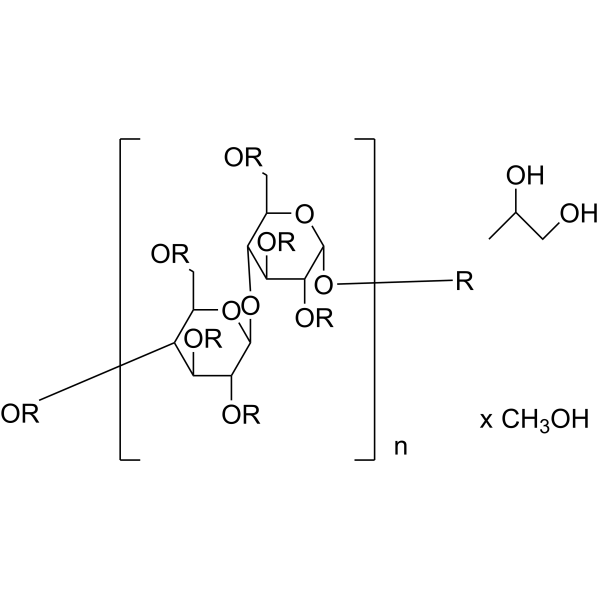
    HPMC (Type II, Viscosity: 3 mPa.s) is a nonionic polymer prepared via synthetic modification of cellulose. As a hydrophilic matrix material, HPMC prolongs drug release through non-Fickian diffusion, which includes the diffusion of drugs in the hydrated matrix and the polymer relaxation process .
    HPMC (Type II,Viscosity:3mPa.s)
  • HY-A0104B

    Hypromellose (Type I,Viscosity:100mPa.s); (Hydroxypropyl)methyl cellulose (Type I,Viscosity:100mPa.s); Celacol HPM 5000 (Type I,Viscosity:100mPa.s)

    Environmental Pollutants Biochemical Assay Reagents Others
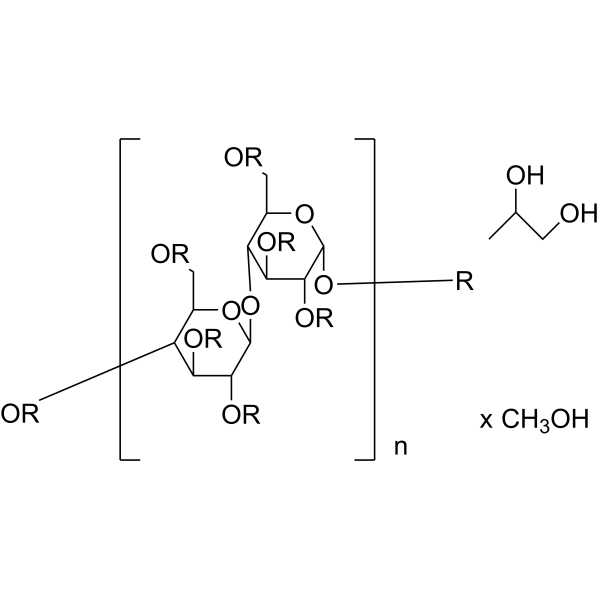
    HPMC (Type I, Viscosity: 100 mPa·s) is a nonionic polymer obtained via synthetic modification of cellulose. As a hydrophilic matrix material, HPMC prolongs drug release through non-Fickian diffusion, including the diffusion of drugs within the hydrated matrix and the polymer relaxation process .
    HPMC (Type I,Viscosity:100mPa.s)
  • HY-A0104E

    Hypromellose (Type II,Viscosity:100mPa.s); (Hydroxypropyl)methyl cellulose (Type II,Viscosity:100mPa.s); Celacol HPM 5000 (Type II,Viscosity:100mPa.s)

    Environmental Pollutants Biochemical Assay Reagents Others
    HPMC (Hypromellose; (Hydroxypropyl)methyl cellulose; Celacol HPM 5000) (Type II,Viscosity:100mPa.s) is a non-ionic polymer obtained via synthetic modification of cellulose. As a hydrophilic matrix material, HPMC prolongs drug release through non-Fickian diffusion, including the diffusion of drugs in the hydrated matrix and the polymer relaxation process .
    HPMC (Type II,Viscosity:100mPa.s)
  • HY-W250721

    CBM 980

    Biochemical Assay Reagents Others
    Carbomer 980 (CBM 980) is an acrylic acid polymer, which can be used as a thickening agent. Carbomer 980 provides a stable gel matrix, exhibits good heat, light and microbial contamination resistance. Carbomer 980 facilitates the drug release and local application, which can be used in the pharmaceutical industry .
    Carbomer 980
  • HY-139201D

    PDLHB (MW 4000-15000)

    CaSR Others
    Poly-D-lysine hydrobromide (MW 4000-15000) (PDLHB (MW 4000-15000)) is an artificially synthesized polymer matrix widely used in neuronal cell culture. Poly-D-lysine hydrobromide is also known as a calcium-sensing receptor (CaSR) agonist peptide .
    Poly-D-lysine hydrobromide (MW 4000-15000)
  • HY-A0104I

    Hypromellose (Type II,Viscosity:100000mPa.s); (Hydroxypropyl)methyl cellulose (Type II,Viscosity:100000mPa.s); Celacol HPM 5000 (Type II,Viscosity:100000mPa.s)

    Biochemical Assay Reagents Others
    HPMC (Hypromellose; (Hydroxypropyl)methyl cellulose; Celacol HPM 5000) (Type II,Viscosity:100000mPa.s) is a non-ionic polymer obtained via synthetic modification of cellulose. As a hydrophilic matrix material, HPMC prolongs drug release through non-Fickian diffusion, including the diffusion of drugs in the hydrated matrix and the polymer relaxation process .
    HPMC (Type II,Viscosity:100000mPa.s)
  • HY-W250721B

    CBM 934

    Biochemical Assay Reagents Others
    Carbomer 934 (CBM 934) is an acrylic acid polymer, which can be used as a thickening agent. Carbomer 934 which forms a high viscosity gel, provides a stable gel matrix, and exhibits good heat, light and microbial contamination resistance. Carbomer 934 facilitates the drug release and local application, which can be used in the pharmaceutical industry .
    Carbomer 934
  • HY-W250721C

    CBM 941

    Biochemical Assay Reagents
    Carbomer 941 (CBM 941) is an acrylic acid polymer, which can be used as a thickening agent. Carbomer 941 provides a stable gel matrix, exhibits good heat, light and microbial contamination resistance. Carbomer 941 facilitates the drug release and local application, which can be used in the pharmaceutical industry .
    Carbomer 941
  • HY-159621

    ES5

    Annexin A Endocrinology
    Endosidine 5 (ES5) inhibits EPS (extracellular polymeric substance) secretion and cell wall expansion. Endosidine 5 alters secretion of ECM (extracellular matrix) material in Penium margaritaceum by affecting the Golgi apparatus. Endosidine 5 interferes with recycling endosomes through Annexin A6, thereby promoting the release and expression of mRNA into the cytoplasm .
    Endosidine 5
  • HY-W250721D

    Carboxy polymethylene

    Biochemical Assay Reagents Others
    Carbomer (Carboxy polymethylene) is an acrylic acid polymer, which can be used as a thickening agent. Carbomer provides a stable gel matrix, exhibits good heat, light and microbial contamination resistance. Carbomer facilitates the drug release and local application, which can be used in the pharmaceutical industry .
    Carbomer
  • HY-W250721G

    Carboxy polymethylene (interpolymer)

    Others
    Carbomer interpolymer (Carboxy polymethylene (interpolymer)) is an acrylic acid polymer, which can be used as a thickening agent. Carbomer interpolymer provides a stable gel matrix, exhibits good heat, light and microbial contamination resistance. Carbomer interpolymer facilitates the drug release and local application, which can be used in the pharmaceutical industry .
    Carbomer interpolymer
  • HY-W250721F

    Carboxy polymethylene (homopolymer)

    Biochemical Assay Reagents Others
    Carbomer homopolymer (Carboxy polymethylene (homopolymer)) is an acrylic acid polymer, which can be used as a thickening agent. Carbomer homopolymer provides a stable gel matrix, exhibits good heat, light and microbial contamination resistance. Carbomer homopolymer facilitates the drug release and local application, which can be used in the pharmaceutical industry .
    Carbomer homopolymer
  • HY-W250721J

    CBM 960

    Biochemical Assay Reagents Others
    Carbomer 960 is an acrylic acid polymer, which can be used as a thickening agent. Carbomer 960 which forms a high viscosity gel, provides a stable gel matrix, and exhibits good heat, light and microbial contamination resistance. Carbomer 960 facilitates the drug release and local application, which can be used in the pharmaceutical industry .
    Carbomer 960
  • HY-W250721K

    CBM 996

    Biochemical Assay Reagents Others
    Carbomer 996 is an acrylic acid polymer, which can be used as a thickening agent. Carbomer 996 which forms a high viscosity gel, provides a stable gel matrix, and exhibits good heat, light and microbial contamination resistance. Carbomer 996 facilitates the drug release and local application, which can be used in the pharmaceutical industry .
    Carbomer 996
  • HY-W250721H

    CBM 970

    Biochemical Assay Reagents Others
    Carbomer 970 is an acrylic acid polymer, which can be used as a thickening agent. Carbomer 970 which forms a high viscosity gel, provides a stable gel matrix, and exhibits good heat, light and microbial contamination resistance. Carbomer 970 facilitates the drug release and local application, which can be used in the pharmaceutical industry .
    Carbomer 970
  • HY-W250721L

    CBM 676

    Biochemical Assay Reagents Others
    Carbomer 676 is an acrylic acid polymer, which can be used as a thickening agent. Carbomer 676 which forms a high viscosity gel, provides a stable gel matrix, and exhibits good heat, light and microbial contamination resistance. Carbomer 676 facilitates the drug release and local application, which can be used in the pharmaceutical industry .
    Carbomer 676
  • HY-W250721I

    CBM 990

    Biochemical Assay Reagents Others
    Carbomer 990 is an acrylic acid polymer, which can be used as a thickening agent. Carbomer 990 which forms a high viscosity gel, provides a stable gel matrix, and exhibits good heat, light and microbial contamination resistance. Carbomer 990 facilitates the drug release and local application, which can be used in the pharmaceutical industry .
    Carbomer 990
  • HY-152030

    Microtubule/Tubulin MMP Apoptosis Cancer
    Tubulin/MMP-IN-2 is dual inhibitor of tubulin and matrix metalloproteinases. Tubulin/MMP-IN-2 can strongly inhibit tubulin polymerization and induces cell apoptosis. Tubulin/MMP-IN-2 has inhibitory activities against MMP-2, MMP-3 and MMP-9 with IC50 values of 24.95 μM, 31.60 μM and 22.37 μM, respectively. Tubulin/MMP-IN-2 can be used for the research of cancer .
    Tubulin/MMP-IN-2

Inquiry Online

Your information is safe with us. * Required Fields.

Salutation


Country or Region *

Applicant Name *


Organization Name *

Department *


Email Address *


Product Name *

Cat. No.


Requested quantity *

Phone Number *


Remarks

Inquiry Online

Inquiry Information

Product Name:
Cat. No.:
Quantity:
MCE Japan Authorized Agent:

