1. Search Result
Search Result
Results for "

protein production

" in MedChemExpress (MCE) Product Catalog:

511

Inhibitors & Agonists

10

Screening Libraries

2

Fluorescent Dyes

133

Biochemical Assay Reagents

24

Peptides

2

MCE Kits

10

Inhibitory Antibodies

83

Natural
Products

1

Recombinant Proteins

19

Isotope-Labeled Compounds

1

Click Chemistry

36

Oligonucleotides

Cat. No. Product Name Target Research Areas Chemical Structure
  • HY-B2162
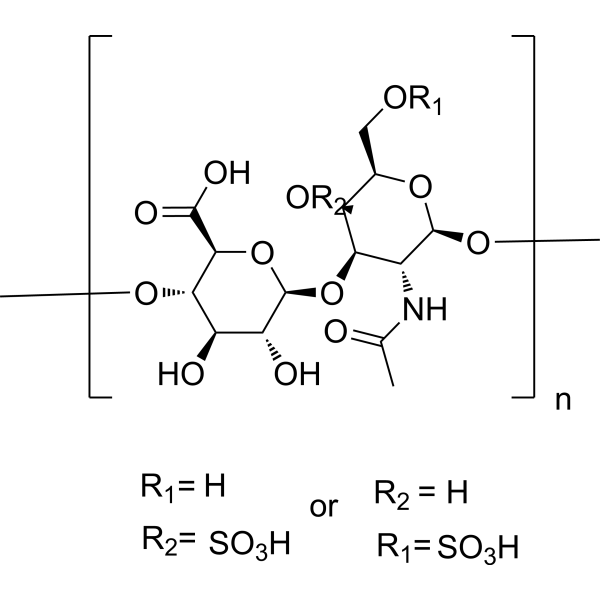
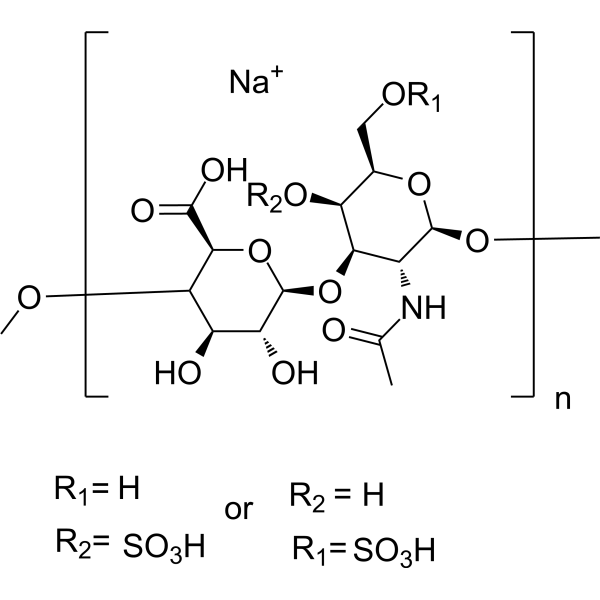
    Chondroitin sulfate
    5+ Cited Publications

    Chondroitin polysulfate

    NO Synthase MMP Endogenous Metabolite Inflammation/Immunology Cancer
    Chondroitin sulfate, one of five classes of glycosaminoglycans, has been widely used in the treatment of osteoarthritis. Chondroitin sulfate reduces inflammation mediators and the apoptotic process and is able to reduce protein production of inflammatory cytokines, iNOS and MMPs.
    Chondroitin sulfate
  • HY-16009

    (+)-Phenserine; ANVS401

    α-synuclein Neurological Disease Inflammation/Immunology
    Buntanetap ((+)-Phenserine) is a selective acetylcholinesterase inhibitor. Buntanetap is a multiple neurotoxic protein translation inhibitor with oral activity, including amyloid precursor protein (APP), α-synuclein (αSYN) and huntingtin protein (HTT). Buntanetap reduces the production of β-amyloid precursor protein by blocking its mRNA translation. Buntanetap has anti-inflammatory effects and can be used in the study of Alzheimer's disease and Parkinson's disease .
    Buntanetap
  • HY-107613
    R 59-022
    2 Publications Verification

    DKGI-I; Diacylglycerol kinase inhibitor I

    PKC 5-HT Receptor Inflammation/Immunology
    R 59-022 (DKGI-I) is a DGK inhibitor (IC50: 2.8 µM). R 59-022 inhibits the phosphorylation of OAG to OAPA. R 59-022 is a 5-HT Receptor antagonist, and activates protein kinase C (PKC). R 59-022 potentiates thrombin-induced diacylglycerol production in platelets and inhibits phosphatidic acid production in neutrophils .
    R 59-022
  • HY-50883

    γ-secretase Neurological Disease
    BMS 299897 is a sulfonamide γ-secretase inhibitor with an IC50 of 7 nM for Aβ production inhibition in HEK293 cells stably overexpressing amyloid precursor protein (APP).
    BMS 299897
  • HY-101572

    Methyl caprooyl tyrosinate

    SphK Inflammation/Immunology Cancer
    MHP (Methyl caprooyl tyrosinate) is an activator of sphingosine kinase (SPHK1), and significantly stimulates CAMP mRNA and protein production. MHP (Methyl caprooyl tyrosinate) enhances antimicrobial defense and innate immunity .
    MHP
  • HY-P2973

    Aspergillus acid protease

    Proteasome Others
    Aspergillopepsin I (Aspergillus acid protease) is a metal-containing aspartic protease that catalyzes the hydrolysis of peptide bonds in soybean 7S globulin, soybean 11S globulin and various proteins, with broad specificity. Aspergillopepsin I is intended for use in wine production, where it hydrolyzes haze-forming proteins into small peptides to prevent turbidity during storage. Aspergillopepsin I can be used in studies related to soybean protein hydrolysis and wine production .
    Aspergillopepsin I
  • HY-132582C

    IONIS-MAPTRx sodium; BIIB080 sodium; ISIS 814907 sodium

    Tau Protein Neurological Disease
    Diranersen (IONIS-MAPTRx) sodium is an antisense oligonucleotide that targets the human MAPT gene to inhibit the production of tau protein. Diranersen sodium can be used in research related to Alzheimer's disease and tauopathies .
    Diranersen sodium
  • HY-132582

    IONIS-MAPTRx; BIIB080; ISIS 814907

    Tau Protein Neurological Disease
    Diranersen (IONIS-MAPTRx) is an antisense oligonucleotide that targets the human MAPT gene to inhibit the production of tau protein. Diranersen can be used in research related to Alzheimer's disease and tauopathies .
    Diranersen
  • HY-161543

    Biochemical Assay Reagents Inflammation/Immunology
    DHT/KLH is a conjugate of DHT (dihydrotestosterone) and keyhole limpet hemocyanin (KLH). By conjugating the antigen with a protein adjuvant, the production of antigen-specific antibodies in vaccine models can be enhanced. The conjugate does not affect protein folding or disrupt linear epitopes, and it can enhance cross-presentation and the generation of antigen-specific T cells.
    DHT/KLH
  • HY-145720A

    ALN-CC5 sodium

    Complement System Others
    Cemdisiran sodium is an N-acetylgalactosamine (GalNAc) conjugated siRNA for the research of complement-mediated diseases by suppressing liver production of complement 5 (C5) protein.
    Cemdisiran sodium
  • HY-NP002A

    Biochemical Assay Reagents Others
    Goat Serum Albumin is a plasma protein derived from goats. Goat Serum Albumin is a versatile protein commonly used in various life sciences research applications, including immunoassays and the production and purification of monoclonal antibodies .
    Goat Serum Albumin
  • HY-161106

    GPR84 Inflammation/Immunology Cancer
    OX04528 (compound 68) is a potent, G-protein biased, and orally active GPR84 agonist. OX04528 no cytotoxicity. OX04528 inhibits cAMP production with an EC50 value of 0.00598 nM .
    OX04528
  • HY-N16331

    Others Others
    Soybean flour is a defatted and slowly available protein nutrient. Soybean flour can be isolated from the leguminous plant soybean. Soybean flour has antioxidant activity and stabilizes lipids in formulated foods. Soybean flour can be used for food production such as gluten-free bread research .
    Soybean flour
  • HY-N4231

    NF-κB Inflammation/Immunology
    Lucyoside B inhibits the production of inflammatory mediators via both NF-κB and activator protein-1 pathways in activated macrophages .
    Lucyoside B
  • HY-143230A

    OGX-011 sodium

    Apoptosis Cancer
    Custirsen sodium is a highly specific antisense oligonucleotide that inhibits the production of clusterin , an antiapoptotic protein that is upregulated in response to chemotherapy and that confers treatment resistance.
    Custirsen sodium
  • HY-107613A
    R 59-022 hydrochloride
    2 Publications Verification

    DKGI-I hydrochloride; Diacylglycerol kinase inhibitor I hydrochloride

    PKC 5-HT Receptor Infection Inflammation/Immunology Cancer
    R 59-022 (DKGI-I) hydrochloride is a DGK inhibitor (IC50: 2.8 µM). R 59-022 hydrochloride inhibits the phosphorylation of OAG to OAPA. R 59-022 hydrochloride is a 5-HT Receptor antagonist, and activates protein kinase C (PKC). R 59-022 hydrochloride potentiates thrombin-induced diacylglycerol production in platelets and inhibits phosphatidic acid production in neutrophils .
    R 59-022 hydrochloride
  • HY-162675

    GSK-3 Infection Neurological Disease Metabolic Disease Cancer
    COB-187 is a potent, ATP-competitive and selective inhibitor of GSK-3β. COB-187 inhibits GSK-3 through a reversible and Cysteine (Cys)-199-dependent mechanism. COB-187 inhibits LPS induced cytokine production and SARS-CoV-2 spike protein-induced CXCL10 production .
    COB-187
  • HY-158279

    Antibiotic Bacterial Inflammation/Immunology
    Gentamicin/OVA is an antigen-adjuvant conjugate conjugate of Gentamicin (HY-A0276A) and ovalbumin (OVA). By conjugating the antigen with a protein adjuvant, the production of antigen-specific antibodies in vaccine models can be enhanced. The conjugate does not affect protein folding or disrupt major epitopes, and can enhance cross-presentation and the production of antigen-specific T cells.
    Gentamicin/OVA
  • HY-W012092

    Tyrosinase Reactive Oxygen Species (ROS) Metabolic Disease Inflammation/Immunology
    Ethyl 3,4,5-trimethoxybenzoate is a melanogenesis inhibitor. Ethyl 3,4,5-trimethoxybenzoate does not directly target tyrosinase activity, but inhibits melanin synthesis in a dose-dependent manner by downregulating α-MSH (HY-P0252)-induced tyrosinase protein expression and scavenging ROS. Ethyl 3,4,5-trimethoxybenzoate scavenges DPPH free radicals. Ethyl 3,4,5-trimethoxybenzoate can be used in the research of hyperpigmentation .
    Ethyl 3,4,5-trimethoxybenzoate
  • HY-161544

    Biochemical Assay Reagents Inflammation/Immunology
    Cholyglycine/BSA is a conjugate of Cholyglycine and Bovine Serum Albumin (BSA). By conjugating the antigen with a protein adjuvant, the production of antigen-specific antibodies in vaccine models can be enhanced. The conjugate does not affect protein folding or disrupt major epitopes, and it can enhance cross-presentation and the production of antigen-specific T cells.
    Cholyglycine/BSA
  • HY-161587

    Biochemical Assay Reagents Inflammation/Immunology
    Chloramphenicol/OVA is a conjugate of Chloramphenicol (HY-B0239) and Ovalbumin (OVA). By conjugating the antigen with a protein adjuvant, the production of antigen-specific antibodies in vaccine models can be enhanced. The conjugate does not affect protein folding or disrupt major epitopes and can enhance cross-presentation and the production of antigen-specific T cells.
    Chloramphenicol/OVA
  • HY-161583

    Biochemical Assay Reagents Inflammation/Immunology
    Marijuana/BSA is the antigen-adjuvant conjugate of Marijuana and Bovine Serum Albumin (BSA). By conjugating the antigen with a protein adjuvant, the production of antigen-specific antibodies in vaccine models can be enhanced. The conjugate does not affect protein folding or destroy major epitopes, and it can enhance cross-presentation and the production of antigen-specific T cells.
    Marijuana/BSA
  • HY-161562

    Biochemical Assay Reagents Inflammation/Immunology
    PROMETON/BSA is an antigen-adjuvant conjugate formed by the coupling of PROMETON with bovine serum albumin (BSA). By coupling the antigen to the protein adjuvant, the production of antigen-specific antibodies in vaccine models can be enhanced. The conjugate does not affect protein folding or disrupt major epitopes, and it can enhance cross-presentation and the production of antigen-specific T cells.
    PROMETON/BSA
  • HY-161531

    Biochemical Assay Reagents Inflammation/Immunology
    Diethylstilbestrol/BSA is a conjugate of Diethylstilbestrol (HY-14598) and Bovine Serum Albumin (BSA). By conjugating the antigen with a protein adjuvant, the production of antigen-specific antibodies in vaccine models can be enhanced. The conjugate does not affect protein folding or disrupt major epitopes, and it can enhance cross-presentation and the production of antigen-specific T cells.
    Diethylstilbestrol/BSA
  • HY-149753

    Hapten Inflammation/Immunology
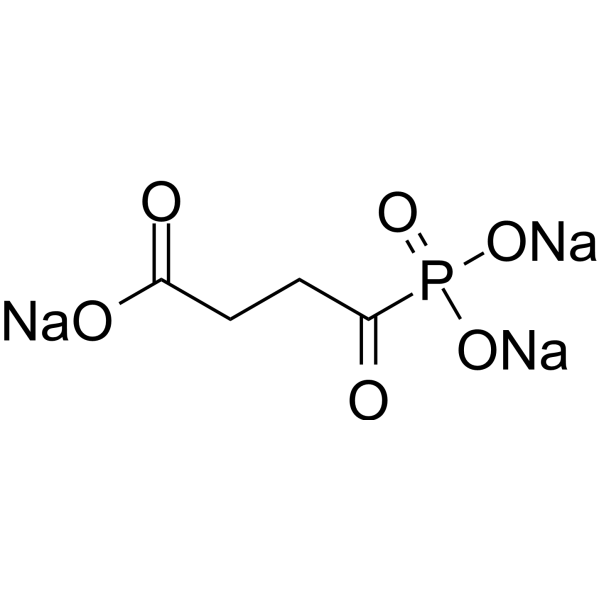
    Methylthiomcresol-succinaldehydic acid is a fenthion hapten that can be used for immunoreagent production (protein conjugates and polyclonal antibodies) .
    Methylthiomcresol-succinaldehydic acid
  • HY-N13299

    Endogenous Metabolite Others
    Glucoberteroin is a glucosinolate, which could be isolated from Degenia velebitica. Glucoberteroin inhibits protein glycosylation and carbonylation, decreases the production of carbonyl protein, and contributes to the preventation of skin-aging .
    Glucoberteroin
  • HY-163555

    Biochemical Assay Reagents Inflammation/Immunology
    BZO/BSA is an antigen-adjuvant conjugate formed by the coupling of BZO (benzodiazepine) with bovine serum albumin (BSA). By conjugating the antigen with a protein adjuvant, the production of antigen-specific antibodies in vaccine models can be enhanced. The conjugate does not affect protein folding or disrupt major epitopes, and it can enhance cross-presentation and the production of antigen-specific T cells.
    BZO/BSA
  • HY-161558

    Biochemical Assay Reagents Inflammation/Immunology
    Ractopamine/KLH is an antigen-adjuvant conjugate of Ractopamine (HY-113781) and Keyhole Limpet Hemocyanin (KLH). By conjugating the antigen with a protein adjuvant, the production of antigen-specific antibodies in vaccine models can be enhanced. The conjugate does not affect protein folding or disrupt major epitopes, and it can enhance cross-presentation and the production of antigen-specific T cells.
    Ractopamine/KLH
  • HY-163553

    Biochemical Assay Reagents Inflammation/Immunology
    Metronidazole/BSA is an antigen-adjuvant conjugate of Metronidazole (HY-B0318) and Bovine Serum Albumin (BSA). By conjugating the antigen with the protein adjuvant, the production of antigen-specific antibodies in vaccine models can be enhanced. The conjugate does not affect protein folding or disrupt major epitopes, and it can enhance cross-presentation and the production of antigen-specific T cells.
    Metronidazole/BSA
  • HY-161535

    Biochemical Assay Reagents Inflammation/Immunology
    Oxytetracycline/BSA is an antigen-adjuvant conjugate formed by the coupling of Oxytetracycline (HY-B0275) with Bovine Serum Albumin (BSA). By conjugating the antigen with the protein adjuvant, the production of antigen-specific antibodies in vaccine models can be enhanced. The conjugate does not affect protein folding or disrupt major epitopes, and it can enhance cross-presentation and the production of antigen-specific T cells.
    Oxytetracycline/BSA
  • HY-161565

    Biochemical Assay Reagents Inflammation/Immunology
    Gastrin(1-17)/BSA is an antigen-adjuvant conjugate formed by the coupling of Gastrin(1-17) and Bovine Serum Albumin (BSA). By conjugating the antigen with a protein adjuvant, the production of antigen-specific antibodies in vaccine models can be enhanced. The conjugate does not affect protein folding or destroy major epitopes, and it can enhance cross-presentation and the production of antigen-specific T cells.
    Gastrin(1-17)/BSA
  • HY-161563

    Biochemical Assay Reagents Inflammation/Immunology
    4,4'-Sulfonyldiphenol/BSA is the antigen-adjuvant conjugate of 4,4'-Sulfonyldiphenol (HY-W011927) and Bovine Serum Albumin (BSA). By conjugating the antigen with a protein adjuvant, the production of antigen-specific antibodies in vaccine models can be enhanced. The conjugate does not affect protein folding or disrupt major epitopes, and it can enhance cross-presentation and the production of antigen-specific T cells.
    4,4'-Sulfonyldiphenol/BSA
  • HY-149752

    Hapten Inflammation/Immunology
    Methylthiomcresol-C1-benzoic acid is a fenthion hapten that can be used for immunoreagent production (protein conjugates and polyclonal antibodies) .
    Methylthiomcresol-C1-benzoic acid
  • HY-161109

    Amyloid-β Neurological Disease
    Aβ42-IN-4 (compound 0043) degrades amyloid precursor protein (APP) and reduces Aβ42 production .
    Aβ42-IN-4
  • HY-174608

    mRNA Inflammation/Immunology
    Human IL32 mRNA encodes the human interleukin 32 (IL32) protein, a member of the cytokine family. IL32 induces the production of TNFalpha from macrophage cells.
    Human IL32 mRNA
  • HY-NP077A

    Biochemical Assay Reagents Inflammation/Immunology
    Phaseolus vulgaris Lectin-P is the protein form of Phytohemagglutinin before the separation and purification of Phytohemagglutinin-L (PHA-L) and PHA-E. Phaseolus vulgaris Lectin-P can be used to stimulate the proliferation of peripheral mononuclear cells, promote the production of certain cytokines and the expression of membrane surface proteins .
    Phaseolus vulgaris Lectin-P
  • HY-174733

    mRNA Inflammation/Immunology
    Human CSF2RA mRNA encodes the human colony stimulating factor 2 receptor subunit alpha (CSF2RA) protein, a cytokine that controls the production, differentiation, and function of macrophages.
    Human CSF2RA mRNA
  • HY-NP0211

    Biochemical Assay Reagents Inflammation/Immunology
    DHT-OVA is a conjugate of DHT (Dihydrotestosterone) and OVA peptide. By conjugating the antigen with a protein adjuvant, the production of antigen-specific antibodies in vaccine models can be enhanced. The conjugate does not affect protein folding or disrupt linear epitopes, and it can enhance cross-presentation and the generation of antigen-specific T cells.
    DHT-OVA
  • HY-174734

    mRNA Inflammation/Immunology
    Human CSF1 mRNA encodes the human colony stimulating factor 1 (CSF1) protein, a cytokine that controls the production, differentiation, and function of macrophages. CSF1 may be involved in the development of the placenta.
    Human CSF1 mRNA
  • HY-153995A

    Drug Metabolite Mitochondrial Metabolism Metabolic Disease
    D-Ribonic acid is a metabolite of D-Ribose (HY-113375). Ribonic acid is associated with genetic variations in ENOSF1 and NUBPL. Ribonic acid may participate in the mitochondrial energy production process .
    D-Ribonic acid
  • HY-NP0250

    Biochemical Assay Reagents Inflammation/Immunology
    Kanamycin-BSA is a conjugate of Kanamycin (HY-16566) and BSA. By conjugating the antigen with protein adjuvants, the production of antigen-specific antibodies in vaccine models can be enhanced. The conjugate does not affect protein folding or disrupt the primary epitopes, and it can enhance cross-presentation and the generation of antigen-specific T cells .
    Kanamycin-BSA
  • HY-174732

    mRNA Inflammation/Immunology
    Human CSF3 mRNA encodes the human colony stimulating factor 3 (CSF3) protein, a member of the IL-6 superfamily of cytokines. CSF3 controls the production, differentiation, and function of granulocytes.
    Human CSF3 mRNA
  • HY-161581

    Biochemical Assay Reagents Inflammation/Immunology
    Metronidazole/OVA is a conjugate of Metronidazole (HY-B0318) and Ovalbumin (OVA). By conjugating the antigen with protein adjuvants, the production of antigen-specific antibodies in vaccine models can be enhanced. The conjugate does not affect protein folding or disrupt the primary epitopes, and it can enhance cross-presentation and the generation of antigen-specific T cells.
    Metronidazole/OVA
  • HY-NP0255

    Biochemical Assay Reagents Inflammation/Immunology
    Amoxicillin-BSA is a conjugate of Amoxicillin (HY-B0467A) and BSA. By conjugating the antigen with protein adjuvants, the production of antigen-specific antibodies in vaccine models can be enhanced. The conjugate does not affect protein folding or disrupt the primary epitopes, and it can enhance cross-presentation and the generation of antigen-specific T cells .
    Amoxicillin-BSA
  • HY-NP0248

    Biochemical Assay Reagents Inflammation/Immunology
    Ciprofloxacin-BSA is a conjugate of Ciprofloxacin (HY-B0356) and BSA. By conjugating the antigen with protein adjuvants, the production of antigen-specific antibodies in vaccine models can be enhanced. The conjugate does not affect protein folding or disrupt the primary epitopes, and it can enhance cross-presentation and the generation of antigen-specific T cells .
    Ciprofloxacin-BSA
  • HY-P4497

    ERK Cancer
    Prolylserine, a dipeptide, is an inhibitor of melanogenesis production in Mel-Ab cells. Prolylserine decreases expression of microphthalmia-associated transcription factor (MITF) and tyrosinase, induces phorphosylation of ERK, but not cAMP response element binding protein (CREB) .
    Prolylserine
  • HY-NP0246

    Biochemical Assay Reagents Inflammation/Immunology
    Sulfamerazine-OVA is a conjugate of Sulfamerazine (HY-B0512) and Ovalbumin (OVA). By conjugating the antigen with protein adjuvants, the production of antigen-specific antibodies in vaccine models can be enhanced. The conjugate does not affect protein folding or disrupt the primary epitopes, and it can enhance cross-presentation and the generation of antigen-specific T cells .
    Sulfamerazine-OVA
  • HY-161548

    Biochemical Assay Reagents Inflammation/Immunology
    Metronidazole/KLH is a conjugate of Metronidazole (HY-B0318) and Keyhole Limpet Hemocyanin (KLH). By conjugating the antigen with the protein adjuvant, the production of antigen-specific antibodies in vaccine models can be enhanced. The conjugate does not affect protein folding or disrupt major epitopes and can enhance cross-presentation and the generation of antigen-specific T cells.
    Metronidazole/KLH
  • HY-NP0247A

    Biochemical Assay Reagents Inflammation/Immunology
    Sulfadimidine-OVA is a conjugate of Sulfadimidine (HY-B0035) and Ovalbumin (OVA). By conjugating the antigen with protein adjuvants, the production of antigen-specific antibodies in vaccine models can be enhanced. The conjugate does not affect protein folding or disrupt the primary epitopes, and it can enhance cross-presentation and the generation of antigen-specific T cells .
    Sulfadimidine-OVA
  • HY-174603

    mRNA Inflammation/Immunology
    Human IL4R mRNA encodes the human interleukin 4 receptor (IL4R) protein, a type I transmembrane protein that can bind interleukin 4 and interleukin 13 to regulate IgE production. IL4R also can bind interleukin 4 to promote differentiation of Th2 cells.
    Human IL4R mRNA

Inquiry Online

Your information is safe with us. * Required Fields.

Salutation


Country or Region *

Applicant Name *


Organization Name *

Department *


Email Address *


Product Name *

Cat. No.


Requested quantity *

Phone Number *


Remarks

Inquiry Online

Inquiry Information

Product Name:
Cat. No.:
Quantity:
MCE Japan Authorized Agent:

