



Chondroitin sulfate sodium (from shark cartilage)
Based on 8 publication(s) in Google Scholar
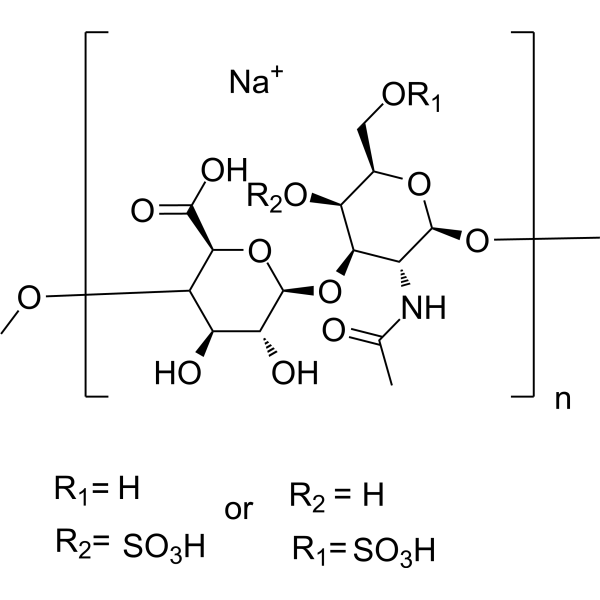
Chondroitin sulfate sodium (from shark cartilage), one of five classes of glycosaminoglycans, has been widely used in the treatment of osteoarthritis. Chondroitin sulfate reduces inflammation mediators and the apoptotic process and is able to reduce protein production of inflammatory cytokines, iNOS and MMPs.
For research use only. We do not sell to patients.
- Purity : 99.52%
- CAS No.: 9082-07-9
-
Storage:
4°C, sealed storage, away from moisture and light
* In solvent : -80°C, 6 months; -20°C, 1 month (sealed storage, away from moisture and light)

To place orders, for customer services and technical support, please contact: MedChemExpress USA
Tel: 609-228-6898 E-mail: [email protected] [email protected]


-
 Biological Activity
-
Chemical Information
-
Solvent & Solubility
- Protocols
- Purity & Documentation
- References
-
 Help & FAQs


-
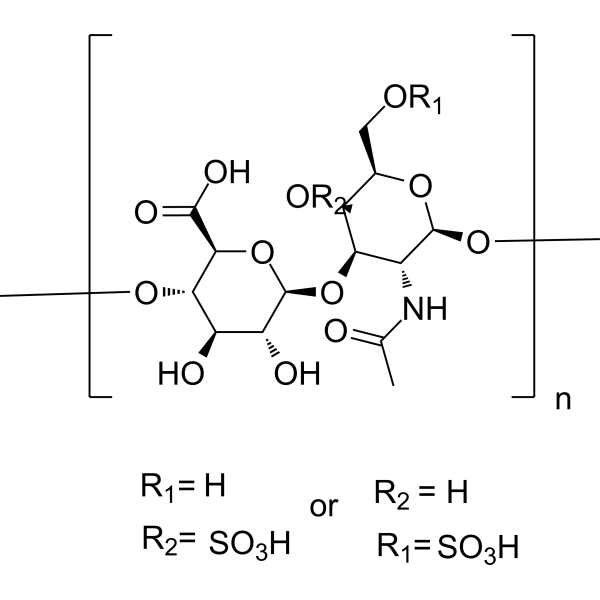
HY-B2162B
Chondroitin sulfate sodium (from bovine)Sulfated Linear Polysaccharide -
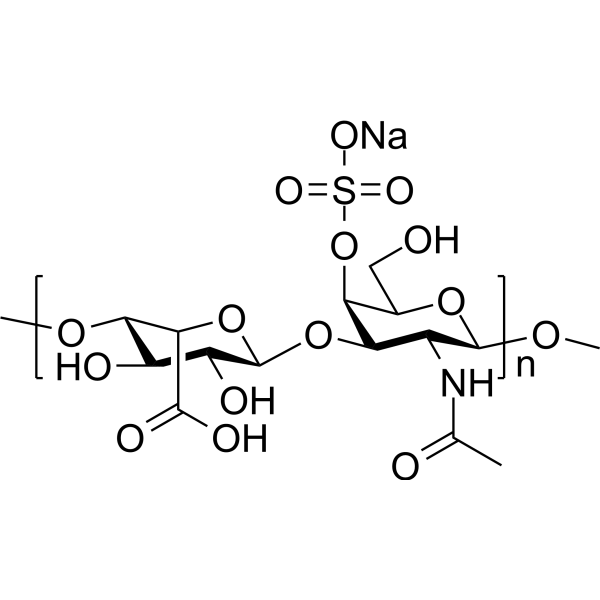
HY-N8278
Dermatan sulphate sodiumThrombin Inactivator -
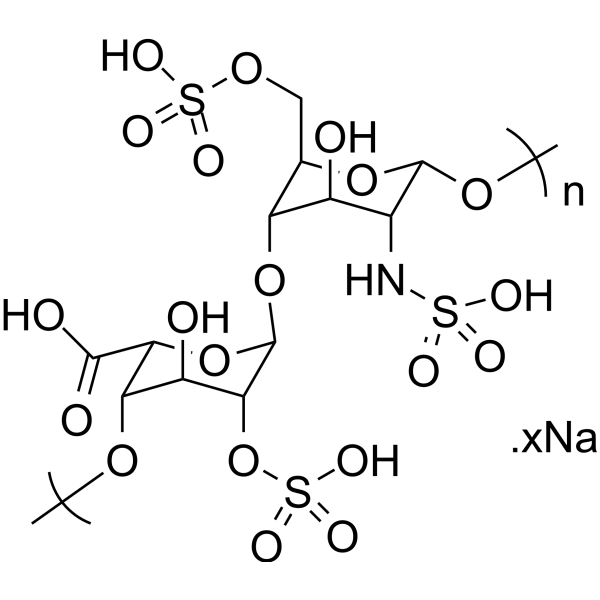
HY-17567A
Heparin sodium saltAnticoagulant -
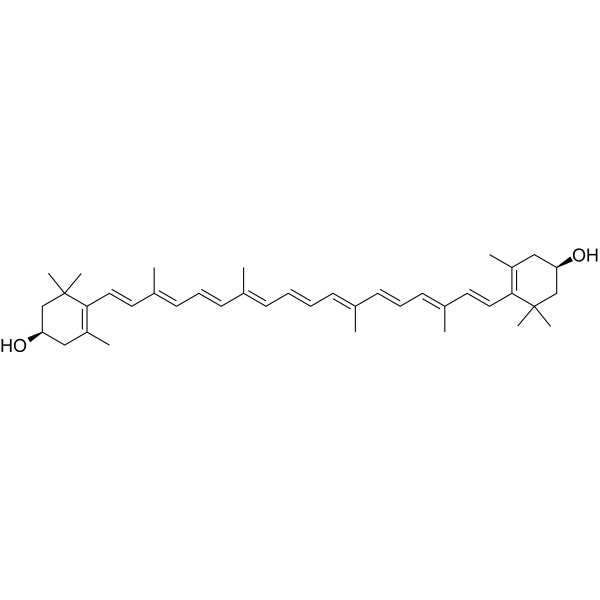
HY-120318
ZeaxanthinDiet-obtained Carotenoid -
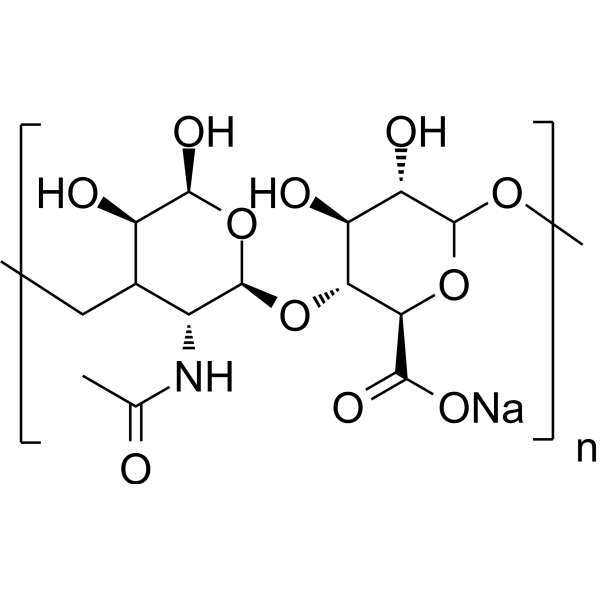
HY-B0633
Hyaluronic acid sodiumGlycosaminoglycan -

HY-172443
Keratin sulfateProteoglycan -
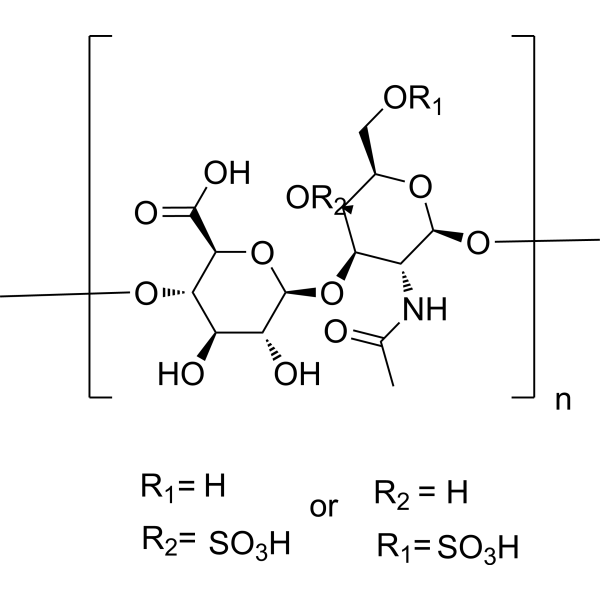
HY-B2162
Chondroitin sulfateGlycosaminoglycan -
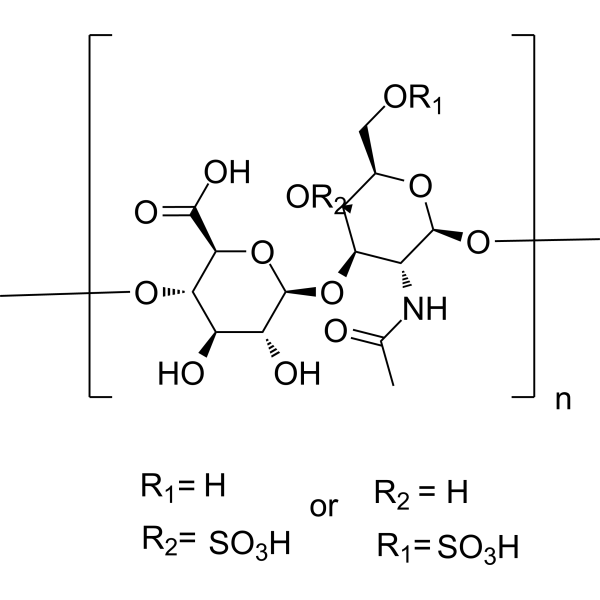
HY-B2162D
Chondroitin sulfate (from chicken)Sulfated Linear Polysaccharide -
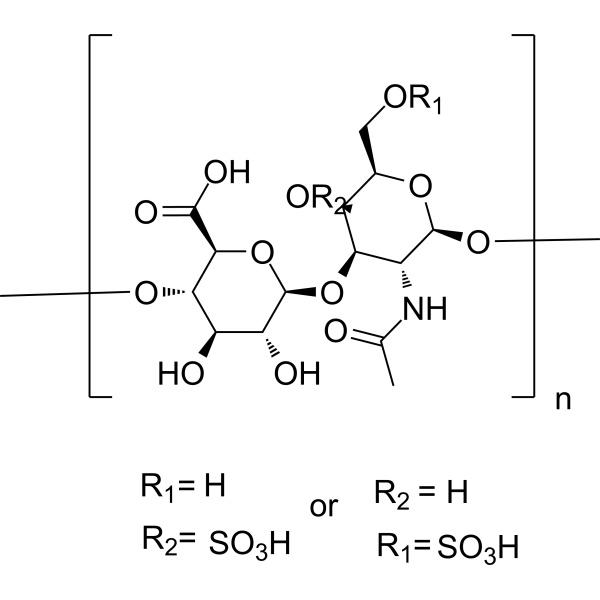
HY-B2162C
Chondroitin sulfate (from pig)Sulfated Linear Polysaccharide -
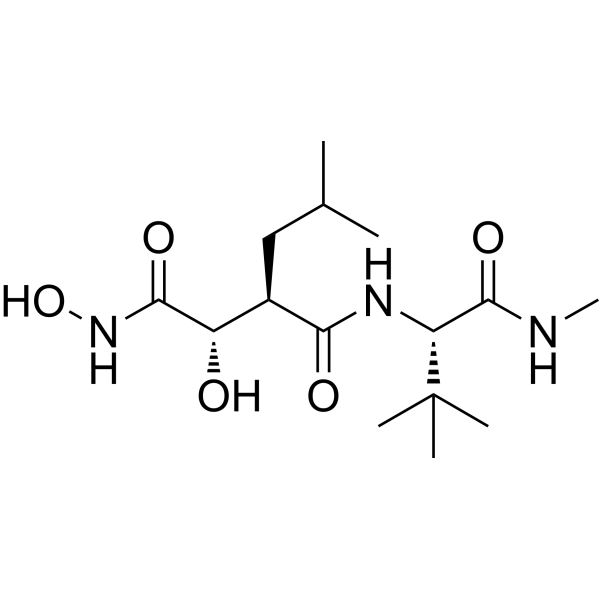
HY-12169
MarimastatMMP Inhibitor -
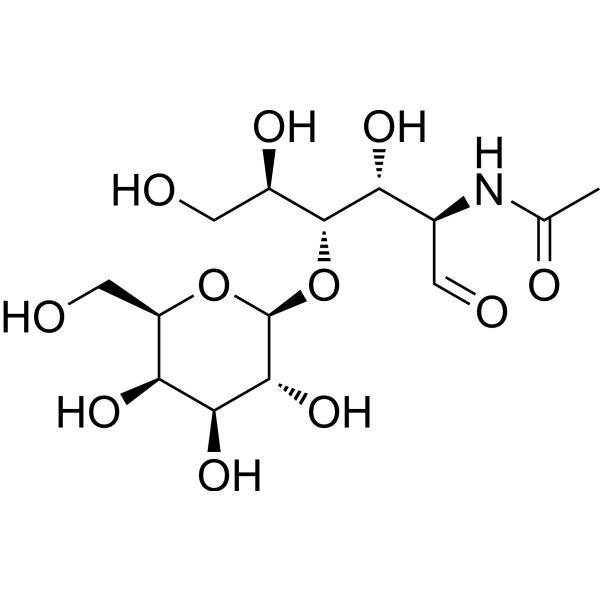
HY-126854
N-AcetyllactosamineNitrogen Disaccharide -
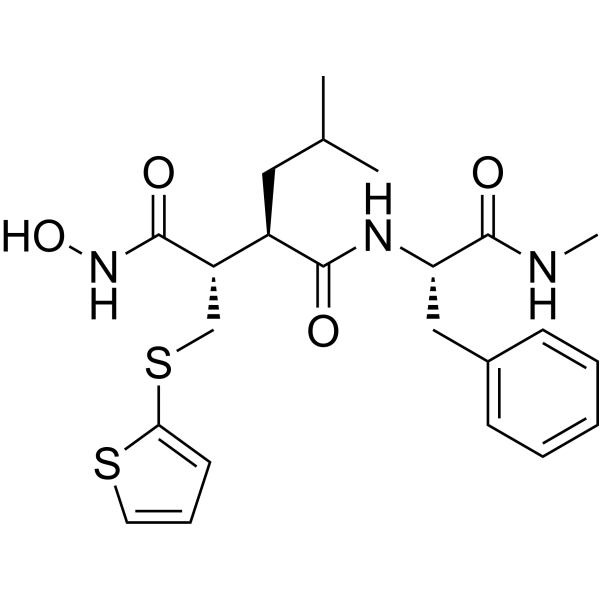
HY-13564
BatimastatMMP Inhibitor
Publications Citing Use of MedChemExpress (MCE) Chondroitin sulfate sodium (from shark cartilage)
More- Immunity. 2021 May 11;54(5):962-975.e8. [Abstract]
- Acta Pharm Sin B. 2024 Mar;14(3):1241-1256. [Abstract]
- Mater Today Bio. 2025 Aug 11:34:102179. [Abstract]
- Biomater Res. 2025 Sep 3:29:0245. [Abstract]
- Food Biosci. 2025 Nov 29.
- J Thromb Haemost. 2021 Feb;19(2):470-477. [Abstract]
- Antibodies. 2026 Aug;15(4):52.
- FEBS Lett. 2020 Jan;594(1):94-103. [Abstract]
 Customer Validation & Images

-
IF
-
IF
-
In Vivo Efficacy Study
-
IF
-
RT-PCR
All Endogenous Metabolite Isoforms
More

Biological Activity
Description
IC50 & Target
|
iNOS |
Human Endogenous Metabolite |
In Vitro
Chondroitin sulfate sodium (from shark cartilage) is a class of sulfated glycosaminoglycans that are linear polysaccharides consisting of repeating disaccharide units composed of uronic acid and N-acetylhexosamine. Several pathogens including parasites, bacteria, and viruses have been shown to utilize cell surface chondroitin sulfate chains to attach to and infect host cells[1].
Chondroitin sulfate occurs naturally in the extracellular matrix of connective tissues, e.g., bone, cartilage, skin, ligaments and tendons. Chondroitin sulfate has been shown to elicit a range of beneficial effects: anti-inflammatory effects, an increase in type II collagen and proteoglycans, a reduction in bone resorption and a better anabolic/catabolic balance in chondrocytes[2].
A large range of chondroitin sulfate concentrations has been used (e.g. 12.5 to 2000 mg/mL, but generally less than200 mg/mL) in in vitro studies. Chondroitin sulfate (200 mg/mL) decreases the chondrocyte susceptibility to single nucleotide polymorphism-induced apoptosis[3].
Chondroitin sulfate reduces inflammation mediators and the apoptotic process and is able to reduce protein production of inflammatory cytokines, iNOS, MMPs[4].
MedChemExpress (MCE) has not independently confirmed the accuracy of these methods. They are for reference only. Further protocols information, click here.
In Vivo
Chondroitin sulfate is mostly administered orally at doses ranging from 800 to 1200mg/day. Chondroitin sulfate is rapidly absorbed by the gastrointestinal tract. The absorbed chondroitin sulfate reaches the blood compartment as 10% chondroitin sulfate and 90% depolymerized low-molecular-weight derivatives[5].
MedChemExpress (MCE) has not independently confirmed the accuracy of these methods. They are for reference only.


Chemical Information
-
CAS No. 9082-07-9
-
Appearance Solid
-
Color White to off-white
-
SMILES
O=S(O)=O.O=S(O)=O.OC([C@@H]1[C@@H](OC)[C@H](O)[C@@H](O)[C@H](O[C@@H]2[C@@H](NC(C)=O)[C@H](OC)O[C@H](CO[R])[C@@H]2O[R])O1)=O.[R].[R].[Na+].[=].[=].[R2=].[R1=].[n].[or]
-
Synonyms
Chondroitin polysulfate sodium (from shark cartilage)
-
Structure Classification
-
Initial Source
-
Shipping
Room temperature in continental US; may vary elsewhere.
-
Storage
4°C, sealed storage, away from moisture and light
* In solvent : -80°C, 6 months; -20°C, 1 month (sealed storage, away from moisture and light)


Publications (8)
-
Journal Impact Factor
-
Most Recent
-
Immunity
Golgi apparatus-synthesized sulfated glycosaminoglycans mediate polymerization and activation of the cGAMP sensor STING. [Abstract]2021 May 11;54(5):962-975.e8. PMID: 33857420 -
Acta Pharm Sin B
Sulfation of chondroitin and bile acids converges to antagonize Wnt/ β-catenin signaling and inhibit APC deficiency-induced gut tumorigenesis. [Abstract]2024 Mar;14(3):1241-1256. PMID: 38487006
Chondroitin sulfate sodium (from shark cartilage) purchased from MedChemExpress. Usage Cited in: Acta Pharm Sin B. 2024 Mar;14(3):1241-1256. [Abstract]
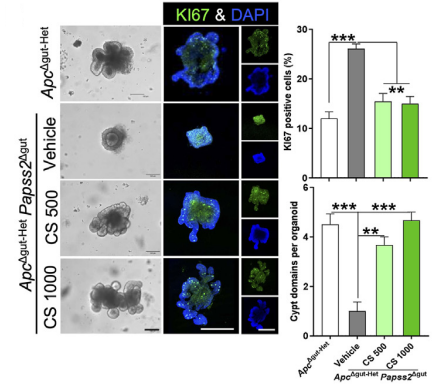
Representative appearance and Ki67 immunofluorescence of organoids isolated from the ileum of ApcDgut-Het and ApcDgut-HetPapss2Dgut mice and treatment with indicated doses of Chondroitin sulfate (CS, 500 and 1000 mg/mL). Shown on the right are the quantifications of organoid crypts and relative Ki67 signals.
Chondroitin sulfate sodium (from shark cartilage) purchased from MedChemExpress. Usage Cited in: Acta Pharm Sin B. 2024 Mar;14(3):1241-1256. [Abstract]
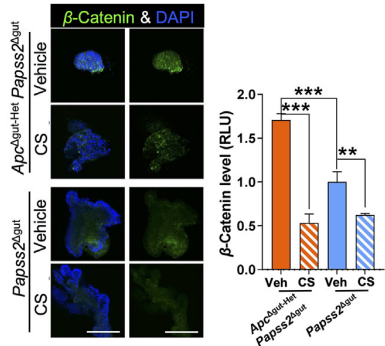
Representative β-catenin immunofluorescence of organoids isolated from the ileum of ApcΔgut-HetPapss2Δgut and AOM-treated Papss2Δgut mice and treatment without or with Chondroitin sulfate. Shown on the right are the quantifications of relative β-catenin signals.
Chondroitin sulfate sodium (from shark cartilage) purchased from MedChemExpress. Usage Cited in: Acta Pharm Sin B. 2024 Mar;14(3):1241-1256. [Abstract]
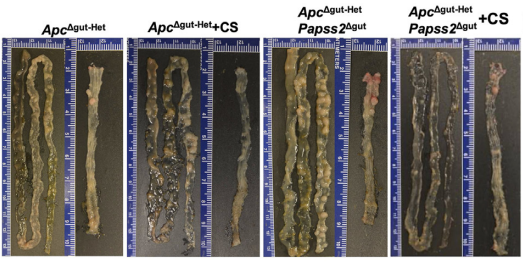
Chondroitin sulfate (CS; 400 mg/kg; daily; PO; 8 weeks) markedly attenuated Papss2 deficiency-induced gut tumorigenesis, as evidenced by the gross appearance of the intestine and colon tissues.
Chondroitin sulfate sodium (from shark cartilage) purchased from MedChemExpress. Usage Cited in: Acta Pharm Sin B. 2024 Mar;14(3):1241-1256. [Abstract]
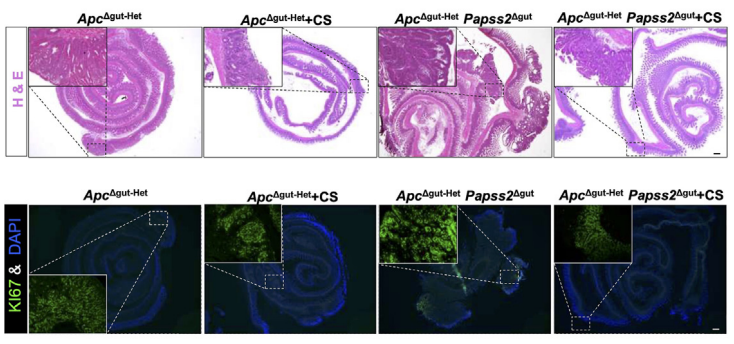
At the histological level, increased tumor morphology and Ki67 immunostaining observed in ApcΔgut-HetPapss2Δgut mice were attenuated upon the Chondroitin sulfate (CS; 400 mg/kg; daily; PO; 8 weeks) treatment.
Chondroitin sulfate sodium (from shark cartilage) purchased from MedChemExpress. Usage Cited in: Acta Pharm Sin B. 2024 Mar;14(3):1241-1256. [Abstract]
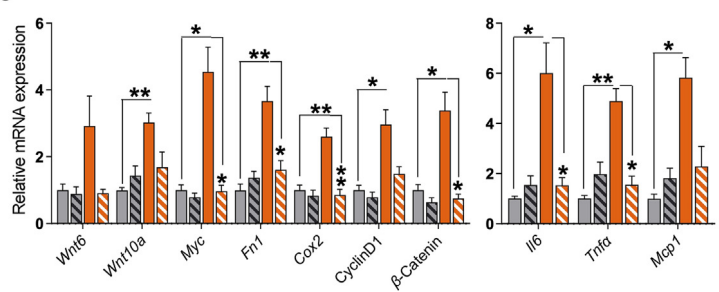
Chondroitin sulfate (CS; 400 mg/kg; daily; PO; 8 weeks) decreased the mRNA expression of Wnt target genes and inflammatory marker genes. Relative ileal mRNA levels of Wnt target genes and pro-inflammatory genes.
-
Mater Today Bio
Brinzolamide encapsulated β-cyclodextrin-chondroitin sulfate nanocomplexes anchored chitosan/polycaprolactone nanofibers as an ocular insert for glaucoma treatment. [Abstract]2025 Aug 11:34:102179. PMID: 40838214 -
Biomater Res
Albumin Nanocages with Methotrexate and Chondroitin Sulfate as a Dual pH/GSH-Responsive Tumor Targeting Nanomedicine for Synergistic Cancer Therapy. [Abstract]2025 Sep 3:29:0245. PMID: 40908968 -
-
J Thromb Haemost
Skeletal muscle myosin and cardiac myosin attenuate heparin's antithrombin-dependent anticoagulant activity. [Abstract]2021 Feb;19(2):470-477. PMID: 33176060 -
-
FEBS Lett
Thermodynamic profiles of the interactions of suramin, chondroitin sulfate, and pentosan polysulfate with the inhibitory domain of TIMP-3. [Abstract]2020 Jan;594(1):94-103. PMID: 31359422


Solvent & Solubility
In Vitro:
H2O : 50 mg/mL (Need ultrasonic)

Protocols
-
Apoptosis
Apoptosis, also called programmed cell death, is generally characterized by distinct morphological characteristics.
-
LPS-Induced Endotoxemia/Systemic Inflammation
Lipopolysaccharide (LPS)-induced endotoxemia is a widely used in vivo model of acute systemic inflammation in which LPS, a Gram-negative bacterial endotoxin, activates innate immune signaling primarily through TLR4, leading to rapid and transient induction of pro-inflammatory cytokines such as TNF-α, IL-6, and IL-1β in circulation and tissues. This cytokine surge is commonly used as a measurable readout of systemic inflammatory activation and immune dysregulation, and is typically assessed within hours after intraperitoneal LPS administration in mouse models of endotoxemia. The model captures key features of systemic inflammatory response syndrome, including cytokine release, immune cell activation, and downstream tissue responses, and has been used to evaluate anti-inflammatory interventions such as cytokine modulation, lipid mediators, and immune cell-targeting therapies.
-
Apoptosis Solutions
Apoptosis is a regulated, generally non-lytic cell-death pathway that removes unwanted, damaged, infected, or abnormal cells through coordinated morphological changes, caspase activation, DNA fragmentation, and membrane remodeling. The intrinsic apoptosis pathway is controlled mainly by mitochondrial outer membrane permeabilization, BCL-2 family proteins, cytochrome c release, apoptosome formation, caspase-9 activation, and downstream executioner caspase-3/7 activation. The extrinsic apoptosis pathway is initiated by death receptors such as Fas, TNFR, and TRAIL receptors, which recruit adaptor proteins and activate caspase-8 before engaging executioner caspases or mitochondrial amplification through BID cleavage. Apoptosis is linked to many phenotypes, including cancer cell killing, tissue homeostasis, immune regulation, neurodegeneration, infection response, and treatment-induced cytotoxicity; unresolved questions include how apoptosis interacts with necroptosis, pyroptosis, ferroptos
-
Research Protocol for Inflammation-related Diseases
The NLRP3 inflammasome is a cytosolic innate immune signaling platform that integrates priming signals and danger-signal activation to promote caspase-1 activation, maturation of IL-1β and IL-18, and gasdermin D-mediated pyroptotic cell death. The core experimental logic is to determine whether inflammatory disease phenotypes are driven by increased NLRP3 expression, ASC-containing inflammasome assembly, caspase-1 cleavage, GSDMD cleavage, and extracellular release of IL-1β/IL-18 rather than by nonspecific cell injury alone. The pathway is strongly linked to inflammation-related disease phenotypes because monosodium urate crystals activate NALP3/NLRP3 inflammasome signaling in gout-like crystal inflammation, cholesterol crystals activate NLRP3 inflammasomes in atherogenesis models, and DSS-induced intestinal inflammation has been reported to involve NLRP3 inflammasome activity. However, experimental colitis studies also show context-dependent protective effects of NLRP3 inflammasome co
-
Protocol For Protein Expression And Purification
Recombinant protein expression in Escherichia coli followed by purification of a His-tagged soluble protein by immobilized metal affinity chromatography (IMAC), with optional MBP fusion and TEV tag removal when the construct includes these elements. The biological readout is production of the encoded target protein, detected as an inducible band at the expected molecular mass by SDS-PAGE and quantified by total protein assay or chromatographic absorbance; the purification readout is enrichment of the target protein in elution fractions after selective binding of polyhistidine residues to immobilized Ni2+/metal-chelate resin and elution by imidazole-containing buffer. Expression is driven by an inducible bacterial expression system, commonly T7/lac-based, in which IPTG or lactose/auto-induction activates transcription and translation of the cloned gene; lower induction temperature, lower inducer concentration, induction timing, and solubility-enhancing fusion tags can influence the frac


Purity & Documentation
-
Data Sheet (281 KB)
-
SDS (393 KB)
- English - EN (393 KB)
- Français - FR (393 KB)
- Deutsch - DE (393 KB)
- Norwegian - NO (393 KB)
- Español - ES (393 KB)
- Swedish - SV (393 KB)
- Italian - IT (393 KB)
- Korean - KR (393 KB)
- Portuguese - PT (393 KB)
-
Handling Instructions (2659 KB)
References
[1]. Mikami T, et al. Biosynthesis and function of chondroitin sulfate. Biochim Biophys Acta. 2013 Oct;1830(10):4719-33. [Content Brief]
[2]. Monfort J, et al. Biochemical basis of the effect of chondroitin sulphate on osteoarthritis articular tissues. Ann Rheum Dis. 2008 Jun;67(6):735-40. [Content Brief]
[3]. Martel-Pelletier J, et al.Discrepancies in composition and biological effects of different formulations of chondroitin sulfate. Molecules. 2015 Mar 6;20(3):4277-89. [Content Brief]
[4]. Campo GM, et al. Glycosaminoglycans modulate inflammation and apoptosis in LPS-treated chondrocytes. J Cell Biochem. 2009 Jan 1;106(1):83-92. [Content Brief]
[5]. Henrotin Y, et al. Chondroitin sulfate in the treatment of osteoarthritis: from in vitro studies to clinicalrecommendations. Ther Adv Musculoskelet Dis. 2010 Dec;2(6):335-48. [Content Brief]

Calculators
Concentration (start) × Volume (start) = Concentration (final) × Volume (final)


Chondroitin sulfate sodium (from shark cartilage) Related Classifications
HY-B2162A Related Classifications
 Powered by Bioz