1. Search Result
Search Result
Results for "

quinone oxidoreductase

" in MedChemExpress (MCE) Product Catalog:

26

Inhibitors & Agonists

1

Fluorescent Dyes

3

Natural
Products

1

Recombinant Proteins

1

Isotope-Labeled Compounds

2

Antibodies

Cat. No. 상품명 Target 연구분야 Chemical Structure
  • HY-N0645
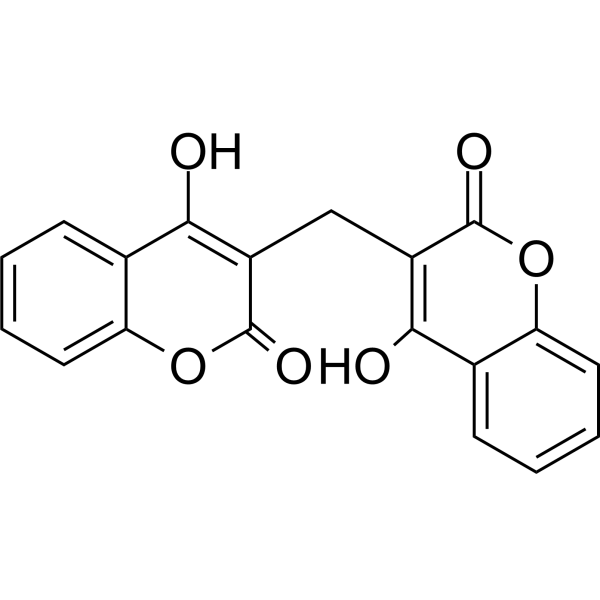
    Dicoumarol
    10+ Cited Publications

    Dicumarol

    Quinone Reductase PDHK Cancer
    Dicoumarol is an inhibitor of both NAD(P)H:quinone oxidoreductase 1 (NQO1) and PDK1 with IC50s of 0.37 and 19.42 μM, respectively.
    Dicoumarol
  • HY-128895
    KL1333
    1 Publications Verification

    Quinone Reductase Mitochondrial Metabolism Metabolic Disease
    KL1333, a derivative of β-lapachone, is an orally available NAD+ modulator. KL1333 reacts with NAD(P)H:quinone oxidoreductase 1 (NQO1) as a substrate, resulting in increases in intracellular NAD+ levels via NADH oxidation. KL1333 improves energy metabolism and mitochondrial dysfunction in MELAS fibroblasts. KL1333 protects against Cisplatin-induced ototoxicity in mouse cochlear cultures .
    KL1333
  • HY-125027

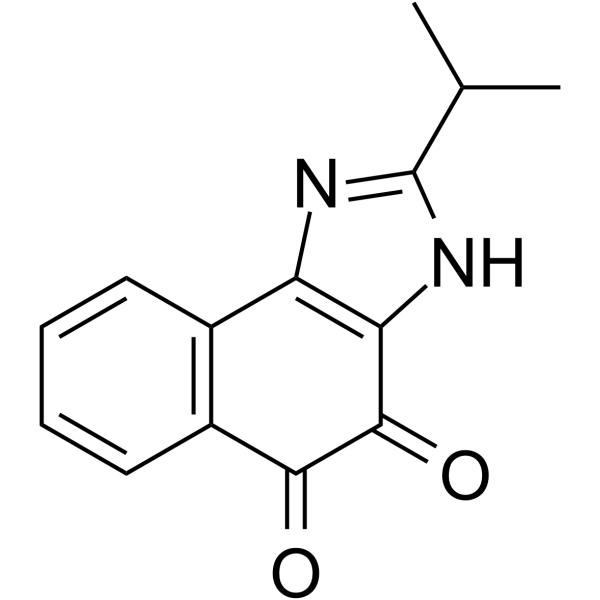
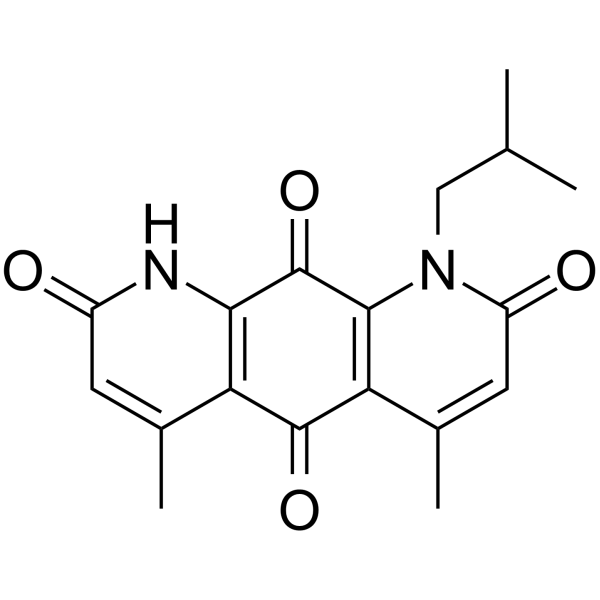
    IB-DNQ

    Quinone Reductase Cancer
    Isobutyl-deoxynyboquinone (IB-DNQ) is a selective substrate for NAD(P)H:quinone oxidoreductase (NQO1). Isobutyl-deoxynyboquinone can be used for the research of anticancer .
    Isobutyl-deoxynyboquinone
  • HY-13543

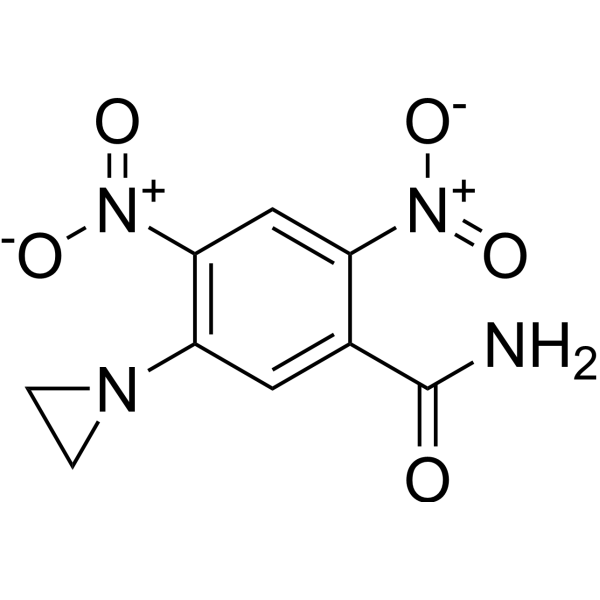
    CB 1954

    Quinone Reductase DNA Alkylator/Crosslinker Cancer
    Tretazicar (CB 1954), an antitumor proagent, is highly selective against the Walker 256 rat tumour line. Tretazicar is enzymatically activated to generate a bifunctional agent, which can form DNA-DNA interstrand cross-links. Tretazicar in rat cells involves the reduction of its 4-nitro group to a 4-hydroxylamine by the enzyme NAD(P)H:quinone oxidoreductase 1 (NQO1) .
    Tretazicar
  • HY-103667
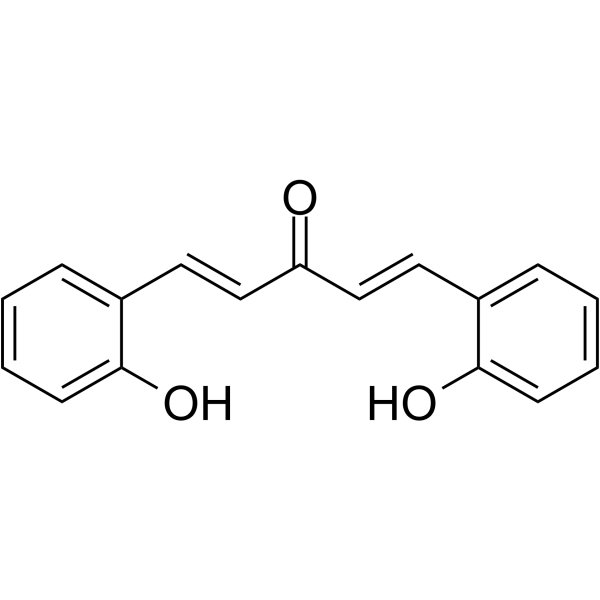
    2-HBA
    3 Publications Verification

    Quinone Reductase Caspase Cancer
    2-HBA is a potent inducer of NAD(P)H:quinone acceptor oxidoreductase 1 (NQO1) which can also activate caspase-3 and caspase-10.
    2-HBA
  • HY-144439

    Mitochondrial Metabolism Cardiovascular Disease Cancer
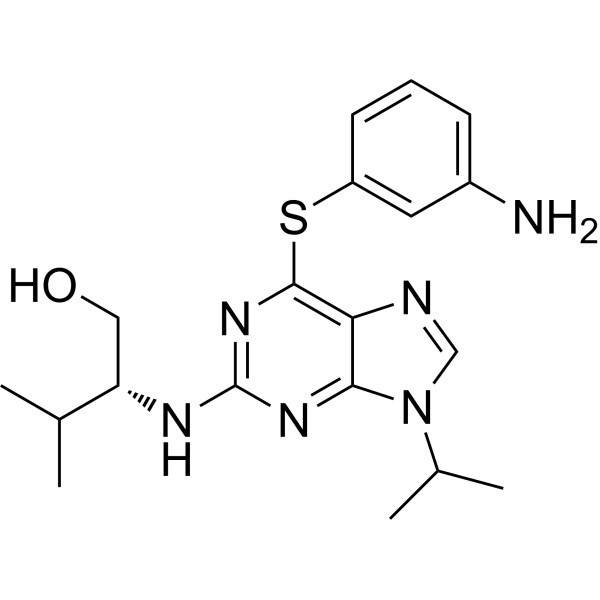
    HTS07545 is a potent sulfide:quinone oxidoreductase (SQOR) inhibitor with an IC50 of 30 nM. HTS07545 reduces the decomposition rate of hydrogen sulfide (H2S). HTS07545 can be used in the research of heart failure and pancreatic ductal adenocarcinoma.
    HTS07545
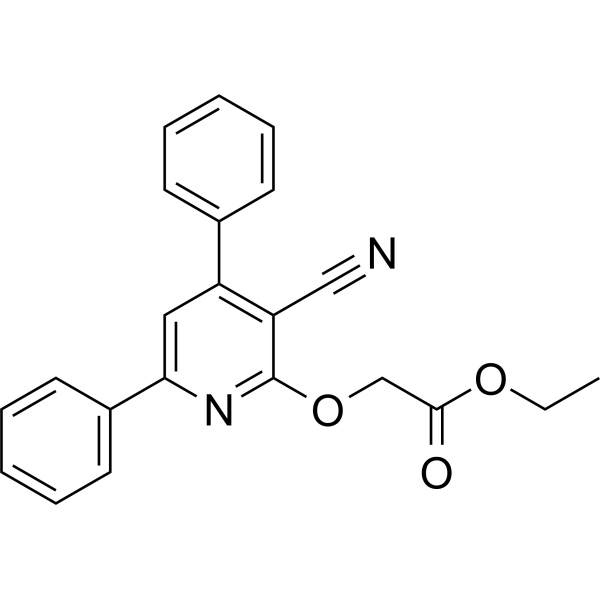
  • HY-141552
    FC9402
    2 Publications Verification

    Mitochondrial Metabolism Cardiovascular Disease
    FC9402 is a potent and selective sulfide quinone oxidoreductase (SQOR) inhibitor extracted from patent WO 2020/146636 A1. FC9402 attenuates TAC-induced cardiomyocyte hypertrophy and left ventricle (LV) fibrosis. FC9402 can be used for cardiovascular regulation .
    FC9402
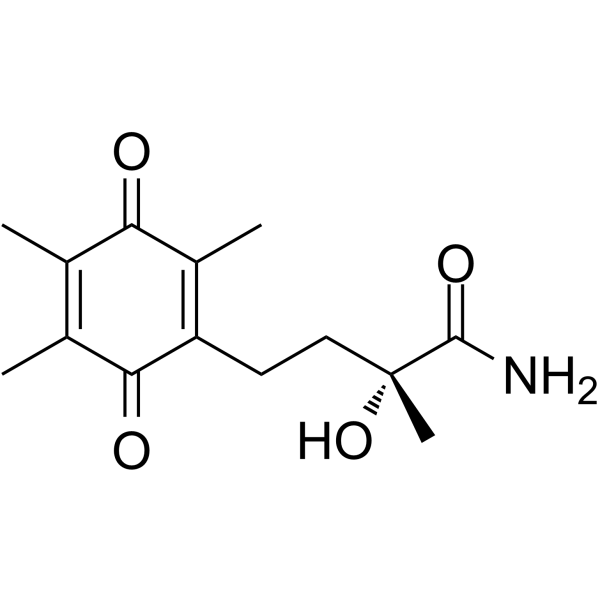
  • HY-125999

    Reactive Oxygen Species (ROS) Neurological Disease
    EPI-589, a quinone derivative, is a safe and well tolerated oxidoreductase enzyme inhibitor and a free radical scavenger, with blood-brain barrier permeable and orally available. EPI-589 is a redox-active neuroprotectant that effectively delays the symptoms of motor neuron disease in wobbler mice. EPI-589 can be used in amyotrophic lateral sclerosis (ALS) research .
    EPI-589
  • HY-118588

    Quinone Reductase Microtubule/Tubulin Others
    Diminutol is an inhibitor for NADP-dependent quinone oxidoreductase (NQO1), that is involved in microtubule morphogenesis and cell devision .
    Diminutol
  • HY-N5018

    Musizin

    Parasite AMPK Infection
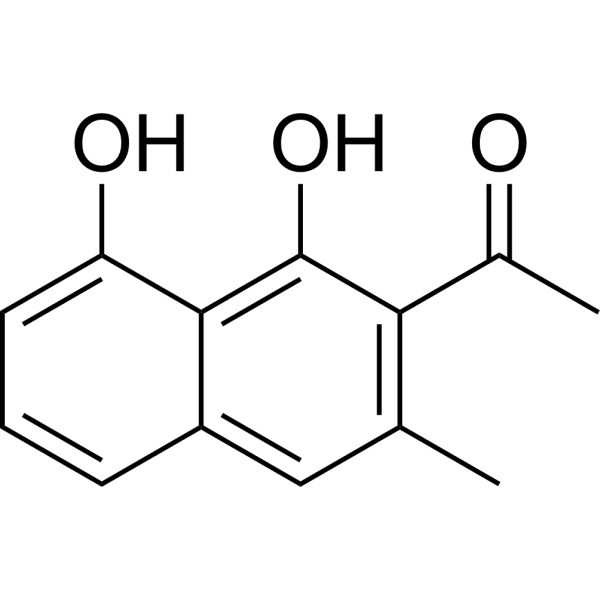
    Nepodin (Musizin) is a quinone oxidoreductase (PfNDH2) inhibitor isolate from Rumex crispus .Nepodin (Musizin) stimulates the translocation of GLUT4 to the plasma membrane by activation of AMPK .Nepodin (Musizin) has antidiabetic and antimalarial activities.
    Nepodin
  • HY-120338

    Mitochondrial Metabolism Parasite Infection
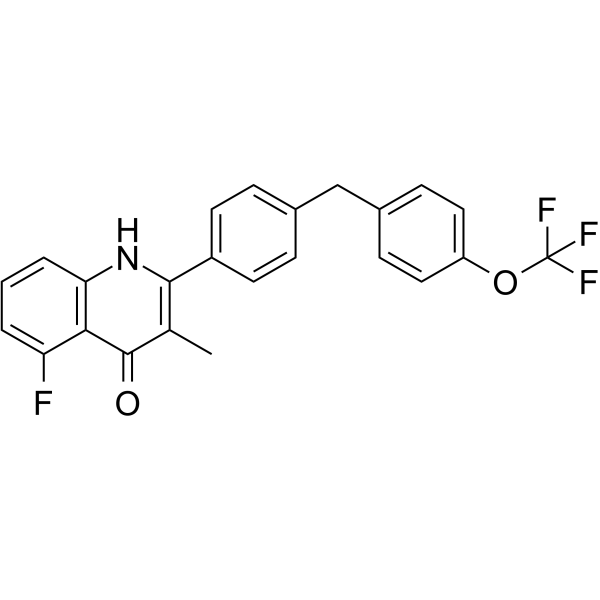
    RYL-552, a mitochondrial electron transport chain (ETC) inhibitor, is a P. falciparum NADH dehydrogenase 2 (PfNDH2) inhibtor .
    RYL-552
  • HY-168926

    Reactive Oxygen Species (ROS) Apoptosis Cancer
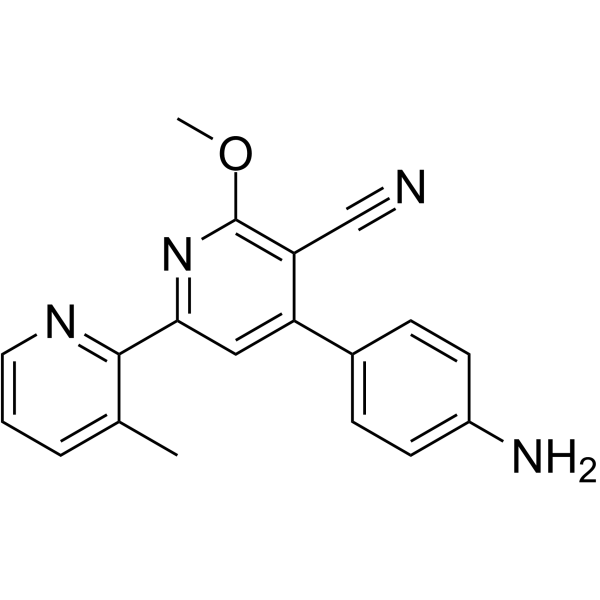
    NQO2-IN-1 (Compound 20b) is the inhibitor for quinone oxidoreductase (NQO) that inhibits NQO2 with an IC50 of 95 nM. NQO2-IN-1 overcomes the resistance of NSCLC cells to tumor necrosis factor-related apoptosis-inducing ligand (TRAIL) by induction of ROS and apoptosis .
    NQO2-IN-1
  • HY-157744

    Mitochondrial Metabolism Cancer
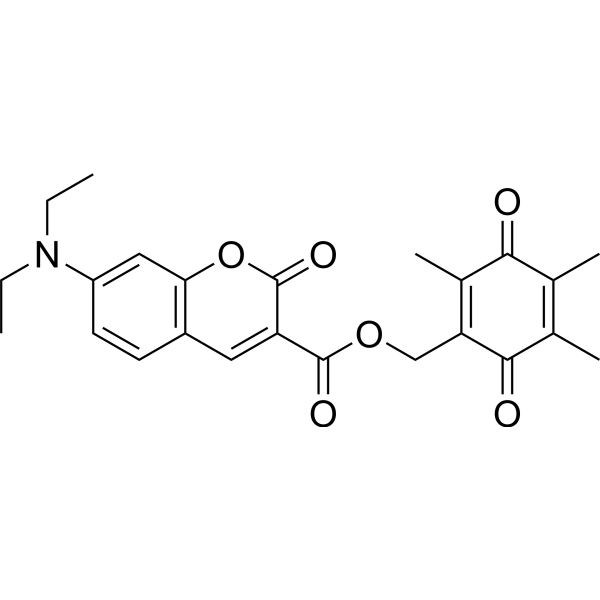
    Coumarin–quinone conjugate is a fluorescent substrate for NADH:ubiquinone oxidoreductases which consists of a coumarin fluorophore and a ubiquinone analog. Coumarin–quinone conjugate can be used to measure the kinetic parameters of AIFM2/FSP1 for researches such as ferroptosis .
    Coumarin–quinone conjugate
  • HY-145820

    Apoptosis Microtubule/Tubulin Cancer
    Tubulin inhibitor 14 is a potent NQO2 (quinone oxidoreductase 2) inhibitor with an IC50 of 1.0 μM. Tubulin inhibitor 14 also inhibits tubulin polymerization and the formation of endothelial cell capillary-like tubes. Tubulin inhibitor 14 is a microtubule-destabilizing agent with potential tumor-selectivity and antiangiogenic and vascular disrupting features .
    Tubulin inhibitor 14
  • HY-W975966

    Keap1-Nrf2 Neurological Disease
    CPDT is an orally active and highly potent inducer of phase 2 enzymes and an activator of Nrf2. The activities of key phase 2 enzymes, including glutathione S-transferase, NAD(P)H:quinone:oxidoreductase 1 and glutamate cysteine synthetase, and levels of glutathione were elevated by CPDT in rat bladder in vivo and in cultured bladder cells in vitro [2].
    CPDT
  • HY-171035

    Quinone Reductase Keap1-Nrf2 Aminotransferases (Transaminases) Metabolic Disease
    PRL-295 is an orally active inhibitor targeting Keap1-Nrf2 interaction. PRL-295 increases the thermal stability of Keap1 and disrupts its interaction with Nrf2, thereby activating the Nrf2-dependent transcriptional target NAD(P)H:quinone oxidoreductase 1 (NQO1). PRL-295 protects against Acetaminophen (HY-66005)-induced liver injury in mice .
    PRL-295
  • HY-169842

    Quinone Reductase Cancer
    NSC 645827 is an inhibitor for NAD(P)H: quinone oxidoreductase 1 (NQO1) with an IC50 of 0.7 μM .
    NSC 645827
  • HY-N0645S

    Dicumarol-d8

    Isotope-Labeled Compounds PDHK Cancer
    Dicoumarol-d8 (Dicumarol-d8) is the deuterium labeled Dicoumarol. Dicoumarol is an inhibitor of both NAD(P)H:quinone oxidoreductase 1 (NQO1) and PDK1 with IC50s of 0.37 and 19.42 μM, respectively.
    Dicoumarol-d8
  • HY-N5018R

    Musizin (Standard)

    Reference Standards Parasite AMPK Infection
    Nepodin (Standard) is the analytical standard of Nepodin. This product is intended for research and analytical applications. Nepodin (Musizin) is a quinone oxidoreductase (PfNDH2) inhibitor isolate from Rumex crispus .Nepodin (Musizin) stimulates the translocation of GLUT4 to the plasma membrane by activation of AMPK .Nepodin (Musizin) has antidiabetic and antimalarial activities.
    Nepodin (Standard)
  • HY-150971

    Pyroptosis Cancer
    ICy-Q is a quinone oxidoreductase 1 (NQO-1)-activated near-infrared (NIR) reagent which can react with NQO-1 to release the reduction product ICy-OH. ICy-OH selectively induces pancreatic cancer cell death through the pyroptosis pathway. ICy-Q can be used as an effective tool for rapid and accurate diagnosis of intraoperative pathological sections .
    ICy-Q
  • HY-13543R

    CB 1954 (Standard)

    DNA Alkylator/Crosslinker Reference Standards Cancer
    Tretazicar (Standard) is the analytical standard of Tretazicar. This product is intended for research and analytical applications. Tretazicar (CB 1954), an antitumor proagent, is highly selective against the Walker 256 rat tumour line. Tretazicar is enzymatically activated to generate a bifunctional agent, which can form DNA-DNA interstrand cross-links. Tretazicar in rat cells involves the reduction of its 4-nitro group to a 4-hydroxylamine by the enzyme NAD(P)H:quinone oxidoreductase 1 (NQO1) .
    Tretazicar (Standard)
  • HY-128895A

    Mitochondrial Metabolism Quinone Reductase Metabolic Disease
    KL1333 hydrochloride is an orally active NAD + modulator that reacts with NAD(P)H:quinone oxidoreductase 1 (NQO1) as a substrate, leading to increased intracellular NAD + levels through NADH oxidation. Elevated NAD + levels trigger activation of SIRT1 and AMPK, and subsequently activate PGC-1α. KL1333 hydrochloride improves energy metabolism and mitochondrial dysfunction in mitochondrial encephalomyopathy, lactic acidosis, and stroke-like episodes (MELAS) fibroblasts. KL1333 hydrochloride protects against cisplatin-induced ototoxicity in mouse cochlear cultures .
    KL1333 hydrochloride
  • HY-W843391

    EP-0152R

    Quinone Reductase Cancer
    Caricotamide (EP-0152R) is a coenzyme of quinone oxidoreductase 2 (NQO2). Caricotamide can efficiently induce the catalytic activity of NQO2 and enhance the anticancer activity of Tretazicar (HY-13543) .
    Caricotamide
  • HY-103667R

    Quinone Reductase Reference Standards Caspase Cancer
    2-HBA (Standard) is the analytical standard of 2-HBA (HY-103667). This product is intended for research and analytical applications. 2-HBA is a potent inducer of NAD(P)H:quinone acceptor oxidoreductase 1 (NQO1) which can also activate caspase-3 and caspase-10.
    2-HBA (Standard)
  • HY-125995

    Keap1-Nrf2 Quinone Reductase Inflammation/Immunology
    NFE2L2 activator 3 (Compound 3) is a NFE2L2/NRF2 activator. NFE2L2 activator 3 specifically activates the NAD(P)H:quinone oxidoreductase (NQO1) enzyme, with its EC50 < 1 nM. NFE2L2 activator 3 can be used for research on respiratory system diseases such as chronic obstructive pulmonary disease .
    NFE2L2 activator 3
  • HY-D3209

    Fluorescent Dye Quinone Reductase Cancer
    NIR-ASM is a near-infrared fluorescent probe that can cross cell membranes and be activated by NQO1. NIR-ASM can distinguish NQO1-expressing cancer cells from normal cells via fluorescence microscopy and flow cytometry. NIR-ASM generates near-infrared fluorescence with a high signal-to-noise ratio in tumor models with NQO1 activity, enabling the detection of endogenous NQO1 activity in vivo. NIR-ASM is applicable to the research of lung cancer and breast cancer .
    NIR-ASM

온라인 문의

Your information is safe with us. * Required Fields.

호칭


Country or Region *

고객명 *


회사명 *

Department *


메일주소 *


상품명 *

Cat. No.


Requested quantity *

전화번호 *


비고

온라인 문의

Inquiry Information

상품명:
Cat. No.:
수량:
MCE Japan Authorized Agent:

