1. Search Result
Search Result
Results for "

radical mechanism

" in MedChemExpress (MCE) Product Catalog:

15

Inhibitors & Agonists

1

Peptides

8

Natural
Products

Cat. No. Product Name Target Research Areas Chemical Structure
  • HY-W011956

    Drug Metabolite Endogenous Metabolite Neurological Disease Metabolic Disease
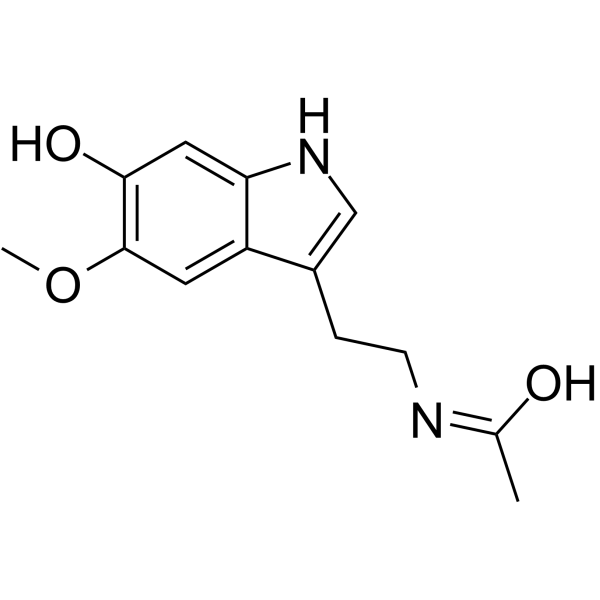
    6-Hydroxymelatonin is the main metabolite of melatonin (HY-B0075) after being metabolized by CYP1A2 and can cross the blood-brain barrier. 6-Hydroxymelatonin has strong free radical scavenging ability and antioxidant activity, and can alleviate oxidative damage caused by various neurotoxins. 6-Hydroxymelatonin can cause oxidative DNA damage in the presence of copper ions through a "non-quinone" type redox cycling mechanism .
    6-Hydroxymelatonin
  • HY-W047187

    Xanthine Oxidase NO Synthase TNF Receptor Others
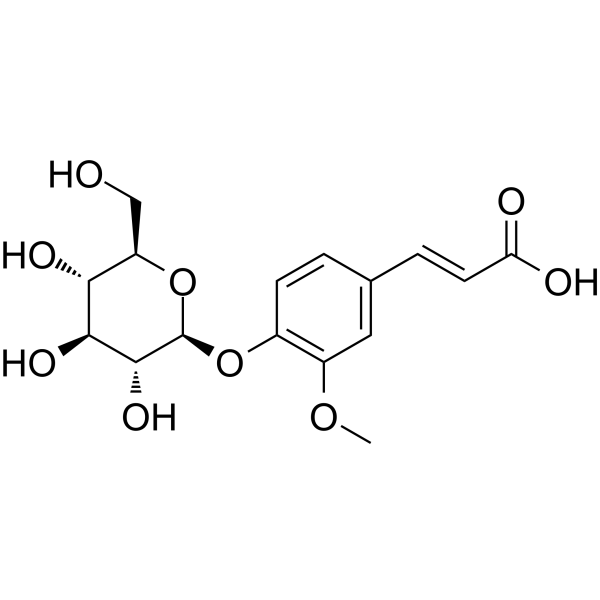
    Lavandoside is an ABTS ?+ free radical scavenger and a moderate inhibitor of xanthine oxidase (XO), with an IC50 of 71.6 μM for inhibiting NO production in LPS-induced macrophages. Lavandoside exerts its antioxidant and potential anti-inflammatory effects by directly scavenging free radicals and inhibiting XO activity, a mechanism related to the hydroxyl groups in its molecular structure. Lavandoside can be isolated from lavender and can be used in the development of natural antioxidants and in research on oxidative stress-related diseases and inflammation-related diseases .
    Lavandoside
  • HY-N12586

    ERK Reactive Oxygen Species (ROS) COX PGE synthase STAT HCV HCV Protease Infection Neurological Disease Cancer
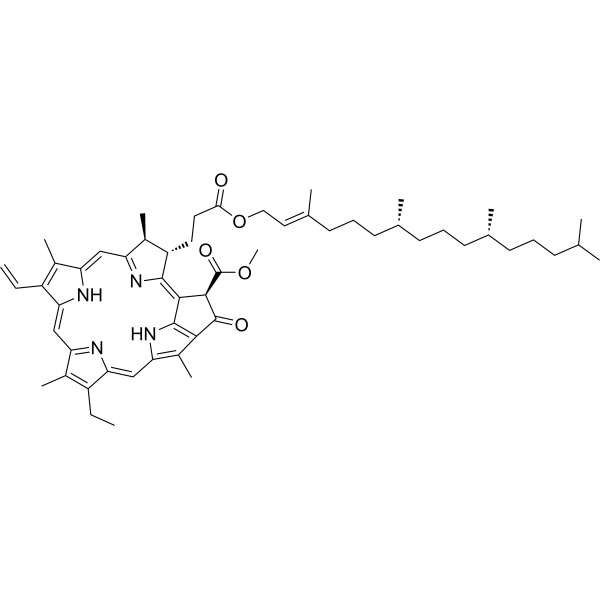
    Pheophytin a is a multi-target inhibitor, anticancer agent, antioxidant and antiviral agent. Pheophytin a directly binds to and inhibits HCV-NS3/4A protease (IC50=0.89 μM) to block viral replication. Pheophytin a also scavenges free radicals, reduces ferric ions, and exhibits cytotoxic activity against breast cancer cells. Pheophytin a effectively inhibits LPS-induced production of nitric oxide, prostaglandin E2, NOS2 and COX-2, as well as various pro-inflammatory cytokines, by downregulating the transcription levels of inflammatory mediators and blocking the ERK1/2 and STAT-1 pathways. In a low nerve growth factor environment, Pheophytin a also enhances ERK1/2 phosphorylation and synergistically promotes neurite outgrowth through MAPK pathway. Pheophytin a can be used to investigate the pathogenic mechanisms of diseases including chronic hepatitis C, sepsis, breast cancer and Alzheimer's disease .
    Pheophytin a
  • HY-141452

    Malondialdehyde

    Endogenous Metabolite Neurological Disease
    Propanedial (Malondialdehyde) (13.88 mM in water) is one of the final products of lipid peroxidation. Propanedial causes protein inactivation, DNA damage and cross-linking by forming stable covalent adducts with biological macromolecules, which is the main mechanism for its cytotoxicity and genotoxicity. Propanedial production increases with the elevation of free radicals. Propanedial is a key biomarker for evaluating the level of cellular oxidative stress [1][2][3].
    Propanedial (13.88 mM in water)
  • HY-W010610

    Drug Intermediate Others
    2-Cyclopropylacetic acid is a substrate. 2-Cyclopropylacetic acid can produce a ring-opening product, which serves as an important precursor for the preparation of fused-ring molecules .
    2-Cyclopropylacetic acid
  • HY-G0004

    3-Hydroxyacetaminophen

    Drug Metabolite Inflammation/Immunology
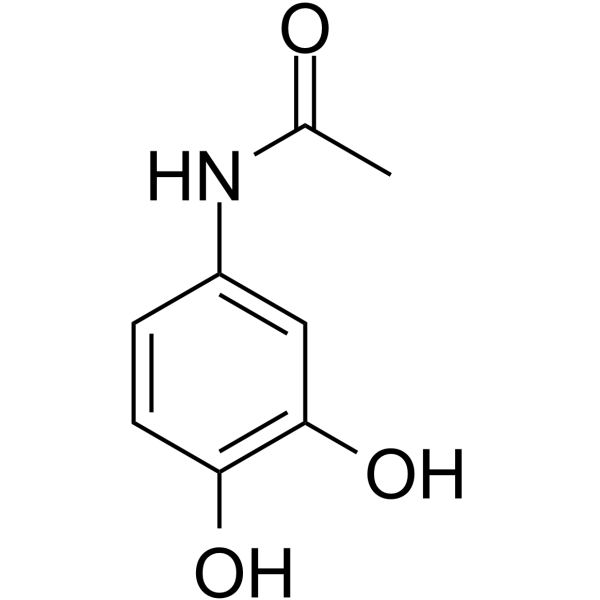
    Acetaminophen metabolite 3-hydroxy-acetaminophen (3-Hydroxyacetaminophen) is a non-toxic metabolite and antioxidant of acetaminophen (HY-66005) with free radical scavenging activity. Acetaminophen metabolite 3-hydroxy-acetaminophen can reduce oxidative damage by exerting electron donation ability and antioxidant activity through phenolic hydroxyl groups. 3-hydroxy-acetaminophen can be used to study the toxicity mechanism and drug metabolism of acetaminophen .
    Acetaminophen metabolite 3-hydroxy-acetaminophen
  • HY-N0435

    DNA/RNA Synthesis Cancer
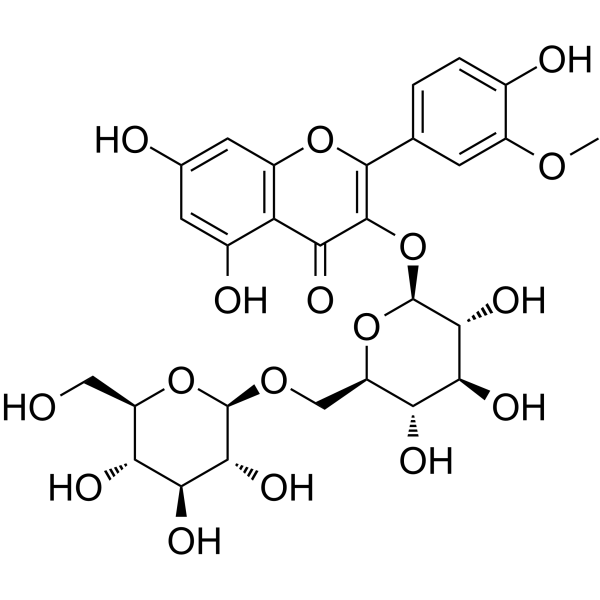
    Isorhamnetin 3-gentiobioside is a flavonoid with activity of promoting cancer cell proliferation. Isorhamnetin 3-gentiobioside is an activator of DNA synthesis in MCF-7 human breast cancer cells with an EC50 of 3.1 μg/mL. Isorhamnetin 3-gentiobioside exhibits ABTS radical scavenging activity with an IC50 of 33.43 μg/mL. The compound can be used to study the bidirectional regulatory mechanism of cancer .
    Isorhamnetin 3-gentiobioside
  • HY-W013494R

    Reference Standards Endogenous Metabolite Metabolic Disease Cancer
    L-Carnosine (Standard) is the analytical standard of L-Carnosine. This product is intended for research and analytical applications. L-Carnosine is a dipeptide of the amino acids beta-alanine and histidine and has the potential to suppress many of the biochemical changes that accompany aging. In Vitro: L-Carnosine is a dipeptide of the amino acids beta-alanine and histidine and has the potential to suppress many of the biochemical changes that accompany aging .
    L-Carnosine also exhibits some antioxidant effects. The antioxidant mechanism of L-Carnosine is attributed to its chelating effect against metal ions, superoxide dismutase (SOD)-like activity, and ROS and free radicals scavenging ability .
    L-Carnosine (Standard)
  • HY-W067572

    (-)-Stobadine

    Reactive Oxygen Species (ROS) Cardiovascular Disease
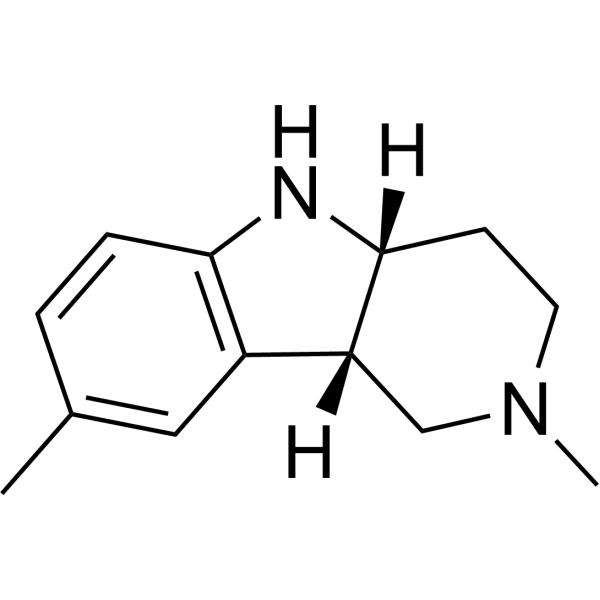
    Stobadine is a potent antioxidant and prevents free radical induced alterations in ER membrane fluidity. Stobadine can be used for effective cardio- and neuroprotectants development based on antioxidant or free radical scavenging mechanisms of action .
    Stobadine
  • HY-W011956R

    Drug Metabolite Reference Standards Endogenous Metabolite Neurological Disease Metabolic Disease
    6-Hydroxymelatonin (Standard) is the analytical standard of 6-Hydroxymelatonin. This product is intended for research and analytical applications. 6-Hydroxymelatonin is the main metabolite of melatonin (HY-B0075) after being metabolized by CYP1A2 and can cross the blood-brain barrier. 6-Hydroxymelatonin has strong free radical scavenging ability and antioxidant activity, and can alleviate oxidative damage caused by various neurotoxins. 6-Hydroxymelatonin can cause oxidative DNA damage in the presence of copper ions through a "non-quinone" type redox cycling mechanism.
    6-Hydroxymelatonin (Standard)
  • HY-G0004R

    3-Hydroxyacetaminophen (Standard)

    Reference Standards Drug Metabolite Inflammation/Immunology
    Acetaminophen metabolite 3-hydroxy-acetaminophen (3-Hydroxyacetaminophen) (Standard) is the analytical standard of Acetaminophen metabolite 3-hydroxy-acetaminophen (HY-G0004). This product is intended for research and analytical applications. Acetaminophen metabolite 3-hydroxy-acetaminophen is a non-toxic metabolite and antioxidant of acetaminophen (HY-66005) with free radical scavenging activity. Acetaminophen metabolite 3-hydroxy-acetaminophen can reduce oxidative damage by exerting electron donation ability and antioxidant activity through phenolic hydroxyl groups. 3-hydroxy-acetaminophen can be used to study the toxicity mechanism and drug metabolism of acetaminophen .
    Acetaminophen metabolite 3-hydroxy-acetaminophen (Standard)
  • HY-172892

    PI3K Reactive Oxygen Species (ROS) Cancer
    PI3K-IN-59 (Compound 3d) is a PI3K inhibitor (IC50: 17.44 μM). PI3K-IN-59 has significant antiproliferative activity and exhibits potent inhibitory effects on breast cancer 4T1 cells (IC50: 3.70 μM) and colon cancer CT26 cells (IC50: 1.98 μM) as well as human breast cancer cells (IC50: 19.72 μM). PI3K-IN-59 exerts a dual anti-tumor mechanism by inhibiting PI3Kα enzymatic activity and triggering the Fenton reaction to generate hydroxyl radicals (•OH). PI3K-IN-59 shows promising anti-4T1 tumor effects and is suitable for synergistic targeting studies in breast and colon cancers .
    PI3K-IN-59
  • HY-N9799

    NO Synthase Reactive Oxygen Species (ROS) Inflammation/Immunology
    Pholidotol C is a stilbene compound with nitric oxide (NO) production inhibitory activity and DPPH free radical scavenging activity (IC50 values ??of 28.6 μM and 21.9 μM, respectively). Pholidotol C exerts its anti-inflammatory and antioxidant activities through mechanisms involving the inhibition of NO production in activated macrophages and free radical scavenging, and can be used in research on inflammation-related diseases. Pholidotol C can be extracted from the dried whole plant of Pholidota chinensis (an orchid of the genus Pholidota) .
    Pholidotol C
  • HY-181436

    NO Synthase Cardiovascular Disease
    CAY10563 is a pH-regulated NO donor. Under acidic conditions, CAY10563 releases NO via an acid-catalyzed ring-opening mechanism, generating sulfur-centered free radicals. CAY10563 induces pH-dependent vasodilation. CAY10563 can be used in studies related to cardiovascular and cerebrovascular diseases .
    CAY10563
  • HY-N17779

    TNF Receptor Reactive Oxygen Species (ROS) Inflammation/Immunology
    3-O-Caffeoyl-5-O-feruloylquinic acid is a quinic acid-based phenolic compound that can be isolated from Eryngium bourgatii. 3-O-Caffeoyl-5-O-feruloylquinic acid regulates free radical scavenging and inflammatory pathways, exerting antioxidant activity through electron transfer and hydrogen atom transfer mechanisms. It also inhibits TNF-α-induced reactive oxygen species (ROS) production and the production of monocyte chemoattractant protein-1 (MCP-1) and its transcripts in human umbilical vein endothelial cells (HUVECs).
    3-O-Caffeoyl-5-O-feruloylquinic acid

Inquiry Online

Your information is safe with us. * Required Fields.

Salutation


Country or Region *

Applicant Name *


Organization Name *

Department *


Email Address *


Product Name *

Cat. No.


Requested quantity *

Phone Number *


Remarks

Inquiry Online

Inquiry Information

Product Name:
Cat. No.:
Quantity:
MCE Japan Authorized Agent:

