
Search Result
Results for "
radical scavenging activity
" in MedChemExpress (MCE) Product Catalog:
10
Biochemical Assay Reagents
16
Isotope-Labeled Compounds
| Cat. No. |
Product Name |
Target |
Research Areas |
Chemical Structure |
-
- HY-N1412
-
-
-
- HY-N1417
-
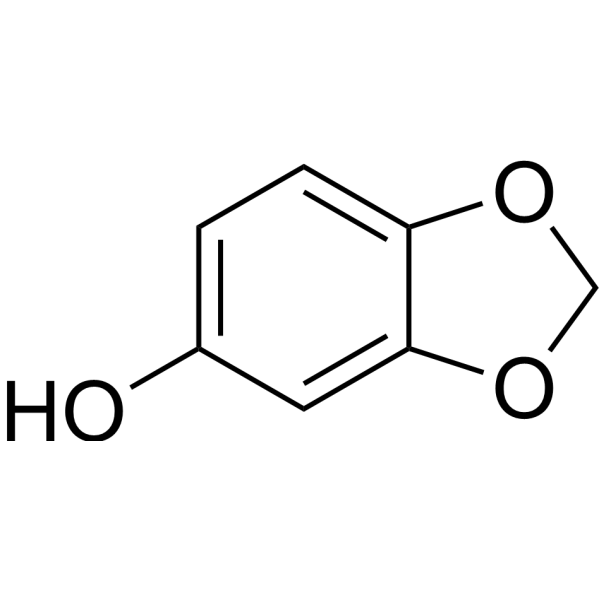
Sesamol
2 Publications Verification
|
Apoptosis
|
Cancer
|
|
Sesamol is a constituent of sesame oil. Sesamol shows a free radical scavenging activity. Sesamol shows an IC50=5.95±0.56 μg/mL in the DPPH assay. Anti-oxidant activities . Anticancer activities .
|
-
-
- HY-N0521
-
-
-
- HY-W014423
-
-
-
- HY-N4084
-
|
|
Apoptosis
|
Cancer
|
|
Thonningianin A, an ellagitannin, is isolated from the methanolic extract of the African medicinal herb, Thonningia sanguinea. The antioxidant properties of Th A involve radical scavenging, anti-superoxide formation and metal chelation. Anti-cancer activities .
|
-
-
- HY-N1354
-
-
-
- HY-139827
-
-
-
- HY-N3220
-
|
|
Xanthine Oxidase
|
Metabolic Disease
|
|
Myricetin 3-O-galactoside inhibits xanthine oxidase (XO) activity, lipid peroxidation and scavenges the free radical. Myricetin 3-O-galactoside inhibits lipid peroxidation with an IC50 of 160 μg/mL. Antioxidant activity .
|
-
-
- HY-W019885A
-
|
Sodium triphosphate pentabasic, 98%
|
Environmental Pollutants
Biochemical Assay Reagents
|
Others
|
|
Sodium tripolyphosphate (STPP), 98% is an inorganic, non-toxic polyphosphate crosslinker, inducer and enhancer. Sodium tripolyphosphate (STPP), 98% induces the formation of unique needle-like microcrystals in sodium alginate-chitosan composite films. Sodium tripolyphosphate (STPP), 98% enhances the DPPH free radical scavenging activity of sodium alginate-chitosan composite films .
|
-
-
- HY-N7931
-
-
-
- HY-W003972
-
|
Syringol
|
Biochemical Assay Reagents
|
Others
|
|
2,6-Dimethoxyphenol (Syringol) is a phenolic compound that scavenges free radicals and exhibits antioxidant activity. 2,6-Dimethoxyphenol is the substrate for determining laccase activity .
|
-
-
- HY-N11552
-
|
|
Glutathione Peroxidase
|
Inflammation/Immunology
|
|
Sorbifolin, a flavone glucoside, can be isolated from the Pterogyne nitens. Sorbifolin has myeloperoxidase inhibitory and radical scavenging activities. Sorbifolin is also a MPO inhibitor with an IC50 value of 19.2 nM .
|
-
-
- HY-P4280
-
-
-
- HY-124313
-
-
-
- HY-N7607
-
|
|
Reactive Oxygen Species (ROS)
|
Cardiovascular Disease
|
|
Quercetin-3-O-D-glucosyl]-(1-2)-L-rhamnoside is a flavonoid glycoside with antioxidant activity and free radical scavenging activity. Quercetin-3-O-D-glucosyl]-(1-2)-L-rhamnoside can scavenge free radicals such as ABTS+ and can be used in the study of antioxidant-related diseases (such as cardiovascular diseases and neurodegenerative diseases) .
|
-
-
- HY-N7692
-
|
|
Others
|
Others
|
|
Polyporusterone A is a triterpene carboxylic acid isolated from Polyporus umbellatus Fries. Polyporusterone A has inhibitory effect on free radical-induced lysis of red blood cells (hemolysis) .
|
-
-
- HY-N2307A
-
|
(+)-Lirinidine
|
Others
|
Cancer
|
|
Lirinidine ((+)-Lirinidine) is an alkaloid isolated from the leaves of L. tulipifera and has antioxidant and anticancer activities. Lirinidine exhibits medium ferric reducing power activity and minor radical scavenging activity in vitro. Lirinidine can be used for cosmetic research .
|
-
-
- HY-N3349
-
|
|
Others
|
Others
|
|
Lyoniresinol is a lignan isolated from the Tarenna attenuata with antioxidant activities. Lyoniresinol has radical scavenging activities against DPPH with an IC50 of 82.4 μM .
|
-
-
- HY-N3985
-
|
|
Others
|
Cancer
|
|
Gyrophoric acid is a good ultraviolet filter in lichen populations. Gyrophoric acid shows DPPH radical scavenging activity with an IC50 value of 105.75 μg/ml .
|
-
-
- HY-N4111
-
|
|
Others
|
Inflammation/Immunology
Cancer
|
|
Wushanicaritin exhibits significant antioxidant activity (IC50=35.3 μM) in DPPH radical scavenging activity tests. Antitumor effects and anti-inflammatory property .
|
-
-
- HY-N7693
-
|
|
Others
|
Others
|
|
Polyporusterone B is a triterpene carboxylic acid isolated from Polyporus umbellatus Fries. Polyporusterone B has inhibitory effect on free radical-induced lysis of red blood cells (hemolysis) .
|
-
-
- HY-N8194
-
|
Syringetin 3-O-β-D-glucoside
|
Others
|
Neurological Disease
|
|
Syringetin-3-O-glucosid (Syringetin 3-O-β-D-glucoside), a flavonol glycoside, shows relatively weak DPPH and ABTS radical scavenging activity .
|
-
-
- HY-N4168B
-
|
|
Others
|
Cancer
|
|
Methyl chlorogenate is an antioxidant, and has radical scavenging activity. Methyl chlorogenate is an anti-inflammatory agent. Methyl chlorogenate also inhibits hepatocellular carcinoma (HCC) cell proliferation and metastasis .
|
-
-
- HY-126241
-
|
|
Aldehyde Dehydrogenase (ALDH)
|
Inflammation/Immunology
|
|
RV01 is an analogue of resveratrol, inhibits DNA damage, reduces acetaldehyde dehydrogenase 2 (ALDH2) mRNA expression induced by ethanol, and exhibits hydroxyl radical scavenging activity . RV01 decreases iNOS expression, with anti-neuroinflammatory activity .
|
-
-
- HY-N1521
-
|
Lantadene A
|
Others
|
Inflammation/Immunology
|
|
Rehmannic acid (lantadene A) is a compound isolated from Lantana camara. Rehmannic acid shows considerable in vitro antioxidant, free radical scavenging capacity activities in a dose dependant manner. Rehmannic acid is a promising candidate for use as an antioxidant and hepatoprotective agent .
|
-
-
- HY-N10917
-
|
|
Drug Derivative
|
Infection
Cancer
|
|
Xanthohumol I is a derivative of Chalcone (HY-121054) that can be isolated from Humulus lupulus L. (hops). Xanthohumol I exhibits free radical scavenging activity .
|
-
-
- HY-N9447
-
-
-
- HY-N3141
-
|
(-)-Olivile; Vladinol C
|
Others
|
Others
|
|
Olivil ((-)-Olivile) is a lignan that has weak DPPH radical-scavenging activity (EC50: 176 μM) .
|
-
-
- HY-W013677
-
|
|
Drug Intermediate
|
Infection
|
|
4-Fluorobenzoic acid is a drug intermediate that can be used to synthesize a series of hydrazone derivatives with antituberculosis activity and Schiff bases with DPPH radical scavenging activity .
|
-
-
- HY-124496
-
-
-
- HY-131803
-
|
|
Nucleoside Antimetabolite/Analog
|
Inflammation/Immunology
|
|
Urolignoside is an antioxidant with free radical scavenging activity. Urolignoside potently scavenges DPPH radical, and exhibits antioxidant to β-carotene-lineoleate model . 3'-Azido-3'-deoxyguanosine is a click chemistry reagent, it contains an Azide group and can undergo copper-catalyzed azide-alkyne cycloaddition reaction (CuAAc) with molecules containing Alkyne groups. It can also undergo strain-promoted alkyne-azide cycloaddition (SPAAC) reactions with molecules containing DBCO or BCN groups.
|
-
-
- HY-N9588
-
|
|
Others
|
Cancer
|
|
Pedaliin is a bioactive component obtained from the ethanol extract of Sesame (Sesamum indicum L.) leaves (SLs). Pedaliin shows in vitro antioxidant and anti-colon cancer efficacy with radical scavenging activity and ferric reducing antioxidant power (FRAP) .
|
-
-
- HY-W002773
-
|
|
Endogenous Metabolite
|
Others
|
|
Methyl isovanillate is a secondary metabolite isolated from Vitex agnus-castus. Methyl isovanillate does not exhibit significant activity in the DPPH free radical scavenging experiment .
|
-
-
- HY-N8193
-
-
-
- HY-W018643A
-
|
Methyl (E)-ferulate
|
COX
|
Others
|
|
(E)-Ferulic acid methyl ester (Methyl (E)-ferulate) exhibits strong DPPH and ABTS + radical scavenging activities .
|
-
-
- HY-111523
-
-
-
- HY-B1001A
-
-
-
- HY-N10176
-
-
-
- HY-W274194
-
|
|
Reactive Oxygen Species (ROS)
|
Others
|
|
Antioxidant agent-7 (SD-7) is a benzodiazepine derivative with antioxidant activity with an IC50 value of 470 nM to scavenge DPPH (2,2-diphenyl-1-picrylhydrazyl) free radical .
|
-
-
- HY-N15684
-
|
|
Others
|
Metabolic Disease
|
|
Rhodoxanthin is a carotenoid. Rhodoxanthin exerts antioxidant activity via free radical scavenging and lipid peroxidation inhibition. Rhodoxanthin is promising for research of oxidative stress-related diseases (e.g., UV-induced skin damage) .
|
-
-
- HY-N9895
-
|
|
Others
|
Infection
Inflammation/Immunology
|
|
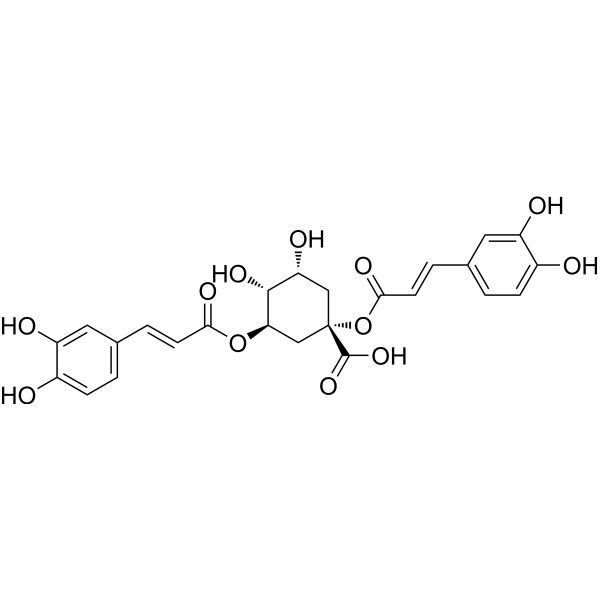
3,5-Dicaffeoyl-epi-quinic acid can be extracted from Chrysanthemum morifolium. 3,5-Dicaffeoyl-epi-quinic acid has antioxidant activities. 3,5-Dicaffeoyl-epi-quinic acid can scavenge DPPH radical and superoxide anion radical, with IC50s of 5.6 and 2.9 μg/mL respectively .
|
-
-
- HY-121153
-
|
Alutenusin
|
FXR
|
Others
|
|
Altenusin shows markedly DPPH radical scavenging activities.
|
-
-
- HY-N9387
-
-
-
- HY-N8955
-
-
-
- HY-N16406
-
|
|
SOD
|
Metabolic Disease
|
|
Auroglaucin is a potent antioxidant. Auroglaucin shows 1,1-diphenyl-2-picrylhydrazyl (DPPH) radical scavenging capacity and superoxide radical scavenging activity with EC50 value of 74.6, 12.3 µM, respectively. Auroglaucin shows low activity for inhibiting the autoxidation of docosahexaenoic acid (DHA) .
|
-
-
- HY-N16504
-
-
-
- HY-N4111R
-
-
-
- HY-N12941
-
-
-
- HY-130294
-
|
|
Elastase
|
Inflammation/Immunology
|
|
Pyracrenic acid is an elastase inhibitor (IC50 = 2.42 µM), can be obtained from the bark of Pyracantha crenulata. Pyracrenic acid has DPPH free radical scavenging activity and anti-inflammatory activity .
|
-
-
- HY-P1512
-
|
|
SOD
|
Cancer
|
|
Antioxidant peptide A is a short peptide, which contains alternative aromatic or sulfur-containing amino acid. The side chains of Antioxidant peptide A are believed to contribute to strong radical scavenging activities of peptides in the cancer cell.
|
-
- HY-N1412R
-
|
1,3-O-Dicaffeoylquinic acid (Standard); 1,5-Dicaffeoylquinic acid (Standard)
|
Reference Standards
PI3K
Akt
Reactive Oxygen Species (ROS)
|
Neurological Disease
|
|
1,3-Dicaffeoylquinic acid (Standard) is the analytical standard of 1,3-Dicaffeoylquinic acid. This product is intended for research and analytical applications. 1,3-Dicaffeoylquinic acid is a caffeoylquinic acid derivative that exhibits antioxidant activity and radical scavenging activity.
|
-
- HY-W416228
-
|
|
Reactive Oxygen Species (ROS)
|
Others
|
|
1-O-Caffeoyl-β-D-glucopyranose, a phenylpropanoid compound derived from Illicium majus, exhibits significant antioxidant activity and can scavenge DPPH radicals in vitro, with an IC50 value of 37.7 μM .
|
-
- HY-W102471
-
|
|
Photosensitizer
|
Others
|
|
3-Acetylbenzophenone (Compound 2) is the photolysis product of Ketoprofen (HY-B0227). 3-Acetylbenzophenone promotes the photoperoxidation reaction of Linoleic acid (HY-N0729), exhibits free radical scavenging and photosensitizing activity .
|
-
- HY-N9068
-
|
|
Fungal
|
Infection
|
|
Alterlactone is an antimicrobial. Alterlactone shows broad antimicrobial activity against bacterial and fungal. Alterlactone has strong radical scavenging activity .
|
-
- HY-146172
-
|
|
Reactive Oxygen Species (ROS)
|
Inflammation/Immunology
Cancer
|
|
Antioxidant agent-3 (Compound 14q), an potent antioxidant, displays potent DPPH radicals scavenging activity and ABTS + scavenging activity with IC50s of 26.58 and 30.31 μM, respectively. Antioxidant agent-3 (Compound 14q) increases reactive oxygen species (ROS), superoxide dismutase (SOD) and glutathione (GSH), and reduced lactate dehydrogenase (LDH) in H2O2-treated HepG2 cells .
|
-
- HY-N10927
-
|
|
Others
|
Others
|
|
2,11,12-Trihydroxy-7,20-epoxy-8,11,13-abietatriene, a diterpenoid, has significant effects on DPPH radical scavenging activity with an IC50 value of 20.0 µM. 2,11,12-Trihydroxy-7,20-epoxy-8,11,13-abietatriene shows potent antioxidant activity .
|
-
- HY-111898
-
|
|
Others
|
Cancer
|
|
Epirosmanol is a nature diterpene lactone from S. officinalis. Epirosmanol shows anti-cancer activity and inhibits melanin biosynthesis against melanoma cells. Epirosmanol also exhibits DPPH radical scavenging activity .
|
-
- HY-N9814
-
|
|
NO Synthase
|
Inflammation/Immunology
|
|
Shanciol B, isolated from the ethyl acetate extract of the air-dried whole plant of Pholidota imbricate Hook, inhibits nitric oxide (NO) production and 1,1-diphenyl-2-picrylhydrazil (DPPH) radical scavenging activity . Shanciol B is a microsomal prostaglandin E synthase-1 (mPGES-1) inhibitor with anti-inflammatory activity .
|
-
- HY-133183
-
|
|
Biochemical Assay Reagents
|
Others
|
|
Urolignoside is an antioxidant with free radical scavenging activity. Urolignoside potently scavenges DPPH radical, and exhibits antioxidant to β-carotene-lineoleate model .
|
-
- HY-155346
-
|
|
Bacterial
|
Others
|
|
Free radical scavenger 1 (compound 8) shows scavenging activity against the DPPH radical, with the IC50 of 43.39 μg/ml .
|
-
- HY-N3670
-
|
Isoolivil
|
Others
|
Cardiovascular Disease
|
|
Cycloolivil (Isoolivil) is a natural polyphenolic compound with a significant radical scavenging activity. Antioxidant and Antiaggregant effects .
|
-
- HY-N11895
-
-
- HY-172604
-
|
|
TNF Receptor
Reactive Oxygen Species (ROS)
|
Neurological Disease
Inflammation/Immunology
|
|
Neuroprotective agent 10 (Compound 11c) is a brain-penetrant neuroprotective agent. Neuroprotective agent 10 scavenges ABTS radicals (scavenging IC50: 9.20 μM), DPPH radicals (scavenging IC50: 7.09 μM) and superoxide anion radicals (inhibition percentage: 48.4%). Neuroprotective agent 10 also alleviates H2O2-induced oxidative damage and LPS-induced neuroinflammation with antiepileptic activity. Neuroprotective agent 10 is promising for research of epilepsy and neuroprotection .
|
-
- HY-137929
-
|
|
Endogenous Metabolite
|
Metabolic Disease
|
|
Deoxygerfelin is a phenolic antioxidant that has been found in A. versicolor. It scavenges free radicals in a Trolox equivalent activity concentration (TEAC) assay.
|
-
- HY-B1001
-
-
- HY-N3349A
-
|
|
Reactive Oxygen Species (ROS)
|
Others
|
|
(-)-Lyoniresinol is a lignan isolated from the Tarenna attenuata with antioxidant activities. (-)-Lyoniresinol has radical scavenging activities against DPPH with an IC50 of 82.4 μM .
|
-
- HY-N7518
-
|
|
MMP
|
Inflammation/Immunology
|
|
Eulophiol shows the 1,1-diphenyl-2-picrylhydrazyl (DPPH) free radical scavenging activity with an EC50 of 27.7μM. Antioxidant activity .
|
-
- HY-N8169
-
|
|
Others
|
Others
|
|
10-O-Trans-p-methoxycinnamoylcatalpol has antioxidant activity with the IC50 value of 0.37 μM/mL in DPPH free radical scavenging assay .
|
-
- HY-N13128
-
|
|
Others
|
Others
|
|
Icaritin-3-O-rhamnoside (compound 20) is a flavonoid compound that exhibits DPPH radical scavenging activity (IC50=227.9 μM) .
|
-
- HY-N12897
-
|
|
Others
|
Others
|
|
JBIR-94 is a phenolic compound and can be isolated from Streptomyces. JBIR-94 has DPPH radical scavenging activity with an IC50 value of 11.4 μM .
|
-
- HY-N1859
-
-
- HY-N8846
-
|
|
Fungal
|
Infection
|
|
dl-Aloesol is a natural product that can be isolated from fungus Aspergillus sp. Aspergillus sp metabolites has cytotoxic, antibacterial, free radical scavenging, anti-parasitic, antiviral and antiproliferative activities, etc .
|
-
- HY-N3315
-
|
|
Others
|
Inflammation/Immunology
|
|
Massonianoside B is an antioxidant, which can be isolated from Cedrus deodara pine needle. Massonianoside B exhibits radicals scavenging capacities, and restores CCL4-impaired activity of antioxidant enzymes .
|
-
- HY-W357738
-
|
|
Bacterial
Urease
|
Infection
|
|
Urease-IN-14 (compound 15) is an urease inhibitor and antioxidant. Urease-IN-14 shows DPPH radical scavenging and urease inhibitory activities with IC50 values 151.7 μM and 41.6 μM, respectively .
|
-
- HY-N3451
-
|
|
Lipoxygenase
|
Cancer
|
|
Isothymusin is a potent anti-oxidant agent. Isothymusin shows radical scavenging activities. Isothymusin shows anti-proliferative activities in cancer cell lines. Isothymusin inhibited the enzymes associated with the promotion stage of cancer, including cycloxygenase- 2 and lipoxygenase-5 .
|
-
- HY-N15323
-
|
|
Cholinesterase (ChE)
|
Infection
Inflammation/Immunology
|
|
Samioside is an effective acetylcholinesterase inhibitor that can be isolated from Phlomis nissolii and P. capitata. Samioside possesses free-radical scavenging and antimicrobial activities. Samioside can be used in research on its anti-Alzheimer’s potency .
|
-
- HY-N8254
-
|
|
Others
|
Others
|
|
Haginin A (compound 3)can be isolated from the EtOAc fraction of Lespedeza cyrtobotrya. Haginin A has radical scavenging activity with IC50 values of 9.0 μM and 37.7 μM in the ABTS system and DPPH system, respectively .
|
-
- HY-168011
-
|
|
Ferroptosis
Glutathione Peroxidase
Reactive Oxygen Species (ROS)
|
Cancer
|
|
GPX4-IN-14 (compound 2c) is an inhibitor of GPX4, with free radical scavenging activity (maximum scavenging rate is 72.52%) and anti-tumor proliferation activity in vitro. GPX4-IN-14 inhibits GPX4 protein, increases lipid peroxide levels and intracellular Reactive Oxygen Species (ROS) levels, thereby inducing ferroptosis and exerting anti-tumor proliferation effects .
|
-
- HY-N9229
-
|
|
NO Synthase
Bacterial
|
Infection
Inflammation/Immunology
|
|
Myricadenin A is an iNOS inhibitor, capable of effectively inhibiting the production of NO (EC₅₀ = 18.1 μM). Myricadenin A has moderate ABTS free radical scavenging activity (SC₅₀ = 175.4 μM) and relatively weak anti-tuberculosis activity (MIC = 80.0 μg/mL). Myricadenin A can be used in inflammation-related research .
|
-
- HY-N18365
-
|
Dillenetin-3-O-β-D-glucopyranoside
|
Reactive Oxygen Species (ROS)
|
Others
|
|
3'-Methoxy tamarixin (compound 6) is a flavonoid glycoside and antioxidant. 3'-Methoxy tamarixin can be found in the leaves of Cadaba farinosa Forssk.3'-Methoxy tamarixin exhibits free radical scavenging activity and 49.1% antioxidant activity .
|
-
- HY-W002773R
-
|
|
Endogenous Metabolite
Reference Standards
|
Others
|
|
Methyl isovanillate (Standard) is the analytical standard of Methyl isovanillate (HY-W002773). This product is intended for research and analytical applications. Methyl isovanillate is a secondary metabolite isolated from Vitex agnus-castus. Methyl isovanillate does not exhibit significant activity in the DPPH free radical scavenging experiment .
|
-
- HY-N17215
-
|
3,4,6-Trigalloylglucose
|
Amylases
Glycosidase
|
Metabolic Disease
Inflammation/Immunology
|
|
3,4,6-Tri-O-galloyl-D-glucose (3,4,6-Trigalloylglucose) is an α-amylase (porcine α-amylase IC50 = 334.6 μM; Ki = 307.5 μM) and α-glucosidase (yeast α-glucosidase IC50 = 46.5 μM; Ki = 39.9 μM) mixed type inhibitor. 3,4,6-Tri-O-galloyl-D-glucose exhibits free radical scavenging ability, ferric-reducing power, and antioxidant activity. 3,4,6-Tri-O-galloyl-D-glucose can be used for the research of diabetes .
|
-
- HY-N12639
-
|
|
TRP Channel
|
Others
|
|
β-Sanshool is found in Zanthoxylum bungeanum and has a unique pungent taste. β-Sanshool is a TRPV1 activator that activates TRPV1 to increase intracellular calcium concentration. β-Sanshool has antioxidant effects and enhances free radical scavenging activity. β-Sanshool increases the thermal denaturation temperature and stabilizes protein structures. β-Sanshool induces sensory experiences of numbness and bitterness .
|
-
- HY-N8274
-
|
|
Others
|
Inflammation/Immunology
|
|
Flavidin, an aromatic compound, can be isolated from Coelogyne longipe. Flavidin is an antioxidant, and has radical scavenging activity .
|
-
- HY-N18011
-
|
|
Others
|
Inflammation/Immunology
|
|
Opuntioside I is a glycoside found in the fresh stems of Opuntia dillenii. Opuntioside I shows weak radicals scavenging activity .
|
-
- HY-N9289
-
|
|
Others
|
Inflammation/Immunology
|
|
Vitedoin A is a phenyldihydronaphthalene-type lignan. Vitedoin A has antioxidative activity and radical-scavenging effect. Vitedoin A can be isolated from Vitex negundo .
|
-
- HY-N17504
-
|
|
Others
|
Others
|
|
N-Formylnornuciferin is an N-acylaporphine alkaloid isolated from the stems of Tinospora crispa. N-Formylnornuciferin exhibits no scavenging activity against DPPH free radicals .
|
-
- HY-N16742
-
-
- HY-N17362
-
|
|
Others
|
Others
|
|
Anhydroevoxine is a furoquinoline alkaloid that can be found in Vepris glomerata. Anhydroevoxine demonstrates in vitro antioxidant activity, reducing Fe 3+ to Fe 2+ and scavenging DPPH radicals .
|
-
- HY-N9799
-
|
|
NO Synthase
Reactive Oxygen Species (ROS)
|
Inflammation/Immunology
|
|
Pholidotol C is a stilbene compound with nitric oxide (NO) production inhibitory activity and DPPH free radical scavenging activity (IC50 values ??of 28.6 μM and 21.9 μM, respectively). Pholidotol C exerts its anti-inflammatory and antioxidant activities through mechanisms involving the inhibition of NO production in activated macrophages and free radical scavenging, and can be used in research on inflammation-related diseases. Pholidotol C can be extracted from the dried whole plant of Pholidota chinensis (an orchid of the genus Pholidota) .
|
-
- HY-N15697
-
|
(-)-Prinsepiol
|
Others
|
Metabolic Disease
|
|
Prinsepiol ((-)-Prinsepiol) is an antioxidant agent targeting free radical scavenging. Prinsepiol exerts antioxidant activity via direct free radical neutralization and modulation of oxidative stress-related pathways. Prinsepiol is promising for research of liver injury repair and oxidative stress-related diseases .
|
-
- HY-N19669
-
-
- HY-N19875
-
|
|
Reactive Oxygen Species (ROS)
|
Cancer
|
|
Myrseguinoside A is a monoterpene glucoside found in the fruits of Myrsine seguinii. Myrseguinoside A does not exhibit significant DPPH radical-scavenging activity or growth inhibitory activity toward human cancer cells. Myrseguinoside A can be used for cancer research .
|
-
- HY-186080
-
|
|
Drug Metabolite
|
Inflammation/Immunology
|
|
Melatonin-OH is an oxidative Melatonin (HY-B0075) metabolite with free radical-scavenging activity. Melatonin-OH forms via Melatonin’s reaction with hydroxyl radicals (·OH). Melatonin-OH forms via Melatonin’s reaction with peroxynitrous acid or its activated form ONOOH .
|
-
- HY-N8027
-
|
|
Others
|
Inflammation/Immunology
|
|
Wushankaempferol is a flavonoid found in the whole herb of Epimedium wushanense T.S. Ying (Berberidaceae). Wushankaempferol shows antioxidant activity and can scavenge DPPH radical. Wushankaempferol can be used for the research of inflammation .
|
-
- HY-183792
-
|
|
Bacterial
Reactive Oxygen Species (ROS)
|
Infection
|
|
Antibacterial agent 347 (Compound 4d) is an Antibacterial agent. Antibacterial agent 347 exhibits selective antibacterial activity against Streptococcus mutans. Antibacterial agent 347 shows moderate ABTS• + free radical scavenging activity .
|
-
- HY-N19331
-
|
|
Biochemical Assay Reagents
|
Cancer
|
|
Matricarin is a sesquiterpene lactone antioxidant with ferric ion reducing antioxidant power activity. Matricarin exhibits free radical scavenging activity. Matricarin induces growth inhibition. Matricarin can be used in the research of ovarian cancer and renal cancer .
|
-
- HY-N13793
-
|
|
Reactive Oxygen Species (ROS)
|
Inflammation/Immunology
|
|
(+)-Isoampelopsin F is an oligostilbene compound that exists in the roots of Caragana sinica. (+)-Isoampelopsin F does not exhibit significant DPPH radical scavenging or lipid peroxidation inhibitory activity, with IC50 values all >200 μM .
|
-
- HY-N19254
-
|
|
Reactive Oxygen Species (ROS)
|
Inflammation/Immunology
|
|
Shepherdine, a harmala-type indole and tetrahydro-β-carboline alkaloid, is an antioxidant. Shepherdine scavenges free radicals via single electron transfer from its indole ring, forming an indolyl cation or neutral radical, and may convert to aromatic β-carbolines during this process. Shepherdine can be used for research on antioxidant activity .
|
-
- HY-182559
-
|
|
Reactive Oxygen Species (ROS)
|
Cancer
|
|
Candidin is an antioxidant flavonoid, which can be found in the roots of Millettia brandisiana. Candidin induces cytotoxic activity in human cancer cells. Candidin mediates antioxidant activity via peroxyl radical scavenging. Candidin can be used for the research of liver cancer and lung cancer .
|
-
- HY-N13285
-
|
(-)-EGC-4'-O-ME
|
Drug Derivative
|
Metabolic Disease
Inflammation/Immunology
|
|
(-)-Epigallocatechin-4'-O-methylether ((-)-EGC-4'-O-ME) is an orally active natural phenolic catechin with antioxidant, free radical-scavenging and hepatoprotective activities. (-)-Epigallocatechin-4'-O-methylether interferes with radiation-induced free radical formation, scavenges DPPH free radicals, inhibits carbon tetrachloride-induced increases in serum GOT and GPT, suppresses carbon tetrachloride-induced TBA-RS formation, and counteracts carbon tetrachloride-induced hepatocyte toxicity. (-)-Epigallocatechin-4'-O-methylether binds specifically to human serum albumin. (-)-Epigallocatechin-4'-O-methylether can be used in studies related to liver injury .
|
-
- HY-N4168A
-
|
5-O-Caffeoylquinic acid methyl ester
|
Quinone Reductase
HBV
|
Infection
Cancer
|
|
Neochlorogenic acid (5-O-Caffeoylquinic) methyl ester is a selective quinone reductase inducer (EC50 = 6.7 μM) and also exhibits hydroxyl radical scavenging activity (EC50 = 0.81 μM). Neochlorogenic acid methyl ester scavenges hydroxyl radicals by donating electrons or hydrogen atoms, while simultaneously inducing quinone reductase expression to enhance carcinogen detoxification, thus exerting antioxidant and cancer chemopreventive activities. Neochlorogenic acid methyl ester is used in research on antioxidant damage and promoting detoxification metabolism, primarily in the fields of cancer chemotherapy and antioxidant-related diseases. Neochlorogenic acid methyl ester is also an HBV inhibitor and can be isolated from the flower buds of *L. japonica* .
|
-
- HY-N17436
-
|
|
Bacterial
|
Inflammation/Immunology
Cancer
|
|
Demethoxyhexahydrocurcumin is a Curcumin (HY-N0005) biotransformation metabolite and diarylheptanoid with antioxidant and antimicrobial activities. Demethoxyhexahydrocurcumin scavenges free radicals, inhibits cancer cell viability, and suppresses microbial growth. Demethoxyhexahydrocurcumin can be used for the research of colorectal cancer .
|
-
- HY-N11173A
-
|
|
Parasite
|
Infection
|
|
trans-Melilotoside is a coumarin precursor and that can be isolated from Melilotus neapolitan. trans-Melilotoside exhibits antiparasitic and DPPH radical-scavenging activity. trans-Melilotoside can be used for the research of human african trypanosomiasis, chagas’ disease, malaria [1] [3].
|
-
- HY-N17551
-
|
|
Drug Derivative
|
Others
|
|
Odoratumone A (Compound 1/11) is a homoisoflavonoid identified in the rhizomes of Polygonatum odoratum (Mill.) Druce. Odoratumone A exhibits DPPH free radical scavenging activity (IC50 = 32.8 μg/mL) and exerts antioxidant properties. Odoratumone A is applicable for antioxidant research .
|
-
- HY-N17774
-
|
|
Reactive Oxygen Species (ROS)
|
Others
|
|
2,3,4,6-Tetragalloylglucose is a hydrolyzable tannin with antioxidant activity, exhibiting DPPH free radical scavenging activity (IC50=11.35 μM). 2,3,4,6-Tetragalloylglucose can be isolated from the endocarp of Juglans regia (walnut).
|
-
- HY-W714006
-
|
|
Reactive Oxygen Species (ROS)
|
Metabolic Disease
|
|
Cochliodinol (compound 1) is a metabolite derived from the Apis mellifera ligustica. Cochliodinol has strong free radical scavenging activity of 2, 2-diphenyl-1-picrohydrazine (DPPH) (IC50=3.06 μg/mL) .
|
-
- HY-111314
-
|
5-Hydroxy-1-methylhydantoin
|
Reactive Oxygen Species (ROS)
|
Inflammation/Immunology
|
|
NZ 419 (5-Hydroxy-1-methylhydantoin) is a metabolite of creatinine and an antioxidant with oral activity, which has the ability to scavenge hydroxyl radicals (•OH). NZ 419 can inhibit the progression of chronic kidney disease (CKD) in rats .
|
-
- HY-W020183
-
|
|
Environmental Pollutants
Fungal
Bacterial
|
Neurological Disease
|
|
γ-Terpinene, a monoterpene, is an orally active antioxidant compound which can scavenge radicals directly. γ-Terpinene has potent antinociception activity. γ-Terpinene exhibits antimicrobial efficacy against various bacteria and fungi .
|
-
- HY-N12443
-
|
|
Cytochrome P450
|
Inflammation/Immunology
|
|
Antioxidant agent-18 (compound 5) is a flavonol glycoside with antioxidant activity isolated from Ginkgo biloba. Antioxidant agent-18 scavenges DPPH radicals (IC50: 15.8 μM) and reduces cytochrome c (IC50: 14.7 μM).
|
-
- HY-B0704
-
|
Nonanedioic acid
|
Antibiotic
Endogenous Metabolite
PROTAC Linkers
|
Inflammation/Immunology
|
|
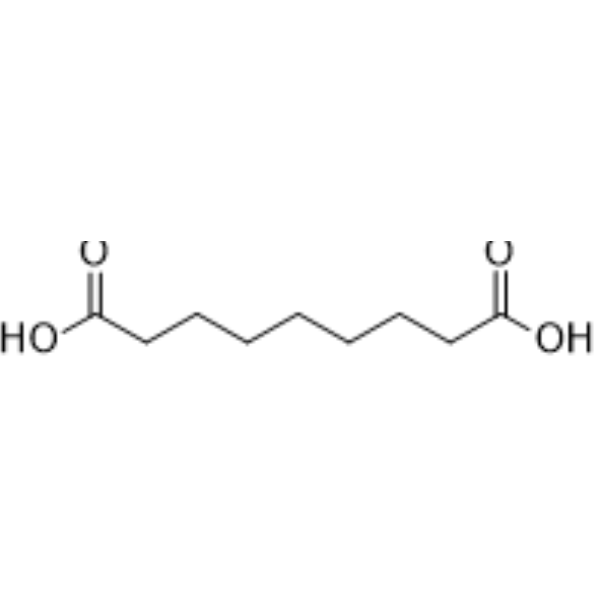
Azelaic acid is a nine-carbon dicarboxylic acid. Azelaic acid has antimicrobial activity against Propionibacterium acnes and Staphylococcus epidermidis through inhibition of microbial cellular prorein synthesis. Azelaic acid has hypopigmentation action resulting from its ability to scavenge free radicals .
|
-
- HY-112053
-
|
2,2-Diphenyl-1-picrylhydrazyl
|
Reactive Oxygen Species (ROS)
|
Metabolic Disease
|
|
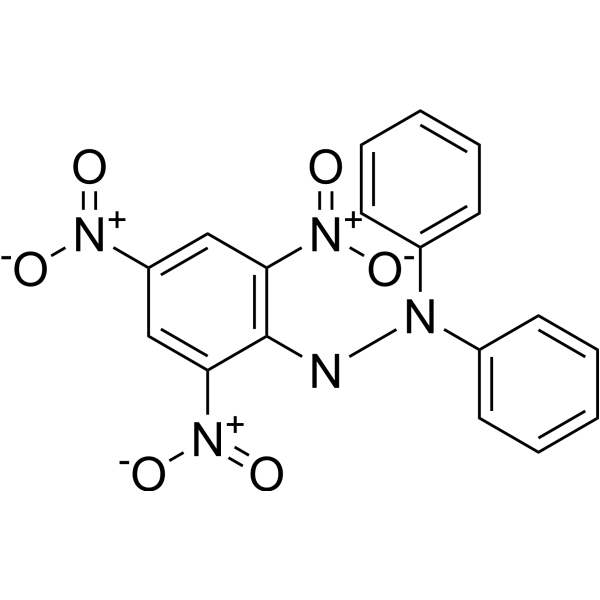
DPPH (2,2-Diphenyl-1-picrylhydrazyl) is a stable free radical that can be used to measure the radical scavenging activity of antioxidants. The odd electron of nitrogen atom in DPPH is reduced by receiving a hydrogen atom from antioxidants to the corresponding hydrazine. DPPH method may be utilized in aqueous and nonpolar organic solvents and can be used to examine both hydrophilic and lipophilic antioxidants .
|
-
- HY-W013677S
-
|
|
Isotope-Labeled Compounds
Drug Intermediate
|
Infection
|
|
4-Fluorobenzoic acid- 13C6 is the 13C6 labeled 4-Fluorobenzoic acid (HY-W013677). 4-Fluorobenzoic acid is a drug intermediate that can be used to synthesize a series of hydrazone derivatives with antituberculosis activity and Schiff bases with DPPH radical scavenging activity.
|
-
- HY-N11771
-
|
|
Reactive Oxygen Species (ROS)
|
Others
|
|
Glyurallin B is a flavonoid, that can be isolated from licorice (Glycyrrhiza inflata and Glycyrrhiza uralensis). Glyurallin B shows ABTS + radical scavenging activity and the inhibitory activity on lipid peroxidation, with EC50 values of 11.9 ± 0.58 μM and 15.3 ± 1.26 μM, respectivley .
|
-
- HY-N1417R
-
|
|
Reference Standards
Apoptosis
|
Cancer
|
|
Sesamol (Standard) is the analytical standard of Sesamol. This product is intended for research and analytical applications. Sesamol is a constituent of sesame oil. Sesamol shows a free radical scavenging activity. Sesamol shows an IC50=5.95±0.56 μg/mL in the DPPH assay. Anti-oxidant activities . Anticancer activities .
|
-
- HY-N1994
-
|
|
Reactive Oxygen Species (ROS)
|
Inflammation/Immunology
|
|
Swertianine is a hydroxyexanthone that can be isolated from Swertia decussata. Swertianine has antioxidant activity by inhibiting lipid peroxidation, scavenging DPPH and superoxide free radicals. Swertianine also inhibits γ-ray induced DNA damage of pBR322 with protective effect .
|
-
- HY-N8375
-
|
|
Others
|
Metabolic Disease
|
|
Sieboldin is a dihydrochalcone, which inhibits the production of advanced glycation end products (AGE) produced by bovine serum albumins (BSA), has free radical scavenging activity and cytotoxicity in cancer cell lines, and is also used to capture of methylglyoxal (MGO) from Malus baccata .
|
-
- HY-N1719
-
|
2α,3α,23-Trihydroxyolean-12-en-28-oic acid
|
Others
|
Others
|
|
Isoarjunolic acid (2α,3α,23-Trihydroxyolean-12-en-28-oic acid) is a triterpenoid, can be isolated from the stems of Cornus kousa. Isoarjunolic acid could have free radical scavenging activity and elastase inhibition activity .
|
-
- HY-N10742
-
|
|
Reactive Oxygen Species (ROS)
|
Cardiovascular Disease
|
|
Maritimein is an aurone that can be isolated from Coreopsis tinctoria. Maritimein shows strong diphenyl(2,4,6-trinitrophenyl)iminoazanium (DPPH) radical-scavenging activity with an IC50 value of 4.12 μM. Maritimein can be used for the research of cardiovascular disease .
|
-
- HY-156711
-
|
|
IFNAR
|
Inflammation/Immunology
|
|
Ternatumoside II is a flavonoid glycoside that can be isolated from R. crenulata. Ternatumoside II can stimulate IFN-γ expression. Ternatumoside II has radical-scavenging activities (IC50s: 260.5 μM and 320.2 μM for DPPH and ABTS) .
|
-
- HY-N10294
-
|
|
HIV
|
Infection
Inflammation/Immunology
|
|
Epicoccone B, firstly reported from C. globosum, exhibits the DPPH free radical scavenging ability with IC50 value of 10.8 μM, and has potent α-glucosidase inhibition with IC50 value of 27.3 μM. Anti-HIV activity .
|
-
- HY-N13707
-
|
|
Reactive Oxygen Species (ROS)
|
Others
|
|
3′-Hydroxytectorigenin-7-O-β-D-xylosyl-(1→6)-β-D-glucopyranoside is an antioxidant that can be found in Pueraria montana var. lobata. It exhibits DPPH radical scavenging activity, with an IC50 value of 42 μg/mL .
|
-
- HY-N13169
-
|
|
Others
|
Others
|
|
Quercetin 3-O-(6-O-malonyl-β-D-galactoside) is an antioxidant derived from Apocynum venetum that exhibits strong scavenging activity against DPPH (HY-112053) free radicals, with an EC50 value of 11.4 μM .
|
-
- HY-W011689
-
6PPD
1 Publications Verification
|
Reactive Oxygen Species (ROS)
|
Others
|
|
6PPD is a rubber antioxidant that scavenges ozone and forms nitro radicals. Exposure to 6PPD reduces the hatching rate, impairs spontaneous locomotor activity, shortens body length and causes malformations in zebrafish embryos. 6PPD also induces oxidative stress in zebrafish embryos .
|
-
- HY-N0393
-
Glabridin
Maximum Cited Publications
12 Publications Verification
|
PPAR
Reactive Oxygen Species (ROS)
Bacterial
|
Cardiovascular Disease
Infection
Neurological Disease
Metabolic Disease
Inflammation/Immunology
Cancer
|
|
Glabridin is a natural isoflavan from Glycyrrhiza glabra L., binds to and activates PPARγ, with an EC50 of 6115 nM. Glabridin exhibits antioxidant, anti-bacterial, anti-nephritic, anti-diabetic, anti-fungal, antitumor, anti-inflammatory, antiosteoporotic, cardiovascular protective, neuroprotective and radical scavenging activities .
|
-
- HY-W013677S1
-
|
|
Isotope-Labeled Compounds
Drug Intermediate
|
Infection
|
|
4-Fluorobenzoic acid- 13C,d4 is the 13C- and deuterium labeled 4-Fluorobenzoic acid (HY-W013677). 4-Fluorobenzoic acid is a drug intermediate that can be used to synthesize a series of hydrazone derivatives with antituberculosis activity and Schiff bases with DPPH radical scavenging activity .
|
-
- HY-100768
-
HTHQ
2 Publications Verification
1-O-hexyl-2,3,5-trimethylhydroquinone; HX-1171; BTT-105
|
Reactive Oxygen Species (ROS)
|
Cancer
|
|
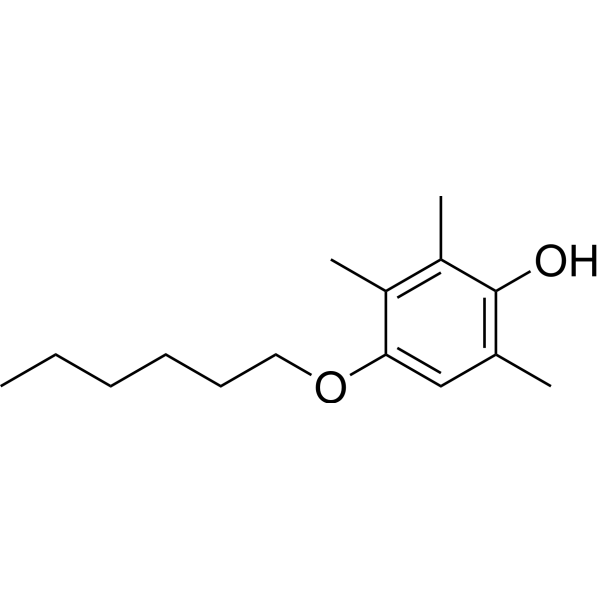
HTHQ (1-O-hexyl-2,3,5-trimethylhydroquinone) is a potent lipophilic phenolic antioxidant. HTHQ has considerable anti-oxidative activity by directly reacting with reactive oxygen species (ROS) and scavenging ROS to form more stable free radicals .
|
-
- HY-W021267
-
|
|
Reactive Oxygen Species (ROS)
|
Inflammation/Immunology
|
|
3-Demethylcolchicine, a colchicine metabolite and anti-inflammatory agent, exhibits potent tubulin-binding activity. 3-Demethylcolchicine inhibits carrageenan-induced rat paw edema. 3-Demethylcolchicine bears a hydroxyl group on its carbocyclic ring; this group participates in free radical scavenging processes, allowing it to act as a free radical scavenger. 3-Demethylcolchicine is applicable to studies related to carrageenan-induced paw edema .
|
-
- HY-172219
-
|
|
Cholinesterase (ChE)
|
Neurological Disease
Inflammation/Immunology
|
|
CUR-IPA is a cholinesterase inhibitor, with IC50 of 5.99, 59.30, and 60.66 μM for eAChE (electric eel), hAChE (human), and hBChE (human), respectively. CUR-IPA can scavenge free radicals and has antioxidant activity. CUR-IPA can be used in the research of cognitive dysfunction .
|
-
- HY-N17378
-
|
|
Others
|
Others
|
|
Camelliquercetiside B is a natural product. Camelliquercetiside B can be isolated from the leaves of Camellia sinensis. Camelliquercetiside B inhibits alcohol dehydrogenase (Alcohol dehydrogenase), with an IC50 of 13.7 μM against yeast alcohol dehydrogenase. Camelliquercetiside B exhibits scavenging activity against DPPH free radicals .
|
-
- HY-N5130
-
|
|
Others
|
Neurological Disease
|
|
Effusol, a phenolic constituent from Juncus effuses, exhibits potent scavenging activity for DPPH and ABTS radicals, with IC50 values of 79 μM and 2.73 μM, respectively. Effusol rescues CA1 LTP attenuated by corticosterone, defending the hippocampal function against stress-induced cognitive decline .
|
-
- HY-N17510
-
|
|
Others
|
Inflammation/Immunology
|
|
Regiafuran A is a prenylated 2-arylbenzofuran derivative and free radical scavenger (IC50=1.9 μg/mL). Regiafuran A is isolated from the stem bark of Chlorophora regia. In a competitive enzyme immunoassay for PGE2, Regiafuran A shows no anti-inflammatory potential .
|
-
- HY-N17880
-
|
|
Drug Derivative
|
Inflammation/Immunology
Cancer
|
|
Monbarbatain C is a biphenanthrene compound found in the tubers of Monomeria barbata Lindl. Monbarbatain C induces cytotoxic activity against liver carcinoma and promyelocytic leukaemia cells in vitro. Monbarbatain C mediates DPPH radical scavenging activity in vitro. Monbarbatain C can be used for the research of liver carcinoma, promyelocytic leukaemia, ovarian carcinoma, and epidermoid carcinoma .
|
-
- HY-W003972S1
-
|
Syringol-d6
|
Isotope-Labeled Compounds
Biochemical Assay Reagents
|
Others
|
|
2,6-Dimethoxyphenol-d6 (Syringol-d6) is deuterated labeled 2,6-Dimethoxyphenol (HY-W003972). 2,6-Dimethoxyphenol is a phenolic compound that scavenges free radicals and exhibits antioxidant activity. 2,6-Dimethoxyphenol is the substrate for determining laccase activity .
|
-
- HY-N11737
-
|
|
Drug Derivative
|
Inflammation/Immunology
|
|
Monasfluore A is an azaphenanthrenone derivative with antioxidant activity. Monasfluore A inhibits LPS-induced nitric oxide production. Monasfluore A scavenges DPPH and superoxide anion free radicals. Monasfluore A exerts cellular antioxidant activity in oxidatively damaged colon adenocarcinoma cells. Monasfluore A shows no antiproliferative effect on human laryngeal cancer cells and colon adenocarcinoma cells .
|
-
- HY-112053R
-
|
2,2-Diphenyl-1-picrylhydrazyl (Standard)
|
Reactive Oxygen Species (ROS)
Reference Standards
|
Metabolic Disease
|
|
DPPH (Standard) is the analytical standard of DPPH. This product is intended for research and analytical applications. DPPH (2,2-Diphenyl-1-picrylhydrazyl) is a stable free radical that can be used to measure the radical scavenging activity of antioxidants. The odd electron of nitrogen atom in DPPH is reduced by receiving a hydrogen atom from antioxidants to the corresponding hydrazine. DPPH method may be utilized in aqueous and nonpolar organic solvents and can be used to examine both hydrophilic and lipophilic antioxidants .
|
-
- HY-N2443
-
-
- HY-N8012
-
|
|
COX
NO Synthase
|
Others
|
|
Multinoside A (compound 6) is an antioxidant with DPPH free radical scavenging activity (IC50=54.3 μg/mL). Multinoside A can also downregulate COX-2 expression (IC50=9.6 μg/mL) and inhibit NO production (IC50=43.9 μg/mL) .
|
-
- HY-N17833
-
|
Kaempferol 3-O-2,4'''-acetylrhamninoside
|
Reactive Oxygen Species (ROS)
|
Cardiovascular Disease
|
|
Actinoside E (Kaempferol 3-O-2,4'''-acetylrhamninoside) is a flavonoid triglycoside with antioxidant activity. Actinoside E scavenges DPPH, superoxide anion and hydroxyl radicals, and inhibits lipid peroxidation in mouse liver homogenate. Actinoside E can be used in studies related to myocardial ischemia .
|
-
- HY-N0025
-
|
|
Reactive Oxygen Species (ROS)
Apoptosis
|
Metabolic Disease
|
|
Jionoside D is a hydroxycinnamic acid ester with antioxidant property. Jionoside D has scavenging activity of intracellular reactive oxygen species (ROS) and of DPPH radical, and lipid peroxidation inhibitory activity. Jionoside D reduces the apoptotic cells induced by H2O2 in V79-4 cells. Jionoside D increases the activities of cellular antioxidant enzymes, SOD and catalase .
|
-
- HY-P11646
-
|
|
COX
|
Metabolic Disease
Inflammation/Immunology
|
|
Brazzein is a functional sweetener with antioxidant, anti-inflammatory, and anti-allergic activities. Brazzein inhibits COX-2 with an IC50 of 12.62 μM. Brazzein exhibits strong antioxidant effects, showing ABTS radical scavenging activity (IC50 = 12.55 μM) . Brazzein shows no antibacterial or antifungal activity. Brazzein can be used for the research of obesity, metabolic disorder, inflammation .
|
-
- HY-N4294
-
|
|
FXR
Insecticide
|
Infection
Metabolic Disease
Inflammation/Immunology
|
|
Arjungenin, a pentacyclic triterpenoid compound, is a FXR agonist. Arjungenin can improve insulin sensitivity by regulating the function of fat cells. Arjungenin exhibits moderate free radical scavenging activity. Arjungenin has growth inhibitory activity against the insect Spilarctia obliqua. Arjungenin has significant antiviral activity against a series of viruses such as chikungunya Virus (CHIKV) .
|
-
- HY-N15727
-
|
|
Others
|
Inflammation/Immunology
|
|
2,5-Dimethylchromone-7-O-β-D-glucopyranoside is an orally active chromone glycoside found in the underground parts of Rheum australe. 2,5-Dimethylchromone-7-O-β-D-glucopyranoside shows a DPPH radical scavenging activity with an IC50 value of 66.9 μM. 2,5-Dimethylchromone-7-O-β-D-glucopyranoside scavenges free radicals by providing hydrogen atoms through phenolic hydroxyl groups, inhibiting lipid peroxidation. 2,5-Dimethylchromone-7-O-β-D-glucopyranoside is promising for research of oxidative stress-related diseases such as inflammation and skin diseases .
|
-
- HY-N3421
-
|
|
Interleukin Related
TNF Receptor
Influenza Virus
|
Infection
Inflammation/Immunology
Cancer
|
|
Koaburaside is a cytoprotective and anti-inflammatory natural compound. Koaburaside shows antioxidant activity with an IC50 of 9.0 μM for DPPH-free radical scavenging assay. Koaburaside inhibits histamine release and expressions of IL-6 and TNF-α in human mast cells. Koaburaside also effectively inhibits influenza A neuraminidase .
|
-
- HY-173151
-
|
|
Reactive Oxygen Species (ROS)
|
Cancer
|
|
BRCA2-IN-1 (Compound 3j) is a potential BRCA2 inhibitor that exhibits antiproliferative activity against the breast cancer MCF-7 cell lines. BRCA2-IN-1 also demonstrates DPPH radical scavenging ability, with an IC50 of 12.36 µM .
|
-
- HY-W003972R
-
|
Syringol (Standard)
|
Biochemical Assay Reagents
Reference Standards
|
Others
|
|
2,6-Dimethoxyphenol (Standard) (Syringol (Standard)) is the analytical standard of 2,6-Dimethoxyphenol (HY-W003972). This product is intended for research and analytical applications. 2,6-Dimethoxyphenol is a phenolic compound that scavenges free radicals and exhibits antioxidant activity. 2,6-Dimethoxyphenol is the substrate for determining laccase activity .
|
-
- HY-W003972S
-
|
Syringol-d3
|
Isotope-Labeled Compounds
Biochemical Assay Reagents
|
Others
|
|
2,6-Dimethoxyphenol-d3 (Syringol-d3) is the deuterium labeled 2,6-Dimethoxyphenol (HY-W003972) . 2,6-Dimethoxyphenol is a phenolic compound that scavenges free radicals and exhibits antioxidant activity. 2,6-Dimethoxyphenol is the substrate for determining laccase activity .
|
-
- HY-133849
-
|
|
Sirtuin
|
Cancer
|
|
Aristoforin, a hypericin derivative, inhibits the activities of SIRT1 and SIRT2. Aristoforin induces G1 phase cell cycle arrest, scavenges hydroxyl free radicals, and exhibits protective activity against Fe 2+-induced DNA breakage. Aristoforin can be used in studies related to breast cancer and colon adenocarcinoma .
|
-
- HY-175524
-
|
|
Monoamine Oxidase
Cholinesterase (ChE)
|
Neurological Disease
|
|
BChE/MAO-B-IN-2 is a dual inhibitor of BChE (IC50 = 0.05 μM, Ki = 0.01 μM) and MAO-B (IC50 = 0.45 μM, Ki = 0.08 μM) with good blood-brain barrier permeability. BChE/MAO-B-IN-2 exhibits antioxidant activity, including DPPH radical scavenging, CUPRAC copper ion reduction, and superoxide anion scavenging. BChE/MAO-B-IN-2 can be used for the study of Alzheimer's disease (AD) .
|
-
- HY-149313
-
|
|
Amylases
|
Metabolic Disease
|
|
α Amylase-IN-1 (Compound 11) is an α-Amylase inhibitor with an IC50 value of 0.5509 μM. α Amylase-IN-1 has antioxidant activity with an IC50 value of 53.49 μM for scavenging DPPH free radicals. IC50 can be used in the study of diabetes and oxidative stress-related diseases.
|
-
- HY-176437
-
|
|
Tyrosinase
|
Metabolic Disease
|
|
Tyrosinase-IN-42 (Compound 13t) is a tyrosinase inhibitor (IC50: 1.363 µM). Tyrosinase-IN-42 exhibits anti-browning effects on fresh-cut apples. Tyrosinase-IN-42 has antioxidant activity by scavenging DPPH and ABTS free radicals (IC50: 57.90 and 45.64 µM, respectively) .
|
-
- HY-N9953
-
|
|
Others
|
Inflammation/Immunology
|
|
Chrysophanol 8-O-β-D-(6’-O-galloyl)glucopyranoside, an anthraquinone glucoside, can be isolated from Rheum undulatum L. Chrysophanol 8-O-β-D-(6’-O-galloyl)glucopyranoside has potent DPPH radical and ?O2 - scavenging activity .
|
-
- HY-168993
-
-
- HY-124953
-
|
|
MAP3K
Apoptosis
|
Cancer
|
|
7,3',4'-Trihydroxyisoflavone, a major metabolite of Daidzein, is an ATP-competitive inhibitor of Cot (Tpl2/MAP3K8) and MKK4. 7,3',4'-Trihydroxyisoflavone has anticancer, anti-angiogenic, chemoprotective, and free radical scavenging activities .
|
-
- HY-N18001
-
|
|
COX
|
Inflammation/Immunology
|
|
Plantanone A is a COX inhibitor with an IC50 of 33.37 μM against ovine COX-1 and an IC50 of 46.16 μM against ovine COX-2. Plantanone A exhibits weak DPPH radical scavenging activity (IC50: 467.7 μM). Plantanone A can be used in the research of inflammation-related diseases .
|
-
- HY-170489
-
|
|
Bacterial
Fungal
Toll-like Receptor (TLR)
|
Infection
Inflammation/Immunology
|
|
Antifungal agent 123 (Compound 4b) exhibits good affinity to the oxidoreductase of Staphylococcus aureus or the membrane protein of Candida albicans, exhibits antibacterial and antifungal activities. Antifungal agent 123 scavenges free radical, exhibits antioxidant efficacy. Antifungal agent 123 inhibits the TLR signaling pathway, and exhibits anti-inflammatory efficacy .
|
-
- HY-N15578
-
|
|
Others
|
Others
|
|
Actinidioionoside (Compound 2) is a megastigmane glucoside compound found in Borago officinalis L. Actinidioionoside has DPPH free radical scavenging activity (IC50: 41.3 μM). Actinidioionoside has no significant cytotoxicity against A549 human lung cancer cells (IC50 > 100 μM). Actinidioionoside can be used in antioxidant studies .
|
-
- HY-N11962A
-
|
|
Cholinesterase (ChE)
|
Neurological Disease
|
|
2,3,9,10-Tetrahydroxyberberine bromide is an acetylcholinesterase AChE inhibitor (IC50=7.8 μM). 2,3,9,10-Tetrahydroxyberberine bromide exhibits DPPH free radical scavenging activity (IC50=43 μM) and is applicable to research related to Alzheimer's disease .
|
-
- HY-W047187
-
|
|
Xanthine Oxidase
NO Synthase
TNF Receptor
|
Others
|
|
Lavandoside is an ABTS ?+ free radical scavenger and a moderate inhibitor of xanthine oxidase (XO), with an IC50 of 71.6 μM for inhibiting NO production in LPS-induced macrophages. Lavandoside exerts its antioxidant and potential anti-inflammatory effects by directly scavenging free radicals and inhibiting XO activity, a mechanism related to the hydroxyl groups in its molecular structure. Lavandoside can be isolated from lavender and can be used in the development of natural antioxidants and in research on oxidative stress-related diseases and inflammation-related diseases .
|
-
- HY-N9051
-
|
|
Glycosidase
|
Inflammation/Immunology
Cancer
|
|
6-Prenylquercetin-3-Me ether is a natural product that can be extracted from G. uralensis leaves.
6-Prenylquercetin-3-Me ether has radical scavenging activity toward DPPH. 6-Prenylquercetin-3-Me ether also has inhibitory activity against α-glucosidase .
|
-
- HY-N13022
-
|
|
Environmental Pollutants
Bacterial
SOD
|
Inflammation/Immunology
Cancer
|
|
Humic acid is an important component of organic matter in soil and water, and serves as a plant regulator. Humic acid has multiple reactive activities such as surface adsorption, ion exchange, and complexation. Humic acid can enhance pyrene degradation by Mycobacterium NJS-1. Humic acid can inhibit the activity of superoxide dismutase and scavenge hydroxyl radicals. Humic acid is also toxic to CEM cells .
|
-
- HY-W014423S4
-
|
H-His-OH-d5 hydrochloride hydrate
|
Isotope-Labeled Compounds
Apoptosis
Reactive Oxygen Species (ROS)
Endogenous Metabolite
|
Inflammation/Immunology
Cancer
|
|
L-Histidine-d5 hydrochloride hydrate is the deuterium labeled L-Histidine hydrochloride hydrate (HY-W014423). L-Histidine hydrochloride hydrate is an endogenous metabolite. L-Histidine hydrochloride hydrate scavenges hydroxyl radicals and singlet oxygen, regulate the absorption of zinc, copper and iron, exhibits anti-inflammatory and antioxidant activities. L-Histidine hydrochloride hydrate is blood brain barrier penetrable .
|
-
- HY-N3348
-
|
|
Fungal
|
Infection
Inflammation/Immunology
|
|
Lyoniside is a lignan glycoside with antioxidant, allelopathic and antifungal activities, which can be isolated from the rhizomes and stems of bilberry (Vaccinium myrtillus L.). Lyoniside exhibits radical scavenging properties with an IC50 value of 23 μg/mL in DPPH assay. Lyoniside inhibits the mycelial growth of Fusarium oxysporum and Mucor hiemalis at 50 μg/mL with inhibitory rates of 78% and 80%, respectively .
|
-
- HY-W014423S7
-
|
H-His-OH-d3 hydrochloride hydrate
|
Isotope-Labeled Compounds
Apoptosis
Reactive Oxygen Species (ROS)
Endogenous Metabolite
|
Inflammation/Immunology
Cancer
|
|
L-Histidine-d3 hydrochloride hydrate is the deuterium labeled L-Histidine hydrochloride hydrate (HY-W014423). L-Histidine hydrochloride hydrate is an endogenous metabolite. L-Histidine hydrochloride hydrate scavenges hydroxyl radicals and singlet oxygen, regulate the absorption of zinc, copper and iron, exhibits anti-inflammatory and antioxidant activities. L-Histidine hydrochloride hydrate is blood brain barrier penetrable .
|
-
- HY-173041
-
|
|
Arginase
|
Inflammation/Immunology
|
|
Arginase inhibitor 9 (Compound 12a) is an arginase inhibitor with IC50 values of 9 μM and 55 μM for bovine and human arginase I, respectively. Arginase inhibitor 9 exhibits antioxidant activity and can scavenge free radicals. Additionally, Arginase inhibitor 9 can effectively regulate the levels of collagen and procollagen, exerting an anti-fibrotic effect .
|
-
- HY-N1312R
-
-
- HY-N1312
-
-
- HY-116866
-
|
|
Lipoxygenase
Fungal
|
Infection
Inflammation/Immunology
|
|
Sclerotiorin is a reversible and uncompetitive inhibitor against soybean lipoxygenase-1 (LOX-1) (IC50: 4.2 μM). Sclerotiorin also shows antioxidant activity by scavenging free radical (ED50: 0.12 μM), and nonenzymatic lipid peroxidation inhibition activity. Sclerotiorin has antifungal activity, and also inhibits platelet aggregation. Sclerotiorin can be purified from the fermented broth of Penicillium frequentans .
|
-
- HY-N17763
-
|
|
Others
|
Inflammation/Immunology
|
|
Styraxlignolide G is a furanofuran-type lignan compound that can be isolated from the stem bark of Styrax japonica. Styraxlignolide G exhibits very weak DPPH free radical scavenging activity, while its hydrolyzed aglycone molecule possesses antioxidant activity (IC50=186.7 μM) and is involved in antioxidant-related regulation in the body. Styraxlignolide G can be used in the study of inflammatory diseases.
|
-
- HY-N6937
-
|
(R,R)-SDG; (R,R)-LGM2605
|
Others
|
Inflammation/Immunology
|
|
(R,R)-Secoisolariciresinol diglucoside ((R,R)-SDG) is the minor isomer of Secoisolariciresinol diglucoside in flaxseed. (R,R)-Secoisolariciresinol diglucoside ((R,R)-SDG) possesses antioxidant and free radical scavenging activities and DNA-radioprotective properties. (R,R)-Secoisolariciresinol diglucoside ((R,R)-SDG) inhibits myeloperoxidase (MPO) activity by suppressing both the peroxidase and chlorination cyclesin inflammatory cells .
|
-
- HY-N17495
-
|
|
Others
|
Metabolic Disease
|
|
Luteolin 7-O-(6-O-malonyl-β-D-glucoside) is an orally active flavonoid free radical scavenger. Luteolin 7-O-(6-O-malonyl-β-D-glucoside) scavenges free radicals, inhibits the activity elevation of aspartate aminotransferase and alanine aminotransferase in mouse plasma, as well as the elevation of liver lipid hydroperoxide content. Luteolin 7-O-(6-O-malonyl-β-D-glucoside) is applicable for liver injury research .
|
-
- HY-W014423S6
-
|
H-His-OH-15N hydrochloride hydrate
|
Isotope-Labeled Compounds
Apoptosis
Reactive Oxygen Species (ROS)
Endogenous Metabolite
|
Inflammation/Immunology
Cancer
|
|
L-Histidine- 15N hydrochloride hydrate is the 15N-labeled L-Histidine hydrochloride hydrate (HY-W014423). L-Histidine hydrochloride hydrate is an endogenous metabolite. L-Histidine hydrochloride hydrate scavenges hydroxyl radicals and singlet oxygen, regulate the absorption of zinc, copper and iron, exhibits anti-inflammatory and antioxidant activities. L-Histidine hydrochloride hydrate is blood brain barrier penetrable .
|
-
- HY-W145076
-
|
AZADO
|
Biochemical Assay Reagents
|
|
|
2-Azaadamantane-N-oxyl (AZADO) is a compound with antioxidant activity that can effectively scavenge free radicals. 2-Azaadamantane-N-oxyl has been widely studied in compound development and has shown potential inhibitory effects on a variety of diseases. The structure of 2-Azaadamantane-N-oxyl gives it excellent biocompatibility and is suitable for screening innovative compounds.
|
-
- HY-W014423S5
-
|
H-His-OH-15N3 hydrochloride hydrate
|
Isotope-Labeled Compounds
Apoptosis
Reactive Oxygen Species (ROS)
Endogenous Metabolite
|
Inflammation/Immunology
Cancer
|
|
L-Histidine- 15N3 hydrochloride hydrate is the 15N-labeled L-Histidine hydrochloride hydrate (HY-W014423). L-Histidine hydrochloride hydrate is an endogenous metabolite. L-Histidine hydrochloride hydrate scavenges hydroxyl radicals and singlet oxygen, regulate the absorption of zinc, copper and iron, exhibits anti-inflammatory and antioxidant activities. L-Histidine hydrochloride hydrate is blood brain barrier penetrable .
|
-
- HY-N7155
-
|
|
Reactive Oxygen Species (ROS)
|
Inflammation/Immunology
|
|
2,4,7-Trihydroxy-9,10-dihydrophenanthrene is a dihydrophenanthrene derivative that can be isolated from the air-dried whole plant of Pholidota chinensis Lindl.. 2,4,7-Trihydroxy-9,10-dihydrophenanthrene shows potent activities of IC50 at 16.2 μM in DPPH radical-scavenging assay .
|
-
- HY-W014423S2
-
|
H-His-OH-13C6 hydrochloride hydrate
|
Isotope-Labeled Compounds
Apoptosis
Reactive Oxygen Species (ROS)
Endogenous Metabolite
|
Inflammation/Immunology
Cancer
|
|
L-Histidine- 13C6 (hydrochloride hydrate) is the 13C-labeled L-Histidine hydrochloride hydrate (HY-W014423). L-Histidine hydrochloride hydrate is an endogenous metabolite. L-Histidine hydrochloride hydrate scavenges hydroxyl radicals and singlet oxygen, regulate the absorption of zinc, copper and iron, exhibits anti-inflammatory and antioxidant activities. L-Histidine hydrochloride hydrate is blood brain barrier penetrable .
|
-
- HY-W014423S
-
|
H-His-OH-13C hydrochloride hydrate
|
Isotope-Labeled Compounds
Apoptosis
Reactive Oxygen Species (ROS)
Endogenous Metabolite
|
Inflammation/Immunology
Cancer
|
|
L-Histidine- 13C hydrochloride hydrate is the 13C-labeled L-Histidine hydrochloride hydrate (HY-W014423). L-Histidine hydrochloride hydrate is an endogenous metabolite. L-Histidine hydrochloride hydrate scavenges hydroxyl radicals and singlet oxygen, regulate the absorption of zinc, copper and iron, exhibits anti-inflammatory and antioxidant activities. L-Histidine hydrochloride hydrate is blood brain barrier penetrable .
|
-
- HY-N0393R
-
|
|
Reference Standards
PPAR
Reactive Oxygen Species (ROS)
Bacterial
|
Infection
Inflammation/Immunology
Cancer
|
|
Glabridin (Standard) is the analytical standard of Glabridin. This product is intended for research and analytical applications. Glabridin is a natural isoflavan from Glycyrrhiza uralensis, binds to and activates PPARγ, with an EC50 of 6115 nM. Glabridin exhibits antioxidant, anti-bacterial, anti-nephritic, anti-diabetic, anti-fungal, antitumor, anti-inflammatory, antiosteoporotic, cardiovascular protective, neuroprotective and radical scavenging activities .
|
-
- HY-N4294R
-
|
|
Reference Standards
FXR
Insecticide
|
Infection
Metabolic Disease
Inflammation/Immunology
|
|
Arjungenin (Standard) is the analytical standard of Arjungenin. This product is intended for research and analytical applications. Arjungenin, a pentacyclic triterpenoid compound, is a FXR agonist. Arjungenin can improve insulin sensitivity by regulating the function of fat cells. Arjungenin exhibits moderate free radical scavenging activity. Arjungenin has growth inhibitory activity against the insect Spilarctia obliqua. Arjungenin has significant antiviral activity against a series of viruses such as chikungunya Virus (CHIKV).
|
-
- HY-128463
-
-
- HY-N0435
-
|
|
DNA/RNA Synthesis
|
Cancer
|
|
Isorhamnetin 3-gentiobioside is a flavonoid with activity of promoting cancer cell proliferation. Isorhamnetin 3-gentiobioside is an activator of DNA synthesis in MCF-7 human breast cancer cells with an EC50 of 3.1 μg/mL. Isorhamnetin 3-gentiobioside exhibits ABTS radical scavenging activity with an IC50 of 33.43 μg/mL. The compound can be used to study the bidirectional regulatory mechanism of cancer .
|
-
- HY-175523
-
|
|
Monoamine Oxidase
Cholinesterase (ChE)
Amyloid-β
|
Neurological Disease
|
|
MAO-B-IN-48 is a selective MAO-B inhibitor (IC50 = 0.09 μM, Ki = 0.02 μM).
MAO-B-IN-48 exhibits inhibitory activity against hBChE (IC50 = 1.10 μM, Ki = 0.43 μM) and AChE (IC50 = 0.56 μM, Ki = 0.14 μM). MAO-B-IN-48 suppresses self-induced aggregation of toxic β-amyloid peptides and exerts antioxidant activity, including DPPH radical scavenging, CUPRAC copper ion reduction, and superoxide anion scavenging. MAO-B-IN-48 can be used for the study of Alzheimer's disease (AD) .
|
-
- HY-P1934A
-
|
|
Fungal
Bacterial
IFNAR
Reactive Oxygen Species (ROS)
|
Infection
Inflammation/Immunology
Cancer
|
|
Cyclo(L-Phe-L-Pro), isolated from Pseudomonas fluorescens and Pseudomonas alcaligenes cell-free culture supernatants is an antifungal cyclic dipeptide . Cyclo(L-Phe-L-Pro) inhibits IFN-β production by interfering with retinoic-acid-inducible gene-I (RIG-I) activation . Cyclo(L-Phe-L-Pro) exhibits free-radical scavenging activity with the IC50 of 24 µM in the DPPH assay .
|
-
- HY-142125
-
|
|
Xanthine Oxidase
Reactive Oxygen Species (ROS)
Apoptosis
|
Inflammation/Immunology
Cancer
|
|
Broussochalcone A is an antioxidant and an inhibitor of Xanthine Oxidase (IC50=2.21 μM), with free radical scavenging activity. Broussochalcone A inhibits iron-induced lipid peroxidation and nitric oxide synthesis in lipopolysaccharide (LPS) -activated macrophages. Broussochalcone A also induces Apoptosis of human renal carcinoma cells by increasing ROS levels and activating FOXO3 signaling pathways .
|
-
- HY-100768R
-
|
1-O-hexyl-2,3,5-trimethylhydroquinone (Standard); HX-1171 (Standard); BTT-105 (Standard)
|
Reference Standards
Reactive Oxygen Species (ROS)
|
Cancer
|
|
HTHQ (Standard) is the analytical standard of HTHQ. This product is intended for research and analytical applications. HTHQ (1-O-hexyl-2,3,5-trimethylhydroquinone) is a potent lipophilic phenolic antioxidant. HTHQ has considerable anti-oxidative activity by directly reacting with reactive oxygen species (ROS) and scavenging ROS to form more stable free radicals .
|
-
- HY-W020183S
-
|
|
Isotope-Labeled Compounds
|
Neurological Disease
|
|
γ-Terpinene-d3 is deuterated labeled γ-Terpinene (HY-W020183). γ-Terpinene, a monoterpene, is an orally active antioxidant compound which can scavenge radicals directly. γ-Terpinene has potent antinociception activity. γ-Terpinene exhibits antimicrobial efficacy against various bacteria and fungi .
|
-
- HY-W020183R
-
|
|
Fungal
Bacterial
Reference Standards
|
Neurological Disease
|
|
γ-Terpinene (Standard) is the analytical standard of γ-Terpinene. This product is intended for research and analytical applications. γ-Terpinene, a monoterpene, is an orally active antioxidant compound which can scavenge radicals directly. γ-Terpinene has potent antinociception activity. γ-Terpinene exhibits antimicrobial efficacy against various bacteria and fungi .
|
-
- HY-181069
-
-
- HY-W014423R
-
|
H-His-OH.HCl.H2O (Standard)
|
Reference Standards
Apoptosis
Reactive Oxygen Species (ROS)
Endogenous Metabolite
|
Inflammation/Immunology
Cancer
|
|
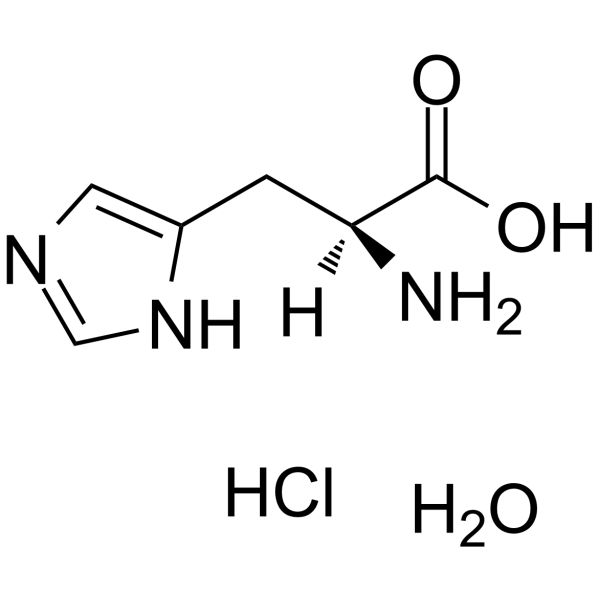
L-Histidine hydrochloride hydrate (Standard) is the analytical standard of L-Histidine hydrochloride hydrate (HY-W014423). This product is intended for research and analytical applications. L-Histidine hydrochloride hydrate is an endogenous metabolite. L-Histidine hydrochloride hydrate scavenges hydroxyl radicals and singlet oxygen, regulate the absorption of zinc, copper and iron, exhibits anti-inflammatory and antioxidant activities. L-Histidine hydrochloride hydrate is blood brain barrier penetrable .
|
-
- HY-150585
-
|
|
Amyloid-β
Cholinesterase (ChE)
Tau Protein
|
Neurological Disease
|
|
BuChE-IN-5 (compound 25b) is a potent BuChE inhibitor with an IC50 value of 1.94 μM. BuChE-IN-5 efficiently inhibits aggregation Aβ and tau protein in Escherichia coli. BuChE-IN-5 also has free radical scavenging capacity and antioxidant activity. BuChE-IN-5 can be used for researching Alzheimer’s disease .
|
-
- HY-N17982
-
|
|
HIV Integrase
|
Infection
|
|
Vanillic acid 4-O-β-D-glucopyranoside is a vanillic acid glycoside with moderate antioxidant activity. Vanillic acid 4-O-β-D-glucopyranoside scavenges DPPH free radicals and superoxide anion radicals, and inhibits AAPH-induced lipid peroxidation in the linoleic acid system. The IC50 value of Vanillic acid 4-O-β-D-glucopyranoside against HIV-1 integrase is >100 μg/mL, indicating that it is not an effective HIV-1 integrase inhibitor. Vanillic acid 4-O-β-D-glucopyranoside is isolable from the ethyl acetate extract of Gardeniae Fructus.
|
-
- HY-N0513
-
|
|
Reactive Oxygen Species (ROS)
Phosphatase
NF-κB
Keap1-Nrf2
|
Metabolic Disease
Inflammation/Immunology
|
|
Loganic acid is an iridoid isolated from cornelian cherry fruits. Loganic acid inhibits NF-κB signaling pathway, activates Nrf2 signaling pathway, exhibits anti-inflammatory activity. Loganic acid can modulate diet-induced atherosclerosis and redox status. Loganic acid has strong free radical scavenging activity and remarkable cyto-protective effect against heavy metal mediated toxicity. Loganic acid is orally active .
|
-
- HY-N13142
-
|
|
Others
|
Inflammation/Immunology
|
|
Luteolin 7-O-[β-D-apiofuranosyl-(1→6)]-β-D-glucopyranoside (compound 3) is a flavonoid with antioxidant activity, which can be isolated from Margaritopsis carrascoana. Luteolin 7-O-[β-D-apiofuranosyl-(1→6)]-β-D-glucopyranoside has good DPPH free radical scavenging activity (IC50=0.188 mg/mL) .
|
-
- HY-178055
-
|
|
Tyrosinase
|
Others
|
|
Tyrosinase-IN-44 (Compound 3) is a Tyrosinase inhibitor with IC50s of 0.47 and 0.53 μM for monophenolase and diphenolase, respectively. Tyrosinase-IN-44 has superior glutathione peroxidase-like catalytic and DPPH radical scavenging activity. Tyrosinase-IN-44 has potent antibrowning activity in banana and apple juices by directly inhibiting polyphenol oxidase (PPO) and offering antioxidant activity. Tyrosinase-IN-44 can be used for redox regulation and food preservation .
|
-
- HY-N7075
-
Inulin
4 Publications Verification
|
Endogenous Metabolite
|
Infection
Neurological Disease
Metabolic Disease
Cancer
|
|
Inulin is an orally active prebiotic targeting the intestinal microbiota, selectively promoting the proliferation and activity of beneficial bacteria such as bifidobacteria and lactic acid bacteria, and playing a role in regulating the intestinal microecology. The functions of Inulin include: Fermentation by probiotics in the colon to produce short-chain fatty acids (such as butyrate and propionate), lowering the intestinal pH and inhibiting the overgrowth of harmful bacteria; Enhancing the intestinal barrier function and reducing endotoxin translocation; Directly scavenging free radicals (such as superoxide free radicals, hydroxyl free radicals) and activating antioxidant enzymes (SOD, CAT) to reduce oxidative stress. Inulin can also be used in the study of intestinal diseases (constipation, IBD), metabolic syndrome (diabetes, obesity) and liver damage by regulating glucose and lipid metabolism (such as reducing triglycerides, improving insulin sensitivity) and immune response (enhancing NK cell activity, inhibiting inflammatory factors)[1][2][3][4].
|
-
- HY-127170
-
|
|
Lipoxygenase
Tyrosinase
|
Metabolic Disease
Inflammation/Immunology
|
|
3-Hydroxycoumarin is an inhibitor of tyrosinase and lipoxygenase with an IC50 for recombinant human tyrosinase (rHT) of 26 μM, and a Ki of 3.39 μM; its IC50 for LOX is 9.5 μM. 3-Hydroxycoumarin has DPPH free radical scavenging activity (IC50 = 31.2 μM). 3-Hydroxycoumarin has photoprotective effects on sea urchin zygotes and embryos .
|
-
- HY-N0499A
-
|
|
Prostaglandin Receptor
|
Inflammation/Immunology
|
|
Cyanidin is an orally active antioxidant and enzyme inhibitor. Cyanidin has IC50 values of 90 μM and 60 μM against PGHS-1 and PGHS-2, respectively. Cyanidin exhibits excellent antioxidant and anti-inflammatory activities, scavenges free radicals, inhibits lipid peroxidation, and protects DNA from cleavage. Cyanidin can be used in the research of inflammatory diseases .
|
-
- HY-W347202
-
|
|
COX
|
Neurological Disease
Inflammation/Immunology
|
|
N-Caffeoyl serotonin is a COX-2 inhibitor, with IC50 and Kᵢ values of 42.5 μM and 65.5 μM against COX-2, respectively. N-Caffeoyl serotonin exhibits weak inhibitory activity against BACE1, with an IC50 > 400 μM. N-Caffeoyl serotonin has free radical scavenging activity. N-Caffeoyl serotonin can be used in the research of allergic diseases and Alzheimer's disease .
|
-
- HY-G0004
-
|
3-Hydroxyacetaminophen
|
Drug Metabolite
|
Inflammation/Immunology
|
|
Acetaminophen metabolite 3-hydroxy-acetaminophen (3-Hydroxyacetaminophen) is a non-toxic metabolite and antioxidant of acetaminophen (HY-66005) with free radical scavenging activity. Acetaminophen metabolite 3-hydroxy-acetaminophen can reduce oxidative damage by exerting electron donation ability and antioxidant activity through phenolic hydroxyl groups. 3-hydroxy-acetaminophen can be used to study the toxicity mechanism and drug metabolism of acetaminophen .
|
-
- HY-168501
-
|
|
Reactive Oxygen Species (ROS)
|
Inflammation/Immunology
|
|
Neuroprotective Agent 6 (Compound Y12) is a neuroprotective agent with antioxidant activity and capabilities in DPPH, ABTS radical scavenging. Neuroprotective Agent 6 demonstrates superior neuroprotective effects in both cellular models induced by oxygen-glucose deprivation/reoxygenation (OGD/R) and animal models induced by transient middle cerebral artery occlusion (tMCAO). Additionally, Neuroprotective Agent 6 exhibits significant metal chelating activity towards Cu 2+ .
|
-
- HY-W014423S8
-
-
- HY-179037
-
|
|
Necroptosis
Reactive Oxygen Species (ROS)
Mitochondrial Metabolism
|
Neurological Disease
|
|
NecroX-2 is a potent inhibitor of caspase-independent necrosis. NecroX-2 exhibits antioxidant activity by scavenging DPPH radicals and peroxynitrite. NecroX-2 inhibits t-BHP-induced mitochondrial ROS/RNS generation, and protects t-BHP and Doxorubicin (HY-15142A)-induced cell death in vitro. NecroX-2 can be used for research on neurological diseases .
|
-
- HY-W014423S3
-
|
H-His-OH-13C6,15N3 hydrochloride hydrate
|
Isotope-Labeled Compounds
Apoptosis
Reactive Oxygen Species (ROS)
Endogenous Metabolite
|
Inflammation/Immunology
Cancer
|
|
L-Histidine- 13C6, 15N3 hydrochloride hydrate is the 13C- and 15N-labeled L-Histidine hydrochloride hydrate (HY-W014423). L-Histidine hydrochloride hydrate is an endogenous metabolite. L-Histidine hydrochloride hydrate scavenges hydroxyl radicals and singlet oxygen, regulate the absorption of zinc, copper and iron, exhibits anti-inflammatory and antioxidant activities. L-Histidine hydrochloride hydrate is blood brain barrier penetrable .
|
-
- HY-128525
-
|
|
Bacterial
Reactive Oxygen Species (ROS)
|
Infection
Inflammation/Immunology
|
|
Enterobactin is a siderophore produced by Gram-negative bacteria and has an extremely high affinity for iron. During the process of Salmonella typhimurium infecting macrophages, Enterobactin can not only help bacteria uptake iron but also reduce the antibacterial activity of macrophages. In addition, Enterobactin is also involved in the oxidative stress response of Escherichia coli. Enterobactin can be hydrolyzed by Fes in the cell and exert antioxidant effects by scavenging free radicals .
|
-
- HY-N0499
-
|
IdB 1027
|
Prostaglandin Receptor
|
Inflammation/Immunology
|
|
Cyanidin Chloride (IdB 1027) is an orally active antioxidant and enzyme inhibitor. Cyanidin Chloride has IC50 values of 90 μM and 60 μM against PGHS-1 and PGHS-2, respectively. Cyanidin Chloride exhibits excellent antioxidant and anti-inflammatory activities, scavenges free radicals, inhibits lipid peroxidation, and protects DNA from cleavage. Cyanidin Chloride can be used in the research of inflammatory diseases .
|
-
- HY-N16424
-
|
Me cis-ferulate; cis-Ferulic acid methyl ester
|
Fungal
|
Infection
|
|
Methyl (Z)-ferulate (Me cis-ferulate) (cis-Ferulic acid methyl ester) is an endogenous Germination self-inhibitor. Methyl (Z)-ferulate can be isolated from the leaves of Tetragonia tetragonoides. Methyl (Z)-ferulate blocks uredospores germination in rust fungi by reversibly inhibiting the digestion of the germination pore plug through the regulation of pre-existing enzyme activity. Methyl (Z)-ferulate also has antioxidant activity, effectively scavenging DPPH and ABTS + radical .
|
-
- HY-N8220
-
|
Flidersiachromone
|
Glycosidase
|
Neurological Disease
Cancer
|
|
2-(2-Phenylethyl) chromone (Flidersiachromone) is a chromone derivative and antioxidant. 2-(2-Phenylethyl) chromone scavenges ABTS· + free radicals, and its derivatives exhibit diverse activities including anti-inflammatory, neuroprotective, anti-tumor, and α-glucosidase inhibitory effects. 2-(2-Phenylethyl) chromone is applicable to experimental research in fields such as inflammation-related diseases, tumors, and neurodegenerative diseases .
|
-
- HY-N2375
-
|
|
Wnt
β-catenin
p38 MAPK
|
Metabolic Disease
|
|
L-Quebrachitol is a methoxy analog of inositol that can be isolated from plants. L-Quebrachitol has free-radical scavenging, gastroprotection, anti-platelet aggregation and anti-diabetic activity. L-Quebrachitol promotes osteoblastogenesis by uppregulation of BMP-2, runt-related transcription factor-2 (Runx2), MAPK (ERK, JNK, p38α), and Wnt/β-catenin signaling pathway .
|
-
- HY-N2375R
-
|
|
Reference Standards
Wnt
β-catenin
p38 MAPK
|
Metabolic Disease
|
|
L-Quebrachitol is a methoxy analog of inositol that can be isolated from plants. L-Quebrachitol has free-radical scavenging, gastroprotection, anti-platelet aggregation and anti-diabetic activity. L-Quebrachitol promotes osteoblastogenesis by uppregulation of BMP-2, runt-related transcription factor-2 (Runx2), MAPK (ERK, JNK, p38α), and Wnt/β-catenin signaling pathway .
|
-
- HY-185554
-
|
|
HDAC
|
Cancer
|
|
HDAC-IN-102 (Compound 21) is a histone deacetylase (HDAC) inhibitor with an IC50 of 58 μM. HDAC-IN-102 inhibits total HDAC activity and exhibits partial subtype selectivity, with the R-isomer targeting HDAC2 and the S-isomer targeting HDAC8. HDAC-IN-102 exerts antioxidant effects by scavenging DPPH free radicals. HDAC-IN-102 can be used in cancer-related research .
|
-
- HY-N17367
-
|
|
Others
|
Others
|
|
(2S,3S)-2-Geranyl-2,7-dimethylchromane-3,5-diol is a phenolic compound that can be found in Boletus pseudocalopus. (2S,3S)-2-Geranyl-2,7-dimethylchromane-3,5-diol exhibits radical-scavenging activity .
|
-
- HY-W001542
-
|
|
Reactive Oxygen Species (ROS)
|
Neurological Disease
Metabolic Disease
Cancer
|
|
5-Hydroxyoxindole is a structural analog of uric acid for its antioxidant. 5-Hydroxyoxindole has DPPH radical scavenging activities and lipid peroxidation-inhibitory activities. 5-Hydroxyoxindole is a product of partial metabolism of tryptophan involving conversion in the gut lumen of tryptophan to indole through the action of bacterial tryptophanase and tryptophan synthase. 5-Hydroxyoxindole is one of the main molecules responsible for the neurological symptoms of hepatic encephalopathy in rats. 5-Hydroxyoxindole can be used for the research of oxidative stress-mediated disorders .
|
-
- HY-W001542R
-
|
|
Reference Standards
Reactive Oxygen Species (ROS)
|
Neurological Disease
Metabolic Disease
Cancer
|
|
5-Hydroxyoxindole is a structural analog of uric acid for its antioxidant. 5-Hydroxyoxindole has DPPH radical scavenging activities and lipid peroxidation-inhibitory activities. 5-Hydroxyoxindole is a product of partial metabolism of tryptophan involving conversion in the gut lumen of tryptophan to indole through the action of bacterial tryptophanase and tryptophan synthase. 5-Hydroxyoxindole is one of the main molecules responsible for the neurological symptoms of hepatic encephalopathy in rats. 5-Hydroxyoxindole can be used for the research of oxidative stress-mediated disorders .
|
-
- HY-108749
-
|
Cropure OL
|
Environmental Pollutants
Xanthine Oxidase
|
Cardiovascular Disease
Metabolic Disease
Inflammation/Immunology
Cancer
|
|
Olive oil (Cropure OL) is an oleaginous compound found in the fruit of the Olea europaea tree . Olive oil contains many phenolic components and exerts antioxidant activity. Olive oil exhibits hydroxyl radical scavenging, platelet aggregation inhibition and xanthine oxidase inhibitory activity. Olive oil can promote wound healing and relieve inflammation. Olive oil can be used for the research of inflammation, cancer, metabolic and cardiovascular disease, such as diabetic foot ulcers and inflammatory bowel disease .
|
-
- HY-N0513R
-
|
|
Reference Standards
Reactive Oxygen Species (ROS)
Phosphatase
NF-κB
Keap1-Nrf2
|
Metabolic Disease
Inflammation/Immunology
|
|
Loganic acid (Standard) is the analytical standard of Loganic acid. This product is intended for research and analytical applications. Loganic acid is an iridoid isolated from cornelian cherry fruits. Loganic acid inhibits NF-κB signaling pathway, activates Nrf2 signaling pathway, exhibits anti-inflammatory activity. Loganic acid can modulate diet-induced atherosclerosis and redox status. Loganic acid has strong free radical scavenging activity and remarkable cyto-protective effect against heavy metal mediated toxicity. Loganic acid is orally active .
|
-
- HY-W004761
-
|
Hypodiboric acid
|
Bacterial
Reactive Oxygen Species (ROS)
|
Infection
Inflammation/Immunology
|
|
Tetrahydroxydiboron (Hypodiboric acid) acts as a hydrogel initiator and bioadhesion promoter, with broad-spectrum antibacterial activity, ROS scavenging capacity, and osteogenic induction properties. Tetrahydroxydiboron initiates rapid gelation by generating free radicals through reactions with vinyl monomers and dissolved oxygen, overcoming oxygen inhibition without deoxygenation or external triggers. Tetrahydroxydiboron achieves strong bioadhesion via interaction with carboxymethyl chitosan. Tetrahydroxydiboron can be used in the research of periodontitis and related inflammatory diseases .
|
-
- HY-N1750
-
|
|
Tyrosinase
|
Metabolic Disease
|
|
3-(2,4-Dihydroxyphenyl) propanoic acid (DPPacid) is a competitive Tyrosinase inhibitor. It exhibits an IC50 value of 3.02 μM against mushroom tyrosinase with L-tyrosine as the substrate, an IC50 value of 62 μM with DL-DOPA as the substrate, and a Ki value of 11.5 μM. 3-(2,4-Dihydroxyphenyl) propanoic acid shows no DPPH radical scavenging activity. It can be used in studies related to ultraviolet B (UVB)-induced hyperpigmentation .
|
-
- HY-N7432
-
|
|
Antibiotic
Bacterial
Fungal
|
Infection
|
|
DIMBOA, an antibiotic, has antibacterial properties and inhibits bacteria such as Staphylococcus aureus and the mycotoxin-producing fungus Fusarium graminearum (which causes scab). DIMBOA exhibits strong free radical scavenging activity and weak iron(III) ion reducing activity, and has antioxidant activity. DIMBOA inhibits the biosynthesis and accumulation of toxic trichothecenes by affecting the expression of Tri6 and Tri5. DIMBOA reduces plant susceptibility to scab. DIMBOA also exhibits cytotoxicity to plant cells, causing plasmolysis, cell collapse, and cell rupture .
|
-
- HY-170583
-
|
|
Cholinesterase (ChE)
Amyloid-β
|
Neurological Disease
|
|
hAChE-IN-10 (Compound ET11) is the inhibitor for human acetylcholinesterase (AChE) with an IC50 of 6.34 nM. hAChE-IN-10 scavenges free radicals, and exhibits antioxidant activity. hAChE-IN-10 exhibits metal chelating activity, inhibits Cu 2+-induced Aβ1-42 aggregation, reduces the formation of amyloid plaques, and exhibits neuroprotective activity. hAChE-IN-10 ameliorates the Scopolamine (HY-N0296)-induced cognitive impairment in mouse models .
|
-
- HY-W014423S1
-
|
H-His-OH-13C6,15N3,d5 hydrochloride hydrate
|
Isotope-Labeled Compounds
Endogenous Metabolite
|
Inflammation/Immunology
Cancer
|
|
L-Histidine- 13C6, 15N3,d5 hydrochloride hydrate is the deuterium, 13C-, and 15-labeled L-Histidine hydrochloride hydrate (HY-W014423). L-Histidine hydrochloride hydrate is an endogenous metabolite. L-Histidine hydrochloride hydrate scavenges hydroxyl radicals and singlet oxygen, regulate the absorption of zinc, copper and iron, exhibits anti-inflammatory and antioxidant activities. L-Histidine hydrochloride hydrate is blood brain barrier penetrable .
|
-
- HY-132280
-
|
U 74006F free base
|
Reactive Oxygen Species (ROS)
SARS-CoV
Virus Protease
|
Neurological Disease
Inflammation/Immunology
|
|
Tirilazad (U 74006F free base) is a neuroprotective agent. Tirilazad can also bind tightly to the main protease of the COVID-19 virus and exert anti-SARS-CoV-2 activity. Tirilazad scavenges hydroxyl and lipid peroxyl free radicals and maintains the levels of endogenous antioxidants. Tirilazad reduces cerebral infarct volume and improves neurobehavioral scores in animal models of focal ischemia. Tirilazad can be used in research related to ischemic stroke and subarachnoid hemorrhage .
|
-
- HY-D0168
-
|
3,5-Dihydroxytoluene
|
Fluorescent Dye
Tyrosinase
p38 MAPK
ERK
|
Metabolic Disease
Cancer
|
|
Orcinol (3,5-Dihydroxytoluene) is an organic compound used in biological dyeing and proteomics research. Orcinol inhibits melanogenesis in B16F10 cells by upregulating the MAPK/ERK signaling pathway, and suppresses the expression of MITF, tyrosinase (TYR), TRP1, and DCT. Orcinol exhibits certain DPPH radical scavenging activity. In addition, Orcinol can alter nitrogen balance in animals. Orcinol holds promise for research in cancer and metabolic diseases .
|
-
- HY-P1934AR
-
|
|
Reference Standards
Fungal
Bacterial
IFNAR
Reactive Oxygen Species (ROS)
|
Infection
Inflammation/Immunology
Cancer
|
|
Gallic acid (hydrate) (Standard) is the analytical standard of Gallic acid (hydrate). This product is intended for research and analytical applications. Cyclo(L-Phe-L-Pro), isolated from Pseudomonas fluorescens and Pseudomonas alcaligenes cell-free culture supernatants is an antifungal cyclic dipeptide . Cyclo(L-Phe-L-Pro) inhibits IFN-β production by interfering with retinoic-acid-inducible gene-I (RIG-I) activation . Cyclo(L-Phe-L-Pro) exhibits free-radical scavenging activity with the IC50 of 24 µM in the DPPH assay .
|
-
- HY-124953R
-
|
|
MAP3K
Apoptosis
|
Cancer
|
|
7,3',4'-Trihydroxyisoflavone (Standard) is the analytical standard of 7,3',4'-Trihydroxyisoflavone. This product is intended for research and analytical applications. 7,3',4'-Trihydroxyisoflavone, a major metabolite of Daidzein, is an ATP-competitive inhibitor of Cot (Tpl2/MAP3K8) and MKK4. 7,3',4'-Trihydroxyisoflavone has anticancer, anti-angiogenic, chemoprotective, and free radical scavenging activities .
|
-
- HY-N0627
-
|
|
LDLR
|
Others
|
|
Kaempferol-7-O-β-D-glucopyranoside is a flavonoid glycoside. Kaempferol-7-O-β-D-glucopyranoside exists in the root bark of Cudrania tricuspidata. Kaempferol-7-O-β-D-glucopyranoside inhibits Cu 2+-induced lipid peroxidation of low-density lipoprotein. Kaempferol-7-O-β-D-glucopyranoside possesses antioxidant activity and scavenges DPPH free radicals .
|
-
- HY-N6937R
-
|
(R,R)-SDG (Standard); (R,R)-LGM2605 (Standard)
|
Reference Standards
Others
|
Inflammation/Immunology
|
|
(R,R)-Secoisolariciresinol diglucoside (Standard) is the analytical standard of (R,R)-Secoisolariciresinol diglucoside. This product is intended for research and analytical applications. (R,R)-Secoisolariciresinol diglucoside ((R,R)-SDG) is the minor isomer of Secoisolariciresinol diglucoside in flaxseed. (R,R)-Secoisolariciresinol diglucoside ((R,R)-SDG) possesses antioxidant and free radical scavenging activities and DNA-radioprotective properties. (R,R)-Secoisolariciresinol diglucoside ((R,R)-SDG) inhibits myeloperoxidase (MPO) activity by suppressing both the peroxidase and chlorination cyclesin inflammatory cells .
|
-
- HY-128463S
-
|
|
COX
Reactive Oxygen Species (ROS)
|
Metabolic Disease
|
|
N-tert-Butyl-α-phenylnitrone-d14 is the deuterium labeled N-tert-Butyl-α-phenylnitrone . N-tert-Butyl-α-phenylnitrone is a nitrone-based free radical scavenger that forms nitroxide spin adducts. N-tert-Butyl-α-phenylnitrone inhibits COX2 catalytic activity. N-tert-Butyl-α-phenylnitrone has potent ROS scavenging, anti-inflammatory, neuroprotective, anti-aging and anti-diabetic activities, and can penetrate the blood-brain barrier .
|
-
- HY-149390
-
|
|
TrxR
|
Cancer
|
|
TrxR1-IN-1 (Compound 5j) is a TrxR1 inhibitor (IC50: 8.8 μM). TrxR1-IN-1 has anticancer activity, with IC50s of MCF-7 (1.5 μM), HeLa (1.7 μM), BGC-823 (2.4 μM), SW-480 (2.8 μM), A549 (2.1 μM). TrxR1-IN-1 has antioxidant activity, and scavenges DPPH radical .
|
-
- HY-N6937S1
-
|
(R,R)-SDG-d6; (R,R)-LGM2605-d6
|
Isotope-Labeled Compounds
|
Inflammation/Immunology
|
|
(R,R)-Secoisolariciresinol diglucoside-d6 is deuterated labeled (R,R)-Secoisolariciresinol diglucoside (HY-N6937). (R,R)-Secoisolariciresinol diglucoside ((R,R)-SDG) is the minor isomer of Secoisolariciresinol diglucoside in flaxseed. (R,R)-Secoisolariciresinol diglucoside ((R,R)-SDG) possesses antioxidant and free radical scavenging activities and DNA-radioprotective properties. (R,R)-Secoisolariciresinol diglucoside ((R,R)-SDG) inhibits myeloperoxidase (MPO) activity by suppressing both the peroxidase and chlorination cyclesin inflammatory cells .
|
-
- HY-146169
-
|
|
Reactive Oxygen Species (ROS)
Microtubule/Tubulin
|
Cancer
|
|
Antitumor agent-68 is a potent tubulin inhibitor. Antitumor agent-68 shows potent anticancer activity with IC50s of 3.6 and 3.8 μM for HeLa and MCF-7 cells, respectively. Antitumor agent-68 exhibits good scavenging activity of ROS and DPPH radical in a dose-dependent manner . Antitumor agent-68 is a click chemistry reagent, it contains an Alkyne group and can undergo copper-catalyzed azide-alkyne cycloaddition (CuAAc) with molecules containing Azide groups.
|
-
- HY-14837
-
|
Enisamium iodide
|
Influenza Virus
SARS-CoV
|
Infection
|
|
Amizon is an orally effective antiviral and anti-inflammatory agent. Amizon inhibits influenza virus replication and restricts viral RNA synthesis. Amizon reduces the mRNA expression of COX-1, COX-2, NF-κB, TGF1β, IL-1 and IL-6, and stimulates the secretion and mRNA expression of IL-10. Amizon inhibits the oxidative activity of macrophages and possesses antioxidant and free radical-scavenging activities. Amizon is applicable to research related to influenza and acute respiratory viral infections .
|
-
- HY-N17639
-
|
|
TGF-beta/Smad
TGF-β Receptor
|
Others
|
|
Regiafuran C is a compound with both TGF-βRI inhibitory and anti-fibrotic activities. Regiafuran C effectively inhibits renal fibrosis by binding to TGF-βRI and interfering with the TGF-β/Smad and Wnt/β-catenin signaling pathways. Regiafuran C also exhibits free radical scavenging activity, but shows no anti-inflammatory activity in PGE2 competitive enzyme immunoassays. The ability of Regiafuran C to specifically block the Smad3-TGF-βRII interaction and inhibit fibrotic processes allows its use in renal fibrosis research .
|
-
- HY-W747297
-
|
|
COX
Endogenous Metabolite
|
Neurological Disease
Inflammation/Immunology
|
|
β-Selinene is a sesquiterpene and is the main active component of the essential oil of red purple hibiscus (Callicarpa macrophylla). β-Selinene exhibits significant related antioxidant activity, anti-inflammatory activity, and antipyretic analgesic activity. β-Selinene may exert antioxidant effects by directly scavenging free radicals (DPPH, NO, •OH) and chelating pro-oxidative metal ions (Fe²⁺); inhibit cyclooxygenase (COX) activity, reduce prostaglandin (such as PGE₂) synthesis to exert anti-inflammatory effects; regulate the thermoregulatory set point of the hypothalamus and inhibit inflammatory mediators to exert antipyretic and analgesic effects .
|
-
- HY-N16129
-
|
Nymphaeol A; Propolin C
|
COX
Reactive Oxygen Species (ROS)
Calcium Channel
Ferroptosis
Mitochondrial Metabolism
MMP
|
Inflammation/Immunology
Cancer
|
|
Diplacone is an orally active geranyl flavanone. It is isolated from the fruits of Paulownia tomentosa. Diplacone reduces COX-2 levels and increases the pro-MMP2/MMP2 ratio. It induces ferroptosis-mediated cell death. Diplacone enhances mitochondrial Ca 2+ influx and ROS production. It possesses anti-inflammatory and free radical-scavenging activities. Diplacone can be used in research related to ulcerative colitis and non-small cell lung cancer .
|
-
- HY-128525R
-
|
|
Bacterial
Reference Standards
Reactive Oxygen Species (ROS)
|
Infection
Inflammation/Immunology
|
|
Enterobactin (Standard) is the analytical standard of Enterobactin. This product is intended for research and analytical applications. Enterobactin is a siderophore produced by Gram-negative bacteria and has an extremely high affinity for iron. During the process of Salmonella typhimurium infecting macrophages, Enterobactin can not only help bacteria uptake iron but also reduce the antibacterial activity of macrophages. In addition, Enterobactin is also involved in the oxidative stress response of Escherichia coli. Enterobactin can be hydrolyzed by Fes in the cell and exert antioxidant effects by scavenging free radicals .
|
-
- HY-W013507
-
-
- HY-W104752
-
-
- HY-W011956
-
|
|
Drug Metabolite
Endogenous Metabolite
|
Neurological Disease
Metabolic Disease
|
|
6-Hydroxymelatonin is the main metabolite of melatonin (HY-B0075) after being metabolized by CYP1A2 and can cross the blood-brain barrier. 6-Hydroxymelatonin has strong free radical scavenging ability and antioxidant activity, and can alleviate oxidative damage caused by various neurotoxins. 6-Hydroxymelatonin can cause oxidative DNA damage in the presence of copper ions through a "non-quinone" type redox cycling mechanism .
|
-
- HY-N2907
-
|
|
Wnt
Ras
Endogenous Metabolite
Bacterial
Fungal
PD-1/PD-L1
Tim3
Akt
AP-1
STAT
|
Infection
Neurological Disease
Inflammation/Immunology
Cancer
|
|
Atranorin is a secondary metabolite of lichens and AKT inhibitor. Atranorin possesses multiple activities such as antibacterial, anti-inflammatory, antioxidant, anti-glycation, analgesic, and anti-tumor effects. Atranorin has IC50 values for scavenging DPPH and ABTS free radicals of 117 μM and less than 10 μM, respectively. Additionally, Atranorin also exhibits effects in promoting wound healing. Atranorin can be used in the research of various diseases, including myelodysplastic syndromes, tumors, and inflammatory conditions .
|
-
- HY-N16838
-
|
|
Drug Derivative
|
Inflammation/Immunology
|
|
cis-Oxyresveratrol-4'-O-glucoside (compound 2a) is a β-D-glucoside derivative of oxyresveratrol, whose parent compound possesses potential anti-inflammatory, antioxidant, free radical scavenging, and tyrosinase inhibitory activities, and can be used in anti-inflammatory, antioxidant, and whitening-related research. cis-Oxyresveratrol-4'-O-glucoside is a product obtained by the biotransformation of oxyresveratrol using cell suspension cultures of Solanum mammosum (a plant of the genus Solanum in the Solanaceae family) .
|
-
- HY-132828
-
|
LT3001; DHDMIQK(KAP)
|
P-selectin
|
Cardiovascular Disease
Metabolic Disease
Inflammation/Immunology
|
|
Odatroltide (LT3001; DHDMIQK(KAP)) is a P-selectin inhibitor. Odatroltide is a peptide molecule comprising a tripeptide Pro-Ala-Lys (PAK) and an (S)-6,7-dihydroxy-1,1-dimethyl-1,2,3,4-tetrahydro-isoquinoline-3-carboxylic acid domain. Odatroltide can restore cerebral blood flow, scavenge free radicals, and inhibit leukocyte migration. Odatroltide possesses thrombolytic and anti-thrombotic activities .
|
-
- HY-174848
-
|
|
TRP Channel
Cannabinoid Receptor
|
Neurological Disease
Inflammation/Immunology
|
|
PQM-244 (Compound 5c) is an orally active and multi-target modulator of TRPV1 and CB1 and CB2 receptors. PQM-244 has significant peripheral antinociceptive effects on both neurogenic and inflammatory phases. PQM-244 also has potential antioxidant activity with an IC50 of 14.15 µM for radical scavenging DPPH. PQM-244 can be used for chronic pain and inflammatory disease research, such as diabetes, atherosclerosis and Alzheimer’s disease .
|
-
- HY-N7005
-
-
- HY-N0499R
-
|
IdB 1027 (Standard)
|
Reference Standards
Prostaglandin Receptor
|
Inflammation/Immunology
|
|
Cyanidin Chloride (IdB 1027) (Standard) is the analytical standard of Cyanidin Chloride (IdB 1027). This product is intended for research and analytical applications. Cyanidin Chloride (IdB 1027) is an orally active antioxidant and enzyme inhibitor. Cyanidin Chloride has IC50 values of 90 μM and 60 μM against PGHS-1 and PGHS-2, respectively. Cyanidin Chloride exhibits excellent antioxidant and anti-inflammatory activities, scavenges free radicals, inhibits lipid peroxidation, and protects DNA from cleavage. Cyanidin Chloride can be used in the research of inflammatory diseases.
|
-
- HY-N0448
-
|
|
AMPK
Reactive Oxygen Species (ROS)
Akt
PI3K
Interleukin Related
TNF Receptor
Apoptosis
|
Neurological Disease
Inflammation/Immunology
Cancer
|
|
10-Gingerol is an AMPK agonist, which is found in the ginger oleoresin from fresh rhizome with anti-inflammatory, antioxidant and anti-proliferative activities. 10-Gingerol suppresses neointimal hyperplasia and inhibits vascular smooth muscle cell proliferation. 10-Gingerol exhibits substantial scavenging activities with an IC50 value of 10.47 μM against DPPH radical, an IC50 value of 1.68 μM against superoxide radical and an IC50 value of 1.35 μM against hydroxyl radical. 10-Gingerol inhibits the proliferation of MDA-MB-231 tumor cell line with an IC50 of 12.1 μM. 10-Gingerol suppresses the proliferation, migration, invasion, and induced apoptosis through targeting the PI3K/Akt signaling pathway in MDA-MB-231/IR cells. 10-Gingerol can be used in research on various common cancers such as ovarian cancer and colon cancer, as well as colitis and neurodegenerative diseases .
|
-
- HY-N9086A
-
|
5,7,4'-Trihydroxy-6-methylflavanone
|
NO Synthase
COX
Interleukin Related
|
Inflammation/Immunology
|
|
(rac)-Poriol (5,7,4'-Trihydroxy-6-methylflavanone) exhibits antioxidant activity, and scavenges free radical DPPH with an IC50 of 0.18 µg/mL. (rac)-Poriol inhibits the LPS (HY-D1056)-induced NO generation in RAW264.7 (98.35% inhibition rate at 10 μM), and exhibits anti-inflammatory activity. (rac)-Poriol exhibits good binding affinity with iNOS, COX-1, COX-2, TNF-α, and IL-1β .
|
-
- HY-N16745
-
|
|
Parasite
HIV
HIV Protease
|
Infection
|
|
5-Hydroxynoracronycine is a selective inhibitor targeting Leishmania, HIV-1 protease, and nitric oxide (NO) production. 5-Hydroxynoracronycine has an IC50 of 93.1 μmol/L against HIV-1 protease and an IC50 of 0.19 mg/mL for scavenging DPPH free radicals. 5-Hydroxynoracronycine exerts anti-leishmanial, anti-HIV, antioxidant and antibacterial activities by inhibiting pathogen proliferation, enzyme activity and inflammation-related NO excessive production. 5-Hydroxynoracronycine can be used in the research of leishmaniasis, HIV infection, and inflammation-related diseases .
|
-
- HY-163746
-
|
|
Cholinesterase (ChE)
|
Neurological Disease
|
|
BuChE-IN-11 (Compound 3b-1) is an selective BuChE inhibitor with an IC50 of 0.44 μM for hBuChE. BuChE-IN-11 has high blood-brain barrier permeability and exhibits strong antioxidant activity due to its free radical scavenging properties. BuChE-IN-11 interacts with the choline binding site, acetyl binding site, and peripheral anionic site, exhibiting submicromolar BuChE inhibitory activity and preventing β-amyloid (Aβ) self-aggregation. BuChE-IN-11 holds promise for research in the field of Alzheimer's disease .
|
-
- HY-N0761A
-
|
trans-3-Hydroxy-4-methoxycinnamic acid
|
NO Synthase
Prostaglandin Receptor
PI3K
Akt
NF-κB
Keap1-Nrf2
COX
|
Metabolic Disease
Inflammation/Immunology
|
|
trans-Isoferulic acid (trans-3-Hydroxy-4-methoxycinnamic acid) is an aromatic acid that exhibits anti-inflammatory activity. trans-Isoferulic acid dephosphorylates PI3K/Akt, suppresses LPS (HY-D1056)-induced NF-κB activation, enhances Nrf2 activity, downregulates iNOS and COX-2 expression, induces HO-1 expression, inhibits NO and PGE2 production, and scavenges hydroperoxyl radical. trans-Isoferulic acid can be used for research of inflammatiory diseases .
|
-
- HY-149404
-
|
|
Reactive Oxygen Species (ROS)
Tyrosinase
|
Others
|
|
Non-competitive tyrosinase inhibitor (Tyrosinase-IN-12) is a potent, non-competitive tyrosinase inhibitor with an IC50 value of 49.33 ± 2.64 µM and Ki value of 31.25 ± 0.25 µM. Non-competitive tyrosinase inhibitor (Tyrosinase-IN-12) have the highest radical scavenging activity to reduce the production of reactive oxygen species (ROS) with an IC50 value of 25.39 ± 0.77 µM. Non-competitive tyrosinase inhibitor (Tyrosinase-IN-12) can be used for anti-browning substances in the food and agricultural sectors .
|
-
- HY-N9097
-
|
|
Reactive Oxygen Species (ROS)
SOD
Glutathione Peroxidase
PKC
NADPH Oxidase
|
Metabolic Disease
Inflammation/Immunology
|
|
Niazirin is an orally active antioxidant. Niazirin can be isolated from Moringa oleifera Lam. Niazirin reduces the production levels of ROS and MDA, while increasing the levels of superoxide dismutase SOD and glutathione peroxidase GPx. Niazirin also abolishes high glucose-induced PKCζ activation and inhibits Nox4 protein expression. Niazirin exhibits excellent free radical scavenging activity. Niazirin significantly inhibits high glucose-induced proliferation of vascular smooth muscle cells. Niazirin can be used in the research of diabetic atherosclerosis .
|
-
- HY-N15536
-
|
|
Reactive Oxygen Species (ROS)
|
Cardiovascular Disease
Neurological Disease
|
|
N-trans-Feruloyltyramine 4′-O-β-D-glucopyranoside is a phenolic amide glycoside compound found in Suaeda japonica. N-trans-Feruloyltyramine 4′-O-β-D-glucopyranoside exhibits antioxidant activity, capable of effectively scavenging DPPH free radicals and reducing the production of ROS induced by H2O2 in cells, thus protecting cells from oxidative stress damage. N-trans-Feruloyltyramine 4′-O-β-D-glucopyranoside is promising for research of cardiovascular diseases and neurodegenerative diseases .
|
-
- HY-168731
-
|
|
Cholinesterase (ChE)
|
Neurological Disease
|
|
AChE/BChE-IN-25 (Compound 6e) is the orally active inhibitor for hAChE and eqBChE with IC50 of 7.9 nM and 0.79 nM. AChE/BChE-IN-25 exhibits antioxidant activity, that scavenges free radical with IC50 of 22.91 μM. AChE/BChE-IN-25 exhibits neuroprotective effects by reducing mitochondrial and cellular oxidative stress in the Drosophila Alzheimer's disease model. AChE/BChE-IN-25 ameliorates Scopolamine (HY-N0296)-induced spatial and cognitive memory impairment in mouse model .
|
-
- HY-N15722
-
|
|
Reactive Oxygen Species (ROS)
|
Inflammation/Immunology
|
|
9-O-β-D-Glucopyranosyl-3,4-dimethoxy-cinnamic acid is an orally active phenylpropanoid glycoside found in Microlepia pilosissima, acting as an antioxidant. 9-O-β-D-Glucopyranosyl-3,4-dimethoxy-cinnamic acid shows a DPPH radical scavenging activity with an ED50 value of 38.1 μM. 9-O-β-D-Glucopyranosyl-3,4-dimethoxy-cinnamic acid is promising for research of oxidative stress-related diseases such as inflammation and liver injury .
|
-
- HY-Y0320E
-
|
|
Cholinesterase (ChE)
Bacterial
|
Infection
Inflammation/Immunology
Cancer
|
|
Dimethyl sulfoxide (suitable for HPLC) is an aprotic solvent that can dissolve water-insoluble therapeutic and toxic agents. Dimethyl sulfoxide (DMSO) has a strong affinity for water and has the ability to rapidly penetrate or enhance the penetration of other substances through biological membranes. Dimethyl sulfoxide also has potential free radical scavenging and anticholinesterase effects and may affect coagulation activity. Dimethyl sulfoxide also induces histamine release from mast cells but is thought to have low systemic toxicity. Dimethyl sulfoxide (suitable for HPLC) is suitable for HPLC .
|
-
- HY-N7432R
-
|
|
Antibiotic
Bacterial
Fungal
Reference Standards
|
Infection
|
|
DIMBOA (Standard) is the analytical standard of DIMBOA. This product is intended for research and analytical applications. DIMBOA, an antibiotic, has antibacterial properties and inhibits bacteria such as Staphylococcus aureus and the mycotoxin-producing fungus Fusarium graminearum (which causes scab). DIMBOA exhibits strong free radical scavenging activity and weak iron(III) ion reducing activity, and has antioxidant activity. DIMBOA inhibits the biosynthesis and accumulation of toxic trichothecenes by affecting the expression of Tri6 and Tri5. DIMBOA reduces plant susceptibility to scab. DIMBOA also exhibits cytotoxicity to plant cells, causing plasmolysis, cell collapse, and cell rupture[1][2][3][4][5].
|
-
- HY-N0448R
-
|
|
Reference Standards
Others
|
Neurological Disease
Inflammation/Immunology
Cancer
|
|
10-Gingerol (Standard) is the analytical standard of 10-Gingerol (HY-N0448). This product is intended for research and analytical applications. 10-Gingerol is an AMPK agonist, which is found in the ginger oleoresin from fresh rhizome with anti-inflammatory, antioxidant and anti-proliferative activities. 10-Gingerol suppresses neointimal hyperplasia and inhibits vascular smooth muscle cell proliferation. 10-Gingerol exhibits substantial scavenging activities with an IC50 value of 10.47 μM against DPPH radical, an IC50 value of 1.68 μM against superoxide radical and an IC50 value of 1.35 μM against hydroxyl radical. 10-Gingerol inhibits the proliferation of MDA-MB-231 tumor cell line with an IC50 of 12.1 μM. 10-Gingerol suppresses the proliferation, migration, invasion, and induced apoptosis through targeting the PI3K/Akt signaling pathway in MDA-MB-231/IR cells. 10-Gingerol is promising for research of ulcerative colitis .
|
-
- HY-107965
-
|
Safflower seed oil (from Carthamus tinctorius seed)
|
Biochemical Assay Reagents
Elastase
|
Inflammation/Immunology
|
|
Safflower oil (from Carthamus tinctorius seed) is rich in unsaturated fatty acids such as linoleic acid and oleic acid, as well as tocopherols and phenolic compounds, and exhibits antioxidant, anti-aging and blood lipid-regulating effects. Safflower oil (from Carthamus tinctorius seed) inhibits the activities of collagenase and elastase, and exerts antioxidant activity by scavenging free radicals. Linoleic acid in safflower oil (from Carthamus tinctorius seed) reduces blood cholesterol levels. Safflower oil (from Carthamus tinctorius seed) can be applied to research in fields such as skin aging, atherosclerosis, edible oil processing and industrial raw material development .
|
-
- HY-175851
-
|
|
Adenosine Receptor
|
Neurological Disease
|
|
A2AAR antagonist 5 is a selective A2AAR antagonist. A2AAR antagonist 5 inhibits NECA-stimulated adenylyl cyclase activity in hA2AAR-expressing CHO cells with an IC50 value of 1863 nM. A2AAR antagonist 5 possesses strong free radical scavenging activity, with an EC50 value of 22.21 μM in the DPPH assay. A2AAR antagonist 5 exerts notable neuroprotective effects in in vitro cerebral ischemia models. A2AAR antagonist 5 can be used for the study of cerebral ischemia .
|
-
- HY-W011956R
-
|
|
Drug Metabolite
Reference Standards
Endogenous Metabolite
|
Neurological Disease
Metabolic Disease
|
|
6-Hydroxymelatonin (Standard) is the analytical standard of 6-Hydroxymelatonin. This product is intended for research and analytical applications. 6-Hydroxymelatonin is the main metabolite of melatonin (HY-B0075) after being metabolized by CYP1A2 and can cross the blood-brain barrier. 6-Hydroxymelatonin has strong free radical scavenging ability and antioxidant activity, and can alleviate oxidative damage caused by various neurotoxins. 6-Hydroxymelatonin can cause oxidative DNA damage in the presence of copper ions through a "non-quinone" type redox cycling mechanism.
|
-
- HY-N17779
-
|
|
TNF Receptor
Reactive Oxygen Species (ROS)
|
Inflammation/Immunology
|
|
3-O-Caffeoyl-5-O-feruloylquinic acid is a quinic acid-based phenolic compound that can be isolated from Eryngium bourgatii. 3-O-Caffeoyl-5-O-feruloylquinic acid regulates free radical scavenging and inflammatory pathways, exerting antioxidant activity through electron transfer and hydrogen atom transfer mechanisms. It also inhibits TNF-α-induced reactive oxygen species (ROS) production and the production of monocyte chemoattractant protein-1 (MCP-1) and its transcripts in human umbilical vein endothelial cells (HUVECs).
|
-
- HY-N6958
-
|
AA-2βG
|
Apoptosis
HSP
Reactive Oxygen Species (ROS)
Keap1-Nrf2
Heme Oxygenase (HO)
|
Inflammation/Immunology
Cancer
|
|
2-O-β-D-Glucopyranosyl-L-ascorbic acid (AA-2βG) is an orally active vitamin C derivative. 2-O-β-D-Glucopyranosyl-L-ascorbic acid exhibits multiple activities including antioxidant, anti-tumor and immunomodulatory effects. 2-O-β-D-Glucopyranosyl-L-ascorbic acid mediates tumor cell apoptosis, induces cell cycle arrest, scavenges free radicals and eliminates oxidative stress. 2-O-β-D-Glucopyranosyl-L-ascorbic acid can be used in studies related to cancer, inflammation and immunity .
|
-
- HY-Y0320C
-
|
DMSO
|
Environmental Pollutants
Bacterial
Cholinesterase (ChE)
|
Inflammation/Immunology
|
Dimethyl sulfoxide (DMSO) is an aprotic solvent that can dissolve water-insoluble therapeutic and toxic agents. Dimethyl sulfoxide (DMSO) has a strong affinity for water and has the ability to rapidly penetrate or enhance the penetration of other substances through biological membranes. Dimethyl sulfoxide also has potential free radical scavenging and anticholinesterase effects and may affect coagulation activity. Dimethyl sulfoxide also induces histamine release from mast cells but is thought to have low systemic toxicity . Low endotoxin, can be used in various biochemical experiments such as drug dissolution.
|
-
- HY-N7521
-
|
Procyanidine C2
|
Acetyl-CoA Carboxylase
Fatty Acid Synthase (FASN)
Stearoyl-CoA Desaturase (SCD)
PPAR
AMPK
mTOR
JNK
|
Inflammation/Immunology
|
|
Procyanidin C2 (Procyanidine C2) is a lipid metabolism regulator and antioxidant with free radical scavenging activity. Procyanidin C2 down-regulates ACC, SREBP-1c, FAS, SCD-1 and PPARγ. Procyanidin C2 increases the level of phosphorylated AMPKα and inhibits the level of phosphorylated mTOR. Procyanidin C2 reduces lipid accumulation, alleviates oxidative stress, enhances fatty acid oxidation and improves mitochondrial function. Procyanidin C2 can be used in the research of non-alcoholic fatty liver disease .
|
-
- HY-149517
-
|
|
EGFR
Raf
Caspase
Bcl-2 Family
Apoptosis
|
Inflammation/Immunology
Cancer
|
|
EGFR/BRAFV600E-IN-2 (compound 3g) is a potential multi-target inhibitor of EGFR, BRAF V600E, and EGFR T790M, and an inducer of apoptosis. EGFR/BRAFV600E-IN-2 can activate caspase-3, 8, and Bax, and downregulate the anti-apoptotic protein Bcl2, inducing apoptosis. EGFR/BRAF V600E-IN-2 also has antioxidant activity and DPPH free radical scavenging potency .
|
-
- HY-134816
-
|
|
Toll-like Receptor (TLR)
|
Metabolic Disease
Inflammation/Immunology
Cancer
|
|
D-Glucan is an orally effective Dectin-1 receptor immune activator with antioxidant properties (reducing TNF-α). D-Glucan activates macrophages and neutrophils to scavenge free radicals, inhibit oxidative stress and inflammatory responses, and improve insulin sensitivity. D-Glucan promotes glycolysis by enhancing the activity of the antioxidant enzyme glutathione, inhibiting gluconeogenesis and activating GK. D-Glucan can be used in the research of liver damage protection (antagonizing Acetaminophen (HY-66005) toxicity), radiation protection (synergistic with vitamin E) and diabetes (improving glucose metabolism) .
|
-
- HY-N9503
-
|
|
TRP Channel
Na+/K+ ATPase
Parasite
|
Others
Neurological Disease
Inflammation/Immunology
|
|
Carvacryl acetate is an orally active and brain-penetrant TRPA1 receptor activator and Na +/K +-ATPase activator. Carvacryl acetate modulates GABAergic signaling, alters hippocampal GABA and glutamine levels, reduces lipid peroxidation and nitrite formation, scavenges hydroxyl radicals, and boosts glutathione and antioxidant enzyme activity. Carvacryl acetate inhibits Haemonchus contortus larval hatching, development, adult motility, and fecal egg counts, and induces adult worm structural damage. Carvacryl acetate can be used for the research of intestinal mucositis, gastrointestinal nematode infection, epilepsy, and neurodegenerative diseases .
|
-
- HY-G0004R
-
|
3-Hydroxyacetaminophen (Standard)
|
Reference Standards
Drug Metabolite
|
Inflammation/Immunology
|
|
Acetaminophen metabolite 3-hydroxy-acetaminophen (3-Hydroxyacetaminophen) (Standard) is the analytical standard of Acetaminophen metabolite 3-hydroxy-acetaminophen (HY-G0004). This product is intended for research and analytical applications. Acetaminophen metabolite 3-hydroxy-acetaminophen is a non-toxic metabolite and antioxidant of acetaminophen (HY-66005) with free radical scavenging activity. Acetaminophen metabolite 3-hydroxy-acetaminophen can reduce oxidative damage by exerting electron donation ability and antioxidant activity through phenolic hydroxyl groups. 3-hydroxy-acetaminophen can be used to study the toxicity mechanism and drug metabolism of acetaminophen .
|
-
- HY-N17729
-
|
|
Reactive Oxygen Species (ROS)
|
Others
|
|
Michelenolide is an antioxidant and ferrous ion chelator. Michelenolide can be found in the stems of Michelia alba, with moderate antioxidant activity, moderate ferrous ion chelating properties .
|
-
- HY-N16851
-
-
- HY-164159
-
|
|
Reactive Oxygen Species (ROS)
MMP
|
Inflammation/Immunology
|
|
α-Glucosylrutin, a flavonoid, is a potent antioxidant with free radical scavenging activity. α-Glucosylrutin reduces MMP-1 gene expression, protein expression, and enzyme activity, and reduces MMP-2 protein expression and enzyme activity in UVA-irradiated human dermal fibroblasts. α-Glucosylrutin prevents oxidative stress-induced intracellular tyrosine residue phosphorylation and counteracts intracellular thiol level depletion in human skin cells. α-Glucosylrutin is effective in the prevention of dermatologic diseases in which oxidative stress is of pathogenetic relevance, e.g. in polymorphous light eruption (PLE). α-Glucosylrutin can be used for the research of UV-induced skin photodamage/photoaging .
|
-
- HY-181029
-
|
|
Tyrosinase
|
Neurological Disease
Inflammation/Immunology
|
|
Tyrosinase-IN-49 (Compound 12) is a potent and mixed-type chalcone-based tyrosinase inhibitor with an IC50 of 0.19 μM. Tyrosinase-IN-49 has potent antioxidant potential with significant DPPH and ABTS radical scavenging capacity. Tyrosinase-IN-49 can chelate the binuclear copper ions in the active center of tyrosinase and reduce Cu 2+ to Cu +, thereby reducing the catalytic activity of the enzyme. Tyrosinase-IN-49 has low cytotoxicity for HEK293 cells and zebrafish embryo. Tyrosinase-IN-49 shows antibrowning effects to improve food quality and can be used for research of food preservation .
|
-
- HY-W013507R
-
|
|
Reference Standards
NF-κB
Reactive Oxygen Species (ROS)
Glutathione Peroxidase
Phytohormone
Apoptosis
|
Neurological Disease
Inflammation/Immunology
Cancer
|
|
(rac)-Methyl jasmonate (Standard) is the analytical standard of Methyl jasmonate. This product is intended for research and analytical applications. (rac)-Methyl jasmonate is the racemate of Methyl jasmonate (HY-135663). Methyl jasmonate is a phytohormone that regulates the defense response of plants under biotic and biotic stress through jasmonate signaling pathway. Methyl jasmonate inhibits the activation of NF-κB signaling pathway. Methyl jasmonate can promote the mitochondrial ROS production, but also scavenges free radicals and reduces the oxidative stress. Methyl jasmonate exhibits anti-inflammatory, antitumor, anticonvulsant, antinociceptive and sedative activities .
|
-
- HY-175027
-
|
|
RIP kinase
Ferroptosis
|
Neurological Disease
|
|
RIPK1-IN-33 is a blood-brain barrier-permeable and orally active RIPK1 inhibitor, with an IC50 of 0.115 μM. RIPK1-IN-33 demonstrates remarkable anti-ferroptosis activity, radical scavenging capacity (IC50 = 123.3 μM), and anti-lipid peroxidation effects (IC50 = 9.72 μM). RIPK1-IN-33 markedly reduces cerebral infarction volume and improves neurological function scores in transient middle cerebral artery occlusion (tMCAO) model. RIPK1-IN-33 can be used for the study of ischemic stroke .
|
-
- HY-170561
-
|
|
Cholinesterase (ChE)
|
Neurological Disease
|
|
AChE/BuChE-IN-6 (Compound 11f) is an inhibitor of AChE and BuChE, with IC50 values of 1.24 and 1.85 μg/mL, respectively. AChE/BuChE-IN-6 also exhibits strong DPPH free radical scavenging activity (IC50 = 3.15 μg/mL). In vivo toxicity studies indicate that AChE/BuChE-IN-6 is safe, showing no significant differences in blood and biochemical markers compared to the control group after long-term administration, and no abnormalities were observed in liver and kidney tissues. AChE/BuChE-IN-6 holds promise for research into Alzheimer's disease .
|
-
- HY-181028
-
|
|
Tyrosinase
|
Neurological Disease
Inflammation/Immunology
|
|
Tyrosinase-IN-48 (Compound 3) is a potent and competitive chalcone-based tyrosinase inhibitor with an IC50 of 0.49 μM. Tyrosinase-IN-48 has potent antioxidant potential with significant DPPH and ABTS radical scavenging capacity. Tyrosinase-IN-48 can chelate the binuclear copper ions in the active center of tyrosinase and reduce Cu 2+ to Cu +, thereby reducing the catalytic activity of the enzyme. Tyrosinase-IN-48 has low cytotoxicity for HEK293 cells and zebrafish embryo. Tyrosinase-IN-48 shows antibrowning effects to improve food quality and can be used for research of food preservation .
|
-
- HY-N10621
-
|
|
Others
|
Cancer
|
|
3,5-Dimethoxy-2,7-phenanthrenediol (compound 2) is a phenanthrene compound isolated from the roots of Combretum laxum. 3,5-Dimethoxy-2,7-phenanthrenediol is cytotoxic to human cancer cell lines 786-0, MCF-7 and NCI/ADR-RES, with IC50s of 73.26 μM, 118.40 μM and 83.99 μM respectively. 3,5-Dimethoxy-2,7-phenanthrenediol also has free radical scavenging activity with an IC50 of 20.4 μM .
|
-
- HY-N2907R
-
|
|
Wnt
Reference Standards
Ras
Endogenous Metabolite
Bacterial
Fungal
PD-1/PD-L1
Tim3
Akt
AP-1
STAT
|
Infection
Neurological Disease
Inflammation/Immunology
Cancer
|
|
Atranorin (Standard) is the analytical standard of Atranorin (HY-N2907). This product is intended for research and analytical applications. Atranorin is a secondary metabolite of lichens and AKT inhibitor. Atranorin possesses multiple activities such as antibacterial, anti-inflammatory, antioxidant, anti-glycation, analgesic, and anti-tumor effects. Atranorin has IC50 values for scavenging DPPH and ABTS free radicals of 117 μM and less than 10 μM, respectively. Additionally, Atranorin also exhibits effects in promoting wound healing. Atranorin can be used in the research of various diseases, including myelodysplastic syndromes, tumors, and inflammatory conditions .
|
-
- HY-126956
-
|
|
Reactive Oxygen Species (ROS)
MMP
Collagen
PPAR
DNA/RNA Synthesis
Apoptosis
Caspase
|
Metabolic Disease
Inflammation/Immunology
|
|
Porphyra 334 is a carnosine-like amino acid and a natural photoprotective agent and antioxidant. Porphyra-334 exerts its photoprotective effects by scavenging ROS, inhibiting the expression and activity of MMP-1/8, and promoting the synthesis of collagen and elastin. Porphyra 334 effectively inhibits linoleic acid oxidation induced by alkyl radicals (AAPH) and singlet oxygen. Porphyra 334 has anti-obesity potential by inhibiting the expression of PPARγ2 and C/EBPα. Porphyra 334 protects cells against UV-induced DNA damage and apoptosis by inhibiting the activation of caspase-3 .
|
-
- HY-Y0320GL
-
|
DMSO (GMP Like)
|
Cholinesterase (ChE)
Bacterial
|
Infection
Inflammation/Immunology
Cancer
|
|
Dimethyl sulfoxide (DMSO) (GMP Like) is the GMP Like class Dimethyl sulfoxide (HY-Y0320C). Dimethyl sulfoxide is an aprotic solvent that can dissolve water-insoluble therapeutic and toxic agents. Dimethyl sulfoxide has a strong affinity for water and has the ability to rapidly penetrate or enhance the penetration of other substances through biological membranes. Dimethyl sulfoxide also has potential free radical scavenging and anticholinesterase effects and may affect coagulation activity. Dimethyl sulfoxide also induces histamine release from mast cells but is thought to have low systemic toxicity .
|
-
- HY-132280R
-
|
U 74006F free base (Standard)
|
Reference Standards
Reactive Oxygen Species (ROS)
SARS-CoV
Virus Protease
|
Neurological Disease
Inflammation/Immunology
|
|
Tirilazad (U 74006F free base) Standard is the analytical standard of Tirilazad (HY-132280). This product is intended for research and analytical applications. Tirilazad (U 74006F free base) is a neuroprotective agent. Tirilazad can also bind tightly to the main protease of the COVID-19 virus and exert anti-SARS-CoV-2 activity. Tirilazad scavenges hydroxyl and lipid peroxyl free radicals and maintains the levels of endogenous antioxidants. Tirilazad reduces cerebral infarct volume and improves neurobehavioral scores in animal models of focal ischemia. Tirilazad can be used in research related to ischemic stroke and subarachnoid hemorrhage .
|
-
- HY-W013494R
-
|
|
Reference Standards
Endogenous Metabolite
|
Metabolic Disease
Cancer
|
L-Carnosine (Standard) is the analytical standard of L-Carnosine. This product is intended for research and analytical applications. L-Carnosine is a dipeptide of the amino acids beta-alanine and histidine and has the potential to suppress many of the biochemical changes that accompany aging.
In Vitro: L-Carnosine is a dipeptide of the amino acids beta-alanine and histidine and has the potential to suppress many of the biochemical changes that accompany aging . L-Carnosine also exhibits some antioxidant effects. The antioxidant mechanism of L-Carnosine is attributed to its chelating effect against metal ions, superoxide dismutase (SOD)-like activity, and ROS and free radicals scavenging ability .
|
-
- HY-130743
-
|
Bis-eugenol; Dehydrodieugenol
|
Parasite
|
Infection
|
|
Dieugenol is a neolignan that has been found in N. leucantha and has antioxidative and antiprotozoal activities. It inhibits the formation of thiobarbituric acid reactive substances (TBARS) and scavenges superoxide anions, but not hydroxyl radicals, in cell-free assays. It has anti-trypanosomal activity against T. cruzi amastigotes and trypomastigotes (IC50s=15.1 and 11.5 μM, respectively) but is cytotoxic to NCTC L-929 fibroblasts with a 50% cytotoxic concentration (CC50) value of 58.2 μM.2 Dieugenol (15 μM) disrupts the integrity of the T. cruzi trypomastigote plasma membrane but does not induce the production of reactive oxygen species (ROS) in trypomastigotes or LPS-stimulated and unstimulated isolated mouse peritoneal macrophages.
|
-
- HY-162819
-
|
|
Apoptosis
|
Cancer
|
|
Apoptosis inducer 26 (compound [AgCl(dap2SH)(PPh3)2]) is an autophagy inducer based on mononuclear Ag(I) ligands, with antibacterial and anticancer activities against a variety of bacterial strains and cancer cell lines. Apoptosis inducer 26 can effectively inhibit the growth of both Gram(+) and Gram(-) bacteria by causing the accumulation of Ag(I) ions in the bacterial periplasm. Apoptosis inducer 26 can intercalate between base pairs of CT DNA and induce apoptosis in A549 cells. Apoptosis inducer 26 also has the ability to scavenge free radicals, which can protect against oxidative stress .
|
-
- HY-N17737
-
|
|
Fatty Acid Synthase (FASN)
Cytochrome P450
|
Metabolic Disease
Inflammation/Immunology
|
|
Floramanoside F is a type of flavonol glycoside compound. Floramanoside F has a moderate free radical scavenging effect, with a SC₅₀ value of 25.1 μM. Floramanoside F has a relatively weak inhibitory activity on aldose reductase, with a IC₅₀ value greater than 100 μM. Floramanoside F has strong binding affinity with key target enzymes of type 1 diabetic nephropathy (T1DN) (Fasn, Cyp2e1, Cyp4a32), and can inhibit lipid accumulation and oxidative stress, thereby alleviating renal inflammation and fibrosis. Floramanoside F can be used to study type 1 diabetic nephropathy and diabetic complications .
|
-
- HY-N2376
-
|
|
Glycosidase
Amylases
NF-κB
|
Metabolic Disease
Inflammation/Immunology
|
|
Chrysin-7-O-glucuronide is a flavonoid found in Scutellaria baicalensis. Chrysin-7-O-glucuronide inhibits α-glucosidase and α-amylase with IC50 values of 612.13 and 980.73 μg/mL. Chrysin-7-O-glucuronide suppresses NF-κB signaling activity. Chrysin-7-O-glucuronide scavenges free radicals, acts as a tight junction protector, and mitigates intestinal mucosal barrier injury. Chrysin-7-O-glucuronide can be used for the research of type 2 diabetes and severe acute pancreatitis-induced intestinal mucosal barrier injury .
|
-
- HY-Z11709
-
|
|
Endogenous Metabolite
|
Cancer
|
|
13-Hydroxy-alpha-tocopherol is a fat-soluble vitamin E derivative and anticancer agent with antioxidant and antiproliferative activities. 13-Hydroxy-alpha-tocopherol scavenges peroxyl free radicals and protects polyunsaturated fatty acids from oxidative damage. 13-Hydroxy-alpha-tocopherol not only inhibits the growth of glioma cancer cells, but its deficiency is also closely associated with recurrent miscarriage, embryonic growth retardation and death. Clinical observations show that the expression of 13-Hydroxy-alpha-tocopherol is downregulated in the follicular fluid of patients with recurrent miscarriage. 13-Hydroxy-alpha-tocopherol has important application potential in the research of recurrent miscarriage and glioma .
|
-
- HY-W540232
-
|
4-Methylphenyl ITC
|
Cholinesterase (ChE)
|
Neurological Disease
|
|
4-Methoxyphenyl isothiocyanate (4-Methylphenyl ITC) is an antioxidant, with a IC50 value of 1.25 mM for scavenging DPPH radicals. ORAC testing indicates its antioxidant capacity as 11.7 mM TE (indicating that the antioxidant efficacy of this compound is equivalent to 11.7 mmol of Trolox (HY-101445, a standard antioxidant) under the same conditions), and it extends the oxidation process by approximately 9180 seconds in the Briggs–Rauscher reaction. Additionally, 4-Methoxyphenyl isothiocyanate exhibits moderate cholinesterase inhibitory activity, with an inhibition rate of 30.4% against acetylcholinesterase (AChE) and 17.9% against butyrylcholinesterase (BChE). 4-Methoxyphenyl isothiocyanate holds potential for research in the fields of antioxidation and neurological disorders .
|
-
- HY-119979
-
|
Cardanol C15:1
|
Apoptosis
Reactive Oxygen Species (ROS)
Mitochondrial Metabolism
MMP
CDK
Caspase
Bcl-2 Family
PARP
MDM-2/p53
Cholinesterase (ChE)
|
Infection
Inflammation/Immunology
Cancer
|
|
Cardanol monoene (Cardanol C15:1) is a phenolic compound which can be found in cashew nut shell liquid. Cardanol monoene can inhibit cancer cells proliferation, migration, cause S phase arrest, induce apoptosis, ROS production and mitochondrial depolarization. Cardanol monoene downregulates MMP-2, MMP-9, cyclinA1 expression, regulates CDK2, p53, Bax, cytochrome c, cleaved caspase-3, cleaved PARP, Apaf-1 expression and Bax/Bcl-2 ratio. Cardanol monoene shows weak DPPH radical scavenging activity and AChE inhibition activity. Cardanol monoene is lethal to Artemia salina nauplii. Cardanol monoene. Cardanol monoene can be used for the research of cancer, infection and inflamation .
|
-
- HY-117085
-
|
|
Phosphatase
TMV
Lipoxygenase
|
Cancer
|
|
Lobaric acid is a depsipeptide metabolite isolated from Stereocaulon lichen with antioxidant, antiproliferative, antiviral and enzyme inhibitory activities. Lobaric acid scavenges superoxide free radicals (IC50=97.9 μM) and inhibits cancer cell proliferation (EC50 of 15.2-63.9 μg/mL against leukemia, colorectal, gastric, breast, ovarian, prostate, pancreatic and lung cancer cell lines). Lobaric acid inhibits protein tyrosine phosphatase 1B (PTP1B; IC50=0.87 μM for human recombinant enzyme) and 12(S)-HETE produced by 12(S)-lipoxygenase (IC50=28.5 μM). Lobaric acid (250 μM) also reduced pathological changes in tobacco leaves infected with tobacco mosaic virus (TMV).
|
-
- HY-N17611
-
|
4'-O-Methylscutellarein
|
Xanthine Oxidase
|
Cardiovascular Disease
Neurological Disease
|
|
5,6,7-Trihydroxy-4'-methoxyflavone (4'-O-Methylscutellarein) is a flavonoid and a weak inhibitor of xanthine oxidase. 5,6,7-Trihydroxy-4'-methoxyflavone possesses antithrombotic and antioxidant activities. 5,6,7-Trihydroxy-4'-methoxyflavone has an IC50 value of 25.29 µM for DPPH free radical scavenging. 5,6,7-Trihydroxy-4'-methoxyflavone can also inhibit H2O2-induced damage to PC12 cells. 5,6,7-Trihydroxy-4'-methoxyflavone is applicable for the research of diseases such as cerebrovascular disorders .
|
-
- HY-N16606
-
|
|
Drug Derivative
NO Synthase
|
Inflammation/Immunology
|
|
2,4-Dihydroxy-6-methoxy-3,5-diprenylacetophenone (Compound 8) is an Acetophenone (HY-Y0989) derivative found in Acronychia oligophlebia. 2,4-Dihydroxy-6-methoxy-3,5-diprenylacetophenone exhibits anti-inflammatory and antioxidant activities. 2,4-Dihydroxy-6-methoxy-3,5-diprenylacetophenone can inhibit LPS (HY-D1056)-induced NO production (IC50 = 34.5 μM) and scavenge DPPH free radical (SC50 = 0.15 mM). 2,4-Dihydroxy-6-methoxy-3,5-diprenylacetophenone can be used for the research of inflammation .
|
-
- HY-175862
-
|
|
Aldose Reductase
Reactive Oxygen Species (ROS)
PI3K
Akt
SOD
p38 MAPK
Keap1-Nrf2
|
Metabolic Disease
|
|
ALR2-IN-9 is a potent ALR2 inhibitor (IC50 = 21.8 nM) with excellent antioxidant activity (EC50 for DPPH radical scavenging = 2.8 μM). ALR2-IN-9 interacts directly with Reactive Oxygen Species (ROS)/Reactive Nitrogen Species (RNS) and interrupts the free radical chain reactions, and as an endogenous enzymatic antioxidant regulator, which regulates enzyme functions of CAT and SOD. ALR2-IN-9 regulates PI3K/Akt/Nrf2 pathway to attenuate hyperglycemia-mediated mitochondrial superoxide overproduction in vitro, and ameliorates CuSO4- and H2O2-induced oxidative stress in vivo. ALR2-IN-9 prolongs lifespan of C. elegans via the regulation of stress response genes such as PMK-1. ALR2-IN-9 is a promising anti-aging drug candidate. ALR2-IN-9 can be used for diabetic complication research .
|
-
- HY-N2438
-
|
|
Ras
Microtubule/Tubulin
|
Cancer
|
|
Methylophiopogonanone B is a homoisoflavonoid compound. Methylophiopogonanone B can be isolated from O. japonicus root. Methylophiopogonanone B promotes Rho activation and Tubulin depolymerization. Methylophiopogonanone B significantly increases GTP-Rho, but not GTP-Rac or GTP-CDC42. Methylophiopogonanone B induces cell morphological change via melanocyte dendrite retraction and stress fiber formation. Methylophiopogonanone B exhibits strong antioxidant activity. Methylophiopogonanone B can be used in the research of cervical cancer .
|
-
- HY-N9551
-
|
|
Cytochrome P450
Parasite
COX
Lipoxygenase
|
Infection
Neurological Disease
Cancer
|
|
Eriodictyol chalcone is an antioxidant that inhibits multiple key enzymes including 5-LOX (IC50=0.043 μM), aromatase/CYP19A1 (IC50=2.8 μM), PTPase 1B (IC50=1.26 μM), and COX (IC50=34 μM). Eriodictyol chalcone exhibits excellent free radical scavenging activity. Eriodictyol chalcone not only inhibits the growth of plasmodia and enhances the efficacy of Artemisinin (HY-B0094), but also reduces depression-like behaviors in animal models. Eriodictyol chalcone serves as a biosynthetic precursor for Aureusidin (HY-N9834). Eriodictyol chalcone is a potential dietary supplement and herbicide, and it can be applied to research on malaria, depression, breast cancer and other related diseases .
|
-
- HY-W207699
-
|
|
Monoamine Oxidase
Amylases
|
Neurological Disease
Metabolic Disease
Inflammation/Immunology
|
|
MAO-B-IN-46 (Compound 16) is a selective hMAO-B inhibitor (IC50: 26.8 nM), with weak activity against hMAO-A (IC50: 7.2054 μM). MAO-B-IN-46 (Compound 8) also acts as an α-amylase inhibitor (IC50: 19.46 μM). MAO-B-IN-46 exhibits certain neuroprotective effects and shows no significant toxicity to human gingival fibroblasts and SH-SY5Y cells. Additionally, MAO-B-IN-46 can scavenge DPPH and ABTS free radicals, with IC50 values of 17.86 μM and 17.71 μM, respectively. MAO-B-IN-46 can be used in the research of neurodegenerative diseases such as Parkinson's disease, diabetes, and diseases related to oxidative stress resistance .
|
-
- HY-Y0320
-
|
DMSO, meets analytical specification of Ch.P.
|
Environmental Pollutants
Bacterial
Cholinesterase (ChE)
|
Infection
Inflammation/Immunology
Cancer
|
Dimethyl sulfoxide (DMSO), meets analytical specification of Ch.P. is an aprotic solvent that dissolves polar and non-polar compounds, including water-insoluble therapeutic and toxic agents. Dimethyl sulfoxide (DMSO) has a strong affinity for water and can rapidly penetrate or enhance the penetration of other substances into biological membranes. Dimethyl sulfoxide also has potential free radical scavenging and anticholinesterase effects and may affect coagulation activity. Dimethyl sulfoxide also induces histamine release from mast cells but is thought to have low systemic toxicity. Dimethyl sulfoxide also exhibits antifreeze and antibacterial properties . MCE provides Dimethyl sulfoxide that complies with the inspection standards (Ch.P) of Part 4 of the Chinese Pharmacopoeia (2020 Edition). Amicrobic, low endotoxin, can be used in various biochemical experiments such as drug dissolution.
|
-
- HY-N2376R
-
|
|
Reference Standards
Glycosidase
Amylases
NF-κB
|
Metabolic Disease
Inflammation/Immunology
|
|
Chrysin-7-O-glucuronide (Standard) is the analytical standard of Chrysin-7-O-glucuronide (Hy-N2376). This product is intended for research and analytical applications. Chrysin-7-O-glucuronide is a flavonoid found in Scutellaria baicalensis. Chrysin-7-O-glucuronide inhibits α-glucosidase and α-amylase with IC50 values of 612.13 and 980.73 μg/mL. Chrysin-7-O-glucuronide suppresses NF-κB signaling activity. Chrysin-7-O-glucuronide scavenges free radicals, acts as a tight junction protector, and mitigates intestinal mucosal barrier injury. Chrysin-7-O-glucuronide can be used for the research of type 2 diabetes and severe acute pancreatitis-induced intestinal mucosal barrier injury .
|
-
- HY-134635
-
|
|
Bacterial
Fungal
HIV
CDK
|
Infection
Cancer
|
|
Dehydrozingerone is a ginger-derived component and cyclin D1 inhibitor that downregulates cyclin D1 expression and induces cell cycle G1 phase arrest. Dehydrozingerone reduces the proliferative capacity of castration-resistant prostate cancer cells under in vitro conditions. Dehydrozingerone reduces subcutaneous tumor growth by inhibiting cell proliferation and angiogenesis. Dehydrozingerone exerts antibacterial and antifungal activities via its α,β-unsaturated carbonyl conjugated system. Dehydrozingerone can be used in studies related to castration-resistant prostate cancer, bacterial infections, and food spoilage fungal infections .
|
-
- HY-N12445
-
|
|
Topoisomerase
Caspase
Apoptosis
SOD
|
Metabolic Disease
Inflammation/Immunology
Cancer
|
|
Quercetin-3'-O-glucoside is an orally active flavonoid glycoside. Quercetin-3'-O-glucoside reduces liver glucose-6-phosphatase activity, alters serum insulin and glucose levels, and regulates the activities of antioxidant enzymes in the liver and kidney. Quercetin-3'-O-glucoside inhibits DNA topoisomerase II, induces S-phase cell cycle arrest and caspase-3-mediated apoptosis in hepatocellular carcinoma cells. Quercetin-3'-O-glucoside selectively inhibits EGFR-mediated signaling pathways targeting AKT, ERK1/2, FAK and MEK1/2. Quercetin-3'-O-glucoside inhibits growth factor-induced migration and invasion in pancreatic cancer cells. Quercetin-3'-O-glucoside exerts free radical scavenging effects. Quercetin-3'-O-glucoside is applicable to research related to pancreatic cancer, diabetes, hepatocellular carcinoma and malignant tumors .
|
-
- HY-N12586
-
|
|
ERK
Reactive Oxygen Species (ROS)
COX
PGE synthase
STAT
HCV
HCV Protease
|
Infection
Neurological Disease
Cancer
|
|
Pheophytin a is a multi-target inhibitor, anticancer agent, antioxidant and antiviral agent. Pheophytin a directly binds to and inhibits HCV-NS3/4A protease (IC50=0.89 μM) to block viral replication. Pheophytin a also scavenges free radicals, reduces ferric ions, and exhibits cytotoxic activity against breast cancer cells. Pheophytin a effectively inhibits LPS-induced production of nitric oxide, prostaglandin E2, NOS2 and COX-2, as well as various pro-inflammatory cytokines, by downregulating the transcription levels of inflammatory mediators and blocking the ERK1/2 and STAT-1 pathways. In a low nerve growth factor environment, Pheophytin a also enhances ERK1/2 phosphorylation and synergistically promotes neurite outgrowth through MAPK pathway. Pheophytin a can be used to investigate the pathogenic mechanisms of diseases including chronic hepatitis C, sepsis, breast cancer and Alzheimer's disease .
|
-
- HY-N2896
-
|
|
Reactive Oxygen Species (ROS)
Apoptosis
Fungal
Bacterial
NF-κB
SOD
AMPK
mTOR
Notch
Toll-like Receptor (TLR)
Wnt
MyD88
Sirtuin
|
Infection
Neurological Disease
Inflammation/Immunology
Cancer
|
|
Arjunolic acid is an orally active, multifunctional bioactive compound. Arjunolic acid exhibits free radical scavenging activity, as well as fungal and bacterial activities. Arjunolic acid induces apoptosis (Apoptosis) in various cancer cells. Arjunolic acid protects hepatocytes against induced oxidative stress and apoptosis by reducing reactive oxygen species and inhibiting NF-κB activation. Arjunolic acid regulates pancreatic dysfunction in type 2 diabetic rats by blocking the activation of the TLR-4/MyD88 and canonical Wnt pathways. Arjunolic acid inhibits neuroinflammation and ameliorates depressive behaviors via the SIRT1/AMPK/Notch1 signaling pathway in microglia. Arjunolic acid improves Crohn's disease-like colitis by restoring gut microbiota composition and inhibiting TLR4 signaling. Arjunolic acid suppresses osteosarcoma progression by inhibiting Wnt3a-mediated M2 polarization of macrophages. Arjunolic acid ameliorates diabetic retinopathy via the autophagy pathway regulated by AMPK/mTOR/HO-1. Arjunolic acid is applicable to research related to type 2 diabetes, organ toxicity, depression, Crohn's disease, osteosarcoma, diabetic retinopathy, and testicular dysfunction .
|
-
- HY-N0493
-
|
|
COX
Lipoxygenase
NF-κB
p38 MAPK
ERK
HIF/HIF Prolyl-Hydroxylase
Keap1-Nrf2
PI3K
Apoptosis
Autophagy
|
Neurological Disease
Inflammation/Immunology
Cancer
|
|
Pectolinarigenin is an orally active dual inhibitor of COX-2/5-LOX with anti-inflammatory, antioxidant, antitumor and neuroprotective activities. Pectolinarigenin exerts neuroprotective and anti-inflammatory effects on astrocyte inflammation via the NFκB and MAPK pathways. Pectolinarigenin inhibits LPS-induced phosphorylation of ERK1/2, N-FκB and p38MAPK, directly inhibits the enzymatic activity or binding of COX-2, 5-LOX and HIF-1α, and reduces the level of XIAP. Pectolinarigenin modifies Keap1 to promote nuclear accumulation of Nrf2, induces ARE-mediated antioxidant enzyme expression, and possesses direct free radical scavenging activity. Pectolinarigenin reduces the release of NO, proinflammatory mediators and leukotrienes, and increases the level of IL-10. Pectolinarigenin induces G2/M cell cycle arrest, apoptosis (Apoptosis) and autophagy (Autophagy) via the PI3K/AKT/mTOR signaling pathway. Pectolinarigenin reduces renal crystal deposition and inhibits melanin synthesis. Pectolinarigenin inhibits inflammation and alleviates allergy in mouse models of inflammation. Pectolinarigenin alleviates renal injury, inflammation and oxidative stress in mice by inhibiting HIF-1α activity. Pectolinarigenin can be used for the research of neurodegenerative diseases, inflammatory/allergic diseases, calcium oxalate nephrocalcinosis, gastric cancer, melasma, post-inflammatory diseases and chloasma .
|
-
- HY-N0493R
-
|
|
Reference Standards
COX
Lipoxygenase
NF-κB
p38 MAPK
ERK
HIF/HIF Prolyl-Hydroxylase
Keap1-Nrf2
PI3K
Apoptosis
Autophagy
|
Inflammation/Immunology
|
|
Pectolinarigenin (Standard) is the analytical standard of Pectolinarigenin. This product is intended for research and analytical applications. Pectolinarigenin is an orally active dual inhibitor of COX-2/5-LOX with anti-inflammatory, antioxidant, antitumor and neuroprotective activities. Pectolinarigenin exerts neuroprotective and anti-inflammatory effects on astrocyte inflammation via the NFκB and MAPK pathways. Pectolinarigenin inhibits LPS-induced phosphorylation of ERK1/2, N-FκB and p38MAPK, directly inhibits the enzymatic activity or binding of COX-2, 5-LOX and HIF-1α, and reduces the level of XIAP. Pectolinarigenin modifies Keap1 to promote nuclear accumulation of Nrf2, induces ARE-mediated antioxidant enzyme expression, and possesses direct free radical scavenging activity. Pectolinarigenin reduces the release of NO, proinflammatory mediators and leukotrienes, and increases the level of IL-10. Pectolinarigenin induces G2/M cell cycle arrest, apoptosis (Apoptosis) and autophagy (Autophagy) via the PI3K/AKT/mTOR signaling pathway. Pectolinarigenin reduces renal crystal deposition and inhibits melanin synthesis. Pectolinarigenin inhibits inflammation and alleviates allergy in mouse models of inflammation. Pectolinarigenin alleviates renal injury, inflammation and oxidative stress in mice by inhibiting HIF-1α activity. Pectolinarigenin can be used for the research of neurodegenerative diseases, inflammatory/allergic diseases, calcium oxalate nephrocalcinosis, gastric cancer, melasma, post-inflammatory diseases and chloasma.
|
-
- HY-182763
-
|
|
EGFR
Raf
Caspase
Apoptosis
Bcl-2 Family
|
Cancer
|
|
EGFR/BRAFV600E-IN-7 is a dual EGFR and BRAF V600E kinase inhibitor with human IC50 values of 0.12 μM, 0.80 μM, 1.20 μM for EGFR and 0.05 μM, 0.22 μM, 0.78 μM for BRAF V600E.EGFR/BRAFV600E-IN-7 interacts with key ATP-binding site residues of EGFR and BRAF V600E, including hydrogen bonding with EGFR Met769 and BRAF V600E Cys532.EGFR/BRAFV600E-IN-7 induces apoptosis via caspase-3/8/9 activation, modulates Bax and Bcl-2 expression, scavenges free radicals, and exhibits antiproliferative activity against human cancer cell lines.EGFR/BRAFV600E-IN-7 displays drug-likeness with no PAINS/Brenk structural alerts per in silico predictions.EGFR/BRAFV600E-IN-7 can be used for the research of colon cancer, pancreatic cancer, lung cancer, breast cancer .
|
-
| Cat. No. |
Product Name |
Type |
-
- HY-D0168
-
|
3,5-Dihydroxytoluene
|
Fluorescent Dyes
|
|
Orcinol (3,5-Dihydroxytoluene) is an organic compound used in biological dyeing and proteomics research. Orcinol inhibits melanogenesis in B16F10 cells by upregulating the MAPK/ERK signaling pathway, and suppresses the expression of MITF, tyrosinase (TYR), TRP1, and DCT. Orcinol exhibits certain DPPH radical scavenging activity. In addition, Orcinol can alter nitrogen balance in animals. Orcinol holds promise for research in cancer and metabolic diseases .
|
| Cat. No. |
Product Name |
Type |
-
- HY-Y0320C
-
|
DMSO
|
Biochemical Assay Reagents
|
Dimethyl sulfoxide (DMSO) is an aprotic solvent that can dissolve water-insoluble therapeutic and toxic agents. Dimethyl sulfoxide (DMSO) has a strong affinity for water and has the ability to rapidly penetrate or enhance the penetration of other substances through biological membranes. Dimethyl sulfoxide also has potential free radical scavenging and anticholinesterase effects and may affect coagulation activity. Dimethyl sulfoxide also induces histamine release from mast cells but is thought to have low systemic toxicity . Low endotoxin, can be used in various biochemical experiments such as drug dissolution.
|
-
- HY-Y0320
-
|
DMSO, meets analytical specification of Ch.P.
|
Biochemical Assay Reagents
|
Dimethyl sulfoxide (DMSO), meets analytical specification of Ch.P. is an aprotic solvent that dissolves polar and non-polar compounds, including water-insoluble therapeutic and toxic agents. Dimethyl sulfoxide (DMSO) has a strong affinity for water and can rapidly penetrate or enhance the penetration of other substances into biological membranes. Dimethyl sulfoxide also has potential free radical scavenging and anticholinesterase effects and may affect coagulation activity. Dimethyl sulfoxide also induces histamine release from mast cells but is thought to have low systemic toxicity. Dimethyl sulfoxide also exhibits antifreeze and antibacterial properties . MCE provides Dimethyl sulfoxide that complies with the inspection standards (Ch.P) of Part 4 of the Chinese Pharmacopoeia (2020 Edition). Amicrobic, low endotoxin, can be used in various biochemical experiments such as drug dissolution.
|
-
- HY-108749
-
|
Cropure OL
|
Biochemical Assay Reagents
|
|
Olive oil (Cropure OL) is an oleaginous compound found in the fruit of the Olea europaea tree . Olive oil contains many phenolic components and exerts antioxidant activity. Olive oil exhibits hydroxyl radical scavenging, platelet aggregation inhibition and xanthine oxidase inhibitory activity. Olive oil can promote wound healing and relieve inflammation. Olive oil can be used for the research of inflammation, cancer, metabolic and cardiovascular disease, such as diabetic foot ulcers and inflammatory bowel disease .
|
-
- HY-134816
-
|
|
Biochemical Assay Reagents
|
|
D-Glucan is an orally effective Dectin-1 receptor immune activator with antioxidant properties (reducing TNF-α). D-Glucan activates macrophages and neutrophils to scavenge free radicals, inhibit oxidative stress and inflammatory responses, and improve insulin sensitivity. D-Glucan promotes glycolysis by enhancing the activity of the antioxidant enzyme glutathione, inhibiting gluconeogenesis and activating GK. D-Glucan can be used in the research of liver damage protection (antagonizing Acetaminophen (HY-66005) toxicity), radiation protection (synergistic with vitamin E) and diabetes (improving glucose metabolism) .
|
-
- HY-Y0320GL
-
|
DMSO (GMP Like)
|
Biochemical Assay Reagents
|
|
Dimethyl sulfoxide (DMSO) (GMP Like) is the GMP Like class Dimethyl sulfoxide (HY-Y0320C). Dimethyl sulfoxide is an aprotic solvent that can dissolve water-insoluble therapeutic and toxic agents. Dimethyl sulfoxide has a strong affinity for water and has the ability to rapidly penetrate or enhance the penetration of other substances through biological membranes. Dimethyl sulfoxide also has potential free radical scavenging and anticholinesterase effects and may affect coagulation activity. Dimethyl sulfoxide also induces histamine release from mast cells but is thought to have low systemic toxicity .
|
-
- HY-W004761
-
|
Hypodiboric acid
|
Biochemical Assay Reagents
|
|
Tetrahydroxydiboron (Hypodiboric acid) acts as a hydrogel initiator and bioadhesion promoter, with broad-spectrum antibacterial activity, ROS scavenging capacity, and osteogenic induction properties. Tetrahydroxydiboron initiates rapid gelation by generating free radicals through reactions with vinyl monomers and dissolved oxygen, overcoming oxygen inhibition without deoxygenation or external triggers. Tetrahydroxydiboron achieves strong bioadhesion via interaction with carboxymethyl chitosan. Tetrahydroxydiboron can be used in the research of periodontitis and related inflammatory diseases .
|
-
- HY-W019885A
-
|
Sodium triphosphate pentabasic, 98%
|
Biochemical Assay Reagents
|
|
Sodium tripolyphosphate (STPP), 98% is an inorganic, non-toxic polyphosphate crosslinker, inducer and enhancer. Sodium tripolyphosphate (STPP), 98% induces the formation of unique needle-like microcrystals in sodium alginate-chitosan composite films. Sodium tripolyphosphate (STPP), 98% enhances the DPPH free radical scavenging activity of sodium alginate-chitosan composite films .
|
-
- HY-Y0320E
-
|
|
Biochemical Assay Reagents
|
|
Dimethyl sulfoxide (suitable for HPLC) is an aprotic solvent that can dissolve water-insoluble therapeutic and toxic agents. Dimethyl sulfoxide (DMSO) has a strong affinity for water and has the ability to rapidly penetrate or enhance the penetration of other substances through biological membranes. Dimethyl sulfoxide also has potential free radical scavenging and anticholinesterase effects and may affect coagulation activity. Dimethyl sulfoxide also induces histamine release from mast cells but is thought to have low systemic toxicity. Dimethyl sulfoxide (suitable for HPLC) is suitable for HPLC .
|
-
- HY-W013677
-
|
|
Biochemical Assay Reagents
|
|
4-Fluorobenzoic acid is a drug intermediate that can be used to synthesize a series of hydrazone derivatives with antituberculosis activity and Schiff bases with DPPH radical scavenging activity .
|
-
- HY-107965
-
|
Safflower seed oil (from Carthamus tinctorius seed)
|
Biochemical Assay Reagents
|
|
Safflower oil (from Carthamus tinctorius seed) is rich in unsaturated fatty acids such as linoleic acid and oleic acid, as well as tocopherols and phenolic compounds, and exhibits antioxidant, anti-aging and blood lipid-regulating effects. Safflower oil (from Carthamus tinctorius seed) inhibits the activities of collagenase and elastase, and exerts antioxidant activity by scavenging free radicals. Linoleic acid in safflower oil (from Carthamus tinctorius seed) reduces blood cholesterol levels. Safflower oil (from Carthamus tinctorius seed) can be applied to research in fields such as skin aging, atherosclerosis, edible oil processing and industrial raw material development .
|
| Cat. No. |
Product Name |
Target |
Research Area |
-
- HY-P1934A
-
|
|
Fungal
Bacterial
IFNAR
Reactive Oxygen Species (ROS)
|
Infection
Inflammation/Immunology
Cancer
|
|
Cyclo(L-Phe-L-Pro), isolated from Pseudomonas fluorescens and Pseudomonas alcaligenes cell-free culture supernatants is an antifungal cyclic dipeptide . Cyclo(L-Phe-L-Pro) inhibits IFN-β production by interfering with retinoic-acid-inducible gene-I (RIG-I) activation . Cyclo(L-Phe-L-Pro) exhibits free-radical scavenging activity with the IC50 of 24 µM in the DPPH assay .
|
-
- HY-132828
-
|
LT3001; DHDMIQK(KAP)
|
P-selectin
|
Cardiovascular Disease
Metabolic Disease
Inflammation/Immunology
|
|
Odatroltide (LT3001; DHDMIQK(KAP)) is a P-selectin inhibitor. Odatroltide is a peptide molecule comprising a tripeptide Pro-Ala-Lys (PAK) and an (S)-6,7-dihydroxy-1,1-dimethyl-1,2,3,4-tetrahydro-isoquinoline-3-carboxylic acid domain. Odatroltide can restore cerebral blood flow, scavenge free radicals, and inhibit leukocyte migration. Odatroltide possesses thrombolytic and anti-thrombotic activities .
|
-
- HY-P4280
-
-
- HY-W013494R
-
|
|
Reference Standards
Endogenous Metabolite
|
Metabolic Disease
Cancer
|
L-Carnosine (Standard) is the analytical standard of L-Carnosine. This product is intended for research and analytical applications. L-Carnosine is a dipeptide of the amino acids beta-alanine and histidine and has the potential to suppress many of the biochemical changes that accompany aging.
In Vitro: L-Carnosine is a dipeptide of the amino acids beta-alanine and histidine and has the potential to suppress many of the biochemical changes that accompany aging . L-Carnosine also exhibits some antioxidant effects. The antioxidant mechanism of L-Carnosine is attributed to its chelating effect against metal ions, superoxide dismutase (SOD)-like activity, and ROS and free radicals scavenging ability .
|
-
- HY-P1512A
-
|
|
Peptides
|
Cancer
|
|
Antioxidant peptide A TFA is a short peptide, which contains alternative aromatic or sulfur-containing amino acid. The side chains of Antioxidant peptide A are believed to contribute to strong radical scavenging activities of peptides in the cancer cell .
|
-
- HY-P1512
-
|
|
SOD
|
Cancer
|
|
Antioxidant peptide A is a short peptide, which contains alternative aromatic or sulfur-containing amino acid. The side chains of Antioxidant peptide A are believed to contribute to strong radical scavenging activities of peptides in the cancer cell.
|
-
- HY-P1934AR
-
|
|
Reference Standards
Fungal
Bacterial
IFNAR
Reactive Oxygen Species (ROS)
|
Infection
Inflammation/Immunology
Cancer
|
|
Gallic acid (hydrate) (Standard) is the analytical standard of Gallic acid (hydrate). This product is intended for research and analytical applications. Cyclo(L-Phe-L-Pro), isolated from Pseudomonas fluorescens and Pseudomonas alcaligenes cell-free culture supernatants is an antifungal cyclic dipeptide . Cyclo(L-Phe-L-Pro) inhibits IFN-β production by interfering with retinoic-acid-inducible gene-I (RIG-I) activation . Cyclo(L-Phe-L-Pro) exhibits free-radical scavenging activity with the IC50 of 24 µM in the DPPH assay .
|
-
- HY-P11646
-
|
|
COX
|
Metabolic Disease
Inflammation/Immunology
|
|
Brazzein is a functional sweetener with antioxidant, anti-inflammatory, and anti-allergic activities. Brazzein inhibits COX-2 with an IC50 of 12.62 μM. Brazzein exhibits strong antioxidant effects, showing ABTS radical scavenging activity (IC50 = 12.55 μM) . Brazzein shows no antibacterial or antifungal activity. Brazzein can be used for the research of obesity, metabolic disorder, inflammation .
|
| Cat. No. |
Product Name |
Category |
Target |
Chemical Structure |
-
- HY-N0393
-
Glabridin
Maximum Cited Publications
12 Publications Verification
|
Structural Classification
Classification of Application Fields
Plants
Infection
Flavonoids
Leguminosae
Phenols
Polyphenols
Glycyrrhiza uralensis Fisch.
Inflammation/Immunology
Disease Research Fields
Isoflavones
Source Classification
|
PPAR
Reactive Oxygen Species (ROS)
Bacterial
|
|
Glabridin is a natural isoflavan from Glycyrrhiza glabra L., binds to and activates PPARγ, with an EC50 of 6115 nM. Glabridin exhibits antioxidant, anti-bacterial, anti-nephritic, anti-diabetic, anti-fungal, antitumor, anti-inflammatory, antiosteoporotic, cardiovascular protective, neuroprotective and radical scavenging activities .
|
-
-
- HY-N1412
-
-
-
- HY-N1417
-
-
-
- HY-B0704
-
-
-
- HY-N0521
-
-
-
- HY-W014423
-
-
-
- HY-W020183
-
-
-
- HY-N4084
-
-
-
- HY-N4168A
-
|
5-O-Caffeoylquinic acid methyl ester
|
Structural Classification
Caprifoliaceae
Lonicera japonica Thunb.
Phenols
Polyphenols
Plants
Source Classification
|
Quinone Reductase
HBV
|
|
Neochlorogenic acid (5-O-Caffeoylquinic) methyl ester is a selective quinone reductase inducer (EC50 = 6.7 μM) and also exhibits hydroxyl radical scavenging activity (EC50 = 0.81 μM). Neochlorogenic acid methyl ester scavenges hydroxyl radicals by donating electrons or hydrogen atoms, while simultaneously inducing quinone reductase expression to enhance carcinogen detoxification, thus exerting antioxidant and cancer chemopreventive activities. Neochlorogenic acid methyl ester is used in research on antioxidant damage and promoting detoxification metabolism, primarily in the fields of cancer chemotherapy and antioxidant-related diseases. Neochlorogenic acid methyl ester is also an HBV inhibitor and can be isolated from the flower buds of *L. japonica* .
|
-
-
- HY-N1354
-
-
-
- HY-N3220
-
-
-
- HY-N7931
-
-
-
- HY-N11552
-
-
-
- HY-N7607
-
-
-
- HY-N7692
-
-
-
- HY-N2307A
-
-
-
- HY-N3349
-
-
-
- HY-N3985
-
-
-
- HY-N4111
-
-
-
- HY-N7693
-
-
-
- HY-N8194
-
-
-
- HY-N4168B
-
-
-
- HY-N1521
-
-
-
- HY-N11173A
-
-
-
- HY-N10917
-
-
-
- HY-N9447
-
-
-
- HY-N3141
-
-
-
- HY-124496
-
-
-
- HY-N9588
-
-
-
- HY-N8375
-
-
-
- HY-W002773
-
-
-
- HY-N8193
-
-
-
- HY-W018643A
-
-
-
- HY-111523
-
-
-
- HY-N10176
-
-
-
- HY-N15684
-
|
|
Natural Products
Animals
Source Classification
|
Others
|
|
Rhodoxanthin is a carotenoid. Rhodoxanthin exerts antioxidant activity via free radical scavenging and lipid peroxidation inhibition. Rhodoxanthin is promising for research of oxidative stress-related diseases (e.g., UV-induced skin damage) .
|
-
-
- HY-N9895
-
-
-
- HY-121153
-
-
-
- HY-N9387
-
-
-
- HY-N8955
-
-
-
- HY-N16406
-
|
|
Microorganisms
Phenols
Polyphenols
Source Classification
|
SOD
|
|
Auroglaucin is a potent antioxidant. Auroglaucin shows 1,1-diphenyl-2-picrylhydrazyl (DPPH) radical scavenging capacity and superoxide radical scavenging activity with EC50 value of 74.6, 12.3 µM, respectively. Auroglaucin shows low activity for inhibiting the autoxidation of docosahexaenoic acid (DHA) .
|
-
-
- HY-N16504
-
-
-
- HY-N4111R
-
-
-
- HY-N12941
-
-
-
- HY-130294
-
-
-
- HY-N1412R
-
-
-
- HY-W416228
-
-
-
- HY-N10742
-
-
-
- HY-N9068
-
-
-
- HY-N10927
-
|
|
Terpenoids
Labiatae
Cassia
Diterpenoids
Plants
Source Classification
|
Others
|
|
2,11,12-Trihydroxy-7,20-epoxy-8,11,13-abietatriene, a diterpenoid, has significant effects on DPPH radical scavenging activity with an IC50 value of 20.0 µM. 2,11,12-Trihydroxy-7,20-epoxy-8,11,13-abietatriene shows potent antioxidant activity .
|
-
- HY-111898
-
|
|
Plants
Source Classification
|
Others
|
|
Epirosmanol is a nature diterpene lactone from S. officinalis. Epirosmanol shows anti-cancer activity and inhibits melanin biosynthesis against melanoma cells. Epirosmanol also exhibits DPPH radical scavenging activity .
|
-
- HY-N9814
-
-
- HY-133183
-
-
- HY-N3670
-
-
- HY-N11895
-
-
- HY-N3349A
-
-
- HY-N7518
-
-
- HY-N8169
-
-
- HY-N13128
-
-
- HY-N12897
-
-
- HY-N1859
-
-
- HY-N8846
-
-
- HY-N3315
-
-
- HY-N3451
-
-
- HY-N15323
-
-
- HY-N8254
-
-
- HY-W714006
-
-
- HY-N12443
-
-
- HY-N11771
-
-
- HY-N1417R
-
-
- HY-N1994
-
-
- HY-N1719
-
|
2α,3α,23-Trihydroxyolean-12-en-28-oic acid
|
Rhododendron collettianum Aitch. & Hemsl.
Ericaceae
Plants
|
Others
|
|
Isoarjunolic acid (2α,3α,23-Trihydroxyolean-12-en-28-oic acid) is a triterpenoid, can be isolated from the stems of Cornus kousa. Isoarjunolic acid could have free radical scavenging activity and elastase inhibition activity .
|
-
- HY-156711
-
-
- HY-N10294
-
-
- HY-N13707
-
-
- HY-N9229
-
-
- HY-N18365
-
-
- HY-W002773R
-
-
- HY-N17215
-
|
3,4,6-Trigalloylglucose
|
Structural Classification
Natural Products
Euphorbia fischeriana Steud.
Euphorbiaceae
Plants
Source Classification
|
Amylases
Glycosidase
|
|
3,4,6-Tri-O-galloyl-D-glucose (3,4,6-Trigalloylglucose) is an α-amylase (porcine α-amylase IC50 = 334.6 μM; Ki = 307.5 μM) and α-glucosidase (yeast α-glucosidase IC50 = 46.5 μM; Ki = 39.9 μM) mixed type inhibitor. 3,4,6-Tri-O-galloyl-D-glucose exhibits free radical scavenging ability, ferric-reducing power, and antioxidant activity. 3,4,6-Tri-O-galloyl-D-glucose can be used for the research of diabetes .
|
-
- HY-N12639
-
-
- HY-N8274
-
-
- HY-N18011
-
-
- HY-N9289
-
-
- HY-N17504
-
-
- HY-N16742
-
-
- HY-N17362
-
-
- HY-N9799
-
-
- HY-N15697
-
-
- HY-N19669
-
-
- HY-N19875
-
-
- HY-N8027
-
-
- HY-N19331
-
-
- HY-N13793
-
-
- HY-N19254
-
-
- HY-182559
-
-
- HY-N13285
-
|
(-)-EGC-4'-O-ME
|
Structural Classification
Ouratea Aubl.
Phenols
Polyphenols
Plants
Source Classification
|
Drug Derivative
|
|
(-)-Epigallocatechin-4'-O-methylether ((-)-EGC-4'-O-ME) is an orally active natural phenolic catechin with antioxidant, free radical-scavenging and hepatoprotective activities. (-)-Epigallocatechin-4'-O-methylether interferes with radiation-induced free radical formation, scavenges DPPH free radicals, inhibits carbon tetrachloride-induced increases in serum GOT and GPT, suppresses carbon tetrachloride-induced TBA-RS formation, and counteracts carbon tetrachloride-induced hepatocyte toxicity. (-)-Epigallocatechin-4'-O-methylether binds specifically to human serum albumin. (-)-Epigallocatechin-4'-O-methylether can be used in studies related to liver injury .
|
-
- HY-N17436
-
-
- HY-N17551
-
-
- HY-N17774
-
-
- HY-N13169
-
-
- HY-W021267
-
-
- HY-N17378
-
-
- HY-N5130
-
-
- HY-N17510
-
-
- HY-N17880
-
-
- HY-N11737
-
|
|
Structural Classification
Natural Products
Microorganisms
Source Classification
|
Drug Derivative
|
|
Monasfluore A is an azaphenanthrenone derivative with antioxidant activity. Monasfluore A inhibits LPS-induced nitric oxide production. Monasfluore A scavenges DPPH and superoxide anion free radicals. Monasfluore A exerts cellular antioxidant activity in oxidatively damaged colon adenocarcinoma cells. Monasfluore A shows no antiproliferative effect on human laryngeal cancer cells and colon adenocarcinoma cells .
|
-
- HY-N2443
-
-
- HY-N8012
-
-
- HY-N17833
-
-
- HY-N0025
-
-
- HY-N4294
-
-
- HY-N15727
-
|
|
Rheum australe D. Don
Polygonaceae
Plants
Saccharides
Monosaccharides
Source Classification
|
Others
|
|
2,5-Dimethylchromone-7-O-β-D-glucopyranoside is an orally active chromone glycoside found in the underground parts of Rheum australe. 2,5-Dimethylchromone-7-O-β-D-glucopyranoside shows a DPPH radical scavenging activity with an IC50 value of 66.9 μM. 2,5-Dimethylchromone-7-O-β-D-glucopyranoside scavenges free radicals by providing hydrogen atoms through phenolic hydroxyl groups, inhibiting lipid peroxidation. 2,5-Dimethylchromone-7-O-β-D-glucopyranoside is promising for research of oxidative stress-related diseases such as inflammation and skin diseases .
|
-
- HY-N3421
-
-
- HY-N9953
-
-
- HY-N18001
-
-
- HY-N15578
-
-
- HY-W047187
-
|
|
Structural Classification
other families
Onychium japonicum (Thunb.) Kunze
Ketones, Aldehydes, Acids
Plants
|
Xanthine Oxidase
NO Synthase
TNF Receptor
|
|
Lavandoside is an ABTS ?+ free radical scavenger and a moderate inhibitor of xanthine oxidase (XO), with an IC50 of 71.6 μM for inhibiting NO production in LPS-induced macrophages. Lavandoside exerts its antioxidant and potential anti-inflammatory effects by directly scavenging free radicals and inhibiting XO activity, a mechanism related to the hydroxyl groups in its molecular structure. Lavandoside can be isolated from lavender and can be used in the development of natural antioxidants and in research on oxidative stress-related diseases and inflammation-related diseases .
|
-
- HY-N9051
-
-
- HY-N13022
-
-
- HY-N3348
-
-
- HY-N1312R
-
-
- HY-N1312
-
-
- HY-116866
-
|
|
Structural Classification
Natural Products
Microorganisms
Source Classification
|
Lipoxygenase
Fungal
|
|
Sclerotiorin is a reversible and uncompetitive inhibitor against soybean lipoxygenase-1 (LOX-1) (IC50: 4.2 μM). Sclerotiorin also shows antioxidant activity by scavenging free radical (ED50: 0.12 μM), and nonenzymatic lipid peroxidation inhibition activity. Sclerotiorin has antifungal activity, and also inhibits platelet aggregation. Sclerotiorin can be purified from the fermented broth of Penicillium frequentans .
|
-
- HY-N17763
-
-
- HY-N6937
-
-
- HY-N17495
-
-
- HY-N7155
-
-
- HY-N0393R
-
|
|
Infection
Flavonoids
Classification of Application Fields
Leguminosae
Phenols
Plants
Glycyrrhiza uralensis Fisch.
Inflammation/Immunology
Disease Research Fields
Source Classification
|
Reference Standards
PPAR
Reactive Oxygen Species (ROS)
Bacterial
|
|
Glabridin (Standard) is the analytical standard of Glabridin. This product is intended for research and analytical applications. Glabridin is a natural isoflavan from Glycyrrhiza uralensis, binds to and activates PPARγ, with an EC50 of 6115 nM. Glabridin exhibits antioxidant, anti-bacterial, anti-nephritic, anti-diabetic, anti-fungal, antitumor, anti-inflammatory, antiosteoporotic, cardiovascular protective, neuroprotective and radical scavenging activities .
|
-
- HY-N4294R
-
|
|
Triterpenes
Terpenoids
Combretaceae
Terminalia chebula Retz.
Plants
Source Classification
|
Reference Standards
FXR
Insecticide
|
|
Arjungenin (Standard) is the analytical standard of Arjungenin. This product is intended for research and analytical applications. Arjungenin, a pentacyclic triterpenoid compound, is a FXR agonist. Arjungenin can improve insulin sensitivity by regulating the function of fat cells. Arjungenin exhibits moderate free radical scavenging activity. Arjungenin has growth inhibitory activity against the insect Spilarctia obliqua. Arjungenin has significant antiviral activity against a series of viruses such as chikungunya Virus (CHIKV).
|
-
- HY-N0435
-
-
- HY-P1934A
-
-
- HY-142125
-
-
- HY-W020183R
-
-
- HY-W014423R
-
-
- HY-N17982
-
-
- HY-N0513
-
-
- HY-N13142
-
-
- HY-N7075
-
Inulin
4 Publications Verification
|
Structural Classification
Human Gut Microbiota Metabolites
Polysaccharides
Classification of Application Fields
Metabolic Disease
Plants
Compositae
Endogenous metabolite
Disease Research Fields
Saccharides
Sophora tomentosa L.
Source Classification
|
Endogenous Metabolite
|
|
Inulin is an orally active prebiotic targeting the intestinal microbiota, selectively promoting the proliferation and activity of beneficial bacteria such as bifidobacteria and lactic acid bacteria, and playing a role in regulating the intestinal microecology. The functions of Inulin include: Fermentation by probiotics in the colon to produce short-chain fatty acids (such as butyrate and propionate), lowering the intestinal pH and inhibiting the overgrowth of harmful bacteria; Enhancing the intestinal barrier function and reducing endotoxin translocation; Directly scavenging free radicals (such as superoxide free radicals, hydroxyl free radicals) and activating antioxidant enzymes (SOD, CAT) to reduce oxidative stress. Inulin can also be used in the study of intestinal diseases (constipation, IBD), metabolic syndrome (diabetes, obesity) and liver damage by regulating glucose and lipid metabolism (such as reducing triglycerides, improving insulin sensitivity) and immune response (enhancing NK cell activity, inhibiting inflammatory factors)[1][2][3][4].
|
-
- HY-127170
-
-
- HY-N0499A
-
-
- HY-128525
-
|
|
Microorganisms
Phenols
Polyphenols
Source Classification
|
Bacterial
Reactive Oxygen Species (ROS)
|
|
Enterobactin is a siderophore produced by Gram-negative bacteria and has an extremely high affinity for iron. During the process of Salmonella typhimurium infecting macrophages, Enterobactin can not only help bacteria uptake iron but also reduce the antibacterial activity of macrophages. In addition, Enterobactin is also involved in the oxidative stress response of Escherichia coli. Enterobactin can be hydrolyzed by Fes in the cell and exert antioxidant effects by scavenging free radicals .
|
-
- HY-N0499
-
-
- HY-N16424
-
|
Me cis-ferulate; cis-Ferulic acid methyl ester
|
Monophenols
Phenols
Aizoaceae
Plants
Tetragonia tetragonioides (Pall.) Kuntze
Source Classification
|
Fungal
|
|
Methyl (Z)-ferulate (Me cis-ferulate) (cis-Ferulic acid methyl ester) is an endogenous Germination self-inhibitor. Methyl (Z)-ferulate can be isolated from the leaves of Tetragonia tetragonoides. Methyl (Z)-ferulate blocks uredospores germination in rust fungi by reversibly inhibiting the digestion of the germination pore plug through the regulation of pre-existing enzyme activity. Methyl (Z)-ferulate also has antioxidant activity, effectively scavenging DPPH and ABTS + radical .
|
-
- HY-N8220
-
-
- HY-N2375
-
-
- HY-N2375R
-
-
- HY-N17367
-
-
- HY-W001542
-
-
- HY-W001542R
-
-
- HY-N0513R
-
-
- HY-N1750
-
-
- HY-N7432
-
-
- HY-D0168
-
-
- HY-P1934AR
-
|
|
Natural Products
Microorganisms
Source Classification
|
Reference Standards
Fungal
Bacterial
IFNAR
Reactive Oxygen Species (ROS)
|
|
Gallic acid (hydrate) (Standard) is the analytical standard of Gallic acid (hydrate). This product is intended for research and analytical applications. Cyclo(L-Phe-L-Pro), isolated from Pseudomonas fluorescens and Pseudomonas alcaligenes cell-free culture supernatants is an antifungal cyclic dipeptide . Cyclo(L-Phe-L-Pro) inhibits IFN-β production by interfering with retinoic-acid-inducible gene-I (RIG-I) activation . Cyclo(L-Phe-L-Pro) exhibits free-radical scavenging activity with the IC50 of 24 µM in the DPPH assay .
|
-
- HY-N0627
-
-
- HY-N6937R
-
|
(R,R)-SDG (Standard); (R,R)-LGM2605 (Standard)
|
Structural Classification
Linum usitatissimum Linn.
Linaceae
Lignans
Phenylpropanoids
Plants
Source Classification
|
Reference Standards
Others
|
|
(R,R)-Secoisolariciresinol diglucoside (Standard) is the analytical standard of (R,R)-Secoisolariciresinol diglucoside. This product is intended for research and analytical applications. (R,R)-Secoisolariciresinol diglucoside ((R,R)-SDG) is the minor isomer of Secoisolariciresinol diglucoside in flaxseed. (R,R)-Secoisolariciresinol diglucoside ((R,R)-SDG) possesses antioxidant and free radical scavenging activities and DNA-radioprotective properties. (R,R)-Secoisolariciresinol diglucoside ((R,R)-SDG) inhibits myeloperoxidase (MPO) activity by suppressing both the peroxidase and chlorination cyclesin inflammatory cells .
|
-
- HY-N17639
-
|
|
Structural Classification
Phenols
Polyphenols
Plants
Moraceae
Morus alba Linn.
Source Classification
|
TGF-beta/Smad
TGF-β Receptor
|
|
Regiafuran C is a compound with both TGF-βRI inhibitory and anti-fibrotic activities. Regiafuran C effectively inhibits renal fibrosis by binding to TGF-βRI and interfering with the TGF-β/Smad and Wnt/β-catenin signaling pathways. Regiafuran C also exhibits free radical scavenging activity, but shows no anti-inflammatory activity in PGE2 competitive enzyme immunoassays. The ability of Regiafuran C to specifically block the Smad3-TGF-βRII interaction and inhibit fibrotic processes allows its use in renal fibrosis research .
|
-
- HY-W747297
-
|
|
Other Terpenoids
Structural Classification
Terpenoids
Psidium guajava Linn.
Myrtaceae
Plants
Source Classification
|
COX
Endogenous Metabolite
|
|
β-Selinene is a sesquiterpene and is the main active component of the essential oil of red purple hibiscus (Callicarpa macrophylla). β-Selinene exhibits significant related antioxidant activity, anti-inflammatory activity, and antipyretic analgesic activity. β-Selinene may exert antioxidant effects by directly scavenging free radicals (DPPH, NO, •OH) and chelating pro-oxidative metal ions (Fe²⁺); inhibit cyclooxygenase (COX) activity, reduce prostaglandin (such as PGE₂) synthesis to exert anti-inflammatory effects; regulate the thermoregulatory set point of the hypothalamus and inhibit inflammatory mediators to exert antipyretic and analgesic effects .
|
-
- HY-N16129
-
-
- HY-128525R
-
|
|
Microorganisms
Phenols
Polyphenols
Source Classification
|
Bacterial
Reference Standards
Reactive Oxygen Species (ROS)
|
|
Enterobactin (Standard) is the analytical standard of Enterobactin. This product is intended for research and analytical applications. Enterobactin is a siderophore produced by Gram-negative bacteria and has an extremely high affinity for iron. During the process of Salmonella typhimurium infecting macrophages, Enterobactin can not only help bacteria uptake iron but also reduce the antibacterial activity of macrophages. In addition, Enterobactin is also involved in the oxidative stress response of Escherichia coli. Enterobactin can be hydrolyzed by Fes in the cell and exert antioxidant effects by scavenging free radicals .
|
-
- HY-W013507
-
-
- HY-W011956
-
-
- HY-N2907
-
|
|
other families
Classification of Application Fields
Phenols
Polyphenols
Plants
Endogenous metabolite
Disease Research Fields
Source Classification
Cancer
|
Wnt
Ras
Endogenous Metabolite
Bacterial
Fungal
PD-1/PD-L1
Tim3
Akt
AP-1
STAT
|
|
Atranorin is a secondary metabolite of lichens and AKT inhibitor. Atranorin possesses multiple activities such as antibacterial, anti-inflammatory, antioxidant, anti-glycation, analgesic, and anti-tumor effects. Atranorin has IC50 values for scavenging DPPH and ABTS free radicals of 117 μM and less than 10 μM, respectively. Additionally, Atranorin also exhibits effects in promoting wound healing. Atranorin can be used in the research of various diseases, including myelodysplastic syndromes, tumors, and inflammatory conditions .
|
-
- HY-N16838
-
|
|
Structural Classification
Solanum mammosum L.
Phenols
Polyphenols
Solanaceae
Plants
Source Classification
|
Drug Derivative
|
|
cis-Oxyresveratrol-4'-O-glucoside (compound 2a) is a β-D-glucoside derivative of oxyresveratrol, whose parent compound possesses potential anti-inflammatory, antioxidant, free radical scavenging, and tyrosinase inhibitory activities, and can be used in anti-inflammatory, antioxidant, and whitening-related research. cis-Oxyresveratrol-4'-O-glucoside is a product obtained by the biotransformation of oxyresveratrol using cell suspension cultures of Solanum mammosum (a plant of the genus Solanum in the Solanaceae family) .
|
-
- HY-N7005
-
-
- HY-N0499R
-
-
- HY-N0448
-
-
- HY-N9086A
-
|
5,7,4'-Trihydroxy-6-methylflavanone
|
Flavonoids
Flavonones
Plants
Cephalotaxaceae
Cephalotaxus oliveri Mast.
Source Classification
|
NO Synthase
COX
Interleukin Related
|
|
(rac)-Poriol (5,7,4'-Trihydroxy-6-methylflavanone) exhibits antioxidant activity, and scavenges free radical DPPH with an IC50 of 0.18 µg/mL. (rac)-Poriol inhibits the LPS (HY-D1056)-induced NO generation in RAW264.7 (98.35% inhibition rate at 10 μM), and exhibits anti-inflammatory activity. (rac)-Poriol exhibits good binding affinity with iNOS, COX-1, COX-2, TNF-α, and IL-1β .
|
-
- HY-N16745
-
|
|
Structural Classification
Alkaloids
Citrus hystrix DC.
Rutaceae
Acridone Alkaloids
Plants
Source Classification
|
Parasite
HIV
HIV Protease
|
|
5-Hydroxynoracronycine is a selective inhibitor targeting Leishmania, HIV-1 protease, and nitric oxide (NO) production. 5-Hydroxynoracronycine has an IC50 of 93.1 μmol/L against HIV-1 protease and an IC50 of 0.19 mg/mL for scavenging DPPH free radicals. 5-Hydroxynoracronycine exerts anti-leishmanial, anti-HIV, antioxidant and antibacterial activities by inhibiting pathogen proliferation, enzyme activity and inflammation-related NO excessive production. 5-Hydroxynoracronycine can be used in the research of leishmaniasis, HIV infection, and inflammation-related diseases .
|
-
- HY-N0761A
-
-
- HY-N9097
-
-
- HY-N15536
-
|
|
Piperaceae
Piper crocatum Ruiz & Pav.
Plants
Saccharides
Monosaccharides
Source Classification
|
Reactive Oxygen Species (ROS)
|
|
N-trans-Feruloyltyramine 4′-O-β-D-glucopyranoside is a phenolic amide glycoside compound found in Suaeda japonica. N-trans-Feruloyltyramine 4′-O-β-D-glucopyranoside exhibits antioxidant activity, capable of effectively scavenging DPPH free radicals and reducing the production of ROS induced by H2O2 in cells, thus protecting cells from oxidative stress damage. N-trans-Feruloyltyramine 4′-O-β-D-glucopyranoside is promising for research of cardiovascular diseases and neurodegenerative diseases .
|
-
- HY-N15722
-
-
- HY-N7432R
-
|
|
Structural Classification
Zea mays L.
Antibiotics
Gramineae
Antibacterial
Disease Research
Plants
Other Antibiotics
Source Classification
|
Antibiotic
Bacterial
Fungal
Reference Standards
|
|
DIMBOA (Standard) is the analytical standard of DIMBOA. This product is intended for research and analytical applications. DIMBOA, an antibiotic, has antibacterial properties and inhibits bacteria such as Staphylococcus aureus and the mycotoxin-producing fungus Fusarium graminearum (which causes scab). DIMBOA exhibits strong free radical scavenging activity and weak iron(III) ion reducing activity, and has antioxidant activity. DIMBOA inhibits the biosynthesis and accumulation of toxic trichothecenes by affecting the expression of Tri6 and Tri5. DIMBOA reduces plant susceptibility to scab. DIMBOA also exhibits cytotoxicity to plant cells, causing plasmolysis, cell collapse, and cell rupture[1][2][3][4][5].
|
-
- HY-N0448R
-
|
|
Zingiber officinale Roscoe
Structural Classification
Natural Products
Monophenols
Phenols
Plants
Source Classification
Zingiberaceae
|
Reference Standards
Others
|
|
10-Gingerol (Standard) is the analytical standard of 10-Gingerol (HY-N0448). This product is intended for research and analytical applications. 10-Gingerol is an AMPK agonist, which is found in the ginger oleoresin from fresh rhizome with anti-inflammatory, antioxidant and anti-proliferative activities. 10-Gingerol suppresses neointimal hyperplasia and inhibits vascular smooth muscle cell proliferation. 10-Gingerol exhibits substantial scavenging activities with an IC50 value of 10.47 μM against DPPH radical, an IC50 value of 1.68 μM against superoxide radical and an IC50 value of 1.35 μM against hydroxyl radical. 10-Gingerol inhibits the proliferation of MDA-MB-231 tumor cell line with an IC50 of 12.1 μM. 10-Gingerol suppresses the proliferation, migration, invasion, and induced apoptosis through targeting the PI3K/Akt signaling pathway in MDA-MB-231/IR cells. 10-Gingerol is promising for research of ulcerative colitis .
|
-
- HY-W011956R
-
-
- HY-N17779
-
-
- HY-N6958
-
-
- HY-N7521
-
-
- HY-N9503
-
|
|
Structural Classification
Natural Products
Labiatae
Launaea mucronata (Forssk.) Muschl.
Plants
Source Classification
|
TRP Channel
Na+/K+ ATPase
Parasite
|
|
Carvacryl acetate is an orally active and brain-penetrant TRPA1 receptor activator and Na +/K +-ATPase activator. Carvacryl acetate modulates GABAergic signaling, alters hippocampal GABA and glutamine levels, reduces lipid peroxidation and nitrite formation, scavenges hydroxyl radicals, and boosts glutathione and antioxidant enzyme activity. Carvacryl acetate inhibits Haemonchus contortus larval hatching, development, adult motility, and fecal egg counts, and induces adult worm structural damage. Carvacryl acetate can be used for the research of intestinal mucositis, gastrointestinal nematode infection, epilepsy, and neurodegenerative diseases .
|
-
- HY-N17729
-
-
- HY-N16851
-
-
- HY-W013507R
-
-
- HY-N10621
-
|
|
Combretaceae
Phenols
Polyphenols
Plants
Quisqualis indica Linn.
|
Others
|
|
3,5-Dimethoxy-2,7-phenanthrenediol (compound 2) is a phenanthrene compound isolated from the roots of Combretum laxum. 3,5-Dimethoxy-2,7-phenanthrenediol is cytotoxic to human cancer cell lines 786-0, MCF-7 and NCI/ADR-RES, with IC50s of 73.26 μM, 118.40 μM and 83.99 μM respectively. 3,5-Dimethoxy-2,7-phenanthrenediol also has free radical scavenging activity with an IC50 of 20.4 μM .
|
-
- HY-N2907R
-
|
|
Structural Classification
other families
Phenols
Polyphenols
Plants
Endogenous metabolite
Source Classification
|
Wnt
Reference Standards
Ras
Endogenous Metabolite
Bacterial
Fungal
PD-1/PD-L1
Tim3
Akt
AP-1
STAT
|
|
Atranorin (Standard) is the analytical standard of Atranorin (HY-N2907). This product is intended for research and analytical applications. Atranorin is a secondary metabolite of lichens and AKT inhibitor. Atranorin possesses multiple activities such as antibacterial, anti-inflammatory, antioxidant, anti-glycation, analgesic, and anti-tumor effects. Atranorin has IC50 values for scavenging DPPH and ABTS free radicals of 117 μM and less than 10 μM, respectively. Additionally, Atranorin also exhibits effects in promoting wound healing. Atranorin can be used in the research of various diseases, including myelodysplastic syndromes, tumors, and inflammatory conditions .
|
-
- HY-126956
-
-
- HY-W013494R
-
-
- HY-N17737
-
-
- HY-N2376
-
-
- HY-Z11709
-
|
|
Structural Classification
Natural Products
Garcinia kola Heckel
Guttiferae
Plants
Source Classification
|
Endogenous Metabolite
|
|
13-Hydroxy-alpha-tocopherol is a fat-soluble vitamin E derivative and anticancer agent with antioxidant and antiproliferative activities. 13-Hydroxy-alpha-tocopherol scavenges peroxyl free radicals and protects polyunsaturated fatty acids from oxidative damage. 13-Hydroxy-alpha-tocopherol not only inhibits the growth of glioma cancer cells, but its deficiency is also closely associated with recurrent miscarriage, embryonic growth retardation and death. Clinical observations show that the expression of 13-Hydroxy-alpha-tocopherol is downregulated in the follicular fluid of patients with recurrent miscarriage. 13-Hydroxy-alpha-tocopherol has important application potential in the research of recurrent miscarriage and glioma .
|
-
- HY-119979
-
|
Cardanol C15:1
|
Monophenols
Classification of Application Fields
Phenols
Plants
Anacardium occidentaleL.
Disease Research Fields
Anacardiaceae
Source Classification
Cancer
|
Apoptosis
Reactive Oxygen Species (ROS)
Mitochondrial Metabolism
MMP
CDK
Caspase
Bcl-2 Family
PARP
MDM-2/p53
Cholinesterase (ChE)
|
|
Cardanol monoene (Cardanol C15:1) is a phenolic compound which can be found in cashew nut shell liquid. Cardanol monoene can inhibit cancer cells proliferation, migration, cause S phase arrest, induce apoptosis, ROS production and mitochondrial depolarization. Cardanol monoene downregulates MMP-2, MMP-9, cyclinA1 expression, regulates CDK2, p53, Bax, cytochrome c, cleaved caspase-3, cleaved PARP, Apaf-1 expression and Bax/Bcl-2 ratio. Cardanol monoene shows weak DPPH radical scavenging activity and AChE inhibition activity. Cardanol monoene is lethal to Artemia salina nauplii. Cardanol monoene. Cardanol monoene can be used for the research of cancer, infection and inflamation .
|
-
- HY-N17611
-
|
4'-O-Methylscutellarein
|
Structural Classification
Flavonoids
Flavones
Labiatae
Plants
Medicago truncatula Gaertn.
Source Classification
|
Xanthine Oxidase
|
|
5,6,7-Trihydroxy-4'-methoxyflavone (4'-O-Methylscutellarein) is a flavonoid and a weak inhibitor of xanthine oxidase. 5,6,7-Trihydroxy-4'-methoxyflavone possesses antithrombotic and antioxidant activities. 5,6,7-Trihydroxy-4'-methoxyflavone has an IC50 value of 25.29 µM for DPPH free radical scavenging. 5,6,7-Trihydroxy-4'-methoxyflavone can also inhibit H2O2-induced damage to PC12 cells. 5,6,7-Trihydroxy-4'-methoxyflavone is applicable for the research of diseases such as cerebrovascular disorders .
|
-
- HY-N16606
-
-
- HY-N2438
-
-
- HY-N9551
-
-
- HY-N2376R
-
-
- HY-N12445
-
|
|
Malvaceae
Structural Classification
Flavonols
Flavonoids
Abelmoschus manihot (Linn.) Medicus
Plants
Source Classification
|
Topoisomerase
Caspase
Apoptosis
SOD
|
|
Quercetin-3'-O-glucoside is an orally active flavonoid glycoside. Quercetin-3'-O-glucoside reduces liver glucose-6-phosphatase activity, alters serum insulin and glucose levels, and regulates the activities of antioxidant enzymes in the liver and kidney. Quercetin-3'-O-glucoside inhibits DNA topoisomerase II, induces S-phase cell cycle arrest and caspase-3-mediated apoptosis in hepatocellular carcinoma cells. Quercetin-3'-O-glucoside selectively inhibits EGFR-mediated signaling pathways targeting AKT, ERK1/2, FAK and MEK1/2. Quercetin-3'-O-glucoside inhibits growth factor-induced migration and invasion in pancreatic cancer cells. Quercetin-3'-O-glucoside exerts free radical scavenging effects. Quercetin-3'-O-glucoside is applicable to research related to pancreatic cancer, diabetes, hepatocellular carcinoma and malignant tumors .
|
-
- HY-N12586
-
|
|
Suaeda vermiculata Forssk. ex J.F.Gmel.
Structural Classification
Alkaloids
Other Alkaloids
Amaranthaceae
Plants
Source Classification
|
ERK
Reactive Oxygen Species (ROS)
COX
PGE synthase
STAT
HCV
HCV Protease
|
|
Pheophytin a is a multi-target inhibitor, anticancer agent, antioxidant and antiviral agent. Pheophytin a directly binds to and inhibits HCV-NS3/4A protease (IC50=0.89 μM) to block viral replication. Pheophytin a also scavenges free radicals, reduces ferric ions, and exhibits cytotoxic activity against breast cancer cells. Pheophytin a effectively inhibits LPS-induced production of nitric oxide, prostaglandin E2, NOS2 and COX-2, as well as various pro-inflammatory cytokines, by downregulating the transcription levels of inflammatory mediators and blocking the ERK1/2 and STAT-1 pathways. In a low nerve growth factor environment, Pheophytin a also enhances ERK1/2 phosphorylation and synergistically promotes neurite outgrowth through MAPK pathway. Pheophytin a can be used to investigate the pathogenic mechanisms of diseases including chronic hepatitis C, sepsis, breast cancer and Alzheimer's disease .
|
-
- HY-N2896
-
-
- HY-N0493
-
|
|
Structural Classification
Flavonoids
Classification of Application Fields
Flavones
Campylotropis hirtella (Franch.) Schindl.
Phenols
Polyphenols
Plants
Compositae
Inflammation/Immunology
Disease Research Fields
Source Classification
|
COX
Lipoxygenase
NF-κB
p38 MAPK
ERK
HIF/HIF Prolyl-Hydroxylase
Keap1-Nrf2
PI3K
Apoptosis
Autophagy
|
|
Pectolinarigenin is an orally active dual inhibitor of COX-2/5-LOX with anti-inflammatory, antioxidant, antitumor and neuroprotective activities. Pectolinarigenin exerts neuroprotective and anti-inflammatory effects on astrocyte inflammation via the NFκB and MAPK pathways. Pectolinarigenin inhibits LPS-induced phosphorylation of ERK1/2, N-FκB and p38MAPK, directly inhibits the enzymatic activity or binding of COX-2, 5-LOX and HIF-1α, and reduces the level of XIAP. Pectolinarigenin modifies Keap1 to promote nuclear accumulation of Nrf2, induces ARE-mediated antioxidant enzyme expression, and possesses direct free radical scavenging activity. Pectolinarigenin reduces the release of NO, proinflammatory mediators and leukotrienes, and increases the level of IL-10. Pectolinarigenin induces G2/M cell cycle arrest, apoptosis (Apoptosis) and autophagy (Autophagy) via the PI3K/AKT/mTOR signaling pathway. Pectolinarigenin reduces renal crystal deposition and inhibits melanin synthesis. Pectolinarigenin inhibits inflammation and alleviates allergy in mouse models of inflammation. Pectolinarigenin alleviates renal injury, inflammation and oxidative stress in mice by inhibiting HIF-1α activity. Pectolinarigenin can be used for the research of neurodegenerative diseases, inflammatory/allergic diseases, calcium oxalate nephrocalcinosis, gastric cancer, melasma, post-inflammatory diseases and chloasma .
|
-
- HY-N0493R
-
|
|
Structural Classification
Flavonoids
Flavones
Campylotropis hirtella (Franch.) Schindl.
Phenols
Polyphenols
Plants
Compositae
Source Classification
|
Reference Standards
COX
Lipoxygenase
NF-κB
p38 MAPK
ERK
HIF/HIF Prolyl-Hydroxylase
Keap1-Nrf2
PI3K
Apoptosis
Autophagy
|
|
Pectolinarigenin (Standard) is the analytical standard of Pectolinarigenin. This product is intended for research and analytical applications. Pectolinarigenin is an orally active dual inhibitor of COX-2/5-LOX with anti-inflammatory, antioxidant, antitumor and neuroprotective activities. Pectolinarigenin exerts neuroprotective and anti-inflammatory effects on astrocyte inflammation via the NFκB and MAPK pathways. Pectolinarigenin inhibits LPS-induced phosphorylation of ERK1/2, N-FκB and p38MAPK, directly inhibits the enzymatic activity or binding of COX-2, 5-LOX and HIF-1α, and reduces the level of XIAP. Pectolinarigenin modifies Keap1 to promote nuclear accumulation of Nrf2, induces ARE-mediated antioxidant enzyme expression, and possesses direct free radical scavenging activity. Pectolinarigenin reduces the release of NO, proinflammatory mediators and leukotrienes, and increases the level of IL-10. Pectolinarigenin induces G2/M cell cycle arrest, apoptosis (Apoptosis) and autophagy (Autophagy) via the PI3K/AKT/mTOR signaling pathway. Pectolinarigenin reduces renal crystal deposition and inhibits melanin synthesis. Pectolinarigenin inhibits inflammation and alleviates allergy in mouse models of inflammation. Pectolinarigenin alleviates renal injury, inflammation and oxidative stress in mice by inhibiting HIF-1α activity. Pectolinarigenin can be used for the research of neurodegenerative diseases, inflammatory/allergic diseases, calcium oxalate nephrocalcinosis, gastric cancer, melasma, post-inflammatory diseases and chloasma.
|
-
| Cat. No. |
Product Name |
Chemical Structure |
-
- HY-W014423S2
-
|
|
|
L-Histidine- 13C6 (hydrochloride hydrate) is the 13C-labeled L-Histidine hydrochloride hydrate (HY-W014423). L-Histidine hydrochloride hydrate is an endogenous metabolite. L-Histidine hydrochloride hydrate scavenges hydroxyl radicals and singlet oxygen, regulate the absorption of zinc, copper and iron, exhibits anti-inflammatory and antioxidant activities. L-Histidine hydrochloride hydrate is blood brain barrier penetrable .
|
-
-
- HY-W014423S3
-
|
|
|
L-Histidine- 13C6, 15N3 hydrochloride hydrate is the 13C- and 15N-labeled L-Histidine hydrochloride hydrate (HY-W014423). L-Histidine hydrochloride hydrate is an endogenous metabolite. L-Histidine hydrochloride hydrate scavenges hydroxyl radicals and singlet oxygen, regulate the absorption of zinc, copper and iron, exhibits anti-inflammatory and antioxidant activities. L-Histidine hydrochloride hydrate is blood brain barrier penetrable .
|
-
-
- HY-W014423S4
-
|
|
|
L-Histidine-d5 hydrochloride hydrate is the deuterium labeled L-Histidine hydrochloride hydrate (HY-W014423). L-Histidine hydrochloride hydrate is an endogenous metabolite. L-Histidine hydrochloride hydrate scavenges hydroxyl radicals and singlet oxygen, regulate the absorption of zinc, copper and iron, exhibits anti-inflammatory and antioxidant activities. L-Histidine hydrochloride hydrate is blood brain barrier penetrable .
|
-
-
- HY-W014423S6
-
|
|
|
L-Histidine- 15N hydrochloride hydrate is the 15N-labeled L-Histidine hydrochloride hydrate (HY-W014423). L-Histidine hydrochloride hydrate is an endogenous metabolite. L-Histidine hydrochloride hydrate scavenges hydroxyl radicals and singlet oxygen, regulate the absorption of zinc, copper and iron, exhibits anti-inflammatory and antioxidant activities. L-Histidine hydrochloride hydrate is blood brain barrier penetrable .
|
-
-
- HY-W014423S
-
|
|
|
L-Histidine- 13C hydrochloride hydrate is the 13C-labeled L-Histidine hydrochloride hydrate (HY-W014423). L-Histidine hydrochloride hydrate is an endogenous metabolite. L-Histidine hydrochloride hydrate scavenges hydroxyl radicals and singlet oxygen, regulate the absorption of zinc, copper and iron, exhibits anti-inflammatory and antioxidant activities. L-Histidine hydrochloride hydrate is blood brain barrier penetrable .
|
-
-
- HY-W014423S7
-
|
|
|
L-Histidine-d3 hydrochloride hydrate is the deuterium labeled L-Histidine hydrochloride hydrate (HY-W014423). L-Histidine hydrochloride hydrate is an endogenous metabolite. L-Histidine hydrochloride hydrate scavenges hydroxyl radicals and singlet oxygen, regulate the absorption of zinc, copper and iron, exhibits anti-inflammatory and antioxidant activities. L-Histidine hydrochloride hydrate is blood brain barrier penetrable .
|
-
-
- HY-W014423S1
-
|
|
|
L-Histidine- 13C6, 15N3,d5 hydrochloride hydrate is the deuterium, 13C-, and 15-labeled L-Histidine hydrochloride hydrate (HY-W014423). L-Histidine hydrochloride hydrate is an endogenous metabolite. L-Histidine hydrochloride hydrate scavenges hydroxyl radicals and singlet oxygen, regulate the absorption of zinc, copper and iron, exhibits anti-inflammatory and antioxidant activities. L-Histidine hydrochloride hydrate is blood brain barrier penetrable .
|
-
-
- HY-W013677S
-
|
|
|
4-Fluorobenzoic acid- 13C6 is the 13C6 labeled 4-Fluorobenzoic acid (HY-W013677). 4-Fluorobenzoic acid is a drug intermediate that can be used to synthesize a series of hydrazone derivatives with antituberculosis activity and Schiff bases with DPPH radical scavenging activity.
|
-
-
- HY-W003972S1
-
|
|
|
2,6-Dimethoxyphenol-d6 (Syringol-d6) is deuterated labeled 2,6-Dimethoxyphenol (HY-W003972). 2,6-Dimethoxyphenol is a phenolic compound that scavenges free radicals and exhibits antioxidant activity. 2,6-Dimethoxyphenol is the substrate for determining laccase activity .
|
-
-
- HY-W003972S
-
|
|
|
2,6-Dimethoxyphenol-d3 (Syringol-d3) is the deuterium labeled 2,6-Dimethoxyphenol (HY-W003972) . 2,6-Dimethoxyphenol is a phenolic compound that scavenges free radicals and exhibits antioxidant activity. 2,6-Dimethoxyphenol is the substrate for determining laccase activity .
|
-
-
- HY-W014423S5
-
|
|
|
L-Histidine- 15N3 hydrochloride hydrate is the 15N-labeled L-Histidine hydrochloride hydrate (HY-W014423). L-Histidine hydrochloride hydrate is an endogenous metabolite. L-Histidine hydrochloride hydrate scavenges hydroxyl radicals and singlet oxygen, regulate the absorption of zinc, copper and iron, exhibits anti-inflammatory and antioxidant activities. L-Histidine hydrochloride hydrate is blood brain barrier penetrable .
|
-
-
- HY-W020183S
-
|
|
|
γ-Terpinene-d3 is deuterated labeled γ-Terpinene (HY-W020183). γ-Terpinene, a monoterpene, is an orally active antioxidant compound which can scavenge radicals directly. γ-Terpinene has potent antinociception activity. γ-Terpinene exhibits antimicrobial efficacy against various bacteria and fungi .
|
-
-
- HY-W014423S8
-
|
|
|
L-Histidine- 15N3,d5 hydrochloride hydrate is the deuterium and 15N labeled L-Histidine hydrochloride hydrate (HY-W014423). L-Histidine hydrochloride hydrate is an endogenous metabolite. L-Histidine hydrochloride hydrate scavenges hydroxyl radicals and singlet oxygen, regulate the absorption of zinc, copper and iron, exhibits anti-inflammatory and antioxidant activities. L-Histidine hydrochloride hydrate is blood brain barrier penetrable .
|
-
-
- HY-128463S
-
|
|
|
N-tert-Butyl-α-phenylnitrone-d14 is the deuterium labeled N-tert-Butyl-α-phenylnitrone . N-tert-Butyl-α-phenylnitrone is a nitrone-based free radical scavenger that forms nitroxide spin adducts. N-tert-Butyl-α-phenylnitrone inhibits COX2 catalytic activity. N-tert-Butyl-α-phenylnitrone has potent ROS scavenging, anti-inflammatory, neuroprotective, anti-aging and anti-diabetic activities, and can penetrate the blood-brain barrier .
|
-
-
- HY-N6937S1
-
|
|
|
(R,R)-Secoisolariciresinol diglucoside-d6 is deuterated labeled (R,R)-Secoisolariciresinol diglucoside (HY-N6937). (R,R)-Secoisolariciresinol diglucoside ((R,R)-SDG) is the minor isomer of Secoisolariciresinol diglucoside in flaxseed. (R,R)-Secoisolariciresinol diglucoside ((R,R)-SDG) possesses antioxidant and free radical scavenging activities and DNA-radioprotective properties. (R,R)-Secoisolariciresinol diglucoside ((R,R)-SDG) inhibits myeloperoxidase (MPO) activity by suppressing both the peroxidase and chlorination cyclesin inflammatory cells .
|
-
-
- HY-W013677S1
-
|
|
|
4-Fluorobenzoic acid- 13C,d4 is the 13C- and deuterium labeled 4-Fluorobenzoic acid (HY-W013677). 4-Fluorobenzoic acid is a drug intermediate that can be used to synthesize a series of hydrazone derivatives with antituberculosis activity and Schiff bases with DPPH radical scavenging activity .
|
-
| Cat. No. |
Product Name |
|
Classification |
-
- HY-131803
-
|
|
|
Azide
|
|
Urolignoside is an antioxidant with free radical scavenging activity. Urolignoside potently scavenges DPPH radical, and exhibits antioxidant to β-carotene-lineoleate model . 3'-Azido-3'-deoxyguanosine is a click chemistry reagent, it contains an Azide group and can undergo copper-catalyzed azide-alkyne cycloaddition reaction (CuAAc) with molecules containing Alkyne groups. It can also undergo strain-promoted alkyne-azide cycloaddition (SPAAC) reactions with molecules containing DBCO or BCN groups.
|
-
- HY-175524
-
|
|
|
Alkynes
|
|
BChE/MAO-B-IN-2 is a dual inhibitor of BChE (IC50 = 0.05 μM, Ki = 0.01 μM) and MAO-B (IC50 = 0.45 μM, Ki = 0.08 μM) with good blood-brain barrier permeability. BChE/MAO-B-IN-2 exhibits antioxidant activity, including DPPH radical scavenging, CUPRAC copper ion reduction, and superoxide anion scavenging. BChE/MAO-B-IN-2 can be used for the study of Alzheimer's disease (AD) .
|
| Cat. No. |
Product Name |
|
Classification |
-
- HY-Y0320
-
|
DMSO, meets analytical specification of Ch.P.
|
|
Solvents
|
Dimethyl sulfoxide (DMSO), meets analytical specification of Ch.P. is an aprotic solvent that dissolves polar and non-polar compounds, including water-insoluble therapeutic and toxic agents. Dimethyl sulfoxide (DMSO) has a strong affinity for water and can rapidly penetrate or enhance the penetration of other substances into biological membranes. Dimethyl sulfoxide also has potential free radical scavenging and anticholinesterase effects and may affect coagulation activity. Dimethyl sulfoxide also induces histamine release from mast cells but is thought to have low systemic toxicity. Dimethyl sulfoxide also exhibits antifreeze and antibacterial properties . MCE provides Dimethyl sulfoxide that complies with the inspection standards (Ch.P) of Part 4 of the Chinese Pharmacopoeia (2020 Edition). Amicrobic, low endotoxin, can be used in various biochemical experiments such as drug dissolution.
|
-
- HY-108749
-
|
Cropure OL
|
|
Solvents
|
|
Olive oil (Cropure OL) is an oleaginous compound found in the fruit of the Olea europaea tree . Olive oil contains many phenolic components and exerts antioxidant activity. Olive oil exhibits hydroxyl radical scavenging, platelet aggregation inhibition and xanthine oxidase inhibitory activity. Olive oil can promote wound healing and relieve inflammation. Olive oil can be used for the research of inflammation, cancer, metabolic and cardiovascular disease, such as diabetic foot ulcers and inflammatory bowel disease .
|
-
- HY-107965
-
|
Safflower seed oil (from Carthamus tinctorius seed)
|
|
Solvents
|
|
Safflower oil (from Carthamus tinctorius seed) is rich in unsaturated fatty acids such as linoleic acid and oleic acid, as well as tocopherols and phenolic compounds, and exhibits antioxidant, anti-aging and blood lipid-regulating effects. Safflower oil (from Carthamus tinctorius seed) inhibits the activities of collagenase and elastase, and exerts antioxidant activity by scavenging free radicals. Linoleic acid in safflower oil (from Carthamus tinctorius seed) reduces blood cholesterol levels. Safflower oil (from Carthamus tinctorius seed) can be applied to research in fields such as skin aging, atherosclerosis, edible oil processing and industrial raw material development .
|
Your information is safe with us. * Required Fields.
Inquiry Information
- Product Name:
- Cat. No.:
- Quantity:
- MCE Japan Authorized Agent:

