



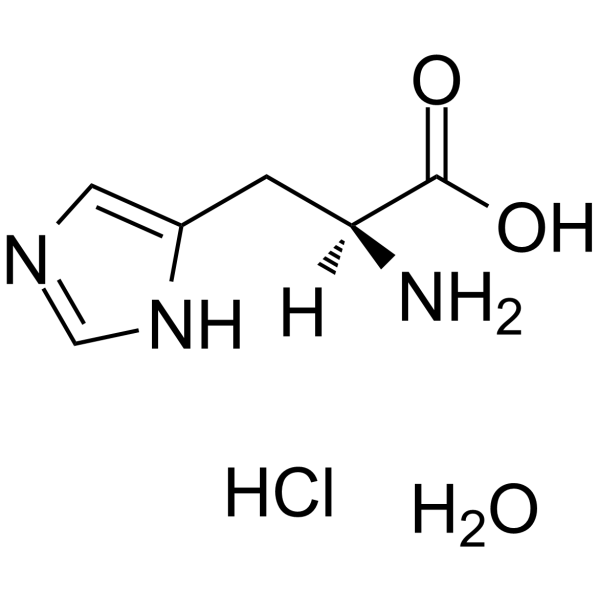
L-Histidine hydrochloride hydrate
Based on 4 publication(s) in Google Scholar
L-Histidine hydrochloride hydrate is an endogenous metabolite. L-Histidine hydrochloride hydrate scavenges hydroxyl radicals and singlet oxygen, regulate the absorption of zinc, copper and iron, exhibits anti-inflammatory and antioxidant activities. L-Histidine hydrochloride hydrate is blood brain barrier penetrable.
For research use only. We do not sell to patients.
- Purity : 98.0%
- CAS No.: 5934-29-2
- Formula: C6H12ClN3O3
- Molecular Weight:209.63
-
Storage:
Store at room temperature, keep dry and cool.
In solvent -80°C, 1 year , -20°C, 6 months

To place orders, for customer services and technical support, please contact: MedChemExpress USA
Tel: 609-228-6898 E-mail: [email protected] [email protected]


-
 Biological Activity
-
Chemical Information
-
Solvent & Solubility
- Purity & Documentation
- References
-
 Help & FAQs


-
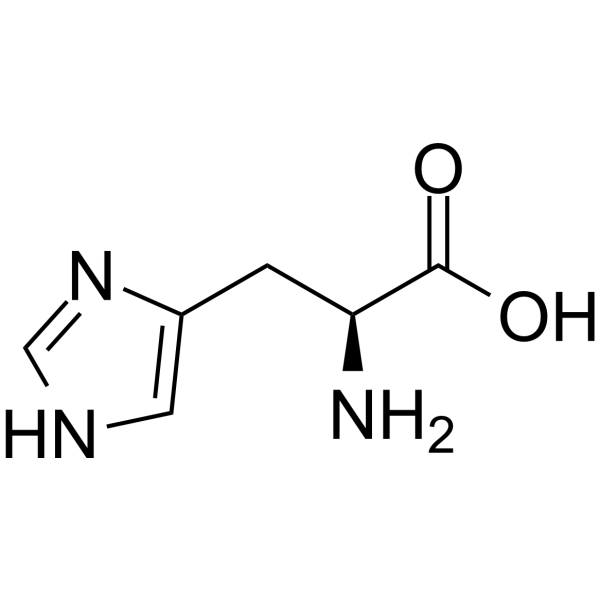
HY-N0832
L-Histidine -
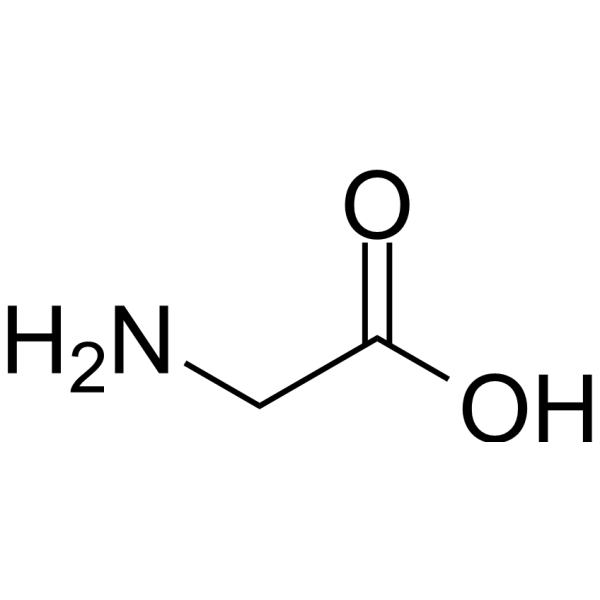
HY-Y0966
Glycine -
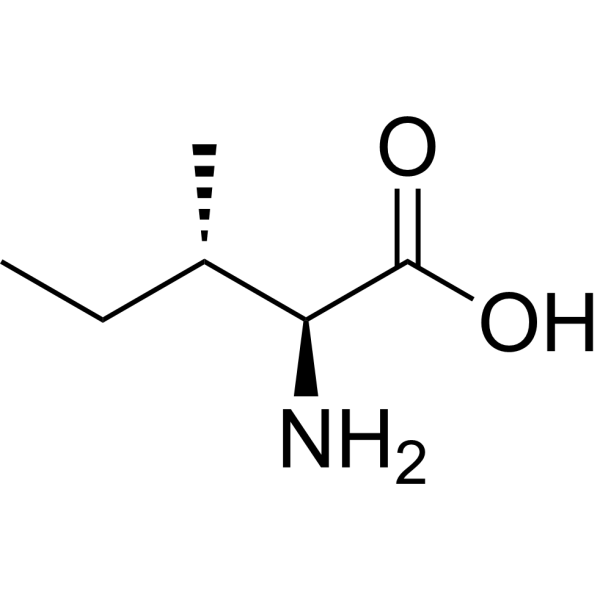
HY-N0771
L-Isoleucine -
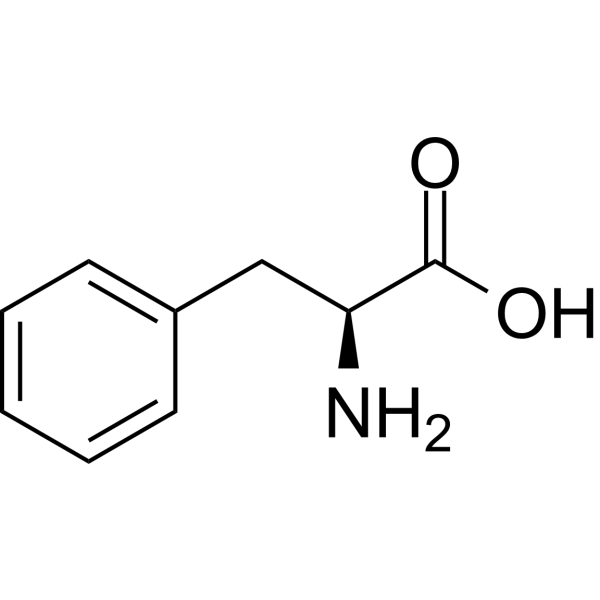
HY-N0215
L-Phenylalanine -
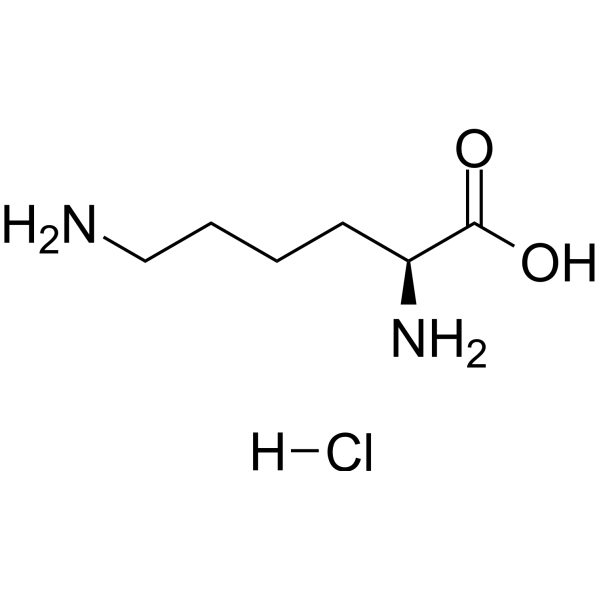
HY-N0470
L-Lysine hydrochloride -
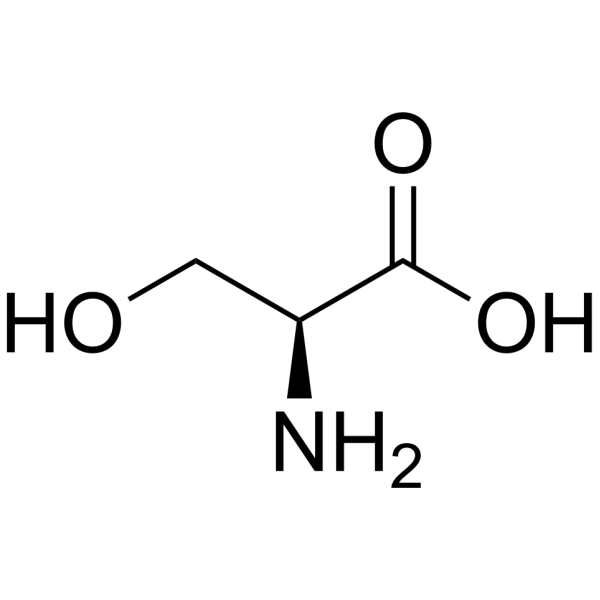
HY-N0650
L-Serine -
HY-N0455A
L-Arginine hydrochloride -
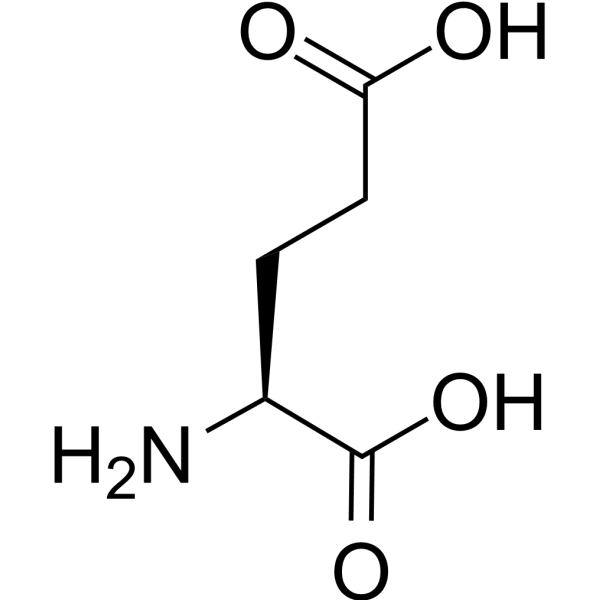
HY-14608
L-Glutamic acid -
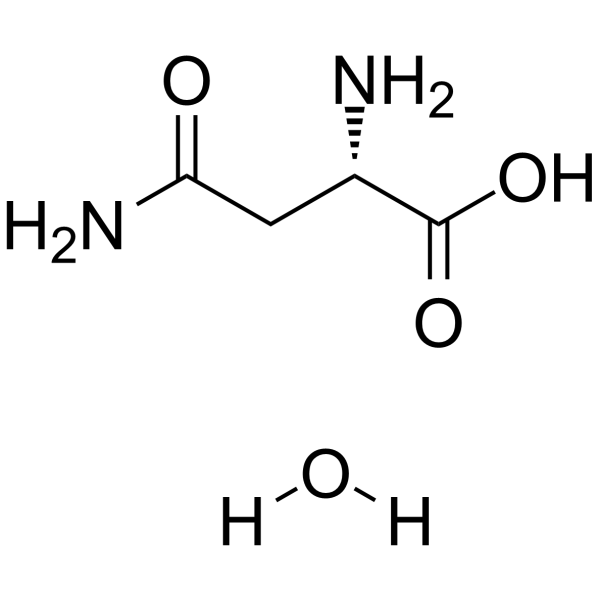
HY-W017443
L-Asparagine monohydrate -
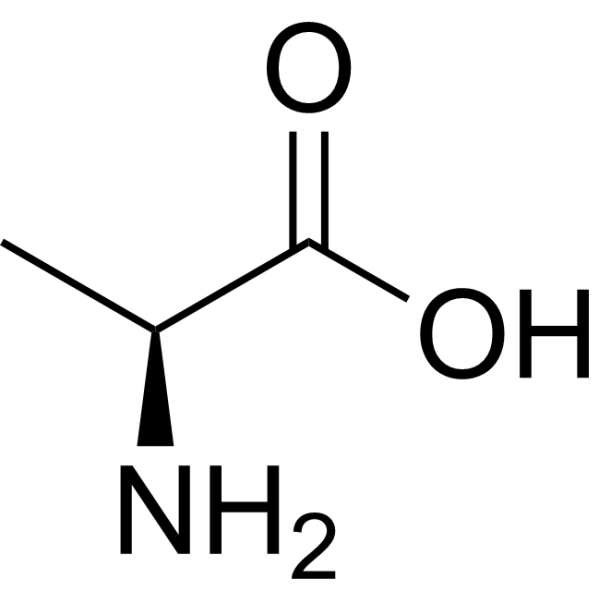
HY-N0229
L-Alanine -
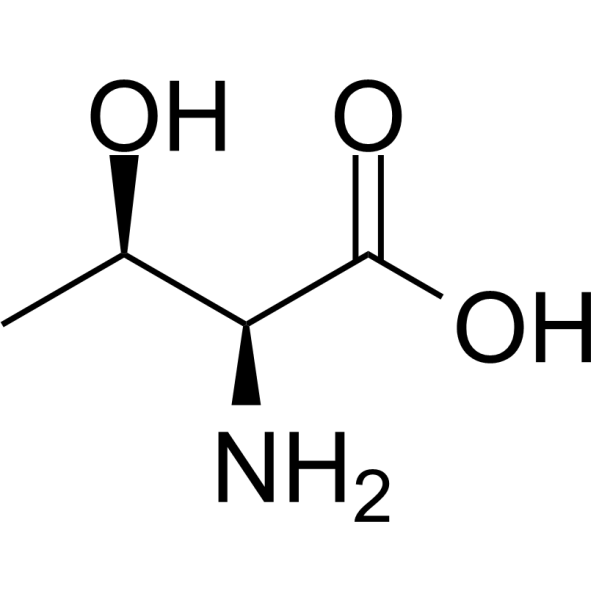
HY-N0658
L-Threonine -
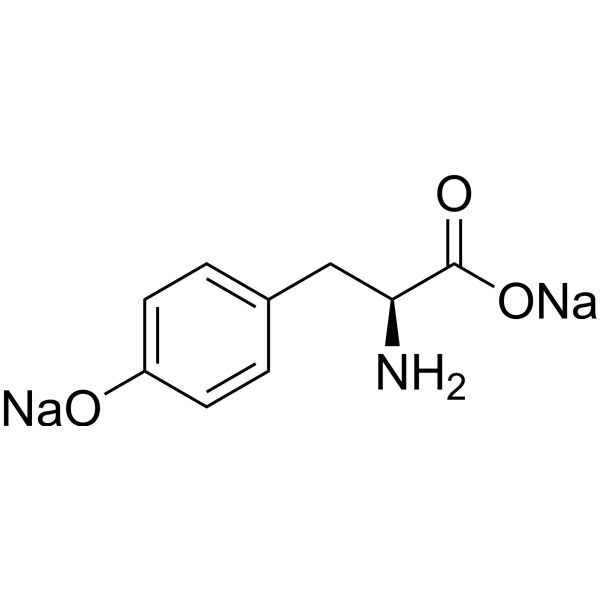
HY-N0473A
L-Tyrosine disodium salt
Publications Citing Use of MedChemExpress (MCE) L-Histidine hydrochloride hydrate
More Customer Validation & Images

-
Cell Proliferation/Viability Assay
-
In Vivo Efficacy Study
-
2D/3D Cell Culture and Differentiation
-
Cell Proliferation/Viability Assay
-
2D/3D Cell Culture and Differentiation
All Endogenous Metabolite Isoforms
More

Biological Activity
Description
In Vitro
L-Histidine hydrochloride hydrate (1 mM, 20 h) enhances the cytotoxicity of H2O2, induces apoptosis by inducing DNA double-strand breaks[1].
L-Histidine hydrochloride hydrate (0.2-10 mM, 20 h) reduces zinc-induced GT1-7 cell death (ED50=0.2 mM), downregulates the expression of zinc-induced ER stress-related genes (such as GADD45, GADD34 and p8) and calcium homeostasis-related genes (such as Arc)[2].
MedChemExpress (MCE) has not independently confirmed the accuracy of these methods. They are for reference only.
-
Cell Line:U937
-
Concentration:1 mM
-
Incubation Time:20 h
-
Result:Induced apoptosis.
In Vivo
L-Histidine hydrochloride hydrate (250 mg/kg, ip, single dose) exhibits neuroprotective efficacy in rat ischemia-reperfusion injury model[3].
MedChemExpress (MCE) has not independently confirmed the accuracy of these methods. They are for reference only.
-
Animal Model:Rats ulcerative colitis models[3]
-
Dosage:250 mg/kg
-
Administration:intra-rectal administration, 3 times a day for 5 days
-
Result:Reduced the severity of colitis, reduced myeloperoxidase activity in colonic tissue.
-
Animal Model:Rat ischemia-reperfusion injury model[3]
-
Dosage:250 mg/kg
-
Administration:ip, single dose
-
Result:Reduced ischemia-induced neuronal death.


Chemical Information
-
CAS No. 5934-29-2
-
Appearance Solid
-
Molecular Weight 209.63
-
Formula C6H12ClN3O3
-
Color White to off-white
-
SMILES
O=C(O)[C@](N)([H])CC1=CN=CN1.Cl.O
-
Synonyms
H-His-OH.HCl.H2O
-
Structure Classification
-
Initial Source
-
Shipping
Room temperature in continental US; may vary elsewhere.
-
Storage
Store at room temperature, keep dry and cool
In solvent -80°C 1 year -20°C 6 months


Publications (4)
-
Journal Impact Factor
-
Most Recent
-
Cancer Cell
Integrative plasma and fecal metabolomics identify functional metabolites in adenoma-colorectal cancer progression and as early diagnostic biomarkers. [Abstract]2024 Aug 12;42(8):1386-1400.e8. PMID: 39137727
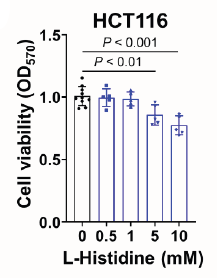
L-Histidine hydrochloride hydrate purchased from MedChemExpress. Usage Cited in: Cancer Cell. 2024 Aug 12;42(8):1386-1400.e8. [Abstract]
Cell viability on day 4 at OD570 of CRC cells treated with different concentrations of CRC-depleted L-histidine (0.5-10 mM).
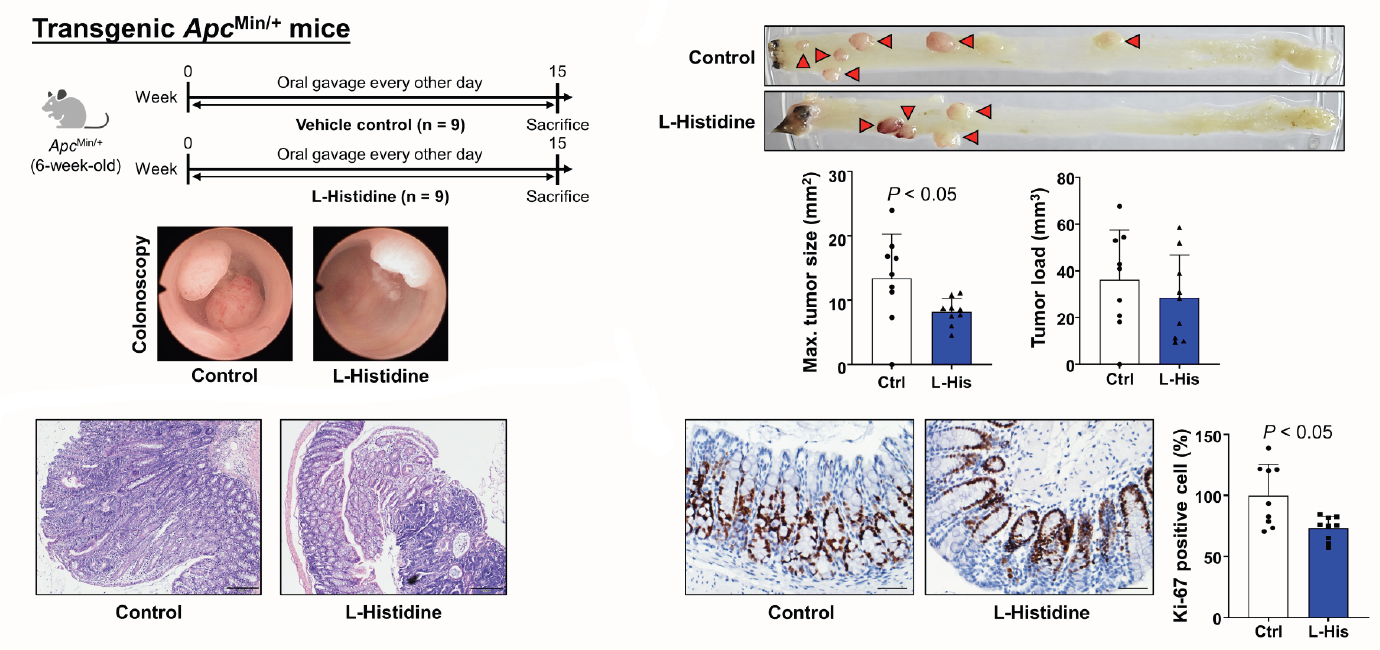
L-Histidine hydrochloride hydrate purchased from MedChemExpress. Usage Cited in: Cancer Cell. 2024 Aug 12;42(8):1386-1400.e8. [Abstract]
Experimental schematic and colonoscopy images. L-histidine (100 mM; 100 μL; i.g.; every other day) reduced tumor size and cell proliferation in ApcMin/+ mice.
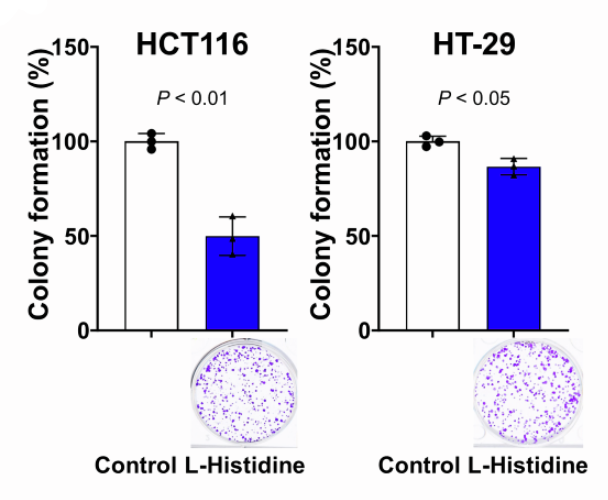
L-Histidine hydrochloride hydrate purchased from MedChemExpress. Usage Cited in: Cancer Cell. 2024 Aug 12;42(8):1386-1400.e8. [Abstract]
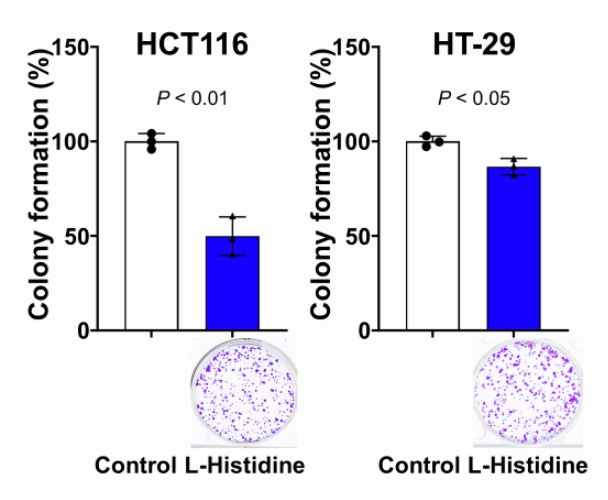
Colony formation assays after L-histidine (5 mM; 10 d) treatment.
L-Histidine hydrochloride hydrate purchased from MedChemExpress. Usage Cited in: Cancer Cell. 2024 Aug 12;42(8):1386-1400.e8. [Abstract]
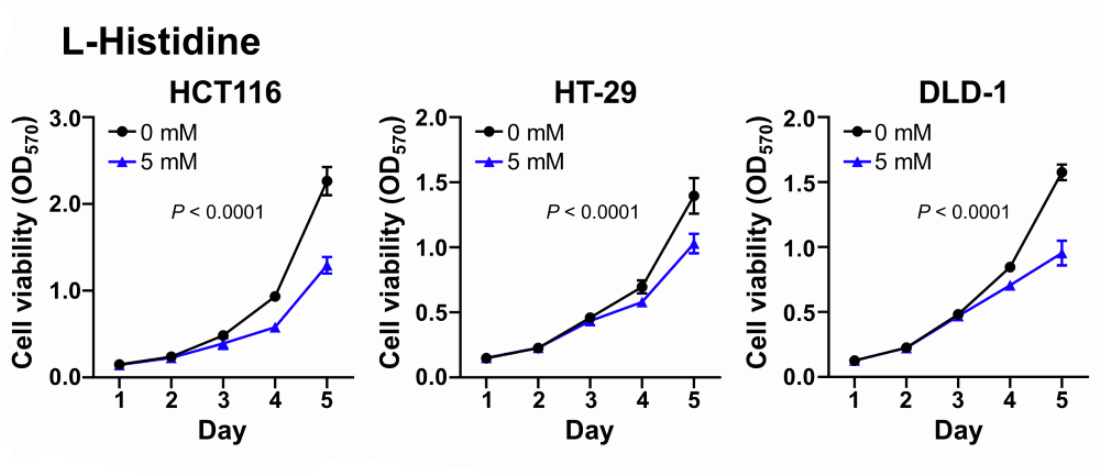
Cell viability at OD570 after L-histidine (5 mM; dissolved in PBS with 10% DMSO; 5 d) treatment.
L-Histidine hydrochloride hydrate purchased from MedChemExpress. Usage Cited in: Cancer Cell. 2024 Aug 12;42(8):1386-1400.e8. [Abstract]
Colony formation assays after L-histidine (10 d) treatment.
-
Redox Biol
Histidine metabolic reprogramming drives oxidative stress induced mtDNA release to promote necroptosis and airway inflammation in severe asthma. [Abstract]2026 Jun 27:95:104280. PMID: 42372708 -
Mol Med
Microbially produced imidazole propionate impairs prostate cancer progression through PDZK1. [Abstract]2025 Jan 16;31(1):14. PMID: 39819421 -
Amino Acids
Identification of amino acids metabolomic profiling in human plasma distinguishes lupus nephritis from systemic lupus erythematosus. [Abstract]2024 Sep 18;56(1):56. PMID: 39292313


Solvent & Solubility
In Vitro:
H2O : 100 mg/mL (477.03 mM; Need ultrasonic)
DMSO : 1 mg/mL (4.77 mM; ultrasonic and warming and heat to 60°C; Hygroscopic DMSO has a significant impact on the solubility of product, please use newly opened DMSO)
Please refer to the solubility information to select the appropriate solvent. Once prepared, please aliquot and store the solution to prevent product inactivation from repeated freeze-thaw cycles.
Storage method and period of stock solution: -80°C, 1 year; -20°C, 6 months. When stored at -80°C, please use it within 1 year. When stored at -20°C, please use it within 6 months.
* Note: If you choose water as the stock solution, please dilute it to the working solution, then filter and sterilize it with a 0.22 μm filter before use.
Please refer to the solubility information to select the appropriate solvent. Once prepared, please aliquot and store the solution to prevent product inactivation from repeated freeze-thaw cycles.
Storage method and period of stock solution: -80°C, 1 year; -20°C, 6 months. When stored at -80°C, please use it within 1 year. When stored at -20°C, please use it within 6 months.
* Note: If you choose water as the stock solution, please dilute it to the working solution, then filter and sterilize it with a 0.22 μm filter before use.
Concentration (start) × Volume (start) = Concentration (final) × Volume (final)
In Vivo:
For the following dissolution methods, please prepare the working solution directly:
It is recommended to prepare fresh solutions and use them promptly within a short period of time.
The percentages shown for the solvents indicate their volumetric ratio in the final prepared solution. If precipitation or phase separation occurs during preparation, heat and/or sonication can be used to aid dissolution.
Add each solvent one by one: PBS
Solubility: 50 mg/mL (238.52 mM); Clear solution; Need ultrasonic


Purity & Documentation
-
Data Sheet (281 KB)
-
SDS (393 KB)
- English - EN (393 KB)
- Français - FR (393 KB)
- Deutsch - DE (393 KB)
- Norwegian - NO (393 KB)
- Español - ES (393 KB)
- Swedish - SV (393 KB)
- Italian - IT (393 KB)
- Korean - KR (393 KB)
- Portuguese - PT (393 KB)
-
Handling Instructions (2659 KB)
References
[1]. Palomba L, et al., Low levels of hydrogen peroxide and L-histidine induce DNA double-strand breakage and apoptosis. Eur J Pharmacol. 1996 Dec 27;318(1):167-73. [Content Brief]
[2]. Kawahara M, et al., D-histidine and L-histidine attenuate zinc-induced neuronal death in GT1-7 cells. Metallomics. 2013 May;5(5):453-60. [Content Brief]


Complete Stock Solution Preparation Table
Please refer to the solubility information to select the appropriate solvent. Once prepared, please aliquot and store the solution to prevent product inactivation from repeated freeze-thaw cycles.
Storage method and period of stock solution: -80°C, 1 year; -20°C, 6 months. When stored at -80°C, please use it within 1 year. When stored at -20°C, please use it within 6 months.
| Optional Solvent | Concentration Solvent Mass | 1 mg | 5 mg | 10 mg | 25 mg |
|---|---|---|---|---|---|
| DMSO / H2O | 1 mM | 4.7703 mL | 23.8515 mL | 47.7031 mL | 119.2577 mL |
| H2O | 5 mM | 0.9541 mL | 4.7703 mL | 9.5406 mL | 23.8515 mL |
| 10 mM | 0.4770 mL | 2.3852 mL | 4.7703 mL | 11.9258 mL | |
| 15 mM | 0.3180 mL | 1.5901 mL | 3.1802 mL | 7.9505 mL | |
| 20 mM | 0.2385 mL | 1.1926 mL | 2.3852 mL | 5.9629 mL | |
| 25 mM | 0.1908 mL | 0.9541 mL | 1.9081 mL | 4.7703 mL | |
| 30 mM | 0.1590 mL | 0.7951 mL | 1.5901 mL | 3.9753 mL | |
| 40 mM | 0.1193 mL | 0.5963 mL | 1.1926 mL | 2.9814 mL | |
| 50 mM | 0.0954 mL | 0.4770 mL | 0.9541 mL | 2.3852 mL | |
| 60 mM | 0.0795 mL | 0.3975 mL | 0.7951 mL | 1.9876 mL | |
| 80 mM | 0.0596 mL | 0.2981 mL | 0.5963 mL | 1.4907 mL | |
| 100 mM | 0.0477 mL | 0.2385 mL | 0.4770 mL | 1.1926 mL |
* Note: If you choose water as the stock solution, please dilute it to the working solution, then filter and sterilize it with a 0.22 μm filter before use.


L-Histidine hydrochloride hydrate Related Classifications
HY-W014423 Related Classifications
 Powered by Bioz