25 Results for "

somatostatin analog

" in MedChemExpress (MCE) Product Catalog:
Products (25)

25 Results for "somatostatin analog" in MCE Product Catalog:

17
17 Cited Publications
Cat. No.: HY-17365
CAS No.: 79517-01-4
Synonyms: SMS 201-995 acetate
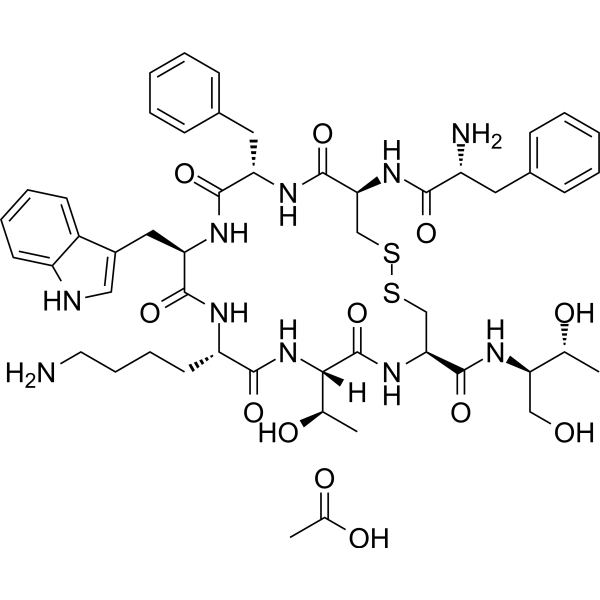
Octreotide acetate, a long-acting synthetic analog of native somatostatin, inhibits growth hormone, glucagon, and insulin more potently.
loading...
    loading...
1
1 Cited Publications
Cat. No.: HY-P1206
CAS No.: 174688-78-9
Target:  

Somatostatin Receptor

Research Areas:  

Neurological Disease

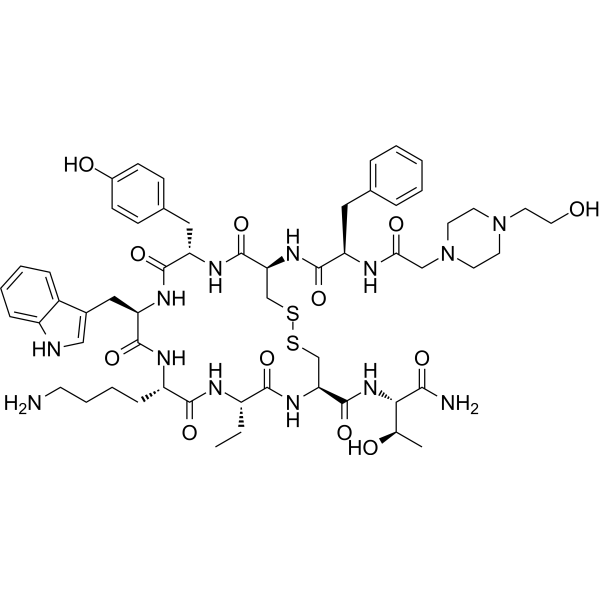
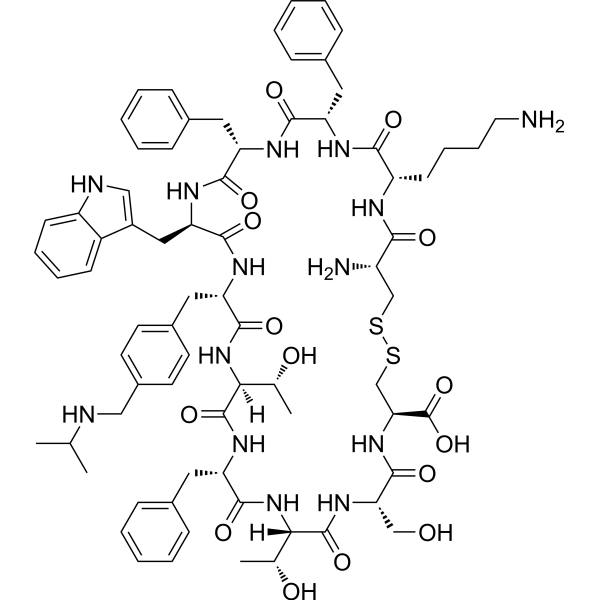
CH 275 is a peptidic somatostatin analog that acts as an agonist of SST1 (IC50 = 30.9 nM, Ki = 52 nM). The IC50 values of CH 275 for sst3, sst4, sst2, and sst5 are 345 nM, >1 μM, >10 μM, and >10 μM, respectively. CH 275 binds to SSTR1 via the IAmp9-Asp137 ion pair interaction and the hydrophobic interaction between the isopropyl group of IAmp9 and Leu107, and reduces the extracellular acidification rate. CH 275 induces weak sst1 internalization, exerts immunosuppressive effects on macrophages, and decreases macrophage viability, MCP-1 expression/secretion, and IL-8 secretion, but does not alter proMMP-9 secretion or IL-8 mRNA levels. CH 275 reduces hippocampal β-amyloid levels and alleviates plaque pathology without inducing hippocampal microglial activation. CH 275 is used in research on Alzheimer's disease, Parkinson's disease, and depression .
loading...
    loading...
Cat. No.: HY-Y1091
CAS No.: 923-27-3
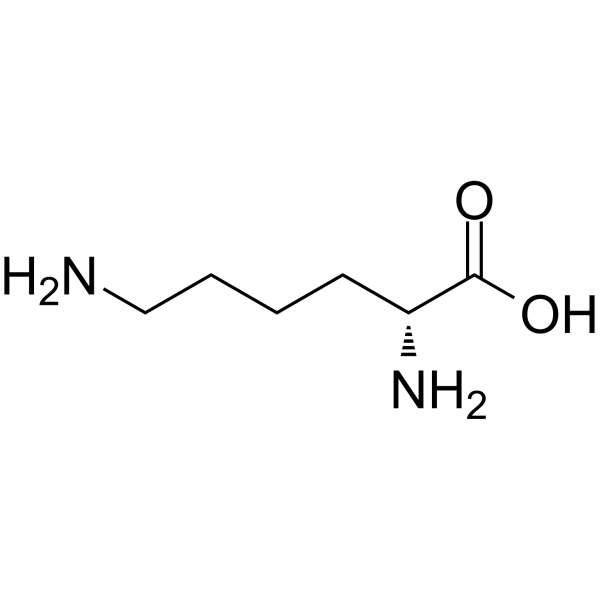
D-Lysine is the D-enantiomer of L-Lysine (HY-N0469). D-Lysine is metabolically inert and not utilized for protein synthesis by mammalian ribosomes. D-Lysine blocks renal uptake of 111In/ 90Y-Octreotide (HY-P0036)-based probes without inhibiting uptake by tumor/receptor tissues, and thus acts as a renoprotective agent in diagnostic imaging and peptide receptor radionuclide therapy (PRRT). D-Lysine specifically inhibits the early steps of non-enzymatic glycation by competing with glucose via its free amino group, theoretically, it can serve as a glycation competitor that "does not interfere with protein synthesis" under chronic hyperglycemia in diabetes. D-Lysine can be used in research related to cancer and diabetes .
loading...
    loading...
Cat. No.: HY-Y1804
CAS No.: 7274-88-6
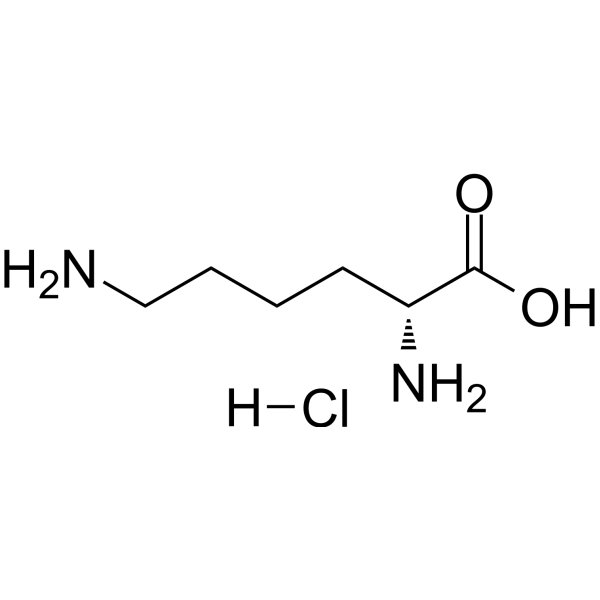
D-Lysine monohydrochloride is the D-enantiomer of L-Lysine (HY-N0469). D-Lysine monohydrochloride is metabolically inert and not utilized for protein synthesis by mammalian ribosomes. D-Lysine monohydrochloride blocks renal uptake of 111In/ 90Y-Octreotide (HY-P0036)-based probes without inhibiting uptake by tumor/receptor tissues, and thus acts as a renoprotective agent in diagnostic imaging and peptide receptor radionuclide therapy (PRRT). D-Lysine monohydrochloride specifically inhibits the early steps of non-enzymatic glycation by competing with glucose via its free amino group, theoretically, it can serve as a glycation competitor that "does not interfere with protein synthesis" under chronic hyperglycemia in diabetes. D-Lysine monohydrochloride can be used in research related to cancer and diabetes .
loading...
    loading...
Cat. No.: HY-106103
CAS No.: 81377-02-8
Purity:  99.30%
Synonyms: MK-678; L-363586
Seglitide (MK-678) is an orally active, selective SSTR2 agonist and somatostatin analog. Seglitide also acts as a competitive Somatostatin receptor antagonist, with pA2 values of 6.50, 6.24 and 6.09 against SS14, SS25 and SS28, respectively. Seglitide produces only weak, transient inhibition of myocardial contractility in isolated right atria of guinea pigs. Seglitide inhibits glucagon secretion and reduces circulating insulin levels. Seglitide causes a sustained, reversible reduction in elevated systolic blood pressure in streptozotocin (HY-13753)-induced diabetic rats, but exerts no effect on spontaneously hypertensive rats. Seglitide induces membrane hyperpolarization and inhibits electrical excitability. Seglitide induces concentration-dependent contraction and significant desensitization in isolated distal colon of rats. Seglitide can be used in research related to hypertension complicated with insulin-dependent diabetes mellitus .
loading...
    loading...
Cat. No.: HY-P10239
CAS No.: 302794-43-0
Tyr3-Octreotate is a ligand for somatostatin receptor subtype 2 (sst2), with an IC50 value of 1.3 nM against sst2 when labeled with [ 111In-DTPA], and an IC50 value of 1.6 nM against sst2 when labeled with [ 90Y-DOTA]. Radiolabeled Tyr3-Octreotate generates cell-associated radioactivity, and acts as both a tumor growth inhibitor and a tumor cytotoxic agent. When radiolabeled with 177Lu or 90Y, Tyr3-Octreotate serves as a peptide receptor radionuclide therapy (PRRT) analog. Tyr3-Octreotate can be used in studies related to pancreatic tumors .
loading...
    loading...
Cat. No.: HY-P3124A
Target:  

Somatostatin Receptor

Research Areas:  

Cancer

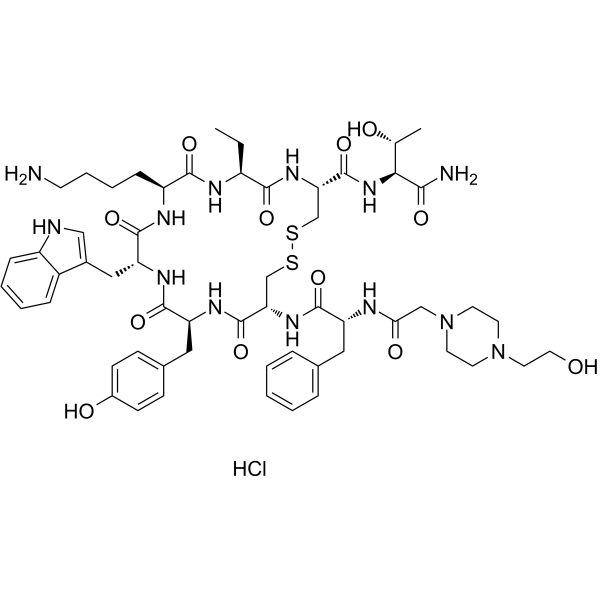
BIM-23190 hydrochloride, a somatostatin analog, a selective SSRT2 and SSRT5 agonist, exhibits Ki values of 0.34 nM and 11.1 nM for SSTR2 and SSTR5, respectively. BIM-23190 can be used in the study for cancer and acromegaly .
loading...
    loading...
Cat. No.: HY-P2022
CAS No.: 138661-02-6
Research Areas:  

Cancer

Pentetreotide is a diethylenetriaminopentaacetic (DTPA) conjugate of Octreotide (HY-P0036). Pentetreotide is a somatostatin analog that, when labeled with 111In, can be used for nuclear medicine imaging. Somatostatin receptor scintigraphy with Pentetreotide is effective in visualizing neuroendocrine tumors, and its metastasis .
loading...
    loading...
Cat. No.: HY-P3901
CAS No.: 77909-99-0
Target:  

Somatostatin Receptor

Research Areas:  

Neurological Disease

[Leu8,D-Trp22,Tyr25] Somatostatin-28 is the analog of Somatostatin-28. Somatostatin-28 is a intestinal peptide containing somatostatin in its C-terminal portion .
loading...
    loading...
Cat. No.: HY-P3124
CAS No.: 182153-96-4
Target:  

Somatostatin Receptor

Research Areas:  

Cancer

BIM-23190, a somatostatin analog, a selective SSTR2 and SSTR5 agonist, exhibits Ki values of 0.34 nM and 11.1 nM for SSTR2 and SSTR5, respectively. BIM-23190 can be used in the study for cancer and acromegaly .
loading...
    loading...
Cat. No.: HY-W035399S
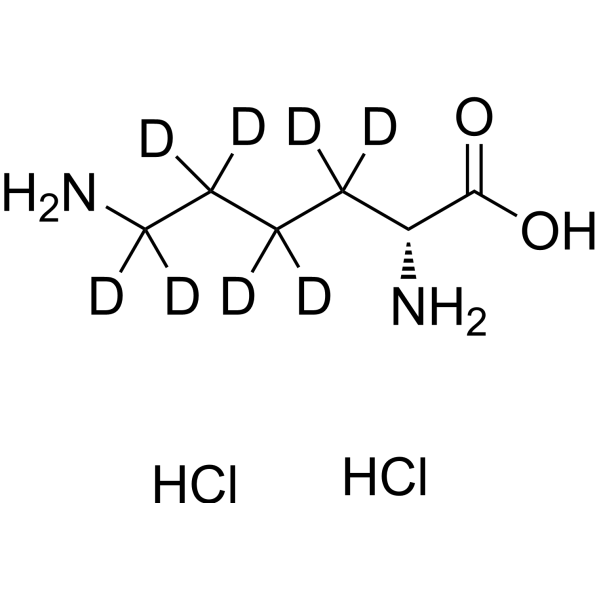
D-Lysine-d8 dihydrochloride is the d8-labeled D-Lysine (HY-Y1091). D-Lysine is the D-enantiomer of L-Lysine (HY-N0469). D-Lysine is metabolically inert and not utilized for protein synthesis by mammalian ribosomes. D-Lysine blocks renal uptake of 111In/ 90Y-Octreotide (HY-P0036)-based probes without inhibiting uptake by tumor/receptor tissues, and thus acts as a renoprotective agent in diagnostic imaging and peptide receptor radionuclide therapy (PRRT). D-Lysine specifically inhibits the early steps of non-enzymatic glycation by competing with glucose via its free amino group, theoretically, it can serve as a glycation competitor that "does not interfere with protein synthesis" under chronic hyperglycemia in diabetes. D-Lysine can be used in research related to cancer and diabetes .
loading...
    loading...
Cat. No.: HY-P4555
CAS No.: 340821-13-8
Target:  

Somatostatin Receptor

Research Areas:  

Neurological Disease

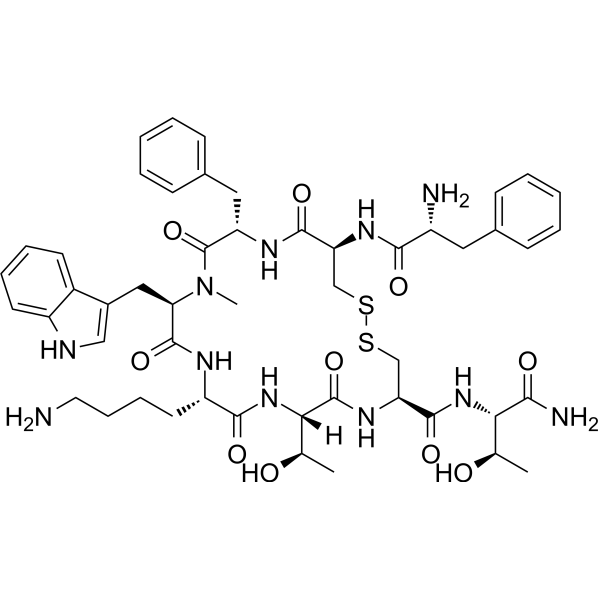
(D-Phe5,Cys6,11,N-Me-D-Trp8)-Somatostatin-14 (5-12) amide (Compound 4) is a somatostatin analog with Kds of 0.61, 11.05, 23.5, 1200 and >1000 nM for SSTR5, SSTR3, SSTR2, SSTR1 and SSTR4, respectively .
loading...
    loading...
Cat. No.: HY-P10239A
Research Areas:  

Cancer

Tyr3-Octreotate acetate is a somatostatin analog. Tyr3-Octreotate acetate exhibits high uptake into tumor, that is capable to be labeled with radioactive metal and thus exhibits antitumor efficacy. Tyr3-Octreotate acetate can be used for the synthesis/research of Radionuclide-Drug Conjugates (RDCs) .
loading...
    loading...
Cat. No.: HY-P2434
CAS No.: 846569-60-6
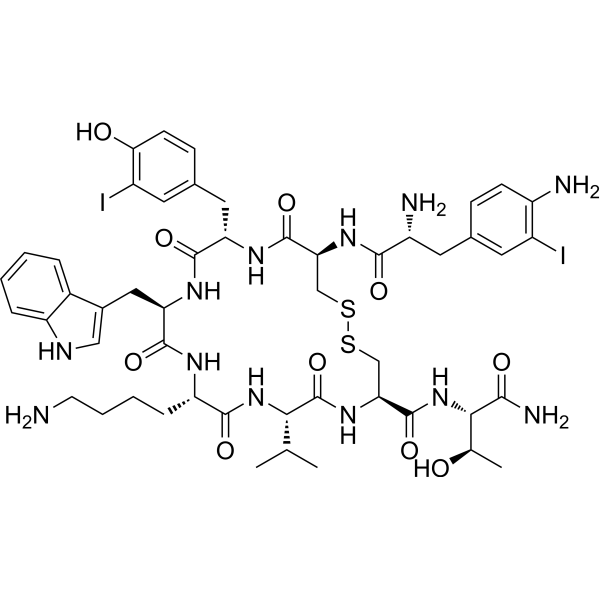
AP102 is a dual SSTR2/SSTR5-specific somatostatin analog (SSA). AP102 is a disulfide-bridged octapeptide SSA containing synthetic iodinated amino acids. AP102 binds with subnanomolar affinity to SSTR2 and SSTR5 (IC50: 0.63 and 0.65 nM, respectively). AP102 does not bind to SSTR1 or SSTR3. AP102 can be used for acromegaly and neuroendocrine tumors research .
loading...
    loading...
Cat. No.: HY-P2229
CAS No.: 119719-11-8
Synonyms: SDZ CO 611
Target:  

Somatostatin Receptor

Research Areas:  

Cancer

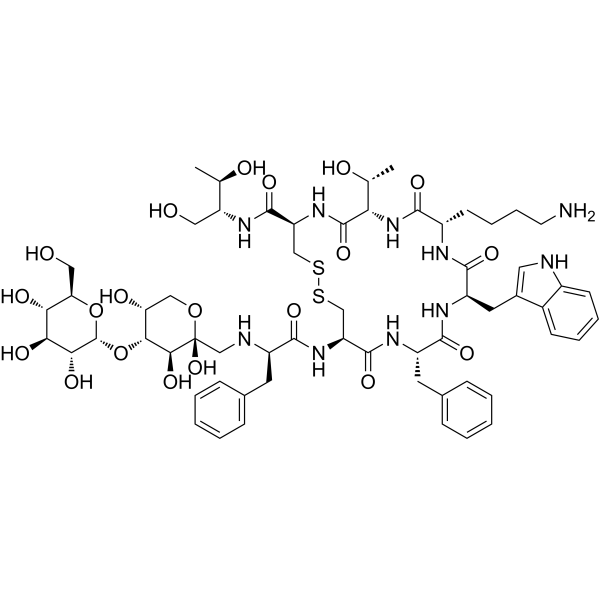
Ilatreotide (SDZ CO61), glycated somatostatin derivative, is a highly potent glycated analog of somatostatin with improved oral activity. Ilatreotide can suppress the fasting level and postprandial release of several gastrointestinal and pancreatic hormones. Ilatreotide can be used for the research of gastroenteropancreatic tumors .
loading...
    loading...
Cat. No.: HY-P3902
CAS No.: 58976-46-8
Target:  

Somatostatin Receptor

Research Areas:  

Neurological Disease

[D-Trp8] Somatostatin-14, a tetradecapeptide, is an analog of Somatostatin more potent than the native Somatostatin .
loading...
    loading...
Cat. No.: HY-P3955
CAS No.: 139668-78-3
Target:  

Somatostatin Receptor

Research Areas:  

Metabolic Disease

RC-160 [Lys(Boc)], a 8-aa peptide, is a Somatostatin analog .
loading...
    loading...
Cat. No.: HY-W106325
CAS No.: 2044709-90-0
Research Areas:  

Others

Fmoc-N-Me-D-Trp(Boc)-OH is an amino acid derivative with an Fmoc protecting group, which can be used to synthesize somatostatin-dopamine chimeric analogs .
loading...
    loading...
Cat. No.: HY-W035399S1
CAS No.: 2708340-91-2
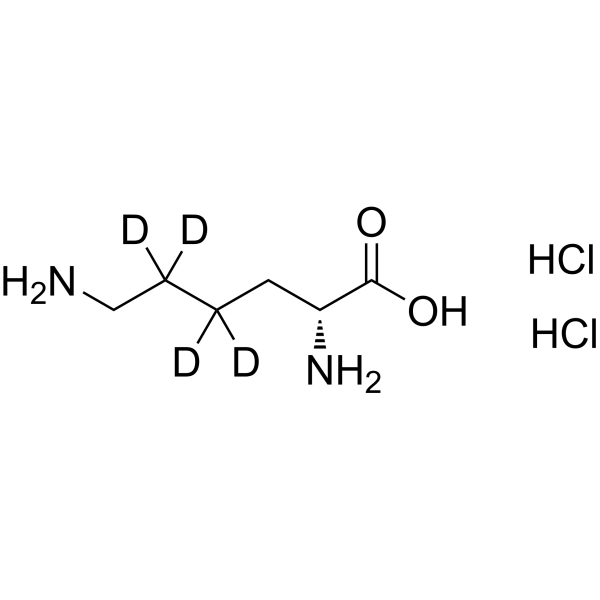
D-Lysine-d4 dihydrochloride is the d4-labeled D-Lysine (HY-Y1091). D-Lysine is the D-enantiomer of L-Lysine (HY-N0469). D-Lysine is metabolically inert and not utilized for protein synthesis by mammalian ribosomes. D-Lysine blocks renal uptake of 111In/ 90Y-Octreotide (HY-P0036)-based probes without inhibiting uptake by tumor/receptor tissues, and thus acts as a renoprotective agent in diagnostic imaging and peptide receptor radionuclide therapy (PRRT). D-Lysine specifically inhibits the early steps of non-enzymatic glycation by competing with glucose via its free amino group, theoretically, it can serve as a glycation competitor that "does not interfere with protein synthesis" under chronic hyperglycemia in diabetes. D-Lysine can be used in research related to cancer and diabetes .
loading...
    loading...
Cat. No.: HY-Y1804S
CAS No.: 2714413-18-8
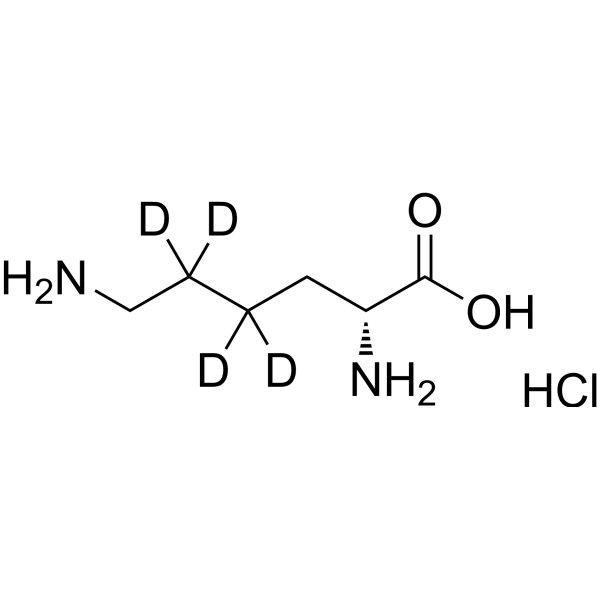
D-Lysine-d4 monohydrochloride is the d4 D-Lysine monohydrochloride (HY-Y1804). D-Lysine monohydrochloride is the D-enantiomer of L-Lysine (HY-N0469). D-Lysine monohydrochloride is metabolically inert and not utilized for protein synthesis by mammalian ribosomes. D-Lysine monohydrochloride blocks renal uptake of 111In/ 90Y-Octreotide (HY-P0036)-based probes without inhibiting uptake by tumor/receptor tissues, and thus acts as a renoprotective agent in diagnostic imaging and peptide receptor radionuclide therapy (PRRT). D-Lysine monohydrochloride specifically inhibits the early steps of non-enzymatic glycation by competing with glucose via its free amino group, theoretically, it can serve as a glycation competitor that "does not interfere with protein synthesis" under chronic hyperglycemia in diabetes. D-Lysine monohydrochloride can be used in research related to cancer and diabetes .
loading...
    loading...