16 Results for "

tissue transglutaminase

" in MedChemExpress (MCE) Product Catalog:
Products (16)

16 Results for "tissue transglutaminase" in MCE Product Catalog:

3
3 Cited Publications
Cat. No.: HY-12589
CAS No.: 1021868-92-7
Purity:  98.19%
Target:  

JAK

Research Areas:  

Neurological Disease Cancer

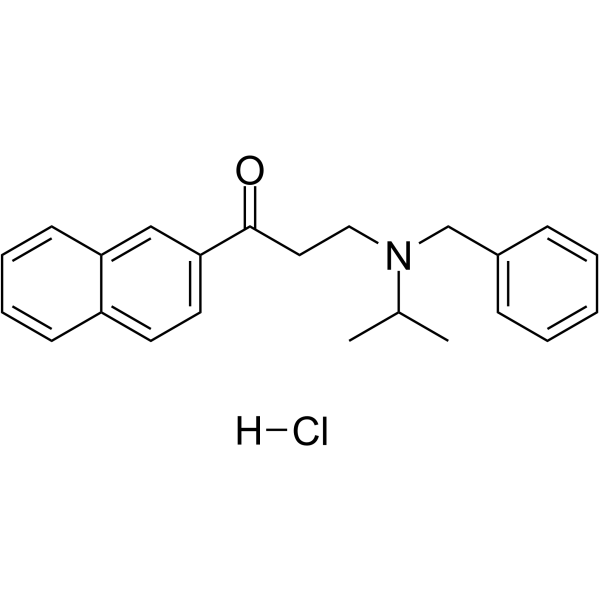
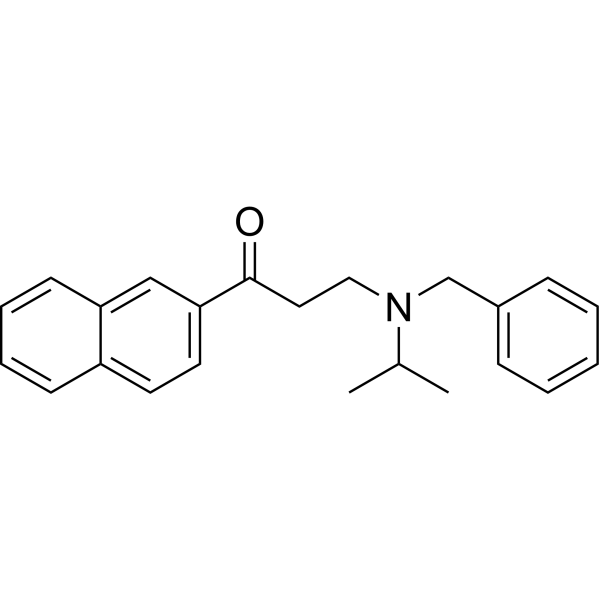
ZM39923 hydrochloride is a JAK3 inhibitor, with a pIC50 of 7.1; ZM39923 hydrochloride also potently inhibits tissue transglutaminase (TGM2) with an IC50 of 10 nM.
loading...
    loading...
Cat. No.: HY-Y1365C
CAS No.: 9000-70-8
Fish Gelatin,suitable for cell culture is an essential natural biopolymer. Fish Gelatin,suitable for cell culture can be isolated from fish processing by-products, such as fish skin, scales, bones and fish maw. Fish Gelatin,suitable for cell culture has been considered as a feasible substitute for mammalian gelatin. Modified Fish gelatin shows significant promise across various industries, including nanomaterials, 3D printing, thin films, coatings, and biopharmaceuticals. Fish Gelatin,suitable for cell culture can be used for cell culture .
loading...
    loading...
Cat. No.: HY-113089
CAS No.: 17105-15-6
Synonyms: H-Glu(H-Lys-OH)-OH; γ-Glu-ε-Lys
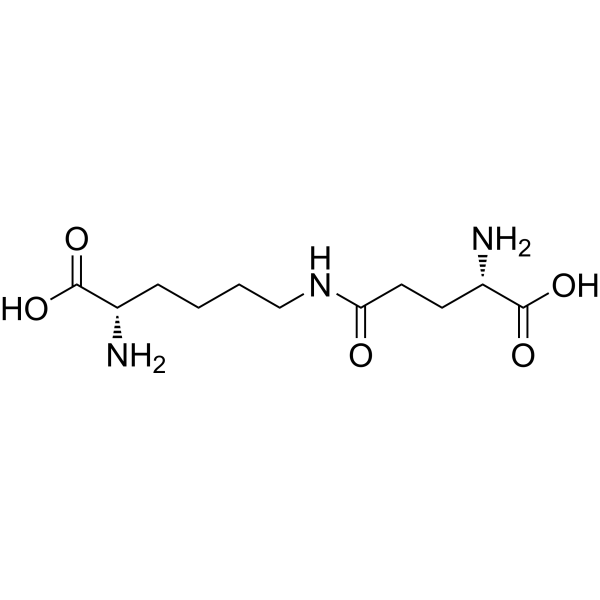
Epsilon-(gamma-glutamyl)-lysine (H-Glu (H-Lys-OH)-OH) is an isodipeptide formed during the proteolytic degradation of proteins containing Nε-(γ-glutamyl)-lysine cross-links. Epsilon-(gamma-glutamyl)-lysine serves as a substrate for γ-glutamylamine cyclotransferase, which specifically cleaves it. Epsilon-(gamma-glutamyl)-lysine is applicable to studies related to transglutaminase-mediated protein cross-linking and turnover, γ-glutamylamine cyclotransferase activity, glaucoma, and tissue scar formation .
loading...
    loading...
Cat. No.: HY-128595
CAS No.: 2327925-35-7
Purity:  99.84%
Target:  

Transglutaminase

Research Areas:  

Cancer

MT-4 is a derivative of a tissue transglutaminase (TG2) inhibitor. MT-4 targets the complex of TG2 and fibronectin (FN) (TG2/FN) and inhibits the adhesion of tumor cells to the matrix. MT-4 inhibits the adhesion of ovarian cancer (OC) cells to the peritoneum and increases the sensitivity of OC cells to paclitaxel.
loading...
    loading...
Cat. No.: HY-113089A
Purity:  98.55%
Synonyms: H-Glu(H-Lys-OH)-OH TFA; γ-Glu-ε-Lys TFA
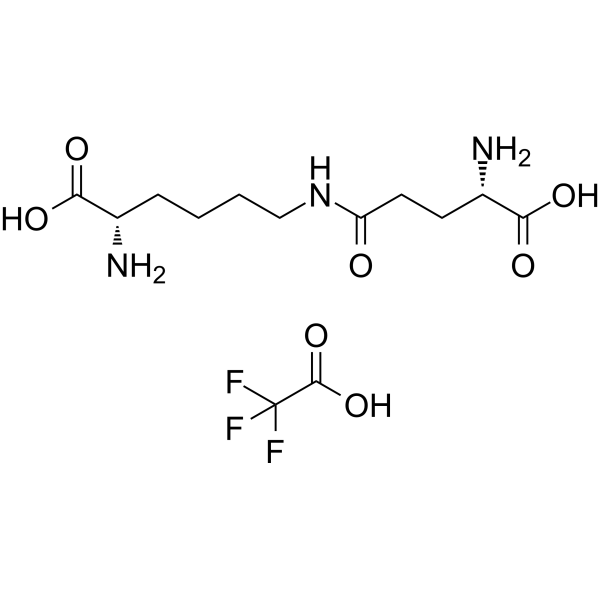
Epsilon-(gamma-glutamyl)-lysine TFA (H-Glu (H-Lys-OH)-OH) is an isodipeptide formed during the proteolytic degradation of proteins containing Nε-(γ-glutamyl)-lysine cross-links. Epsilon-(gamma-glutamyl)-lysine TFA serves as a substrate for γ-glutamylamine cyclotransferase, which specifically cleaves it. Epsilon-(gamma-glutamyl)-lysine TFA is applicable to studies related to transglutaminase-mediated protein cross-linking and turnover, γ-glutamylamine cyclotransferase activity, glaucoma, and tissue scar formation .
loading...
    loading...
Cat. No.: HY-E70437
CAS No.: 80146-85-6
Synonyms: tissue-type transglutaminase; TG2; TGase 2
Research Areas:  

Others

Guinea pig liver transglutaminase (Tissue-type transglutaminase) is a calcium-dependent tissue-type transglutaminase and serves as the prototype of intracellular tissue transglutaminases purified from guinea pig liver. Guinea pig liver transglutaminase catalyzes acyl transfer reactions via a ping-pong mechanism, forming a transient thioester acyl-enzyme intermediate that mediates the hydrolysis of glutamine amides, displacement by primary amines, and the formation of isopeptide cross-links between peptide-bound glutamine and the amino groups of lysine or polyamines .
loading...
    loading...
Cat. No.: HY-102073
CAS No.: 946369-04-6
Target:  

Glutaminase Integrin FAK Src

Research Areas:  

Cancer

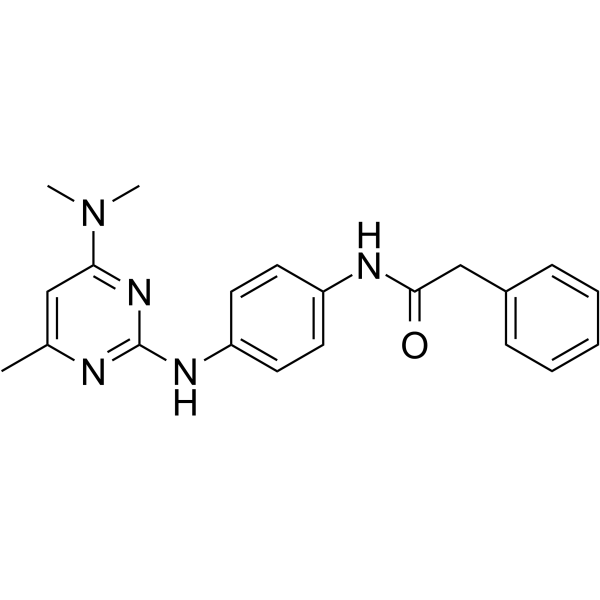
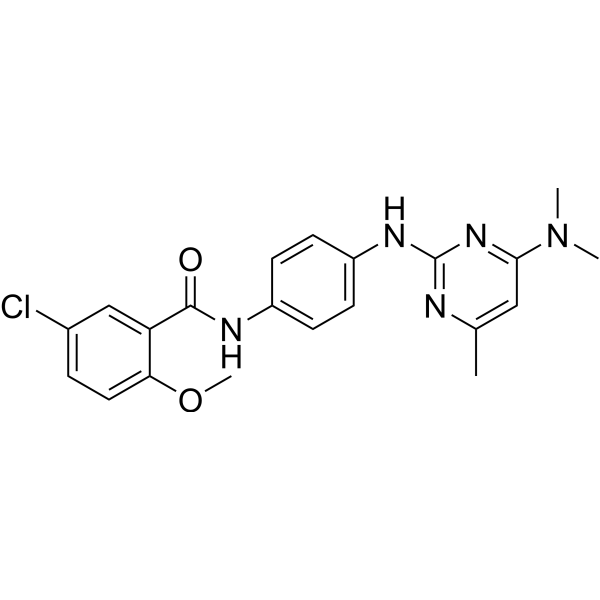
TG53 is a potent inhibitor of tissue transglutaminase (TG2) and fibronectin (FN) protein-protein interaction. TG53 inhibits formation of a complex with integrin β1 and activation of FAK and c-Src during SKOV3 cell attachment onto FN. TG53 can be used for ovarian cancer research .
loading...
    loading...
Cat. No.: HY-113089AR
Synonyms: H-Glu(H-Lys-OH)-OH TFA (Standard); γ-Glu-ε-Lys TFA (Standard)
Epsilon-(gamma-glutamyl)-lysine TFA (Standard) (H-Glu(H-Lys-OH)-OH TFA (Standard)) is the analytical standard of Epsilon-(gamma-glutamyl)-lysine TFA (HY-113089A). This product is intended for research and analytical applications. Epsilon-(gamma-glutamyl)-lysine TFA (H-Glu (H-Lys-OH)-OH) is an isodipeptide formed during the proteolytic degradation of proteins containing Nε-(γ-glutamyl)-lysine cross-links. Epsilon-(gamma-glutamyl)-lysine TFA serves as a substrate for γ-glutamylamine cyclotransferase, which specifically cleaves it. Epsilon-(gamma-glutamyl)-lysine TFA is applicable to studies related to transglutaminase-mediated protein cross-linking and turnover, γ-glutamylamine cyclotransferase activity, glaucoma, and tissue scar formation .
loading...
    loading...
Cat. No.: HY-155643
CAS No.: 3033465-55-0
Target:  

PROTACs Glutaminase

Research Areas:  

Cancer

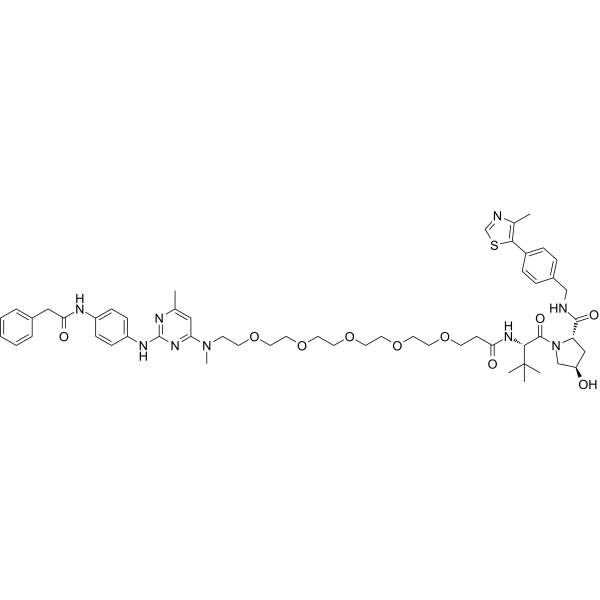
PROTAC TG2 degrader-1 is a tissue transglutaminase (TG2) PROTAC degrader with a Kd of 68.9 μM. PROTAC TG2 degrader-1 recruits the VHL E3 ubiquitin ligase to the fibronectin-binding site of TG2, forms a ternary complex, and induces proteasome-dependent degradation of TG2. PROTAC TG2 degrader-1 inhibits ovarian cancer cell migration and adhesion to fibronectin, without producing a significant inhibitory effect on cell proliferation. PROTAC TG2 degrader-1 can be used in related research on ovarian cancer .
loading...
    loading...
Cat. No.: HY-12589A
CAS No.: 273727-89-2
Target:  

JAK

Research Areas:  

Neurological Disease Cancer

ZM39923 is a JAK3 inhibitor, with a pIC50 of 7.1; ZM39923 also potently inhibits tissue transglutaminase (TGM2) with an IC50 of 10 nM.
loading...
    loading...
Cat. No.: HY-P82510A
Synonyms: TGM2; Protein-glutamine gamma-glutamyltransferase 2; tissue transglutaminase; transglutaminase C; TG(C); TGC; TGase C; transglutaminase H; TGase H; transglutaminase-2; TGase-2

Host:  

Rabbit

Application:  

WB, IHC-P, IP

Reactivity:  

Human, Mouse, Rat

loading...
    loading...
Cat. No.: HY-P82510
Synonyms: TGM2; Protein-glutamine gamma-glutamyltransferase 2; tissue transglutaminase; transglutaminase C; TG(C); TGC; TGase C; transglutaminase H; TGase H; transglutaminase-2; TGase-2

Host:  

Rabbit

Application:  

WB, IHC-P

Reactivity:  

Human, Mouse, Rat

loading...
    loading...
Cat. No.: HY-123933
CAS No.: 330471-93-7
Target:  

Glutaminase

Research Areas:  

Neurological Disease Cancer

TTGM 5826 is a tissue transglutaminase (tTG) inhibitor with an EC50 of 20 μM. TTGM 5826 stabilizes the open conformation of tTG that exhibits protein cross-linking activity, and acts as a competitive inhibitor of tTG-mediated cross-linking activity. TTGM 5826 inhibits the transformed phenotypes of breast cancer cells, brain cancer cells and glioma stem cells. TTGM 5826 can be used in the research of breast cancer, glioblastoma, pancreatic cancer and glioma stem cell-related tumors .
loading...
    loading...
Cat. No.: HY-P71132A
Purity:  ≥ 95%, as determined by reducing SDS-PAGE.
Synonyms: TGM2; transglutaminase C; transglutaminase 2; transglutaminase H; TGC; transglutaminase-2; Protein-Glutamine Noradrenalinyltransferase TGM2; Heart G Alpha(H); Protein-Glutamine Gamma-Glutamyltransferase 2; HhG Alpha(H); Protein-Glutamine Histaminyltransfe
Species:  
Mouse
Source:  
HEK293
loading...
    loading...
Cat. No.: HY-167262
CAS No.: 156691-86-0
Target:  

RAR/RXR

Research Areas:  

Metabolic Disease Cancer

AGN-191659 is an orally active RAR/RXR agonist with EC50 values of 11 nM, 23 nM, and 37 nM for RXRα, RARβ, and RARγ, respectively. AGN-191659 activates RXRα, RARβ and RARγ to induce gene transcription. AGN-191659 induces tissue transglutaminase activity, inhibits ornithine decarboxylase activity induced by tumor promoters, and suppresses chondrogenesis. AGN-191659 reverses basic fibroblast growth factor-induced endothelial cell proliferation. AGN-191659 induces hypertriglyceridemia in rat models. AGN-191659 inhibits total heparin-releasable lipase activity. AGN-191659 can be used in research related to promyelocytic leukemia and hypertriglyceridemia .
loading...
    loading...
Cat. No.: HY-184378
CAS No.: 2922221-22-3
Research Areas:  

Metabolic Disease Cancer

MDB5 is a Hedgehog pathway and Smoothened inhibitor that binds to the 7-TM domain of Smo . MDB5 reduces hepatic stellate cell activation, extracellular matrix-related gene expression, collagen deposition, hydroxyproline content and epithelial-mesenchymal transition, and prevents sinusoidal endothelial cell capillarization . MDB5 induces G1 and S phase cell cycle arrest, triggers apoptosis by upregulating Bax and downregulating Bcl-2, and also decreases oxygen consumption rate, glucose uptake, transglutaminase activity and fibronectin matrix assembly . MDB5 reduces the levels of liver injury markers, hepatic triglyceride deposition and hepatic steatosis, restores the tissue structure of the kidney and spleen, and inhibits pancreatic tumor growth without causing body weight loss . MDB5 can be loaded into PEG-PCC-g-DC micelles, achieving high drug loading, sustained release, improved water solubility, enhanced cellular uptake and optimized hepatic distribution, with good tolerance in mice . MDB5 is applicable to research related to alcohol-associated liver disease, liver fibrosis and pancreatic cancer .
loading...
    loading...
  • 1

