1. Search Result
Search Result
Pathways Recommended: Stem Cell/Wnt Cell Cycle/DNA Damage
Results for "

ventricular muscle cells

" in MedChemExpress (MCE) Product Catalog:

15

Inhibitors & Agonists

1

Peptides

3

Natural
Products

Cat. No. Product Name Target Research Areas Chemical Structure
  • HY-119850

    ARM036; S44121

    Calcium Channel Cardiovascular Disease
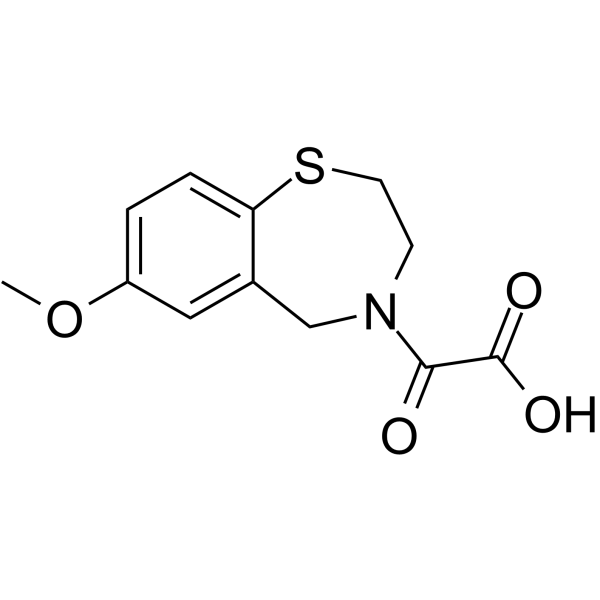
    Aladorian (ARM036; S44121) is a non-peptidic ryanodine receptor 2 (RyR2) stabilizer. Aladorian stabilizes RyR2 channels and rectifies abnormal Ca²⁺ handling in cardiomyocytes. Aladorian improves cardiomyocyte Ca²⁺ homeostasis independent of dystrophin restoration. Aladorian attenuates early cardiomyopathy and enhances left ventricular function in a canine muscular dystrophy model. Aladorian can be used for the research of heart failure, Duchenne muscular dystrophy-associated cardiomyopathy and muscular dystrophy .
    Aladorian
  • HY-108594

    Potassium Channel Metabolic Disease
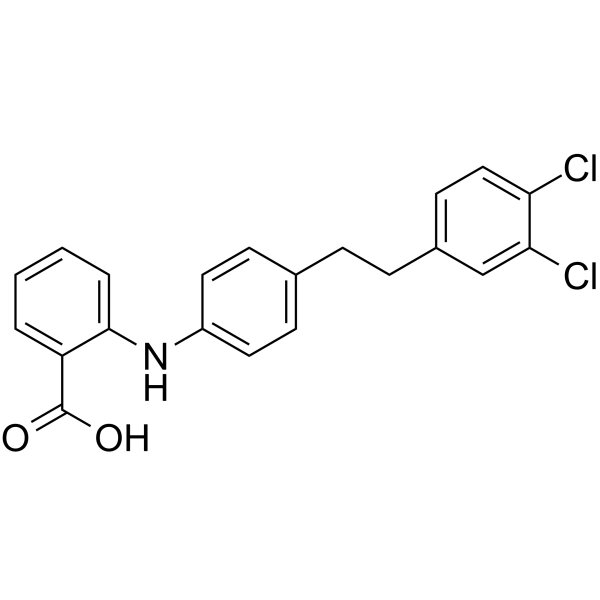
    PD-118057 is a hERG channel activator without causing hERG blockade. PD-118057 activates hERG channel to suppress changes in membrane excitability .
    PD-118057
  • HY-W100287

    NF-κB p38 MAPK Interleukin Related IKK JNK β-catenin Wnt Neurological Disease Inflammation/Immunology Cancer
    Murrayafoline A is a carbazole alkaloid that can be extracted from Murraya tetramera. Murrayafoline A directly targets Specificity protein 1 (Sp1), thereby inhibiting NF-κB and MAPK signaling pathways. Murrayafoline a induces a G0/G1-phase arrest in platelet-derived growth factor (PDGF)-stimulated vascular smooth muscle cells. Murrayafoline A attenuates the Wnt/β-catenin pathway by promoting the degradation of intracellular β-catenin proteins. Murrayafoline A enhances the contraction of rat ventricular myocytes and L-type calcium current by activating protein kinase C. Murrayafoline A inhibits LPS (HY-D1056)-induced neuroinflammation in vivo. Murrayafoline A can be used for the study of inflammation, vascular complications and colon cancer .
    Murrayafoline A
  • HY-19664

    OPC-13340

    Calcium Channel NO Synthase Cardiovascular Disease
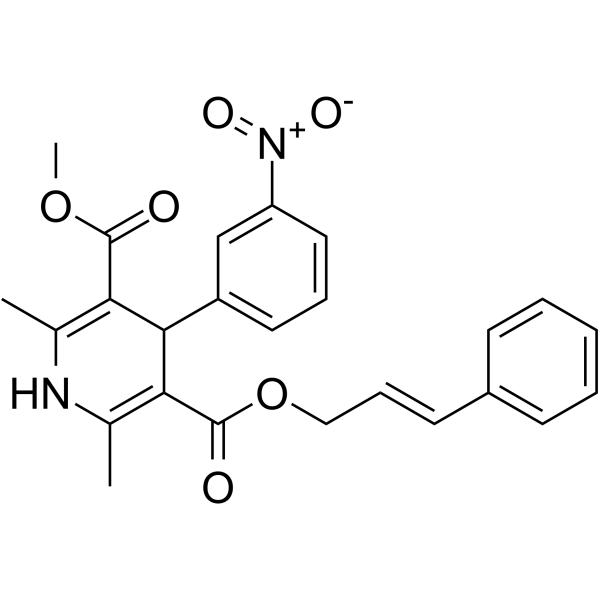
    Pranidipine (OPC-13340) is an orally active L-type voltage-dependent calcium channel (L-VDCC) blocker with a Ki value of 0.16 nM. Pranidipine inhibits calcium-induced contraction, suppresses slow-response action potentials, shortens action potential duration, reduces systolic and diastolic blood pressure, and exerts vasodilatory effects. Pranidipine enhances its vasodilatory effect by blocking NO decomposition. Pranidipine can be used in research related to essential hypertension, angina pectoris, myocardial infarction, and dilated cardiomyopathy .
    Pranidipine
  • HY-A0236

    Sodium Channel Potassium Channel Calcium Channel Calmodulin Cardiovascular Disease
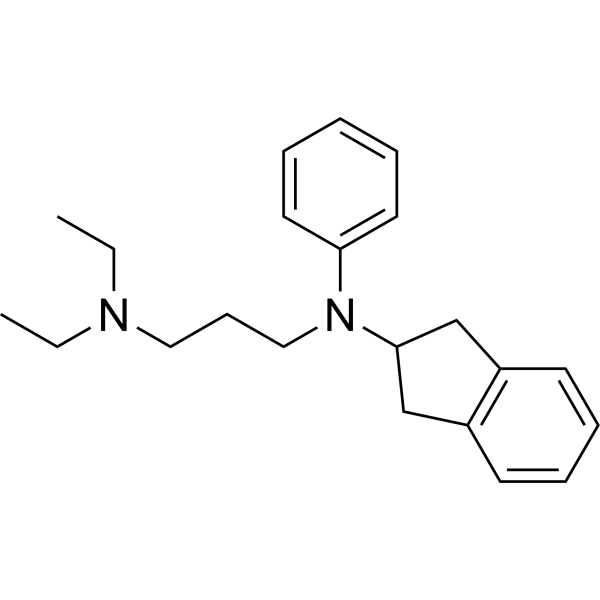
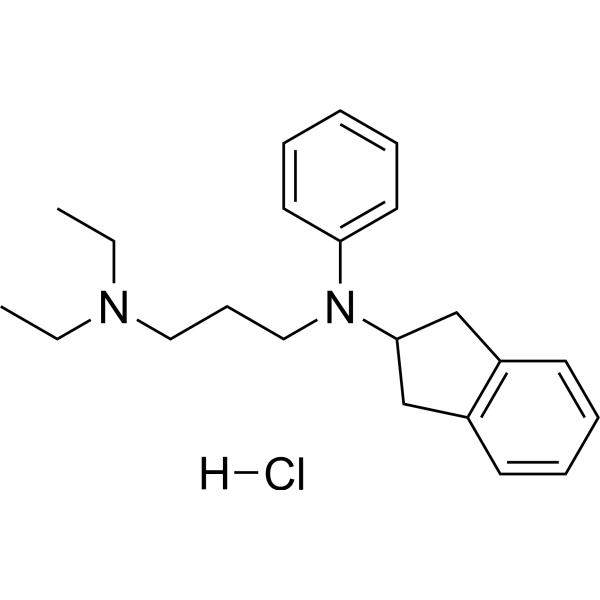
    Aprindine is an Ib-class anti-arrhythmic agent. Aprindine mainly exerts its effect by blocking sodium channels (INa), thereby reducing the excitability and conduction velocity of cardiac muscle cells. Aprindine significantly inhibits delayed potassium currents, which helps to prolong the atrial effective refractory period (AERP) and inhibit the occurrence of atrial fibrillation. Aprindine can also regulate intracellular calcium ion concentration by inhibiting Na +/Ca 2+ exchange current (INCX), thereby further stabilizing cardiac electrical activity. Aprindine can be used for the study of atrial fibrillation (AF) and ventricular arrhythmias .
    Aprindine
  • HY-A0236A

    Sodium Channel Potassium Channel Calcium Channel Calmodulin Cardiovascular Disease
    Aprindine hydrochloride is an Ib-class anti-arrhythmic agent. Aprindine hydrochloride mainly exerts its effect by blocking sodium channels (INa), thereby reducing the excitability and conduction velocity of cardiac muscle cells. Aprindine hydrochloride significantly inhibits delayed potassium currents, which helps to prolong the atrial effective refractory period (AERP) and inhibit the occurrence of atrial fibrillation. Aprindine hydrochloride can also regulate intracellular calcium ion concentration by inhibiting Na +/Ca 2+ exchange current (INCX), thereby further stabilizing cardiac electrical activity. Aprindine hydrochloride can be used for the study of atrial fibrillation (AF) and ventricular arrhythmias .
    Aprindine hydrochloride
  • HY-100952

    Adrenergic Receptor Cardiovascular Disease
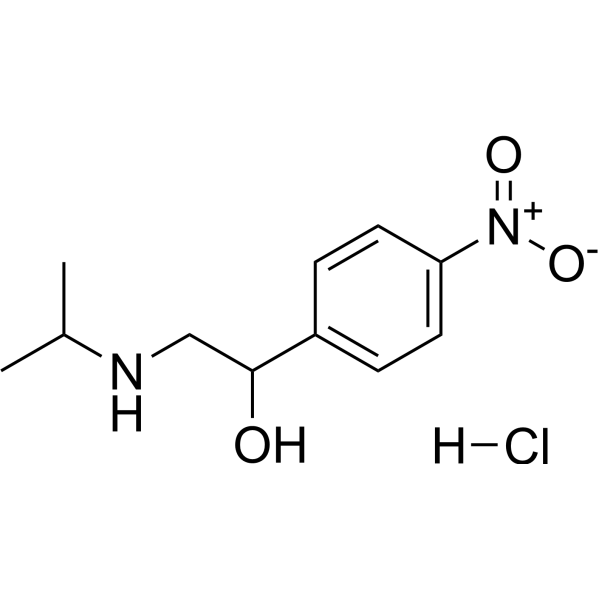
    Nifenalol hydrochloride is a β-adrenergic receptor antagonist. Nifenalol hydrochloride induces the Early Afterdepolarization (EAD) effect. EAD is a phenomenon in cardiac electrophysiology that usually occurs during an action potential in ventricular muscle cells and can lead to arrhythmia. The EAD effect of Nifenalol hydrochloride can be blocked by Tetrodotoxin. Nifenalol hydrochloride is used in the study of conditions such as irregular heartbeat or high blood pressure .
    Nifenalol hydrochloride
  • HY-N13747

    Myosin PKC Calcium Channel Cardiovascular Disease
    Chrysosplenol C is a type of flavonoid compound. Chrysosplenol C selectively activates cardiac myosin ATPase, with its EC50 being 45 µM. Chrysosplenol C enhances the release of intracellular calcium ions by activating protein kinase C (PKC), thereby increasing the contractility of rat ventricular muscle cells. Chrysosplenol C can be used in the research of heart failure .
    Chrysosplenol C
  • HY-P5157

    Potassium Channel Neurological Disease
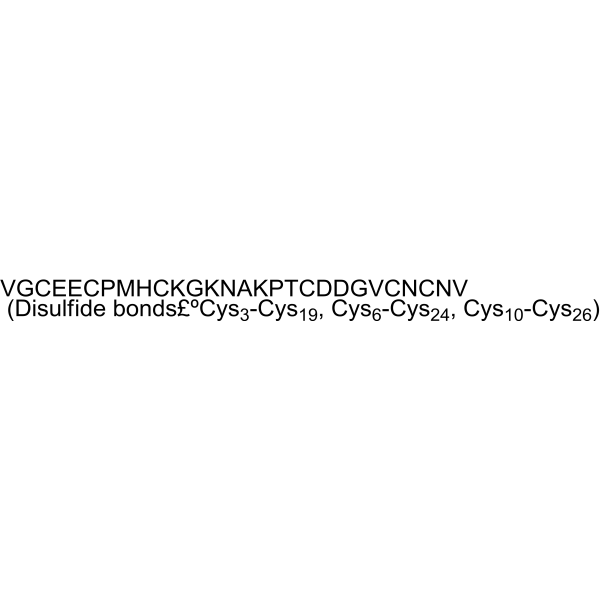
    BmP02 is a selective Kv1.3 channel blocker and a highly-selective Kv4.2 modulator, which can be isolated from Chinese scorpion (Buthus martensi Karsch) venom. BmP02 also delays the inactivation of Kv4.2 in HEK293T cells, with an EC50 value of ~850 nM. BmP02 inhibits the transient outward potassium currents (Ito) in ventricular muscle cells .
    BmP02
  • HY-183644

    Lysyl Oxidase Cardiovascular Disease
    LNO 9 is an orally active LOXL2 inhibitor and NO donor, with an IC50 of 0.17 μM against human LOXL2. LNO 9 competitively binds to the LTQ cofactor of LOXL2 to form an irreversible complex, thereby inhibiting collagen oxidation and abnormal cross-linking. LNO 9 releases nitric oxide (NO) to increase cGMP levels in pulmonary artery smooth muscle cells. LNO 9 inhibits hypoxia-induced collagen modification and possesses vasodilatory activity. LNO 9 ameliorates right ventricular hypertrophy and pulmonary artery medial thickness in rat models induced by hypoxia and Monocrotaline (HY-N0750), and can be used for research on pulmonary hypertension .
    LNO 9
  • HY-108594R

    Reference Standards Potassium Channel Metabolic Disease
    PD-118057 (Standard) is the analytical standard of PD-118057 (HY-108594). This product is intended for research and analytical applications. PD-118057 is a hERG channel activator without causing hERG blockade. PD-118057 activates hERG channel to suppress changes in membrane excitability .
    PD-118057 (Standard)
  • HY-105439A

    LY 150378

    Drug Derivative Cardiovascular Disease
    Clofilium phosphate (LY 150378) is an antiarrhythmic/antifibrillatory agent. Clofilium phosphate significantly prolongs the action potential duration and effective refractory period of canine cardiac Purkinje fibers, increases the ventricular fibrillation threshold, reduces the risk of reentrant arrhythmias, and enables spontaneous conversion of some ventricular fibrillation episodes to sinus rhythm. Clofilium phosphate is applicable to research related to ventricular fibrillation, arrhythmias, and ventricular tachyarrhythmias .
    Clofilium phosphate
  • HY-A0236AR

    Reference Standards Sodium Channel Potassium Channel Calcium Channel Calmodulin Cardiovascular Disease
    Aprindine hydrochloride (Standard) is the analytical reference standard of Aprindine hydrochloride (HY-A0236A). This product is used for research and analytical applications. Aprindine hydrochloride is an Ib-class anti-arrhythmic agent. Aprindine hydrochloride mainly exerts its effect by blocking sodium channels (INa), thereby reducing the excitability and conduction velocity of cardiac muscle cells. Aprindine hydrochloride significantly inhibits delayed potassium currents, which helps to prolong the atrial effective refractory period (AERP) and inhibit the occurrence of atrial fibrillation. Aprindine hydrochloride can also regulate intracellular calcium ion concentration by inhibiting Na +/Ca 2+ exchange current (INCX), thereby further stabilizing cardiac electrical activity. Aprindine hydrochloride can be used for the study of atrial fibrillation (AF) and ventricular arrhythmias.
    Aprindine hydrochloride (Standard)
  • HY-W100287R

    NF-κB Reference Standards p38 MAPK Interleukin Related IKK JNK β-catenin Wnt Neurological Disease Inflammation/Immunology Cancer
    Murrayafoline A (Standard) is the analytical standard of Murrayafoline A (HY-W100287). This product is intended for research and analytical applications. Murrayafoline A is a carbazole alkaloid that can be extracted from Murraya tetramera. Murrayafoline A directly targets Specificity protein 1 (Sp1), thereby inhibiting NF-κB and MAPK signaling pathways. Murrayafoline a induces a G0/G1-phase arrest in platelet-derived growth factor (PDGF)-stimulated vascular smooth muscle cells. Murrayafoline A attenuates the Wnt/β-catenin pathway by promoting the degradation of intracellular β-catenin proteins. Murrayafoline A enhances the contraction of rat ventricular myocytes and L-type calcium current by activating protein kinase C. Murrayafoline A inhibits LPS (HY-D1056)-induced neuroinflammation in vivo. Murrayafoline A can be used for the study of inflammation, vascular complications and colon cancer .
    Murrayafoline A (Standard)
  • HY-182599

    Calcium Channel mAChR Neurological Disease
    RCC-36 hydrochloride is an L-type calcium channel inhibitor and competitive muscarinic receptor antagonist. RCC-36 hydrochloride inhibits L-type calcium currents in voltage- and concentration-dependent fashion with no effect on cardiac K + currents. RCC-36 hydrochloride suppresses maximum acetylcholine-induced contractile responses, inhibits detrusor muscle contractions induced by potassium chloride, calcium chloride, and electric field stimulation, including atropine-resistant contractions. RCC-36 hydrochloride can be used for the research of urinary frequency, urinary incontinence, and bladder overactivity .
    RCC-36 hydrochloride

Inquiry Online

Your information is safe with us. * Required Fields.

Salutation


Country or Region *

Applicant Name *


Organization Name *

Department *


Email Address *


Product Name *

Cat. No.


Requested quantity *

Phone Number *


Remarks

Inquiry Online

Inquiry Information

Product Name:
Cat. No.:
Quantity:
MCE Japan Authorized Agent:

