



Tetracycline (Standard)

Based on 1 Customer Validation
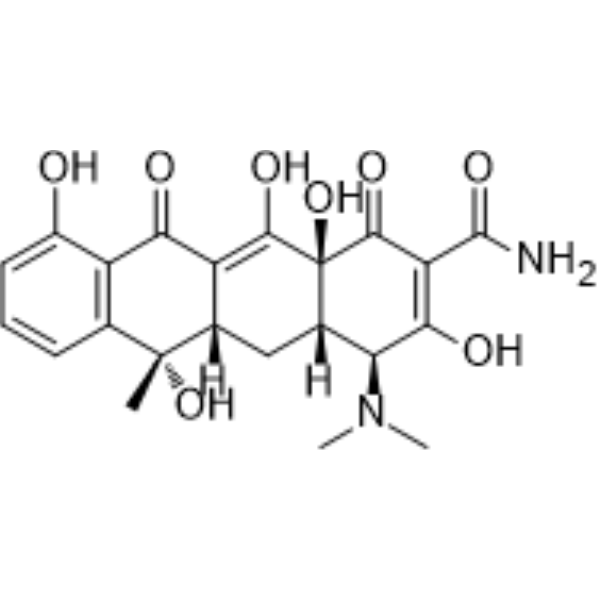
Tetracycline (Standard) is the analytical standard of Tetracycline. This product is intended for research and analytical applications. Tetracycline is a broad-spectrum antibiotic with oral activity. Tetracycline exhibits activity against a wide range of bacteria including gram-positive, gram-negative bacteria, chlamydiae, mycoplasmas and rickettsiae. Tetracycline can be used for the research of infections.
Nur für Forschungszwecke. Wir verkaufen nicht an Patienten.
- Reinheit : 95.21%
- CAS. Nr.: 60-54-8
- Formel: C22H24N2O8
- Molecular Weight:444.43
-
Speicherung:
Please store the product under the recommended conditions in the Certificate of Analysis.


To place orders, for customer services and technical support, please contact: MedChemExpress USA
Tel: 609-228-6898 E-mail: [email protected] [email protected]


-
 Product Information
-
Chemical Information
- Reinheit & Dokumentation
-
 Help & FAQs


-
HY-A0107
TetracyclineAntibiotic -
HY-B0275A
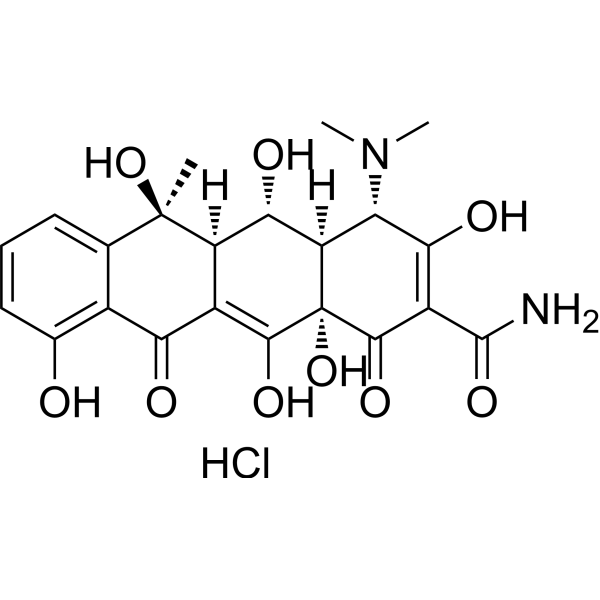
Oxytetracycline hydrochlorideAntibiotic Agent -

HY-B0275AR
Oxytetracycline hydrochloride (Standard)Antibiotic Agent -
HY-B0474
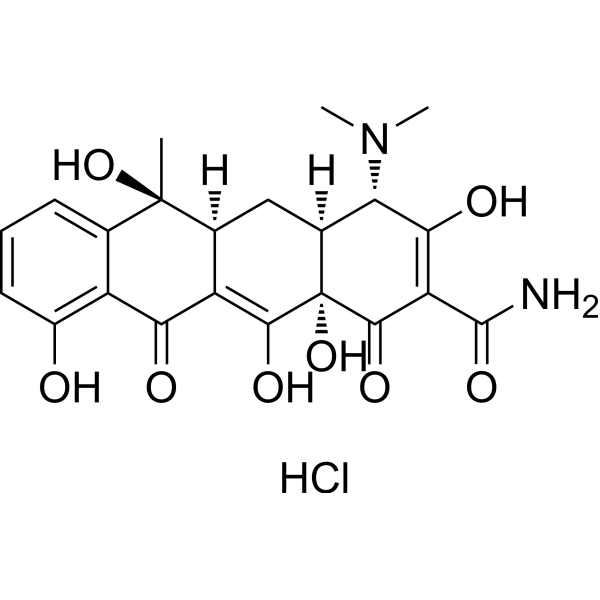
Tetracycline hydrochlorideAntibiotic -

HY-B0474R
Tetracycline hydrochloride (Standard)Bacterial Inhibitor -
HY-16908A
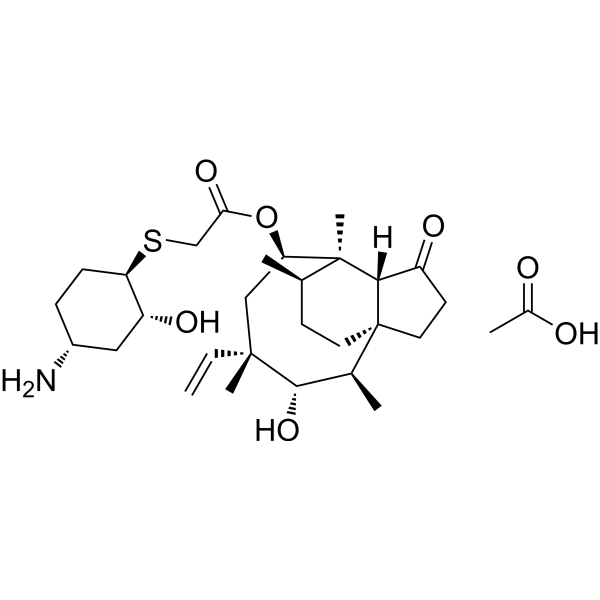
Lefamulin acetateAntibiotic -
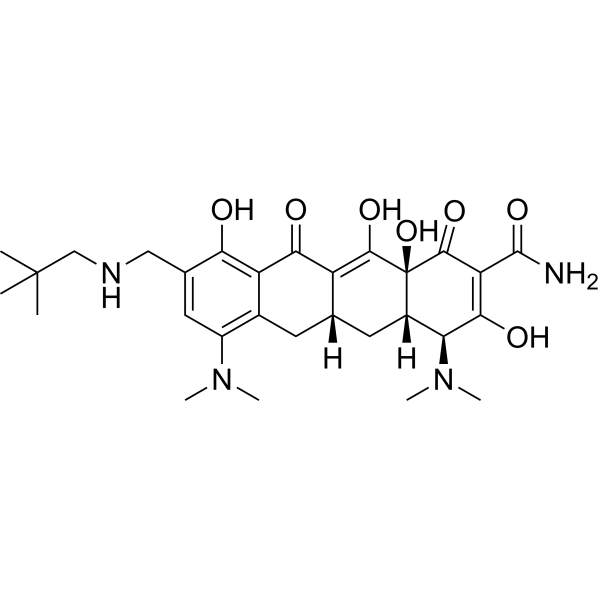
HY-14865
OmadacyclineAntimicrobial Agent -
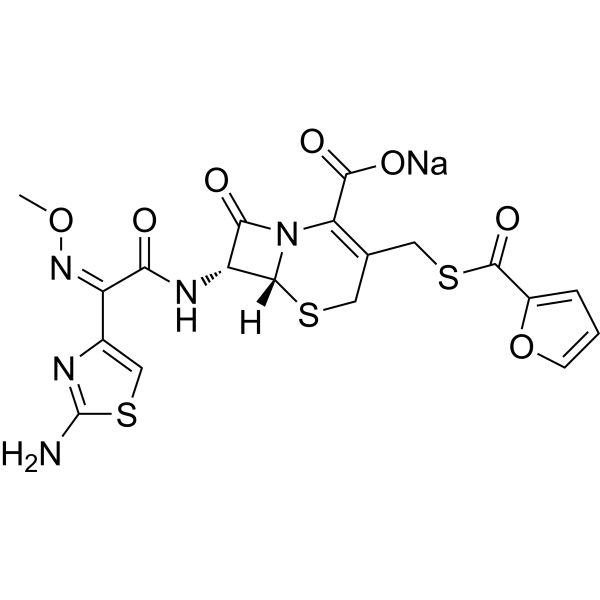
HY-B0898
Ceftiofur sodiumAntibiotic -

HY-B0898R
Ceftiofur sodium (Standard)Bacterial Inhibitor -

HY-16908AR
Lefamulin acetate (Standard)Antibiotic -

HY-14865R
Omadacycline (Standard)Antimicrobial Agent


Product Information
Information
Anwendung
The compound is the grade of analytical standard, which is the reference standard supplied assay. It is commonly used in qualitative, quantitative and methodological research experiments in HPLC, GC and MS.


Chemical Information
-
CAS. Nr. 60-54-8
-
Appearance Solid
-
Molecular Weight 444.43
-
Formel C22H24N2O8
-
Color Yellow to brown
-
SMILES
O=C(C(C1=O)=C(O)[C@@H](N(C)C)[C@]2([H])C[C@]3([H])[C@](C)(O)C4=C(C(C3=C(O)[C@@]21O)=O)C(O)=CC=C4)N
-
Initial Source
-
Versand
Room temperature in continental US; may vary elsewhere.
-
Speicherung
Please store the product under the recommended conditions in the Certificate of Analysis.


Reinheit & Dokumentation
-
SDS (254 KB)
- English - EN (254 KB)
- Français - FR (254 KB)
- Deutsch - DE (254 KB)
- Norwegian - NO (254 KB)
- Español - ES (254 KB)
- Swedish - SV (254 KB)
- Italian - IT (254 KB)
- Korean - KR (254 KB)
- Portuguese - PT (254 KB)
-
Handling Instructions (2659 KB)
Verweise
[1]. Chopra I, et al. Tetracycline antibiotics: mode of action, applications, molecular biology, and epidemiology ofbacterial resistance. Microbiol Mol Biol Rev. 2001 Jun;65(2):232-60. [Content Brief]
[2]. Bowdre JH, et al. Antibiotic efficacy against Vibrio vulnificus in the mouse: superiority of tetracycline. J Pharmacol Exp Ther. 1983 Jun;225(3):595-8. [Content Brief]
[3]. Forloni G, et al. Anti-amyloidogenic activity of tetracyclines: studies in vitro. FEBS Lett. 2001 Jan 5;487(3):404-7. [Content Brief]

Calculators
Konzentration (Stammlösung) × Volumen (Stammlösung) = Konzentration (Ziellösung) × Volumen (Ziellösung)


Tetracycline (Standard) Related Classifications
HY-A0107R Related Classifications
 Powered by Bioz