



UFP-803
UFP-803 is a potent urotensin-II receptor (UT) ligand. UFP-803 has lower residual agonist activity, so it may be an important tool for the investigations on the role played by the UT system in physiology and pathology.
For research use only. We do not sell to patients.
- CAS No.: 879497-82-2
- Formula: C50H64N10O12S2
- Molecular Weight:1061.23
-
Storage:
Please store the product under the recommended conditions in the Certificate of Analysis.

To place orders, for customer services and technical support, please contact: MedChemExpress USA
Tel: 609-228-6898 E-mail: [email protected] [email protected]


-
 Biological Activity
-
Chemical Information
-
Solvent & Solubility
- Protocols
- Purity & Documentation
- References
-
 Help & FAQs


-
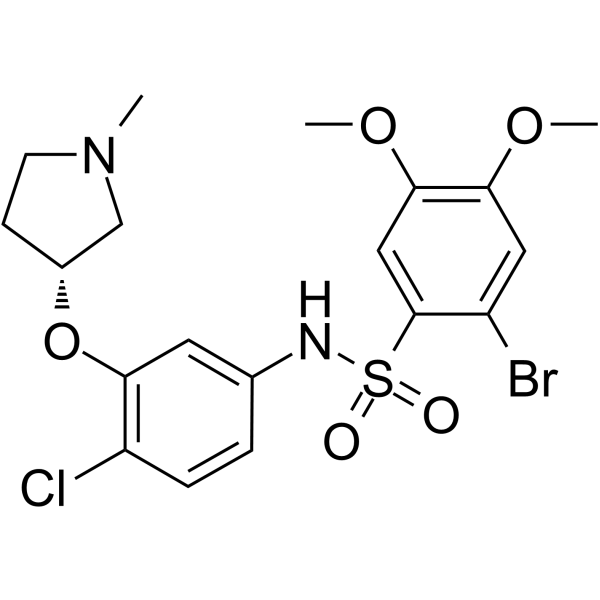
HY-10656
SB-657510UII Receptor Antagonist -
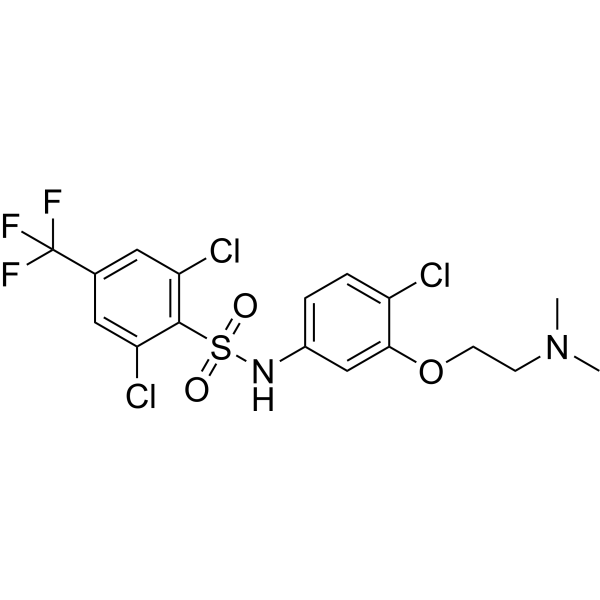
HY-10664
SB-611812Urotensin Receptor Antagonist -
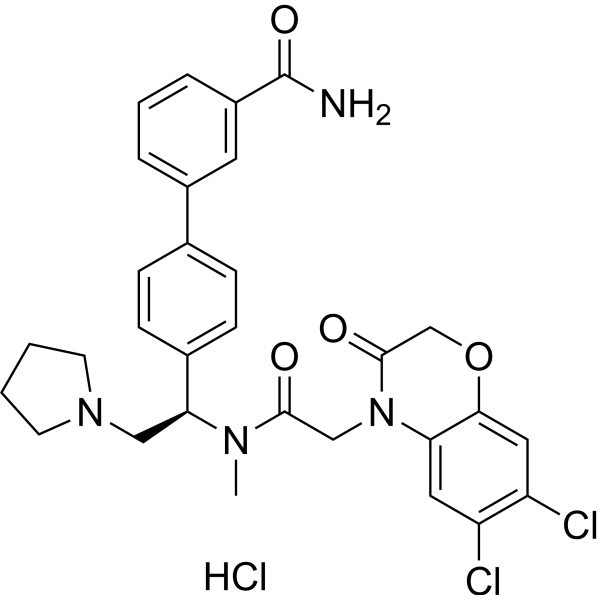
HY-108446
GSK 1562590 hydrochlorideUrotensin-II Receptor Antagonist -
![[Orn5]-URP](https://file.medchemexpress.com/product_pic/hy-p1167.gif)
HY-P1167
[Orn5]-URPUT Antagonist -

HY-10656R
SB-657510 (Standard)Reference Standard -

HY-10657
SB-706375Urotensin II Receptor Antagonist -

HY-10664R
SB-611812 (Standard)Urotensin Receptor Antagonist -
HY-10658
AC-7954Urotensin Receptor Agonist -
HY-P1165
Urotensin II-related peptideUrotensin II Anague -
HY-P1164
Urotensin II (114-124), humanUrotensin Receptor Agonist -

HY-10657R
SB-706375 (Standard)Reference Standard -

HY-108055
Urantideurotensin-II Receptor Antagonist Peptide


Biological Activity
Description
IC50 & Target
Urotensin-II receptor[1]


Chemical Information
-
CAS No. 879497-82-2
-
Molecular Weight 1061.23
-
Formula C50H64N10O12S2
-
Sequence Shortening
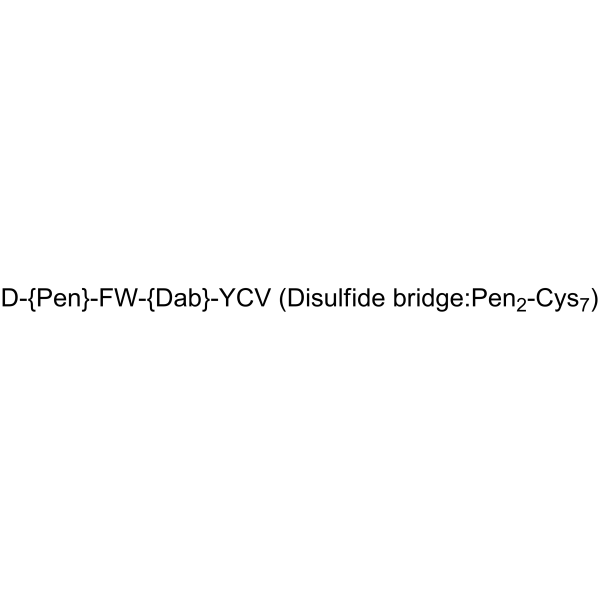
D-{Pen}-FW-{Dab}-YCV (Disulfide bridge:Pen2-Cys7)
-
Shipping
Room temperature in continental US; may vary elsewhere.
-
Storage
Please store the product under the recommended conditions in the Certificate of Analysis.


Solvent & Solubility
In Vitro
H2O
Peptide Solubility and Storage Guidelines:
1. Calculate the length of the peptide.
2. Calculate the overall charge of the entire peptide according to the following table:
| Contents | Assign value | |
|---|---|---|
| Acidic amino acid | Asp (D), Glu (E), and the C-terminal -COOH. | -1 |
| Basic amino acid | Arg (R), Lys (K), His (H), and the N-terminal -NH2 | +1 |
| Neutral amino acid | Gly (G), Ala (A), Leu (L), Ile (I), Val (V), Cys (C), Met (M), Thr (T), Ser (S), Phe (F), Tyr (Y), Trp (W), Pro (P), Asn (N), Gln (Q) | 0 |
3. Recommended solution:
| Overall charge of peptide | Details |
|---|---|
| Negative (<0) |
1. Try to dissolve the peptide in water first. 2. If water fails, add NH4OH (<50 μL). 3. If the peptide still does not dissolve, add DMSO (50-100 μL) to solubilize the peptide. |
| Positive (>0) |
1. Try to dissolve the peptide in water first. 2. If water fails, try dissolving the peptide in a 10%-30% acetic acid solution. 3. If the peptide still does not dissolve, try dissolving the peptide in a small amount of DMSO. |
| Zero (=0) |
1. Try to dissolve the peptide in organic solvent (acetonitrile, methanol, etc.) first. 2. For very hydrophobic peptides, try dissolving the peptide in a small amount of DMSO, and then dilute the solution with water to the desired concentration. |

Protocols
-
Protocol for Hematoxylin-Eosin (H&E) Staining
Hematoxylin-eosin staining is a routine histological method that stains nuclei mainly blue-purple with hemalum and stains cytoplasm, extracellular matrix, and many stromal components pink with eosin, allowing tissue architecture, cell morphology, necrosis, inflammation, fibrosis, tumor growth pattern, and treatment-associated injury to be evaluated by light microscopy. In cancer cells, primary neurons, mouse tumor models, intestinal organoids, inflammatory macrophage preparations, and drug-screening tissues, H&E is a morphology assay rather than a molecular assay; it should be interpreted with complementary molecular or immunostaining assays when the biological question concerns specific proteins, RNA levels, ferroptosis, mitophagy, or immune phenotypes.


Purity & Documentation
References

Calculators
Concentration (start) × Volume (start) = Concentration (final) × Volume (final)


UFP-803 Related Classifications
HY-P1166 Related Classifications
 Powered by Bioz