



α-Glucosidase, Yeast
Based on 1 publication(s) in Google Scholar
α-Glucosidase, Yeast (α-D-Glucosidase, Yeast), a carbohydrate hydrolyzing enzyme, catalyzes the liberation of α-glucose from the non-reducing end of the substrate. α-Glucosidase can facilitate the absorption of glucose by the small intestine. Inhibition of α-Glucosidase is an effective management of non-insulin-dependent diabetes mellitus (NIDDM).
For research use only. We do not sell to patients.
- CAS No.: 9001-42-7
-
Storage:
Please store the product under the recommended conditions in the Certificate of Analysis.


To place orders, for customer services and technical support, please contact: MedChemExpress USA
Tel: 609-228-6898 E-mail: [email protected] [email protected]


-
 Biological Activity
-
Chemical Information
-
Solvent & Solubility
- Protocols
- Purity & Documentation
- References
-
 Help & FAQs


-
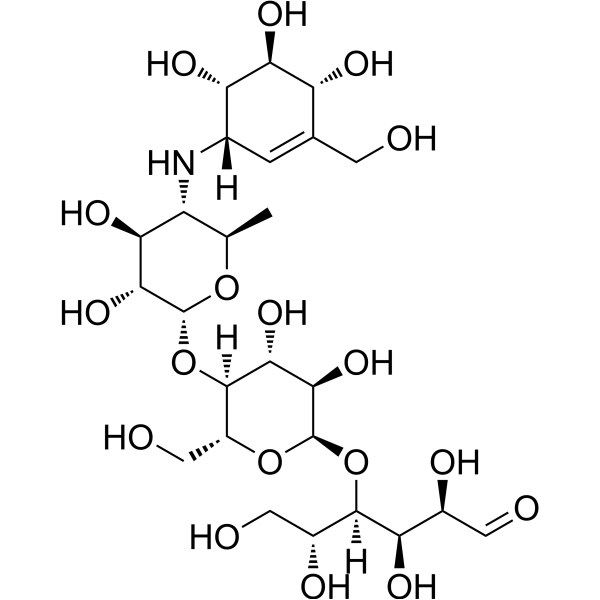
HY-B0089
AcarboseAlpha-Glucosidase Inhibitor -
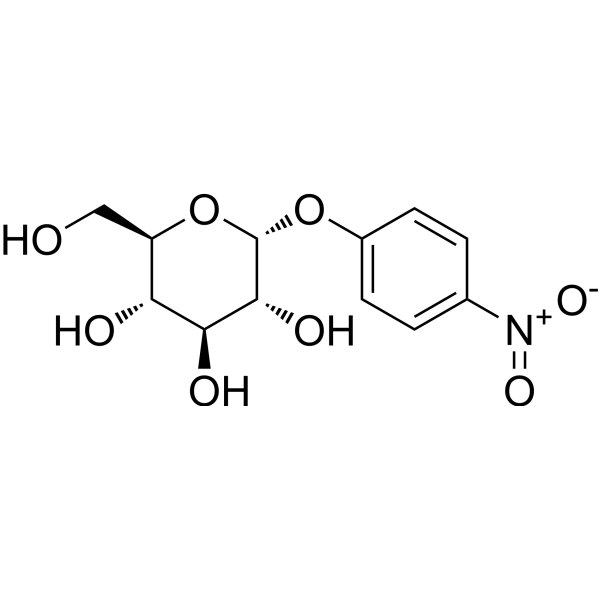
HY-W011411
4-Nitrophenyl a-D-glucopyranosideα-Glucosidase Substrate -
HY-18739
Phorbol 12-myristate 13-acetatePKC Activator -

HY-P2802A
α-Glucosidase, bacillus stearothermophilusα-Glucosidase -
HY-17394
CisplatinDNA Alkylator -
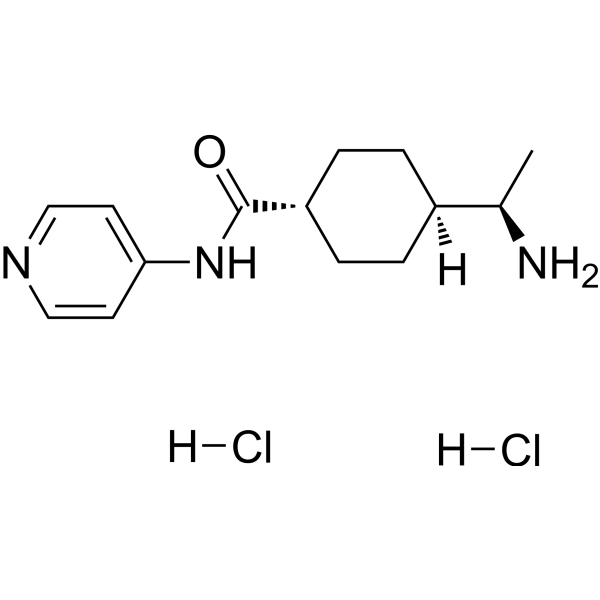
HY-10583
Y-27632 dihydrochlorideROCK Inhibitor -
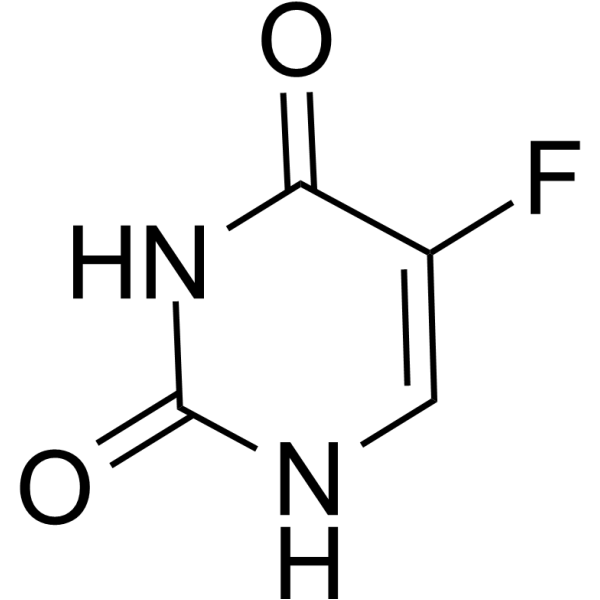
HY-90006
5-FluorouracilThymidylate Synthase Inhibitor -
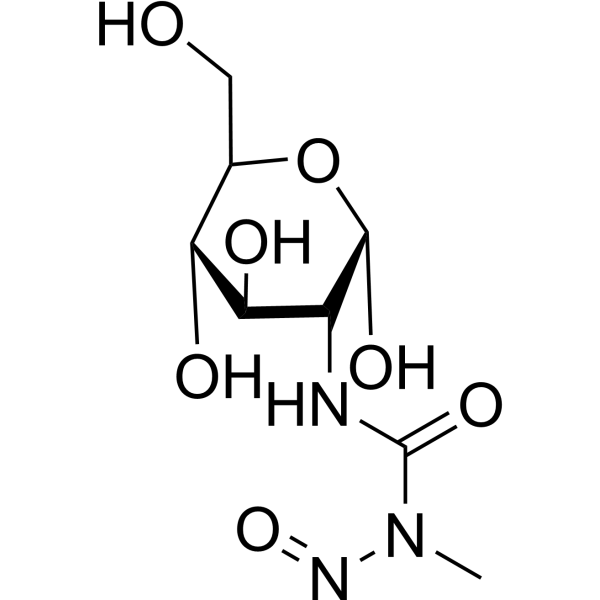
HY-13753
StreptozotocinDiabetes Modeling Agent -
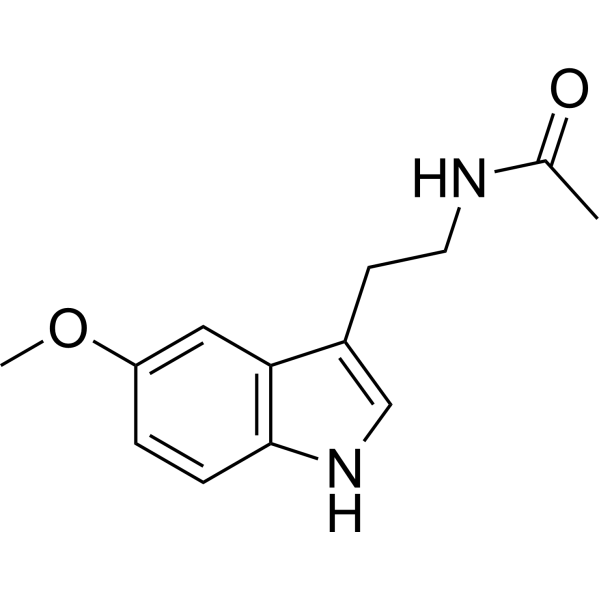
HY-B0075
MelatoninMelatonin Receptor Activator -
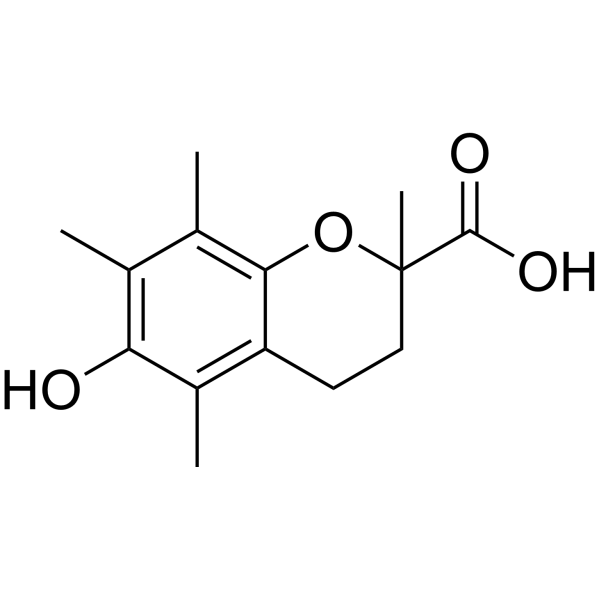
HY-101445
TroloxAntioxidant -
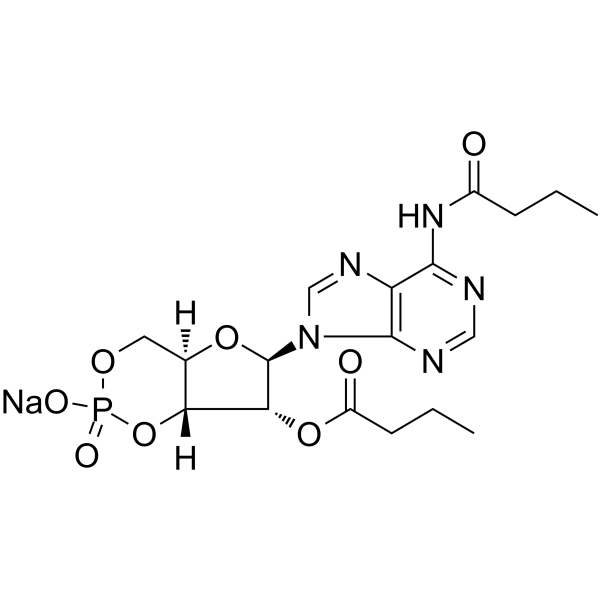
HY-B0764
Bucladesine sodiumcAMP Analog -

HY-P2802B
α-Glucosidase, riceGlycosidase
Publications Citing Use of MedChemExpress (MCE) α-Glucosidase, Yeast
More

Biological Activity
Description
In Vitro
Product information
Molecular weight: 68.5 kDa
Isoelectric point (pI): 5.9
Optimum pH: 6.5-7.5
Optimum reaction temperature: 37°C
pH stability: 6.0-8.5 (25°C, 24 hours)
Inhibitors: histidine, amines (Tris), metal ions (Hg2+, Cu2+, Ag+, Pb2+, Fe2+ and Zn2+), iodoacetate, 4-chloromercury benzoate.
Instructions
Dissolved in water at 1 mg/mL, divided into portions according to the single use amount and frozen at -20°C to avoid repeated freezing and thawing, and can be stored for up to 1 month. It can also be dissolved according to the specific experimental reference buffer.
MedChemExpress (MCE) has not independently confirmed the accuracy of these methods. They are for reference only. Further protocols information, click here.
In Vivo
MedChemExpress (MCE) has not independently confirmed the accuracy of these methods. They are for reference only.
EC Number
3.2.1.20
Enzyme Activity
≥10 U/mg soild
Unit Definition
One unit is defined as the amount of enzyme that will convert 1 μmol PNPG to PNP per minute at 37°C and pH 7.0.


Chemical Information
-
CAS No. 9001-42-7
-
Appearance Solid
-
Color White to off-white
-
SMILES
[a-Glucosidase, Yeast]
-
Synonyms
α-D-Glucosidase, Yeast
-
Shipping
Room temperature in continental US; may vary elsewhere.
-
Storage
Please store the product under the recommended conditions in the Certificate of Analysis.


Publications (1)
-
Journal Impact Factor
-
Most Recent


Solvent & Solubility
In Vitro:
H2O : 10 mg/mL (Need ultrasonic)

Protocols
-
Research Protocol for Endocrine Diseases
Endocrine diseases often arise from disrupted hormone production, hormone signaling, or target-tissue responsiveness; for diabetes-focused endocrine disease models, insulin signaling regulates glucose uptake, hepatic glucose output, lipid metabolism, and β-cell compensation. Type 2 diabetes develops through interacting defects in insulin resistance, β-cell dysfunction, adipose inflammation, hepatic glucose overproduction, altered incretin signaling, and ectopic lipid metabolism. A major unresolved question is whether endocrine dysfunction is driven primarily by target-tissue insulin resistance, intrinsic β-cell failure, immune/inflammatory stress, or combined multi-organ failure that differs by disease stage.
-
Research Protocol for Metabolic Diseases
AMP-activated protein kinase, AMPK, is a conserved cellular energy sensor that responds to reduced cellular energy status and coordinates metabolism by increasing ATP-generating catabolic pathways while suppressing ATP-consuming anabolic processes. In metabolic disease research, the AMPK pathway is experimentally relevant because it regulates hepatic lipid synthesis, fatty acid oxidation, glucose production, skeletal-muscle glucose disposal, mTORC1-linked biosynthesis, autophagy, mitochondrial homeostasis, and whole-body energy balance. The central pathway logic is that energy stress, metformin, exercise-like stimulation, or direct AMPK activators increase AMPKα Thr172 phosphorylation and downstream substrate phosphorylation, including ACC and RAPTOR. Phosphorylation of ACC suppresses lipogenesis and supports fatty acid oxidation, whereas phosphorylation of RAPTOR suppresses mTORC1 signaling and links cellular energy status to growth and protein synthesis control. The pathway is linked


Purity & Documentation
-
Data Sheet (270 KB)
-
SDS (418 KB)
- English - EN (418 KB)
- Français - FR (418 KB)
- Deutsch - DE (418 KB)
- Norwegian - NO (418 KB)
- Español - ES (418 KB)
- Swedish - SV (418 KB)
- Italian - IT (418 KB)
- Korean - KR (418 KB)
- Portuguese - PT (418 KB)
-
Handling Instructions (2659 KB)
References
[1]. Kumar S, et, al. α-glucosidase inhibitors from plants: A natural approach to treat diabetes. Pharmacogn Rev. 2011 Jan;5(9):19-29. [Content Brief]
[2]. Laar FA, et, al. Alpha-glucosidase inhibitors for patients with type 2 diabetes: results from a Cochrane systematic review and meta-analysis. Diabetes Care. 2005 Jan;28(1):154-63. [Content Brief]

Calculators
Concentration (start) × Volume (start) = Concentration (final) × Volume (final)


α-Glucosidase, Yeast Related Classifications
HY-P2802 Related Classifications
 Powered by Bioz