



4'-Methoxyresveratrol
Based on 1 publication(s) in Google Scholar
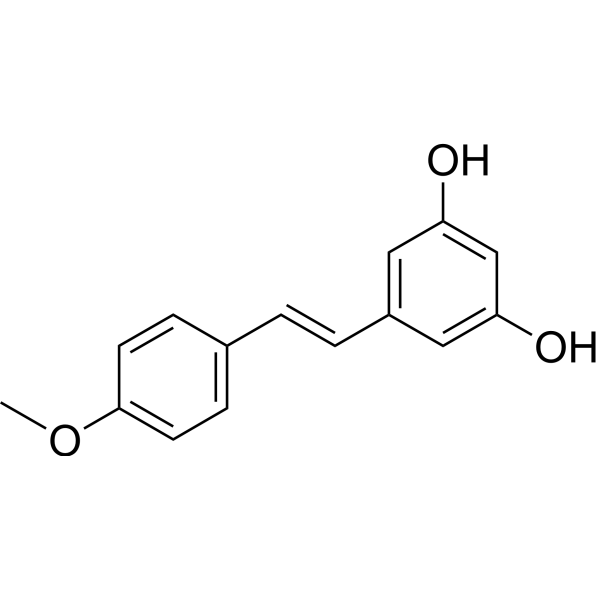
4'-Methoxyresveratrol (4'-O-Methylresveratrol) is a polyphenol derived from Dipterocarpaceae, with antiandrogenic, antifungal and anti-inflammatory activities. 4'-Methoxyresveratrol alleviates AGE-induced inflammation through suppressing RAGE-mediated MAPK/NF-κB signaling pathway and NLRP3 inflammasome activation.
연구목적의 판매만을 진행합니다. 환자를 대상으로 한 판매는 하지 않습니다.
- Purity : 99.48%
- CAS No.: 33626-08-3
- 화학식: C15H14O3
- 분자량:242.27
-
보관:
4°C, protect from light
* In solvent : -80°C, 6 months; -20°C, 1 month (protect from light)

To place orders, for customer services and technical support, please contact: MedChemExpress USA
Tel: 609-228-6898 E-mail: [email protected] [email protected]


-
 Biological Activity
-
Chemical Information
-
용액&용해도
- Protocol
- 순도&문서
- References
-
 Help & FAQs


-
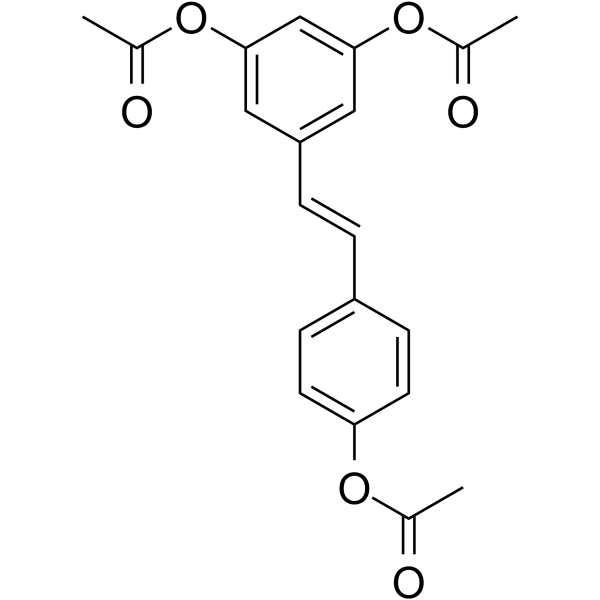
HY-N1410
TriacetylresveratrolSTAT3/NF-κB Inhibitor -
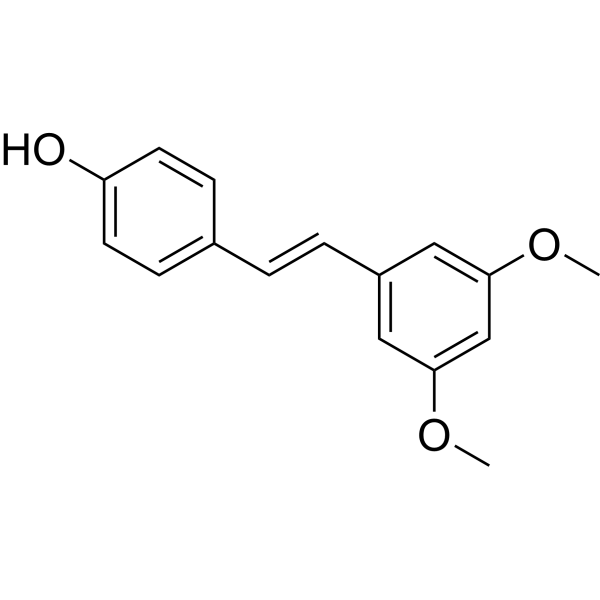
HY-N0828
PterostilbeneAutophagy Inducer -
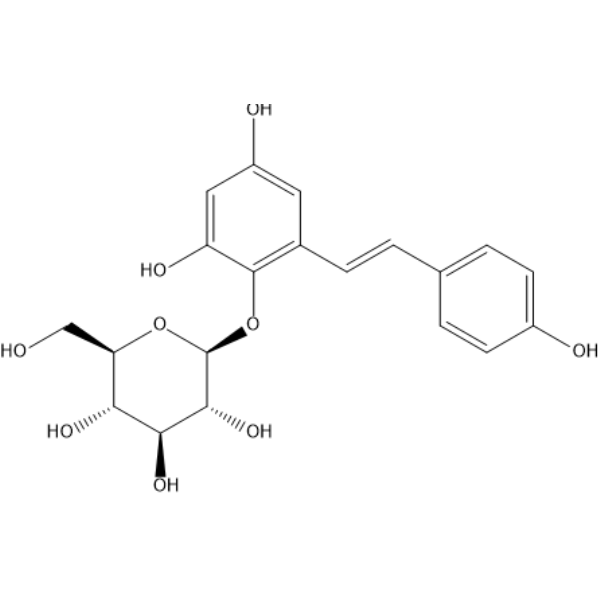
HY-N0652
2,3,5,4'-Tetrahydroxystilbene 2-O-β-D-glucosideNatural Product -
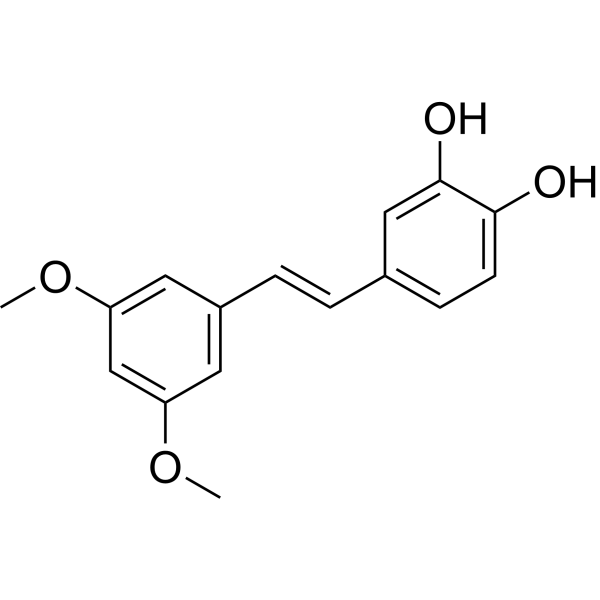
HY-N6002
3'-HydroxypterostilbenePterostilbene Analogue -

HY-N2485R
4'-Methoxyresveratrol (Standard)NOD-like Receptor (NLR) Activator -
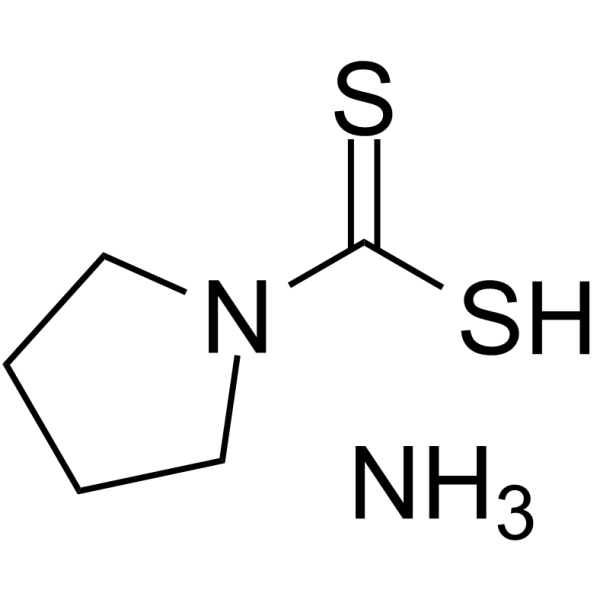
HY-18738
Pyrrolidinedithiocarbamate ammoniumSelective NF-κB Inhibitor -
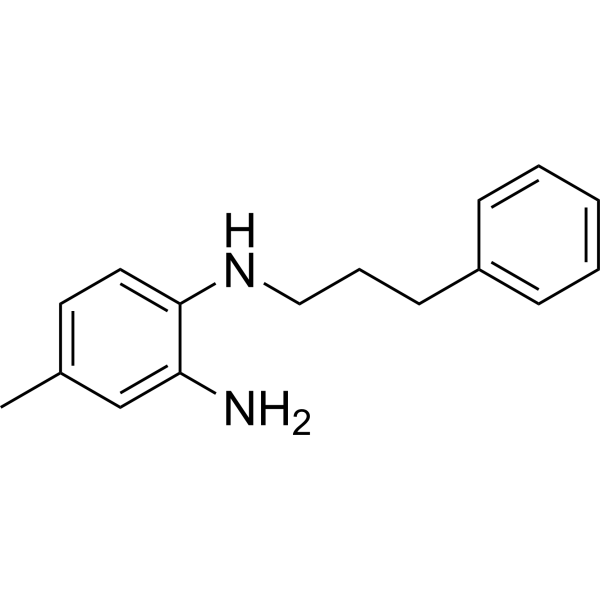
HY-13982
JSH-23NF-κB Inhibitor -
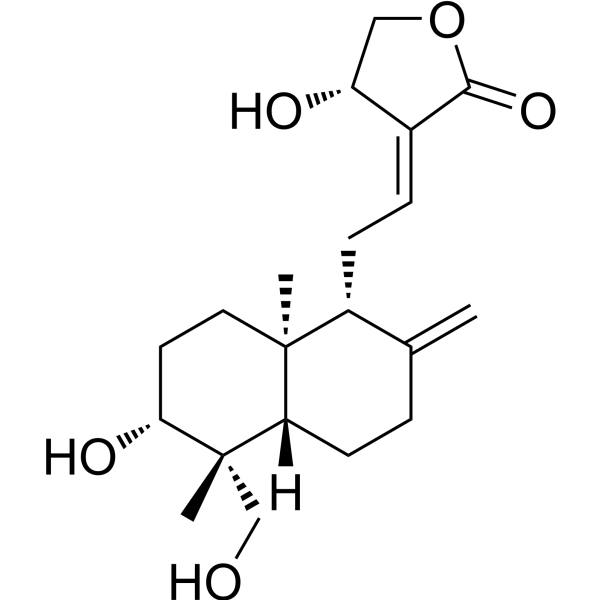
HY-N0191
AndrographolideNF-κB Inhibitor -
HY-N0510
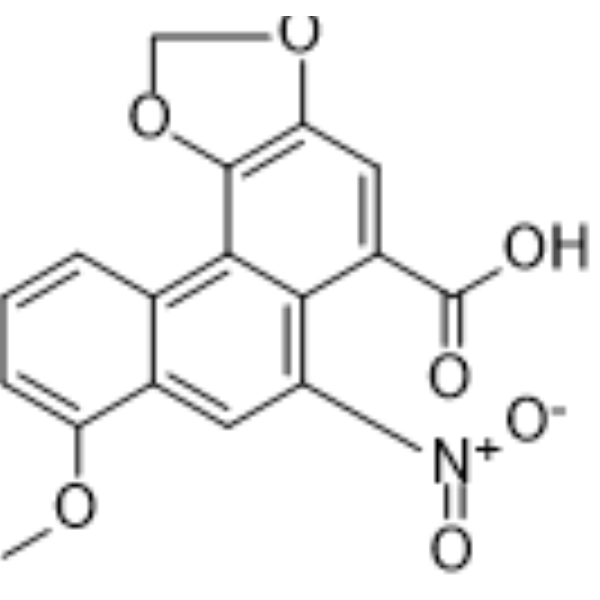
Aristolochic acid ANF-κB Inhibitor -
HY-N2065
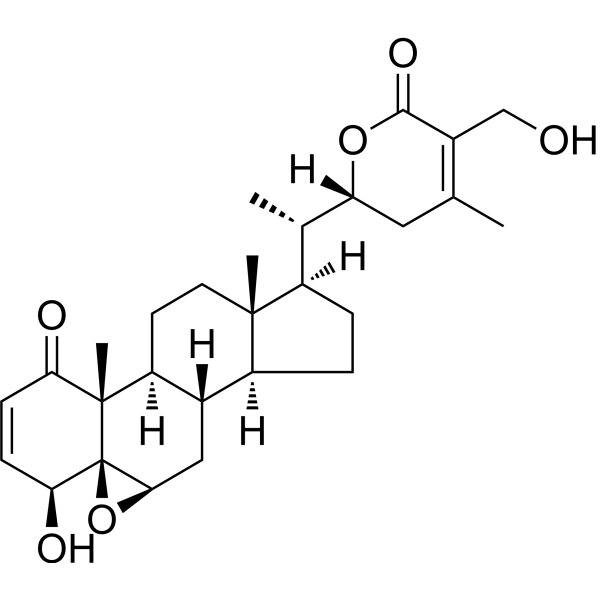
Withaferin ANF-κB Inhibitor -
HY-N0170
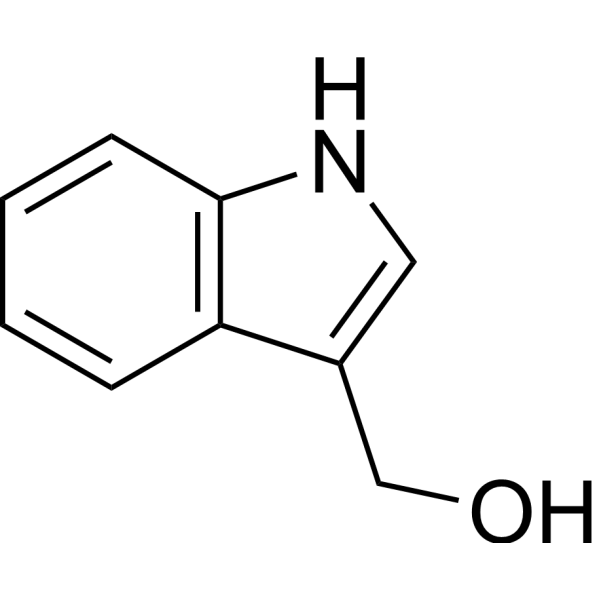
Indole-3-carbinolEndogenous Metabolite -
HY-N0441
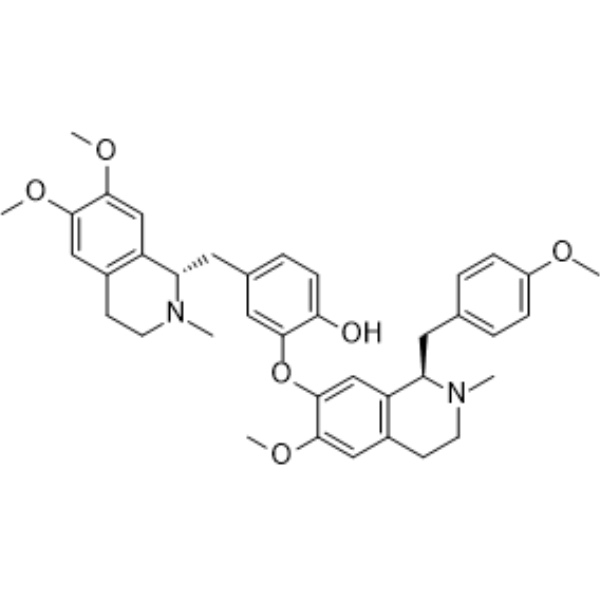
NeferineAutophagy Modulator
Publications Citing Use of MedChemExpress (MCE) 4'-Methoxyresveratrol
More

Biological Activity
제품 설명
IC50 & Target
|
NLRP3 |
Cellular Effect
|
Cell Line

|
Type | Value | Description | References |
|---|---|---|---|---|
| BXPC-3 | GI50 |
6.3 μg/mL
Compound: 14l
|
In vitro growth inhibition of BXPC-3 (human pancreatic adenocarcinoma) cell line.
In vitro growth inhibition of BXPC-3 (human pancreatic adenocarcinoma) cell line.
|
[PMID: 12036362] |
| Caco-2 | IC50 |
>30 μM
Compound: 13
|
Cytotoxicity against human Caco-2 cells after 3 days by [3H]thymidine incorporation assay
Cytotoxicity against human Caco-2 cells after 3 days by [3H]thymidine incorporation assay
|
[PMID: 20627379] |
| DU-145 | GI50 |
2.7 μg/mL
Compound: 14l
|
In vitro growth inhibition of DU-145 (human prostate carcinoma) cell line.
In vitro growth inhibition of DU-145 (human prostate carcinoma) cell line.
|
[PMID: 12036362] |
| HT-29 | IC50 |
24.5 μM
Compound: 13
|
Cytotoxicity against human HT-29 cells after 3 days by [3H]thymidine incorporation assay
Cytotoxicity against human HT-29 cells after 3 days by [3H]thymidine incorporation assay
|
[PMID: 20627379] |
| KM-20L2 | GI50 |
3.8 μg/mL
Compound: 14l
|
In vitro growth inhibition of KM20L2 cell line.
In vitro growth inhibition of KM20L2 cell line.
|
[PMID: 12036362] |
| MCF7 | GI50 |
3.4 μg/mL
Compound: 14l
|
Cell growth inhibition of breast MCF-7 cells, expressed as 50% reduction in the net protein increase
Cell growth inhibition of breast MCF-7 cells, expressed as 50% reduction in the net protein increase
|
[PMID: 12036362] |
| MDA-MB-231 | IC50 |
>50 μM
Compound: 1
|
Inhibitory concentration required for antiproliferative activity against human MDA-MB-231 cells
Inhibitory concentration required for antiproliferative activity against human MDA-MB-231 cells
|
[PMID: 16250636] |
| NCI-H460 | GI50 |
6.8 μg/mL
Compound: 14l
|
In vitro growth inhibition of NCI-H460 (human non-small cell lung carcinoma) cell line.
In vitro growth inhibition of NCI-H460 (human non-small cell lung carcinoma) cell line.
|
[PMID: 12036362] |
| P388 | ED50 |
28.9 μg/mL
Compound: 14l
|
In vitro inhibition of P388 (murine leukemia) cell proliferation.
In vitro inhibition of P388 (murine leukemia) cell proliferation.
|
[PMID: 12036362] |
| Platelet | IC50 |
119.14 μg
Compound: 3a
|
Inhibition of adenosine diphosphate-induced platelet aggregation in human platelet-rich plasma
Inhibition of adenosine diphosphate-induced platelet aggregation in human platelet-rich plasma
|
[PMID: 9392877] |
| Platelet | IC50 |
12.9 μg
Compound: 3a
|
Inhibition of collagen-induced platelet aggregation in human platelet-rich plasma
Inhibition of collagen-induced platelet aggregation in human platelet-rich plasma
|
[PMID: 9392877] |
| SF-268 | GI50 |
3.1 μg/mL
Compound: 14l
|
In vitro growth inhibition of central nervous system SF-268 cell line.
In vitro growth inhibition of central nervous system SF-268 cell line.
|
[PMID: 12036362] |


Chemical Information
-
CAS No. 33626-08-3
-
Appearance Solid
-
분자량 242.27
-
화학식 C15H14O3
-
Color White to off-white
-
SMILES
OC1=CC(O)=CC(/C=C/C2=CC=C(OC)C=C2)=C1
-
Synonyms
4'-O-Methylresveratrol
-
Structure Classification
-
Initial Source
-
선적
Room temperature in continental US; may vary elsewhere.
-
보관
4°C, protect from light
* In solvent : -80°C, 6 months; -20°C, 1 month (protect from light)


Publications (1)
-
Journal Impact Factor
-
Most Recent


용액&용해도
In Vitro:
DMSO : 50 mg/mL (206.38 mM; Need ultrasonic; Hygroscopic DMSO has a significant impact on the solubility of product, please use newly opened DMSO)
Please refer to the solubility information to select the appropriate solvent. Once prepared, please aliquot and store the solution to prevent product inactivation from repeated freeze-thaw cycles.
Storage method and period of stock solution: -80°C, 6 months; -20°C, 1 month (protect from light). When stored at -80°C, please use it within 6 months. When stored at -20°C, please use it within 1 month.
Please refer to the solubility information to select the appropriate solvent. Once prepared, please aliquot and store the solution to prevent product inactivation from repeated freeze-thaw cycles.
Storage method and period of stock solution: -80°C, 6 months; -20°C, 1 month (protect from light). When stored at -80°C, please use it within 6 months. When stored at -20°C, please use it within 1 month.
Concentration (start) × Volume (start) = Concentration (final) × Volume (final)
In Vivo:
Select the appropriate dissolution method based on your experimental animal and administration route.
- For the following dissolution methods, please ensure to first prepare a clear stock solution using an In Vitro approach and then sequentially add co-solvents:
- To ensure reliable experimental results, the clarified stock solution can be appropriately stored based on storage conditions. As for the working solution for In Vivo experiments, it is recommended to prepare freshly and use it on the same day.
- The percentages shown for the solvents indicate their volumetric ratio in the final prepared solution. If precipitation or phase separation occurs during preparation, heat and/or sonication can be used to aid dissolution.
Add each solvent one by one: 10% DMSO 90% (20% SBE-β-CD in Saline)
Solubility: ≥ 2.5 mg/mL (10.32 mM); Clear solution
This protocol yields a clear solution of ≥ 2.5 mg/mL (saturation unknown).
Taking 1 mL working solution as an example, add 100 μL DMSO stock solution (25.0 mg/mL) to 900 μL 20% SBE-β-CD in Saline, and mix evenly.
Preparation of 20% SBE-β-CD in Saline (4°C, storage for one week): 2 g SBE-β-CD powder is dissolved in 10 mL Saline, completely dissolve until clear.
In Vivo Dissolution Calculator
Please enter the basic information of animal experiments:
-
-
-
-
Recommended: Prepare an additional quantity of animals to account for potential losses during experiments.
Please enter your animal formula composition:
-
%DMSO +
Recommended: Keep the proportion of DMSO in working solution below 2% if your animal is weak.
-
%+
-
+%Tween-80 + +
-
%Saline +
The co-solvents required include: DMSO, . All of co-solvents are available by MedChemExpress (MCE). , Tween 80. All of co-solvents are available by MedChemExpress (MCE).
Working solution concentration: 0.22 mg/mL
Method for preparing stock solution: mg drug dissolved in μL DMSO. Stock solution concentration: mg/mL. * In solvent : -80°C, 6 months; -20°C, 1 month (protect from light)
1. Take μL DMSO stock solution;
2. Add μL .
μL , mix evenly;
3. Then add μL Tween 80, mix evenly;
4. Then add μL
Please ensure that the stock solution in the first step is dissolved to a clear state, and add co-solvents in sequence. You can use ultrasonic heating (ultrasonic cleaner, recommended frequency 20-40 kHz), vortexing, etc. to assist dissolution.


순도&문서
-
Data Sheet (270 KB)
-
SDS (392 KB)
- English - EN (392 KB)
- Français - FR (392 KB)
- Deutsch - DE (392 KB)
- Norwegian - NO (392 KB)
- Español - ES (392 KB)
- Swedish - SV (392 KB)
- Italian - IT (392 KB)
- Korean - KR (392 KB)
- Portuguese - PT (392 KB)
-
Handling Instructions (2659 KB)
References


Complete Stock Solution Preparation Table
Please refer to the solubility information to select the appropriate solvent. Once prepared, please aliquot and store the solution to prevent product inactivation from repeated freeze-thaw cycles.
Storage method and period of stock solution: -80°C, 6 months; -20°C, 1 month (protect from light). When stored at -80°C, please use it within 6 months. When stored at -20°C, please use it within 1 month.
| Optional Solvent | Concentration Solvent Mass | 1 mg | 5 mg | 10 mg | 25 mg |
|---|---|---|---|---|---|
| DMSO | 1 mM | 4.1276 mL | 20.6381 mL | 41.2763 mL | 103.1907 mL |
| 5 mM | 0.8255 mL | 4.1276 mL | 8.2553 mL | 20.6381 mL | |
| 10 mM | 0.4128 mL | 2.0638 mL | 4.1276 mL | 10.3191 mL | |
| 15 mM | 0.2752 mL | 1.3759 mL | 2.7518 mL | 6.8794 mL | |
| 20 mM | 0.2064 mL | 1.0319 mL | 2.0638 mL | 5.1595 mL | |
| 25 mM | 0.1651 mL | 0.8255 mL | 1.6511 mL | 4.1276 mL | |
| 30 mM | 0.1376 mL | 0.6879 mL | 1.3759 mL | 3.4397 mL | |
| 40 mM | 0.1032 mL | 0.5160 mL | 1.0319 mL | 2.5798 mL | |
| 50 mM | 0.0826 mL | 0.4128 mL | 0.8255 mL | 2.0638 mL | |
| 60 mM | 0.0688 mL | 0.3440 mL | 0.6879 mL | 1.7198 mL | |
| 80 mM | 0.0516 mL | 0.2580 mL | 0.5160 mL | 1.2899 mL | |
| 100 mM | 0.0413 mL | 0.2064 mL | 0.4128 mL | 1.0319 mL |


4'-Methoxyresveratrol Related Classifications
HY-N2485 Related Classifications
 Powered by Bioz