41 Results for "

6-OHDA

" in MedChemExpress (MCE) Product Catalog:
Products (41)

41 Results for "6-OHDA" in MCE Product Catalog:

41
41 Publications Verification
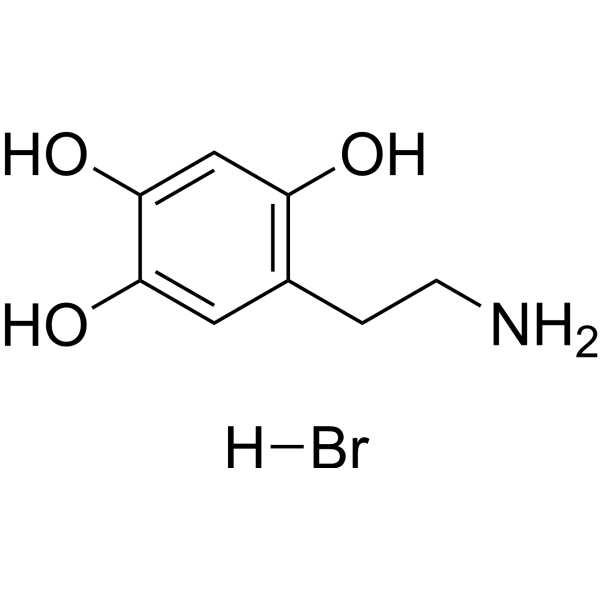
Cat. No.: HY-B1081A
CAS No.: 636-00-0
Synonyms: 6-Hydroxydopamine hydrobromide; 6-OHDA hydrobromide
Oxidopamine (6-OHDA) hydrobromide is an antagonist of the neurotransmitter dopamine. Oxidopamine hydrobromide is a widely used neurotoxin and selectively destroys dopaminergic neurons. Oxidopamine hydrobromide promotes COX-2 activation, leading to PGE2 synthesis and pro-inflammatory cytokine IL-1β secretion. Oxidopamine hydrobromide can be used for the research of Parkinson’s disease (PD), attention-deficit hyperactivity disorder (ADHD), and Lesch-Nyhan syndrome .
41
41 Publications Verification
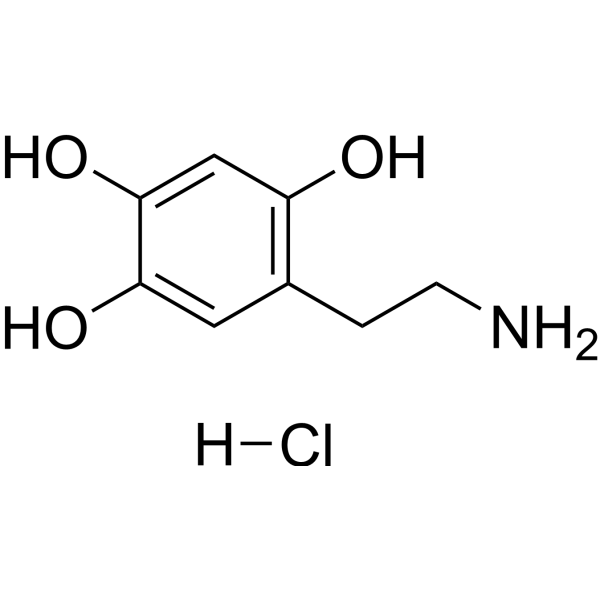
Cat. No.: HY-B1081
CAS No.: 28094-15-7
Synonyms: 6-Hydroxydopamine Hydrochloride
Oxidopamine (6-OHDA) hydrochloride is an antagonist of the neurotransmitter dopamine. Oxidopamine hydrochloride is a widely used neurotoxin and selectively destroys dopaminergic neurons. Oxidopamine hydrochloride promotes COX-2 activation, leading to PGE2 synthesis and pro-inflammatory cytokine IL-1β secretion. Oxidopamine hydrochloride can be used for the research of Parkinson’s disease (PD), attention-deficit hyperactivity disorder (ADHD), and Lesch-Nyhan syndrome .
4
4 Cited Publications
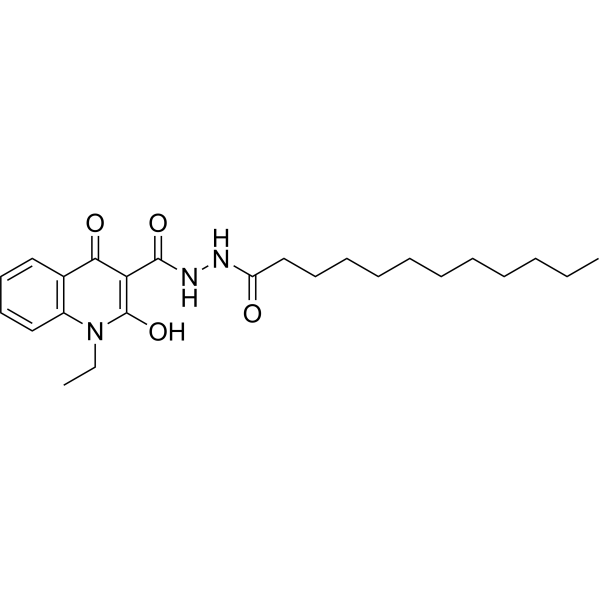
Cat. No.: HY-153089
CAS No.: 331963-27-0
Purity:  98.80%
Target:  

GSK-3 Mitophagy

Research Areas:  

Neurological Disease

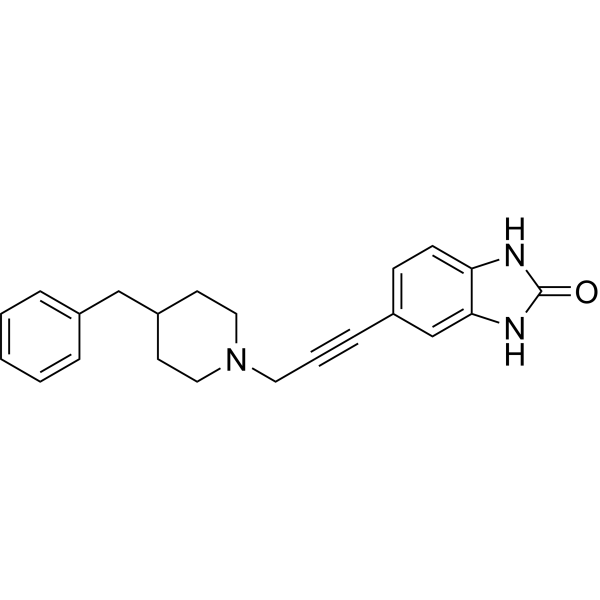
GSK3-IN-3 is a mitophagy inducer, inducing Parkin-dependent mitophagy. GSK3-IN-3 is also a GSK-3 inhibitor with an IC50 value of 3.01 μM. GSK3-IN-3 is non-ATP nor substrate competitive and is neuroprotective against 6-OHDA .
2
2 Cited Publications
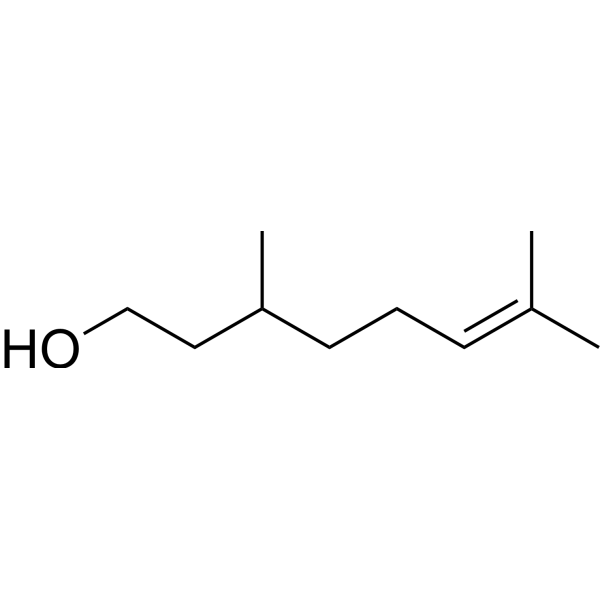
Cat. No.: HY-W010201
CAS No.: 106-22-9
Synonyms: (±)-Citronellol; (±)-β-Citronellol
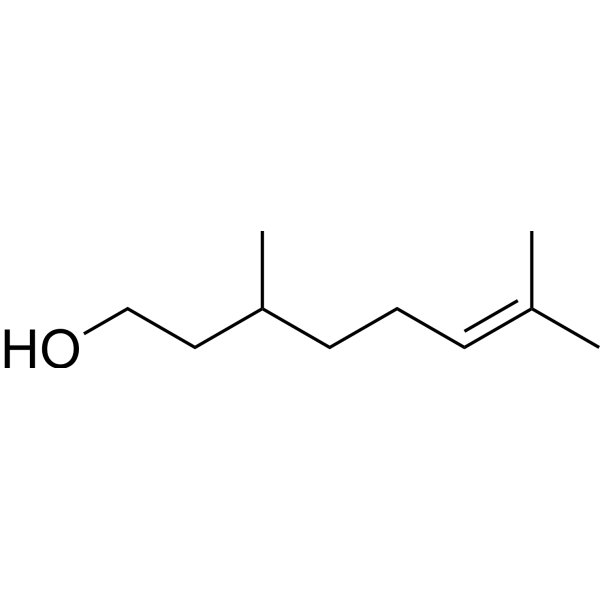
Citronellol ((±)-Citronellol) is an orally active inducer of apoptosis. Citronellol can prevent oxidative stress, mitochondrial dysfunction, and apoptosis in the SH-SY5Y cell Parkinson's disease model induced by 6-OHDA by regulating the ROS-NO, MAPK/ERK, and PI3K/Akt signaling pathways. Citronellol can induce necroptosis in human lung cancer cells through the TNF-α pathway and accumulation of ROS. Citronellol can reduce the levels of LC-3 and p62 to regulate the autophagy pathway, inhibit oxidative stress and neuroinflammation, and thus have neuroprotective effects on Parkinson's rats. Citronellol exhibits anti-fungal activity against Trichophyton rubrum by inhibiting ergosterol synthesis [6] .
2
2 Cited Publications
Cat. No.: HY-W010201R
CAS No.: 106-22-9
Synonyms: (±)-Citronellol (Standard); (±)-β-Citronellol (Standard)
Citronellol (Standard) is the analytical standard of Citronellol. Citronellol (Standard) is an orally active inducer of apoptosis. Citronellol (Standard) can prevent oxidative stress, mitochondrial dysfunction, and apoptosis in the SH-SY5Y cell Parkinson's disease model induced by 6-OHDA by regulating the ROS-NO, MAPK/ERK, and PI3K/Akt signaling pathways. Citronellol (Standard) can induce necroptosis in human lung cancer cells through the TNF-α pathway and accumulation of ROS. Citronellol (Standard) can reduce the levels of LC-3 and p62 to regulate the autophagy pathway, inhibit oxidative stress and neuroinflammation, and thus have neuroprotective effects on Parkinson's rats. Citronellol (Standard) exhibits anti-fungal activity against Trichophyton rubrum by inhibiting ergosterol synthesis [6] .
1
1 Cited Publications
Cat. No.: HY-131592
CAS No.: 520-31-0
Purity:  97.73%
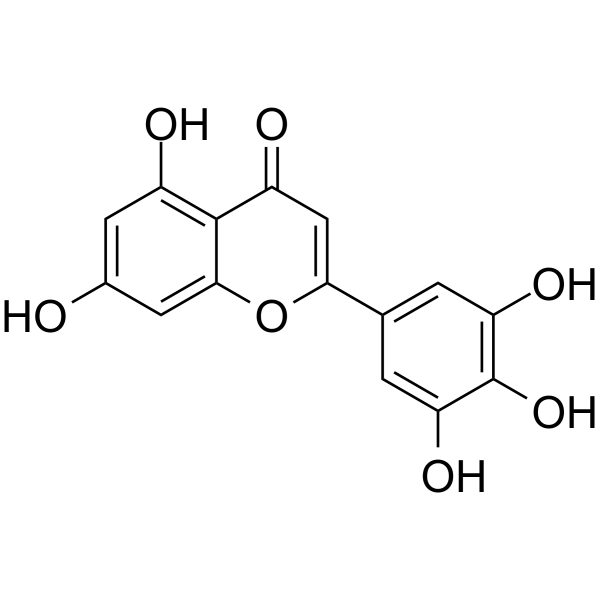
Tricetin is a potent competitive inhibitor of the Keap1-Nrf2 Protein Protein Interaction (PPI). Tricetin protects against 6-OHDA-induced neurotoxicity in Parkinson's disease model by activating Nrf2/HO-1 signaling pathway and preventing mitochondria-dependent apoptosis pathway .
1
1 Cited Publications
Cat. No.: HY-N0909
CAS No.: 80418-25-3
Synonyms: 20(S)-Notoginsenoside R2; Ginsenoside Ng-R2
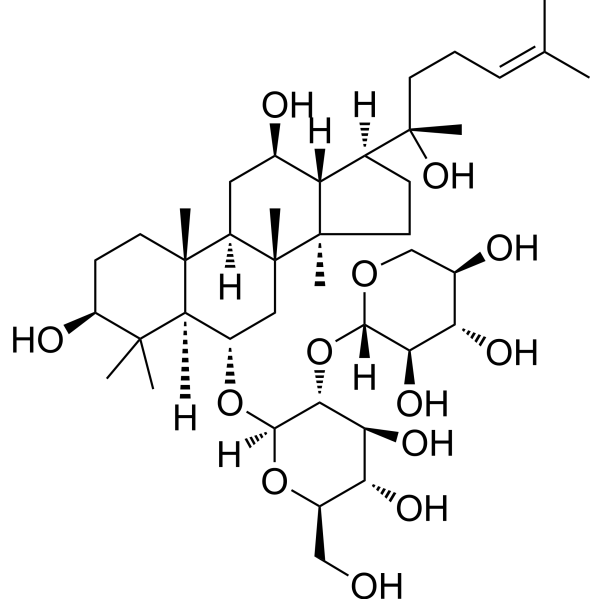
Notoginsenoside R2 (20(S)-Notoginsenoside R2; Ginsenoside Ng-R2) is an orally active notoginsenoside . Notoginsenoside R2 activates P90RSK and Nrf2 via the MEK1/2-ERK1/2 pathway to inhibit 6-OHDA-induced apoptotic damage in nerve cells. Notoginsenoside R2 upregulates SOX8/β-catenin by reducing miR-27a, thereby suppressing Aβ25-35-induced neuronal apoptosis and inflammatory responses . Notoginsenoside R2 alleviates lipid accumulation and mitochondrial dysfunction in diabetic nephropathy by inhibiting c-Src. Notoginsenoside R2 alleviates hepatic fibrosis by inducing hepatic stellate cell senescence and inhibiting the inflammatory microenvironment via JAK/STAT3 suppression . Notoginsenoside R2 can be used in research related to Parkinson's disease, Alzheimer's disease, diabetic nephropathy and hepatic fibrosis .
Cat. No.: HY-N7675
CAS No.: 577-38-8
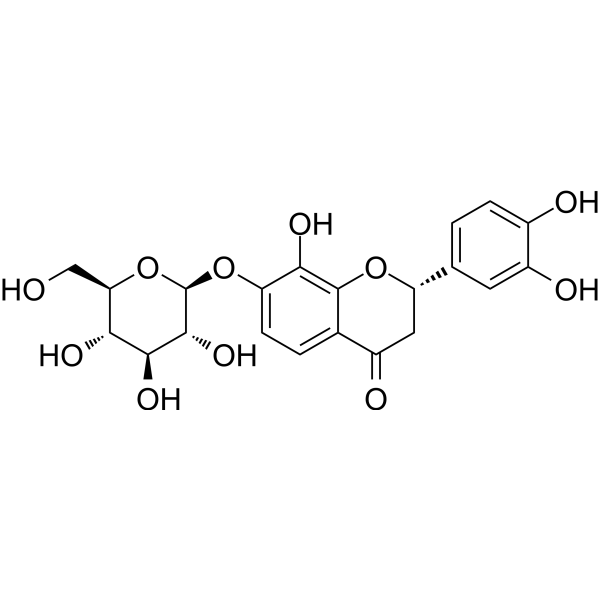
Flavanomarein is a substance with cytoprotective, anti-inflammatory and antioxidant activities, with a Ka of 3.064e-5 M against human Syk. Flavanomarein enhances the phosphorylation level of AKT, regulates the expression of PKC-δ, P85α, PKC-β1, Sirt1, Bcl-2 and ICAD, and inhibits the nuclear translocation of NF-κB p65. Flavanomarein regulates EMT marker proteins, promotes the proliferation of HK-2 cells, and protects neuronal cells from 6-OHDA-induced neurotoxic damage. Flavanomarein can be used in studies related to Parkinson's disease and diabetic nephropathy.
Cat. No.: HY-122958
CAS No.: 130464-57-2
Purity:  95.07%
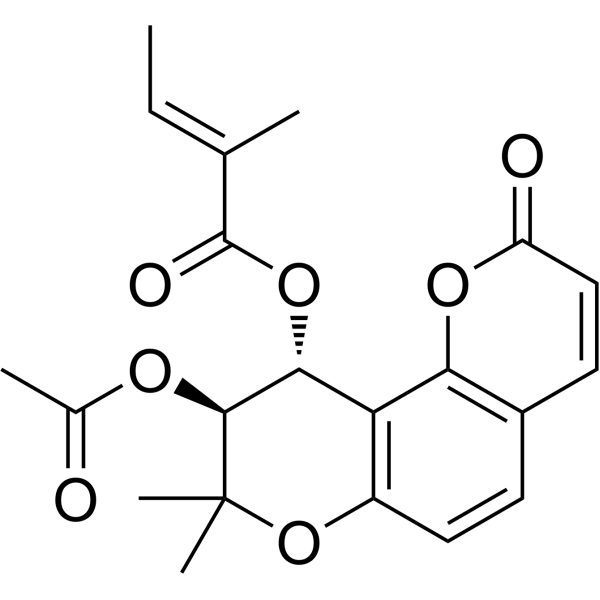
Peucedanocoumarin III is an α-synuclein fiber depolymerizer with blood-brain barrier permeability. Peucedanocoumarin III depolymerizes β-sheet aggregate structures, promotes aggregate clearance, inhibits β23-induced cytotoxicity, blocks the formation of Lewy body-like inclusions, and prevents dopaminergic neuron loss. Peucedanocoumarin III can be used in studies related to Parkinson's disease .
Cat. No.: HY-126975
CAS No.: 1347760-82-0
Purity:  99.14%
Research Areas:  

Inflammation/Immunology Cancer

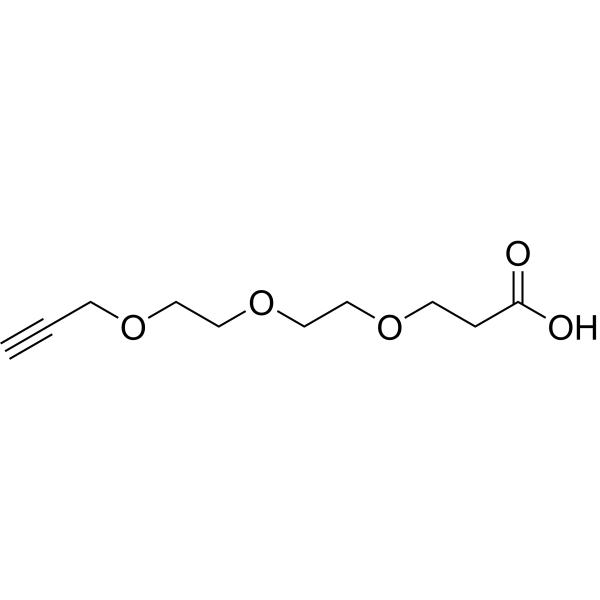
Propargyl-PEG3-acid is a non-cleavable (3 unit PEG) ADC linker and also a PEG-based PROTAC linker that can be used to synthesis 6-OHDA-PEG3-yne. 6-OHDA-PEG3-yne contains 6-OHDA (HY-B1081, HY-B1081A) and Propargyl-PEG3-acid . Propargyl-PEG3-acid is a click chemistry reagent, it contains an Alkyne group and can undergo copper-catalyzed azide-alkyne cycloaddition (CuAAc) with molecules containing Azide groups.
Cat. No.: HY-107707
CAS No.: 302799-86-6
Purity:  99.84%
Target:  

iGluR

Research Areas:  

Neurological Disease

TCS 46b (Compound 46b) is a potent, selective and orally active NMDA NR1A/2B receptor antagonist with an IC50 of 5.3 nM . TCS 46b is a click chemistry reagent, it contains an Alkyne group and can undergo copper-catalyzed azide-alkyne cycloaddition (CuAAc) with molecules containing Azide groups.
Cat. No.: HY-W628136
CAS No.: 67082-01-3
Target:  

Monoamine Oxidase

Research Areas:  

Neurological Disease

MAO-B-IN-47 is a selective monoamine oxidase B (MAO-B) inhibitor with a Ki of 875 nM. MAO-B-IN-47 shows an IC50 >100 μM for SH-SY5Y cells. MAO-B-IN-47 shows neuroprotective effect in 6-OHDA-treated SH-SY5Y cells. MAO-B-IN-47 can be used for the research of neurological disease, such as Parkinson’s disease (PD) .
Cat. No.: HY-P991380

Target:  

Transferrin Receptor

Research Areas:  

Neurological Disease

TXB4 is a brain-permeable human monoclonal antibody (mAb) targeting CD71. TXB4 prevents 6-OHDA-induced death of TH-positive neurons in the SNc in a 6-OHDA mouse model of Parkinson's disease (PD). TXB4 can be used in neurodegenerative diseases, acute brain and spinal cord injury, and depression research .
Cat. No.: HY-N16649
CAS No.: 2365501-63-7
Clausenalansine B (Compound 2) is a carbazole alkaloid found in the fruits of Clausena lansium. Clausenalansine B exhibits potent neuroprotective effects. Clausenalansine B prevents SH-SY5Y cells death from 6-OHDA (HY-B1081A) with an EC50 of 5.82 μM. Clausenalansine B can be used for the research of neurological disease, such as Parkinson’s disease .
Cat. No.: HY-156972
CAS No.: 2099681-43-1
Target:  

Opioid Receptor

Research Areas:  

Metabolic Disease

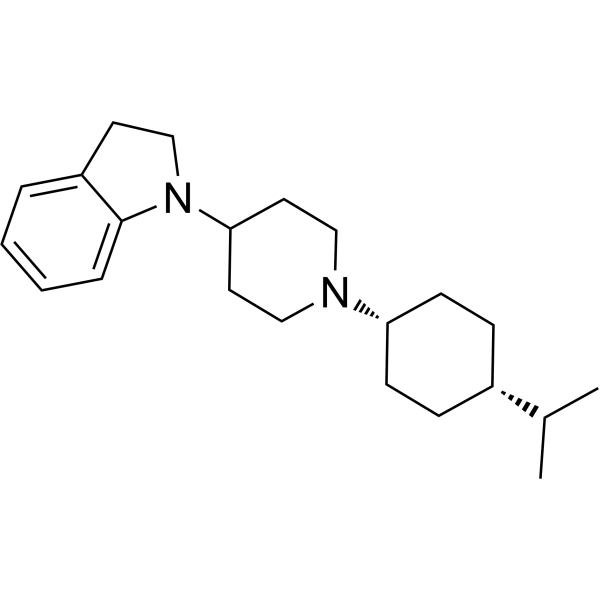
NOP agonist-1(compound 4) is a nociceptin opioid receptor (NOP) partial agonist. NOP agonist-1attenuate parkinsonian disabilities in 6-OHDA hemilesioned rats .
Cat. No.: HY-125693
CAS No.: 143839-74-1
Target:  

Fungal

Research Areas:  

Infection Neurological Disease

L685818 is a specific immunophilin ligand. L685818 was neuroregenerative and non-neuroprotective in primary brain cultures. L685818 protects dopaminergic neurons from toxic inhibition of MPP+ and 6-OHDA, reduces tyrosine hydroxylase (TH) loss, and promotes neuronal process regeneration. L685818 is also an antifungal reagent for Cryptococcus neoformans .
Cat. No.: HY-N15190
CAS No.: 74061-79-3
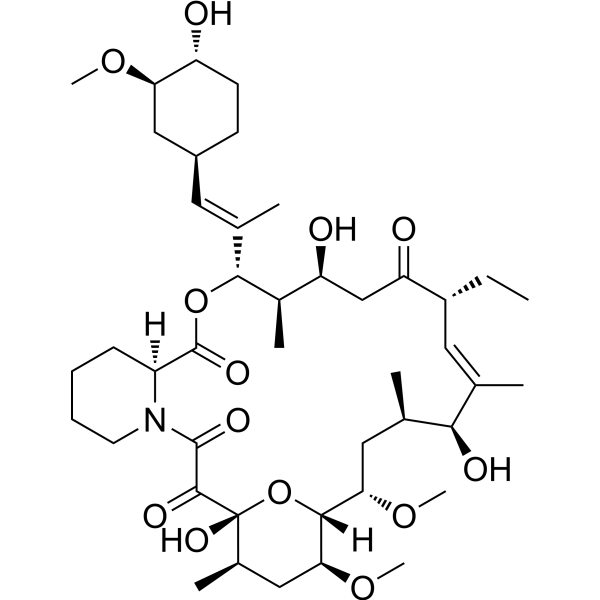
Sesaminol is an orally active activator for Nrf2-ARE pathway, that promotes the the nuclear translocation of Nrf2 and enhances the NQO1 expression, thereby enhances the cell's defense against oxidative stress. Sesaminol inhibits 6-OHDA (HY-B1081)-induced ROS production and apoptosis in cell SH-SY5Y. Sesaminol exhibits neuroprotective efficacy against Rotenone (HY-B1756)-induced Parkinson's disease .
Cat. No.: HY-P11124
CAS No.: 1611488-66-4
MGF24 is a modified protease-resistant MGF derivative. MGF24 protects dopaminergic neurons from 6-Hydroxydopamine (6-OHDA) (HY-113028)-induced apoptosis by inducing Heme oxygenase-1 (HO-1). MGF24 activates PKC-ε, which in turn activates Nrf2, up-regulating HO-1. MGF24 has neuroprotective activity and reduces myocardial infarct size in sheep models of myocardial ischemia. MGF24 can be used for neurological diseases like stroke, nerve injury and amyotrophic lateral sclerosis research .
Cat. No.: HY-N7990
CAS No.: 160669-23-8
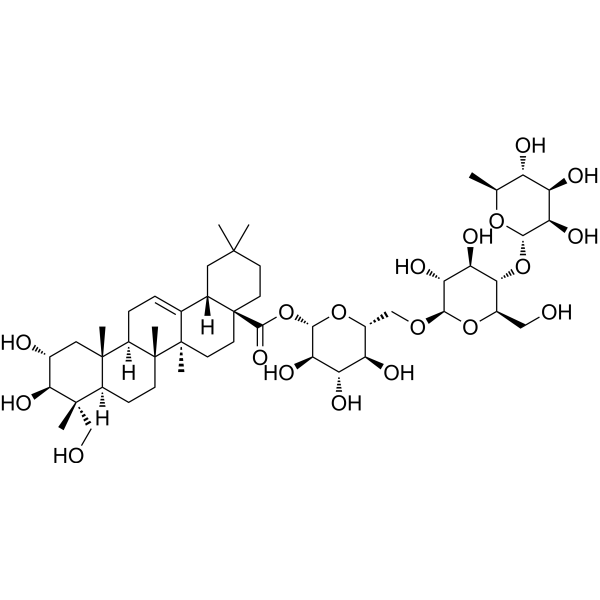
Scheffoleoside A is a neuroprotective agent can be derived from Centella asiatica. Scheffoleoside A exhibits moderate activity in inhibiting 6-OHDA-induced cytotoxicity .
Cat. No.: HY-106652
CAS No.: 224450-56-0
SUN-N8075 dimethanesulfonate is a radical scavenger with antioxidant and neuroprotective effect. SUN-N8075 dimethanesulfonate can inhibit apoptosis and ROS production. SUN-N8075 dimethanesulfonate can protect against 6-OHDA (HY-B1081)-induced cell death. SUN-N8075 dimethanesulfonate can be used for the research of neurological disease, such as Parkinson's disease .

