



Carteolol hydrochloride
Based on 2 publication(s) in Google Scholar
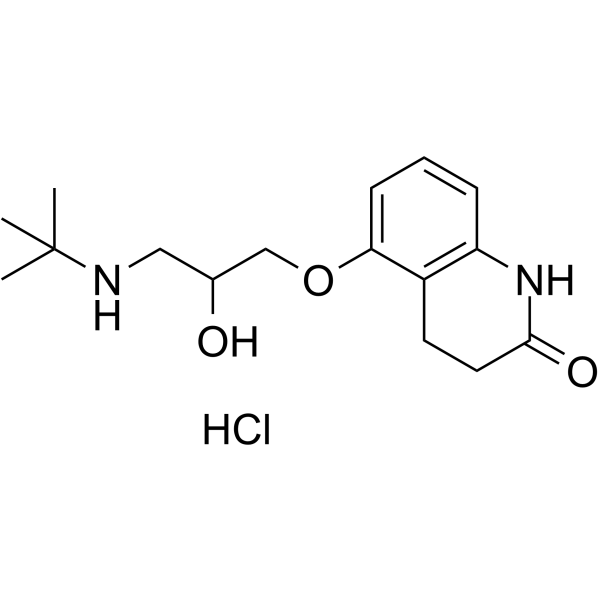
Carteolol hydrochloride (OPC-1085 hydrochloride) is a non-selective beta blocker used to treat glaucoma.
For research use only. We do not sell to patients.
- Purity : 99.56%
- CAS No.: 51781-21-6
- Formula: C16H25ClN2O3
- Molecular Weight:328.83
-
Storage:
4°C, sealed storage, away from moisture
* In solvent : -80°C, 6 months; -20°C, 1 month (sealed storage, away from moisture)

To place orders, for customer services and technical support, please contact: MedChemExpress USA
Tel: 609-228-6898 E-mail: [email protected] [email protected]


-
 Biological Activity
-
Chemical Information
-
Solvent & Solubility
- Purity & Documentation
- References
-
 Help & FAQs


-

HY-17495AR
Carteolol hydrochloride (Standard)Adrenergic Receptor Antagonist -
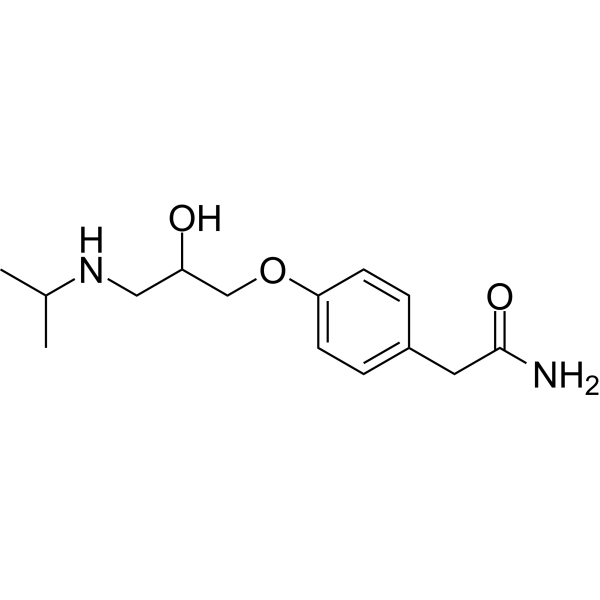
HY-17498
Atenololβ1-Adrenergic Receptor Blocker -
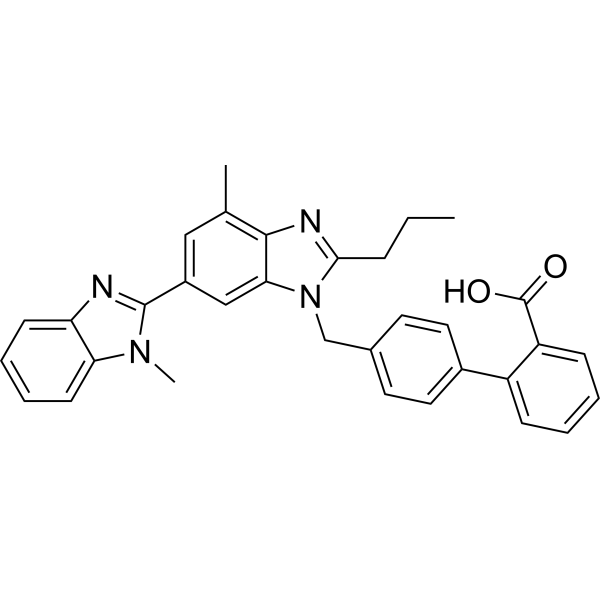
HY-13955
TelmisartanAngiotensin II Type 1 Receptor -
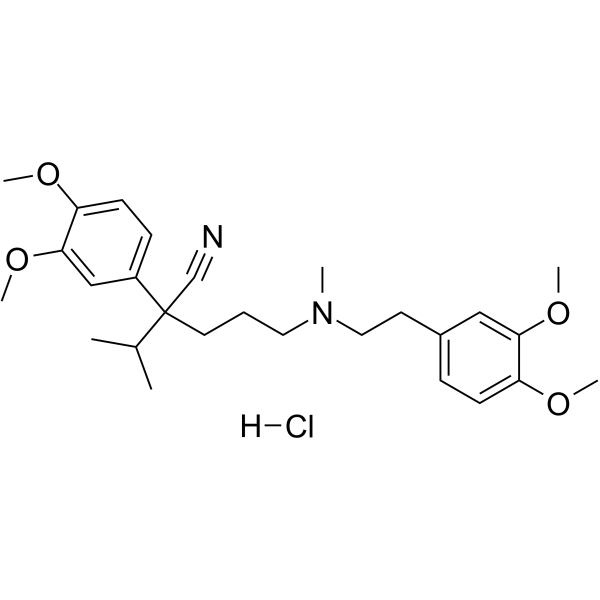
HY-A0064
Verapamil hydrochlorideCalcium Channel Blocker -
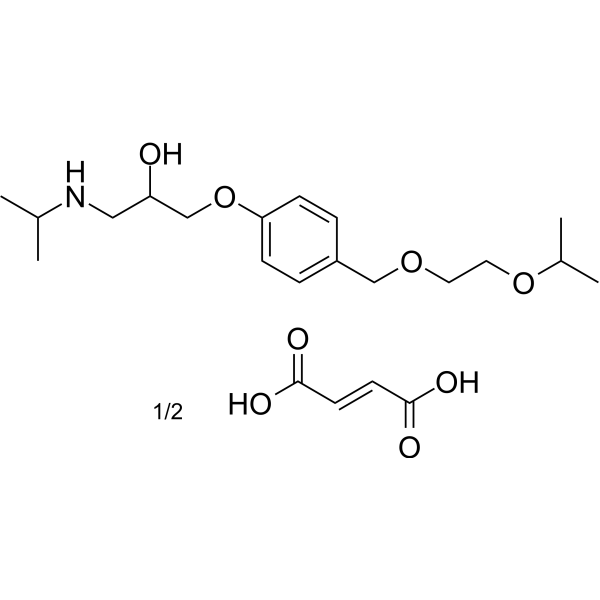
HY-B0076
Bisoprolol hemifumarateβ1-Receptor Blocker -
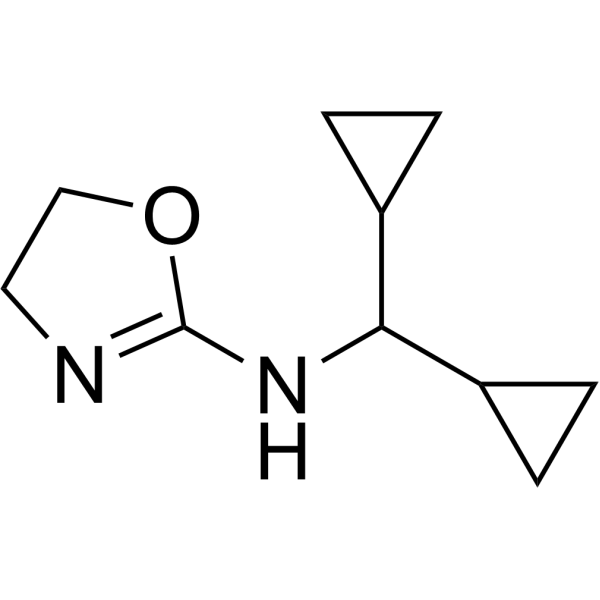
HY-100490
RilmenidineI1 Imidazoline Receptor/α2-Adrenoceptor Agonist -
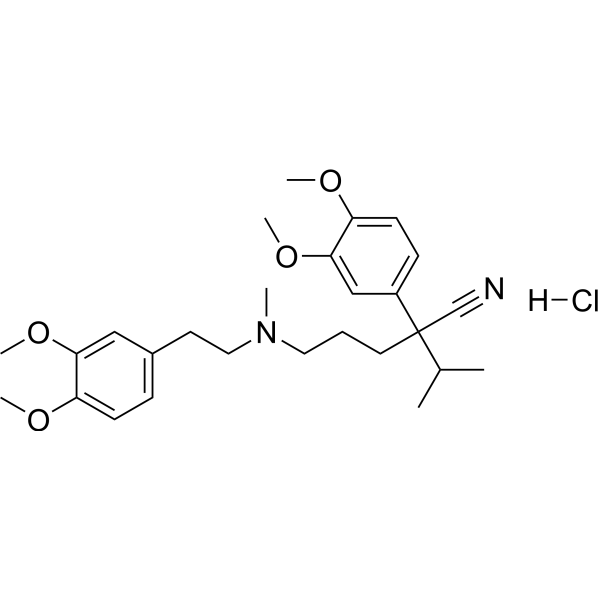
HY-A0064R
Verapamil hydrochloride (Standard)Calcium Channel Blocker -
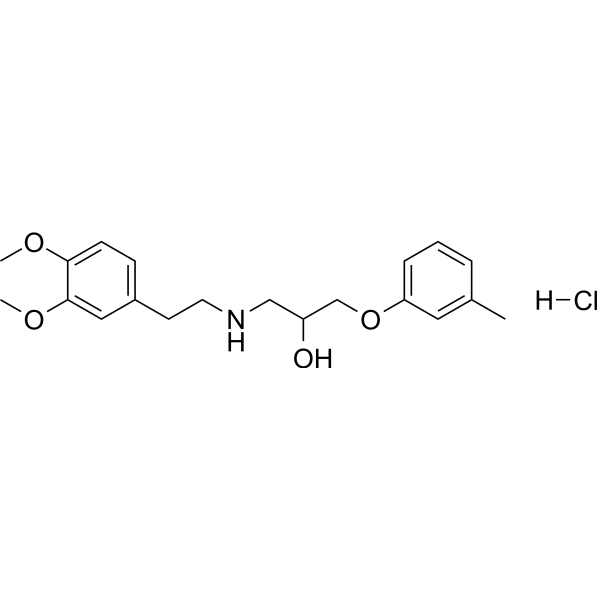
HY-121186
Bevantolol hydrochlorideβ1-adrenergic Receptor Inhibitor -

HY-100490R
Rilmenidine (Standard)I1 Imidazoline Receptor/α2-Adrenoceptor Agonist -
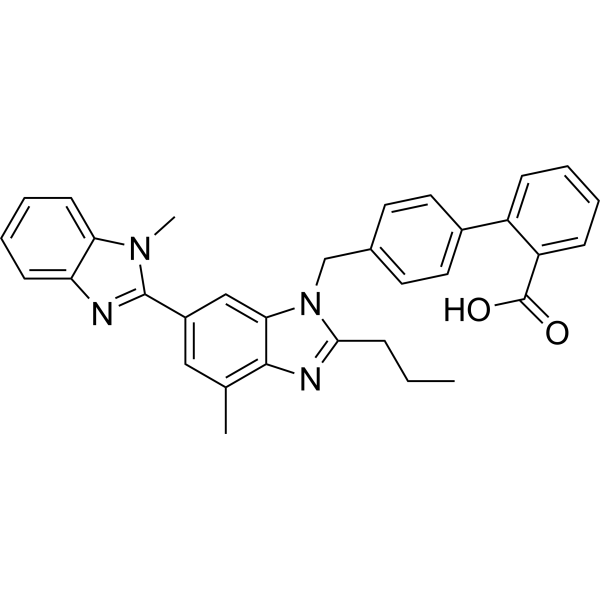
HY-13955R
Telmisartan (Standard)Angiotensin II Type 1 Receptor -

HY-121186R
Bevantolol hydrochloride (Standard)Reference Standard
Publications Citing Use of MedChemExpress (MCE) Carteolol hydrochloride
MoreAll Adrenergic Receptor Isoforms
More

Biological Activity
Description
IC50 & Target
Beta adrenergic Receptor
In Vitro
Carteolol HCl is a beta-adrenergic antagonist used as an anti-arrhythmia agent, an anti-angina agent, an antihypertensive agent, and an antiglaucoma agent. Carteolol hydrochloride at 1 mmol/L (P<0.05) significantly inhibited H2O2-induced cell damage and was able to scavenge O2 (EC50 value: 48 mmol/L). carteolol hydrochloride has a protective action against UVB-induced HCEC damage, and its radical scavenging ability may be an important basis for this effect [1]. The new alginate formulation of long-acting carteolol 1% given once daily is as effective as standard 1% carteolol given twice daily, with no meaningful differences regarding safety. This efficacy wasy was verified at 9 AM (24 hours after the last drop of long-acting carteolol or 12 hours after that of standard carteolol) and at 11 AM (2 hours after the morning drop). The new alginate formulation of long-acting carteolol 1% given once a day is effective and well tolerated by glaucoma patients who require chronic treatment [2].
MedChemExpress (MCE) has not independently confirmed the accuracy of these methods. They are for reference only. .


Chemical Information
-
CAS No. 51781-21-6
-
Appearance Solid
-
Molecular Weight 328.83
-
Formula C16H25ClN2O3
-
Color White to off-white
-
SMILES
O=C1NC2=C(C(OCC(O)CNC(C)(C)C)=CC=C2)CC1.Cl
-
Synonyms
OPC-1085 hydrochloride
-
Shipping
Room temperature in continental US; may vary elsewhere.
-
Storage
4°C, sealed storage, away from moisture
* In solvent : -80°C, 6 months; -20°C, 1 month (sealed storage, away from moisture)


Publications (2)
-
Journal Impact Factor
-
Most Recent
-
ACS Omega
Computational and Experimental Approaches Identify Beta-Blockers as Potential SARS-CoV-2 Spike Inhibitors. [Abstract]2022 Aug 8;7(32):27950-27958. PMID: 35983371 -
J Pharm Biomed Anal
Screening method of mildronate and over 300 doping agents by reversed-phase liquid chromatography-high resolution mass spectrometry. [Abstract]2021 Feb 20:195:113870. PMID: 33453569


Solvent & Solubility
In Vitro:
DMSO : 50 mg/mL (152.05 mM; ultrasonic and warming and heat to 60°C; Hygroscopic DMSO has a significant impact on the solubility of product, please use newly opened DMSO)
H2O : ≥ 25 mg/mL (76.03 mM)
* "≥" means soluble, but saturation unknown.
Please refer to the solubility information to select the appropriate solvent. Once prepared, please aliquot and store the solution to prevent product inactivation from repeated freeze-thaw cycles.
Storage method and period of stock solution: -80°C, 6 months; -20°C, 1 month (sealed storage, away from moisture). When stored at -80°C, please use it within 6 months. When stored at -20°C, please use it within 1 month.
* Note: If you choose water as the stock solution, please dilute it to the working solution, then filter and sterilize it with a 0.22 μm filter before use.
Please refer to the solubility information to select the appropriate solvent. Once prepared, please aliquot and store the solution to prevent product inactivation from repeated freeze-thaw cycles.
Storage method and period of stock solution: -80°C, 6 months; -20°C, 1 month (sealed storage, away from moisture). When stored at -80°C, please use it within 6 months. When stored at -20°C, please use it within 1 month.
* Note: If you choose water as the stock solution, please dilute it to the working solution, then filter and sterilize it with a 0.22 μm filter before use.
Concentration (start) × Volume (start) = Concentration (final) × Volume (final)
In Vivo:
Select the appropriate dissolution method based on your experimental animal and administration route.
- For the following dissolution methods, please ensure to first prepare a clear stock solution using an In Vitro approach and then sequentially add co-solvents:
- To ensure reliable experimental results, the clarified stock solution can be appropriately stored based on storage conditions. As for the working solution for In Vivo experiments, it is recommended to prepare freshly and use it on the same day.
- The percentages shown for the solvents indicate their volumetric ratio in the final prepared solution. If precipitation or phase separation occurs during preparation, heat and/or sonication can be used to aid dissolution.
Add each solvent one by one: 10% DMSO 40% PEG300 5% Tween-80 45% Saline
Solubility: ≥ 3 mg/mL (9.12 mM); Clear solution
This protocol yields a clear solution of ≥ 3 mg/mL (saturation unknown).
Taking 1 mL working solution as an example, add 100 μL DMSO stock solution (30.0 mg/mL) to 400 μL PEG300, and mix evenly; then add 50 μL Tween-80 and mix evenly; then add 450 μL Saline to adjust the volume to 1 mL.
Preparation of Saline: Dissolve 0.9 g sodium chloride in ddH₂O and dilute to 100 mL to obtain a clear Saline solution.
Add each solvent one by one: 10% DMSO 90% (20% SBE-β-CD in Saline)
Solubility: ≥ 3 mg/mL (9.12 mM); Clear solution
This protocol yields a clear solution of ≥ 3 mg/mL (saturation unknown).
Taking 1 mL working solution as an example, add 100 μL DMSO stock solution (30.0 mg/mL) to 900 μL 20% SBE-β-CD in Saline, and mix evenly.
Preparation of 20% SBE-β-CD in Saline (4°C, storage for one week): 2 g SBE-β-CD powder is dissolved in 10 mL Saline, completely dissolve until clear.
In Vivo Dissolution Calculator
Please enter the basic information of animal experiments:
-
-
-
-
Recommended: Prepare an additional quantity of animals to account for potential losses during experiments.
Working solution concentration: 0.22 mg/mL
This product has good water solubility, please refer to the measured solubility data in water/PBS/Saline for details.


Purity & Documentation
-
Data Sheet (273 KB)
-
SDS (393 KB)
- English - EN (393 KB)
- Français - FR (393 KB)
- Deutsch - DE (393 KB)
- Norwegian - NO (393 KB)
- Español - ES (393 KB)
- Swedish - SV (393 KB)
- Italian - IT (393 KB)
- Korean - KR (393 KB)
- Portuguese - PT (393 KB)
-
Handling Instructions (2659 KB)
References
[1]. Kuwahara, K., et al., Carteolol hydrochloride protects human corneal epithelial cells from UVB-induced damage in vitro. Cornea, 2005. 24(2): p. 213-20. [Content Brief]
[2]. Trinquand, C., et al., [Efficacy and safety of long-acting carteolol 1% once daily. A double-masked, randomized study]. J Fr Ophtalmol, 2003. 26(2): p. 131-6. [Content Brief]


Complete Stock Solution Preparation Table
Please refer to the solubility information to select the appropriate solvent. Once prepared, please aliquot and store the solution to prevent product inactivation from repeated freeze-thaw cycles.
Storage method and period of stock solution: -80°C, 6 months; -20°C, 1 month (sealed storage, away from moisture). When stored at -80°C, please use it within 6 months. When stored at -20°C, please use it within 1 month.
| Optional Solvent | Concentration Solvent Mass | 1 mg | 5 mg | 10 mg | 25 mg |
|---|---|---|---|---|---|
| H2O / DMSO | 1 mM | 3.0410 mL | 15.2052 mL | 30.4105 mL | 76.0261 mL |
| 5 mM | 0.6082 mL | 3.0410 mL | 6.0821 mL | 15.2052 mL | |
| 10 mM | 0.3041 mL | 1.5205 mL | 3.0410 mL | 7.6026 mL | |
| 15 mM | 0.2027 mL | 1.0137 mL | 2.0274 mL | 5.0684 mL | |
| 20 mM | 0.1521 mL | 0.7603 mL | 1.5205 mL | 3.8013 mL | |
| 25 mM | 0.1216 mL | 0.6082 mL | 1.2164 mL | 3.0410 mL | |
| 30 mM | 0.1014 mL | 0.5068 mL | 1.0137 mL | 2.5342 mL | |
| 40 mM | 0.0760 mL | 0.3801 mL | 0.7603 mL | 1.9007 mL | |
| 50 mM | 0.0608 mL | 0.3041 mL | 0.6082 mL | 1.5205 mL | |
| 60 mM | 0.0507 mL | 0.2534 mL | 0.5068 mL | 1.2671 mL | |
| DMSO | 80 mM | 0.0380 mL | 0.1901 mL | 0.3801 mL | 0.9503 mL |
| 100 mM | 0.0304 mL | 0.1521 mL | 0.3041 mL | 0.7603 mL |
* Note: If you choose water as the stock solution, please dilute it to the working solution, then filter and sterilize it with a 0.22 μm filter before use.


Carteolol hydrochloride Related Classifications
HY-17495A Related Classifications
 Powered by Bioz