



Cort108297

Based on 1 Customer Validation
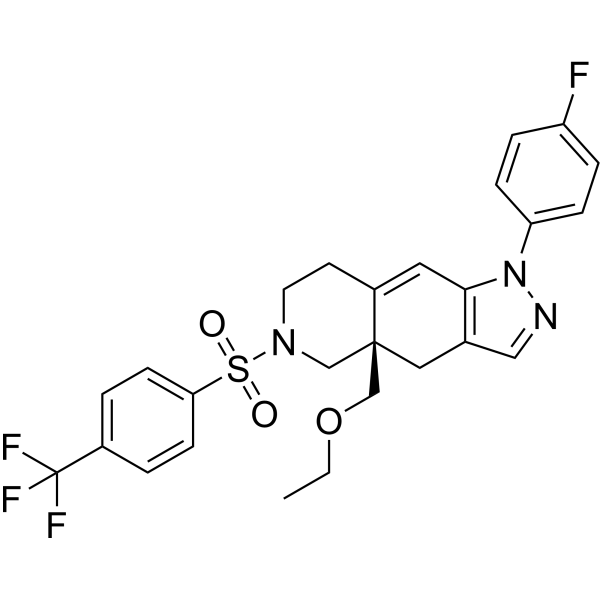
Cort108297 is a specific glucocorticoid receptor (GR) antagonist. Cort108297 has a high affinity for GRs with a Ki of 0.45 nM.
商品は「研究用試薬」です。人や動物の医療用・臨床診断用・食品用の製品ではありません。
研究用途以外に使用した場合、当社は一切の責任を負いかねます。
- 純度 : 99.80%
- CAS 番号: 1018679-79-2
- 分子式: C26H25F4N3O3S
- 分子量:535.55
-
保管条件:Powder -20°C, 3 years , 4°C, 2 years ; In solvent -80°C, 6 months , -20°C, 1 month

To place orders, for customer services and technical support, please contact: MedChemExpress USA
Tel: 609-228-6898 E-mail: [email protected] [email protected]


-
 生物活性
生物活性
-
化学情報
-
溶剤 & 溶解度
- プロトコル
- 純度とドキュメンテーション
- 参考文献
-
 Help & FAQs


-
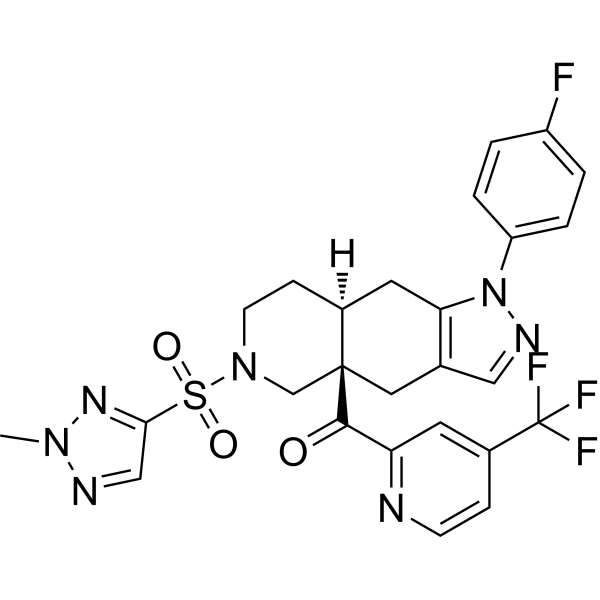
HY-117880
Exicorilant -
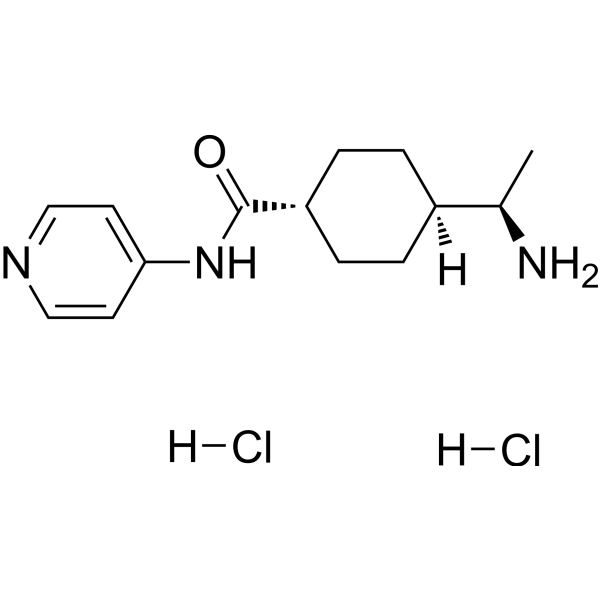
HY-10583
Y-27632 dihydrochlorideROCK Inhibitor -
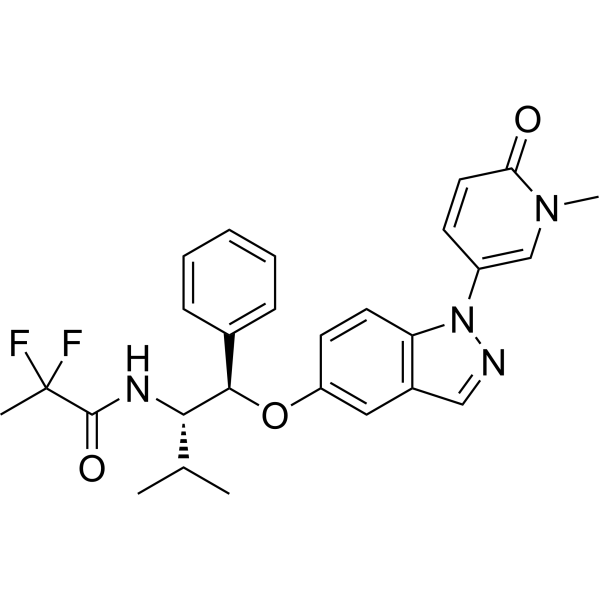
HY-120012
Mizacorat -
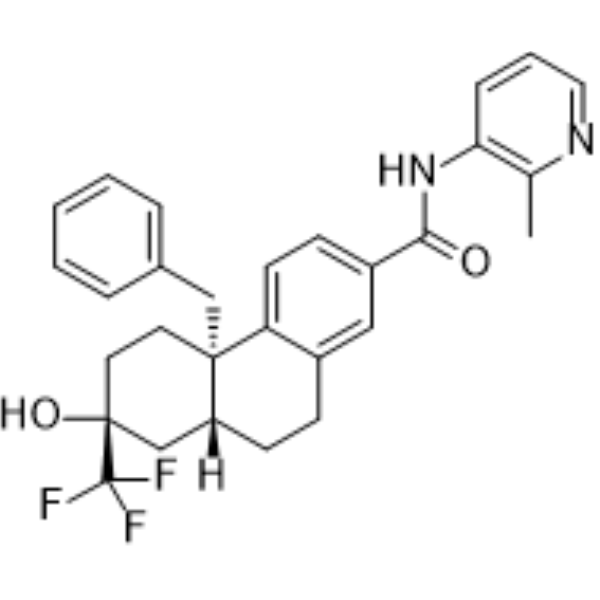
HY-16718
DagrocoratGlucocorticoid Receptor Agonist -
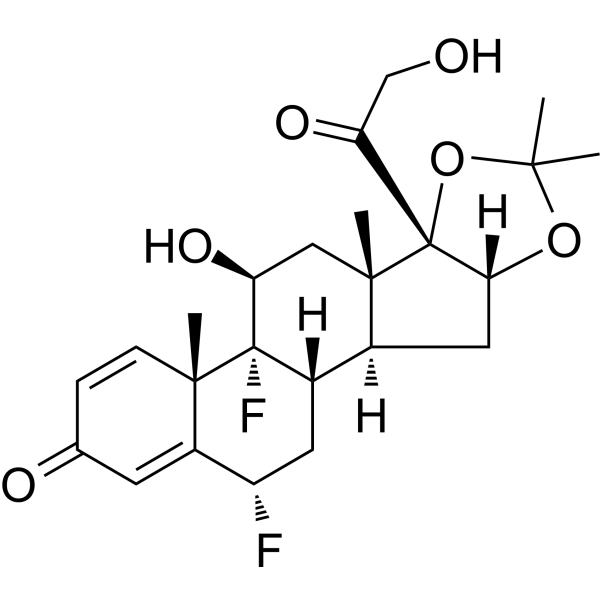
HY-B0415
Fluocinolone (Acetonide)Glucocorticoid Receptor Agonist -
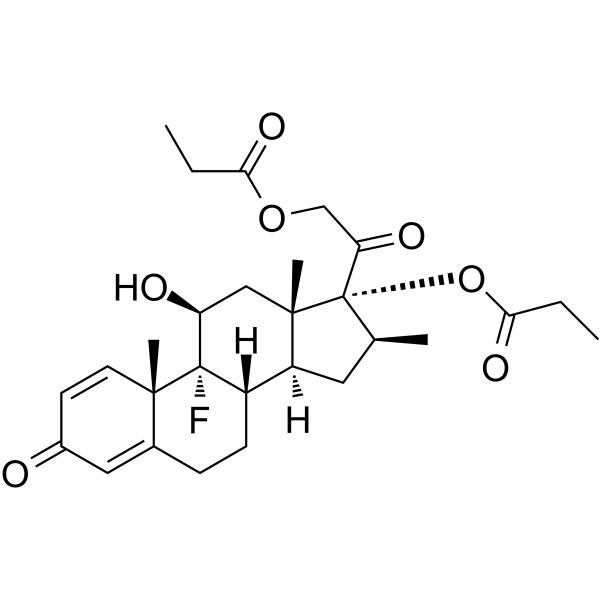
HY-13571
Betamethasone dipropionateGlucocorticoid Receptor Modulator -
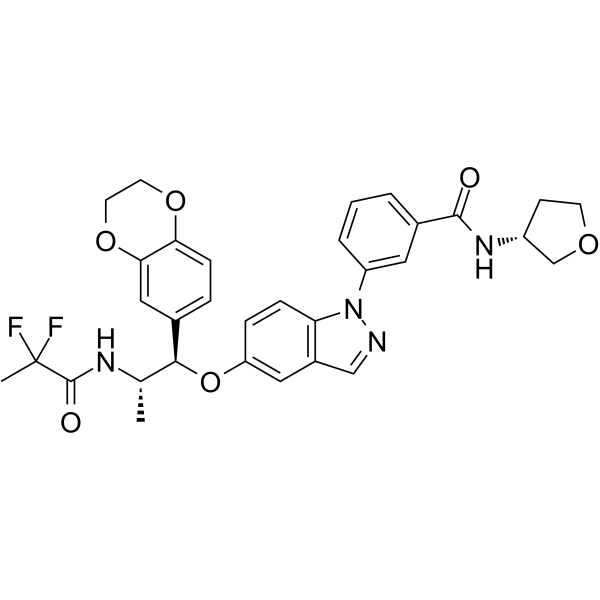
HY-111453
Velsecorat -
HY-17463
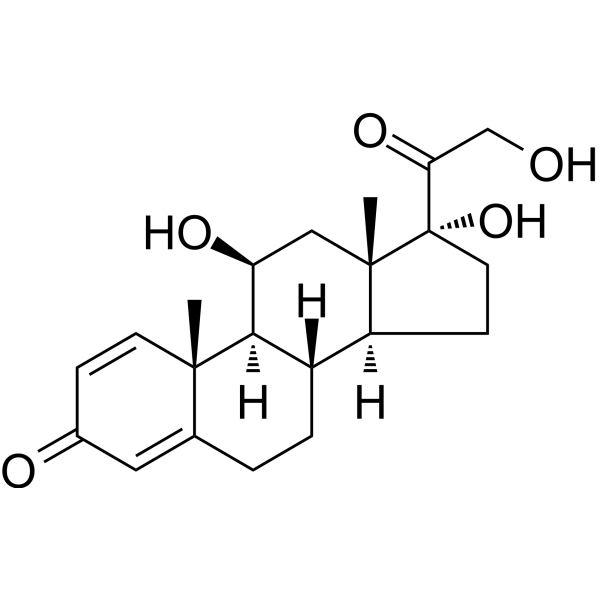
PrednisoloneGlucocorticoid -
HY-13580
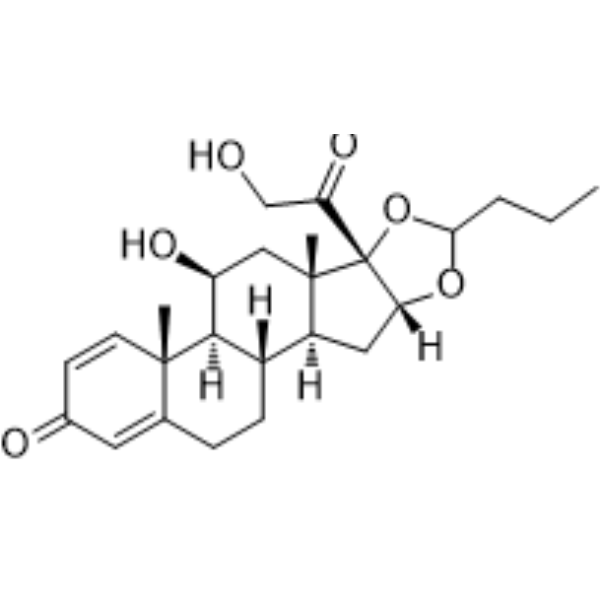
BudesonideGlucocorticoid Receptor Agonist -

HY-B0415R
Fluocinolone (Acetonide) (Standard)Glucocorticoid Receptor Agonist -
HY-B1829A
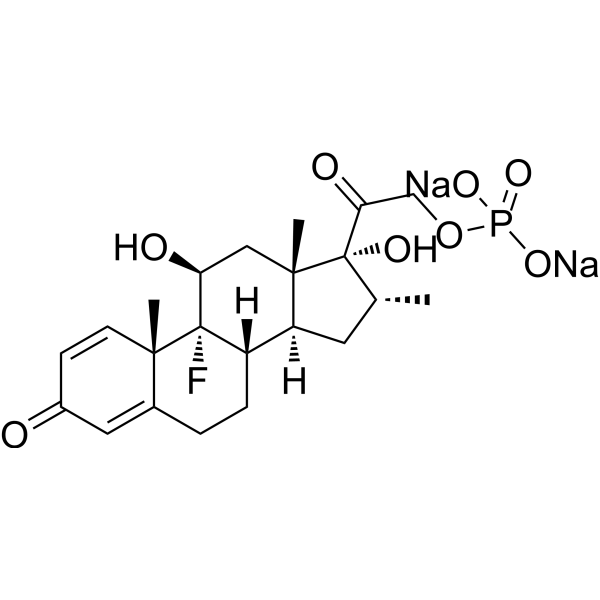
Dexamethasone phosphate disodiumDexamethasone Prodrug -

HY-13571R
Betamethasone dipropionate (Standard)Glucocorticoid Receptor Modulator


生物活性
製品説明
IC50 & Target
Ki: 0.45 nM (glucocorticoid receptor)[1]
体外実験
In LAPC4 cells, co-treatment with Dexamethasone induces steady-state SGK1 expression 1.7-fold compared to R1881/Enzalutamide (RE) treatment alone. Addition of CORT118335 (1µM) inhibits Dexamethasone-induced SGK1 expression 50% while Cort108297 completely blocks the Dexamethasone-mediated SGK1 increase (p<0.05). KLK3 expression is increased 2.5-fold by Dexamethasone compared to treatment with RE. Both Cort108297 and CORT118335 antagonize Dexamethasone-induced KLK3 expression (by 48% and 60%, respectively, p<0.05). Following 3 days of Dexamethasone±SGRMs in CWR-22Rv1 cells, SGK1 gene expression is dramatically induced by ~100-fold compared to RE-treated cells and this induction is completely abrogated by both Cort108297 and CORT118335 (p<0.01). KLK3 is also induced (7.5-fold) by Dexamethasone compared to RE in CWR-22Rv1 cells; Cort108297 and CORT118335 inhibits this induction by 70% and 75%, respectively (p<0.01)[2].
MedChemExpress (MCE) has not independently confirmed the accuracy of these methods. They are for reference only. Further protocols information, click here.
体内実験
MedChemExpress (MCE) has not independently confirmed the accuracy of these methods. They are for reference only.
臨床実験
| NCT Number | Sponsor | Condition | Start Date |
Phase

|
|---|---|---|---|---|
| NCT01329991 | Plexxikon| | 2011-05 | PHASE1 |


化学情報
-
CAS 番号 1018679-79-2
-
性状 Solid
-
分子量 535.55
-
分子式 C26H25F4N3O3S
-
Color White to off-white
-
SMILES
O=S(N1C[C@@]2(COCC)CC3=C(N(C4=CC=C(F)C=C4)N=C3)C=C2CC1)(C5=CC=C(C(F)(F)F)C=C5)=O
-
輸送条件
Room temperature in continental US; may vary elsewhere.
-
保管条件
Powder -20°C 3 years 4°C 2 years In solvent -80°C 6 months -20°C 1 month


溶剤 & 溶解度
体外:
DMSO : 100 mg/mL (186.72 mM; Need ultrasonic; Hygroscopic DMSO has a significant impact on the solubility of product, please use newly opened DMSO)
Please refer to the solubility information to select the appropriate solvent. Once prepared, please aliquot and store the solution to prevent product inactivation from repeated freeze-thaw cycles.
Storage method and period of stock solution: -80°C, 6 months; -20°C, 1 month. When stored at -80°C, please use it within 6 months. When stored at -20°C, please use it within 1 month.
Please refer to the solubility information to select the appropriate solvent. Once prepared, please aliquot and store the solution to prevent product inactivation from repeated freeze-thaw cycles.
Storage method and period of stock solution: -80°C, 6 months; -20°C, 1 month. When stored at -80°C, please use it within 6 months. When stored at -20°C, please use it within 1 month.
濃度 (開始) × 体積 (開始) = 濃度 (終了) × 体積 (終了)

プロトコル
-
Research Protocol for Endocrine Diseases
Endocrine diseases often arise from disrupted hormone production, hormone signaling, or target-tissue responsiveness; for diabetes-focused endocrine disease models, insulin signaling regulates glucose uptake, hepatic glucose output, lipid metabolism, and β-cell compensation. Type 2 diabetes develops through interacting defects in insulin resistance, β-cell dysfunction, adipose inflammation, hepatic glucose overproduction, altered incretin signaling, and ectopic lipid metabolism. A major unresolved question is whether endocrine dysfunction is driven primarily by target-tissue insulin resistance, intrinsic β-cell failure, immune/inflammatory stress, or combined multi-organ failure that differs by disease stage.


純度とドキュメンテーション
-
データシート (283 KB)
-
SDS (393 KB)
- English - EN (393 KB)
- Français - FR (393 KB)
- Deutsch - DE (393 KB)
- Norwegian - NO (393 KB)
- Español - ES (393 KB)
- Swedish - SV (393 KB)
- Italian - IT (393 KB)
- Korean - KR (393 KB)
- Portuguese - PT (393 KB)
-
取扱説明書 (2659 KB)
参考文献
[1]. Sindelar DK, et al. LLY-2707, a novel nonsteroidal glucocorticoid antagonist that reduces atypical antipsychotic-associated weight gain in rats. J Pharmacol Exp Ther. 2014 Jan;348(1):192-201. [Content Brief]
[2]. Kach J, et al. Selective Glucocorticoid Receptor Modulators (SGRMs) Delay Castrate-Resistant Prostate Cancer Growth. Mol Cancer Ther. 2017 Aug;16(8):1680-1692. [Content Brief]
[3]. Asagami T, et al. Selective Glucocorticoid Receptor (GR-II) Antagonist Reduces Body Weight Gain in Mice. J Nutr Metab. 2011;2011:235389. [Content Brief]
[4]. Solomon MB, et al. The selective glucocorticoid receptor antagonist CORT 108297 decreases neuroendocrine stress responses and immobility in the forced swim test. Horm Behav. 2014 Apr;65(4):363-71. [Content Brief]


Complete Stock Solution Preparation Table
Please refer to the solubility information to select the appropriate solvent. Once prepared, please aliquot and store the solution to prevent product inactivation from repeated freeze-thaw cycles.
Storage method and period of stock solution: -80°C, 6 months; -20°C, 1 month. When stored at -80°C, please use it within 6 months. When stored at -20°C, please use it within 1 month.
| Optional Solvent | Concentration Solvent Mass | 1 mg | 5 mg | 10 mg | 25 mg |
|---|---|---|---|---|---|
| DMSO | 1 mM | 1.8672 mL | 9.3362 mL | 18.6724 mL | 46.6810 mL |
| 5 mM | 0.3734 mL | 1.8672 mL | 3.7345 mL | 9.3362 mL | |
| 10 mM | 0.1867 mL | 0.9336 mL | 1.8672 mL | 4.6681 mL | |
| 15 mM | 0.1245 mL | 0.6224 mL | 1.2448 mL | 3.1121 mL | |
| 20 mM | 0.0934 mL | 0.4668 mL | 0.9336 mL | 2.3340 mL | |
| 25 mM | 0.0747 mL | 0.3734 mL | 0.7469 mL | 1.8672 mL | |
| 30 mM | 0.0622 mL | 0.3112 mL | 0.6224 mL | 1.5560 mL | |
| 40 mM | 0.0467 mL | 0.2334 mL | 0.4668 mL | 1.1670 mL | |
| 50 mM | 0.0373 mL | 0.1867 mL | 0.3734 mL | 0.9336 mL | |
| 60 mM | 0.0311 mL | 0.1556 mL | 0.3112 mL | 0.7780 mL | |
| 80 mM | 0.0233 mL | 0.1167 mL | 0.2334 mL | 0.5835 mL | |
| 100 mM | 0.0187 mL | 0.0934 mL | 0.1867 mL | 0.4668 mL |


Cort108297 関連分類
HY-15710 関連分類
 Powered by Bioz