



Resazurin sodium
Based on 11 publication(s) in Google Scholar
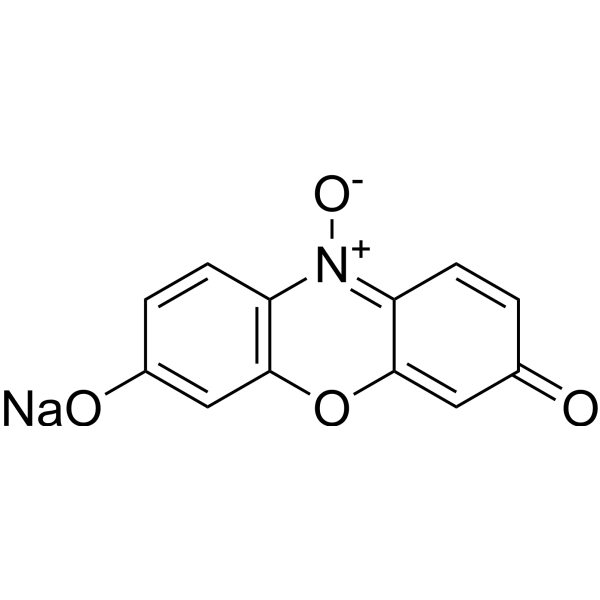
Resazurin sodium (Diazoresorcinol sodium) is a non-toxic, stable, membrane-permeable blue non-fluorescent dye (faintly fluorescent). Resazurin sodium is used as a redox indicator, can be reduced to pink, highly fluorescent Resorufin (Ex=530-560 nm, Em=590 nm) in living cells. Resazurin sodium can be used for the detection of cell viability, toxicity, proliferation, migration and invasion in cells (human, plant and animal, bacterial and fungal).
For research use only. We do not sell to patients.
- Purity : 98.74%
- CAS No.: 62758-13-8
- Formula: C12H6NNaO4
- Molecular Weight:251.17
-
Storage:
4°C, sealed storage, away from moisture and light
* In solvent : -80°C, 6 months; -20°C, 1 month (sealed storage, away from moisture and light)

To place orders, for customer services and technical support, please contact: MedChemExpress USA
Tel: 609-228-6898 E-mail: [email protected] [email protected]


-
 Biological Activity
-
Chemical Information
-
Solvent & Solubility
- Protocols
- Purity & Documentation
- References
-
 Help & FAQs


-
HY-19424
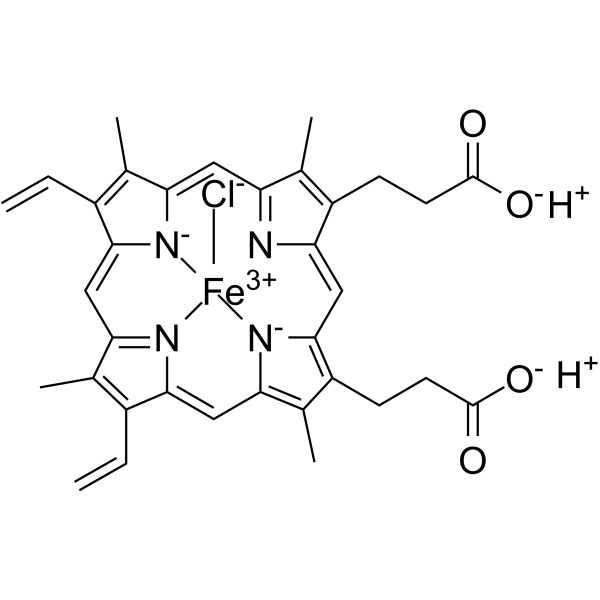
HeminHeme Oxygenase-1 Inducer -
HY-D0940
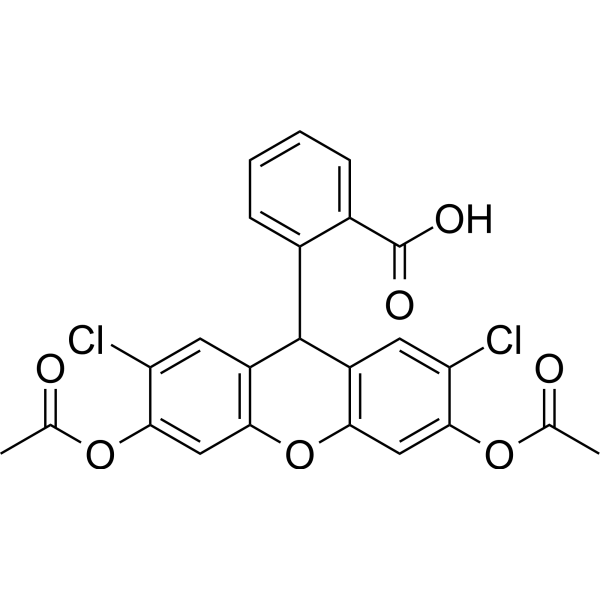
H2DCFDAROS-Sensitive Probe -

HY-Y0320
Dimethyl sulfoxide, meets analytical specification of Ch.P.Aprotic Solvent -
HY-10219
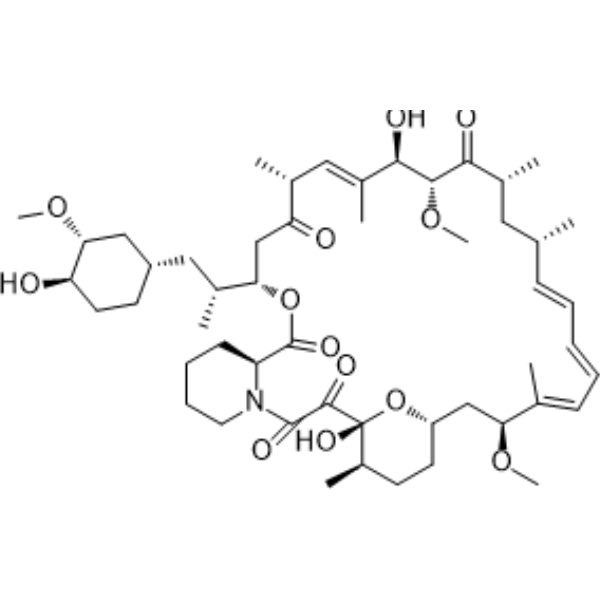
RapamycinmTOR Inhibitor -
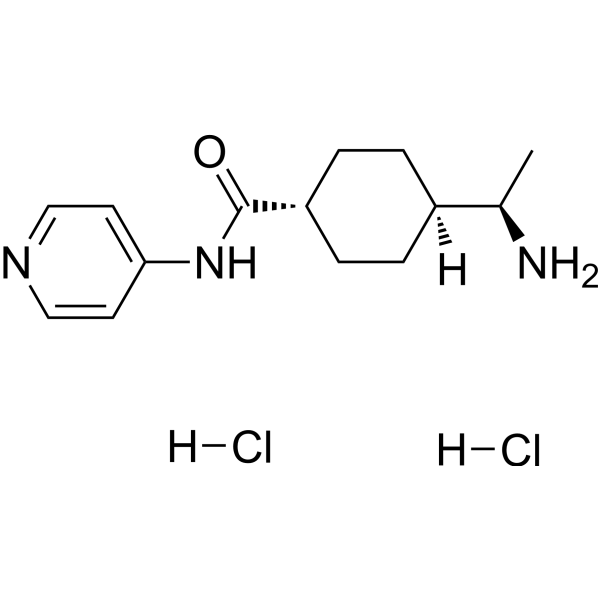
HY-10583
Y-27632 dihydrochlorideROCK Inhibitor -
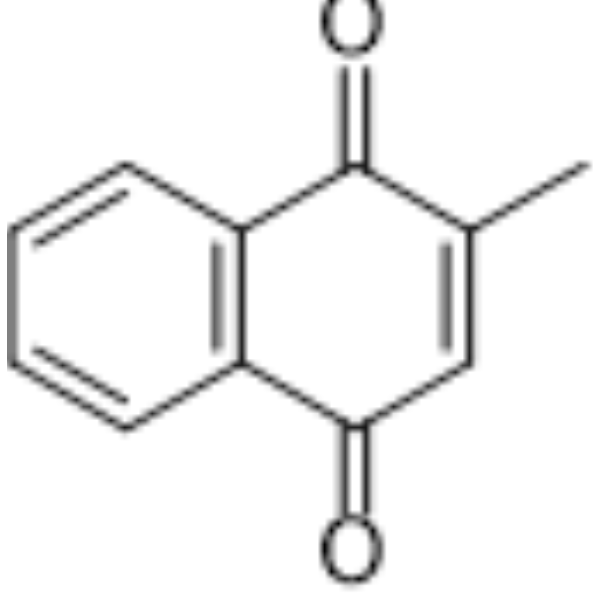
HY-B0332
MenadioneEndogenous Metabolite -
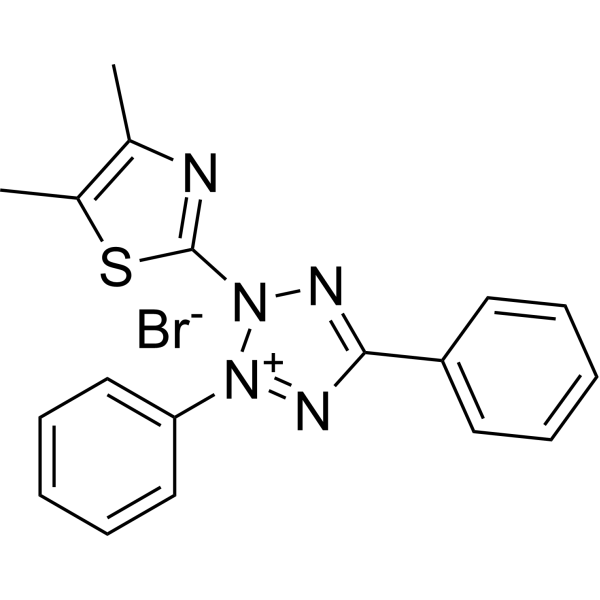
HY-15924
Thiazolyl BlueCytotoxicity Detection Reagent -
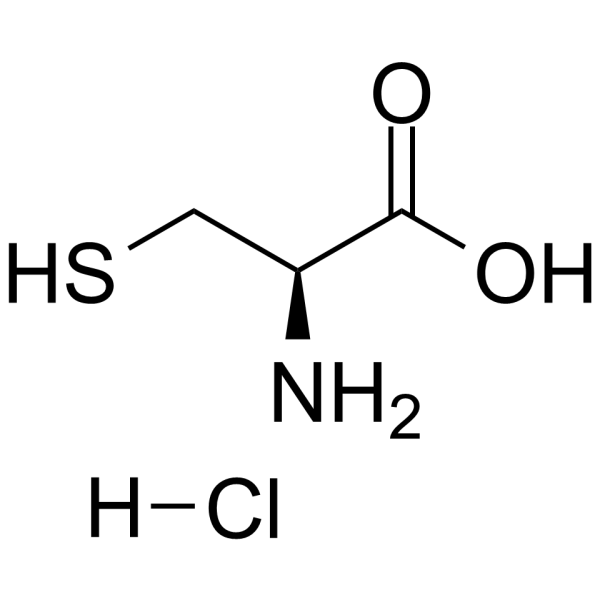
HY-Y0337A
L-Cysteine hydrochlorideEssential Amino Acid -
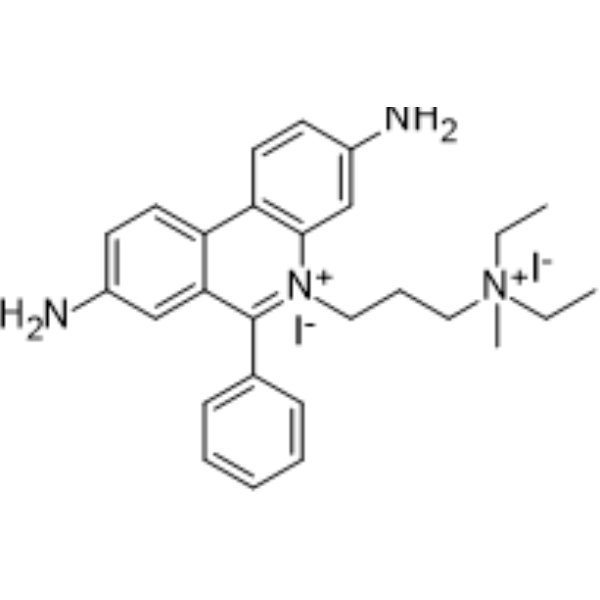
HY-D0815
Propidium IodideFluorochrome -
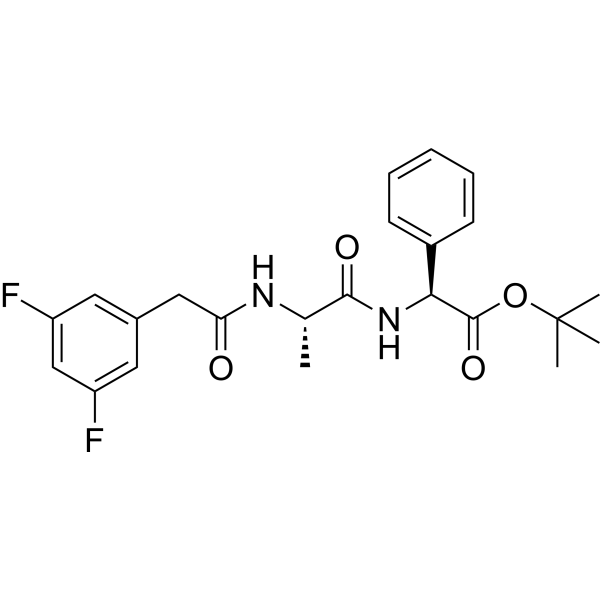
HY-13027
DAPTγ-secretase Inhibitor -
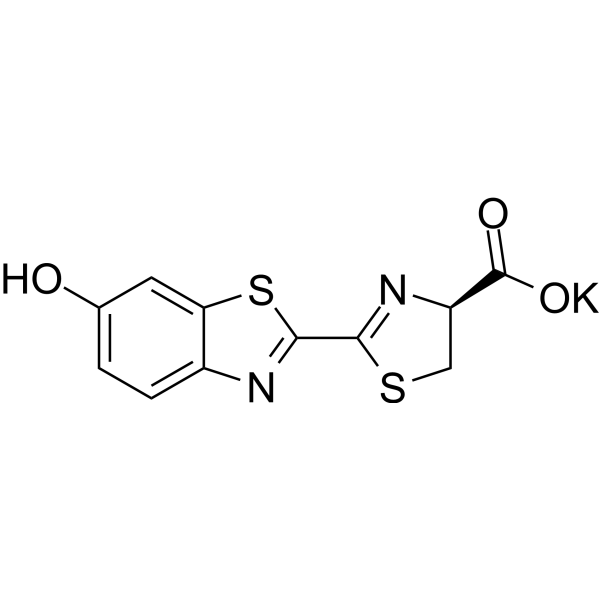
HY-12591B
D-Luciferin potassiumSubstrate for Luciferase -
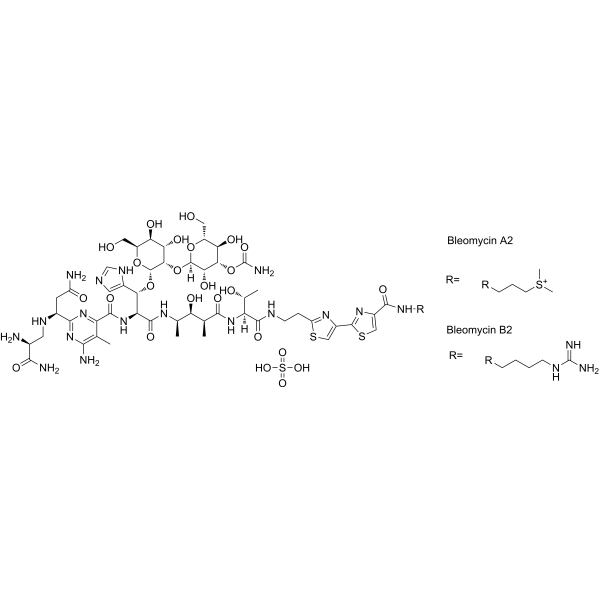
HY-17565
Bleomycin sulfateDNA Synthesis Inhibitor
Publications Citing Use of MedChemExpress (MCE) Resazurin sodium
More- Nat Metab. 2021 Oct;3(10):1357-1371. [Abstract]
- Environ Sci Technol. 2025 Oct 21;59(41):21898-21909. [Abstract]
- J Immunother Cancer. 2026 May 27;14(5):e014533. [Abstract]
- Pharmaceuticals (Basel). 2024 Feb 2;17(2):197. [Abstract]
- Eur J Pharm Sci. 2026 Oct 1:225:107613.
- Surgery. 2024 Mar;175(3):726-734. [Abstract]
- bioRxiv. 2026 Jul 17.
- bioRxiv. 2026 Jun 29:2026.06.26.734853.
- bioRxiv. 2026 May 13:2026.05.13.724856. [Abstract]
- The Catholic University of America. 2026.
- bioRxiv. 2023 Apr 8:2023.04.07.536013. [Abstract]


Biological Activity
Description
In Vitro
Resazurin sodium is commonly used to measure bacterial and eukaryotic cell viability through its reduction to the fluorescent product resorufin. No viable bacteria are detected 24 h post-inoculation following inclusion of Resazurin sodium in TSBc cultures of F. tularensis LVS at the concentration of 44 μM. Lowering the Resazurin sodium concentration to as little as 4.4 μM still results in a 10-fold reduction in viable F. tularensis LVS compare to growth medium alone. Both Resazurin sodium treatments result in a significant decrease in viable F. tularensis LVS bacteria over 22 h. Treatment with Resazurin sodium significantly reduces the number of viable F. tularensis LVS bacteria in HEK293 cells 22 h post-infection[1].
Guide (Following is our recommended protocol. This protocol only provides a guideline, and should be modified according to your specific needs).
1. Solution preparation
1.1 Preparation of stock solution
Solvent: DMSO or ddH2O
Concentration: 1 mg/mL (optimized according to the experiment).
Storage: Store at -20°C or -80°C in dark after aliquoting. Avoid repeated freezing and thawing.
1.2 Preparation of working solution
Dilute to 1 μg/mL with PBS or serum-free medium (optimized according to the experiment).
Note: The working solution should be prepared and used immediately. Keep it away from light.
2. Cell viability
1. Defrost the Resazurin sodium solution in a 37°C water bath.
2. Place the cells on a 96-well plate, and washed by PBS (avoid light).
3. Remove the PBS wash, then add 100 μL (1 μg/mL) of Resazurin sodium solution.
4. Place the plate, in the incubator for 30 min (incubation time depends on cell type and cell number).
5. Measure Resazurin sodium fluorescence (Ex = 530-560 nm, Em = 590 nm) using a microplate reader.
MedChemExpress (MCE) has not independently confirmed the accuracy of these methods. They are for reference only. Further protocols information, click here.


Chemical Information
-
CAS No. 62758-13-8
-
Appearance Solid
-
Molecular Weight 251.17
-
Formula C12H6NNaO4
-
Color Brown to black
-
SMILES
O=C1C=CC2=[N+]([O-])C3=C(C=C(O[Na])C=C3)OC2=C1
-
Synonyms
Diazoresorcinol sodium
-
Shipping
Room temperature in continental US; may vary elsewhere.
-
Storage
4°C, sealed storage, away from moisture and light
* In solvent : -80°C, 6 months; -20°C, 1 month (sealed storage, away from moisture and light)


Publications (11)
-
Journal Impact Factor
-
Most Recent
-
Nat Metab
The alternative activity of nuclear PHGDH contributes to tumour growth under nutrient stress. [Abstract]2021 Oct;3(10):1357-1371. PMID: 34663976 -
Environ Sci Technol
Revealing Ferroptosis Induction by Bisphenol A and Bisphenol S through Distinct Protein Targets. [Abstract]2025 Oct 21;59(41):21898-21909. PMID: 41068997 -
J Immunother Cancer
Gasdermin D antagonizes immunosuppression in prostate cancer by inducing LAMC2 degradation to block M2 macrophage polarization. [Abstract]2026 May 27;14(5):e014533. PMID: 42203263 -
Pharmaceuticals (Basel)
Therapeutic Implications of Ceritinib in Cholangiocarcinoma beyond ALK Expression and Mutation. [Abstract]2024 Feb 2;17(2):197. PMID: 38399413 -
-
Surgery
2024 Mar;175(3):726-734. PMID: 37914574 -
-
-
bioRxiv
Physiological levels of 3-hydroxykynurenine alter mitochondrial function and morphology in neuronal cells. [Abstract]2026 May 13:2026.05.13.724856. PMID: 42182345 -
-
bioRxiv
Inhibition of serotonin biosynthesis in neuroendocrine neoplasm suppresses tumor growth in vivo. [Abstract]2023 Apr 8:2023.04.07.536013. PMID: 37066322


Solvent & Solubility
In Vitro:
H2O : 5 mg/mL (19.91 mM; ultrasonic and warming and heat to 60°C)
DMSO : 2 mg/mL (7.96 mM; ultrasonic and warming and heat to 60°C; Hygroscopic DMSO has a significant impact on the solubility of product, please use newly opened DMSO)
Please refer to the solubility information to select the appropriate solvent. Once prepared, please aliquot and store the solution to prevent product inactivation from repeated freeze-thaw cycles.
Storage method and period of stock solution: -80°C, 6 months; -20°C, 1 month (sealed storage, away from moisture and light). When stored at -80°C, please use it within 6 months. When stored at -20°C, please use it within 1 month.
* Note: If you choose water as the stock solution, please dilute it to the working solution, then filter and sterilize it with a 0.22 μm filter before use.
Please refer to the solubility information to select the appropriate solvent. Once prepared, please aliquot and store the solution to prevent product inactivation from repeated freeze-thaw cycles.
Storage method and period of stock solution: -80°C, 6 months; -20°C, 1 month (sealed storage, away from moisture and light). When stored at -80°C, please use it within 6 months. When stored at -20°C, please use it within 1 month.
* Note: If you choose water as the stock solution, please dilute it to the working solution, then filter and sterilize it with a 0.22 μm filter before use.
Concentration (start) × Volume (start) = Concentration (final) × Volume (final)

Protocols
-
Cell Cytotoxicity Assay
Cytotoxicity assays are usually based on the assessment of cell membrane damage, which can also be indirectly detected by measuring cell viability. Detection methods include MTT assay, CKK-8 assay, LDH assay and ATP assay, etc.
-
Mammalian live/dead viability and cytotoxicity staining
Live/dead viability and cytotoxicity staining assays are based on the simultaneous detection of intracellular esterase activity in metabolically active (viable) cells and membrane integrity loss in non-viable cells. In commonly used dual-staining approaches, membrane-permeant fluorogenic substrates are converted by intracellular esterases into fluorescent products in live cells, while impermeant DNA-binding dyes selectively enter cells with compromised plasma membranes and label nucleic acids in dead or dying cells, enabling discrimination between viable and non-viable populations by fluorescence microscopy or flow cytometry.
-
ROS/oxidative-stress fluorescent staining
ROS/oxidative-stress fluorescent staining uses cell-permeant fluorogenic probes that become fluorescent after oxidation inside cells or tissues; commonly used examples include DCFH-DA/DCFDA for broad cellular oxidant detection, DHE for superoxide-related signal detection, MitoSOX for mitochondrial superoxide-related signal detection, and CellROX probes for oxidative-stress-associated fluorescence readouts. The assay detects probe oxidation rather than a single ROS species unless the probe and analysis method have been chemically validated for that species. DCFH-DA enters cells, is deacetylated by intracellular esterases to DCFH, and produces fluorescent DCF after oxidation, so the readout is used as an operational measure of total cellular oxidative stress rather than a species-specific ROS measurement. DHE and MitoSOX can report superoxide-related oxidation, but red fluorescence alone can include non-specific ethidium-like oxidation products; HPLC or optimized spectral approaches are
-
Cell migration
Cell migration is a method that plays an important role in wound healing, cell differentiation, embryonic development, etc.
-
CCK-8/WST-8 Cell Proliferation Assay
The CCK-8/WST-8 assay is based on the reduction of the water-soluble tetrazolium salt WST-8 to a water-soluble formazan product by cellular dehydrogenases in metabolically active cells, where the generated formazan amount is proportional to the number of living cells and is quantified by measuring absorbance in the visible range, providing a colorimetric readout for cell viability and proliferation assessment. This class of tetrazolium-based assays improves upon earlier MTT-based systems by producing a water-soluble formazan, eliminating the need for organic solubilization steps and enabling direct spectrophotometric measurement in culture medium.
-
Cell invasion
Cell invasion is the ability of cells to migrate from one area to another via the extracellular matrix. Cell invasion is the response of normal and cancer cells to chemical and mechanical stimuli. Before migrating to a new region, the extracellular matrix is degraded by proteases within the cell. Cell invasion often occurs during wound repair, vascularization and inflammation, abnormal tissue invasion, and tumor cell metastasis.
-
MTT Cell Proliferation Assay
The MTT assay is a colorimetric endpoint assay for estimating viable cell number, cell growth, cytotoxicity, or cell activation in cultured mammalian cells. Living cells reduce the yellow tetrazolium salt MTT into purple/blue formazan, while dead cells do not generate the same signal; the resulting color can be quantified with a multiwell spectrophotometer. MTT reduction is commonly interpreted as a readout of metabolic activity that often correlates with viable cell number, but it should not be treated as a direct cell-counting method unless the assay is optimized for the cell type and experimental condition. Studies show that MTT reduction can involve mitochondrial and non-mitochondrial reducing systems, and formazan may accumulate in intracellular lipid droplets rather than simply marking mitochondria.
-
Cell Viability Determination by MTT Colorimetric Assay
The following protocol uses the MTT colorimetric assay as a classic literature-established method for assessing cell viability/metabolic activity in cultured mammalian cells. MTT[3-(4,5-dimethylthiazol-2-yl)-2,5-diphenyltetrazolium bromide] is reduced by metabolically active cells to a colored formazan product; the amount of formazan is quantified spectrophotometrically and provides an indirect measure of metabolically active viable cells. Importantly, MTT reduction reflects cellular oxidoreductase/metabolic activity rather than an absolute direct count of living cells, so changes in cellular metabolism can alter the signal independently of cell number.


Purity & Documentation
-
Data Sheet (278 KB)
-
SDS (394 KB)
- English - EN (394 KB)
- Français - FR (394 KB)
- Deutsch - DE (394 KB)
- Norwegian - NO (394 KB)
- Español - ES (394 KB)
- Swedish - SV (394 KB)
- Italian - IT (394 KB)
- Korean - KR (394 KB)
- Portuguese - PT (394 KB)
-
Handling Instructions (2659 KB)
References
[1]. Schmitt DM, et al. The use of resazurin as a novel antimicrobial agent against Francisella tularensis. Front Cell Infect Microbiol. 2013 Dec 6;3:93. [Content Brief]
[2]. Silva FSG, et al. Determination of Metabolic Viability and Cell Mass Using a Tandem Resazurin/Sulforhodamine B Assay. Curr Protoc Toxicol. 2016 May 4;68:2.24.1-2.24.15. [Content Brief]
[3]. Rampersad SN. Multiple applications of Alamar Blue as an indicator of metabolic function and cellular health in cell viability bioassays. Sensors (Basel). 2012;12(9):12347-60. [Content Brief]


Complete Stock Solution Preparation Table
Please refer to the solubility information to select the appropriate solvent. Once prepared, please aliquot and store the solution to prevent product inactivation from repeated freeze-thaw cycles.
Storage method and period of stock solution: -80°C, 6 months; -20°C, 1 month (sealed storage, away from moisture and light). When stored at -80°C, please use it within 6 months. When stored at -20°C, please use it within 1 month.
| Optional Solvent | Concentration Solvent Mass | 1 mg | 5 mg | 10 mg | 25 mg |
|---|---|---|---|---|---|
| DMSO / H2O | 1 mM | 3.9814 mL | 19.9068 mL | 39.8137 mL | 99.5342 mL |
| 5 mM | 0.7963 mL | 3.9814 mL | 7.9627 mL | 19.9068 mL | |
| H2O | 10 mM | 0.3981 mL | 1.9907 mL | 3.9814 mL | 9.9534 mL |
| 15 mM | 0.2654 mL | 1.3271 mL | 2.6542 mL | 6.6356 mL |
* Note: If you choose water as the stock solution, please dilute it to the working solution, then filter and sterilize it with a 0.22 μm filter before use.


Resazurin sodium Related Classifications
HY-111391 Related Classifications
 Powered by Bioz