



Cancer Targeted Therapy
Cancer targeted therapy is the foundation of precision medicine; it uses drugs or other substances to target specific genes and proteins that control cancer cells’ growth, division and spreading. Compared to traditional chemotherapy drugs, targeted-drugs can specifically act on cancer cells with high efficacy without damaging normal cells. Drugs used in cancer targeted therapy mainly includes small molecules and macromolecules (e.g., monoclonal antibodies), which can target cancer cells and constituents in the tumor microenvironment to activate the immune system. Anti-angiogenesis drugs, such as those targeting vascular endothelial growth factor (VEGF), epidermal growth factor receptor (EGFR), transforming growth factor (TGF)-α, TGF-β, Tumor necrosis factor (TNF)-α, and platelet-derived endothelial growth factor (PDGFR) inhibit the proliferation and metastasis of cancer cells. In recent years, the proportion of antibody drugs in cancer treatment has gradually become prominent. Antibody-drug conjugates (ADCs) are a new type of targeted drugs that are composed of monoclonal antibody, cytotoxic drug and linker. ADCs can deliver drugs to tumor cells and minimize the toxicity to normal tissues. Proteolysis-targeting chimera (PROTAC) is a useful technology for targeted protein degradation. PROTAC exploits the ubiquitin-proteasome system and forms a ternary complex with a hijacked E3 ubiquitin ligase and target protein, leading to polyubiquitination and degradation of the target protein.
Targeted therapy is a useful strategy in treatment of cancer either alone or in combination with standard chemotherapy. At present, targeted therapy has proved significant clinical success in the treatment of many types of cancer, including breast cancer, colorectal cancer, leukemia, ovarian cancer and lung cancer.
-
5’-O-Benzoyl-2’-O,4’-C-methyleneuridine
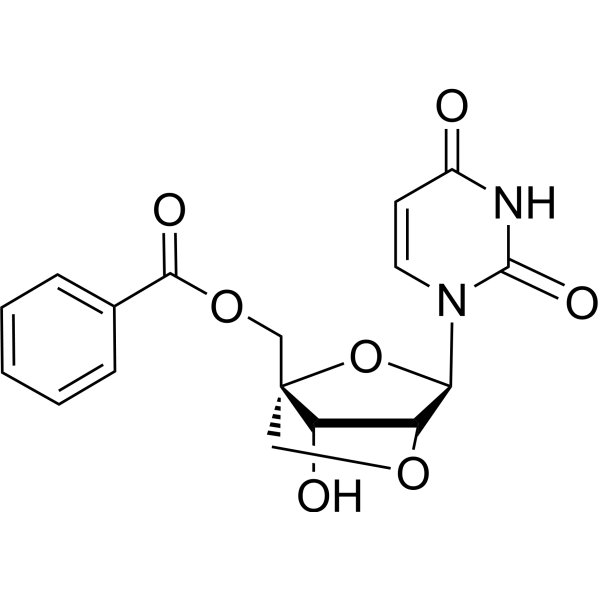 0 ImagesCat. No.: HY-154371CAS No.: 293751-31-2
5’-O-Benzoyl-2’-O,4’-C-methyleneuridine is a purine nucleoside analog. Purine nucleoside analogs have broad antitumor activity targeting indolent lymphoid malignancies. Anticancer mechanisms in this process rely on inhibition of DNA synthesis, induction of apoptosis, etc.
-
VD5123
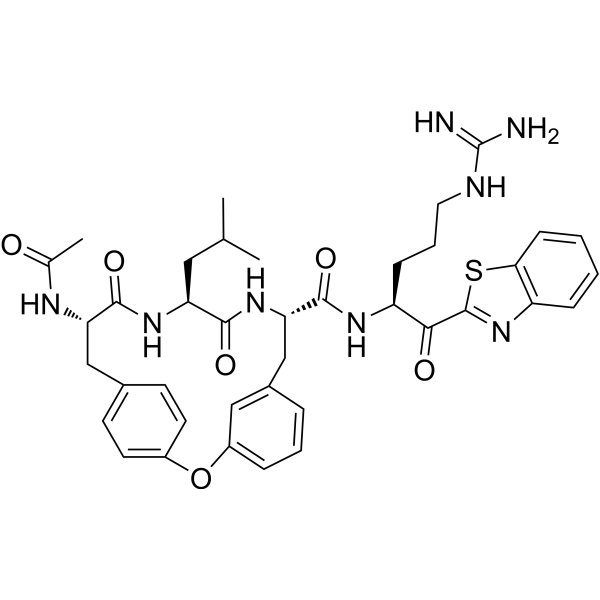 0 ImagesCat. No.: HY-161371CAS No.: 3058672-63-9
-
MC-Val-Cit-Gly-exatecan-β-D-glucopyranosiduronic acid
 0 ImagesCat. No.: HY-164380CAS No.: 3023709-42-1
MC-Val-Cit-Gly-exatecan-β-D-glucopyranosiduronic acid (example 13) is a drug-linker conjugate that consists of a DNA topoisomerase I inhibitor Exatecan (HY-13631) and a linker (HY-180841). MC-Val-Cit-Gly-exatecan-β-D-glucopyranosiduronic acid can be used in synthesis of ADC.

-
mmu-miR-1188-5p inhibitor
 0 ImagesCat. No.: HY-RI02574
mmu-miR-1188-5p inhibitors are chemically-modified oligonucleotides that hybridize with mature miRNAs. The miRNA inhibitors have full-length nucleotide 2'-methoxy modification. The miRNA inhibitors strongly compete with mature miRNAs to prevent the complementary pairing of miRNAs and their target genes, thereby inhibiting miRNAs from functioning.
-
mmu-miR-467b-3p inhibitor
 0 ImagesCat. No.: HY-RI03196
mmu-miR-467b-3p inhibitors are chemically-modified oligonucleotides that hybridize with mature miRNAs. The miRNA inhibitors have full-length nucleotide 2'-methoxy modification. The miRNA inhibitors strongly compete with mature miRNAs to prevent the complementary pairing of miRNAs and their target genes, thereby inhibiting miRNAs from functioning.
-
mmu-miR-704 inhibitor
 0 ImagesCat. No.: HY-RI03821
mmu-miR-704 inhibitors are chemically-modified oligonucleotides that hybridize with mature miRNAs. The miRNA inhibitors have full-length nucleotide 2'-methoxy modification. The miRNA inhibitors strongly compete with mature miRNAs to prevent the complementary pairing of miRNAs and their target genes, thereby inhibiting miRNAs from functioning.
-
rno-miR-361-3p inhibitor
 0 ImagesCat. No.: HY-RI04442
rno-miR-361-3p inhibitors are chemically-modified oligonucleotides that hybridize with mature miRNAs. The miRNA inhibitors have full-length nucleotide 2'-methoxy modification. The miRNA inhibitors strongly compete with mature miRNAs to prevent the complementary pairing of miRNAs and their target genes, thereby inhibiting miRNAs from functioning.
-
MYC-MAX-IN-1
 0 ImagesCat. No.: HY-175964CAS No.: 911714-36-8
MYC-MAX-IN-1 is a ligands for target protein for PROTAC. MYC-MAX-IN-1 can be used to synthesize PROTAC MDEG-541 (HY-150259).
-
Tyrosine kinase-IN-11
 0 Images
Tyrosine kinase-IN-11 (Compound 4b) is a tyrosine kinase inhibitor. Tyrosine kinase-IN-11 decreases general tyrosine kinase activity, selectively inhibits PDGFR-β, SRC, and c-MET kinases. Tyrosine kinase-IN-11 induces apoptosis, accompanied by reduced ERK signalings. Tyrosine kinase-IN-11 exhibits selective anticancer activity against pancreatic cancer and renal cancer.
-
Myrislignan-13C,d2
 0 ImagesCat. No.: HY-N0608S
Myrislignan-13C,d2 is the 13C, d2 deuterated-labeled Myrislignan (HY-N0608). Myrislignan is a PI3K/AKT/NF-κB inhibitor that can cross the blood-brain barrier. Myrislignan exerts anticancer activity by inducing apoptosis and ferroptosis. Myrislignan inhibits the replication and invasion of Toxoplasma gondii; it induces reactive oxygen species (ROS) imbalance, autophagy, and the death of Toxoplasma gondii tachyzoites. Myrislignan inhibits mitochondrial function and ERK1/2 phosphorylation to improve ovariectomy-induced osteoporosis. Myrislignan can be used in studies related to gastric cancer, glioblastoma, osteoporosis, and toxoplasmosis.
-
Rolinsatamab talirine
 0 ImagesCat. No.: HY-P99881CAS No.: 2095467-44-8Synonyms: ABBV 176
Rolinsatamab talirine (ABBV 176) is a prolactin receptor (PRLR)-targeting antibody-drug conjugate (ADC), compoused of Rolinsatamab (HY-P99238) and SGD-1882 (HY-101127). Rolinsatamab talirine binds to PRLR to deliver a cytotoxin to tumor cells. Rolinsatamab talirine induces DNA damage, and exhibits cytotoxicity against multiple breast tumor models, including triple negative and low PRLR-expressing models. Rolinsatamab talirine demonstrates enhanced anti-tumor activity in several breast cancer models. Rolinsatamab talirine can be used for the research of breast cancer, hepatocellular carcinoma, ovarian cancer, endometrial cancer, prostate cancer, colorectal cancer, adrenocortical carcinoma, and solid tumors.
-
hsa-miR-3136-5p inhibitor
 0 ImagesCat. No.: HY-RI00576
hsa-miR-3136-5p inhibitors are chemically-modified oligonucleotides that hybridize with mature miRNAs. The miRNA inhibitors have full-length nucleotide 2'-methoxy modification. The miRNA inhibitors strongly compete with mature miRNAs to prevent the complementary pairing of miRNAs and their target genes, thereby inhibiting miRNAs from functioning.
-
Thalidomide-NH-amido-PEG1-C2-NH2
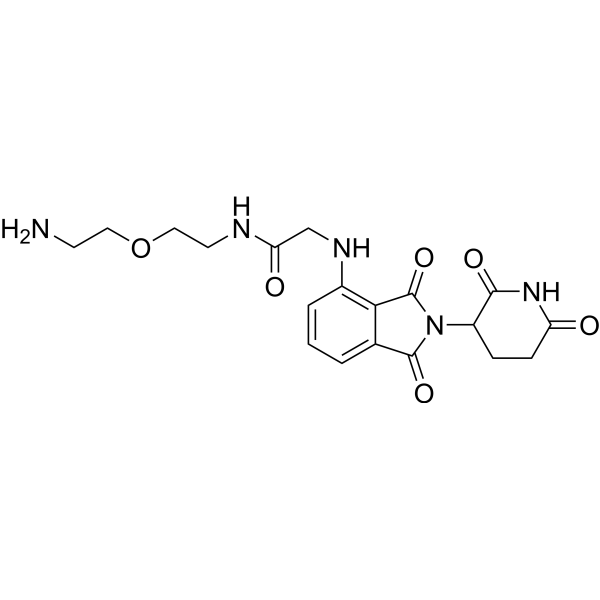 0 ImagesCat. No.: HY-138854CAS No.: 2983036-28-6
Thalidomide-NH-amido-PEG1-C2-NH2 is a synthesized E3 ligase ligand-linker conjugate that incorporates the Thalidomide based cereblon ligand and a linker used in PROTAC technology.
-
hsa-miR-4649-5p inhibitor
 0 ImagesCat. No.: HY-RI01197
hsa-miR-4649-5p inhibitors are chemically-modified oligonucleotides that hybridize with mature miRNAs. The miRNA inhibitors have full-length nucleotide 2'-methoxy modification. The miRNA inhibitors strongly compete with mature miRNAs to prevent the complementary pairing of miRNAs and their target genes, thereby inhibiting miRNAs from functioning.
-
m-PEG48-Mal
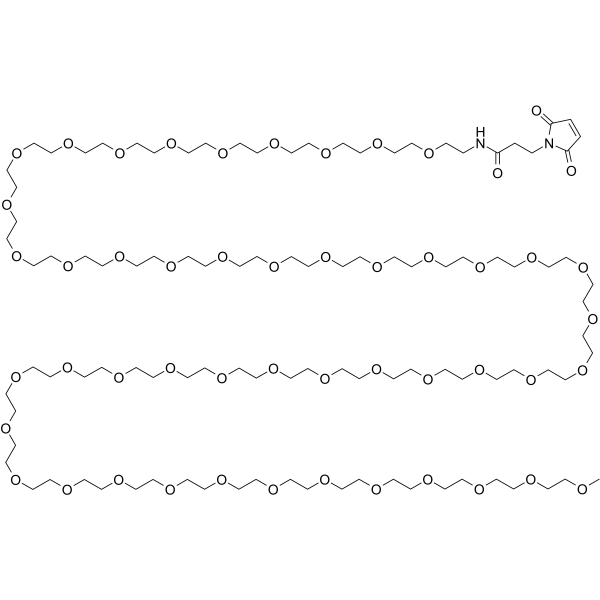 0 ImagesCat. No.: HY-140986CAS No.: 2853560-29-7
-
hsa-miR-587 antagomir
 0 ImagesCat. No.: HY-RI01817A
hsa-miR-587 antagomirs are chemically-modified oligonucleotides that hybridize with mature miRNAs. The miRNA antagomirs have 2 phosphorothioates at the 5' end, 4 phosphorothioates at the 3' end, 1 cholesterol group at the 3' end, and full-length nucleotide 2'-methoxy modification. The miRNA antagomirs strongly compete with mature miRNAs to prevent the complementary pairing of miRNAs and their target genes, thereby inhibiting miRNAs from functioning. Stability of miRNA antagomirs appears to be significantly higher than miRNA inhibitors, they exhibits enhanced cellular uptake, stability and regulatory activity in vivo.
-
KRAS G12C inhibitor 22
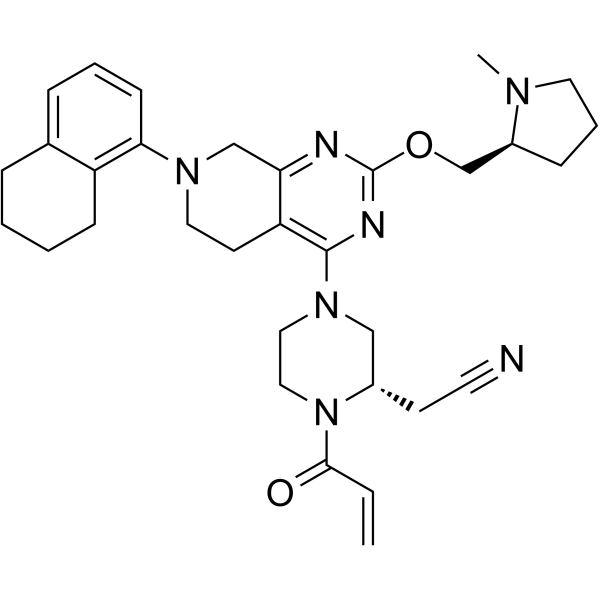 0 ImagesCat. No.: HY-145019CAS No.: 2736599-72-5
KRAS G12C inhibitor 22 is a KRAS G12C inhibitor extracted from patent WO2021219072A1, example 120.
-
BrP-LPA sodium
 0 ImagesCat. No.: HY-148291CAS No.: 944265-88-7
BrP-LPA sodium is a pan-opposite agent for lysophosphatidic acid (LPA). It has antagonistic activity against LPA1 (IC50 = 4520 nM), LPA2 (IC50 = 468 nM), LPA3, and LPA4. BrP-LPA sodium also has partial agonistic activity for LPA5, with its EC50 being 1282 nM. BrP-LPA sodium has ATX inhibitory activity. BrP-LPA sodium effectively inhibits the migration and invasion of breast cancer cells. BrP-LPA sodium achieves tumor regression and anti-angiogenesis in mice breast cancer xenograft model. BrP-LPA sodium can be used for the study of breast cancer.
-
FGFR4-IN-14
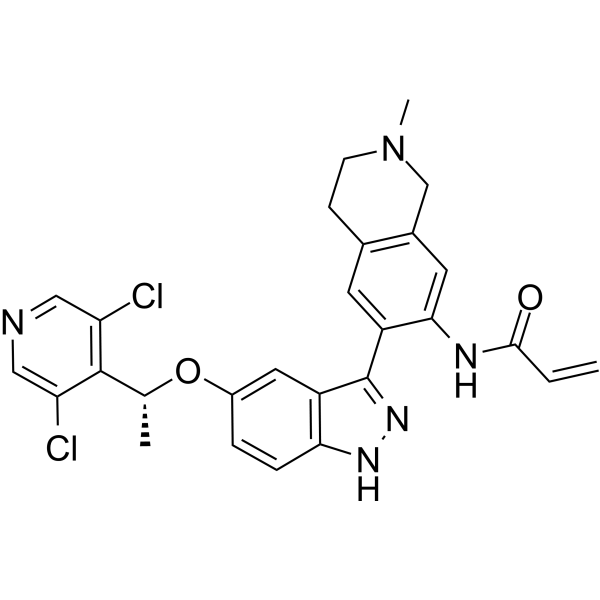 0 ImagesCat. No.: HY-155046CAS No.: 3027827-02-4
FGFR4-IN-14 (Compound 27i) is a FGFR4 inhibitor (IC50: 2.4 nM. FGFR4-IN-14 inhibits the proliferation of V550L and N535K mutant strains, with IC50s of 21 nM, 2.5 nM, 171 nM against huh7, BaF3/ETV6-FGFR4-V550L and BaF3/ETV6-FGFR4-N535K cells respectively. FGFR4-IN-14 has potent antitumor efficacy in the Huh7 xenograft model. FGFR4-IN-14 can be used for research of hepatocellular carcinoma (HCC).



